 Based on 3,000+ reviews on:


Move your Magento store to BigCommerce with LitExtension, no technical skill required on your end. Run the transfer yourself with our Automated Migration Tool, or let our experts manage it through the All-in-One service, while your Magento store stays live and selling the entire time.
Start with a Free Demo Migration to preview how your data will appear on BigCommerce. Once you approve the results, run the Full Migration, and you’re covered by up to 60 days of support after it completes.
How to Perform Magento to BigCommerce Migration

1. Connect Your Magento and BigCommerce Stores
Select Magento as your Source Cart and BigCommerce as your Target Cart, then enter your store details, including your BigCommerce API path, access token, and client ID, to link both systems together.

2. Select Data and Migration Options
Choose which entities to migrate, products, categories, orders, customers, SEO URLs, and more, then map your order status settings to fit your BigCommerce store.

3. Run Demo and Full Migration
Run a free Demo Migration to preview a sample of your data on BigCommerce. Once you approve it, launch the Full Migration, it keeps processing on our servers even after you close your browser.
Why Migrate from Magento to BigCommerce
Migrating from Magento to BigCommerce is a big step, so it’s worth choosing the right time. Below are the most common scenarios where the switch makes the most sense.
1. When maintenance becomes too time-consuming
Magento is powerful, but it often requires regular updates, developer support, and hosting management. If you’re spending more time fixing issues than growing your business, that’s a sign it might be time for a change. BigCommerce removes the need for manual server maintenance and offers a fully hosted solution with 99.99% uptime, so you can focus on what matters most.
2. When you want a simpler, more user-friendly backend
Magento can be overwhelming for non-technical users. If your team struggles with day-to-day tasks or needs help for every small update, BigCommerce offers a much more intuitive dashboard. The switch can improve workflow and reduce your reliance on developers.
3. When you want lower long-term cost
While Magento is free to download, the total cost of ownership adds up fast with hosting, development, and third-party extensions. BigCommerce offers transparent pricing, over 65 integrated payment gateways with no transaction fees beyond standard credit card processing rates, and built-in tools that reduce the need for extra apps. Over time, this can add up to major savings.
If you’re facing more than one of these signs, it’s likely the right time to begin your Magento to BigCommerce migration.
Choose Your Migration Method
Before diving into the steps, it helps to understand the three main approaches for migrating Magento to BigCommerce. Each comes with different trade-offs in cost, speed, and technical involvement.
| LitExtension | Manual (CSV) | Hire Developer | |
|---|---|---|---|
| Pricing | From $59 (Automated) or $129 (All-in-One) | Free (your time) | $50–100/hr or $1,000+ per project |
| Pros | Easy-to-use tool, quick and accurate, secure transfer, 24/7 support, All-in-One option available | No cost, full control over data | Hands-off, can handle complex customizations |
| Cons | Paid service | Time-consuming, technical knowledge required, error-prone for large catalogs | Expensive, some developers unfamiliar with Magento’s data structure |
| Best for | Most merchants who want speed, accuracy, and support | Very small stores with a basic product catalog | Stores with heavy custom extensions or complex integrations |
Prepare Before Your Magento to BigCommerce Migration
Proper preparation reduces errors and makes the whole transfer go more smoothly. Complete these steps before starting.
Back up your Magento store
Always create a full backup before migrating. In your Magento Admin Panel, go to System > Tools > Backups and choose one of three options:
- System Backup: a full backup of the database and file system.
- Database and Media Backup: the database plus the media folder.
- Database Backup: the database only.
During backup, tick the checkbox to enable maintenance mode. This shows customers a temporary notice and prevents new orders while the backup runs. Maintenance mode turns off automatically once the backup completes.
Set up your new BigCommerce store
Register a new BigCommerce account. The platform offers a 15-day free trial with no credit card required, so you can get your store ready without any upfront cost. Fill in your email, password, store name, and basic business information, and you’ll be directed straight to the BigCommerce dashboard.
You don’t need to configure every advanced feature right away. Focus on the basics first, like currency, shipping zones, and tax rules. BigCommerce support is also available around the clock via phone and chat if you get stuck.
Audit and clean your current data
Before migrating, review your Magento store data. Remove outdated products, inactive customer accounts, test orders, and duplicate entries. Cleaner data means fewer issues on BigCommerce and a faster migration overall.
Method 1: Migrate Magento to BigCommerce with LitExtension
Migrating from Magento to BigCommerce can feel complex, especially with large amounts of data and custom store setups. Given Magento’s open-source nature, transferring everything manually without errors or downtime can be difficult.
That’s where LitExtension comes in. As an eCommerce migration service, LitExtension offers an automated tool built to take the stress out of moving your store. It securely transfers your key data, including products, customers, and orders, in just a few clicks, with no technical skill required.
With LitExtension, you can complete a Magento to BigCommerce migration in three simple steps. Your Magento store stays live and selling throughout the process, since the transfer runs securely on the cloud.
Step 1: Set up the Source and Target cart
- Log in to the LitExtension app using your registered account or Google account.
- Click “Create New Migration” to get started.
- In the Source Cart Setup section, select Magento from the drop-down list.
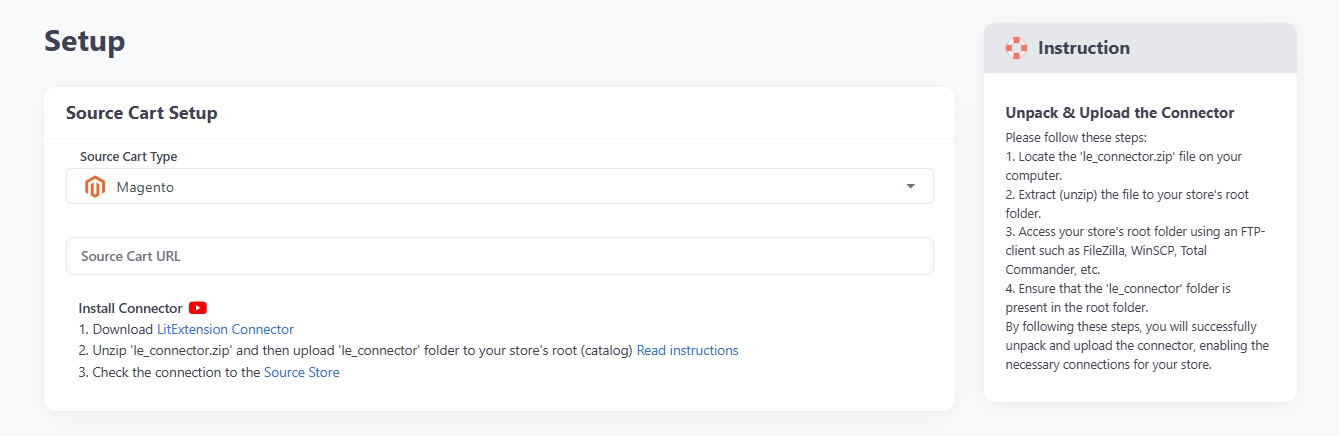
You have two ways to connect your Magento store:
- LitExtension Connector: install the connector to your Magento store following the on-screen instructions, then fill in your Source Cart URL and wait for the “Connection was successfully installed” notification.
- Magento API: select the Magento API option from the drop-down list instead, then fill in your Source Cart URL, Username, and Password.
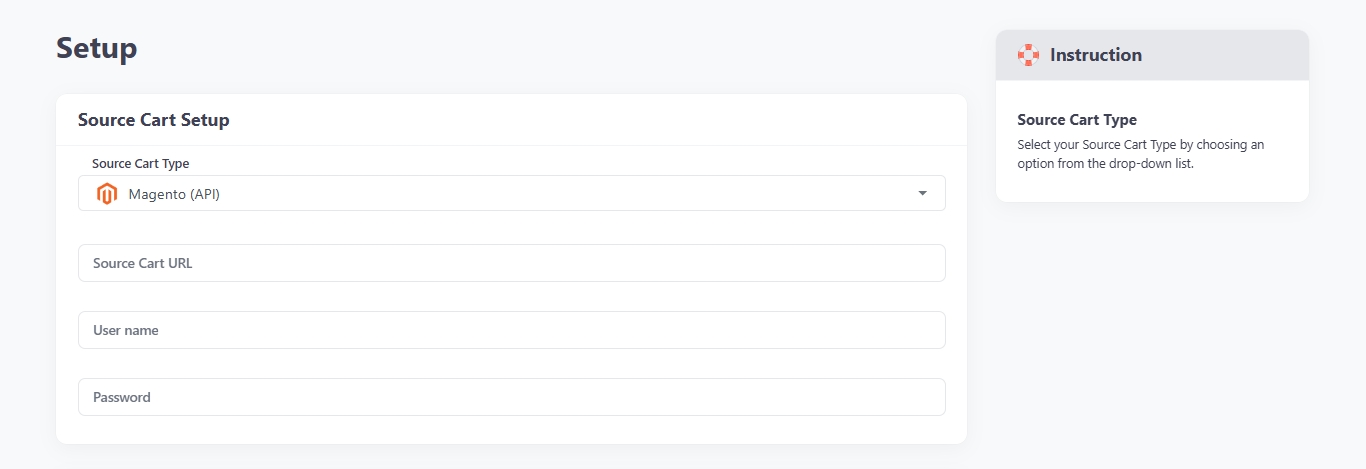
Once your Source Cart is ready, scroll down to the Target Cart Setup section and choose BigCommerce from the drop-down list. You’ll need to provide your Target Cart URL, API Path, Client ID/Username, and API Access Token. A step-by-step guide is available if you need help finding these details, or you can contact support directly.
When everything is ready, click “Next: Configure Your Migration” to move on to choosing what to transfer.
Step 2: Select data and migration options
Choose which entities to migrate from Magento to BigCommerce. Tick individual boxes for what you want to bring along, such as products, categories, orders, customers, manufacturers, coupons, reviews, CMS pages, and blogs, or simply click “Select All” to migrate everything.
Important note: due to BigCommerce platform restrictions, Order IDs cannot be migrated directly. LitExtension transfers your original order ID into BigCommerce’s “external ID” field instead, so keep in mind this doesn’t guarantee a unique order ID when searching on your new store.
LitExtension also provides Additional Options here to further enhance your migration, such as preserving product IDs, stripping HTML tags from categories, creating 301 redirects, and migrating SEO URLs. Hover over any option’s name or watch the accompanying video for more details before deciding which ones fit your needs.
Don’t forget to map your Order Status and Customer Groups in this step, so your data displays correctly on your new BigCommerce storefront.
Important: in your BigCommerce Advanced Settings, under Order Notifications, make sure you do not tick any options under “Email customers when.” This prevents BigCommerce from sending notification emails to your customers while the migration is running.
Once you’re done, click “Next: Start Free Demo Migration” to preview how the migration works, or toggle “Skip Demo Migration” to go straight to the full transfer.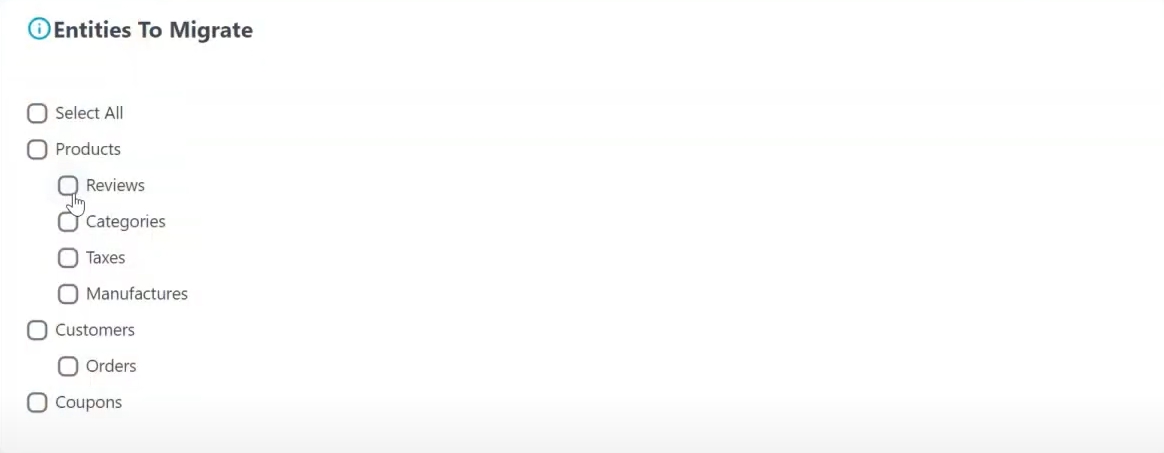
Step 3: Perform the full migration from Magento to BigCommerce
LitExtension recommends running a Demo Migration first to preview how your data will appear on BigCommerce. The demo is limited to 200 entities and takes about 20 minutes. You can close your browser during the process and you’ll get an email notification once it’s done.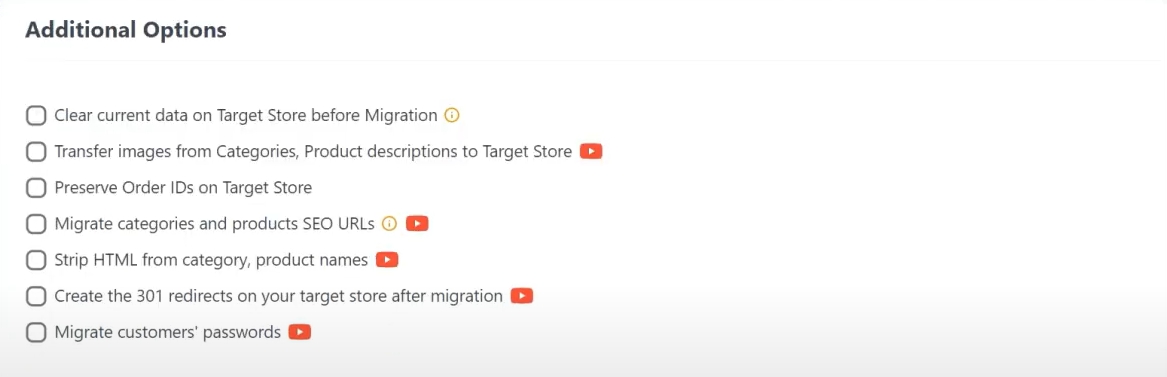
After reviewing the demo results, launch the Full Migration. LitExtension transfers all your selected data on the cloud, so you don’t need to keep your browser open, and you don’t need to put your store into maintenance mode either. Your Magento store keeps operating normally throughout, and you’ll receive an email notification as soon as the full migration completes so you can check the results right away.
By following the steps above, you can successfully migrate your store from Magento to BigCommerce using LitExtension’s automated tool. But if you’re short on time or want extra peace of mind, LitExtension’s All-in-One Migration Service is the perfect solution. With this hands-off option, our experts handle everything for you, from setting up the migration to verifying the final results.
The All-in-One service also includes free Additional Options that help enhance your migration, such as stripping HTML tags from categories and migrating SEO URLs. You can also request a custom migration project to fit your specific requirements. On top of that, you’ll receive premium support from a dedicated personal assistant who guides you through the process, answers questions, and handles any unexpected issues right away.
In short, with LitExtension, you’re not just getting a migration tool. You’re getting a team that works to make your Magento to BigCommerce migration smooth, accurate, and tailored to your business needs.
Method 2: Manually Export and Import Data from Magento to BigCommerce
If you prefer a hands-on approach, you can manually export data from Magento and import it into BigCommerce. This method only suits merchants with strong technical skills and a good understanding of both platforms’ data structures, since the process involves mapping fields, handling CSV files, and adjusting formats to match BigCommerce’s requirements. Even a small mistake can lead to data loss or incorrect imports.
Still, if you’re confident managing technical details and want full control over the migration, this method gives you the flexibility to customize your data before moving it. Here’s how to manually transfer your store from Magento to BigCommerce safely and accurately.
Step 1: Export Magento data
The first step is exporting your store data from Magento. You can do this directly from the Magento Admin Panel:
- Navigate to System > Data Transfer > Export.
- In the Export Settings section, set “Entity Type” to one of the following: Advanced Pricing, Products, Customer Finances, Customers Main File, Customer Addresses, or Stock Sources.
- Accept the default Export File Format of CSV.
- Scroll to the bottom of the page and click “Continue.” Your CSV file downloads automatically to your local device.
Step 2: Format data to match BigCommerce’s requirements
Before importing, prepare your exported data so it aligns with BigCommerce’s format. This avoids incompatibility issues and ensures a smoother import later on.
- Download a sample BigCommerce CSV file for reference.
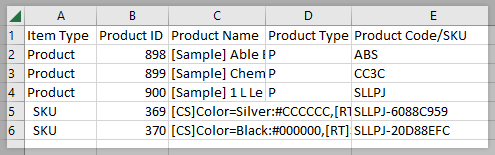
- Map the data from your Magento CSV file to match the BigCommerce CSV file. You can remove any unnecessary fields you don’t plan to include in your new store, so they won’t be imported.
- Once everything is adjusted and aligned, verify your file carefully to prevent failed imports.
Step 3: Import your data into BigCommerce
Once your CSV files are formatted, you can begin the import from Magento to BigCommerce.
- Go to the BigCommerce admin panel and navigate to Products > Import.
- Upload your CSV file and map the fields accordingly.
- Start the import and wait for confirmation.
The Complete Checklist for a Successful Magento to BigCommerce Migration
Migrating from Magento to BigCommerce involves multiple steps, so having a clear checklist helps you stay organized and avoid costly mistakes. Here’s the full list of tasks to guide you before, during, and after the migration.
Before migration
- Back up your Magento store (System > Tools > Backups, choose System Backup for full coverage).
- Audit your current data: remove outdated products, inactive customers, and test orders.
- Set up your BigCommerce store: register your account and configure currency, shipping, and tax rules.
- Choose your migration method: LitExtension Automated, LitExtension All-in-One, Manual CSV, or Hire Developer.
During migration
- Run a Demo Migration first: test with sample records to verify how data appears on BigCommerce.
- Start the full migration during off-peak hours to reduce the risk of lost orders or customer confusion.
- Monitor progress and check for errors on the migration dashboard.
- In BigCommerce, do not tick “Email customers when” under Order Notifications while the migration is running.
After migration
- Check your migration results: verify products display correctly on both the front end and back end.
- Confirm products appear in the appropriate categories and in onsite search.
- Examine every link in your menus, header, footer, and inside pages.
- Place a test order to verify checkout, payment, shipping, and confirmation emails.
Configure your new BigCommerce store
- Select a BigCommerce theme: choose from 15 free themes or 100+ paid options ($145–$350), all mobile responsive. Your Magento theme can’t transfer directly due to incompatible platform structures.
- Configure tax settings: go to Store Setup > Tax. Both manual and automatic tax setups are available.
- Configure shipping: go to Store Setup > Shipping. Add your origin address and the shipping services you want to offer.
- Set up payment methods: go to Store Setup > Payments > Online Payment Methods. Over 65 gateways are available, including Apple Pay, Amazon Pay, and PayPal, with no transaction fees beyond standard credit card processing rates.
- Set up 301 redirects and verify SEO settings: make sure your old Magento URLs redirect properly to their BigCommerce equivalents.
- Reconnect your apps and integrations: marketing, analytics, shipping, and any other third-party tools your store relies on.
Handle new data and go live
- Recent Data Migration: transfer orders and customers added to Magento while the migration was running, free when the new data represents 5% or less of your original transfer.
- Smart Update: sync data that was edited on Magento during or after the migration.
- Re-migration: transfer your data again from scratch if needed (unlimited on Automated, up to 2 free runs on All-in-One).
All three services are available within 60 days after your Full Migration completes.
- Update your DNS settings to point your domain to BigCommerce. Contact your old hosting provider for assistance, or update the DNS records directly yourself.
- Place several test orders, covering successful and failed transactions, refunds, cancellations, and partial fulfillment.
- Inform your customers about the new store experience, if needed.
Following this checklist will help you complete a smooth, successful Magento to BigCommerce migration with fewer surprises along the way.
Join 200,000+ businesses that have migrated with LitExtension. Start a Free Demo Migration to preview how your Magento products, customers, orders, and URLs will be transferred to BigCommerce before running the full migration.
What Data Can Be Migrated From Magento to BigCommerce
Use the tabs below to see which Magento data fields we can migrate to BigCommerce.


-
Products
- Name, SKU, Short Description, Full Description, Status.
- Manufacturer.
- Price, Special Price.
- Quantity, Manage Stock.
- Meta Title, Meta Description.
- Weight, Width, Height, Depth.
- Tags.
- Attributes: Name, Values.
- Variants: Name, SKU, Weight, Quantity, Manage Stock, Image, Price, Special Price.
- Thumbnail Image, Additional Images.
Product Categories
- Name, Description.
- Sort Order.
- Image.
- Meta Title, Meta Description.
-
- First Name, Last Name, Email.
- Billing Address.
- Status.
-
- Order ID, Order Date, Order Status.
- Order Items (Name, SKU, Option), Product Price, Quantity.
- Sub Price, Discount Price, Tax Price, Shipping Price, Total Price.
- Order Comments.
- Customer Name, Email.
- Billing Address (First Name, Last Name, Company, Address 1, Address 2, Country, State, City, Zip Code, Telephone).
- Shipping Address (First Name, Last Name, Company, Address 1, Address 2, Country, State, City, Zip Code, Telephone).
-
- Name.
-
- Description.
- Coupon Code, Coupon Date.
- Customer Groups.
- Uses Per Coupon, Uses Per Customer.
- Discount Amount/Percent.
- Coupon from date, Coupon to date.
-
- Status, Rate.
- User Name, User Email.
- Comment.
- Created Date.
-
- Title.
- Created Date.
- URL.
- Description.
- Categories.
- Thumbnail Image.
-
- Created Date.
- URL.
- Description.
- Thumbnail Image.
Can’t find the data you need to migrate? Contact us or click on the Live Chat in the right corner for a free consultation.


Leave The Work For The Experts

How Your Data Is Secured During Migration?

Server Security

Data Security

Data Access Restriction

GDPR Compliance

NDA

Payment Security
Why Choose Magento to BigCommerce Migration Services










Who We Truly Are? Let Our Customer Define!

The team at LitExtension, and our rep in particular; Andy, were extremely responsive and knowledgeable. There were a couple of small migration issues that they promptly resolved to our complete satisfaction. The pricing was fair and the work performed exemplary. Our migration was from Magento 2.3.6 to Bigcommerce and we are very happy!
We had a complicated migration from Magento 1.9 to BigCommerce. Litextension was able to customize the migration to bring over Customers, customer order history for the last 8 years, reward points, gift certificates and associated products. They constantly asked if there was anything else they could do for us. I would recommend them and would absolutely use them again.
We had some issues migrating data from Magento to BigCommerce but the support team helped us out. Excellent support!


