Shopify to WordPress Migration
Shopify to WordPress migration with LitExtension’s All-In-One service is engineered to move your CMS pages and blog posts with complete structural accuracy, no technical skill required, and downtime to your stores. When you migrate Shopify to WordPress through our dedicated service, a certified migration team takes full ownership of the project, ensureing your CMS pages and blogs retain their original hierarchy and content integrity after the migration.
As a trusted migration provider with 200,000+ successful migrations completed and up to 60 days of post-migration support included, LitExtension guarantees a secure, accurate, and fully hassle-free way to transfer Shopify to WordPress.
Reasons to Switch from Shopify to WordPress WooCommerce
A quick sharing: Personally, I find WordPress’s flexibility and control incredibly appealing, especially for businesses aiming for long-term growth and a unique brand identity.
WordPress is More Cost-Effective
Shopify’s monthly fees range from $39 to $399 (and even higher for Shopify Plus). These plans include hosting, security, and various features. However, as your business grows, the costs can add up.
On the other hand, WordPress is open-source and free to use. You’ll need to invest in hosting and potentially some premium themes or plugins. However, the overall cost is often significantly lower, especially in the long run.
- Hosting: a few dollars per month to much more, depending on your needs.
- Themes: free themes or paid themes cost between $50 and $200 (one-time purchase).
- Plugins: plugins for security, SEO, and eCommerce functionality (like WooCommerce) can be free or premium and cost from a few dollars per month to hundreds per year.
In my experience, WordPress can be cheaper than Shopify, especially when starting out. I was able to launch my first website with a minimal investment using a free theme and a few essential plugins.
WordPress Has Better Customizability
As being open-source, WordPress allows extensive modifications and customizations. You can choose from thousands of themes and plugins, modify them, or even create your own from scratch. This level of control lets you create an online store that truly reflects your unique style and needs.
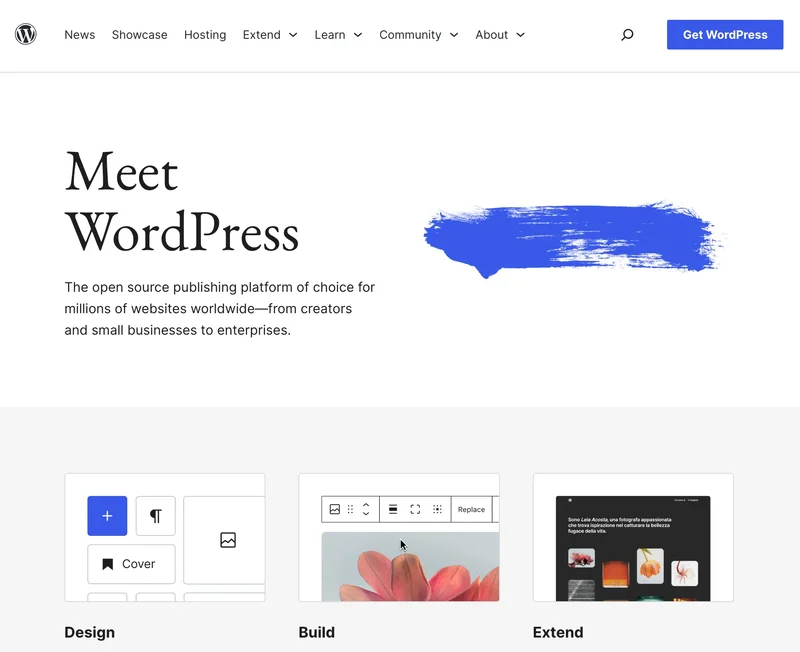
So, Shopify also offers lots of cool themes and ways to customize your online store, which is awesome for beginners. But because it’s somewhat limited, you have less freedom in creating unique designs and adding extra functionality compared to WordPress.
In my own experience, the customizability of WordPress truly matters. It allowed me to design every aspect of my online store, from the layout and color scheme to specific features and integrations.
WordPress Is Feature-Rich
I understand the importance of WordPress’s core strength, which lies in its intuitive and powerful content management system. Even without plugins, you can easily create, edit, and manage pages, posts, and various content types.
Moreover, WordPress includes features like customizable permalinks, categorization, tagging, and the ability to optimize meta descriptions and improve your search engine visibility. Even without plugins, WordPress provides a strong foundation for content-focused websites and blogs.
WordPress Offers WooCommerce Plugin
WooCommerce is a powerful and versatile eCommerce plugin for WordPress, designed to transform any WordPress website into a fully functional online store. As an open-source solution, WooCommerce offers complete control over your store’s design, functionality, and data, allowing for extensive customization through thousands of available themes and plugins. Its seamless integration with WordPress makes it easy to manage products, process payments, and optimize for search engines, all within a familiar and user-friendly interface. Whether you’re running a small business or a large enterprise, WooCommerce’s scalability, flexibility, and cost-effectiveness make it an ideal choice for creating a unique and robust online shopping experience.
Methods to Migrate from Shopify to WordPress
Choosing the right method to migrate your Shopify store to WordPress is crucial for a smooth and successful transition. Below, I will tell you a detailed comparison of three popular options, outlining their pros, cons, and suitability for different scenarios.
Transfer Data Manually
This involves manually exporting your data from Shopify and importing it into WordPress. You’ll need to handle data mapping, formatting, and potential troubleshooting yourself.
Pros: If you have the technical expertise and time, this method can be the cheapest option, as you’re not paying for external services.
Cons:
- Manually exporting and importing data can be extremely time-consuming, especially for large stores with extensive product catalogs and customer data.
- This method requires significant technical knowledge and expertise in data management and WordPress configuration.
- Manual data manipulation increases the risk of errors, potentially leading to data loss or inconsistencies.
Suitable for: Tech-savvy individuals with time and a deep understanding of data migration processes.
Hire a Migration Expert
You hire a freelance developer or agency to handle the entire migration process for you. They will manage data export, mapping, import, and configuration.
Pros:
- This option requires minimal effort on your part, allowing you to focus on other aspects of your business.
- Experienced professionals ensure accurate data migration and minimize the risk of errors.
Cons:
- Hiring an expert can be significantly more expensive than other options.
- Research and vetting potential developers or agencies can be time-consuming.
Suitable for: Businesses with a larger budget and a preference for a hands-off approach, prioritizing expert handling and minimizing potential disruptions.
Choose a Migration Service like LitExtension
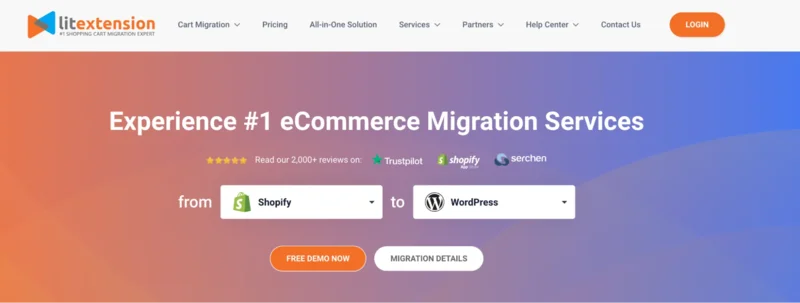
Migration service providers like LitExtension offer an automated migration service that handles data export, mapping, import, and configuration, along with personalized support and quality assurance.
Pros:
- Automated migration minimizes downtime and ensures a faster transition.
- Meticulous data mapping and expert handling ensure accurate data transfer and minimize the risk of errors.
- This option offers a balance between cost and efficiency, providing a valuable service at a reasonable price.
- Dedicated support teams provide guidance and assistance throughout the migration process.
Cons: While you have control over data mapping and settings, the actual migration process is handled by your migration partner.
Suitable for: Businesses seeking a balance between cost, efficiency, and peace of mind.
Personal recommendation:
Choosing migration service like LitExtension will give you the best balance between cost, efficiency, and peace of mind. The automated process minimizes downtime and ensures data accuracy, while the personalized support provides valuable guidance throughout the migration process.
What Data Can Be Migrated From Shopify to WordPress
(*) Please note that if you want to import store data other than CMS/Blogs, plugins may need to be installed before migration.
Additional Options
Clear Sample Data On WordPress Before Migration
You can delete the sample data on WordPress in accordance with selected entities for migration… More Details →
Preserve Order IDs on WordPress Store
This option helps keep your order ID the same during your store migration… More Details →
Create 301 Redirects on WordPress Store
Automatically redirect your old store’s URLs to the new ones during the migration… More Details →
Migrate Images from Products, Categories, Blog Descriptions
This option helps you to migrate images in descriptions of products, categories, and blog posts… More Details →
Strip HTML Tags from Category and Product Names
Strip HTML tags from category and product names automatically when migrating your store … More Details →

LitExtension Migration Experts
Our Shopify to WordPress Migration Experts will attentively consider your unique requirements, suggesting necessary measures to guarantee optimal preparation for the Shopify to WordPress migration.

Set up Shopify and WordPress Stores, deploy the necessary apps and create the appropriate environment before migration.

Let’s start the Shopify to WordPress migration. Once the process is kicked off, it will constantly run even when you turn off your browser.
Shopify to WordPress: The Ultimate Guide to Migrate and Integrate
Shopify’s blogging tools were built for product pages first and editorial content second, which leaves many store owners wanting WordPress’s deeper categorization, flexible layouts, and stronger long-form SEO control. That’s why many store owners are looking to migrate from Shopify to WordPress or integrate Shopify to WordPress to get the best of both worlds.
In this guide, we’ll walk you through a step-by-step process to accurately and securely transfer CMS pages and blogs from Shopify to WordPress with LitExtension. Or, if you prefer selling on WordPress with Shopify, we’ll cover the guide to integrate Shopify to WordPress at the end.
Please note that this guide only covers the Shopify to WordPress migration for CMS pages and content. For those who want to migrate their eCommerce store, please check out our Shopify to WooCommerce migration service.
What to Prepare Before the Shopify to WordPress Migration
Before any content moves, a short list of preparation steps will save you hours of cleanup later:
- Back up your CMS pages and blog content.
- Set up your WordPress environment in advance.
- Choose a WordPress theme built for content.
- Clean your database to eliminate clutter and confirm exactly what’s moving.
- Audit your category structure.
- Note your top-performing URLs for SEO continuity.
How to Migrate from Shopify to WordPress with LitExtension
If you’re looking for a safe and time-saving way to move your store from Shopify to WordPress, LitExtension – the #1 eCommerce Migration Service, offers a dedicated migration service designed to make the process simple and stress-free. Our team of experts takes full responsibility for the entire migration process, so you don’t need to manage the technical work on your own, freeing you to focus on running your business while specialists handle your CMS pages and blog data safely and accurately.
Step 1. Technical consultation with LitExtension experts
Your Shopify to WordPress migration begins with a personalized technical consultation led by LitExtension’s expert team, setting the foundation for a smooth, well-planned transition. During this consultation, our team examines your Shopify store’s structure, size, and specific business requirements — assessing your existing CMS pages, blog posts, and any custom fields to identify exactly what needs to be migrated. Any unique workflows or custom fields on your Shopify setup are carefully documented, ensuring nothing is lost or misaligned once your content lands on WordPress.
Step 2. Pre-migration customization
Once the consultation is complete, our team prepares both platforms for a smooth, accurate transfer by checking the readiness of your Shopify store and your target WordPress site. We gather essential information, such as your website URL, admin credentials, and technical settins, to establish a secure connection, and confirm your WordPress installation is properly configured to receive incoming data.
We then map your Shopify CMS pages and blog structure, including categories and formatting, to WordPress’s native content format, adapting for any custom fields or business rules along the way.
Step 3. Run demo migration
Before transferring your entire content library, we run a demo migration to confirm your Shopify to WordPress setup is properly configured. This test transfers a small sample of your CMS pages and blog posts to WordPress so we can verify that structure, formatting, and field mapping display correctly and resolve any inconsistencies before proceeding to the full migration.
Step 4. Perform the full Source Cart to Target Cart Migration
Once you’ve reviewed and approved the demo results, we move forward with the full Shopify to WordPress migration — securely and completely transferring all selected CMS pages and blog content according to your customized migration plan. A key benefit of migrating with LitExtension: the full migration runs automatically on our secure cloud system, so your Shopify store stays live and fully functional throughout, with zero downtime and no maintenance mode required.
Step 5. Migration results testing
After the full migration completes, we move into rigorous testing to confirm everything transferred accurately. Our team reviews all critical elements, including CMS pages, blog posts, and formatting, fixing any inconsistencies or missing fields immediately before sending you a detailed project outcome report.
Step 6. Post-migration tasks
Because your Shopify store stays active during migration, it may continue publishing new content while data transfers, so LitExtension offers post-migration services to keep your WordPress site fully synced:
- Free and unlimited Recent Data migration: Applies automatically if new content added during migration is less than 5% of your initial dataset
- Free 02 Re-migration: Two additional full re-migrations included at no extra cost
- Free & unlimited Smart Update: Ongoing syncing to capture any changes without added fees
Step 7. Customer support post migration
Our work doesn’t stop once your Shopify to WordPress migration is complete. For up to 60 days after the transfer, our dedicated Customer Support Team is available to answer questions and resolve any issues that arise. Whether you need help with configuration or a technical concern, LitExtension ensures you feel fully supported so you can focus on growing your business.
Shopify to WordPress: Post-Migration Checklist
Once your Shopify to WordPress migration is complete, a few final checks ensure your new site is fully functional, indexable, and ready for traffic before you go live.
- Verify CMS pages and blog content: Check that all pages and blog posts transferred with correct formatting, images, and internal links intact, and that no content was truncated or duplicated during the transfer.
- Check permalink structure: Confirm WordPress post and page URLs match or properly redirect from your original Shopify URLs to avoid broken links and preserve link equity.
- Set up 301 redirects: Map old Shopify URLs to their new WordPress equivalents so returning visitors and search engines land on the correct pages instead of 404 errors.
- Test theme and layout rendering: Review how migrated blog posts and CMS pages display within your new WordPress theme, since formatting elements like headers, embeds, and custom fields can render differently across platforms.
- Reconnect SEO metadata: Reapply meta titles, meta descriptions, and alt text if they weren’t automatically carried over, since these directly affect search rankings.
- Submit an updated sitemap: Generate a new XML sitemap in WordPress and submit it to Google Search Console so search engines can quickly re-crawl and re-index your migrated content.
- Test site speed and mobile responsiveness: Run performance checks post-migration, as new hosting environments and themes can affect load times and mobile rendering.
Shopify WordPress integration: How to Sell on WordPress with Shopify
If you don’t want to fully migrate away from Shopify but still want the flexibility of WordPress’s content management system, integrating the two platforms lets you sell directly through WordPress while keeping Shopify as your backend. This approach works well for merchants who value WordPress’s blogging and CMS capabilities but rely on Shopify’s checkout, inventory, and order management infrastructure.
The trade-off is added complexity: you’re maintaining two connected systems instead of one, which means more moving parts to monitor, potential sync delays between platforms, and dependency on plugin reliability for keeping product data and orders aligned.
Why do you need the Shopify WordPress integration?
Shopify’s native CMS and blogging tools are limited compared to WordPress, which offers far more flexibility for content-heavy sites, SEO customization, and design control. Merchants who want to build out rich blog content, landing pages, or a full content marketing strategy often find WordPress’s ecosystem of themes and plugins better suited to that goal than Shopify’s built-in editor.
By integrating Shopify to WordPress, you can keep Shopify’s proven eCommerce engine, including checkout, payment processing, inventory, and order fulfillment, while running your content and site presentation through WordPress.
How does the Shopify to WordPress integration work?
The integration typically works through a dedicated plugin, such as the official Shopify plugin for WordPress, which connects your Shopify store’s backend to your WordPress frontend. Once connected, the plugin pulls your Shopify product catalog into WordPress, allowing you to embed a “Buy Button,” product listings, or a full shopping cart directly onto WordPress pages and posts.
All transactions, payment processing, and order management still run through Shopify’s checkout system, while WordPress handles the presentation layer, meaning your product data stays synced between the two platforms for pricing, inventory, and availability to display accurately on both ends.
How to integrate Shopify to WordPress
Setting up the integration is a straightforward, plugin-driven process, though it requires careful configuration to keep both platforms in sync. Follow these steps:
- Step 1. Install the Shopify plugin on WordPress: From your WordPress Dashboard, go to Plugins > Add New, search for “Shopify,” and click Install Now, then Activate.
- Step 2. Connect your Shopify account: After activation, navigate to Shopify in your WordPress sidebar menu and click Connect to Shopify. You’ll be redirected to log in to your Shopify admin and authorize the connection.
- Step 3. Select products to sync: In the Shopify plugin dashboard within WordPress, choose which products or collections from your Shopify store you want to display on your WordPress site.
- Step 4. Embed Product or Collection blocks via the block editor: Open the page or post editor in WordPress, click the + button, search “Shopify,” and select the Product or Collection block, then adjust layout and styling as needed.
- Step 5. Test the full purchase flow: Place a test order to confirm that clicking Buy on WordPress correctly routes the customer through Shopify’s checkout, processes payment, and updates inventory on both platforms.
Migration Pricing
Migration Pricing
Total Entities:
- Products;
- Orders;
- Customers;
- Blog Posts
Automated Migration (Self-service)
OR
All-in-One Migration Service
FAQs About Shopify to WordPress Migration
Not seeing your question listed here? Contact Us for the quickest answer!
How much does it cost to migrate from Shopify to WordPress?
Pricing for a Shopify to WordPress migration with LitExtension starts from $169 per project. Final cost depends on your store’s specific data volume and migration requirements, and a technical consultation upfront helps determine an accurate quote for your project.
What influences the cost to migrate from Shopify to WordPress?
Several factors affect total cost, including the volume of CMS pages and blog posts being migrated, the complexity of your existing content structure and custom fields, whether additional services, such as recent data re-sync or extra re-migrations, are needed, and the level of technical customization required during data mapping. Stores with larger content libraries or non-standard structures typically require more mapping work, which can affect pricing.
What should I do after migrating Shopify to WordPress?
Work through a focused Shopify to WordPress post-migration checklist to protect your SEO equity and ensure your new WordPress site runs smoothly:
- Verify CMS pages and blog content
- Ensure WordPress URLs match or properly redirect from your original Shopify URLs
- Map old Shopify URLs to new WordPress equivalents to avoid 404 Not Found errors
- Audit links within pages and posts to point to the correct new WordPress URLs
- Reapply meta titles, descriptions, and alt text if not automatically carried over
- Generate a new XML sitemap and submit it to Google Search Console for re-indexing
How long does it take to migrate from Shopify to WordPress?
The Shopify to WordPress migration timelines vary based on store size, complexity, and the amount of CMS pages and blog content being transferred. With LitExtension’s All-In-One service, a certified migration team efficiently manages consultation, demo migration, full data transfer, and testing, keeping your Shopify store fully live with zero downtime throughout the process.
Can I use both Shopify and WordPress?
es. You can integrate Shopify with WordPress using a dedicated plugin, letting you manage content and blogs on WordPress while keeping Shopify’s checkout, payment processing, and inventory management as your backend. This hybrid setup works well if you want WordPress’s flexible CMS without giving up Shopify’s ecommerce engine, though it means maintaining two connected systems long-term.
Which route is better for me: migration or integration?
t depends on your long-term goals. Choose integration if you want to keep Shopify’s checkout while gaining WordPress’s content capabilities, but expect ongoing sync maintenance and plugin dependency. Choose full migration if you want a single, unified platform with WordPress handling everything, including your CMS pages, blogs, and store without the complexity of managing two separate systems.
Choose Your Migration Plan
Compare features and support levels to find the migration service that fits your timeline, budget, and needs.
Automated Migration$0 |
All-in-One Migration Service$0 |
|
|---|---|---|
| FREE Demo Migration | Unlimited FREE Demo Migration | Unlimited FREE Demo Migration |
| Migration Process | 3-step migration tool with easy-to-follow wizard guide | Expert-managed migration with Personal Assistant & QA testing |
| Additional Options |
FREE up to 6 Additional Options |
FREE all Additional Options |
| Migration Testing | Done by yourself | Done by LitExtension experts |
| Technical Support | 60-day technical support (after Full Migration is completed) | Upto 60-day technical support (after Full migration is completed) |
| Post-migration Support |
Free & Unlimited Recent Migration Free & Unlimited Smart Update Free & Unlimited Re-migration |
Free & Unlimited Recent Migration Free & Unlimited Smart Update Free 02 Re-migration |
| Receive Support Request | 24/7 | 24/7 |
| Support Channels | Ticket | Ticket, Slack/WhatsApp |
| Money-back guarantee | 30-day money-back guarantee | 30-day money-back guarantee |
| Response Time Commitment | 24 hours | 24 hours |
Choose Your Migration Plan
All-in-One Migration Service$0 |
|
|---|---|
| FREE Demo Migration | Unlimited FREE Demo Migration |
| Migration Process | Expert-managed migration with Personal Assistant & QA testing |
| Additional Options | FREE all Additional Options |
| Migration Testing |
Done by LitExtension experts |
| Technical Support | Upto 60-day technical support (after Full migration is completed) |
| Post-migration Support |
Free & Unlimited Recent Migration Free & Unlimited Smart Update Free 02 Re-migration |
| Support Response Time | 24/7 |
| Support Channels | Ticket, Slack/WhatsApp |
| Money-back guarantee | 30-day money-back guarantee |
| Response Time Commitment | 24 hours |
If you’re non-tech, let our WordPress migration experts handle your migration from A to Z.
Save your time for more important tasks.

How Your Data Is Secured During Migration?

Server Security

Data Security

Data Access Restriction

GDPR Compliance

NDA

Payment Security
Why choose LitExtension Migration Services for Shopify to WordPress Migration
Zero Effort Required
Leave every detail of your migration to our experts for a seamless, zero-effort transition from Shopify to WordPress.
Inclusive Migration Options
Access all migration options like 301 Redirects and Product ID preservation at no additional cost to enhance your migration experience.
Personalized Migration Experience
Customize each step of your Shopify to WordPress migration to suit your specific business goals and requirements.
Enhanced Data Quality Assurance
Our two-phase data quality assurance combines manual checks with free autotesting to uphold precise, dependable migration results.
Dedicated Personal Assistant
Get one-on-one support from consultation through post-migration so you’re never left guessing.
Comprehensive Post-Migration Support for 30 Days
Enjoy unlimited re-migrations, recent data updates, and smart updates to stay fine-tuned and ready for success for 30 days post-migration.
Who We Truly Are? Let Our Customer Define!
Excellent customer service both before and post website transfer. I moved my shopify blogs to wordpress. LitExtension answered my queries beforehand as I was apprehensive about a website transfer. The transfer happened and 90% was complete, a couple of things were missed. However the after care was excellent and now managed to have a full transfer with no problems.
I had a very small custom migration where I wanted only my customers and orders moved from my existing shopify to a new wordpress site that would bear the same domain name. The LitExtension sales and support team was awesome and treated me just like I was a large migration. The developer was responsive and sensitive to my requests. Overall, I was extremely satisfied and was happy to STILL come in underbudget after all the personal care I was given.
The LitExtension team was so helpful before, during, and after the migration of our website! I really appreciated all of their knowledge and expertise. Would recommend them to anyone looking to migrate their website.
Try Free Demo
Join 200K+ merchants who have grown businesses with us. Try Free Demo to visualize how easy and efficient the cart migration can be.