
For many manufacturers, choosing the right platform for their eCommerce business is not an easy decision. Indeed, the best eCommerce platform for manufacturers needs to fit the way you sell, from wholesale orders and customer-specific pricing to connections with systems like ERP and CRM.
But don’t worry! In this guide, we will introduce 20 different solutions while discussing their pricing, key features, pros and cons, and more. Keep scrolling!
Top 20 Best eCommerce Platform for Manufacturers
1. Shopify

Shopify Pricing: $29/month (Basic), $79/month (Grow), $299/month (Advanced), and Shopify Plus starting at $2,300/month on a 3-year term.
Key features:
- B2B and DTC selling from one platform
- Company profiles with multiple buyers and locations
- Customer-specific catalogs and pricing
- Quantity rules and volume discounts
- Payment terms and purchase-order workflows
- Inventory management and multi-location support
- Shopify Flow for workflow automation
- ERP and third-party system integrations through APIs
- Custom storefronts, Liquid, and headless commerce options
- Global selling through Shopify Markets
| Pros | Cons |
| Easy to launch and manage compared with many enterprise platforms | Advanced customization can require developer expertise |
| Strong combination of B2B and DTC capabilities | Some complex manufacturing workflows may require apps or custom development |
| Large app and integration ecosystem | Costs can increase as businesses add apps and move to higher-tier plans |
| Scales from smaller manufacturers to enterprise operations | Shopify Plus is considerably more expensive |
Site examples: Snyder Performance Engineering, Carrier, Allied Medical.
Best for: Manufacturers that want to combine B2B wholesale and DTC sales while keeping implementation relatively fast and manageable.
Read more: Shopify Review
Make Shopify Migration Simple with LitExtension
Move products, customers, orders, and more with a straightforward migration process built to save you time.
2. Adobe Commerce
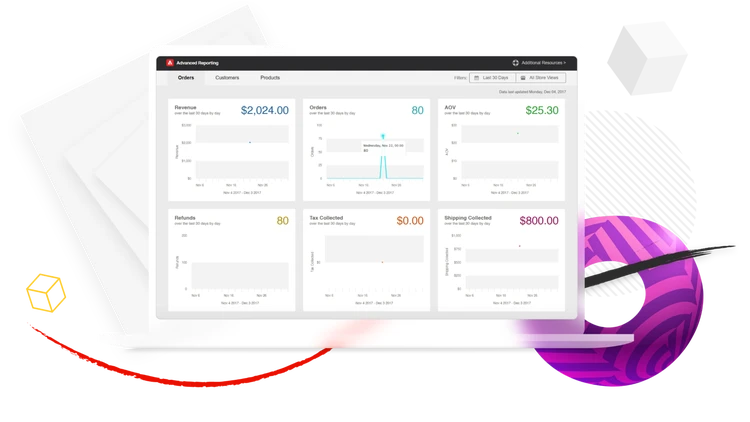
Adobe Commerce Pricing: Adobe Commerce uses custom pricing rather than publicly listed standard plans. The total cost depends on factors such as business size, GMV, implementation, hosting, and required services.
Key features:
- Company accounts with multiple buyers and permission levels
- Shared catalogs and customer-specific pricing
- B2B account management and company credit
- Custom catalogs and product access permissions
- Quote and purchasing workflows
- Multi-site and multi-store capabilities
- Advanced product and catalog management
- API-based ERP, CRM, PIM, and third-party integrations
- Flexible architecture for extensive customization
- Support for both B2B and B2C commerce from one platform
| Pros | Cons |
| Highly customizable for complex manufacturing requirements | Higher implementation and ownership costs |
| Strong B2B functionality and account structures | Requires more technical expertise than SaaS platforms |
| Suitable for complex catalogs and pricing models | Development and maintenance can be resource-intensive |
| Extensive integration and multi-store capabilities | Overkill for smaller manufacturers with simple catalogs |
Site examples: SEE (Sealed Air), Zep, Shinola.
Best for: Large manufacturers and complex B2B operations that need deep customization, sophisticated catalogs, and extensive ERP/enterprise-system integration.
Read more: Adobe Commerce Cloud Review
3. BigCommerce
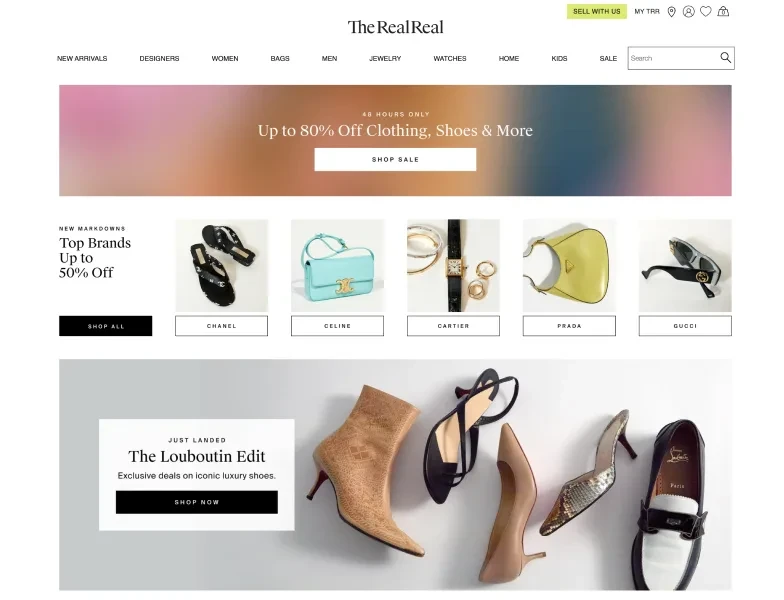
BigCommerce Pricing: $29/month when billed annually (Core), $79/month (Growth), $299/month (Scale). Performance starts at $1,499/month and targets high-volume businesses.
Key features:
- B2B Edition for business buyers
- Company account and buyer management
- Customer-specific pricing and price lists
- Sales quotes and negotiated pricing
- Shared shopping lists and quick reordering
- Invoice and payment management
- Purchase orders and net payment terms
- Role-based buyer permissions
- Multi-Storefront for different brands, regions, or customer segments
- Open APIs for ERP, PIM, CRM, and custom integrations
- Large-catalog support and faceted search
| Pros | Cons |
| Strong native B2B capabilities | Some advanced B2B functionality requires additional configuration |
| Good fit for large and complex product catalogs | Pricing structure and GMV thresholds can become complex |
| Open APIs make ERP and custom integrations flexible | Learning curve can be higher than simpler SaaS platforms |
| Supports B2B and B2C from the same backend | Enterprise features can increase total cost |
Site examples: Berlin Packaging, Clarion Safety Systems, Ballard Industrial.
Best for: Mid-market and growing manufacturers that need strong B2B functionality, large catalogs, and integrations without taking on the complexity of a fully self-managed platform.
Read more: BigCommerce Review
4. WooCommerce
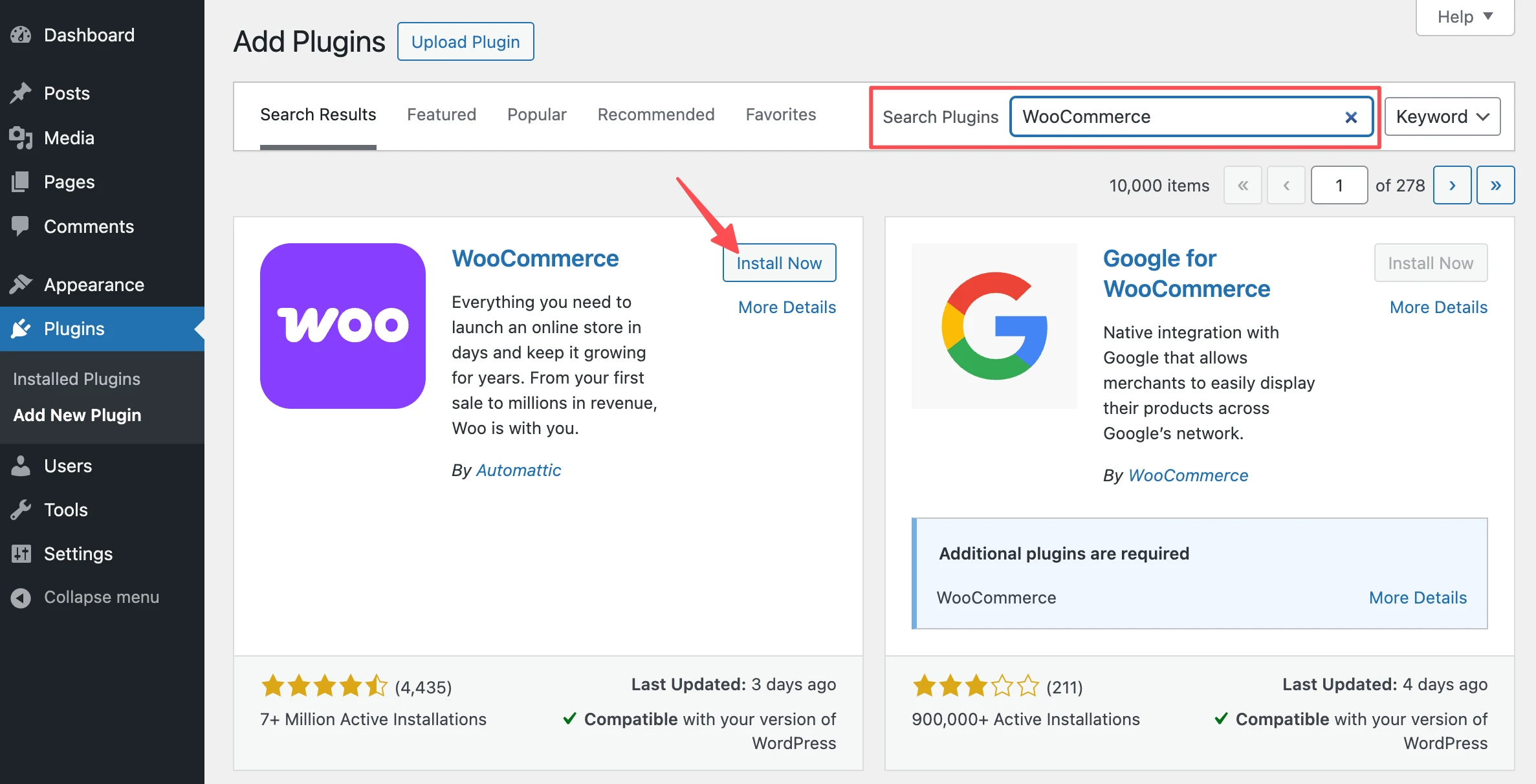
WooCommerce Pricing: WooCommerce itself is free and open source, but businesses need to pay separately for hosting, payment processing, and extensions. WooCommerce estimates hosting at roughly$25-350/month for most stores, and extensions typically cost $29-299/year each.
Key features:
- Open-source and highly customizable storefront
- Flexible product and catalog management
- Extensive WordPress and WooCommerce extension ecosystem
- B2B/wholesale pricing through dedicated extensions
- Role-based and customer-specific pricing
- Tiered and quantity-based pricing
- Minimum and maximum order quantities
- Quote and wholesale ordering workflows through extensions
- Multilingual and multi-currency capabilities
- Flexible payment and shipping integrations
- REST API for custom integrations and connected systems
| Pros | Cons |
| Very flexible and highly customizable | B2B functionality often depends on extensions |
| Low platform cost and no revenue share | Hosting, extensions, security, and maintenance add to TCO |
| Huge WordPress ecosystem | Requires more technical management than SaaS platforms |
| Good option for content-heavy manufacturing websites | Too many plugins can create compatibility and performance issues |
Site examples: SQUATWOLF, Northwest Eye Design, Bang On Books.
Best for: Small to mid-sized manufacturers that already use WordPress or need a highly customizable storefront and are comfortable managing a more modular technology stack.
Read more: WooCommerce Review
Ready for a Smoother WooCommerce Migration?
LitExtension takes care of the data transfer from other platforms to WooCommerce, so you can focus on getting your new store ready to grow.
5. Salesforce Commerce Cloud
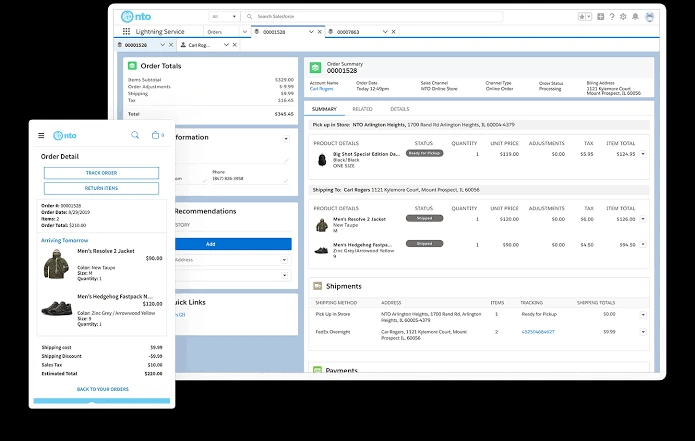
Pricing: Salesforce lists Commerce pricing based on gross merchandise value (GMV). Salesforce B2B Commerce pricing starts from a percentage of GMV and enterprise configurations available through Salesforce.
Key features:
- B2B commerce and self-service purchasing
- Company and buyer account management
- Customer-specific catalogs and pricing
- Quote and order management
- Personalized commerce experiences
- AI-powered personalization and recommendations
- Integration with Salesforce CRM and customer data
- Multi-site and international commerce
- API and composable/headless capabilities
- Enterprise-grade scalability and security
- Integration with ERP and other back-office systems
| Pros | Cons |
| Strong combination of commerce, CRM, and customer data | Higher cost than most mid-market platforms |
| Powerful personalization and AI capabilities | Implementation can be complex |
| Well suited to large, global organizations | Often requires specialized Salesforce expertise |
| Strong B2B capabilities and enterprise integrations | Total cost can be difficult to predict from GMV-based pricing |
Site examples: Avery Dennison, Southco, Costa Del Mar.
Best for: Large, global manufacturers that already rely on Salesforce or need sophisticated B2B commerce, CRM integration, personalization, and multi-market operations.
Read more: Salesforce Commerce Cloud Review
6. OroCommerce
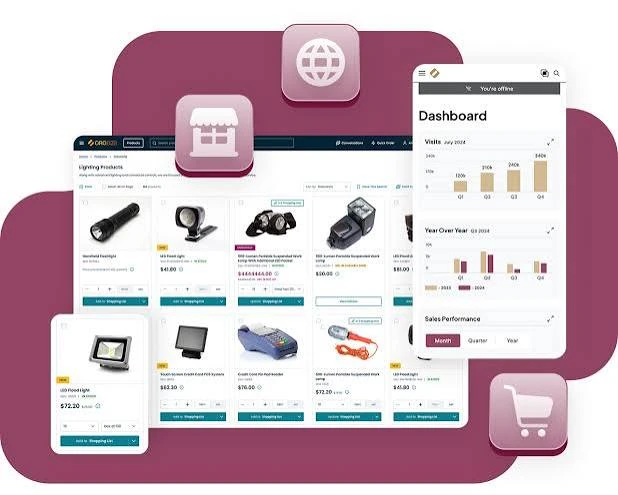
Pricing: OroCommerce does not publish a standard public price list. Its current model is based on a single license with the full platform included, rather than charging separately for sites, users, or usage.
Key features:
- B2B-first architecture designed for manufacturers, distributors, and wholesalers
- Corporate account hierarchies and buyer roles
- Customer-specific pricing and price lists
- Multiple catalogs for different customers or markets
- RFQ and quote-to-order workflows
- CPQ and complex product/pricing workflows
- Multi-organization and multi-site management
- Distributor and reseller portals
- CRM, PIM, DAM, invoicing, and payments within the broader platform
- ERP, CRM, PIM, WMS, and accounting integrations
- Workflow automation and API-first architecture
- Support for B2B, B2C, and D2C models from the same platform
| Pros | Cons |
| Built specifically around complex B2B commerce | Higher investment than entry-level eCommerce platforms |
| Strong native support for manufacturing workflows | Implementation typically requires experienced technical partners |
| Complex pricing, catalogs, accounts, and RFQs are handled natively | Can be excessive for manufacturers with simple DTC operations |
| Strong ERP and enterprise-system integration capabilities | More complex to manage than lightweight SaaS platforms |
| Supports multiple websites, organizations, and sales channels | Custom implementation can still require significant planning |
Site examples: DiversiTech, Dunlop Protective Footwear, Braskem, Lactalis.
Best for: Mid-market to enterprise manufacturers with complex B2B sales processes, multiple customer groups, negotiated pricing, distributor networks, or substantial ERP integration requirements.
7. OrderEase
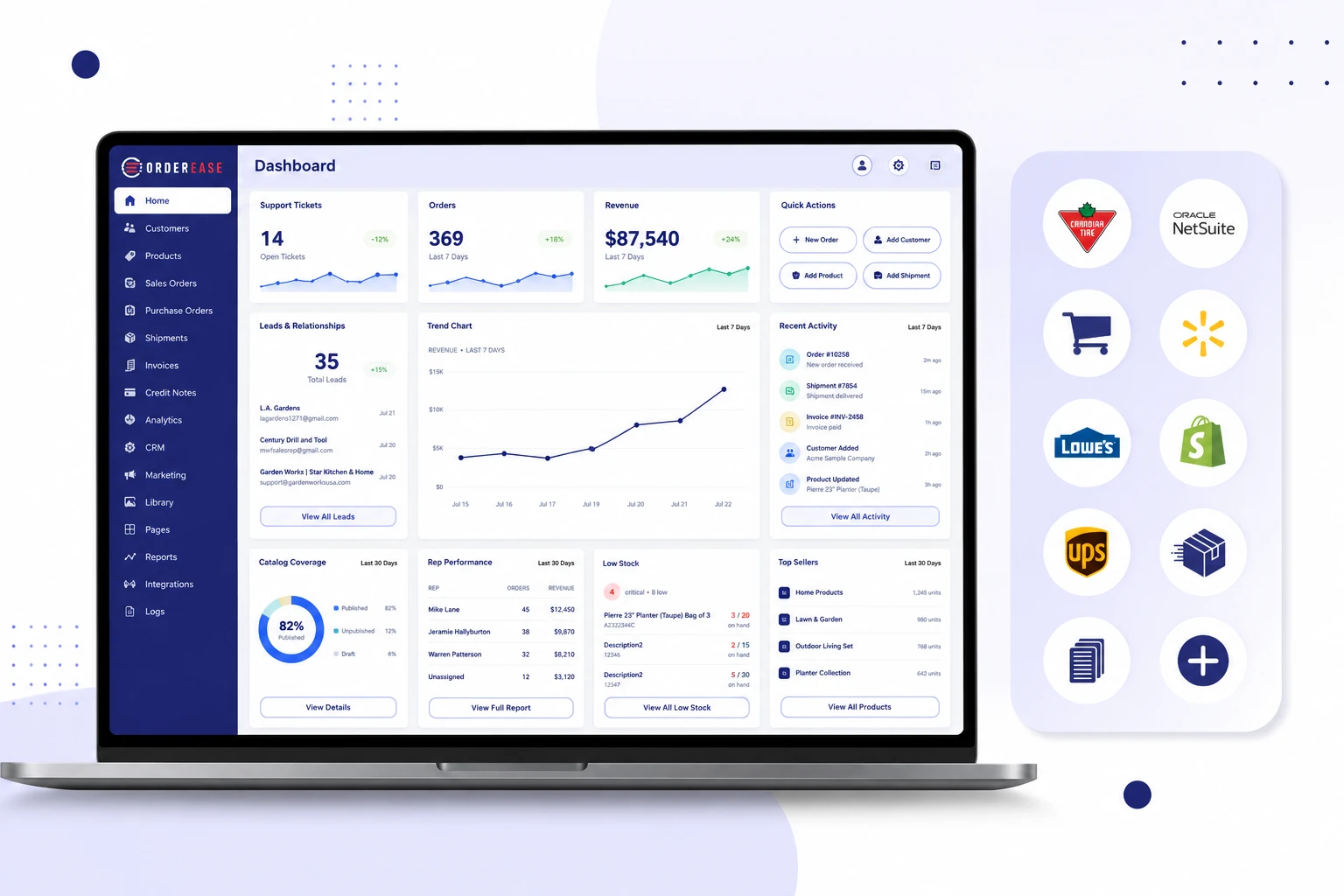
Pricing: OrderEase pricing starts at $17/day. The final cost depends on connected sales channels, order volume, integrations, and advanced functionality. The platform does not charge per user, and basic onboarding is included; complex implementations may require additional setup fees.
Key features:
- Centralized B2B order management
- Customer-specific pricing and contracts
- Tiered, matrix, and volume pricing
- Minimum order quantities and case-pack rules
- Kits, bundles, and BOM logic
- B2B customer ordering portals
- Sales-rep ordering
- EDI and emailed purchase-order automation
- ERP-connected inventory, pricing, and order data
- eCommerce and marketplace integrations
- Order routing and fulfillment automation
- Order history and repeat ordering
- Real-time order status and inventory visibility
| Pros | Cons |
| Purpose-built for complex B2B order operations | More focused on order management than storefront design |
| Strong support for customer-specific pricing and ordering rules | Businesses still need an eCommerce storefront or sales channel where required |
| ERP-first approach reduces manual order entry | Pricing depends on integrations and operational complexity |
| Handles orders from portals, eCommerce, marketplaces, EDI, and sales reps | May be more functionality than a simple manufacturer needs |
| No per-user licensing | Implementation can require additional setup for complex workflows |
Site examples: Century Drill & Tool, TDI Brands, HJS Wholesale, Muskoka Brewery.
Best for: Manufacturers and suppliers that already have sales channels but need to centralize complex B2B orders, pricing, ERP integration, and fulfillment workflows.
8. Pepperi
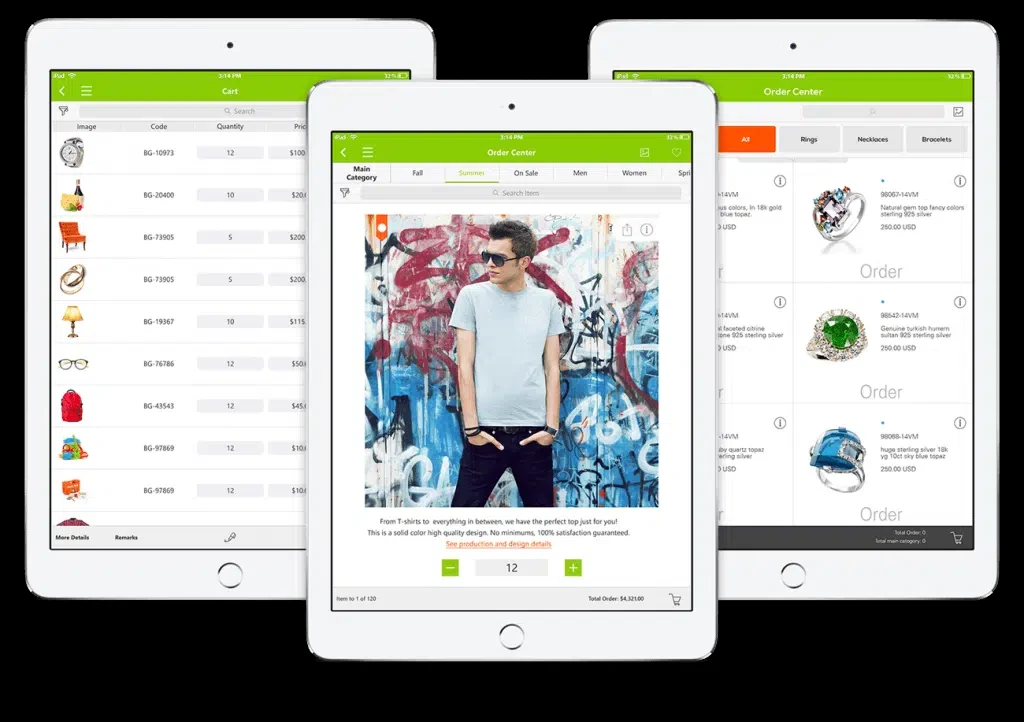
Pricing: Pepperi does not publish a standard public subscription price. Pricing is customized based on the business, users, functionality, integrations, and deployment requirements, so manufacturers need to request a quote.
Key features:
- B2B eCommerce portals for self-service ordering
- Native iOS, Android, and web applications
- Online and offline ordering
- Customer-specific catalogs and price lists
- Volume and tiered pricing
- Trade promotions, bundles, and quantity discounts
- Multiple units of measure
- Multi-warehouse inventory visibility
- Sales-rep mobile ordering
- Quick and bulk ordering
- Barcode scanning
- Order history and reordering
- ERP integration and real-time product, pricing, and inventory data
- Multi-currency and multilingual support
- White-label mobile apps
- Sales analytics and buyer adoption reporting
| Pros | Cons |
| Designed specifically for B2B sales and wholesale operations | Less suited to businesses looking primarily for a traditional DTC storefront |
| Strong combination of eCommerce and mobile sales-rep tools | Pricing is not publicly transparent |
| Excellent support for complex pricing and trade promotions | Implementation can become complex for enterprise deployments |
| Native online/offline functionality is useful for field sales | More specialized than general-purpose eCommerce platforms |
| Strong ERP integration capabilities | Best value comes when businesses use its broader B2B sales ecosystem |
Site examples: Kimberly-Clark, Marchon, Keune, OGI Eyewear, Bensons Trading.
Best for: Manufacturers and distributors with field sales teams, complex wholesale pricing, recurring orders, and a need to connect online B2B commerce with mobile sales operations. Pepperi specifically positions its solution for industrial parts and chemicals as well.
9. PrestaShop
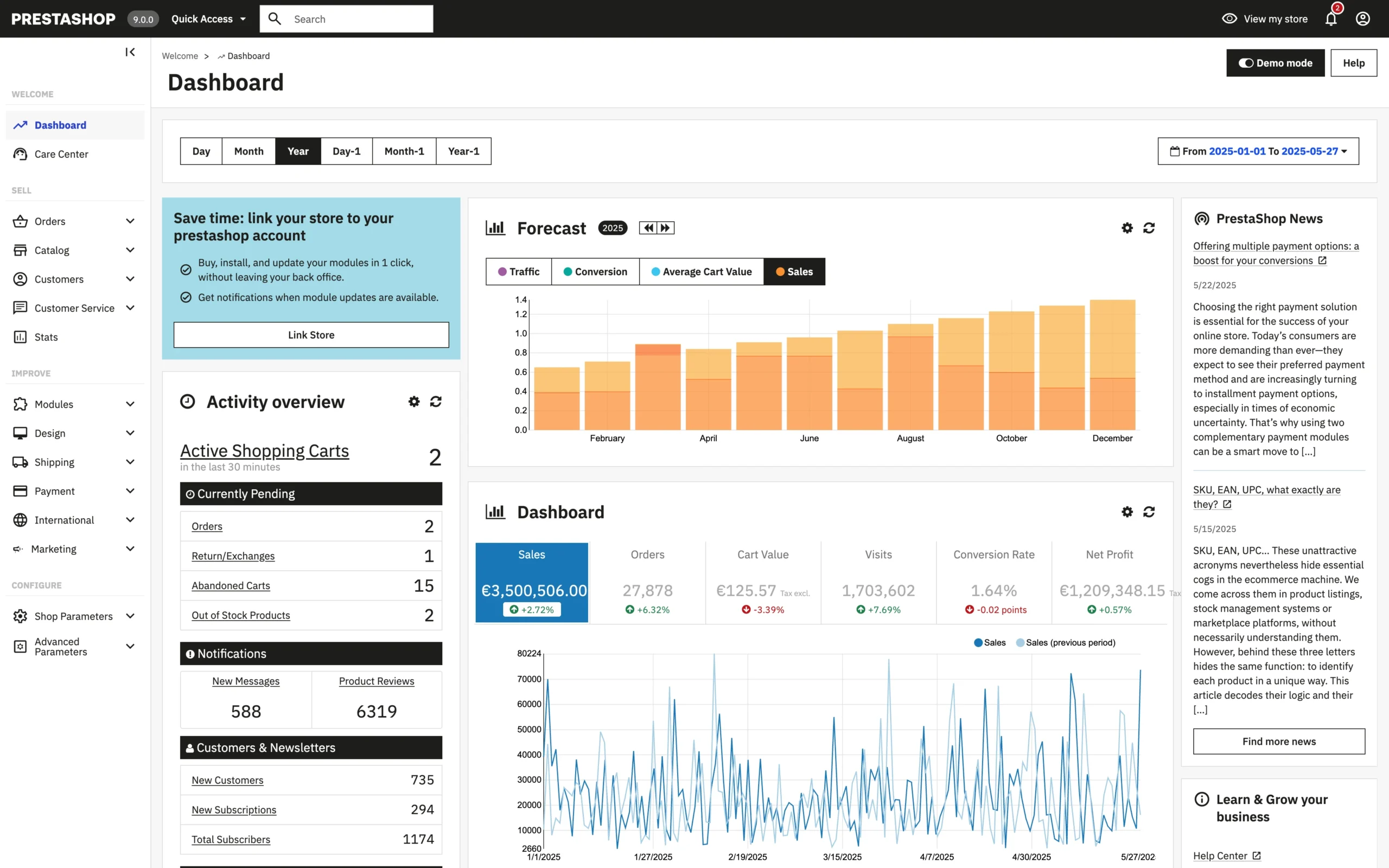
PrestaShop Pricing: PrestaShop’s open-source software is free to download, but businesses need to pay separately for hosting, domain, development, modules, and maintenance.
Key features:
- Open-source and highly customizable architecture
- Product catalog and inventory management
- B2B mode for business customers
- Customer groups and segmented pricing
- Customer-specific discounts and bulk-order discounts
- Multi-store management
- Multi-language and multi-currency support
- Flexible payment and shipping integrations
- Marketplace of modules and themes
- SEO and marketing tools
- API capabilities for external integrations
- Customizable storefront and back office
- ERP/CRM integration possibilities
| Pros | Cons |
| Free open-source core | Hosting, development, modules, and maintenance add to TCO |
| Highly customizable | Requires more technical expertise than SaaS platforms |
| Native B2B mode and customer-group management | More advanced B2B workflows may require third-party modules |
| Strong multi-store capabilities | Module dependency can increase complexity |
| Good option for businesses wanting control over their infrastructure | Ongoing upgrades and maintenance remain the merchant’s responsibility |
Site examples: Decowood, Freshly Cosmetics, Danone.
Best for: Small to mid-sized manufacturers that want an open-source platform with strong customization and multi-store capabilities, especially if they have developers or an agency to manage the technology stack.
Note: PrestaShop is currently strengthening its native B2B foundation, including company accounts, contacts, permissions, and approval workflows. Hence, its B2B capabilities are evolving rather than being as mature out of the box as OroCommerce.
Read more: PrestaShop Review
10. OpenCart
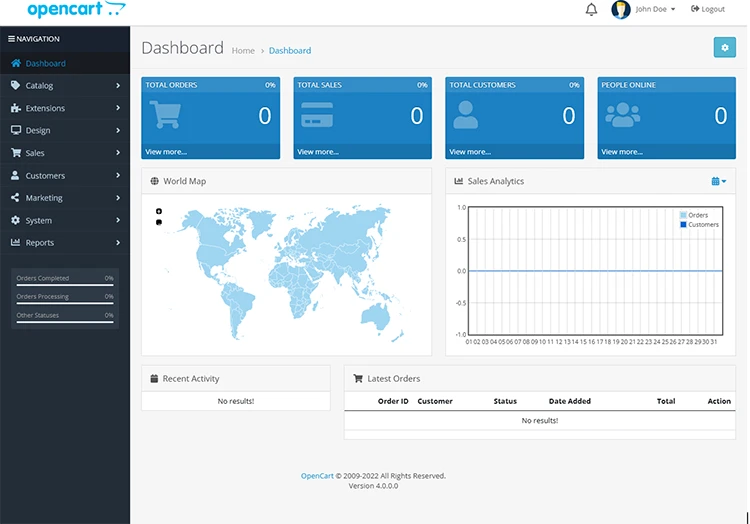
OpenCart Pricing: OpenCart’s core platform is free and open source, so there is no mandatory platform subscription. Businesses pay separately for hosting, development, extensions, themes, and support.
Key features:
- Open-source and self-hosted
- Multi-store management
- Product and catalog management
- Customer groups and differentiated pricing
- Multiple currencies and languages
- Tax and payment management
- Order and inventory management
- Role-based administrative access
- API and third-party integrations
- Large extension marketplace
- B2B wholesale and quotation functionality through extensions
- CSV-based product and catalog management
- Customizable storefront themes
| Pros | Cons |
| Free and open-source core | Advanced B2B features generally require extensions |
| Relatively lightweight and customizable | Requires technical knowledge for deeper customization |
| Large extension ecosystem | Extension quality and compatibility can vary |
| Customer groups can support differentiated B2B experiences | Less sophisticated native B2B functionality than OroCommerce or BigCommerce |
| Low entry cost | Hosting, security, updates, and maintenance are the merchant’s responsibility |
Site examples: Shorelines Distribution, Everbuild, British Red Cross Gift Shop.
Best for: Small manufacturers and wholesalers with technical support that want an affordable, self-hosted platform and are comfortable extending its functionality with third-party modules.
Read more: OpenCart Review
11. Wix

Wix Pricing: Wix offers a free plan and a Light plan ($19/month) for the basics. eCommerce selling starts with $29.77/month (Core), followed by Business at $39.77/month and Business Elite at $159/month.
Key features:
- No-code drag-and-drop website builder
- Up to 50,000 products on Business and Business Elite plans
- Product variants, inventory, and back-in-stock notifications
- Multichannel selling through marketplaces and social channels
- Multiple currencies and automated tax tools
- Customizable product pages and storefront
- Built-in SEO, analytics, and marketing tools
- Wix CMS and APIs for custom functionality
- B2B capabilities through third-party solutions such as SparkLayer
- Manufacturing/inventory apps for BOMs, raw materials, production runs, and COGS
| Pros | Cons |
| Very easy to build and manage without extensive technical skills | Advanced B2B functionality often requires third-party apps |
| Strong visual customization for product-focused brands | Less suitable for highly complex manufacturing workflows |
| Good combination of website, ecommerce, marketing, and CMS tools | App costs can increase the total cost of ownership |
| Manufacturing-specific apps can extend inventory capabilities | Deep ERP or enterprise integrations may require custom development |
Site examples: Kesesan Automotive, Cosmet Group, Forge to Table. Wix Marketplace also showcases Kesesan Automotive as an OEM parts manufacturer using Wix for its bilingual B2B website.
Best for: Small manufacturers and product brands that prioritize ease of use, strong visual presentation, and relatively straightforward online selling over complex B2B commerce.
Read more: Wix eCommerce Review
12. Squarespace

Squarespace Pricing: $10/month when billed annually (Basic), $14/month (Core), and $23/month (Advanced).
Key features:
- Professionally designed, responsive templates
- Unlimited product and service selling on supported plans
- Customizable product pages
- Product variants and inventory management
- Abandoned cart recovery
- Subscriptions and memberships
- Customer accounts and checkout on your domain
- Built-in SEO and analytics
- Invoicing and payment collection
- Social selling integrations
- Squarespace POS for in-person sales
- Custom CSS and advanced integrations on higher plans
| Pros | Cons |
| Excellent design quality for showcasing products and brand identity | B2B-specific features are limited compared with dedicated B2B platforms |
| Simple website and store management | Complex pricing, quoting, and buyer-account structures may require workarounds |
| Strong built-in content and SEO capabilities | Fewer ecommerce integrations than larger platforms |
| Good choice for manufacturers focused on direct online sales | Not ideal for complex catalogs or large-scale B2B operations |
Site examples: Coach and Equipment Bus Sales.
Best for: Small manufacturers and design-led product businesses that primarily need a polished website and straightforward DTC ecommerce presence rather than sophisticated B2B ordering.
Read more: Squarespace Review
13. Shift4Shop
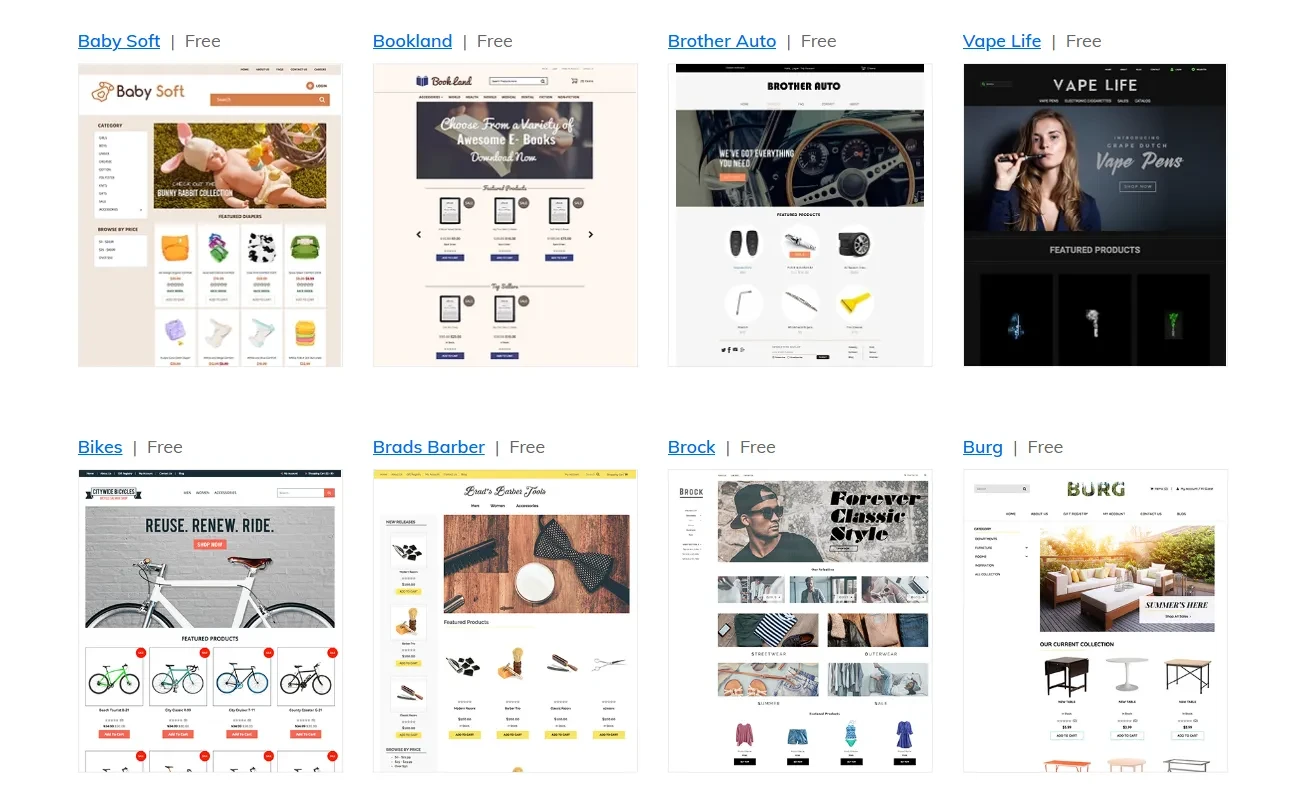
Pricing: Shift4Shop is free ($0/month) for US-based merchants if you use their in-house payment processor Shift4 Payments and process at least $1,000 per month in sales. If you do not meet the $1,000 sales minimum or prefer external gateways, standard monthly fees and transaction terms apply.
Key features:
- B2B-specific ecommerce functionality
- Customer groups with different pricing, payment, shipping, and promotion rules
- Customer-specific price lists
- Tiered and bulk pricing
- Minimum order quantities
- Quick Order Pad for SKU-based bulk ordering
- One-click reordering
- Unlimited products and bandwidth
- Inventory management
- Bulk data import/export
- Staff accounts and permissions
- Built-in SEO and marketing tools
- ERP, shipping, payment, and third-party integrations
- Ability to operate B2B and B2C stores from the same platform
| Pros | Cons |
| Strong native B2B functionality for its price range | Interface can feel less modern than newer SaaS competitors |
| Excellent support for wholesale pricing and bulk ordering | Some advanced functionality varies by plan |
| Unlimited products and bandwidth | Smaller ecosystem than Shopify |
| Suitable for both B2B and B2C selling | Enterprise implementations may still require technical expertise |
Site examples: Soteria Metal Roofs, TruTech Tools, Allparts Music Corporation.
Best for: Small to mid-sized manufacturers and distributors that need wholesale pricing, bulk ordering, customer-specific pricing, and B2B/B2C selling without moving to an enterprise platform.
Read more: Shift4Shop Review
14. Volusion
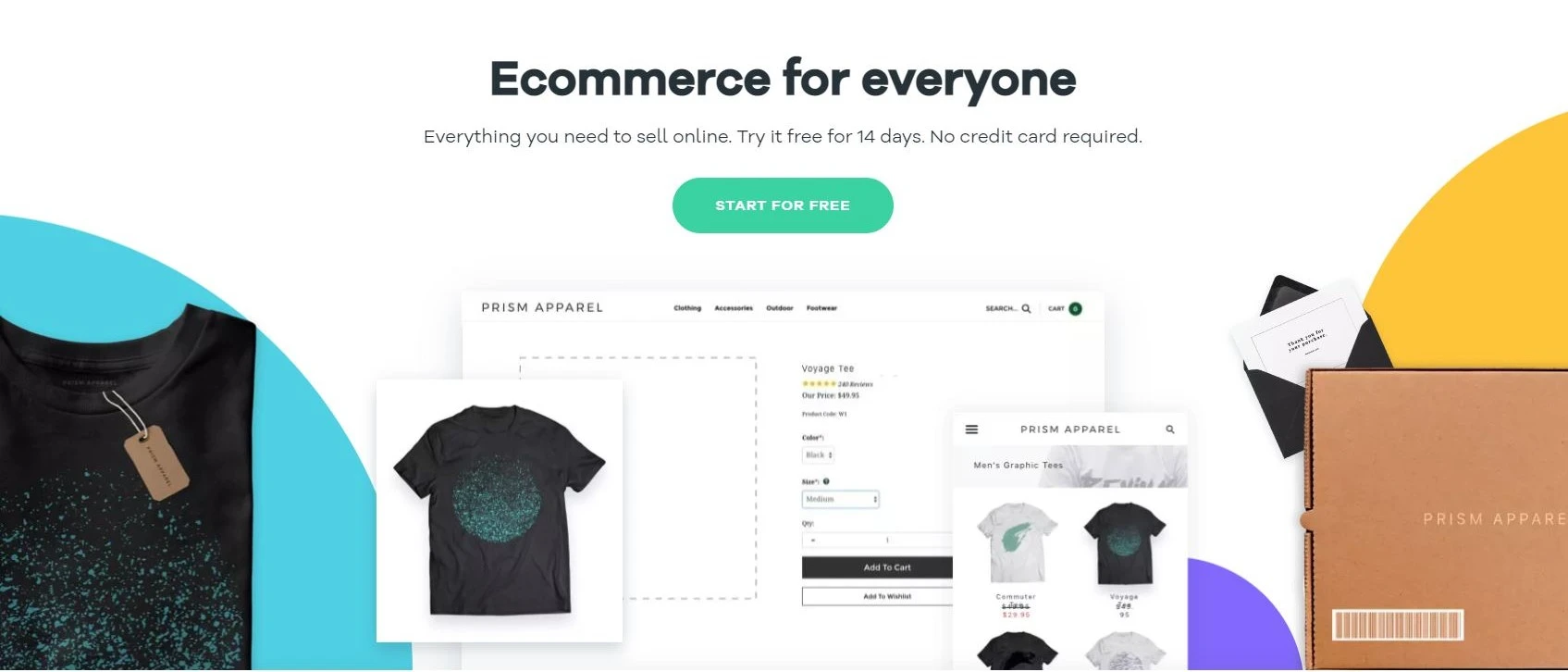
Pricing: $35/month (Personal), $79/month (Professional), $299/month (Business), and a Prime plan with custom pricing based on GMV.
Key features:
- Hosted ecommerce platform
- Unlimited products on Business and Prime plans
- Customer-specific pricing levels
- Up to five pricing levels for different customer groups
- Member-only pricing
- Recurring/subscription products
- Custom setup costs for made-to-order products
- Batch order processing
- CRM and customer management
- API access on higher plans
- Inventory and order management
- Product import/export
- Responsive storefront themes
- Built-in payment and shipping options
- SSL and PCI-compliant hosting
| Pros | Cons |
| Customer-specific pricing can support basic wholesale models | B2B capabilities are less comprehensive than dedicated B2B platforms |
| Built-in ecommerce functionality reduces reliance on plugins | Annual GMV limits can influence which plan a growing business needs |
| Supports made-to-order pricing and recurring products | Smaller ecosystem than Shopify or BigCommerce |
| Hosted infrastructure reduces technical maintenance | Less compelling for manufacturers with highly complex B2B workflows |
Site examples: Allparts Music Corporation, Fitness Finders, Jon Hart Design.
Best for: Small manufacturers and distributors that need a hosted storefront with basic wholesale pricing and made-to-order capabilities without extensive B2B complexity.
Read more: Volusion Review
15. Square Online
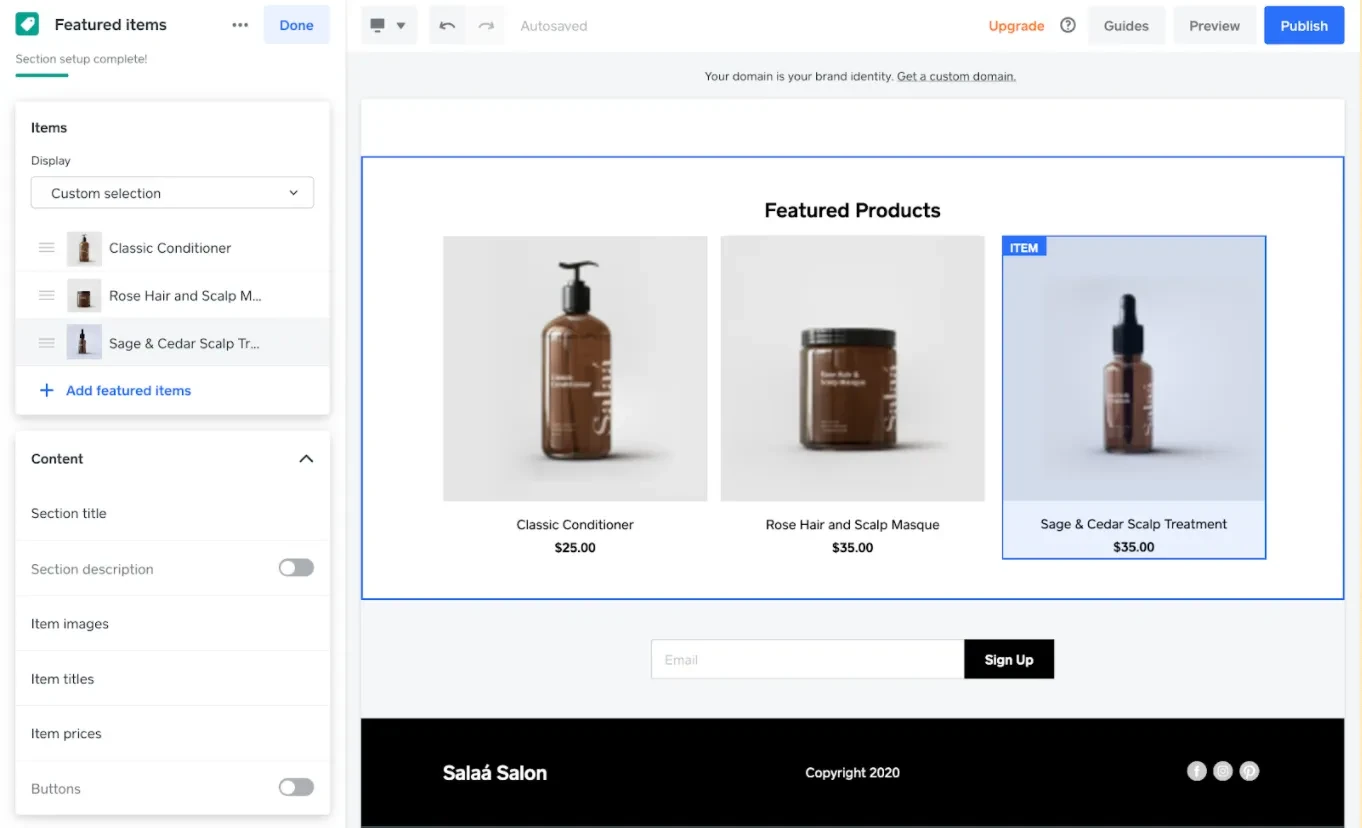
Pricing: $0/month (Free), $49/month per location (Plus), $149/month per location (Premium). Businesses processing more than $250,000 annually can contact Square for custom pricing.
Key features:
- Free online store option
- Website builder with built-in SEO tools
- Automatic synchronization with Square POS
- Centralized product and inventory catalog
- Customer accounts and reorder functionality
- Pickup, local delivery, and shipping
- Multiple payment methods
- Social selling
- Product subscriptions
- Multiple website/location management
- Discounts and loyalty programs
- Fraud controls
- Bulk shipping-label printing
- Advanced ecommerce analytics on higher plans
| Pros | Cons |
| Very low entry cost | Limited B2B-specific functionality |
| Excellent integration with Square POS and in-person operations | Not designed for complex manufacturing workflows |
| Simple setup and inventory synchronization | Customer-specific pricing and advanced wholesale features are limited |
| Good option for businesses selling both online and offline | Less flexible than WooCommerce, Shopify, or BigCommerce for complex customization |
Best for: Small manufacturers with a local or hybrid sales model, especially those already using Square POS and wanting a simple online storefront connected to their offline operations.
Read more: Square Online Review
16. GoDaddy
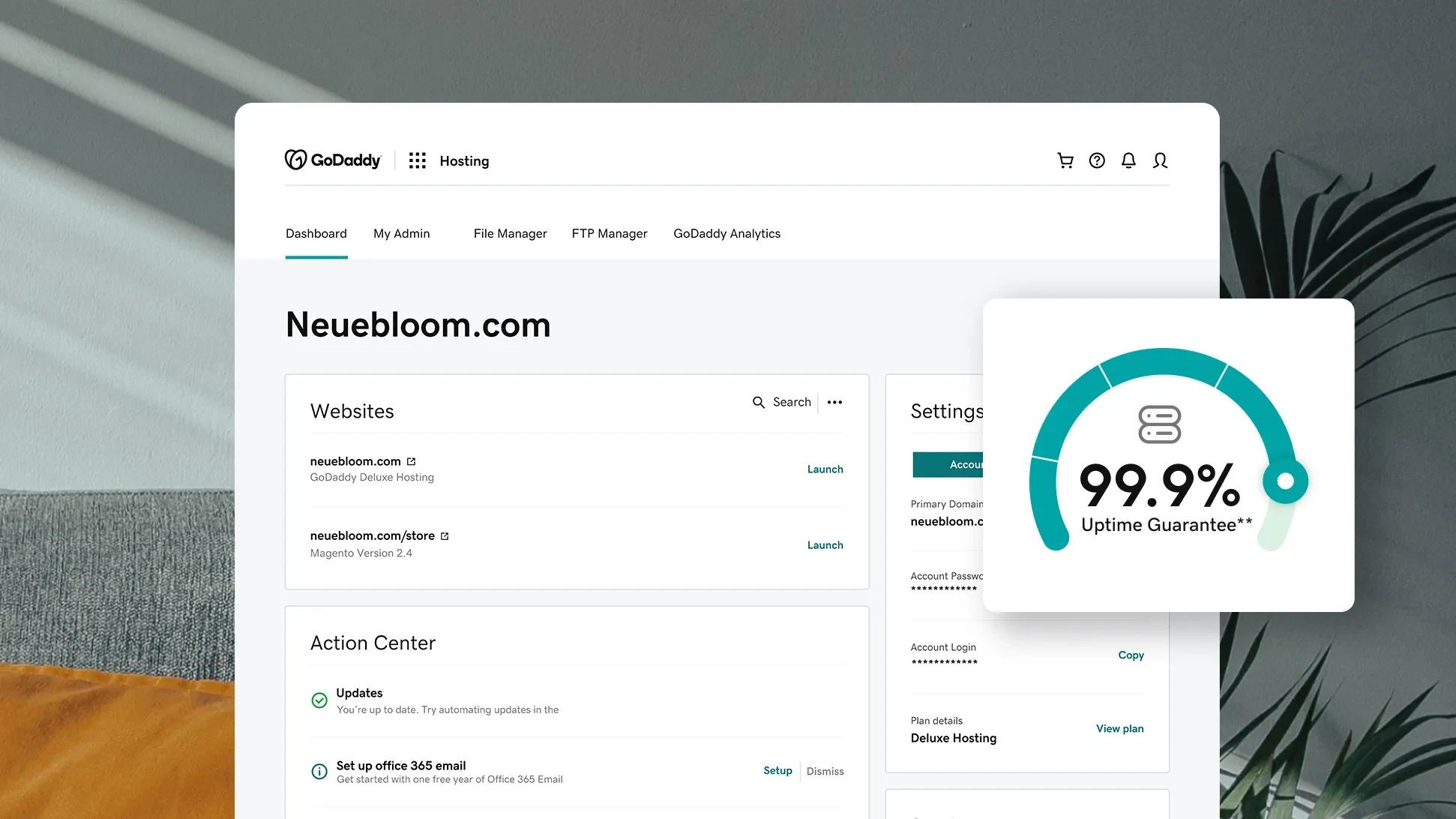
Pricing: GoDaddy Online Store currently offers a free plan, followed by Starter ($9.99/month when billed annually), Professional ($24.99/month), and Ultimate ($99.99/month).
Key features:
- No-code website and store builder
- Product variants and inventory management
- Multiple payment options
- Flat-rate and weight-based shipping
- Abandoned-cart recovery
- Integrated SEO and marketing tools
- Social media and marketplace selling
- Amazon, eBay, Google, and Facebook integrations
- Mobile-responsive storefront
- Built-in SSL and hosting
- 24/7 customer support
| Pros | Cons |
| Very easy to set up and manage | Limited advanced B2B functionality |
| Affordable entry point for small manufacturers | Product limit may restrict larger catalogs |
| Hosting, SSL, and ecommerce tools are bundled | Less customizable than open-source platforms |
| Built-in marketing and multichannel tools | Complex ERP, pricing, or procurement workflows may require third-party solutions |
Best for: Small manufacturers that need a simple online storefront, particularly businesses selling a relatively focused product catalog directly to consumers.
Read more: GoDaddy Review
17. VirtueMart
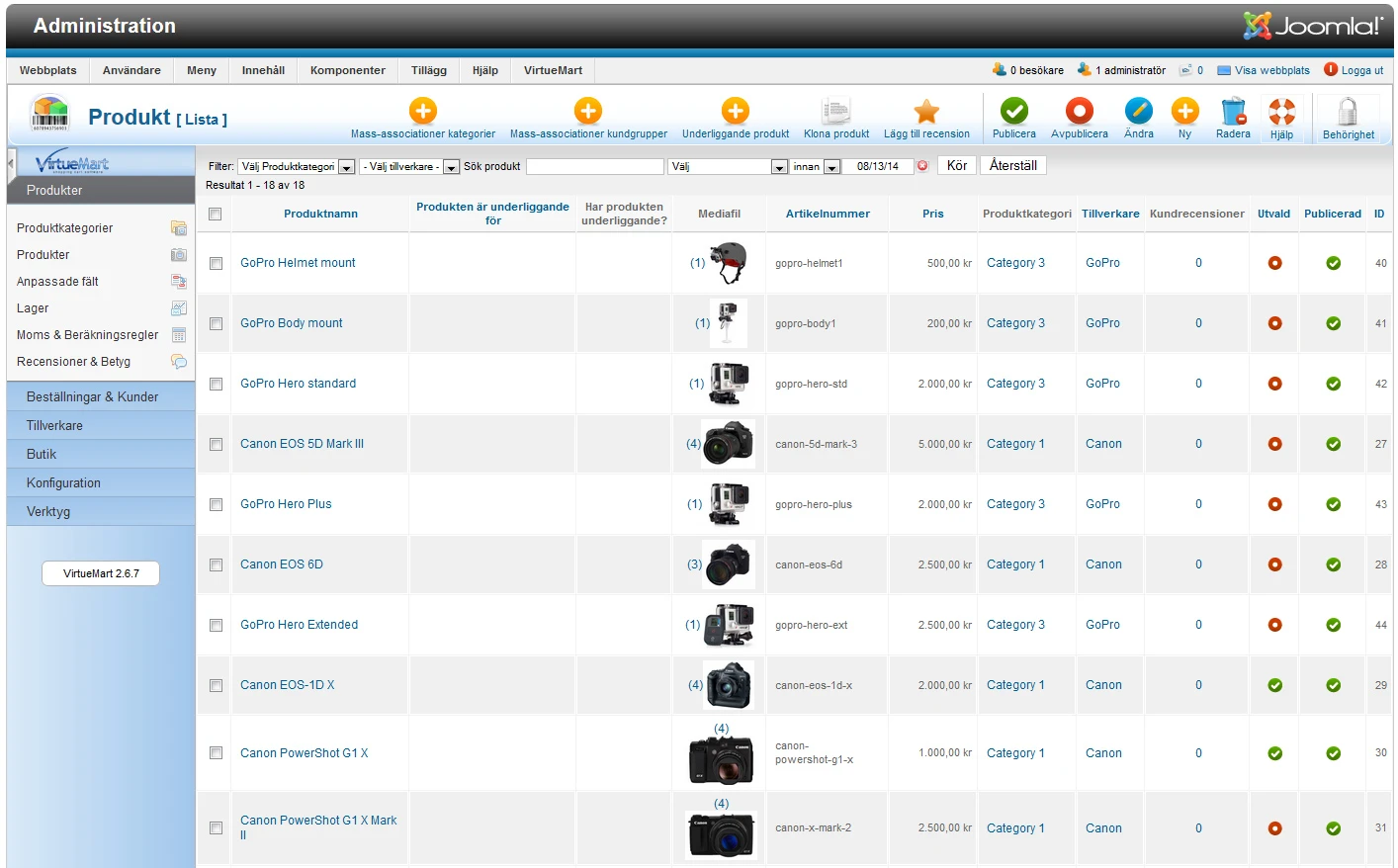
Pricing: VirtueMart is a free, open-source Joomla ecommerce solution. The core platform can be downloaded at no cost, while businesses may pay separately for hosting, extensions, development, and optional support memberships. VirtueMart currently advertises 500+ features with no product limits.
Key features:
- Open-source Joomla-based ecommerce
- Unlimited products and categories
- Complex product attributes and variants
- Nested product categories
- Multi-currency support
- Multilingual store capabilities through Joomla
- Catalog mode for businesses that do not need online checkout
- Product reviews and ratings
- Flexible payment and shipping methods
- Order and inventory management
- Customizable checkout
- API and extension support
- Support for B2B functionality through configuration and extensions
| Pros | Cons |
| Free and open-source | Requires Joomla and technical expertise |
| No platform-imposed product limits | Advanced B2B functionality may require extensions/customization |
| Highly customizable | Hosting, updates, security, and maintenance are merchant responsibilities |
| Good fit for complex catalogs | Smaller ecosystem than WooCommerce or Shopify |
| Can operate as both ecommerce store and product catalog | Less beginner-friendly |
Site examples: You Can Print, Ripe Publishing, Barossa Fine Foods, Rosen Classroom.
Best for: Manufacturers already using Joomla that need an open-source catalog/ecommerce solution and have technical resources available for customization and maintenance.
18. Yo!Kart
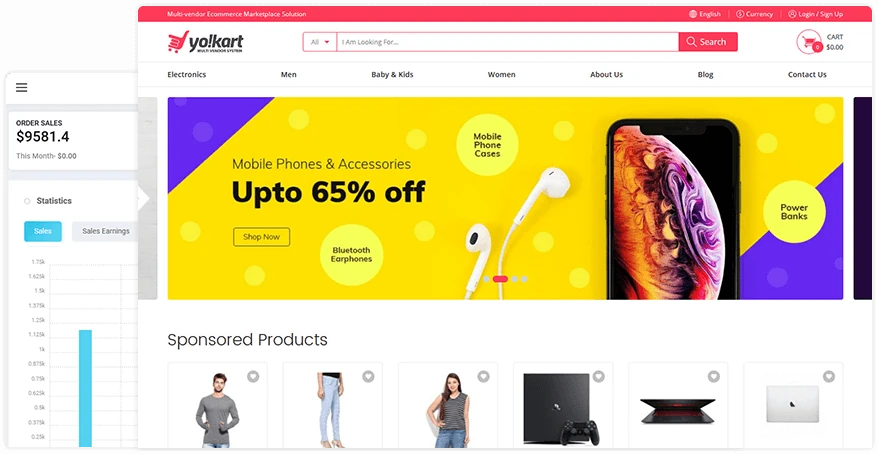
Pricing: $1299 to $6249, custom pricing available (Web app packages), $2499 to $3499 (Web app with mobile apps)
Key features:
- Multi-vendor marketplace architecture
- Vendor and seller management
- Separate dashboards for vendors and administrators
- Product and catalog management
- Bulk product management
- Multiple payment and shipping options
- Multi-language and multi-currency capabilities
- Vendor commissions and payouts
- Order and inventory management
- RFQ/quotation capabilities depending on configuration
- Customizable storefront
- Mobile-responsive/PWA-ready architecture
- APIs and third-party integrations
| Pros | Cons |
| One-time licensing can reduce recurring platform fees | Primarily designed for multi-vendor marketplaces |
| Strong marketplace functionality | May be unnecessary for a manufacturer selling only its own products |
| Customizable and self-hosted | Requires more technical involvement than SaaS platforms |
| Suitable for manufacturers building supplier/distributor marketplaces | Additional customization can increase implementation costs |
Site examples: Crefftus, Safaripedia, BuyCBDSupps.
Best for: Manufacturers building multi-vendor marketplaces or supplier networks, rather than manufacturers looking for a conventional single-brand online store.
19. Magento
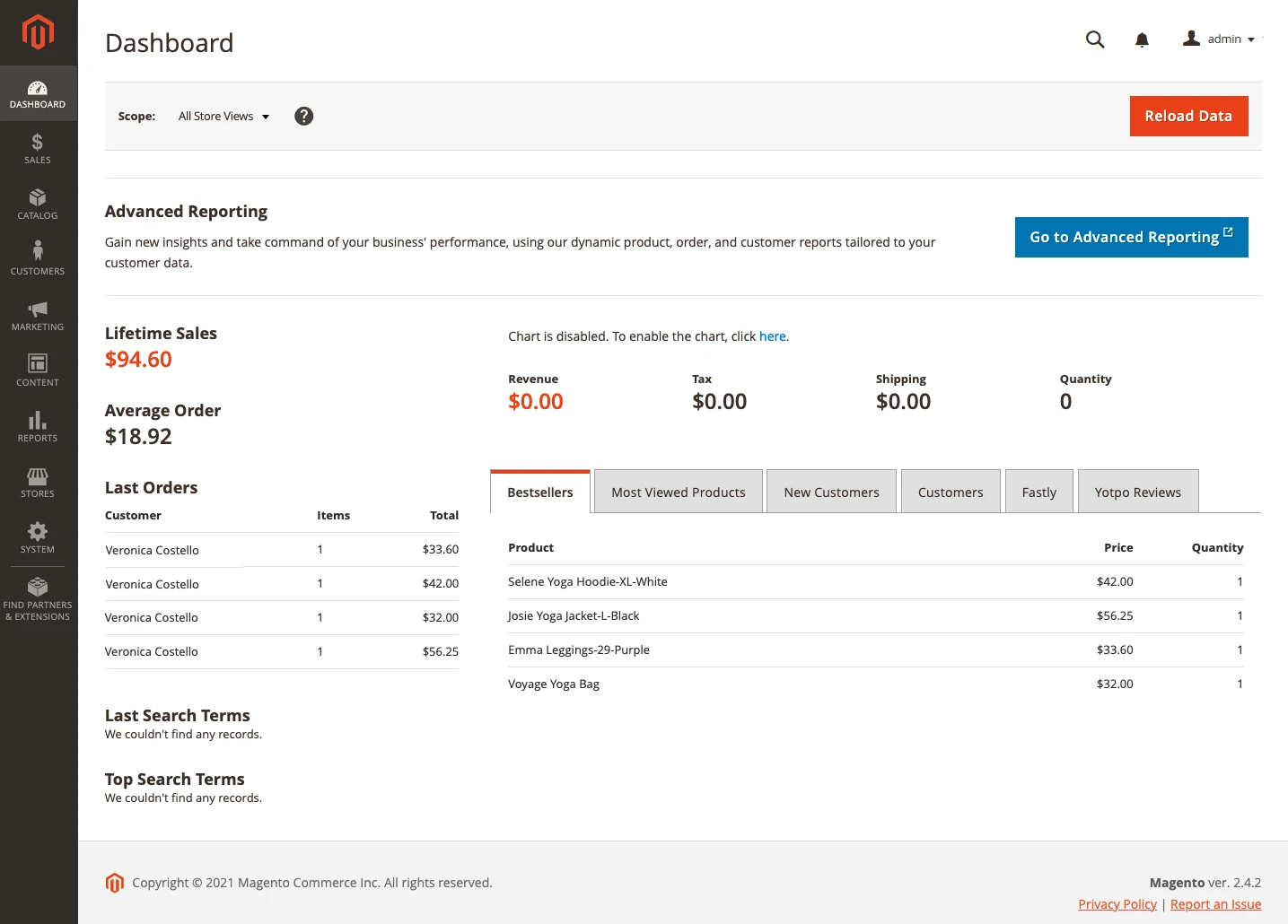
Magento Pricing: Magento Open Source is free to download and use, but businesses are responsible for hosting, development, security, extensions, and maintenance.
Key features:
- Open-source and highly customizable architecture
- Large and complex product catalogs
- Configurable, grouped, bundled, and virtual products
- Customer groups and differentiated pricing
- Advanced catalog and product attributes
- Multi-store and multi-website management
- Multiple currencies and languages
- Flexible payment and shipping integrations
- REST and GraphQL APIs
- ERP, CRM, PIM, WMS, and third-party integrations
- Advanced inventory management through MSI
- B2B functionality through Adobe Commerce
- Headless commerce capabilities
| Pros | Cons |
| Extremely flexible for complex manufacturing requirements | High development and maintenance requirements |
| Strong catalog and product configuration capabilities | Open Source does not include the full B2B feature set of Adobe Commerce |
| Excellent API and integration capabilities | Hosting and infrastructure can become expensive |
| Suitable for large catalogs and multiple storefronts | Overkill for smaller manufacturers |
| Strong ecosystem and customization potential | Requires experienced Magento developers |
Site examples: Land Rover, Helly Hansen, Paul Smith, HP.
Best for: Manufacturers with complex catalogs, multiple storefronts, or significant customization and integration requirements (especially businesses with an in-house development team or an experienced Magento partner).
Read more: Magento 2 Review
20. Ecwid
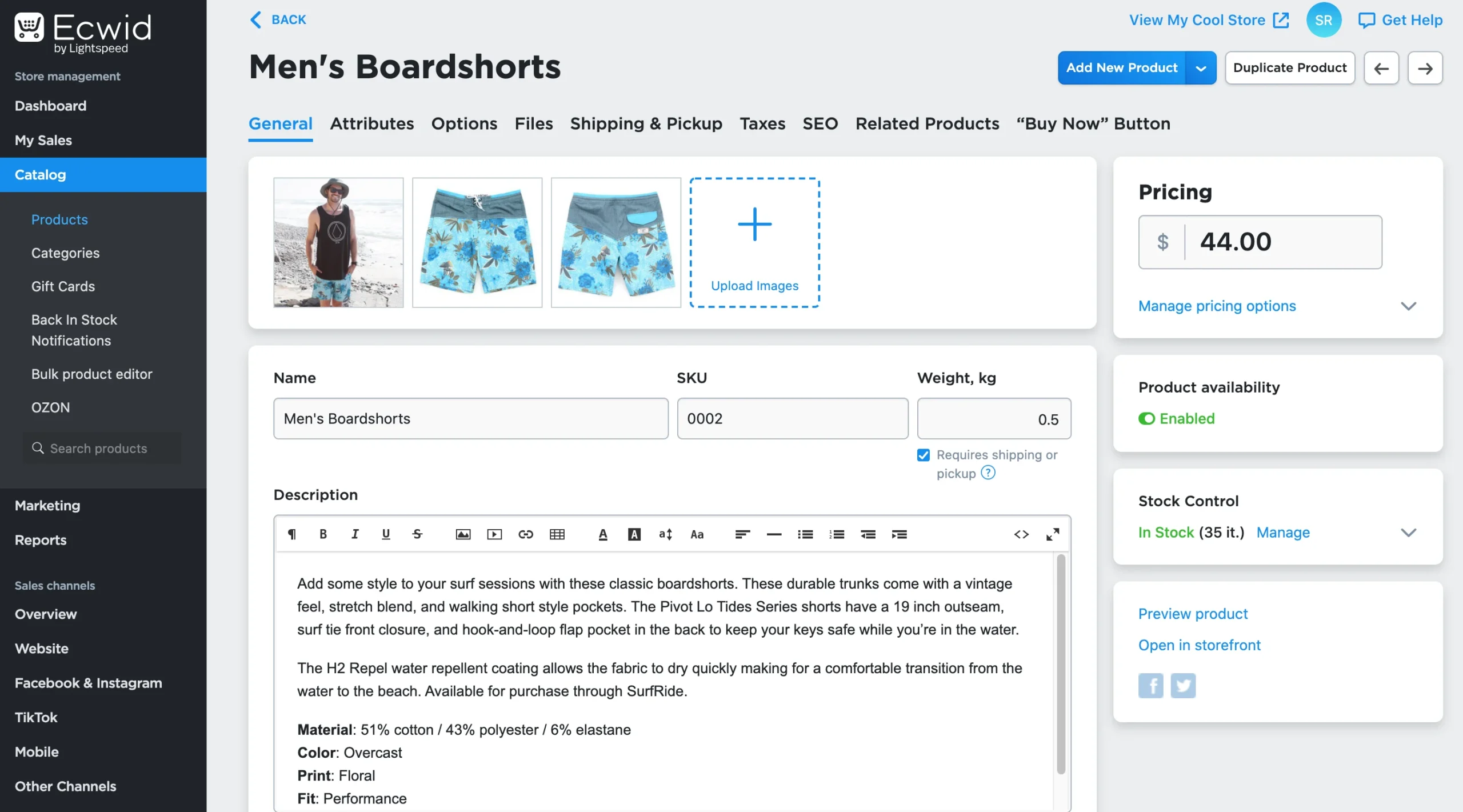
Ecwid Pricing: $5/month when billed annually (Starter), $29/month (Venture), $49/month (Business), Unlimited ($119/month).
Key features:
- Add eCommerce to an existing website
- No-code Instant Site builder
- Up to unlimited products on Unlimited plan
- Wholesale pricing groups on Business and Unlimited
- Custom checkout fields for tax IDs and order information
- Multilingual catalog on Business and Unlimited
- Marketplace and social selling
- POS integrations
- Staff accounts and permissions
- Mobile store management
- App Market for additional functionality
| Pros | Cons |
| Easy to add ecommerce to an existing website | B2B functionality is relatively basic |
| No transaction fees charged by Ecwid | Advanced manufacturing workflows require third-party apps |
| Low entry cost | Less suitable for highly complex catalogs and pricing structures |
| Supports wholesale pricing groups | Limited compared with dedicated B2B platforms |
| Good multichannel and POS capabilities | Less control over the underlying platform than open-source solutions |
Best for: Small manufacturers that already have a website and want to add ecommerce without rebuilding their entire site, particularly when their B2B requirements are relatively simple.
Read more: Ecwid Review
Benefits of Using an eCommerce Platform for Manufacturers
The right eCommerce platform can help manufacturers reach more buyers, simplify day-to-day processes, and connect online sales with the systems already running the business:
Expand customer base
An eCommerce platform allows manufacturers to reach customers beyond their existing sales territories and distributor networks. Buyers can discover products, access catalogs, check availability, and place orders online, making it easier to enter new markets without relying entirely on traditional sales channels.
Streamline operations
Secondly, on the right platforms, manufacturers can automate repetitive tasks such as order entry, reordering, pricing, and order-status updates. Not to mention, features like customer-specific pricing, bulk ordering, saved lists, and self-service portals reduce manual work for both buyers and sales teams while helping minimize data-entry errors.
Integrate with ERP, CRM, and other business systems
Last but not least, connecting eCommerce with ERP, CRM, PIM, WMS, or other business systems keeps product, customer, inventory, pricing, and order data synchronized. This approach creates a more connected workflow and reduces the need to manage the same information across multiple systems.
How to Find the Best eCommerce Platform for Manufacturers
There is no single best platform for every manufacturer. The right choice depends on your products, sales model, customer requirements, existing technology stack, and growth plans:
- Consider your B2B requirements: If you sell to businesses, look for features such as customer-specific pricing, company accounts, buyer permissions, bulk ordering, RFQs, purchase orders, payment terms, and approval workflows.
- Evaluate catalog complexity: Consider your number of SKUs, product variants, configurable products, bundles, technical specifications, and product data. Larger or more complex catalogs may require stronger catalog management and PIM/ERP integrations.
- Check integration capabilities: Make sure the platform can connect with the systems you already use. These include ERP, CRM, PIM, WMS, accounting, payment, and shipping solutions. API flexibility is particularly important if you have a customized technology stack.
- Compare scalability and total cost: Look beyond the monthly subscription. Specifically, you should consider implementation, hosting, apps or extensions, custom development, integrations, maintenance, and support. The platform should also be able to accommodate increasing product volume, orders, customers, and new markets.
- Match the platform to your business model: Finally, choose based on how you actually sell. For instance, a small manufacturer focused on DTC may benefit from Shopify or Wix. Meanwhile, a manufacturer with complex B2B workflows may need Adobe Commerce, OroCommerce, or Salesforce Commerce Cloud.
FAQs
What are the top 5 eCommerce platforms?
The top five ecommerce platforms are Shopify (for fast setups and scaling), WooCommerce (for WordPress flexibility), BigCommerce (for large product catalogs), Wix (for visual design control), and Squarespace (for aesthetic brand displays).
What are the 7 types of eCommerce?
The seven main types of eCommerce are:
Business-to-Consumer (B2C)
Business-to-Business (B2B)
Consumer-to-Consumer (C2C)
Consumer-to-Business (C2B)
Direct-to-Consumer (D2C)
Business-to-Government (B2G)
Consumer-to-Government (C2G).
Do I need an LLC for eCommerce?
You do not legally need a Limited Liability Company (LLC) to start an online business. When you launch without forming a formal structure, your business automatically defaults to a sole proprietorship (or a partnership if you have co-founders). However, an LLC provides critical personal liability protection and financial separation as your online venture grows.
What are the best eCommerce platforms for enterprises?
The best eCommerce platforms for enterprises are Adobe Commerce, Shopify Plus, and BigCommerce Enterprise, which offer the highest levels of scalability, security, and advanced features for large-scale operations.
Final Words
All in all, the best eCommerce platform for manufacturers ultimately depends on your business model, product complexity, B2B requirements, and existing technology stack. Comparing these factors alongside the platform’s long-term scalability can help you make a more confident decision.
And if you already have an online store but the platform no longer fits your manufacturing business, migration can be the next step! Backed by 15+ years of experience, LitExtension can help transfer products, customers, orders, and other essential data from your existing platform to a new one.
Let Our Experts Handle Your Store Migration!
With the All-in-One Migration Service, our experts take care of everything, ensuring a seamless and stress-free migration.
For more eCommerce tips, check out our blog and subscribe to our newsletter.

