If you are comparing Shopify vs Square, the summary is: Shopify is built for online stores, offering strong eCommerce tools and scalability, while Square focuses on in-person sales with a simple, low-cost POS system.
But besides those core differences, the two platforms are distinguished in many ways. This Shopify vs Square comparison will help you assess both platforms against different criteria, so you can choose the ideal solution for your business.
| Criteria | Shopify | Square | Verdict |
| Pricing & Fees | Plans from $39 to $399/month; no free plan | Free plan available; paid plans from $29 to $79/month | Square wins |
| POS System | Shopify POS Lite and Pro, best for retail businesses already on Shopify | Free POS software with built-in checkout, inventory, reports, and tailored versions for retail, restaurants, and appointments | Square wins |
| Hardware | Hardware prices range from $49 to $349, with no free entry-level reader | Hardware prices range from free (magstripe reader) to $899 for a full POS system | Square wins |
| Ecommerce Features | Advanced storefront builder, strong inventory tools, dropshipping support | Fewer variants for storefront customization; no dropshipping support | Shopify wins |
| AI Tools | Shopify Magic generates product descriptions, email copy, and blog content; Sidekick surfaces insights and suggests ecommerce actions | Square AI (in beta) focuses on operational insights like staffing and inventory planning using external data | Shopify wins |
| Marketing Features | Full blogging platform, robust email marketing automation | Basic blogging via “Stories” tool, AI-assisted email marketing | Shopify wins |
| Templates & Design | Over 200 professional themes across ecommerce industries, though only 13 are free | Three free themes and 24 additional paid themes | Shopify wins |
| Ease of Use | Guided setup checklist, section-based editor | Simple drag-and-drop editor, faster initial setup | Tie |
| Multichannel Selling | Broad integrations across marketplaces and social platforms | Fewer multichannel integrations, limited to a smaller set of channels | Shopify wins |
| Scalability & Internationalization | Shopify Plus supports multi-currency conversion, regional catalog filtering, and translation | International shipping option available, but requires manual profile setup | Shopify wins |
| Help & Support | 24/7 phone, live chat, and email support | Live chat, phone, and email, but not available 24/7 | Shopify wins |
| Security | SSL certification, PCI compliance, built-in fraud analysis | SSL certification, PCI compliance, free fraud monitoring and Risk Manager | Tie |
Shopify vs Square – An Overview
Before comparing Shopify vs Square, let’s have a quick look at both platforms first. Shopify has grown into one of the dominant forces in eCommerce, with over 6.8 million active Shopify stores as reported by BuiltWith. That growth spans more than 175 countries, making Shopify one of the most widely adopted all-in-one eCommerce platforms on the market today. With that scale comes a broad set of tools built specifically for running an online store, from inventory management to multichannel selling.
That said, size alone does not tell the whole story. Before deciding whether Shopify fits your business, it is worth weighing its strengths against its trade-offs. If you want a full breakdown of this platform, please check out our Shopify review article for more details.
| Shopify Pros | Shopify Cons |
| Deep eCommerce feature set, including dropshipping support and advanced inventory tools | No free plan; every tier requires a paid subscription |
| Over 100 payment processors supported, including Shopify Payments | Third-party apps can add up quickly, increasing total operating costs |
| Strong app marketplace covering marketing, shipping, and merchandising needs | Section-based editor can feel restrictive for highly custom designs |
| Built-in AI tools (Shopify Magic and Sidekick) for content and store management | Hardware costs more upfront, with no free entry-level reader |
| 24/7 phone, live chat, and email support | Steeper learning curve for merchants new to eCommerce |
Now, let’s turn to Square. Unlike Shopify, Square built its reputation in point-of-sale and payment processing before expanding into eCommerce. Its dedicated online storefront software, Square Online, is currently the home for over 350,000 websites worldwide, according to BuiltWith. That positions Square as a smaller platform in pure eCommerce, but in terms of payment and in-person retail space, Square might be a much larger player.
Now, let’s see what makes Square a good choice for your business and where it falls short. For a detailed analysis of this platform, don’t forget to check out our Square Online Store review article to get more information.
| Square Pros | Square Cons |
| Free plan available for both POS and online selling | Ecommerce tools are noticeably more limited than Shopify’s |
| Affordable hardware, including a free entry-level card reader | Locked into Square Payments, with no third-party processor flexibility |
| Fast, beginner-friendly setup for in-person sellers | No native blogging feature beyond a basic “Stories” tool |
| Strong POS tools tailored to restaurants, retail, and appointments | Advanced features, like inventory management, require higher-tier plans |
| Transparent, flat-rate transaction fees | Less suited to businesses that plan to scale primarily online |
Now that the brief look is done, let’s get to the detailed comparison of Shopify vs Square.
Pricing and Fees
Our verdict:
Square wins on affordability for most new and low-volume sellers, thanks to its free plan and lower-cost paid tiers. Shopify costs more upfront, but its pricing can pay off for merchants whose growth depends on stronger eCommerce tools.
Shopify pricing comes with three core paid tiers: Basic, Grow (formerly called “Shopify”), and Advanced, priced from $39 to $399 per month, or discounted when billed annually. Each plan also carries a transaction fee that decreases as you move up in tier, unless you use Shopify Payments to eliminate it entirely.
| Plan | Monthly Price | Online Transaction Fee | Third-Party Payment Fee |
| Basic | $39/month | 2.9% + 30¢ | 2% |
| Grow | $105/month | 2.7% + 30¢ | 1% |
| Advanced | $399/month | 2.5% + 30¢ | 0.6% |
Beyond these three tiers, Shopify also offers a Starter plan at $5 per month for merchants who only need to sell through social platforms or messaging apps, and Shopify Plus for enterprise-level businesses, with contract pricing starting from $2,300 per year on a three-year term. It is worth noting that all plans charge a transaction fee unless Shopify Payments is used, which removes that fee entirely but still leaves standard credit card processing costs in place.
On the flip side, Square offers three different tiers to create an eCommerce website: Free, Plus, and Premium, priced at $0, $49, and $149 per month, respectively. Please note that this cost of Square websites is for one location, so the pricing might change if you have more than one physical store.
| Plan | Monthly Price | In-Person Fee | Online Fee |
| Free | $0 | 2.6% + 15¢ | 3.3% + 30¢ |
| Plus | $49/month per location | 2.5% + 15¢ | 2.9% + 30¢ |
| Premium | $149/month per location | 2.4% + 15¢ | 2.9% + 30¢ |
Unlike Shopify, Square Online does not offer a way to fully waive transaction fees, since Square Payments is the platform’s only supported processor. The trade-off is that merchants can start selling immediately at no monthly cost on the free plan, though advanced eCommerce features, such as site statistics and expanded reporting, are reserved for the paid tiers.
Point-of-Sale System
Our verdict:
Since its POS software works well right out of the box, this round of the Shopify vs Square comparison leans toward Square, particularly for merchants whose priority is in-person selling.
Shopify’s point-of-sale system comes in two tiers: Shopify POS Lite and Shopify POS Pro. POS Lite is available on every Shopify plan and works well for merchants who occasionally sell at pop-ups or markets, while POS Pro, priced at $89 per month per location, is built for retail businesses with high foot traffic, larger inventory catalogs, and multiple staff members.
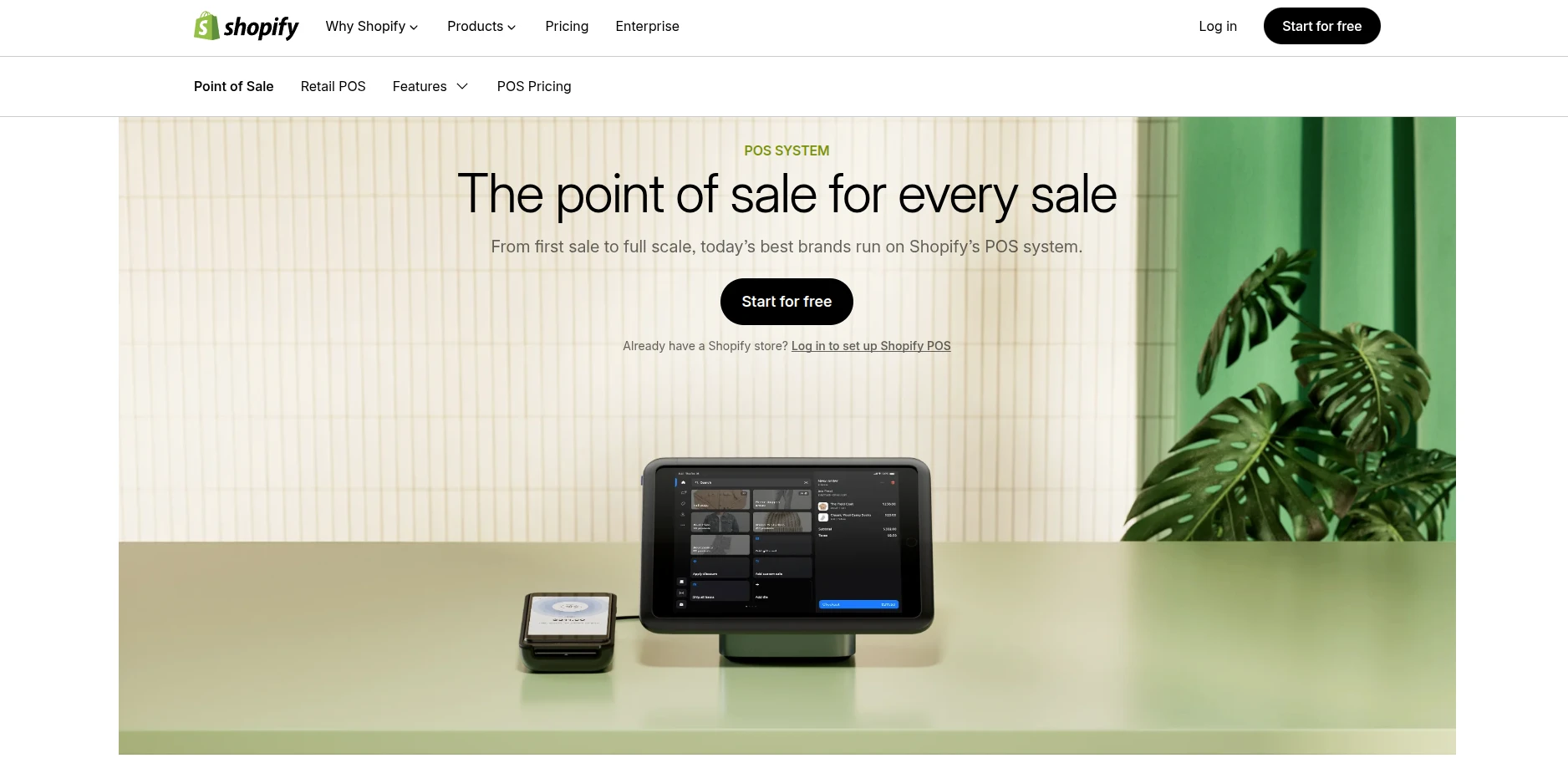
Shopify POS system integrates tightly with the broader Shopify ecommerce platform, so inventory, orders, and customer data sync automatically between online and in-person sales. This makes it a strong option for merchants who are already running their online store on Shopify and want in-person selling to plug into the same system, rather than operating as a separate tool.
Square, by contrast, built its business around point-of-sale first. The platform offers five distinct POS software options: one regular point-of-sale app, plus four versions tailored specifically for food & beverage, retail, beauty, and services. All five include real-time inventory tracking across online and in-person channels, customer and order management, and analytics.
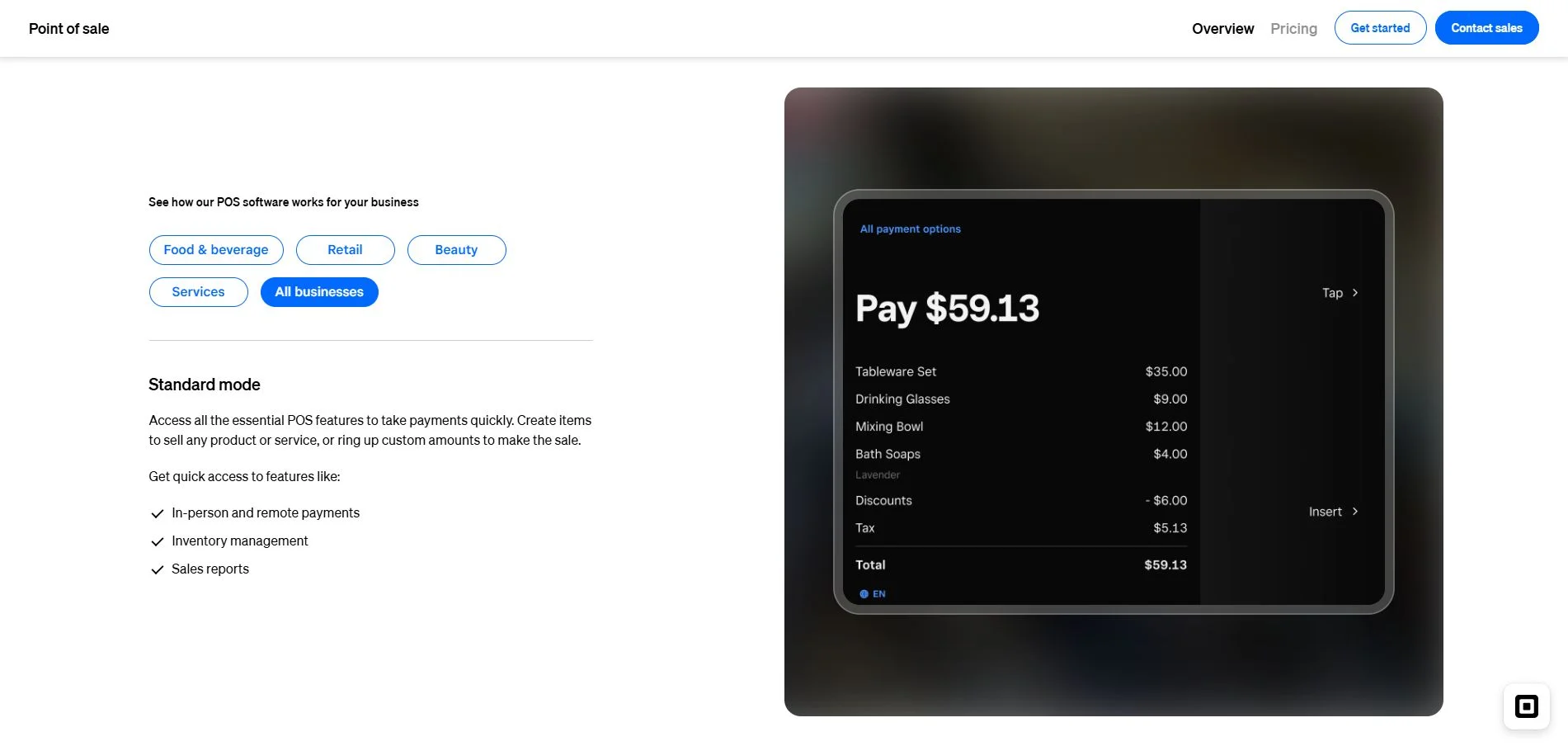
Square POS software is free to use, and pricing follows the unified structure covered in the previous section, meaning merchants only pay processing fees rather than a mandatory monthly software cost on the entry-level plan. This makes Square a common starting point for newly established stores that want a functional POS system without upfront software costs.
POS Hardware
Our verdict:
Between Shopify vs Square in terms of POS hardware, Square takes the lead. It offers a free entry-level reader and a wider range of devices at lower price points, while Shopify’s hardware starts at a higher cost with no free option.
Shopify offers three card readers that support tap and swipe payments, along with a full POS system that connects to a range of Apple and Android devices. Hardware prices range from $49 to $349, covering everything from a basic mobile reader to a complete countertop setup.
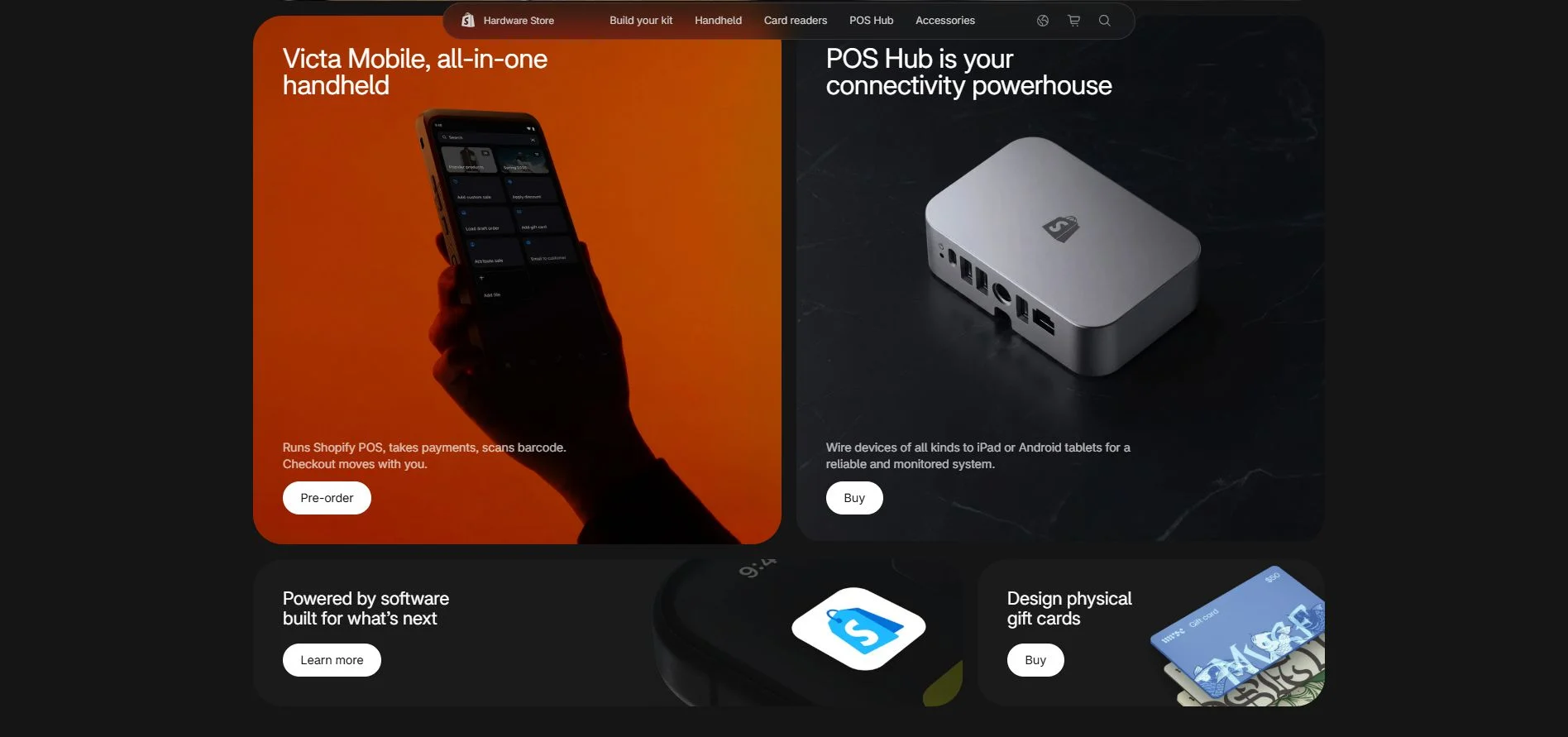
Shopify does not offer a free magstripe reader, which means the cost of entry into Shopify’s hardware ecosystem is immediately higher than Square’s. For merchants just getting started with in-person sales, this can be a meaningful barrier, even though Shopify’s hardware options integrate seamlessly with its broader POS software.
Square offers a significantly wider range of hardware, spanning from a free magstripe reader for eligible new accounts to a full two-touchscreen POS system priced at $899. In between, Square sells countertop devices, handheld terminals, and mobile card readers designed to fit different business sizes and selling environments.
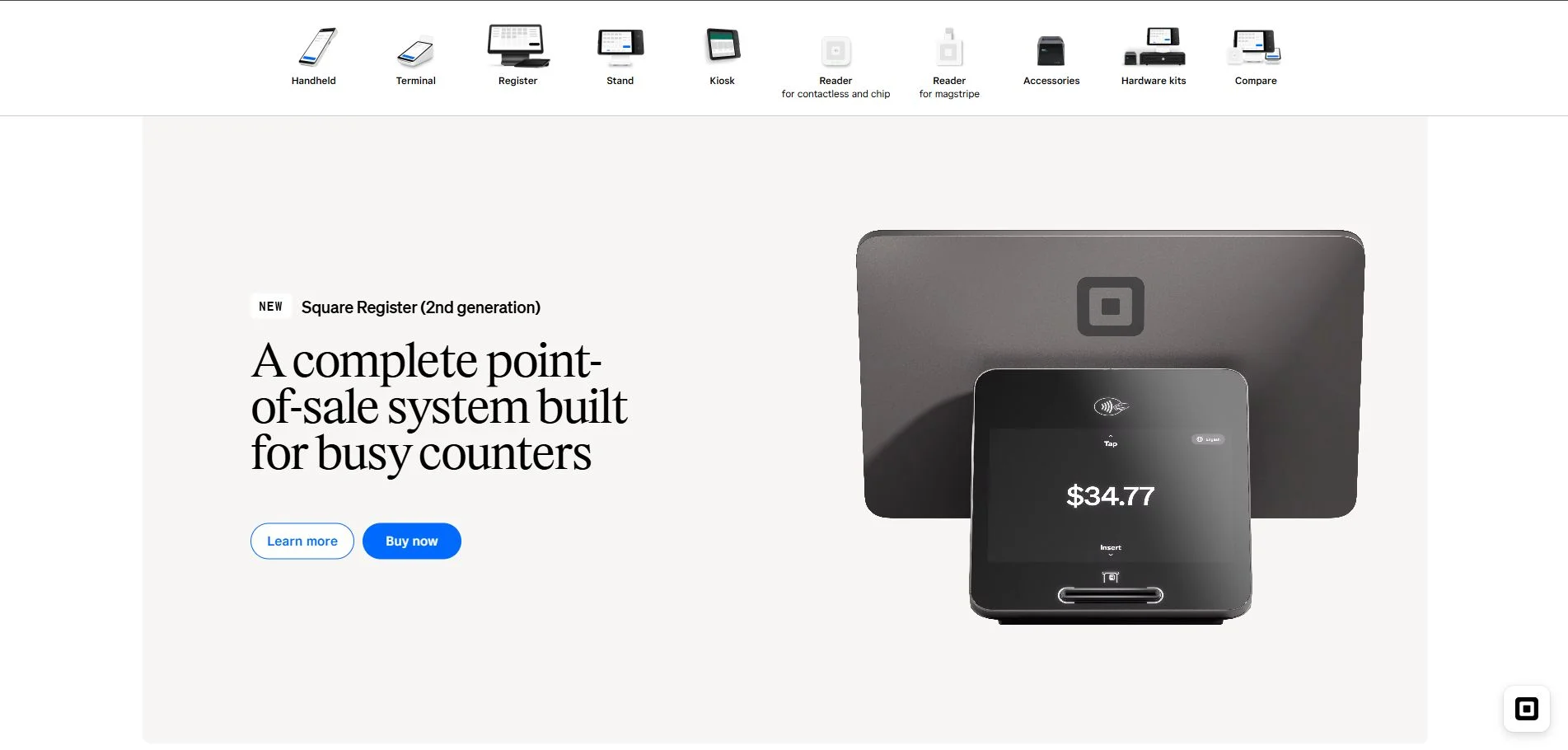
Square’s willingness to offer a free reader, combined with its broader device lineup, makes it the more accessible option for small and mobile businesses that want to start accepting in-person payments without a large upfront investment.
eCommerce Features
Our verdict:
Between Shopify vs Square in terms of eCommerce features, Shopify wins this round. It offers deeper inventory tools, dropshipping support, and a more complete checkout experience, giving it the edge for merchants whose growth depends on online sales.
Shopify supports unlimited products and up to 2,048 variants per product, along with a full set of order and fulfillment tools built directly into the platform. Merchants can access:
- Dropshipping and order fulfillment support across all plans
- Abandoned cart recovery and gift cards available on every tier
- Shipping rate discounts of up to 88 percent
- 200+ website themes, both free and paid
- Automatic tax calculation and 100+ checkout payment gateways
This breadth is one of the reasons Shopify continues to lead in broader platform evaluations, including comparisons like Shopify vs QuickBooks, where its eCommerce depth is treated as a baseline strength rather than a standout feature.
Meanwhile, Square Online supports a lower per-product variant limit, up to 250, and falls short in several areas that matter for merchants scaling an online store. Notably:
- No dropshipping support
- Abandoned cart recovery and gift cards limited to the Performance plan and higher
- Shipping rate discounts capped at 55 percent
- 25+ website themes, most requiring a paid plan or free trial
- Checkout options limited compared to Shopify’s payment gateway range
Square’s eCommerce toolset is functional and improving, but it is still built around supporting a physical retail business online rather than serving as a standalone growth engine. For merchants whose primary channel is in-person sales, this is rarely a dealbreaker. For those planning to scale online, it becomes a real limitation.
If you’re currently on Square and feel restricted by its eCommerce feature, you can consider a Shopify migration. LitExtension is a trusted migration partner with over 15 years of experience and more than 300,000 successful store migrations, helping you move your products, customers, and order history from Square to Shopify accurately, securely, and without the manual heavy lifting.
Let Our Experts Handle Your Store Migration!
With the All-in-One Migration Service, our experts take care of everything, ensuring a seamless and stress-free migration.
AI-Powered Tools
Our verdict:
If AI-driven content creation and ecommerce automation are a priority, Shopify is the more developed option right now. That’s why, in this comparison of Shopify vs Square, Shopify is the winner here.
Shopify’s AI features center on Shopify Magic and Sidekick. Shopify Magic can generate product descriptions, email copy, and blog content, helping merchants scale their content output without hiring additional writers. Sidekick works more like an in-admin assistant, surfacing insights from store data, helping schedule promotions, set discounts, and suggest pricing or marketing actions directly inside the dashboard.

On the other hand, Square’s AI tools, still in beta, take a more operational approach. Square AI pulls in external data, such as local weather, nearby events, news, and customer reviews, to generate recommendations around staffing, inventory planning, and product or menu decisions inside the Square Dashboard. Square has also introduced AI-assisted image tools, including background generation through Square Photo Studio, to help merchants create better product listings without a professional photographer.
Templates and Design
Our verdict:
When comparing templates and design in Shopify vs Square, Shopify wins. It offers a significantly larger theme library and more advanced design features, though Square Online remains easy to use for merchants who want a simpler setup.
Shopify offers more than 800 professional themes covering a wide range of industries. While there’s only a small number of free Shopify themes, the paid options come with more sophisticated design features, including slide-out checkout carts and complex mega menus, that Square Online does not offer.
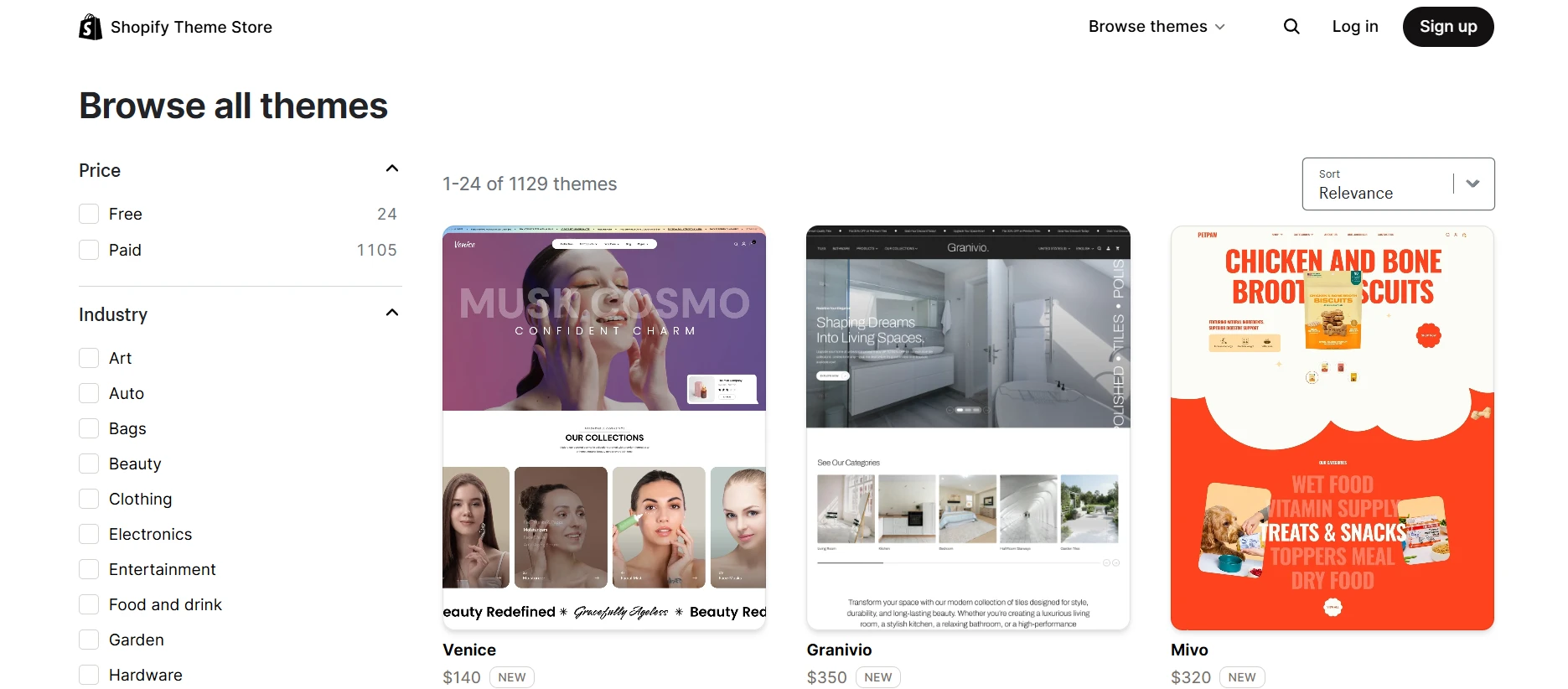
On top of that, Shopify’s editor is section-based, meaning merchants stack different sections on top of each other to build out a page. This approach is quick to learn, though it can feel restrictive for those who want more freedom to rearrange page elements.
Meanwhile, Square Online offers a much smaller selection, with three free themes and 24 additional paid themes available to merchants on premium plans. These themes tend to be responsive and present a professional storefront, though they lack the design depth and customization range found in Shopify’s library.
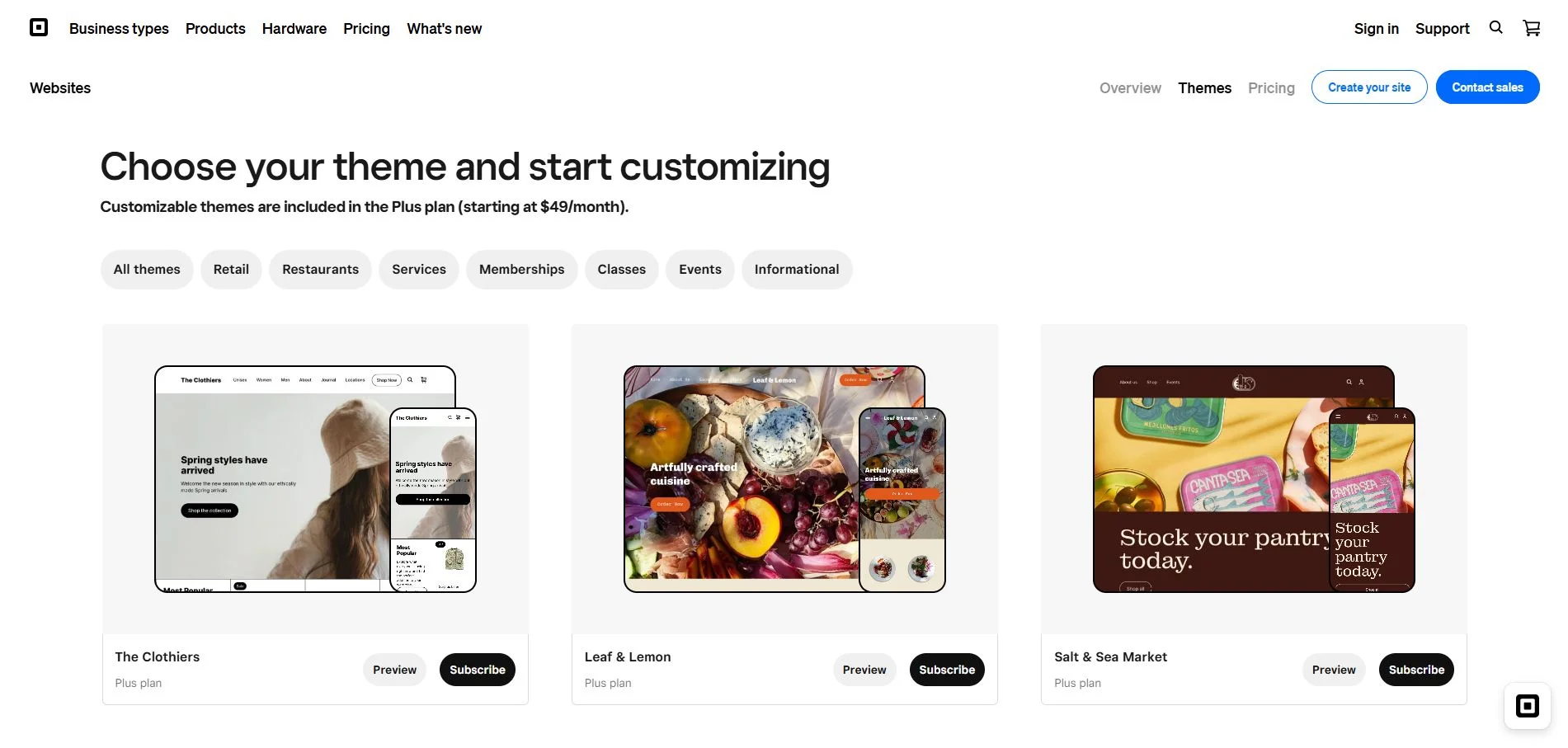
Square’s editor uses a straightforward drag-and-drop layout, letting merchants click on a section to add it to the page. Like Shopify, placement is still somewhat rigid, limited to positioning sections above or below one another, but the overall interface is easier to pick up for beginners with no design experience.
Marketing Features
Our verdict:
In this round of Shopify vs Square, Shopify wins. Both platforms offer adequate SEO capabilities, but Shopify pulls ahead with a full blogging feature and stronger email marketing tools.
Shopify’s SEO tools are fairly comprehensive for an all-in-one platform. Merchants can easily edit titles, meta descriptions, and image alt text, customize URLs, and set up 301 redirects to avoid broken links. Site speed is solid, and structuring a store by category is straightforward.
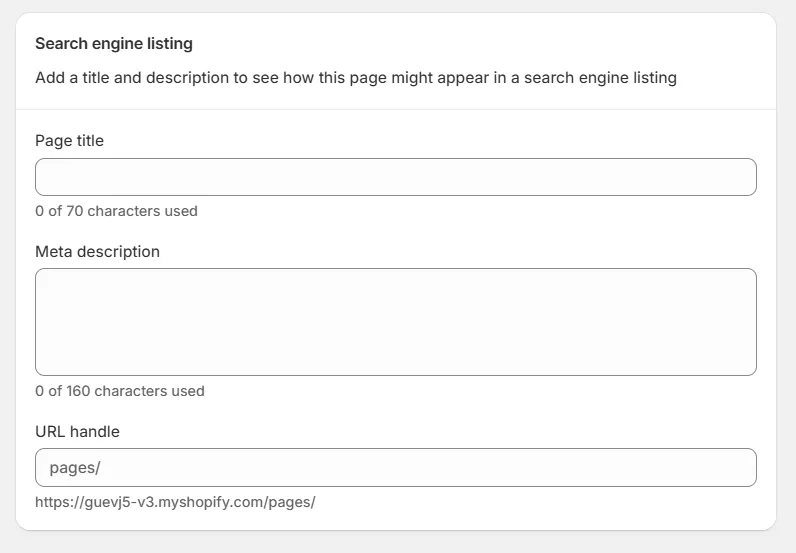
Shopify also includes a built-in blogging feature, allowing merchants to add tags, edit titles and keywords, and build a long-term content strategy directly from the platform. On the email side, Shopify’s marketing automation supports multichannel campaigns, and merchants can send up to 10,000 emails per month at no additional cost.
On the flip side of this Shopify vs Square comparison, Square Online covers the SEO fundamentals as well, letting merchants customize page titles, meta descriptions, and alt text, and create headings without much friction. Changing page or product URLs is simple, and Square does not add any prefixes to your URLs, which is a small but useful detail for clean site structure.
That said, Square requires merchants to set up product redirects manually, and site speed tends to run slower than Shopify’s. There is also no dedicated blogging feature on any Square Online plan, which limits long-term content marketing options.
Ease of Use
Our verdict:
In terms of ease of use, Shopify vs Square is close to a tie. Shopify offers a more guided, step-by-step experience, while Square’s drag-and-drop editor lets merchants make changes more freely.
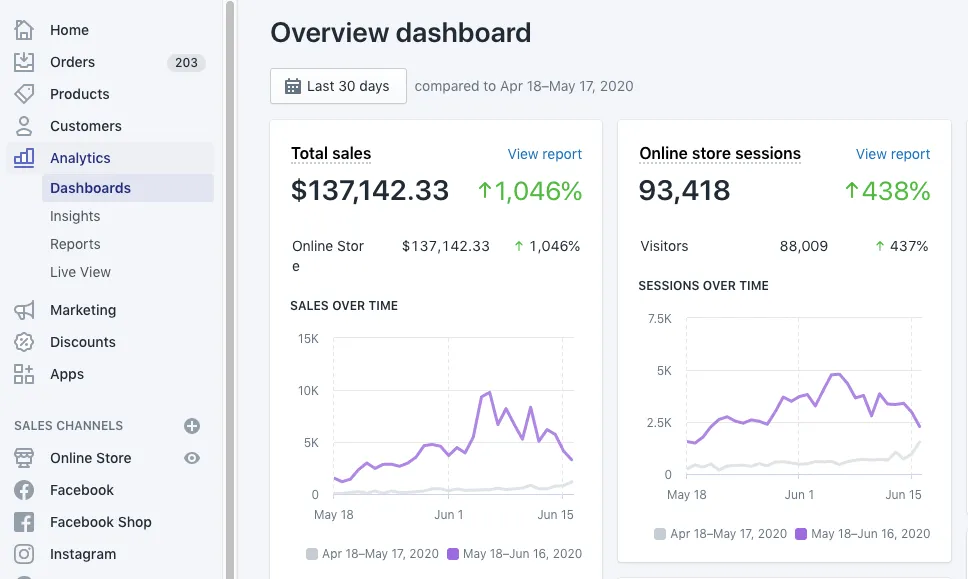
Shopify combines a strong feature set with a clean, approachable interface, even for merchants with little to no technical background. New users are walked through a Get-Started checklist that lays out each step logically, from adding products to customizing the storefront.
When running hands-on testing for this comparison, we found the process straightforward from start to finish, with no major friction points during setup. Day-to-day use is just as manageable, since Shopify’s admin dashboard keeps common tasks easy to find.
On the other hand, Square takes a faster, more simplified approach. Merchants enter their business name and address, choose the features they want, upload a logo, and pick a color scheme, and the store populates automatically based on those inputs. With a few additional product listings, a Square Online store can be ready to launch in a short amount of time.
Square also includes a drag-and-drop editor that allows merchants to click on and adjust any element immediately, offering more flexibility in the moment than Shopify’s section-based editor allows.
Scalability and Internationalization
Our verdict:
On scalability and internationalization, Shopify vs Square is a decisive win for Shopify. Its Shopify Plus pricing tier offers dedicated global selling features that Square does not currently match.
Globalization is one of Shopify’s clearest strengths, and the platform’s enterprise tier, Shopify Plus, is built specifically to support international growth. Merchants on Shopify Plus can:
- Ship anywhere in the world within 1 to 5 working days at exclusive discount rates
- Let customers prepay VAT, duties, and local taxes at checkout, with support for local payment methods
- Automatically filter product catalogs based on regional import and carrier restrictions
- Convert prices automatically into more than 130 local currencies
- Localize content and messaging for different markets through language translation
Square Online does not offer a dedicated international tier, but merchants can still ship physical products worldwide through the platform’s international shipping option. Setting this up requires building an international shipping profile, selecting target countries, and manually configuring shipping rates for each destination.
To help simplify this process, Square Online partners with shipping providers such as EasyShip, Shippo, and ShipBob, which offer automated shipping workflows, discounted rates with major global couriers, and hands-off order fulfillment and warehousing for merchants who need extra support scaling internationally.
Help and Support
Our verdict:
For help and support, Shopify vs Square is a clear win for Shopify. Its round-the-clock availability across every channel gives it a meaningful edge over Square’s more limited hours.
Shopify’s support team is available 24/7 through phone calls, live chat, and email, which means merchants can get help quickly regardless of time zone or how urgent the issue is. That level of availability is a significant advantage for businesses that operate outside standard business hours or sell to customers across multiple regions.
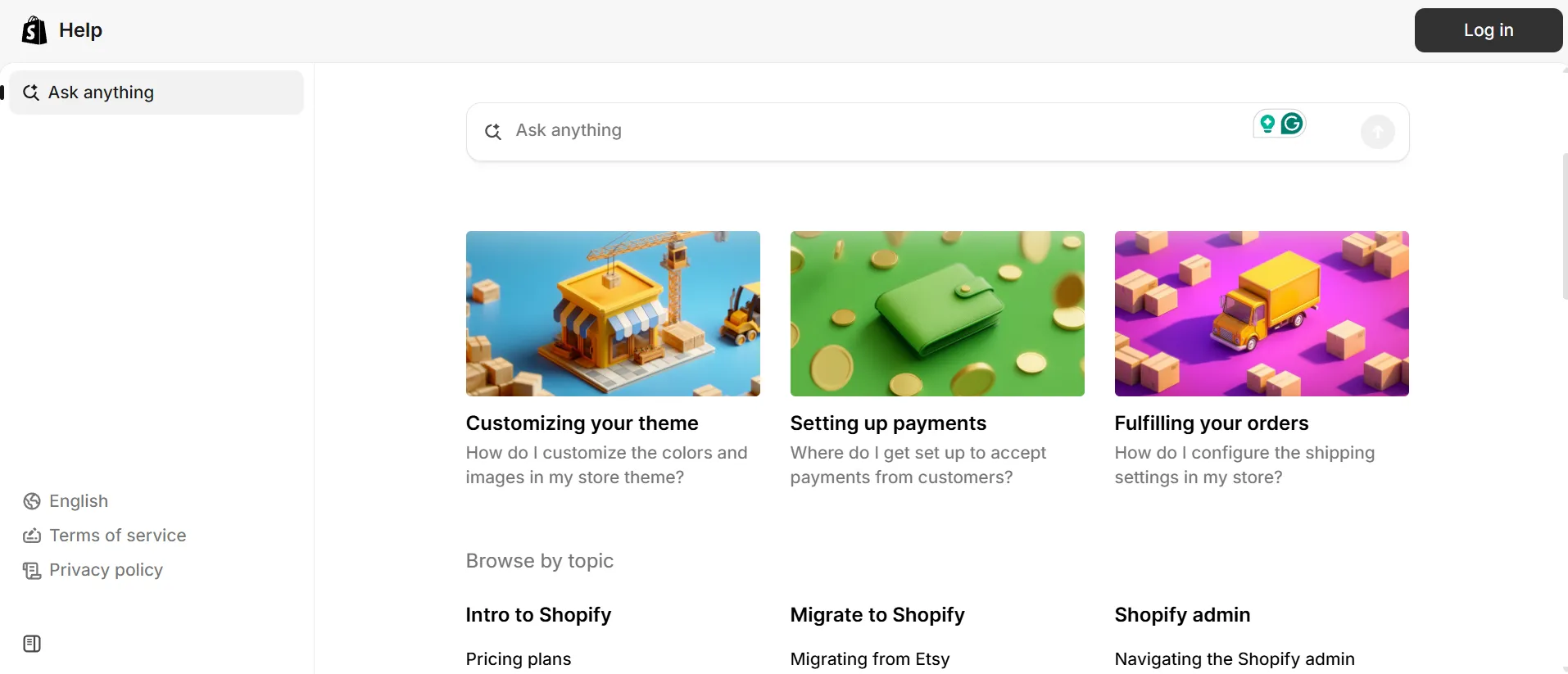
Beyond direct support, Shopify merchants also have access to the Shopify Help Center for self-service research, along with an active eCommerce community where store owners can troubleshoot issues, share advice, and learn from other merchants’ experiences.
Square also offers support through live chat, phone calls, and email, covering the same core channels as Shopify. The key difference is availability: Square’s support is not available 24/7, which means merchants may need to wait longer for assistance depending on when an issue comes up.
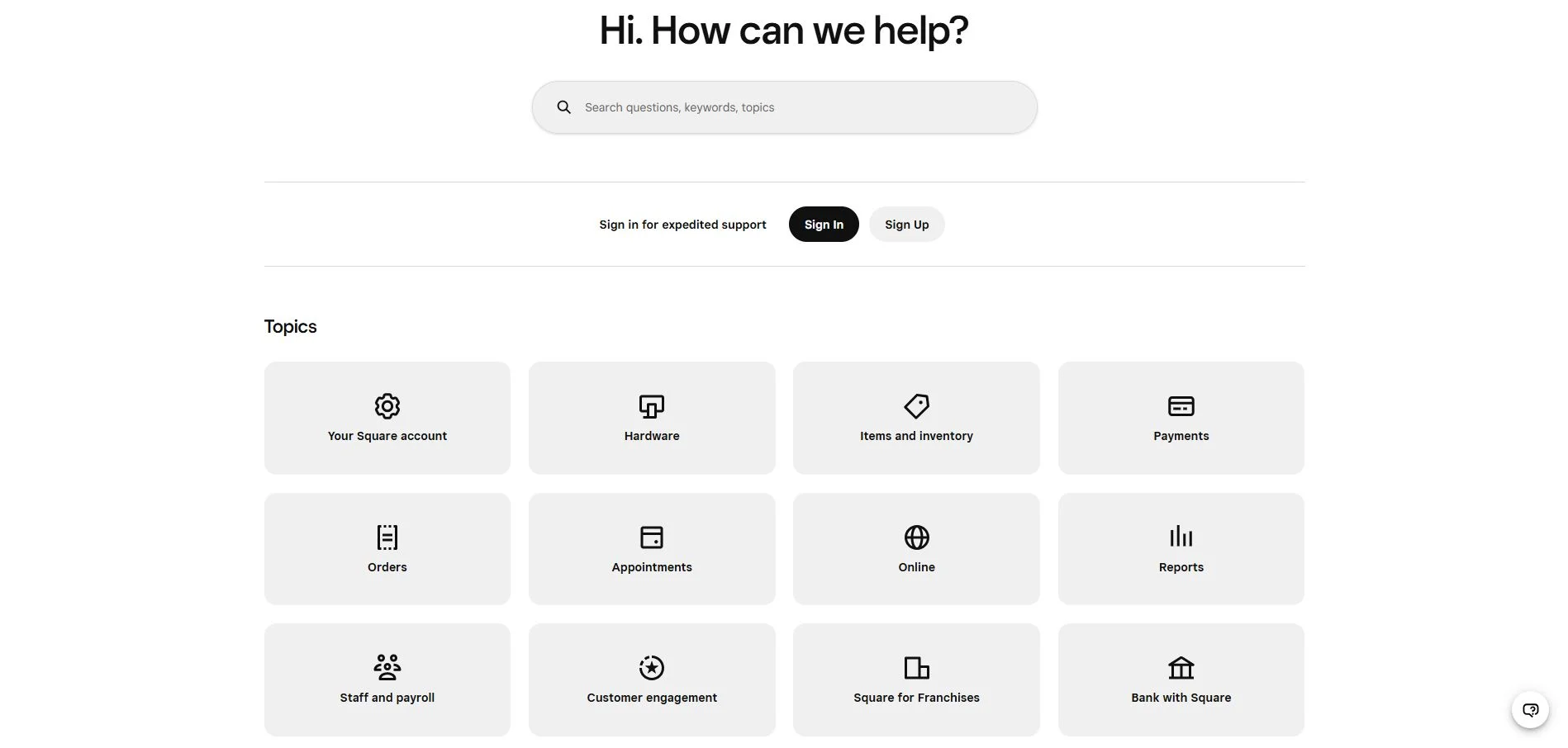
To help offset this, Square maintains a large knowledge base within its Help Center, where merchants can search for answers directly or browse through organized categories to find relevant guidance without needing to contact support at all.
Security
Our verdict:
On security, Shopify vs Square ends in a tie. Both platforms provide built-in SSL encryption, PCI compliance, and fraud protection tools as standard, so this category comes down to personal preference rather than a clear gap.
Every Shopify store includes SSL certification by default, ensuring that data transferred between merchants and customers is encrypted. The platform also follows established security standards for processing credit and debit card payments, which helps build trust with customers at checkout.
In addition, every Shopify plan includes an internal fraud analysis feature. This covers fraud indicators, support for third-party fraud detection apps, and actionable recommendations, giving merchants an extra layer of protection without needing to configure anything manually.
On the other hand, as a company built around payment processing, Square brings strong security credentials to its online store product as well. Secure card readers and POS software protect customer payment details, and sensitive information, including card numbers, magnetic-stripe data, and security codes, is never stored on any device.
Additionally, every Square account also includes free fraud monitoring and dispute management, along with Risk Manager, a dedicated risk management system that flags and acts on suspicious card payments automatically.
Can You Use Square and Shopify Together?
Yes, Square and Shopify can be used together, but there is no native integration between Square and Shopify, so the two platforms do not sync automatically out of the box. Instead, merchants typically use Square for in-person point-of-sale and Shopify for their online store, connecting the two through a dedicated integration app.
SkuIQ is one commonly used option, allowing inventory to sync automatically between platforms so that a product sold in-store through Square updates stock levels on the Shopify store as well, and vice versa. DPL Square Integration & Sync offers a similar function, syncing products, inventory, and orders between the two systems so merchants are not manually reconciling stock counts across separate dashboards.
From our perspective, running one primary platform is much simpler. But for businesses with a genuine split between physical retail and online sales, pairing Square and Shopify through an integration can offer the best of both without forcing a full Square to Shopify migration.
Final Verdict on Shopify vs Square
After comparing pricing, features, AI tools, support, and everything in between, the honest answer to Shopify vs Square is that there is no single winner. Each platform was built with a different kind of merchant in mind, and the right choice depends less on which platform is “better” overall and more on where your business actually sells.
Choose Shopify if:
- Run an online store that needs advanced eCommerce features, dropshipping, or extensive inventory management
- Want a large app marketplace and strong multichannel selling capabilities
- Plan to scale internationally and need built-in currency conversion, tax handling, and localization tools
- Value AI tools that support content creation and merchandising, like Shopify Magic and Sidekick
Choose Square if you:
- Sell primarily in person and want a free or low-cost POS system to start
- Need affordable, ready-to-use hardware without a large upfront investment
- Run a restaurant, café, or appointment-based business that benefits from Square’s tailored POS software
- Want simple, transparent, flat-rate transaction fees
Shopify vs Square – FAQs
Should I use Square or Shopify?
The choice between Shopify vs Square depends on where most of your sales happen. Square is the stronger pick if you sell primarily in person, since it offers a free plan and affordable hardware built around point-of-sale transactions. Shopify is the better choice if eCommerce is your main channel, as it comes with more advanced storefront, checkout, and shipping tools built for growing online stores.
Can I use Square and Shopify together?
Yes, though there is no built-in connection between the two platforms out of the box. Some sellers use Square for in-person POS and Shopify for their online store, keeping the two synced through a third-party integration app, such as SkuIQ, so that a sale in one system automatically updates inventory in the other.
Is Square cheaper than Shopify?
In most cases, yes. Square offers a free plan for both POS and online selling, while Shopify requires a paid subscription to unlock its eCommerce tools. Shopify’s entry-level plan starts at a low monthly cost, but reaching full storefront functionality typically means moving to a higher tier, which usually puts it above Square’s cost for merchants who sell mostly in person.
Is Square the biggest Shopify competitor?
Square is a significant competitor, but mainly in the point-of-sale space rather than pure eCommerce. Because of this difference in origin and focus, Square is better understood as the leading alternative for merchants who prioritize in-person sales, while platforms built primarily for online selling, such as WooCommerce or BigCommerce, are often considered closer eCommerce competitors to Shopify.
Is Shopify still worth it?
For most eCommerce-focused businesses, yes. Shopify continues to offer a wider app ecosystem, stronger checkout and shipping tools, and more advanced marketing features than Square, along with newer additions like Shopify Magic and Sidekick for AI-assisted content and store management.
Shopify vs Square – The Conclusion
Choosing between Shopify vs Square ultimately comes down to how and where your business sells. Shopify remains the stronger platform for merchants who need deep eCommerce features, broad payment flexibility, AI-assisted content tools, and room to scale internationally. Square, on the other hand, continues to stand out for its affordability, free entry point, and point-of-sale strength, making it a natural fit for businesses that sell primarily in person.
We hope that this Shopify vs Square comparison gave you the information you need. Lastly, don’t forget to check out our LitExtension Blogs and Resources to get more eCommerce platforms reviews, tutorials, and expert insights.