Starting an online store with Magento isn’t always straightforward. There can be unexpected costs and tricky financial hurdles to watch out for. Therefore, it’s a must for any business to evaluate any factors related to Magento pricing beforehand.
If you don’t know where to start, LitExtension – #1 eCommerce Migration Service has done the work for you. In this guide, we will break down all those fees that might add up to your Magento pricing:
- Why pick Magento for your online store;
- An overview of all Magento pricing plans;
- A rough guide to Magento Open Source pricing;
- Magento Commerce & Magento Cloud pricing;
- Comparing Magento eCommerce pricing with other platforms.
Let’s get the ball rolling!
Why Choose Magento?
Magento eCommerce stands out in the digital marketplace for these good reasons:
- Performance: Native Magento features are tailored for eCommerce, offering notable speed and functionality that can be critical for online store operations.
- Community support: Magento’s open-source model allows for a collective development effort, which can lead to diverse contributions and support options.
- Search Engine Optimization: Magento’s architecture benefits SEO practices and accommodates various external tools for enhancing search visibility.
- Customization: The platform provides an extensive array of themes, which can be great in tailoring the visual aspect of an ecommerce site to match a company’s branding.
- User experience: Magento’s design philosophy emphasizes user experience, potentially leading to faster and more secure transactions.
- Dashboard interface: The backend interface of Magento is designed to be intuitive, which may facilitate the management of store performance and the analysis of business metrics.
More than just an eCommerce platform, business owners can also enjoy a supported omnichannel journey with Magento POS.
Want to see how Magento Open Source is performing in 2025 and if it’s still worth the investment? After 300K+ store migrations, our team breaks it all down in this video: real pros, hidden costs, performance, and what to watch out for during migration.
Magento Pricing: How Much is Magento?
Exploring the above factors that affect Magento pricing will lead you to the core question: In total, how much does Magento cost?
First things first, let’s do your homework!
Magento offers 3 main editions to cater to different business needs: Magento Open Source (previously Magento Community Edition), Magento Commerce (renamed to Commerce Pro, previously known as Magento Enterprise Edition), along with Magento Cloud (also known as Managed Services).
Now, the question is, is Magento free? Actually, Magento pricing is tier-based. You can use the initial tier, Magento Open Source, at no cost at all. The Magento Commerce cost begins at $1,988 each month. As for the top tier – Magento Commerce Cloud, you will have to pay from $2,800 per month upwards for Magento price.
Furthermore, as mentioned above, creating a Magento store involves various specific costs tailored to each need. The following expenses are fundamental to Magento website cost, allowing you to estimate your business’s projected costs.
Magento Open Source | Commerce Pro | Managed Services | |
Magento license cost | 0 | $22,000–125,000/year | $40,000–190,000/year |
Domain name | $10–400/year | $10–400/year | $10–400/year |
Hosting | From $100/year | From $500/year | 0 |
SSL Certificate | $50–300/year | $5–300/year | $50–300/year |
Theme | $0–10,000 | $0–10,000 | $0–10,000 |
Extensions | $60–600/extension | $60–600/extension | $60–600/extension |
SEO & Marketing | $10,000–40,000/year | $10,000–40,000/year | $10,000–40,000/year |
Payment Integration | 2.9%+ $0.30 | 2.9%+ $0.30 | 2.9%+ $0.30 |
Development | From $1,800 | From $10,000 | From $10,000 |
Maintenance | $50–100/hour | $70–$140+/hour | $70–$140+/hour |
Magento Open Source Pricing Breakdown: An Estimation
♣ Total Magento Open Source pricing: $12,000–$45,000+
1. Magento domain name cost ($10–400/year)
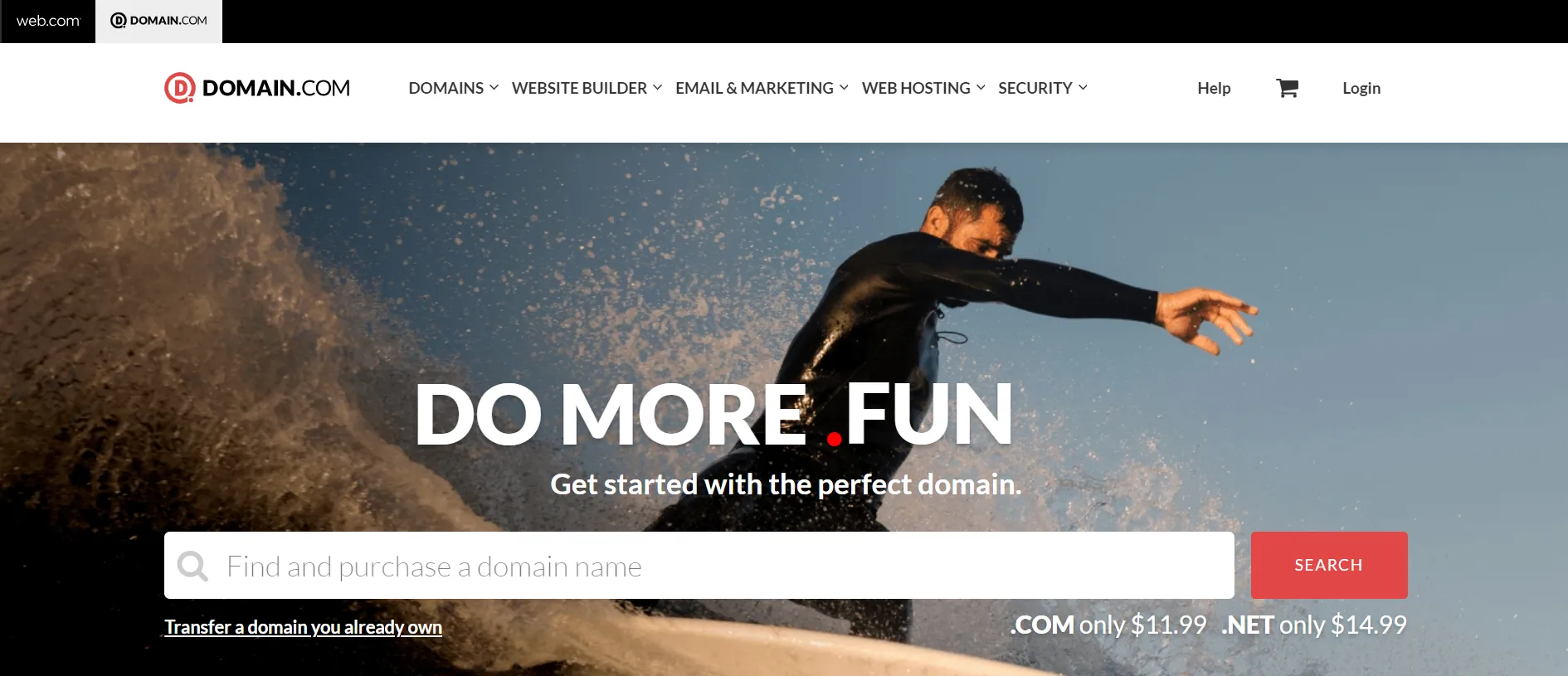
When establishing your eCommerce business, you can purchase either an expired domain name or a brand-new one. That’s why the baseline Magento pricing for domain names can vary annually:
- Brand new domain: Typically priced between $10 and $15 per year, a brand new domain allows you to create a unique brand name and grants you complete control over it. Also, opting for a new domain reduces the risk of inheriting poor-quality backlinks.
- Expired domain: The cost of expired domains ranges from $20 to $400 per year. By selecting an expired domain, you may benefit from faster search engine rankings and quicker indexing by search engines. Furthermore, the existing high-quality backlinks associated with these domains can enhance your store’s visibility on search engine results pages (SERPs).
2. Magento hosting cost (from $10/month)
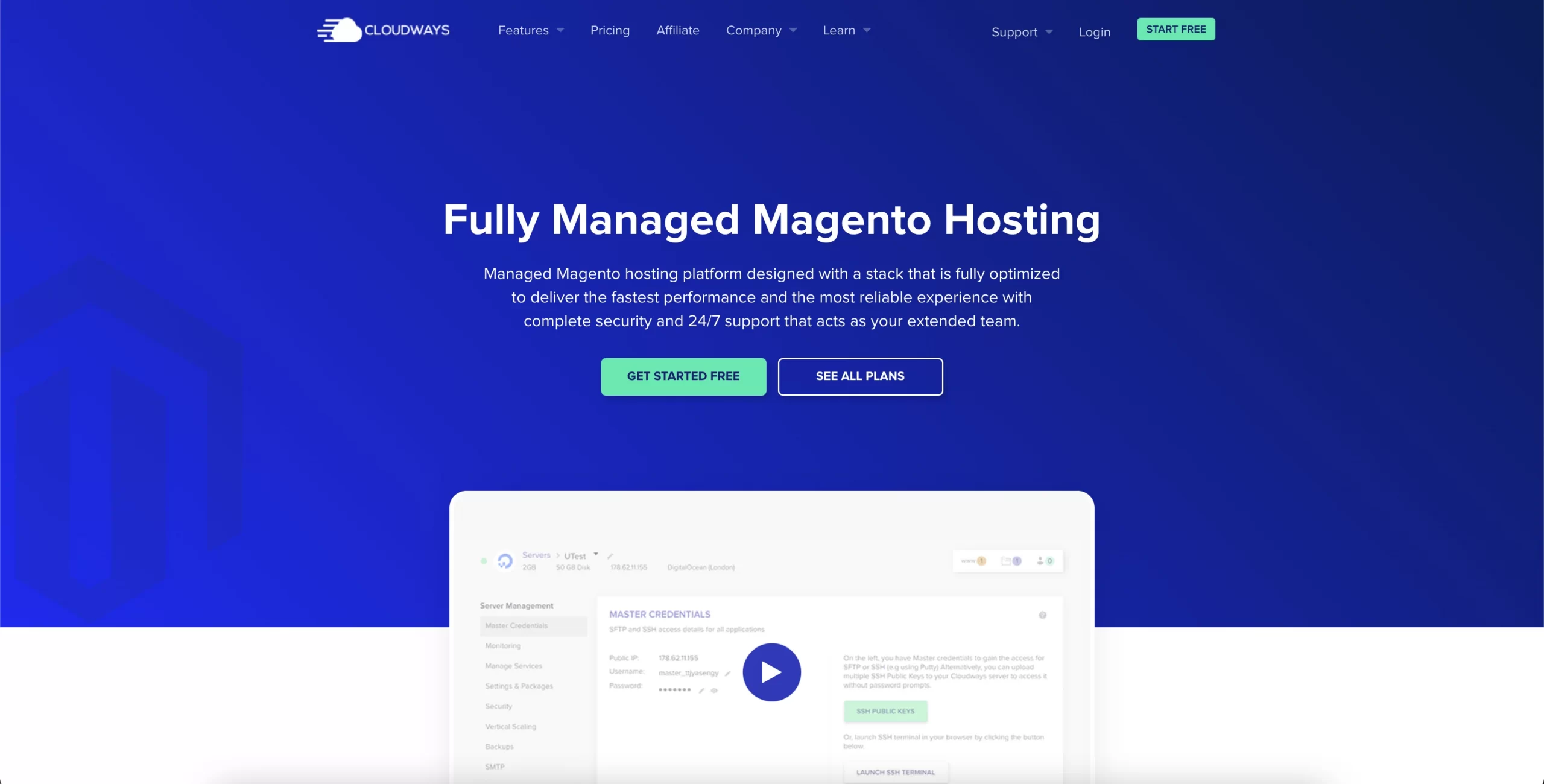
There are four primary categories of web hosting available: shared hosting, virtual private server (VPS), dedicated server hosting, and cloud hosting. For a robust Magento website, a VPS is often the most suitable choice.
The monthly Magento pricing for these services can range from $10 to $850, depending on your data storage needs and the chosen hosting provider.
Crucially, before settling on a hosting service, you must verify its compatibility with Magento. Numerous providers offer dedicated hosting solutions that are fully optimized for Magento.
3. Magento SSL cost ($50–300/year)
The Magento pricing for an SSL certificate can range from $50 to $300 per year, depending on the type of certificate and the provider.
Domain-validated (DV) SSL certificates only verify domain ownership. They are the most affordable option, typically costing between $10 and $100 annually. Meanwhile, Organization-validated (OV) SSL certificates, which provide higher assurance by verifying domain ownership and basic company information, usually range from $50 to $200 per year.
Extended-validation (EV) SSL certificates offer the highest level of assurance and display the company name in the browser’s address bar. They can cost between $100 and $500 per year.
4. Magento design cost ($0–5,000+)
As frequently outlined in any setup Magento tutorial, when it comes to designing your website, you’re presented with 2 distinct paths:
- Utilize an off-the-shelf Magento theme.
- Design a custom theme ideally suited to your requirements.
For a standard theme, the Magento 2 cost related to the design can vary from $0 to $500. Alternatively, crafting a personalized design necessitates engaging a professional web designer.
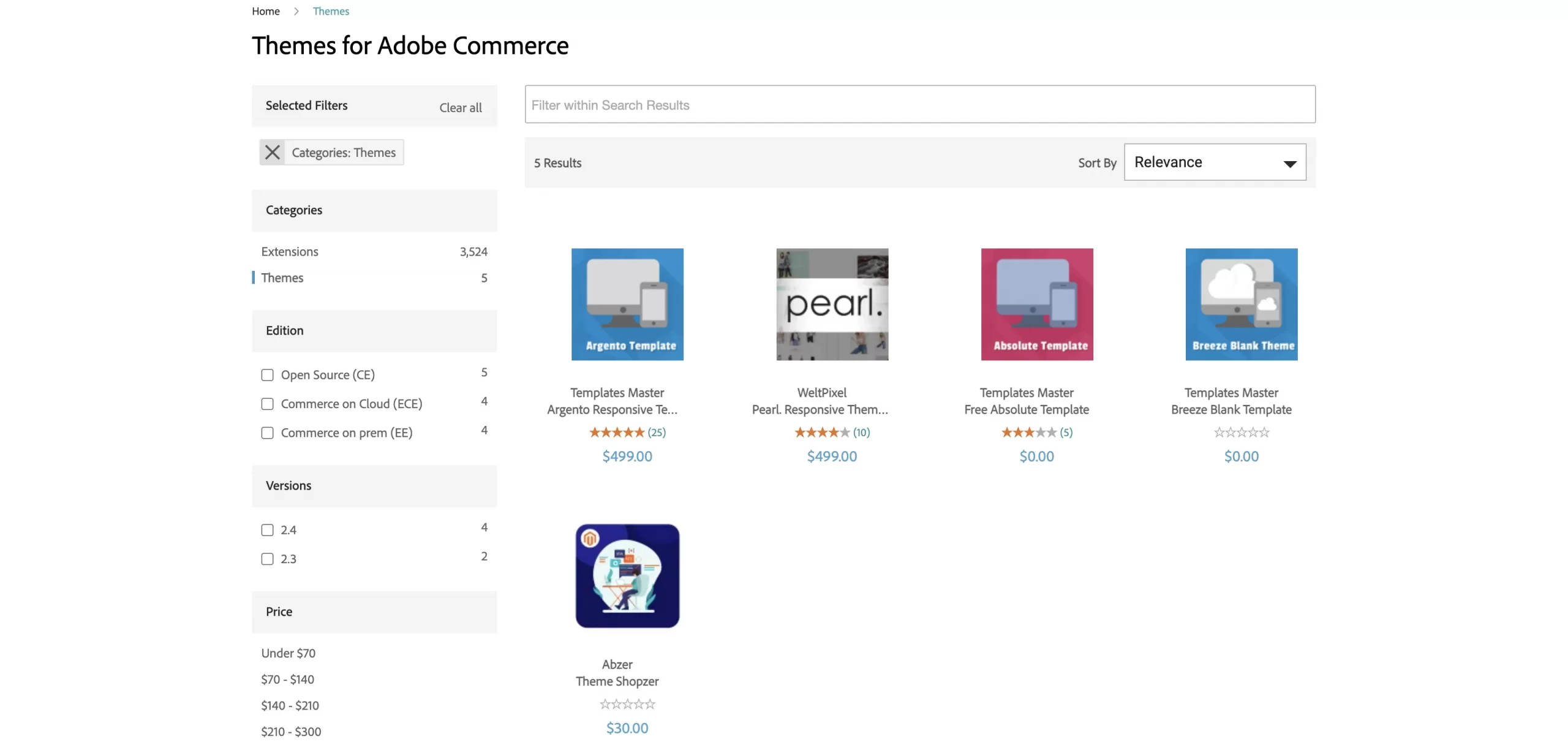
On the other hand, Magento developers can create a tailor-made theme in 40 to 160 hours. With the base rate starting at $40 per hour, the total cost can exceed $5,000.
It’s essential to acknowledge the growing trend of mobile usage and its contribution to revenue. Hence, you should ensure that your website is responsive across various devices, such as tablets and smartphones, to provide a user-friendly experience for mobile shoppers.
Last but not least, don’t forget to verify the compatibility of a new theme with your existing Magento version before implementation. This is to ensure that the design performs well on your online store. If you feel that choosing a suitable theme from Magento is too difficult, please check out the top 10 best Magento themes.
5. Magento extensions cost ($60–600/extension)
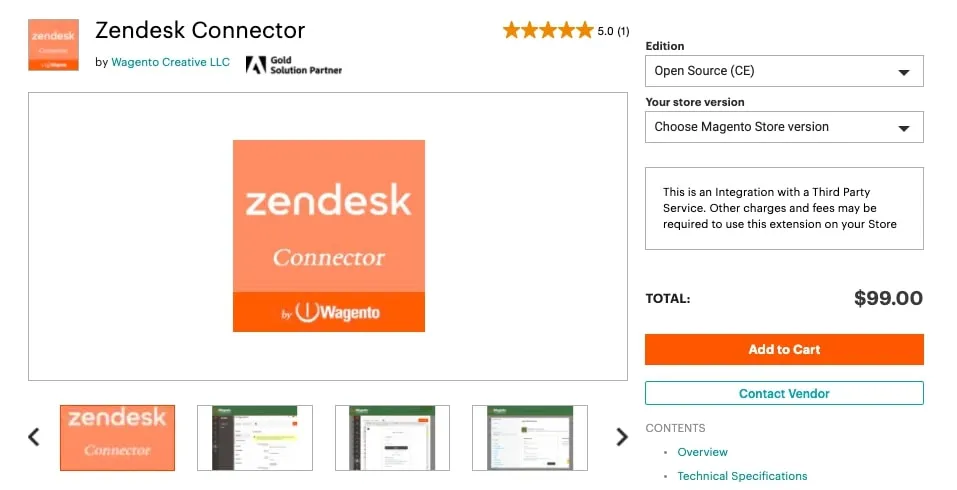
The Magento eCommerce platform equips you with fundamental functionality to operate an online business. However, Magento stores usually enhance their capabilities by incorporating additional extensions for customer support features, improved layered navigation, and advanced search.
You can discover and add these extensions from the Magento marketplace to your store. While some are free, most high-quality and advanced ones require a one-time fee. The average Magento pricing for an extension typically ranges from $60 to $600, depending on the specific features offered and the extension provider’s reputation.
6. Magento SEO & marketing cost ($10,000–40,000/year)
Running an online business is fiercely competitive. Therefore, you have to make substantial investments in website promotion and SEO to attract customers. However, if you specialize in niche products and services, you might be able to bypass this step. Otherwise, the average annual cost for SEO and promotion services typically falls within the range of $10,000 to $40,000.
This Magento pricing covers a variety of strategies aimed at enhancing online visibility and driving traffic to the website. It includes costs for keyword research, content creation, backlink building, and implementing SEO best practices to improve search rankings. Additionally, promotional expenses may encompass social media marketing, pay-per-click campaigns, email marketing, and other digital advertising efforts to attract and retain customers.
7. Magento payment cost (2.9% + $0.30/transaction)
Stripe, Authorize.net, and PayPal are the leading payment processors for Magento stores. Connecting a supported Magento payment gateway comes with no initial setup fees, though standard processing rates begin at 2.9% plus $0.30 per successful transaction.
To ensure you select the most economical option for your enterprise, we suggest conducting thorough research to find a payment service provider that aligns with your specific business needs and financial considerations. This approach will help you balance transaction costs with the benefits each service offers, such as security, customer support, and integration capabilities.
8. Magento development & maintenance cost (from $50/hour)
Whether configuring custom layouts or installing a third-party Magento extension, there are 5 key pages for customer loyalty and engagement, thereby enhancing conversion rates:
- Homepage;
- Category page;
- Product page;
- Shopping cart page;
- Checkout page.
Customizing these pages to align with your brand’s aesthetic—even when utilizing a free Magento theme—requires about 40 hours of development work. Tasks include crafting banners, modifying the color scheme of text, icons, and buttons, and repositioning elements.
Given that Magento developers charge an average of $50 per hour, the baseline Magento cost for developing a site begins at $1,800.
Further, maintaining and updating a Magento site is an ongoing process requiring your attention. Maintenance tasks often involve:
- Theme upgrades;
- Implementing unique payment or shipping integrations;
- Developing new features for a better customer experience;
- Custom import, return, and pick-up point services;
- Complex custom product development and bug fixing.
Depending on the complexity of your site, you may need a specialist for a few hours each month or on a full-time basis, with hourly rates ranging from $50 to $100. This investment ensures your site remains up-to-date and operates smoothly.
Magento Commerce & Magento Cloud Pricing
Besides Magento Open Source (where store owners manually resolve technical Magento issues), we have two other Adobe Commerce editions for larger businesses, with extra features and more robust security measures: Magento Commerce (Commerce Pro) and Magento Commerce Cloud (Managed Services). These two Magento enterprise pricing structures are determined by your yearly average gross sales revenue. They offer 5 distinct cost levels to accommodate varying business needs.
Gross Merchandise Value | Commerce Pro | Managed Services |
$0 – $1M | $22,000 | $40,000 |
$1M – $5M | $32,000 | $55,000 |
$5M – $10M | $49,000 | $80,000 |
$10M – $25M | $75,000 | $120,000 |
$25M+ | $125,000 | $190,000 |
The main difference between the two editions is that Magento Commerce (Commerce Pro) pricing doesn’t include hosting services. As a result, you’ll need to arrange and pay for hosting separately – a critical consideration when expanding into a unified Magento omnichannel enterprise setup. This may fall around anywhere from $10 – 50/month.
Please remember that for Commerce Pro and Managed Services editions, you can submit a ticket for technical issues and receive remote support. However, their response time and scope are restricted to Magento’s built-in functionality. That’s why you might still require your dedicated Magento development team to address issues related to third-party extensions, integrations, and custom logic for immediate support. Normally, the hourly rate to hire them will range from $50 to $250.
Magento Pricing vs Other Platforms Comparison
If you’re interested in how Magento eCommerce pricing stacks up against its main rivals, here is an important summary:
Platforms | Overall Pricing Estimation | About Platforms |
Adobe Commerce |
|
|
Shopify |
|
|
WooCommerce |
|
|
Salesforce Commerce |
|
|
OpenCart |
|
|
Magento Pricing – FAQs
Is Magento still free?
Yes, Magento is still free if you use Magento Open Source. It gives you the core tools to build and manage an online store, including products, categories, customers, orders, checkout, and basic storefront features. However, “free” only refers to the software license. You still need to pay for hosting, domain, development, security, maintenance, extensions, and any custom features your store needs.
How much does Magento license cost?
Magento Open Source has no license fee, so you can download and use it for free. The paid enterprise version, Adobe Commerce, does not have a fixed public license price. Adobe Commerce uses customized pricing based on your business needs, selected package, infrastructure model, scale, and required features. Therefore, businesses need to contact Adobe for an exact quote.
What are the disadvantages of Magento?
The main disadvantages of Magento are complexity, technical maintenance, and higher long-term operating costs. It is powerful and flexible, but it often requires developers to handle installation, hosting, customization, updates, performance, security, and complex Magento shipping configurations. Magento can also become expensive once you add premium extensions, custom development, advanced hosting, and ongoing support. For small stores without technical resources, a hosted platform may be easier to manage.
Is Magento the same as Adobe Commerce?
Not exactly. Magento Open Source is the free, open-source version of the platform. Adobe Commerce is the paid enterprise version built on Magento’s foundation, with more advanced features, cloud options, scalability, B2B capabilities, and Adobe ecosystem integrations.
In simple terms, Magento Open Source is best for businesses that want flexibility and can manage technical work. Adobe Commerce is better for larger businesses that need enterprise-level features, support, and scalability.
Conclusion
As highlighted in this comprehensive Magento 2 Review, Adobe Commerce is definitely a robust solution for both medium and large enterprises to operate and develop their business. This article has shown everything you need to know when estimating Magento pricing so you can easily manage your budget.
In case you intend to perform a Magento migration or upgrade, you can always schedule a meeting with the LitExtension experts. We are dedicated to safely, accurately, and securely transfer your data at a reasonable price.
For more detailed information, please contact our support team. We are available 24/7 via Ticket System, email, and live chat. You can also join our community to get more eCommerce tips and news!