
Ever since the rise of online retail, it’s become clear that eCommerce and SEO go hand in hand. After all, without strong search engine rankings, even the most advanced eCommerce features can fall flat! So, what’s the best eCommerce platform for SEO that truly fits your business?
This article has the answer you need. I’ll walk you through 15+ top platforms:
- WooCommerce – Best for full SEO control
- Shopify – Best for fast, secure SEO
- BigCommerce – Best for built-in SEO on large catalogs
- Magento (Adobe Commerce) – Best for multi-store/multi-language SEO
- PrestaShop – Best for multilingual and international SEO
- OpenCart – Best for developer-level, low-cost SEO customization
- Squarespace – Best for clean, built-in SEO with minimal setup
- Wix – Best for beginner-friendly, AI-powered SEO
- Shift4Shop – Best for all-in-one SEO tools
- Ecwid – Best for SEO-friendly commerce to content sites
- Volusion – Best for insight-driven SEO dashboards
- Weebly – Best for simple SEO for small stores
- GoDaddy – Best for local SEO
- Big Cartel – Best for lightweight, fast-loading stores
- Zoho Commerce – Best for AI-generated multilingual SEO
- Kajabi – Best for content SEO
Let’s dive in!
The Best eCommerce Platform for SEO: Top 15+ Most Popular
Among the top 15+ platforms, WooCommerce is considered the best and most popular option. Before jumping into the detailed breakdown of each platform’s SEO capabilities, here’s a quick summary table to help you compare the top contenders and find the best eCommerce platforms regarding your goals:
|
Platform |
Advantage |
Limitations |
Pricing Range (USD) |
|
WooCommerce |
Unparalleled SEO flexibility via WordPress ecosystem |
Requires manual setup and technical knowledge |
Free (excluding hosting & plugins) |
|
Shopify |
Fast, secure, and optimized by default with strong app ecosystem |
Fixed URL structures, limited access to backend SEO files |
$39 – $2,300+/month |
|
BigCommerce |
Built-in advanced SEO tools with minimal reliance on apps |
Schema and customization limited to built-in capabilities |
$39 – $1,000+/month |
|
Magento |
Full control over every technical SEO element for enterprise needs |
Steep learning curve, high maintenance burden |
Free (Open Source) or Enterprise |
|
PrestaShop |
Great multilingual and metadata SEO flexibility |
Relies on third-party modules for advanced SEO features |
Free (Open Source) or Custom |
|
OpenCart |
Developer-level SEO customization with low entry cost |
Fragmented SEO tools, lacks built-in schema |
Free (plus extensions/hosting) |
|
Squarespace |
Built-in SEO for basic needs with clean code and responsive templates |
Limited schema control and no robots.txt or canonical customization |
$14 – $44/month |
|
Wix eCommerce |
SEO Wizard and beginner-friendly SEO tools |
Rigid URL structures, limited server-side SEO access |
$17 – $159/month |
|
Shift4Shop |
All SEO essentials included for free (with conditions) |
U.S.-only free plan, limited third-party integrations |
$39/month |
|
Ecwid |
Seamless SEO plugin for content-first sites |
Dependent on host platform for deeper SEO features |
$5 to $105/month |
|
Volusion |
Central SEO dashboard and metadata management |
No deep server-level customization |
$35 – $299+/month |
|
Weebly |
Simple, guided SEO for beginners and small stores |
Lacks advanced features like schema, robots.txt |
Free – $26/month |
|
GoDaddy |
Best for local SEO via directory integration |
Not built for product SEO at scale |
$9.99 – $24.99/month |
|
Big Cartel |
Lightweight, fast-loading, and simple metadata control |
No schema, sitemap, or advanced SEO tools |
Free – $30/month |
|
Zoho Commerce |
AI-generated metadata and multilingual SEO support |
Less plugin flexibility, not ideal for headless or enterprise use |
$19 – $129/month |
|
Kajabi |
Great for content SEO and thought leadership |
Lacks product SEO and eCommerce-specific metadata tools |
$71 – $319/month |
#1. WooCommerce
Users’ rating: 4.4/5 (on G2)

WooCommerce easily stands as the best eCommerce platform for SEO. After all, it inherits the full power of WordPress, the CMS behind more than 40% of all websites and the industry leader in organic search performance.
What truly sets WooCommerce apart is not just plugin compatibility, but how deeply merchants can customize every technical layer of SEO. Additionally, unlike hosted platforms, WooCommerce doesn’t restrict access to file structures, server configurations, or URL hierarchies, allowing users to shape their SEO strategy as they see fit.
Highlights
- Fully customizable URLs, meta titles, meta descriptions, breadcrumbs, and permalinks
- Seamless integration with SEO plugins (Yoast, Rank Math, All in One SEO) offering real-time audits, schema, internal linking, and redirection tools
- Access to .htaccess, robots.txt, and server-level cache control (e.g., via W3 Total Cache, LiteSpeed)
- Schema-rich product markup via plugins (ratings, availability, pricing, breadcrumbs)
- WordPress blog integration supports content clustering, topic authority, and internal linking
- Image optimization plugins (Smush, ShortPixel) help meet Core Web Vitals
- Open access to performance tools for improving LCP, INP, CLS (e.g., lazy loading, CDNs, async JS)
Pricing: 100% free to install
|
WooCommerce strengths |
WooCommerce limitations |
|
Total control over site architecture, from URLs to sitemaps to server rules |
Requires technical expertise to configure and maintain properly |
|
Supports content-driven SEO via native WordPress blogging and taxonomies |
Site performance (speed, mobile) is entirely dependent on external hosting and manual optimization |
|
Deep plugin ecosystem enables advanced schema, redirects, canonical tags, and content analysis |
Quality and compatibility of SEO plugins can vary widely; no centralized QA |
|
Full access to robots.txt, .htaccess, and caching mechanisms |
Mistakes in technical setup (e.g., redirect loops, broken schema) can severely hurt SEO if unmanaged |
|
Ability to build custom SEO silos, internal link strategies, and topic clusters |
No official support team; success depends on user knowledge or hiring professionals |
Furthermore, one of WooCommerce’s biggest SEO strengths lies in its vast ecosystem of SEO plugins. Among the most widely used are Yoast SEO and Rank Math, two powerful plugins that dominate the WordPress SEO landscape. Each offers a robust feature set and caters to slightly different user preferences. Here’s a quick overview:
|
Feature |
Yoast SEO |
Rank Math |
|
Multiple Focus Keywords |
Only in Premium version |
Available in free version |
|
WooCommerce SEO Support |
Requires separate add-on (~$79/year) |
Included in core free package |
|
Redirect Manager |
Premium only |
Included in free version |
|
Schema Types |
Limited by default; more available in add-ons |
Advanced schema builder for 20+ types in free version |
|
Image SEO (ALT automation) |
Not included; requires separate tools |
Automated ALT and title tag generation built-in |
|
404 Monitoring / Analytics |
Add-ons required |
Built-in 404 monitor and analytics integration |
|
Pricing (add-ons and plans) |
~$99/year + $79/year for WooCommerce add-on |
Cheaper overall; WooCommerce features included free |
|
Performance and Bloat |
More established and stable, fewer conflicts |
Lightweight, modular—but more updates and potential compatibility considerations |
Read more: WooCommerce review
So, it’s clear that WooCommerce gives you all the tools and flexibility needed to make the most out of SEO. But to see real results, everything still needs to be set up and optimized correctly. That’s why I’ve put together a dedicated WooCommerce SEO checklist to guide you through the process.
#2. Shopify
Users’ rating: 4.4/5 (on G2)
While WooCommerce gives users absolute freedom and control over every SEO element, Shopify offers a more opinionated, hosted approach to help streamline technical SEO.
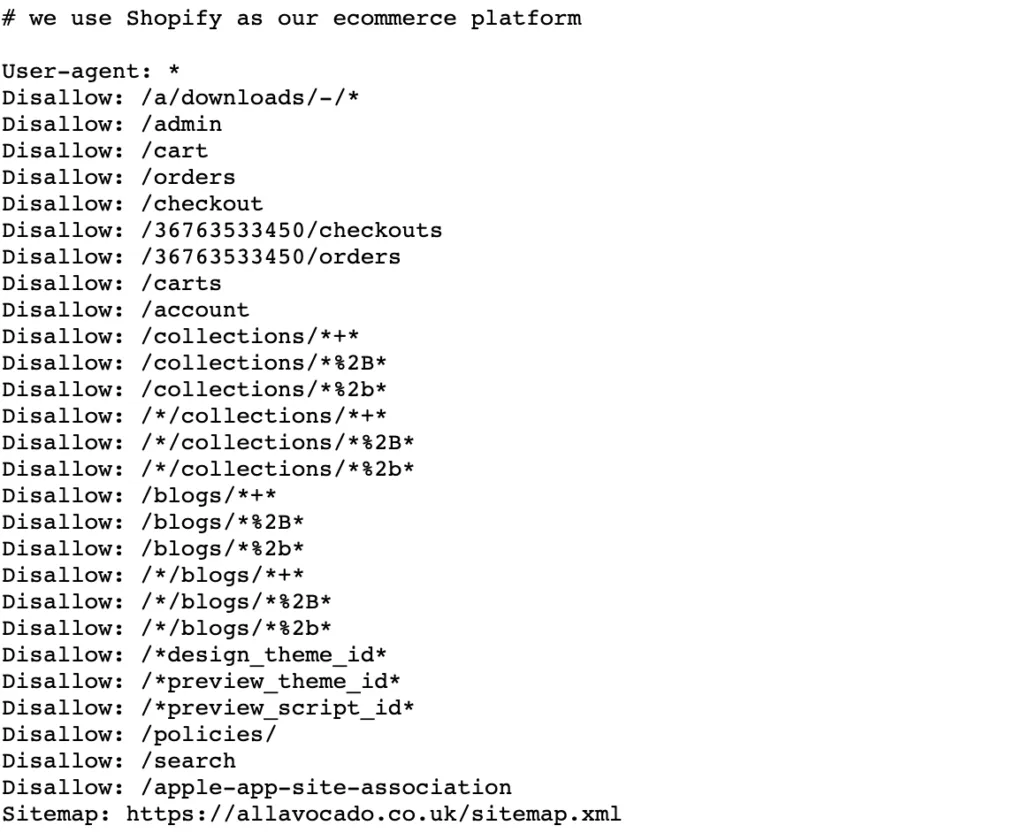
Specifically, Shopify offers clean URL structures, secure HTTPS hosting, blazing-fast global CDN delivery, automatic sitemap generation, and mobile-optimized themes that are aligned with Google’s Core Web Vitals standards. All these features give stores a solid SEO foundation without requiring technical intervention.
Highlights:
- Auto-generated XML sitemap and robots.txt file
- Built-in canonical tags to prevent duplicate content
- Native product schema for price, availability, and reviews (JSON-LD)
- HTTPS and mobile-first themes optimized for Core Web Vitals
- Redirect management via admin panel
- SEO apps available for structured data, redirects, image optimization, broken link monitoring
Pricing:
- Basic: $39/month
- Grow (formerly Shopify): $105/month
- Advanced: $399/month
- Shopify Plus (Enterprise): Starts at around $2,300/month
|
Shopify strengths |
Shopify limitations |
|
Excellent page speed and uptime with global CDN |
Fixed URL paths (e.g. /products/) limit full control
|
|
HTTPS and mobile-first themes help Core Web Vitals |
Advanced schema customization requires third-party apps |
|
Sitemap, canonical tags, and redirects built-in |
Limited access to robots.txt and full head control |
|
Simple admin UI for metadata editing |
Duplicate content issues possible with tags and collections |
|
SEO apps extend functionality without code |
Cumulative app costs can be high; features fragmented |
Read more: Shopify review
#3. BigCommerce
Users’ rating: 4.2/5 (on G2)
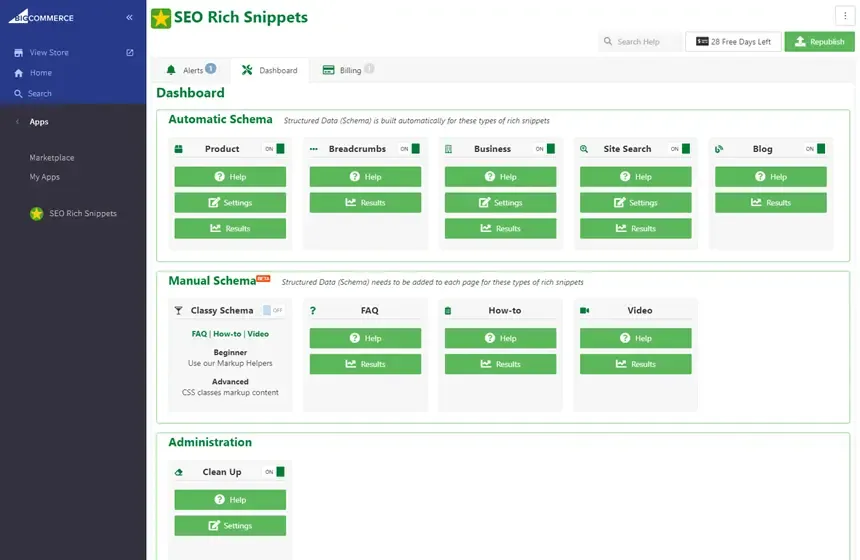
Compared to Shopify, which leans on apps to expand its SEO stack, BigCommerce builds most of its advanced SEO toolkit directly into the core platform. Built-in structured data ensures product listings are eligible for rich snippets, and automatic AMP support (for blogs and product pages) also provides mobile-first acceleration.
These features make BigCommerce the best eCommerce platform for SEO ranking with large catalogs or intricate navigation systems that need built-in SEO features that can keep pace with growth.
Highlights:
- Native support for rich product schema (price, reviews, availability)
- Fully customizable URLs and slug structures
- Built-in AMP for mobile page speed (optional via plugin or theme)
- Admin-level access to robots.txt, redirects, and canonical tags
- Built-in faceted navigation with canonical rules to prevent duplication
- SEO-friendly blog module with metadata editing
Pricing:
- Standard: $39/month
- Plus: $105/month
- Pro: $399/month (pricing increases above $400k annual revenue)
- Enterprise: Custom pricing (starts ~$1,000/month)
|
BigCommerce strengths |
BigCommerce cons |
|
No reliance on apps for core SEO features |
Schema customization is limited to built-in fields |
|
AMP, rich snippets, and canonical tags natively supported |
Faceted navigation needs proper configuration to avoid crawl traps |
|
Admin UI gives access to redirects and robots.txt |
Less community documentation/support than Shopify |
|
Custom URLs improve keyword targeting and CTR |
Requires dev assistance for advanced optimization (e.g. PWA) |
|
Strong scalability for large and growing catalogs |
Enterprise features gated behind Pro/Enterprise tiers |
Read more: BigCommerce review
#4. Magento (Adobe Commerce)
Users’ rating: 4.0/5 (on G2)
Where BigCommerce offers strong SEO tooling for large catalogs, Magento takes things even further by delivering full backend-level SEO customization – ideal for enterprise-level merchants and dev-heavy teams.
It gives developers and SEO teams unrestricted access to every aspect of site architecture, from fine-tuned URL rewrites and multi-layered category structures to server configurations, sitemap logic, schema injection, and headless deployment options.
Below is a full review on Magento platform in 2025, check it out:
Highlights:
- Full access to customize URLs, metadata, schema, redirects, robots.txt
- Built-in XML sitemap and advanced layered navigation control
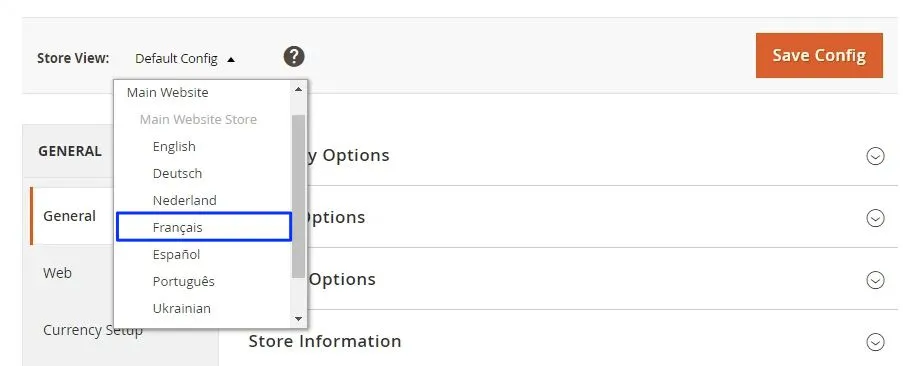
- Multi-store, multi-language SEO from a single backend
- Structured data customization via backend or modules
- Headless-ready for custom PWA frontends
- Deep integration with Adobe Analytics and Experience Cloud (enterprise plans)
Pricing: Free (self-hosted)
|
Magento strengths |
Magento limitations |
|
Full control over every technical SEO factor |
Complex interface and steep learning curve
|
|
Best-in-class for international/multi-site SEO setups |
Not suitable for lean teams or fast deployment |
|
Custom schema, sitemap logic, and robots rules |
Requires constant maintenance and security updates |
|
Headless flexibility for optimizing CWV and UX |
Poor SEO performance if not configured by experts |
|
Advanced layered navigation control for large catalogs |
High cost and dev resource requirements |
Read more: Magento review
#5. PrestaShop
Users’ rating: 4.3/5 (on G2)
In contrast to Magento’s enterprise-level complexity, PrestaShop offers an open-source solution with core SEO features baked in, tailored for SMBs and global merchants who need multilingual and international SEO flexibility without a steep learning curve.
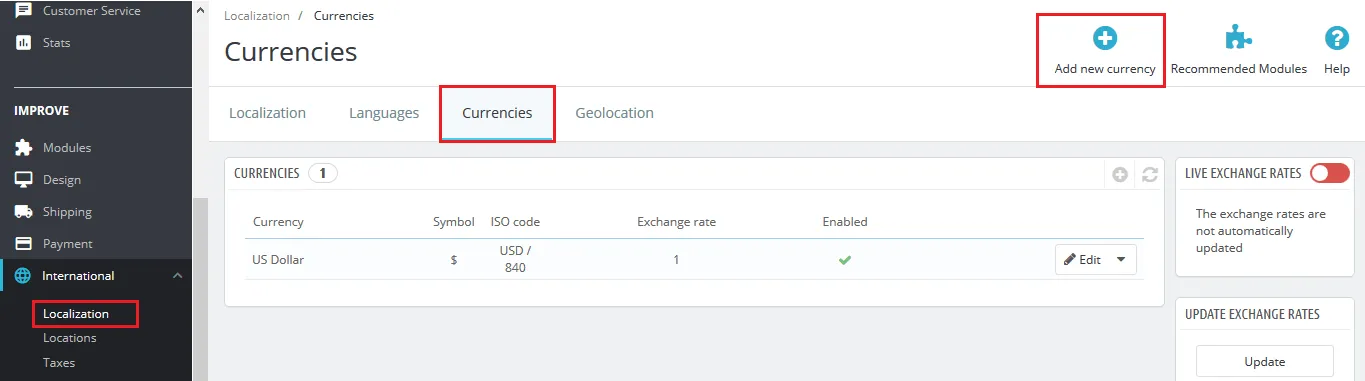
And while not as powerful as Magento or as plug-and-play as Shopify, it offers a solid middle ground: it allows full control over meta titles, descriptions, canonical tags, and URLs without coding. Multi-language and multi-currency support also comes built-in, which makes it the best eCommerce platform for SEO in international strategies.
Highlights:
- Editable meta titles, descriptions, URLs, and canonical tags
- Built-in support for multilingual and multi-currency SEO
- Manual redirect, robots.txt, and sitemap management
- GDPR-friendly compliance for EU-based stores
- SEO modules available for schema, open graph, sitemap enhancements
Pricing:
- Core: Free (open source)
- Hosted: Custom
|
PrestaShop strengths |
PrestaShop limitations |
|
Strong built-in support for multilingual SEO
|
Many advanced features require paid third-party modules |
|
Manual control over all key metadata and URLs |
Plugin ecosystem lacks consistency and quality control |
|
Flexible open-source codebase for custom SEO logic |
No official support or centralized SEO guidance |
|
Lightweight compared to Magento |
Performance depends entirely on chosen hosting setup |
|
Better international SEO than most SaaS platforms |
Steep learning curve for non-tech-savvy users |
Read more: PrestaShop review
#6. OpenCart
Users’ rating: 4.3/5 (on G2)
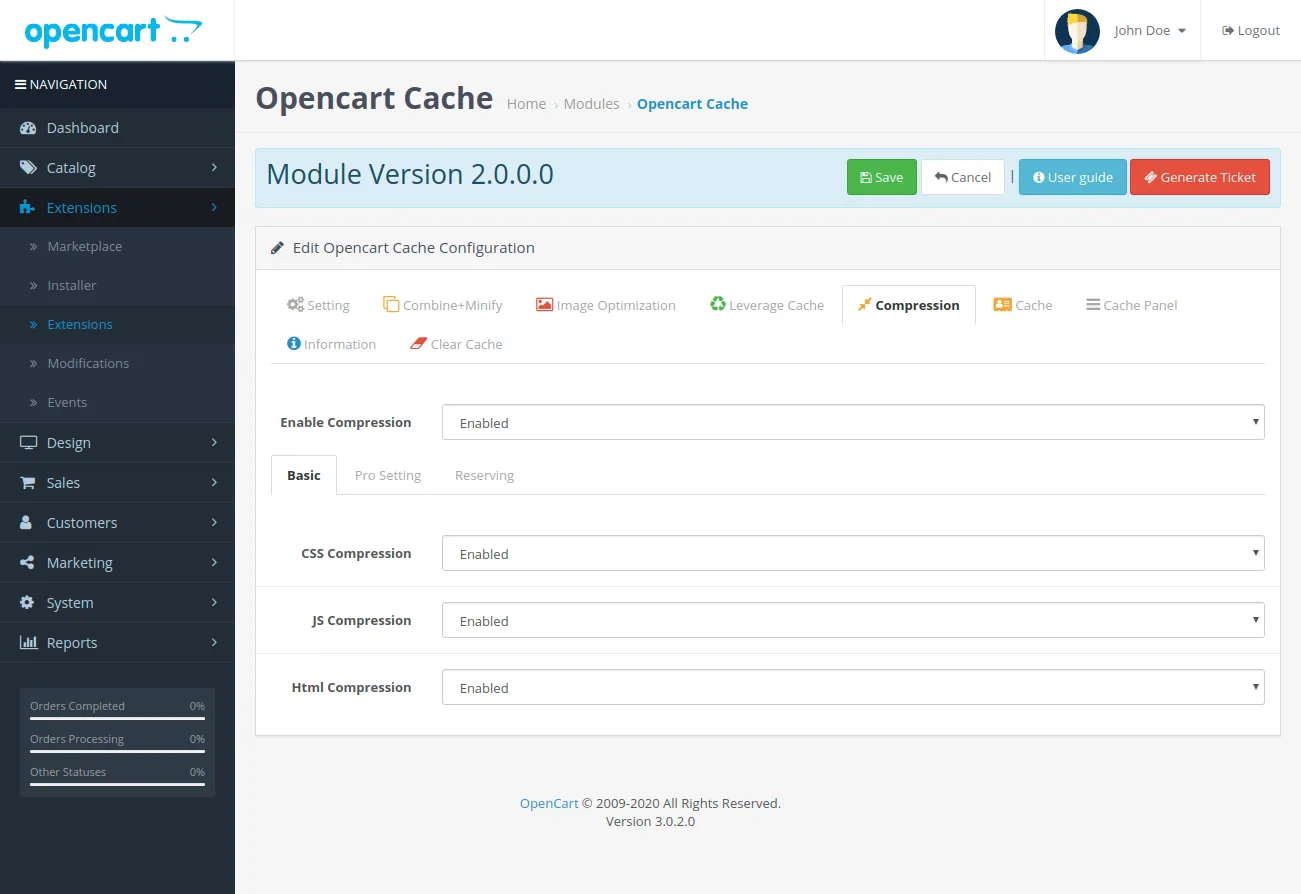
While PrestaShop emphasizes EU compliance and built-in simplicity, OpenCart takes a more modular, developer-oriented approach to SEO.
It enables complete backend SEO customization (from meta tags and URL rewriting to breadcrumb structure and robots control) via its core system or affordable extensions under $100. Still, maintaining SEO health essentially requires managing these extensions and the hosting environment yourself.
Highlights:
- Customizable URLs, meta titles/descriptions for all entities
- Extensions available for JSON-LD product schema, Open Graph, breadcrumbs
- Robots.txt editing via FTP or module
- Sitemap generation and support for pagination
- 301 redirects available via SEO modules
- Multi-language/currency SEO via plugins
- Access to caching & compression through extensions
Pricing: Core software: Free
|
OpenCart strengths |
OpenCart limitations |
|
Full URL control |
No built-in advanced SEO tools |
|
Multilingual SEO support via extensions |
Fragmented SEO management |
|
Editable robots.txt and .htaccess |
No automatic structured data |
|
No SEO-related platform fees |
Manual sitemap and redirect setup |
|
Developer-friendly and customizable |
Hosting affects performance |
Read more: OpenCart review
#7. Squarespace
Users’ rating: 4.4/5 (on G2)

Compared to OpenCart’s (or Magento’s) developer-oriented model, Squarespace appeals to users who prioritize clean design and built-in functionality. Users get customizable URLs, metadata, automatic XML sitemaps, schema, Google Search Console integration, and a well-managed CDN.
Still, keep in mind that there’s no access to robots.txt or canonical edits, and schema is limited in scope, so whether Squarespace is the best eCommerce platform for SEO overall also depends on your goals.
Highlights:
- Custom URL slugs, titles, and meta descriptions
- Built-in XML sitemap generation and automatic 301 redirects
- Basic structured data (schema.org) for pages/posts
- HTTPS and CDN hosting for speed
- Google Search Console integration
- Clean HTML markup and mobile-responsive themes
Pricing:
- Personal: $14/month
- Business: $20/month
- Commerce Basic: $24/month
- Commerce Advanced: $44/month
|
Squarespace strengths |
Squarespace limitations |
|
Clean semantic HTML structure |
No access to robots.txt or sitemap.xml
|
|
Automatic image optimization |
Limited structured data control |
|
Canonical tags applied by default |
Static URL folders |
|
Built-in sitemap and SSL |
No support for hreflang |
|
Google Search Console integration |
No bulk SEO field editing |
Read more: Squarespace review
#8. Wix
Users’ rating: 4.2/5 (on G2)

In a way, one can say Squarespace and Wix are similar in many ways. Wix combines beginner-friendly site-building with practical SEO tools and an AI-powered SEO Wizard that scans your site, generates metas, and suggests improvements. Plus, for eCommerce users, Wix also supports strong on-page SEO with CMS flexibility.
Highlights:
- SEO Wiz assists with metadata optimization and site validation
- Custom URLs, titles, descriptions, and image alt text
- Native XML sitemap and HTTPS hosting
- Built-in structured data for products
- CDN hosting with mobile-optimized themes for page speed
- App market offers additional SEO tools (broken link checker, Schema apps)
Pricing:
- Light (non-eCommerce): $17/month
- Core (eCommerce): $29/month
- Business: $39/month
- Business Elite: $159/month
|
Wix strengths |
Wix limitations |
|
AI-powered SEO setup |
Rigid URL structure |
|
Custom meta and alt fields |
No server-side SEO access |
|
Built-in product schema |
No hreflang support |
|
CDN and mobile optimization |
Page speed can vary |
|
SEO apps available in marketplace |
Limited canonical tag control |
Read more: Wix review
Need to Migrate to Wix?
Let LitExtension provide a well-optimized All-in-One migration service for you!

#9. Shift4Shop
Users’ rating: 3.9/5 (on G2)
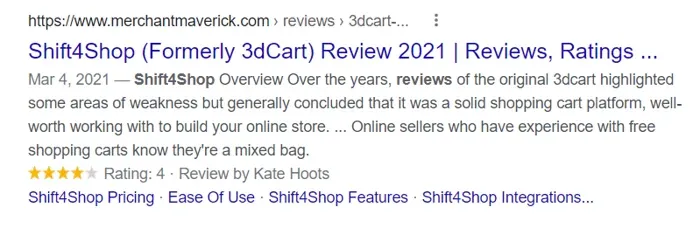
Shift4Shop differentiates itself by offering a hosted environment packed with robust SEO features: editable metadata, auto-generated sitemaps, secure HTTPS, canonical settings, customizable URLs, 301 redirects, schema markup – all included with no need for plugins.
That means merchants get Shopify-level convenience with more SEO control baked in, even at no cost (if using Shift4 Payments in the U.S.). For this reason, Shift4shop is considered by many to be the best eCommerce platform for SEO.
Highlights:
- Full metadata control (titles, descriptions, alt tags, URLs)
- Sitemap.xml and built-in canonical tag support
- HTTPS hosting + CDN for speed and security
- Native 301 redirect manager and robots.txt editing
- Rich snippet markup (JSON-LD) supported
- Custom URL structures and SEO-friendly category hierarchies
Pricing: $19–$39/month
|
Shift4shop strengths |
Shift4shop limitations |
|
All SEO tools built into admin |
Free plan limited to U.S. users |
|
Built-in schema support |
Smaller SEO support community |
|
Editable robots.txt and canonical tags |
Limited app ecosystem |
|
Integrated 301 redirect manager |
Some templates not SEO-optimized |
|
Supports AMP and mobile SEO |
Less flexible for enterprise SEO setups |
Read more: Shift4shop review
#10. Ecwid
Users’ rating: 4.7/5 (on G2)

While Shift4Shop (and most other previously mentioned options) serve as a comprehensive platform, Ecwid excels as an SEO-enhanced plugin for content-first websites seeking to add eCommerce functionality without compromising their existing structure.
Specifically, Ecwid excels at turning any site into a storefront via embeddable widgets, while automatically generating SEO-friendly components like product schema, meta tags, XML sitemaps, and mobile responsiveness. It’s ideal for users who already have a content-rich site (e.g., WordPress, Wix) and want to add commerce without rebuilding, though note that its SEO depth is restricted to what the widget system allows.
Highlights:
- Automatic schema markup for products and categories
- Metadata customization (titles, descriptions, alt tags)
- XML sitemap generation when used standalone
- Mobile-ready widgets and HTTPS hosting included
- Social meta tags (Open Graph, Twitter Cards) support via UI
Pricing:
- Starter: $5/month
- Venture: $30/month
- Business: $55/month
- Unlimited: $130/month
|
Ecwid strengths |
Ecwid limitations |
|
Auto schema markup |
No canonical tag control |
|
Editable metadata fields |
SEO dependent on host platform |
|
Fast-loading and mobile-ready |
No sitemap if embedded |
|
HTTPS on all plans |
Flat URL structure |
|
Social meta tag support |
No built-in blog or content tools |
Read more: Ecwid review
#11. Volusion
Users’ rating: 3.2/5 (on G2)
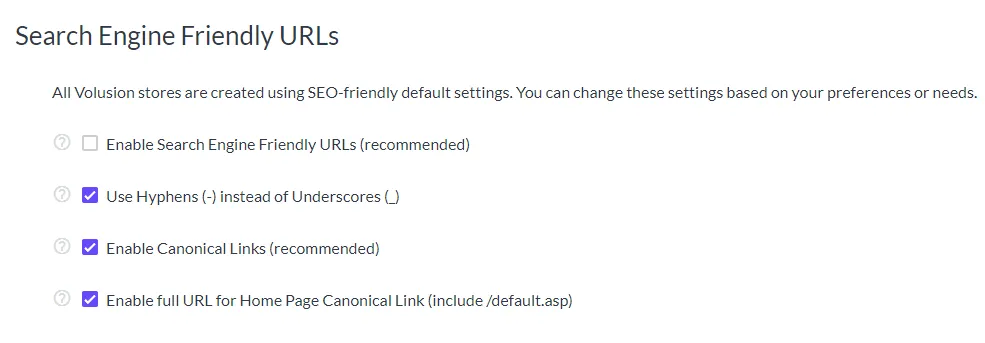
All in all, Volusion stands out as the best eCommerce platform for SEO by offering an SEO dashboard tailored for mid-sized eCommerce stores that want insight-driven optimization without code.
It provides real-time analysis of product page performance (displaying missing metadata, duplicate content warnings, and crawl diagnostics), all within the same interface used for store management. This built-in intelligence allows merchants to chart page-level SEO KPIs, adjust canonical tags, and manage redirects across large inventories. However, it stops short of offering server-level controls like robots.txt editing or custom schema injection.
Highlights:
- Central SEO dashboard for metadata across pages, products, categories
- Enabled SEO-friendly URLs and canonical links
- Sitemap auto-generation and submission tools
- 301 redirect manager and structured metadata editor
- Keyword and image alt-text optimization guidance
Pricing:
- Personal: $35/month
- Professional: $79/month
- Business: $299/month
- Prime: Based on GMV
|
Volusion strengths |
Volusion limitations |
|
Centralized metadata and URL controls |
Less backend server-level editing |
|
SEO recommendations built into admin |
Smaller extension ecosystem |
|
Automatic sitemap and canonical tools |
Less control over deeper schema types |
|
Redirect management included natively |
Custom server optimization not supported |
|
Lightweight SEO without plugins |
May not scale for international stores |
Read more: Volusion review
#12. Weebly
Users’ rating: 4.2/5 (on G2)

From my observation, Weebly focuses on delivering essential SEO tools to small business owners and hobbyists without overwhelming them.
It allows simple editing of URLs, alt tags, meta titles/descriptions, and auto-generates accessible sitemaps and canonicals. Furthermore, real-time prompts also guide users to improve on-page optimization as they edit content. Nevertheless, Weebly lacks advanced SEO features, such as schema types, hreflang, and server access. As a result, it’s a fit for straightforward, single-language product catalogs or portfolio sites.
Highlights:
- Custom URL slugs, page titles, and meta descriptions
- Auto-generated sitemap and canonical tags
- ALT tags for images and 301 redirects support
- Responsive templates with SSL secured sites
- Basic SEO guides embedded in the admin for beginners
Pricing:
- Free: $0
- Personal: $10/month
- Professional: $12/month
- Performance: $26/month
|
Weebly strengths |
Weebly limitations |
|
Easy metadata and URL customization |
No robots.txt or server file control |
|
Built-in sitemap and canonical tags |
Limited support for structured data types |
|
301 redirects and image alt-tags included |
No hreflang or international SEO tools |
|
Mobile-optimized, secure by default |
Bulk editing isn’t available |
|
SEO tutorials integrated into UI |
Templates feel dated for modern SEO demands |
Read more: Weebly review
#13. GoDaddy
Users’ rating: 3.9/5 (on G2)

Taking a different direction from Weebly’s creator-first focus, GoDaddy’s eCommerce platform emphasizes local SEO and directory-based visibility.
In essence, GoDaddy’s eCommerce platform centers on small businesses targeting geographically-bound customers. Its standout feature is integration with local directories and search platforms, which allows users to push consistent metadata, location info, and business hours to Google My Business, Yelp, Bing, and more. Hence, GoDaddy makes it onto my list as the best eCommerce platform for SEO.
Highlights:
- SEO wizard for metadata, keyword analysis, and tasks
- Local SEO tools with business directory integration
- Basic metadata editing for pages and products
- HTTPS and mobile-optimized hosting
- Basic SEO analytics dashboards
Pricing:
- Basic: $9.99/month
- Premium: $14.99/month
- Commerce Plan: $20.99/month
|
GoDaddy strengths |
GoDaddy limitations |
|
Guided setup with local SEO focus |
Limited product page SEO controls |
|
Keyword suggestions included |
No sitemap or canonical editing |
|
Integration with business directories |
Lacks structured data capabilities |
|
Simple interface for non-technical users |
Not suited for larger stores |
|
HTTPS and mobile optimization built-in |
No advanced SEO tools or apps |
Read more: GoDaddy review
#14. Big Cartel
Users’ rating: 4.2/5 (on G2)
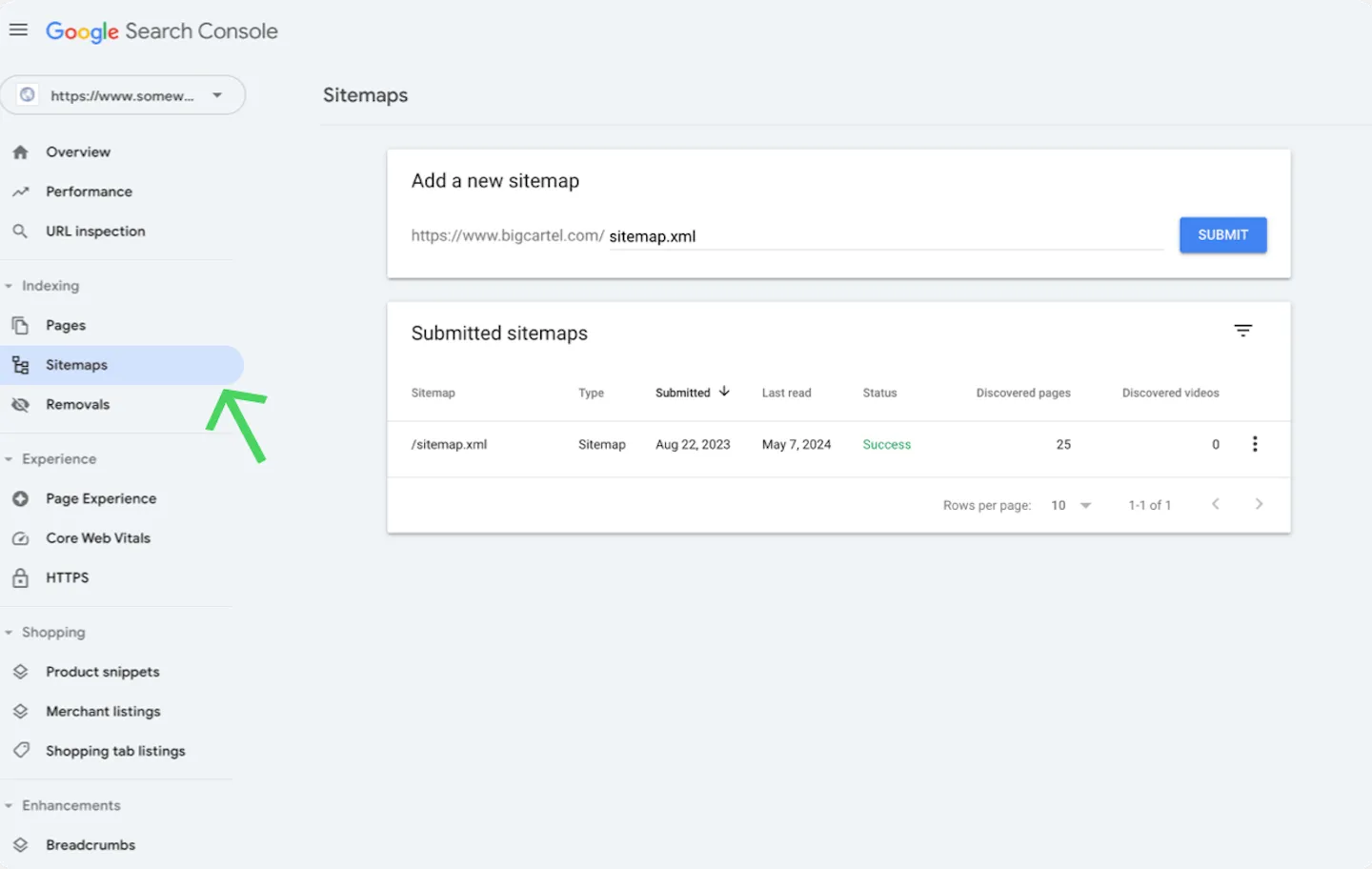
Instead of targeting local businesses like GoDaddy, Big Cartel is built for solo creators and artists with the essentials covered. Its SEO strength lies in generating favorably cached, lightweight, schema-free pages that load quickly – ideal for minimal product catalogs. Shops also benefit from editable page titles, meta descriptions, and integration with Google Search Console.
Highlights:
- Metadata edit fields for products and pages
- Clean URL generation with basic structure
- Auto-indexing and Google Search Console integration
- Responsive themes and secure hosting
- No jarring ads or forced branding
Pricing:
- Gold: Free (up to 5 products)
- Platinum: $15/month (50 products)
- Diamond: $30/month (500 products)
|
Big Cartel strengths |
Big Cartel limitations |
|
Clean metadata UI for quick edits |
No schema or structured data support |
|
Simple, readable URLs |
Lacks canonical or redirect controls |
|
Google Search Console compatibility |
No XML sitemap generation |
|
Lightweight, fast-loading pages |
Not fit for stores with >250 SKUs |
|
No hidden fees or ads |
Missing deeper SEO analytics/tools |
Read more: Big Cartel review
#15. Zoho Commerce
Users’ rating: 4.2/5 (on G2)

Next, we have Zoho Commerce. For many, Zoho Commerce is the best eCommerce platform for SEO as it combines built-in multilingual and multi-currency support with automated, AI-enhanced metadata generation and schema injection.
The SEO dashboard supports robots.txt editing, sitemap configuration, and bulk metadata editing. Plus, its AI tools can generate structured product descriptions optimized for target keywords, supported by built-in hreflang tags that manage regional content variation.
Highlights:
- Custom URLs, titles, meta-description fields
- Auto-generated sitemaps and configurable robots.txt
- SEO-optimized blog support
- AI-generated SEO descriptions for products
- Support for multi-country stores
- Schema markup via built-in AI tools
Pricing:
- Standard: $19/month
- Professional: $59/month
- Premium: $129/month
|
Zoho Commerce strengths |
Zoho Commerce limitations |
|
Metadata, URL, and robots control built-in |
AI descriptions may lack nuance |
|
Auto-sitemaps and hreflang support |
Less plugin flexibility |
|
SEO blog features included |
Analytics not as advanced as larger SaaS |
|
AI-generated schema and descriptions |
Performance depends on hosting setup |
|
Centralized SEO dashboard |
Not ideal for enterprise headless setups |
Read more: Zoho Commerce review
#16. Kajabi
Users’ rating: 4.1/5 (on G2)
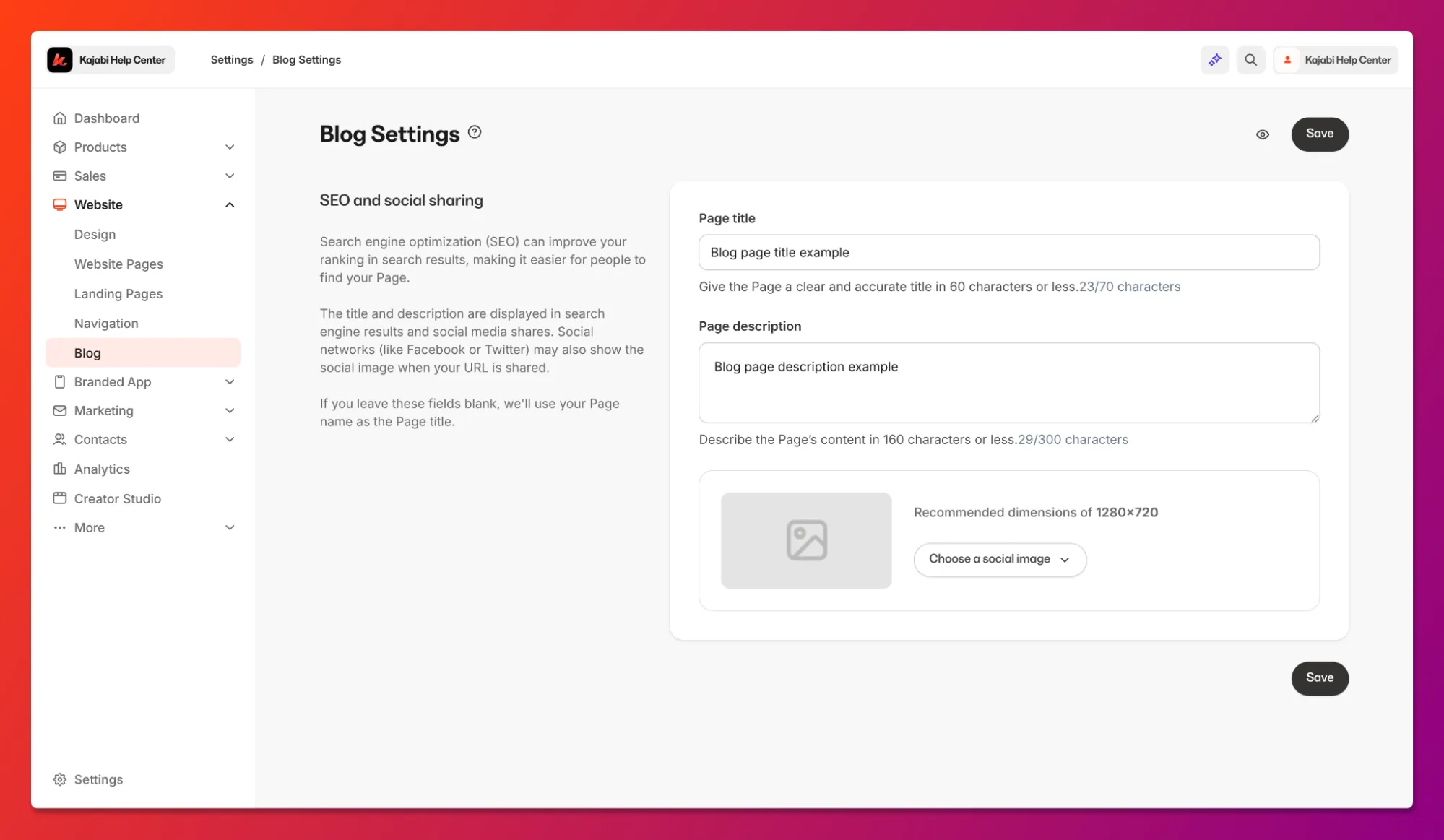
Lastly, Kajabi is tailored not for product SEO, but for educators and digital creators aiming to rank through thought leadership. It provides tools to customize metadata, blog content, and site structure in a clean UI. Pages are automatically mobile-responsive and loaded via CDN for fast performance.
However, Kajabi lacks eCommerce-specific SEO features – no product schema, canonical control, structured data for offers, or URL hierarchies optimized for shopping funnels. So, all in all, it remains a strong choice for content-first creators, but not for stores that need SEO eCommerce depth.
Highlights:
- Custom page URLs, titles, descriptions, and social image tags
- Integrated blog for publishing SEO-driven content
- SSL and mobile-responsive default templates
- Basic SEO checklists and internal guidance
- Connects to Google Search Console
Pricing:
- Kickstarter: $71/month
- Basic: $119/month
- Growth: $159/month
- Pro: $319/month
|
Kajabi strengths |
Kajabi limitations |
|
Metadata and URL editing across pages |
No product schema or rich snippet support |
|
Blogging tools for content marketing |
Can’t edit robots.txt or use canonical overrides |
|
Built-in SEO guidance for non-tech users |
Not eCommerce-focused; no product metadata |
|
Secure and fast hosting |
Less suitable for SEO-heavy transactional stores |
|
Simple Google Search Console integration |
Limited to content-based SEO environments |
Read more: Kajabi review
What to Look for in an eCommerce Platform for SEO
Before deciding on the best eCommerce platform for SEO, it’s important to understand what actually makes a platform SEO-friendly in the first place. After all, SEO performance doesn’t depend on one single feature; instead, it comes from a combination of technical flexibility, content capabilities, site performance, and long-term scalability:
1. SEO customization and technical control
First and foremost, a strong eCommerce SEO platform should give you enough control over essential optimization elements, including URLs, meta titles, meta descriptions, canonical tags, redirects, and structured data. These may seem like small details, but they directly affect how search engines crawl, understand, and rank your website.
And for growing businesses, deeper technical access also becomes increasingly important. Platforms that allow robots.txt editing, sitemap management, schema customization, or even server-level optimization give SEO teams much more flexibility to solve complex ranking issues. Meanwhile, platforms with locked-down structures may be easier to manage but can become limiting once your SEO strategy becomes more advanced.
2. Site speed and Core Web Vitals performance
No matter how well your content is optimized, poor website performance can still hurt both search visibility and user experience. That’s why speed optimization should always be one of the biggest factors when evaluating an eCommerce platform for SEO.
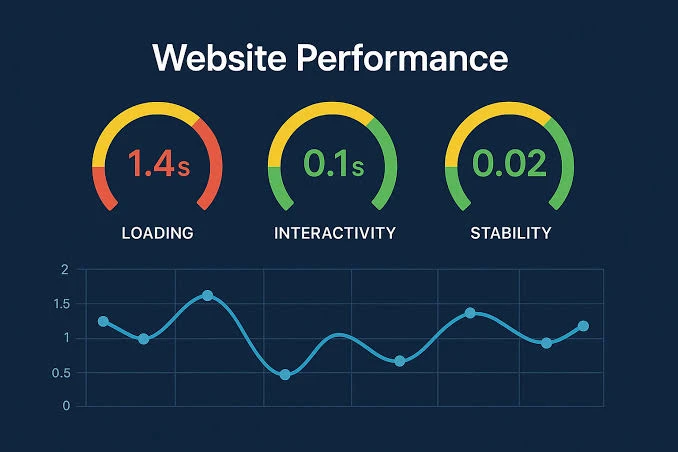
Ideally, your chosen platform should support fast hosting infrastructure, responsive themes, image optimization, caching, and clean code structures. These factors contribute to Google’s Core Web Vitals metrics, including Largest Contentful Paint (LCP), Interaction to Next Paint (INP), and Cumulative Layout Shift (CLS), which measure how quickly and smoothly users can interact with your website.
That being said, different platforms handle performance differently. Hosted solutions like Shopify and BigCommerce manage many speed-related factors for you through built-in hosting and CDN systems. On the other hand, open-source platforms like WooCommerce and Magento offer greater optimization potential but require proper hosting, configuration, and maintenance to achieve the best results.
3. Content marketing and blogging capabilities
eCommerce SEO is not only about optimizing product pages. To build long-term organic traffic, your platform should also support content-driven strategies such as blogs, buying guides, tutorials, and comparison articles.
Strong content features allow businesses to target informational keywords, build topic authority, and create internal linking structures that guide users from educational content toward product pages. This is one reason why WooCommerce, powered by WordPress, is often praised for SEO, as it combines commerce functionality with one of the strongest content management systems available.
Of course, not every business needs an advanced publishing system. Smaller stores may only require basic blogging features, while larger brands often need flexible categories, custom content layouts, author management, and advanced internal linking options. The key is choosing a platform that matches your content strategy, not just your current product catalog.
4. Mobile optimization and user experience
Since most online shopping journeys now happen on mobile devices, mobile SEO has become a critical part of eCommerce success. A good SEO-friendly platform should provide responsive themes, mobile-friendly navigation, fast loading on smaller devices, and smooth checkout experiences.
Search engines increasingly evaluate websites based on how real users experience them. Therefore, factors like confusing menus, slow product filters, intrusive pop-ups, or difficult checkout processes can indirectly affect your SEO performance by increasing bounce rates and lowering engagement.
When comparing platforms, don’t just look at whether they offer mobile-responsive designs. Instead, consider how much control you have over improving the entire shopping experience, from product discovery and search functionality to page layouts and conversion optimization.
5. Scalability
Finally, the best eCommerce platform for SEO should be able to grow with your business. A platform that works well for 100 products might struggle when your catalog expands to thousands of SKUs, multiple languages, or international markets.
For larger stores, advanced features like bulk metadata editing, multilingual SEO, hreflang support, faceted navigation management, and scalable site architecture become essential. Without them, managing SEO at scale can quickly become time-consuming and inefficient. Enterprise business intelligence consulting can also help larger retailers manage and analyze performance data across increasingly complex operations.
Additionally, consider the platform’s overall SEO ecosystem, including available apps, plugins, extensions, developer resources, and community support. Even if a feature is not available by default, a strong ecosystem ensures you have reliable ways to extend your store’s SEO capabilities as your needs evolve.
My Methodology
To rank the best eCommerce platform for SEO, my team evaluated each platform against a consistent set of technical and practical SEO criteria:
1. Evaluate core SEO feature sets
First, my team mapped out the foundational SEO capabilities each platform offers out of the box, including:
- Custom URL structures
- Meta title/description control
- Canonical tag management
- XML sitemap generation
- Structured data (schema markup) for products, reviews, and pricing.
In addition, I also checked how much backend access each platform grants (such as editing robots.txt or .htaccess files) since this determines whether merchants can fine-tune technical SEO beyond what the admin dashboard allows. Simply put, platforms that combined strong defaults with deeper customization options scored higher in this category.
2. Assess technical performance and Core Web Vitals readiness
Next, I examined how each platform handles the technical factors that influence search rankings but aren’t always visible in an SEO settings panel. This included:
- Default hosting infrastructure (CDN availability
- HTTPS enforcement)
- Image optimization tools
- Page load speed
- Mobile responsiveness across themes.
Since Google’s Core Web Vitals directly factor into rankings, I prioritized platforms that made these optimizations accessible without requiring extensive developer work.
3. Analyze ecosystem depth and scalability
Finally, my team looked at how well each platform’s app or plugin ecosystem extends its native SEO functionality, and whether that functionality scales as a business grows.
Specifically, I reviewed the availability and quality of SEO plugins (for platforms like WooCommerce and OpenCart), then compared which SEO features are gated behind higher pricing tiers. Plus, my team also evaluated how much technical expertise is needed to unlock advanced capabilities like multi-language SEO, headless architecture, or enterprise-level schema customization.
Trends in eCommerce SEO 2026-2027
Search is no longer a single channel that eCommerce teams optimize once and monitor quarterly. Now, SEO is undergoing its most significant transformation in over a decade, driven by the rapid integration of artificial intelligence into how people find information. The conversation is shifting from keywords and backlinks to multi-platform visibility:
AI Overviews and Generative Engine Optimization (GEO)
AI Overviews now appear on roughly 65% of commercial queries in the US, with organic click-through rates down 28 to 34% on informational queries and 12 to 19% on mid-funnel category pages. Interestingly, product detail pages show less than 5% CTR change, and Google Shopping clicks are holding steady or growing slightly. This means the risk is concentrated in top-of-funnel discovery content, not the transactional core of a store.

In addition, Generative Engine Optimization is now a distinct discipline focused on getting content surfaced inside AI-generated answers and summaries. The fundamental objective is evolving from winning clicks on a results page to becoming a cited authority within an AI-synthesized answer.
Entity-based SEO and the Shopping Graph
With roughly 60% of searches now ending without a click, shoppers increasingly make decisions directly within the search results page. They interact with AI Overviews and compare prices through structured product data rather than visiting individual sites.
The Google Shopping Graph now functions as the backend intelligence layer of search, connecting over 60 billion product listings in real time. On top of this, agentic commerce tools like Google’s Universal Commerce Protocol are already live for major retailers such as Nike, Sephora, and Walmart. Aagentic AI is described as the most significant shift in eCommerce SEO since mobile-first indexing, with AI shopping assistants researching, comparing, and purchasing on a customer’s behalf.
Technical performance as an AI-readiness signal
Content quality alone won’t carry a store through 2026. Core Web Vitals have tightened around an Interaction to Next Paint threshold of 150ms, which now directly affects search rankings.
Aside from classic search engines, generative AI platforms such as ChatGPT, Perplexity, and Claude are increasingly shaping how users search, marking an early-stage but real transition from search engines to “response engines”. Sites that fail to maintain clean technical foundations, risk being excluded not just from Google’s page one, but also from the datasets that AI systems draw on to answer shopping queries altogether.
Best eCommerce Platform for SEO: FAQs
What is the best SEO tool for eCommerce?
Some universal tools include:
– Yoast SEO or Rank Math (for WooCommerce/WordPress)
– Ahrefs or SEMrush for keyword research and backlink tracking
– Google Search Console for monitoring indexing and crawling issues
– Schema Pro or JSON-LD apps for structured data
– Screaming Frog for technical audits
– TinyPNG or ShortPixel for image optimization
Each platform may also offer its own built-in or marketplace SEO apps, like Shopify’s SEO Manager or Wix’s SEO Wiz.
What platform is best for SEO?
WooCommerce is widely considered the best eCommerce platform for SEO due to its open-source nature, full WordPress integration, and granular control over every SEO element—from permalinks to canonical tags, schema, and topic clustering.
However, for those who want strong built-in features without the need for plugins or coding, BigCommerce is an excellent alternative, offering native support for schema, redirects, and AMP out of the box.
Is Shopify or WooCommerce better for SEO?
It depends on your priorities.
WooCommerce gives you full SEO control but requires technical knowledge and hands-on optimization. However, Shopify provides a fast, secure, SEO-optimized base with minimal effort, but restricts certain customizations like full URL control or robots.txt editing. So:
– If you want flexibility and control, go WooCommerce.
– If you want ease and stability, Shopify is a solid choice.
Is Wix still bad for SEO?
No; Wix has significantly improved its SEO capabilities in recent years. It now includes:
– Custom URLs and metadata
– Automatic XML sitemaps
– Structured data support
– Google Search Console integration
– AI-powered SEO setup
However, it still has limitations in canonical tag control, hreflang support, and deep server-level optimization. It’s now good enough for most small- to medium-sized businesses, but may still not satisfy advanced SEO professionals or enterprise-scale projects.
Final Words
That’s a wrap of my take on the best eCommerce platform for SEO! And if reading through this list has convinced you that your current platform is holding back your SEO potential, it may be time for a change.
Here’s where LitExtension comes in. With 12+ years of experience migrating stores for over 200,000 merchants, we’ll help you get there with zero downtime and zero data loss. I also offer SEO URL migration services so that you don’t lose rankings during the move.
For more tips and guidance, check out our blog or subscribe to our newsletter.

