For most first-time merchants, Shopify is the easier way to launch and run an online store because hosting, checkout, security, and platform updates are managed for you. WordPress is the stronger choice for content-led or highly customized websites, but selling normally requires WooCommerce, separate hosting, and more technical maintenance.
The real decision is therefore managed convenience versus technical control. This Shopify vs. WordPress comparison uses self-hosted WordPress.org; whenever ecommerce features are discussed, WordPress means WordPress with WooCommerce installed. WordPress.com is a separate hosted service and is not included in the pricing below.
Shopify vs WordPress: The Short Answer
Quick takeaway:
Choose Shopify if selling is the website’s main purpose and you want hosting, checkout, security, updates, and support managed within one platform. Choose WordPress if content, custom architecture, or direct control over the technology stack matters more and you have the resources to manage it properly.
| Decision factor | Shopify
(Read our Shopify review) |
WordPress
(Read our WordPress review) |
|---|---|---|
| Core purpose | Hosted commerce platform | Open-source CMS with ecommerce added through a plugin |
| Best for | Businesses that want a dedicated store with less technical overhead | Content-led or highly customized businesses with technical resources |
| Hosting | Included and managed by Shopify | Selected and managed by the site owner or hosting provider |
| Setup | Faster and more guided | More decisions involving hosting, themes, plugins, security, and testing |
| Pricing model | Published subscription plans plus payment, app, theme, and development costs | Free core software plus hosting, payment, extension, security, and development costs |
| Design control | Strong theme customization within Shopify’s platform rules | Extensive control over themes, templates, code, and content models |
| Ecommerce | Built in and managed from one admin | Primarily provided through WooCommerce and extensions |
| Content management | Suitable for standard pages and blogs | More powerful for complex publishing and content-heavy websites |
| Maintenance | Platform maintenance is handled by Shopify | The owner manages the host, WordPress core, plugins, themes, backups, and compatibility |
| Technical control | Controlled access within a hosted ecosystem | Full access to the application, database, hosting environment, and source code |
There is no universal winner. Shopify reduces operational complexity, while WordPress offers greater architectural freedom. The right choice is the one whose responsibilities match your team, not simply the one with the longest feature list.
Shopify vs WordPress Pricing and Total Cost
Quick takeaway:
- Shopify has the more predictable price: a small US store using Basic will usually spend at least about $363 per year before apps and payment processing.
- A self-managed WordPress/WooCommerce store can start around $135–$515 in the first year, while a professionally maintained small store can realistically reach $1,300–$2,500 before payment processing or custom development.
Shopify pricing
At the time of this update, Shopify’s US pricing page lists these prices when billed annually:
- Basic: $29 per month, or $348 per year.
- Grow: $79 per month, or $948 per year.
- Advanced: $299 per month, or $3,588 per year.
- Plus: starting from $2,300 per month.
Shopify pricing, billing terms, and promotions can change. Check the official Shopify pricing page before making a final budget.
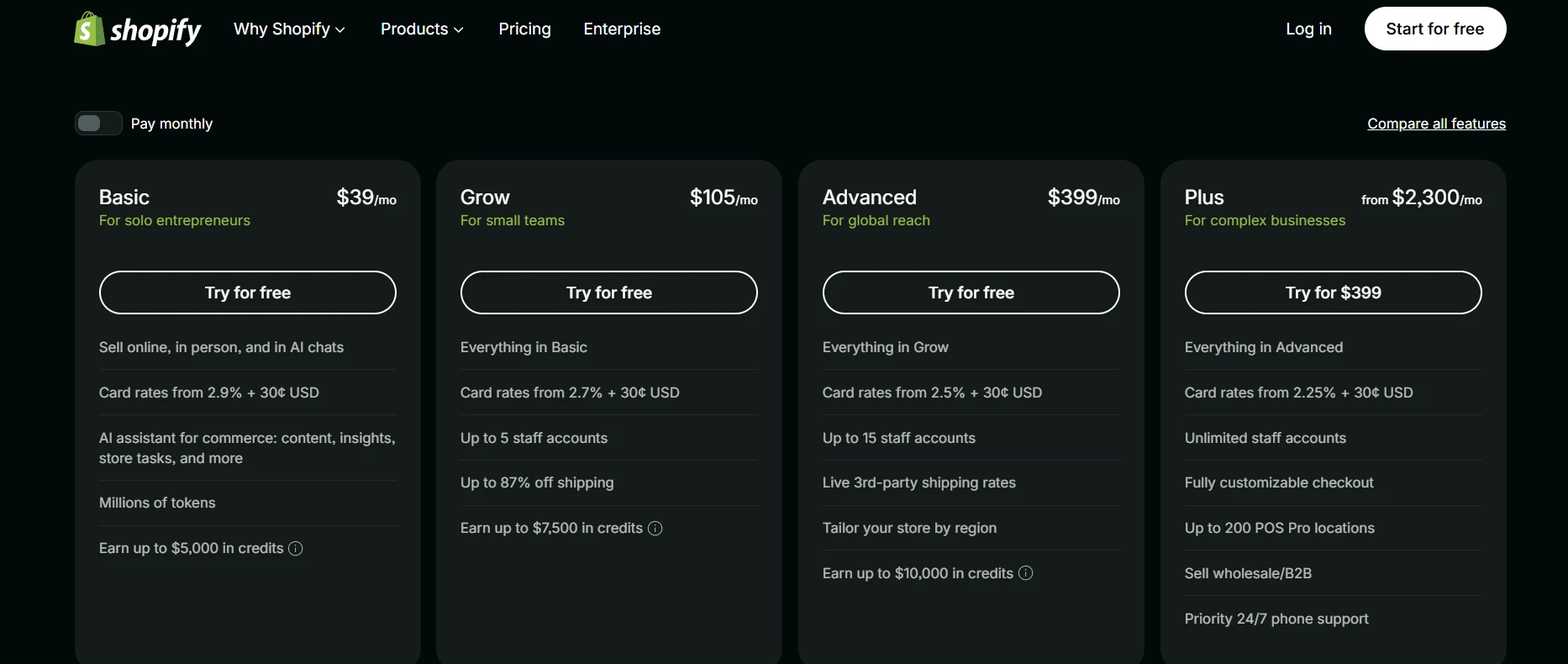
The subscription covers the platform and hosting, but not every cost of running the store. You may also pay for a custom domain, a premium theme, apps, payment processing, and professional design or development.
Here are two illustrative Shopify Basic budgets for a US small business:
| Shopify Basic cost | Lean store | Store using a premium theme and several apps |
|---|---|---|
| Annual Shopify subscription | $348 | $348 |
| Domain | About $15 | About $15 |
| Theme | $0 | About $400 one time |
| Apps | $0–$240/year | $600–$1,200/year |
| Illustrative first-year total | $363–$603 | $1,363–$1,963 |
These examples exclude payment processing, taxes, inventory, marketing, and custom development. Shopify’s cost can remain close to the subscription price when the store uses a free theme and native features. It rises quickly when several paid apps are needed to support subscriptions, reviews, search, reporting, B2B, or other specialized workflows.
WordPress (and WooCommerce) pricing
WordPress core and WooCommerce core are free and open source. A working store still needs hosting, a domain, and usually a combination of themes, extensions, backups, security, and maintenance.
Unlike Shopify, WordPress does not have one standard price because merchants assemble their own stack. The following scenarios show what that can mean in practice. Read our WooCommerce pricing guide for more details and examples.
| WordPress/WooCommerce cost | Lean DIY store | Professionally maintained small store |
|---|---|---|
| Domain | About $15/year | About $15/year |
| Hosting | $120–$300/year | $300–$600/year |
| Theme | $0 | About $80 one time |
| Paid extensions | $0–$200/year | $300–$600/year |
| Backups and security | Included with hosting or self-managed | Included with hosting or maintenance |
| Technical maintenance | Self-managed | $600–$1,200/year |
| Illustrative first-year total | $135–$515 | $1,295–$2,495 |
These are planning examples, not fixed WordPress packages. They exclude payment processing and custom development. A DIY store stays inexpensive only if the owner can configure, update, secure, and troubleshoot the site without paid assistance. A custom WooCommerce build can cost several thousand dollars before launch when it needs bespoke design, complex product logic, or business-system integrations.
WooCommerce states that its core platform has no platform fee or revenue share. You still pay the payment provider and any extensions or services used by the store. See the WooCommerce pricing overview for its current cost model.
Which platform is cheaper?
WordPress has the lower entry cost when you can run a lean stack and manage it yourself. Shopify can offer better value for a non-technical team because hosting and platform maintenance are already included. Once a WordPress store needs managed hosting, several premium extensions, and ongoing professional support, it can cost as much as (or more than) a comparable Shopify store.
Compare the cost of ownership rather than free software against a subscription. The most useful calculation includes the platform, hosting, extensions, payment fees, maintenance, and the staff time required to keep the store reliable.
How we evaluated the platforms: We checked US pricing and current platform documentation, then compared the work a merchant must pay for or manage across setup, hosting, payments, content, SEO, extensions, security, support, and long-term ownership. The budgets above are transparent planning scenarios, not quoted packages.
Shopify vs WordPress: Pros and Cons
| Platform | Pros | Cons |
|---|---|---|
| Shopify |
|
|
| WordPress + WooCommerce |
|
|
Payment Processing and Transaction Fees
Quick takeaway:
Both platforms charge payment processing fees through their payment providers. Shopify may also apply a third-party transaction fee when a merchant uses an external payment provider, while WordPress and WooCommerce do not add a platform-wide percentage to every order.
Shopify offers Shopify Payments and also supports third-party payment providers. In the United States, the published online card rate on Basic currently starts at 2.9% + $0.30, with lower starting rates on higher plans. Actual rates depend on the plan, location, card type, and transaction. Shopify says orders processed through Shopify Payments are not charged third-party transaction fees, although standard payment processing rates still apply. Review the current Shopify Payments terms for your market.
WooCommerce lets the merchant choose WooPayments or another gateway. WooCommerce core does not add a platform transaction fee. In the United States, WooPayments currently lists card payments at 2.9% + $0.30, with possible additional charges for international cards, currency conversion, and disputes. Fees vary by country and payment method, so confirm them on the WooPayments fees page.
For a low-volume store, a small difference in processing rates may not determine the platform choice. At higher volume, payment mix, international sales, alternative gateways, subscriptions, disputes, and currency conversion can materially affect margins. Calculate these costs using your expected order value and annual revenue rather than comparing headline rates alone.
Ease of Use, Setup, and Ongoing Maintenance
Quick takeaway:
Shopify is easier to set up and maintain for most non-technical teams. WordPress offers more control, but every additional choice such as hosting, themes, plugins, caching, backups, and security becomes part of the system your team must manage.
Shopify ease of use
Shopify provides a guided setup flow for adding products, selecting a theme, configuring payments, defining shipping settings, and preparing a store for launch. Products, orders, customers, discounts, analytics, and settings are organized within the same admin.
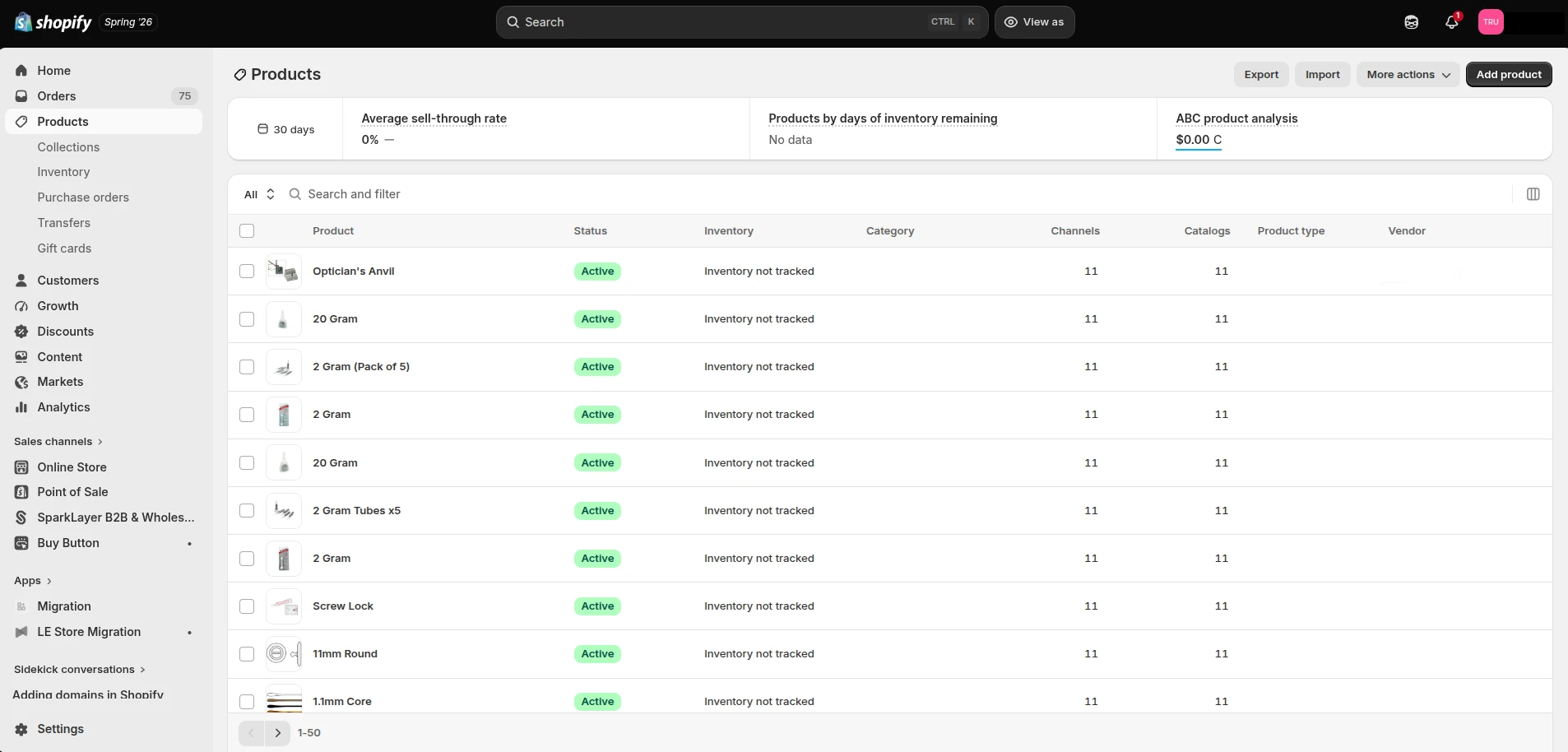
The important advantage is not that a complete store can be built in a few minutes. A store still needs product data, policies, taxes, shipping rules, payment verification, design work, analytics, and quality assurance. The advantage is that Shopify reduces the number of infrastructure decisions required before that work can begin.
Ongoing platform updates, server maintenance, and core hosting are handled by Shopify. Merchants still need to maintain their theme, app stack, catalog, integrations, permissions, and business settings.
WordPress ease of use
WordPress itself has a familiar publishing interface, but setting up an ecommerce store involves more components. A typical project includes:
- Selecting and configuring hosting.
- Installing WordPress and WooCommerce.
- Choosing and testing a compatible theme.
- Configuring payments, shipping, tax, email, and store pages.
- Adding required plugins and extensions.
- Setting up backups, security, caching, and monitoring.
- Testing checkout, account flows, performance, and plugin compatibility.
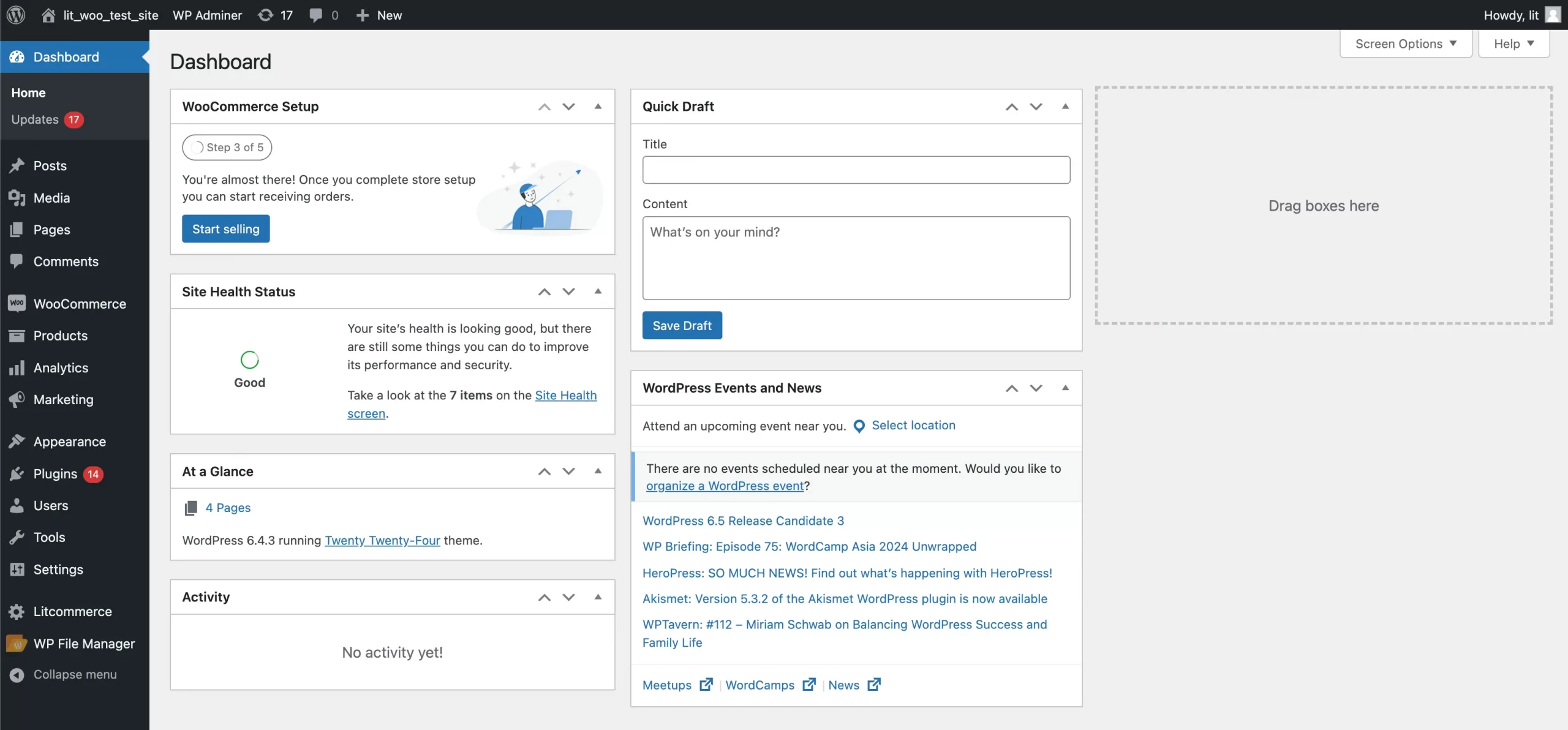
Managed WordPress hosting can reduce some of this work, but it does not remove responsibility for the entire application. A theme update can conflict with a plugin; a poorly optimized extension can affect performance; and support may be split between the host, theme vendor, plugin vendor, and developer.
This is not automatically a disadvantage. Technical ownership is exactly why many businesses choose WordPress. It becomes a problem only when a business selects WordPress for its flexibility but does not budget for the people and processes required to maintain that flexibility.
Ecommerce and Sales Features
Quick takeaway:
Shopify is stronger out of the box for teams that want one coordinated commerce system. WooCommerce can support equally serious stores, but the final feature set depends more heavily on extensions, configuration, hosting, and development quality.
Shopify is designed around selling. Its core platform covers product management, inventory, checkout, discounts, orders, customer records, shipping settings, analytics, and multiple sales channels. Additional capabilities are available through Shopify apps and higher-tier plans.
WooCommerce adds the core store layer to WordPress, including products, carts, checkout, coupons, orders, shipping, tax configuration, and payment integrations. Extensions can add subscriptions, memberships, bookings, product bundles, advanced shipping, wholesale pricing, and other specialized workflows.
For a more commerce-specific analysis, our Shopify vs WooCommerce comparison examines the two store systems directly. In the broader Shopify vs WordPress decision, the practical difference is how those capabilities are assembled and maintained.
| Commerce area | Shopify | WordPress + WooCommerce |
|---|---|---|
| Product and order management | Integrated into the core admin | Managed through WooCommerce inside WordPress |
| Checkout | Managed and optimized within Shopify’s ecosystem; customization depends on platform capabilities and plan | More direct control, but the merchant is responsible for implementation, testing, security, and compatibility |
| POS | First-party Shopify POS ecosystem | Available through WooCommerce-compatible POS solutions and integrations |
| Specialized functionality | Apps and custom Shopify development | Extensions, custom plugins, and direct code-level development |
| Operational responsibility | Shopify manages the platform foundation | The store owner manages the complete stack |
The deciding question is not whether either platform can sell products. Both can. The better question is whether your team wants a standardized commerce foundation or a stack that can be shaped more freely around custom requirements.
POS, B2B, international, and AI commerce
These capabilities matter more as a store grows, and they expose the difference between the two platforms’ operating models.
| Growth requirement | Shopify | WordPress + WooCommerce |
|---|---|---|
| In-person selling | Shopify POS provides a first-party system connected to the online store, inventory, customers, and orders | Requires a WooCommerce-compatible POS product or a separate retail system integration |
| B2B and wholesale | Native and app-based options are available; the exact capabilities depend on the plan and configuration | Usually assembled with wholesale extensions, custom roles, pricing rules, and development |
| International selling | Shopify provides managed tools for markets, currencies, domains, languages, duties, and local payment methods, with availability varying by market and plan | Offers broad flexibility but may require separate plugins or services for currency, translation, tax, payments, and regional catalogs |
| AI shopping channels | Shopify is building AI-channel selling and product discovery into its commerce platform | Implementation depends on the WordPress/WooCommerce ecosystem, feeds, plugins, and custom integrations |
| Reporting and data | Centralized reports with capabilities that vary by plan; apps can extend the reporting layer | Direct access to store data and flexible reporting, but advanced dashboards may require plugins, an external BI tool, or custom work |
Shopify usually reaches these capabilities with fewer vendors and a more standardized configuration. WooCommerce can provide deeper control over how each capability works, but the business must select, connect, and maintain more components. For a growing company, that difference in operational ownership can be more important than whether a feature technically exists.
Themes, Design, and Customization
Quick takeaway:
Shopify offers a faster route to a polished commerce storefront. WordPress provides broader control over layouts, templates, code, and content models, but achieving a high-quality result may require more design and development work.
Shopify design
Shopify themes are built specifically for commerce. Merchants can use the theme editor to adjust sections, colors, typography, layouts, and other storefront settings without editing code. Developers can make deeper changes using Liquid, HTML, CSS, JavaScript, platform APIs, and Shopify’s development tools.
The official Shopify Theme Store currently advertises more than 800 free and paid themes. The exact number changes as themes and presets are added or removed.

Shopify’s limitation is that customization operates within a hosted platform. A business can build a highly distinctive store, but it does not have unrestricted access to every layer of the system.
WordPress design
WordPress supports classic themes, block themes, page builders, custom templates, and fully bespoke development. The official WordPress Theme Directory lists more than 15,000 free themes, with additional commercial themes available outside the directory.

This range creates more options, but quantity does not guarantee suitability. A WooCommerce store needs a theme that is actively maintained, responsive, accessible, performant, and compatible with the plugins used by the business. Combining a theme, page builder, and many front-end plugins without a clear architecture can lead to inconsistent design and unnecessary code.
WordPress wins on maximum control. Shopify often wins on the speed and predictability of reaching a commercially usable result.
Content Management and Blogging
Quick takeaway:
WordPress is the stronger content management system for complex or large-scale publishing. Shopify’s blogging tools are sufficient for many ecommerce brands, but they provide fewer options for advanced content architecture.
Shopify content management
Shopify lets merchants create pages and blog posts, organize articles into blogs, edit search listing information, and connect content to products and collections. This is enough for news, product education, gift guides, announcements, and a straightforward content marketing program.
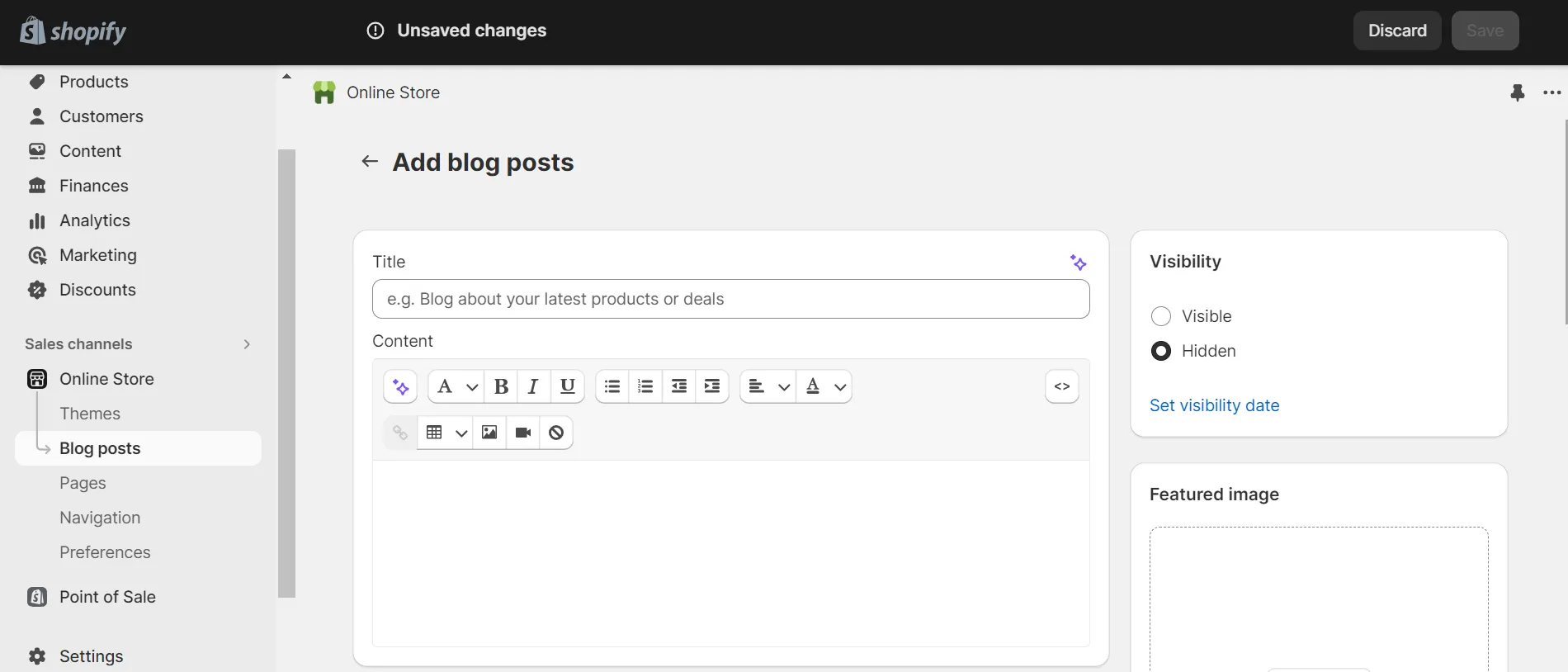
The limitations become more noticeable when a site needs complex relationships between content types, advanced editorial workflows, deeply customized archives, or a large publishing operation alongside the store.
WordPress content management
WordPress was built around publishing and remains more flexible for content-led websites. It supports categories, tags, authors, archives, reusable blocks, custom post types, custom taxonomies, custom fields, revisions, user roles, and specialized editorial workflows.
That makes WordPress a better fit when organic content is a primary acquisition channel or when the website must manage more than products, landing pages, and a standard blog. Examples include magazines, resource libraries, directories, learning hubs, and businesses with several content teams.
However, more flexibility does not automatically produce a better content strategy. Taxonomies, templates, internal linking, and indexation still need to be planned carefully. WordPress makes complex architecture possible; it does not design that architecture for you.
SEO and Marketing
Quick takeaway:
Both Shopify and WordPress can rank competitively. WordPress offers more technical and structural control, while Shopify provides a solid managed foundation with fewer configuration decisions. Implementation quality matters more than the platform name alone.
Shopify SEO
Shopify includes essential SEO capabilities such as editable titles and meta descriptions, canonical tags, XML sitemaps, robots.txt controls, image alt text, and URL redirects. Its hosted infrastructure also removes many server-level performance and maintenance decisions from the merchant.
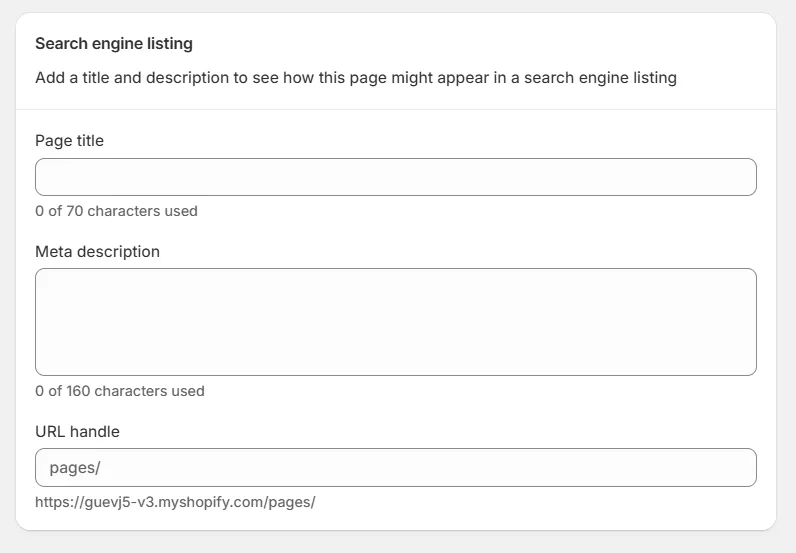
Shopify has platform constraints. Some URL directory patterns are fixed, advanced template changes operate within Shopify’s architecture, and apps can introduce extra scripts or duplicate functionality if they are not managed carefully. These constraints do not prevent a store from ranking, but they can affect how an advanced SEO strategy is implemented.
WordPress SEO
WordPress offers broader control over templates, URLs, metadata, structured data, internal linking systems, taxonomies, sitemaps, redirects, and crawl directives. SEO plugins such as Yoast SEO and Rank Math make many controls accessible through the admin, while developers can customize the underlying output directly.
That flexibility can be valuable for large content libraries, custom schema, programmatic templates, and unusual site architectures. It also creates more opportunities for mistakes. Indexable tag archives, conflicting plugins, poor hosting, bloated page builders, and unplanned migrations can all damage organic performance.
For most stores, the platform is not the main SEO bottleneck. Content quality, site architecture, product and category optimization, internal linking, backlinks, performance, and indexation management usually have a greater impact.
Marketing tools
Shopify centralizes many commerce-related marketing functions and connects to additional channels through apps. WordPress relies more heavily on plugins and external services, but gives teams greater freedom to select and integrate their preferred marketing stack.
Choose based on the tools your business actually needs. A larger plugin or app directory is not automatically better if it increases cost, overlap, or maintenance risk.
Apps, Plugins, and Integrations
Quick takeaway:
WordPress has the larger extension ecosystem, while Shopify offers a more centralized app experience. In both cases, the quality and maintainability of the final stack matter more than the number of available options.
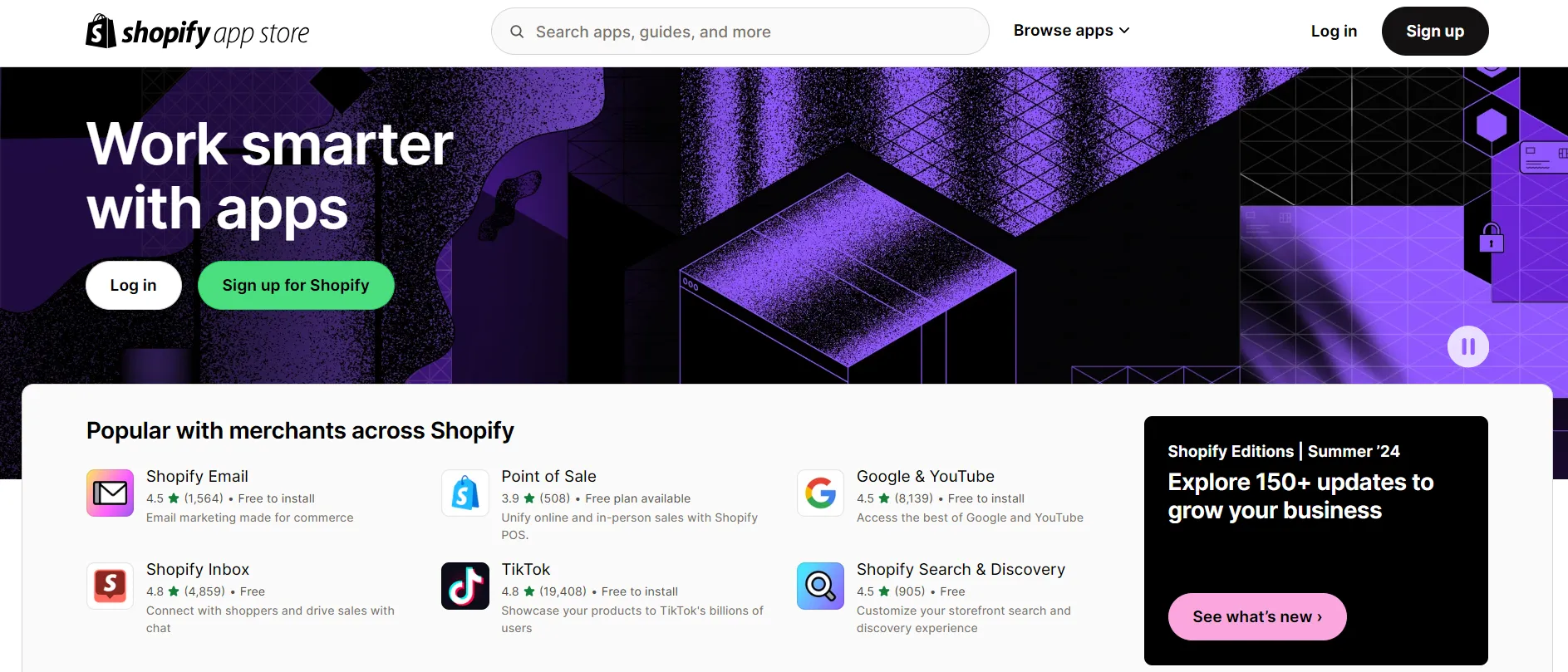
Shopify’s official App Store currently lists more than 16,000 apps covering store design, marketing, fulfillment, inventory, subscriptions, customer service, reporting, B2B, and other functions. Shopify states that apps go through a review process before appearing in the store. See the current directory on the Shopify App Store.
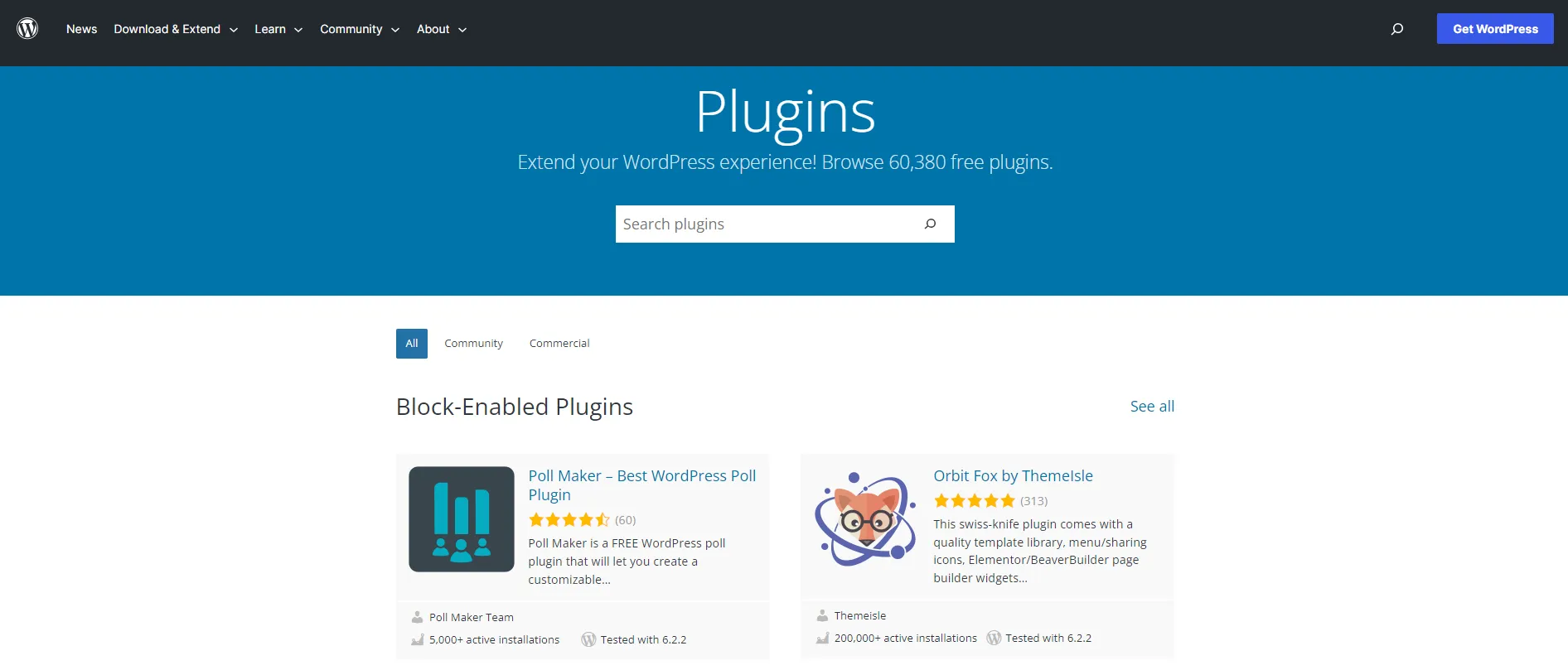
The official WordPress Plugin Directory currently lists more than 69,000 free plugins, with many additional commercial plugins sold elsewhere. See the latest total in the WordPress Plugin Directory.
Whichever platform you choose, avoid installing an extension for every small problem. Before adding an app or plugin, evaluate:
- Whether the feature already exists in the platform or current stack.
- Update history and developer reputation.
- Compatibility with the theme and other extensions.
- Performance impact.
- Data access and privacy requirements.
- Support quality.
- Recurring cost.
- How the store would function if the extension were removed.
Shopify apps reduce the need for server-level installation and maintenance, but recurring fees can accumulate. WordPress plugins provide extensive freedom, but the site owner carries more responsibility for security, compatibility, and updates.
Performance, Security, and Reliability
Quick takeaway:
Shopify is easier for teams that want a managed operational foundation. WordPress can be extremely fast and secure, but the result depends on hosting, development quality, plugin selection, updates, monitoring, and maintenance.
Shopify performance and security
Shopify hosts the store and manages the core platform infrastructure. Merchants do not configure the web server, patch Shopify’s core software, or maintain the checkout infrastructure themselves.
Shopify is certified Level 1 PCI DSS compliant, and Shopify states that this compliance extends to stores hosted on its platform. Merchants still remain responsible for account security, staff permissions, app access, privacy obligations, fraud management, and safe business practices. See Shopify’s PCI compliance information for details.
Performance is not completely automatic. Heavy themes, oversized media, excessive apps, and third-party scripts can still slow down a Shopify storefront. The difference is that server infrastructure and core platform maintenance are not merchant-managed variables.
WordPress performance and security
WordPress performance can range from excellent to poor depending on the stack. Important factors include:
- Hosting resources and configuration.
- Theme and plugin quality.
- Caching and content delivery.
- Database health.
- Image and script optimization.
- Traffic patterns and scaling strategy.
The same is true for security. WordPress core, themes, and plugins need to be updated; backups must be verified; user access should be controlled; and vulnerabilities need to be monitored. A reputable managed host can handle part of this work, but the complete application still requires ownership.
WordPress is not inherently slow or insecure. It is simply less standardized. The business has more ways to optimize the system and more ways to misconfigure it.
Customer Support
Quick takeaway:
Shopify provides a clearer support path because one company owns the platform. WordPress support is distributed across the hosting provider, WordPress community, theme vendor, plugin developers, WooCommerce, and any hired technical partner.
Shopify provides its Help Center, AI-assisted search, community resources, and support options that vary by plan and product. Standard stores should not assume that direct phone or email support is included. Shopify currently reserves additional phone and email options for certain Shopify Plus, Retail, and POS Pro configurations. Confirm the channels available to your plan on the Shopify support page.

WordPress.org provides documentation, community forums, developer resources, and a large global ecosystem. Commercial hosts, themes, and plugins may provide their own support. The challenge is identifying which component caused the problem and which vendor is responsible for resolving it.
If your team wants one central platform owner, Shopify has the advantage. If your team prefers to select specialized providers and retain control over the stack, WordPress offers more freedom but requires stronger technical coordination.
Scalability, Ownership, and Long-Term Control
Quick takeaway:
Both platforms can support growing businesses. Shopify makes infrastructure scaling more predictable, while WordPress provides greater control over data, code, hosting, and custom architecture.
Shopify can scale without requiring merchants to redesign their server architecture as traffic grows. Higher plans and Shopify Plus add capabilities for larger teams and more complex operations. The tradeoff is platform dependency: the business works within Shopify’s plans, APIs, checkout capabilities, app ecosystem, and product roadmap.
With WordPress and WooCommerce, the business controls the hosting environment, database, codebase, and extension stack. This can be valuable for unusual workflows, custom integrations, proprietary features, or organizations with established engineering resources.
That control does not make scaling effortless. High-volume WooCommerce stores require appropriate infrastructure, careful database and application work, monitoring, deployment processes, and a team capable of supporting the system.
In practical terms:
- Shopify scales by standardizing more of the platform.
- WordPress scales by giving the business more control over how the platform is engineered.
Neither model is inherently better. The decision depends on whether your business sees technical ownership as a strategic advantage or an operational burden.
Shopify vs WordPress by Business Type
The following recommendations are more useful than declaring one platform the winner for every website.
| Business profile | Better starting point | Reason |
|---|---|---|
| First-time merchant with no developer | Shopify | Fewer infrastructure decisions and a more unified store admin |
| DTC brand that needs a fast launch | Shopify | Commerce, checkout, hosting, and core operations are bundled |
| Business website or blog with no ecommerce | WordPress | Shopify’s commerce-focused subscription would add unnecessary cost |
| Publisher or content-led business adding a store | WordPress + WooCommerce | Preserves advanced content architecture while adding commerce |
| Existing WordPress business with an experienced technical team | Often WordPress + WooCommerce | The organization can reuse its publishing stack and development expertise |
| Retail business prioritizing a unified first-party POS ecosystem | Shopify | Shopify offers a tightly integrated online and in-person commerce system |
| Store with highly specialized workflows or proprietary integrations | Depends | Compare Shopify’s APIs and app model with the cost of building and maintaining a custom WooCommerce stack |
| Business that wants full control over hosting, code, and data architecture | WordPress + WooCommerce | Self-hosting provides broader ownership of the technology stack |
Before choosing, document five things: your required sales channels, content model, integrations, internal technical resources, and three-year budget. Those answers usually reveal the better platform more clearly than a generic list of pros and cons.
What Merchants Often Underestimate Before Choosing
Quick takeaway:
Most platform problems do not begin with a missing product or order feature. They begin when the store’s ongoing costs, maintenance responsibilities, content requirements, or customization needs no longer match the platform originally chosen.
From LitExtension’s migration experience, the difficult part of a platform decision is rarely creating the first version of the store. It is predicting how the business will operate after the catalog, content library, team, and integration stack have grown.
| What Shopify merchants may underestimate | What WordPress/WooCommerce merchants may underestimate |
|---|---|
| How quickly recurring app fees accumulate when several specialist features are needed | How much time routine updates, compatibility testing, backups, and troubleshooting require |
| Whether a custom checkout, B2B workflow, or integration fits Shopify’s plan and platform constraints | How hosting quality affects checkout speed, reliability, and the ability to handle traffic spikes |
| How fixed URL patterns and a simpler content model affect a content-heavy SEO strategy | How easily overlapping plugins can create performance, security, or data-consistency problems |
| That themes and apps do not transfer directly if the business later changes platforms | That “free and open source” does not include professional maintenance or custom development |
| How dependent some workflows become on a specific app vendor | How fragmented support can become when the host, theme, plugin, and payment provider are different companies |
Before committing, map not only what the store needs at launch but also what it is likely to need in two or three years. Include expected product volume, content growth, markets, sales channels, staff roles, B2B requirements, integrations, and who will own technical maintenance.
Can Shopify and WordPress Work Together?
Yes. The choice does not always have to be binary.
Shopify supports placing products and purchase experiences on non-Shopify websites. Its Buy Button can be embedded into WordPress pages or posts, and Shopify also documents a Sell on WordPress connection. This allows WordPress to manage content while Shopify manages products and checkout. See Shopify’s official guidance on Buy Buttons and connecting Shopify to WordPress.
A hybrid architecture can make sense when:
- An established WordPress site already receives substantial organic traffic.
- The business wants Shopify’s commerce operations without rebuilding its entire content platform.
- Ecommerce is important but not the primary function of the website.
The tradeoff is operational complexity. A hybrid setup may require additional planning for analytics, product data, design consistency, domains, tracking, customer journeys, and SEO. It should be treated as an architecture decision, not a shortcut.
What Happens If You Switch Platforms Later?
Both Shopify and WordPress allow you to export important data, but switching platforms is not a one-click replacement. A complete migration may involve:
- Products, variants, categories or collections, and images.
- Customers, orders, coupons, and reviews.
- Blog posts, pages, and other content.
- URLs, metadata, canonical tags, and 301 redirects.
- Theme design and page templates.
- Apps, plugins, subscriptions, and custom functionality.
- Payments, shipping, tax, and email configurations.
- Analytics, advertising pixels, feeds, and integrations.
Data can be transferred, but themes and third-party functionality usually need to be rebuilt or replaced. SEO performance can also be affected if URLs, redirects, internal links, structured data, and indexation are not handled carefully.
It is better to choose around your expected operating model for the next several years than around the fastest initial setup. Platform migration is possible, but it becomes more expensive as the catalog, content library, integrations, and historical data grow.
If you decide to move your WordPress content and supported store data to Shopify, explore our WordPress to Shopify migration service to understand the scope and expert-managed process.
Need Help to Migrate Your Store?
LitExtension Automated Migration Tool transfers products, customers, and orders
from WooCommerce to Shopify – fast, accurate, and hassle-free.

Shopify vs WordPress: FAQs
Is Shopify or WordPress better for ecommerce?
Shopify is usually better for merchants who want an all-in-one, hosted commerce platform that is easier to launch and maintain. WordPress with WooCommerce is better for businesses that need deeper control over content, code, hosting, or custom functionality and have the technical resources to manage the stack.
Is WordPress cheaper than Shopify?
WordPress core and WooCommerce core are free, so a simple site can cost less than Shopify. A production store still requires hosting, a domain, payment processing, security, maintenance, and potentially paid themes, extensions, and development. Shopify has a higher fixed platform cost but includes hosting and platform maintenance. Compare total ownership costs for your actual requirements.
Do I need WooCommerce to sell on WordPress?
WordPress does not include a complete ecommerce system by default. WooCommerce is the most common way to add products, cart, checkout, orders, payments, and shipping, but it is not the only option. You can also embed Shopify commerce into WordPress or use another ecommerce plugin.
Is WordPress.com the same as WordPress.org?
No. WordPress.org provides open-source software that you install on a hosting service of your choice. WordPress.com is a hosted service with its own plans and platform rules. This article compares Shopify with self-hosted WordPress.org.
Is Shopify or WordPress better for SEO?
Both can rank well. WordPress offers more control over content types, taxonomies, templates, URLs, schema, and technical implementation. Shopify provides a strong managed SEO foundation with fewer infrastructure decisions. Content quality, architecture, backlinks, performance, and implementation normally matter more than the platform name alone.
Which platform is easier for beginners?
Shopify is generally easier for beginners who want to sell online because hosting, checkout, updates, and many core commerce functions are managed in one platform. WordPress has a steeper setup and maintenance curve, especially when WooCommerce and multiple plugins are involved.
Can I use Shopify on a WordPress website?
Yes. Shopify provides options for placing products and purchase experiences on WordPress, including Buy Buttons and a Sell on WordPress connection. This can work well for content-led websites, but analytics, design, domains, and the customer journey still need careful planning.
Can I migrate between Shopify and WordPress without losing SEO?
A well-planned migration can preserve much of the existing SEO value, but no migration is risk-free. Keep valuable URLs where possible, create one-to-one 301 redirects, transfer metadata and content, update internal links, preserve structured data, and monitor indexing and traffic after launch.
Final Verdict: Should You Choose Shopify or WordPress?
The most important tradeoff is straightforward: Shopify gives up some infrastructure control to reduce operational complexity, while WordPress gives you more control in exchange for greater technical responsibility. Choose the responsibility model your business can support over the long term.
- Choose Shopify when ecommerce is the main purpose of the site and your priority is to launch and operate through a managed, coordinated platform. It is particularly suitable for first-time sellers, lean teams, DTC brands, and merchants who do not want to manage hosting, platform updates, or plugin compatibility.
- Choose WordPress with WooCommerce when content, customization, or technical ownership is central to the business. It is a better fit for content-led organizations, existing WordPress sites, and teams that have the expertise and budget to maintain a self-hosted commerce stack.
Ready to make the switch or need help deciding? Contact our experts today for a free migration consultation.