Finding the best eCommerce platform for digital products can feel overwhelming when you’re trying to sell ebooks, templates, courses, software, or memberships online. There are plenty of tools to choose from, and you might get lost in the sea of options.
Understanding this challenge, we have compiled the list of the best eCommerce platform for selling digital products for your consideration, including:
In the sections below, we will dive into detailed platform breakdowns and clear criteria to help you decide which solution best matches your goals, budget, and technical comfort. So without further delay, let's get started.
10 Best Ecommerce Platforms for Digital Products – Quick Verdict
If you’re comparing options and don’t want to read everything yet, this quick verdict gives you a high‑level sense of which platform fits which type of digital seller. Each tool shines for different use cases: some are built for solo creators who just want to upload files and start selling today, others are better for brands that care about design and full website control, and a few are geared toward technical users who want deep customization and integrations.
TL;DR
- Sellfy: Best for creator-friendly store building and subscription‑based selling; limited design freedom and ecosystem scalability.
- Gumroad: Best for low-friction product launching and audience-driven selling; revenue share pressure and branding control limits.
- Wix: Best for drag‑and‑drop website building and visual‑first storefront creation; feature‑depth tradeoff and long‑term scalability concerns.
- Squarespace: Best for design‑centric brand building and portfolio‑style product showcasing; eCommerce feature ceiling and automation limitations.
- WooCommerce: Best for WordPress‑based store customization; technical maintenance burden and setup complexity.
- Payhip: Best for budget‑friendly digital product selling and built‑in tax handling; layout flexibility limits and brand differentiation challenges.
- SureCart: Best for modern checkout optimization and subscription revenue models on WordPress; website building dependency and ecosystem maturity risk.
- Podia: Best for all‑in‑one course hosting, community building, and membership management; funnel flexibility limits and design customization constraints.
- Ecwid: Best for plug‑and‑play store embedding and multichannel product distribution; complex setup overhead for advanced use.
- SendOwl: Best for robust file‑delivery automation and integration workflows; storefront simplicity and extra website tool dependence.
You can use this section to shortlist the best eCommerce platform for digital products that match your goals, then dive into the detailed breakdowns to check features, limits, and pricing in the following breakdown.
1. Sellfy
Sellfy is a creator‑focused ecommerce platform designed to help you launch a digital product store quickly, without wrestling with complex tech or plugins. It’s especially popular among creators selling ebooks, printables, digital art, music, and simple subscriptions, thanks to its straightforward dashboard and built‑in marketing tools.
If you’re looking for something close to a plug‑and‑play option when evaluating the best eCommerce platform for digital products, Sellfy is often one of the easiest starting points. For a detailed breakdown of this platform, please check out our Sellfy review here.

Key features that Sellfy offers:
- Built‑in digital file hosting and automatic download delivery after purchase.
- Support for subscriptions and recurring payments for memberships or ongoing content.
- Ability to sell bundles and offer coupon codes, discounts, and pay‑what‑you‑want pricing.
- Embeddable buy buttons and product widgets you can place on your existing website or landing pages.
Limitations to keep in mind:
- Design customization options are more limited than full website builders or WordPress‑based setups.
- Smaller app/integration ecosystem compared to larger ecommerce players, which can limit advanced workflows.
- Not ideal if you need highly complex site structures, multi‑store setups, or deep backend customization.
Sellfy pricing: From $29 to $159 per month
Best for:
Sellfy is the best eCommerce platform for digital products if you want a low‑friction, hosted storefront to start selling quickly, without needing deep technical skills or complex customization.
2. Gumroad
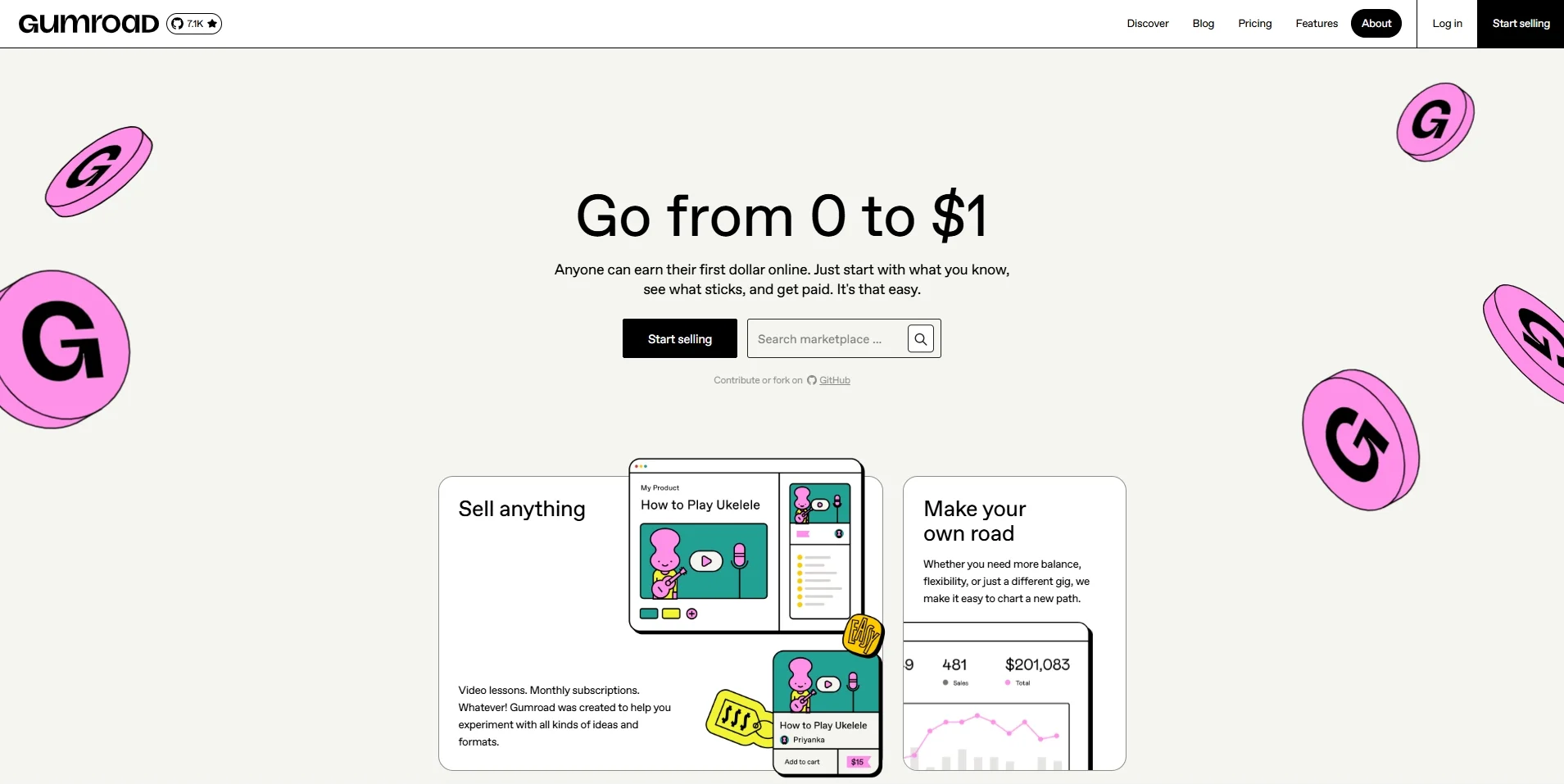
Gumroad is a minimalist, creator‑first platform that makes it incredibly easy to start selling digital products with almost no setup. It’s especially popular among indie creators, writers, designers, and developers who want to share ebooks, templates, digital art, or small software tools directly with their audience.
For many solo creators comparing the best eCommerce platform for digital products, Gumroad stands out because you can go from idea to live product page in a short time.
Key features that Gumroad offers:
- Instant product publishing with hosted sales pages and checkout, no separate website required.
- Support for multiple digital formats, including downloads, streams, and license keys for software.
- Flexible pricing models such as pay‑what‑you‑want, subscriptions, and one‑time purchases.
- VAT handling for digital sales, which removes a major compliance headache for creators.
Gumroad limitations to keep in mind:
- Platform‑level branding and layout options are limited, which can make it hard to build a fully unique storefront.
- Transaction fees and revenue‑share can add up as your sales volume grows, especially at higher revenue levels.
- Not ideal for complex catalogs, advanced funnel building, or large multi‑product brands that need granular control.
Gumroad pricing:
- 10% + $0.5 per transaction for all sales through creators' profiles or direct links.
- 30% per transaction when new customers find and buy from Gumroad's discovery marketplace.
Best for:
Gumroad is best for solo creators and small teams who want a friction‑free way to validate ideas, launch digital products quickly, and sell directly to an existing audience without managing a full website or complex tech stack.
3. Wix
Wix is a drag‑and‑drop website builder that lets you create a visually polished site and storefront without touching code. Its eCommerce capabilities have grown steadily, and it now supports selling digital downloads alongside physical products and services. With over 4.5 million users worldwide (according to BuiltWith), Wix has proved its appeal for beginners and small brands.
For creators who want a branded website first and a store second, Wix can feel like a comfortable middle ground when exploring the best eCommerce platform for digital products that also covers broader business needs. If you want to learn more about this platform, please don't forget to check out our in-depth Wix review here.

Key features that Wix offers:
- Built‑in support for digital product downloads with automated file delivery after purchase.
- Intuitive drag‑and‑drop editor with a wide range of the best Wix templates available for free.
- Integrated payment processing with multiple gateways and currencies, suitable for global audiences.
- App Market with add‑ons for memberships, bookings, and additional marketing or analytics tools.
Wix limitations to keep in mind:
- eCommerce feature depth and automation for digital‑only businesses can feel lighter than on more specialized platforms.
- Performance issues might arise if not optimized carefully.
Wix pricing: From $0 to $159 per month, with a custom plan available for Enterprise
Best for:
Wix is the best eCommerce platform for digital products if you want an easy, design‑friendly way to build a full website and sell a mix of digital and other offerings, without dealing with hosting or complex technical setup.
4. Squarespace
Squarespace is a website builder built around clean, professional design, which makes it especially appealing to creatives and small brands who care about how their site looks as much as how it sells. Beyond hosting your portfolio, blog, or service pages, it also lets you add digital products so you can run your whole online presence and store from a single platform.
If you’re exploring the best eCommerce platform for digital products but still want a polished, content‑driven website, Squarespace offers a visually refined, all‑in‑one approach. Check out our in-depth Squarespace review here for more expert insights on this platform.

Key features that Squarespace offers:
- Native support for digital downloads with automatic delivery links sent after purchase.
- High‑quality, responsive Squarespace templates ideal for showcasing creative work, portfolios, and product pages.
- Marketing essentials integrated, including email campaigns, pop‑ups, basic analytics, and promotional banners.
- Blogging and content‑publishing tools to help drive organic traffic to your digital offers.
Squarespace limitation to keep in mind:
- eCommerce feature depth and automation options are a bit limited.
- Not ideal for very large catalogs, advanced funnel setups, or intricate digital product ecosystems.
Squarespace pricing: From $14 to $32 per month
Best for:
If you value aesthetics, simplicity, and professional presentation more than deep technical customization or complex automation, Squarespace is the best eCommerce platform for digital products to consider. It's best for design‑conscious creators, consultants, and small brands that want a beautiful, all‑in‑one website.
5. WooCommerce
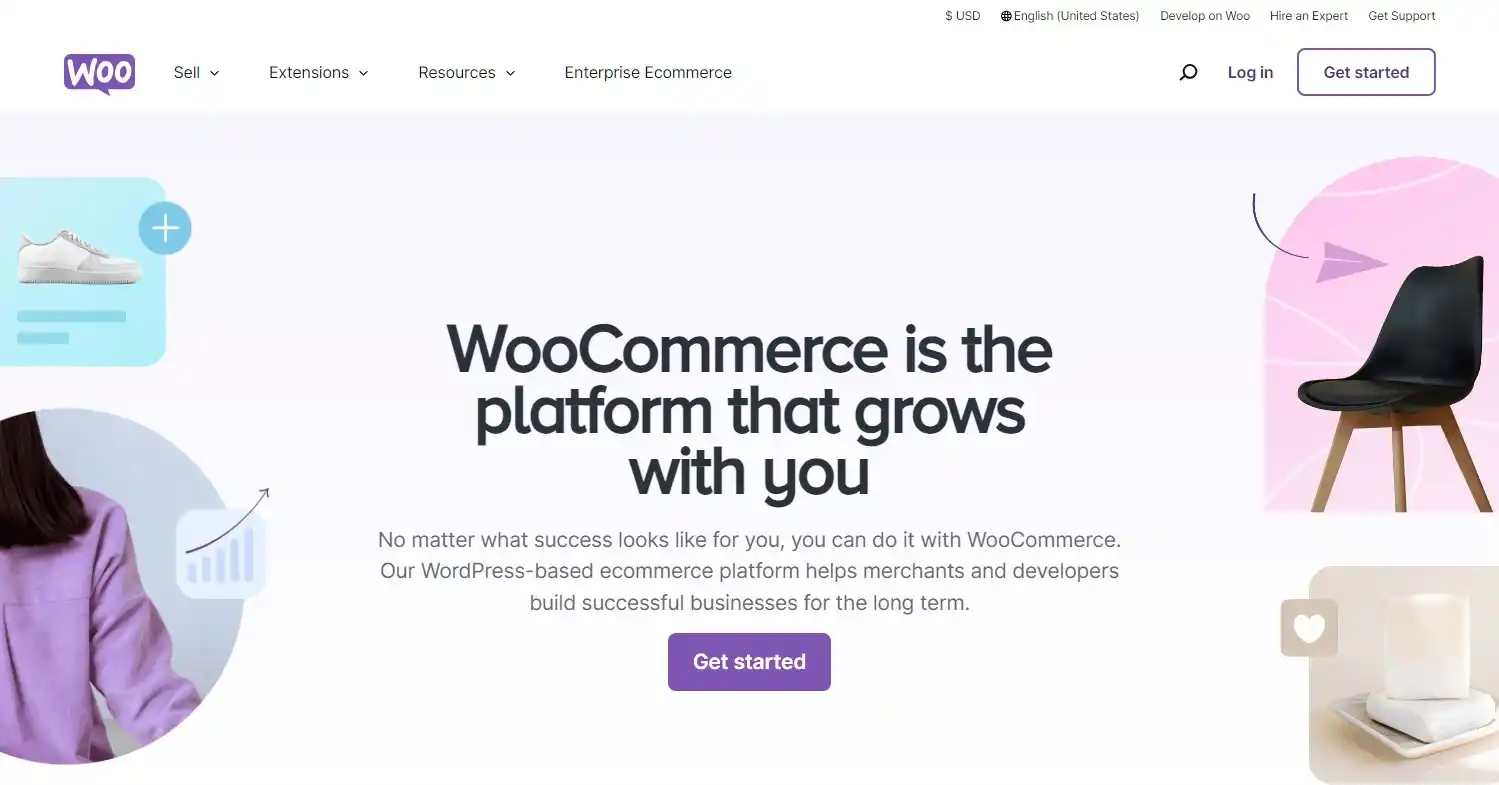
WooCommerce is a powerful ecommerce plugin for WordPress that turns a regular site into a fully customizable online store. It’s widely used by businesses of all sizes and supports both physical and digital products, making it a flexible foundation if you already run or plan to run a WordPress‑based website.
For sellers who want deep control over their tech stack and are comparing the best eCommerce platform for digital products with maximum flexibility, WooCommerce often becomes a top contender.
Key features that WooCommerce offers:
- Native support for digital downloads with configurable access rules and automatic delivery.
- Extensive library of extensions for subscriptions, memberships, license keys, and course integrations.
- Full control over site structure, design, and checkout via themes, page builders, and custom code.
- Wide choice of payment gateways, currencies, and tax options, including tools tailored for digital goods.
WooCommerce limitations to keep in mind:
- Your website requires separate hosting, WordPress setup, and ongoing maintenance, which adds technical overhead.
- Performance and security depend heavily on your hosting quality, theme, and plugin choices.
WooCommerce pricing: Custom based on your choice of hosting and maintenance fee
Best for:
WooCommerce is best for sellers and brands who want full ownership and customization of their store, are comfortable with (or can hire for) WordPress management, and plan to build a content‑rich site where digital products are a core revenue stream.
6. Payhip
Payhip is a lightweight, hosted ecommerce platform built specifically with digital creators in mind, making it a popular choice for selling ebooks, printables, software, courses, and memberships from a simple storefront. You can either use Payhip as your main store or embed its checkout on an existing site, which is handy if you already have a blog or portfolio.
If you are budget‑conscious creators exploring the best eCommerce platform for digital products, Payhip stands out because it combines low upfront costs with features tailored to digital sales and tax compliance.

Key features that Payhip offers:
- Native support for digital downloads with secure, automated file delivery after purchase.
- Built‑in tools for selling online courses and memberships alongside one‑off digital products.
- EU and UK VAT handling for digital goods, reducing the complexity of international tax compliance.
- Flexible pricing tools, including coupons, pay‑what‑you‑want, and product bundling.
Payhip limitations to keep in mind:
- Storefront design and layout customization are more limited than full website builders.
- Smaller ecosystem and fewer third‑party integrations compared to larger eCommerce platforms.
Payhip pricing: From $0 to $99 per month
Best for:
Payhip is the best eCommerce platform for digital products for solo creators and small teams who want an affordable, low‑friction way to sell digital downloads, courses, and memberships without managing hosting or complex technical setups
7. SureCart
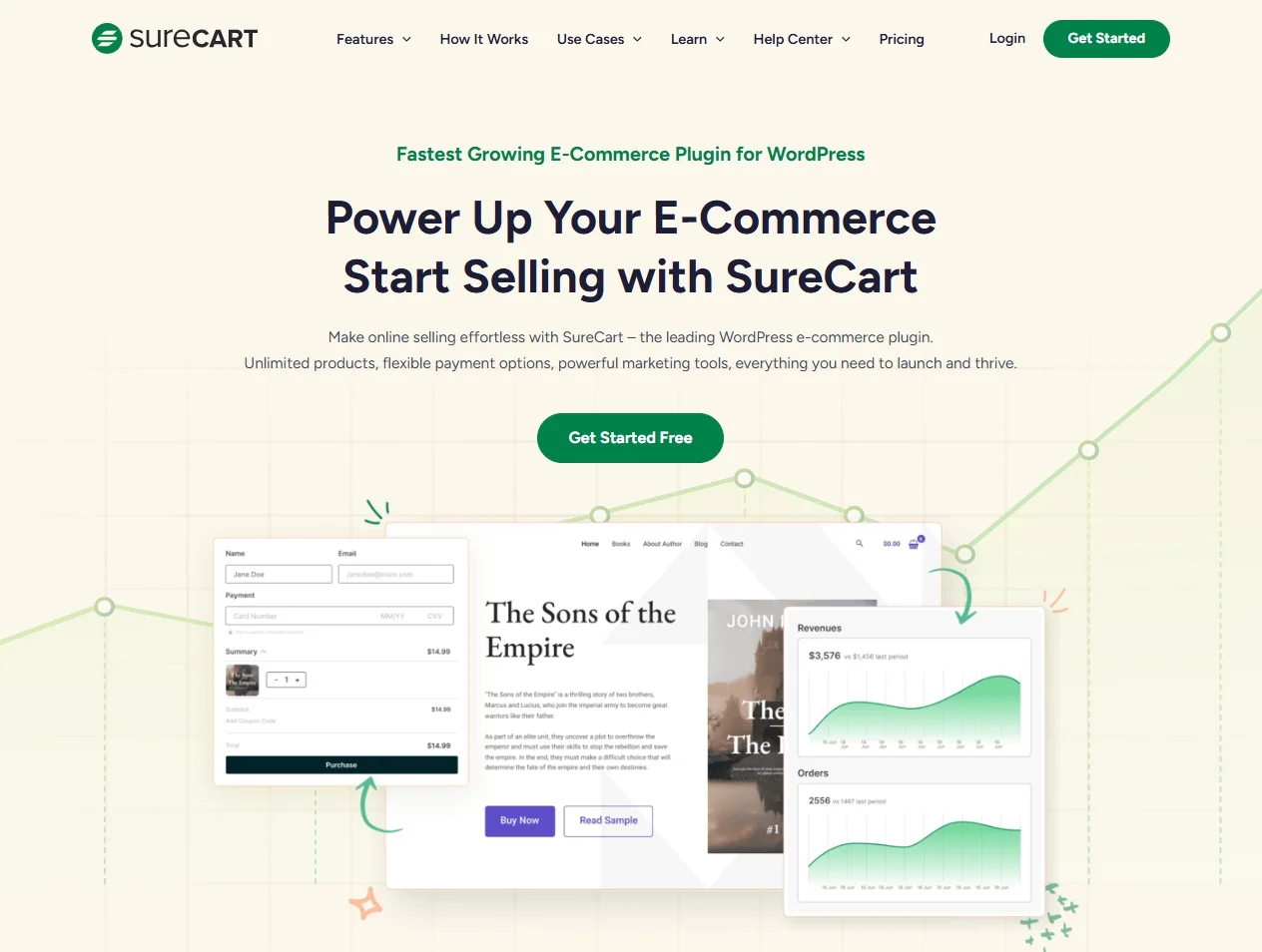
SureCart is a modern checkout and payments solution built for WordPress users who want to sell digital products without the usual plugin bloat or technical headaches. Instead of acting as a full website builder, it slots into your existing WordPress site and focuses on streamlined carts, subscriptions, and access‑based products.
If you already use WordPress for content and design and are evaluating the best eCommerce platform for digital products that feel lightweight yet powerful, SureCart offers a contemporary, “checkout‑first” approach tailored to that workflow.
Key features that SureCart offers:
- Optimized, conversion‑focused checkout pages that you can embed across your WordPress site.
- Strong support for subscriptions, payment plans, and recurring billing for digital products and memberships.
- Tools for selling licenses, access‑based products, and other digital‑only offers.
- Automated email notifications, receipts, and customer account access for managing purchases.
SureCart limitations to keep in mind:
- Requires a WordPress site, so it’s not a standalone hosted solution for non‑WordPress users.
- May require some WordPress familiarity to get the most out of its flexibility and integration options.
SureCart pricing: Pro plan starts at $179 per month for 1 store (if billed annually), Launch plan is available for free
Best for:
SureCart is the best eCommerce platform for digital products if you are WordPress users who want a clean, modern checkout and robust subscription capabilities for selling digital products, memberships, and other access‑based offers.
8. Podia
Podia is an all‑in‑one platform built specifically for creators who sell online courses, digital downloads, memberships, and communities from a single, unified hub. Instead of stitching together separate tools for hosting content, managing students, and taking payments, Podia gives you a streamlined dashboard where you can set up products, publish content, and communicate with your audience.
For many knowledge‑based businesses evaluating the best eCommerce platform for digital products, Podia is appealing because it combines storefront, course platform, and community space under one roof.
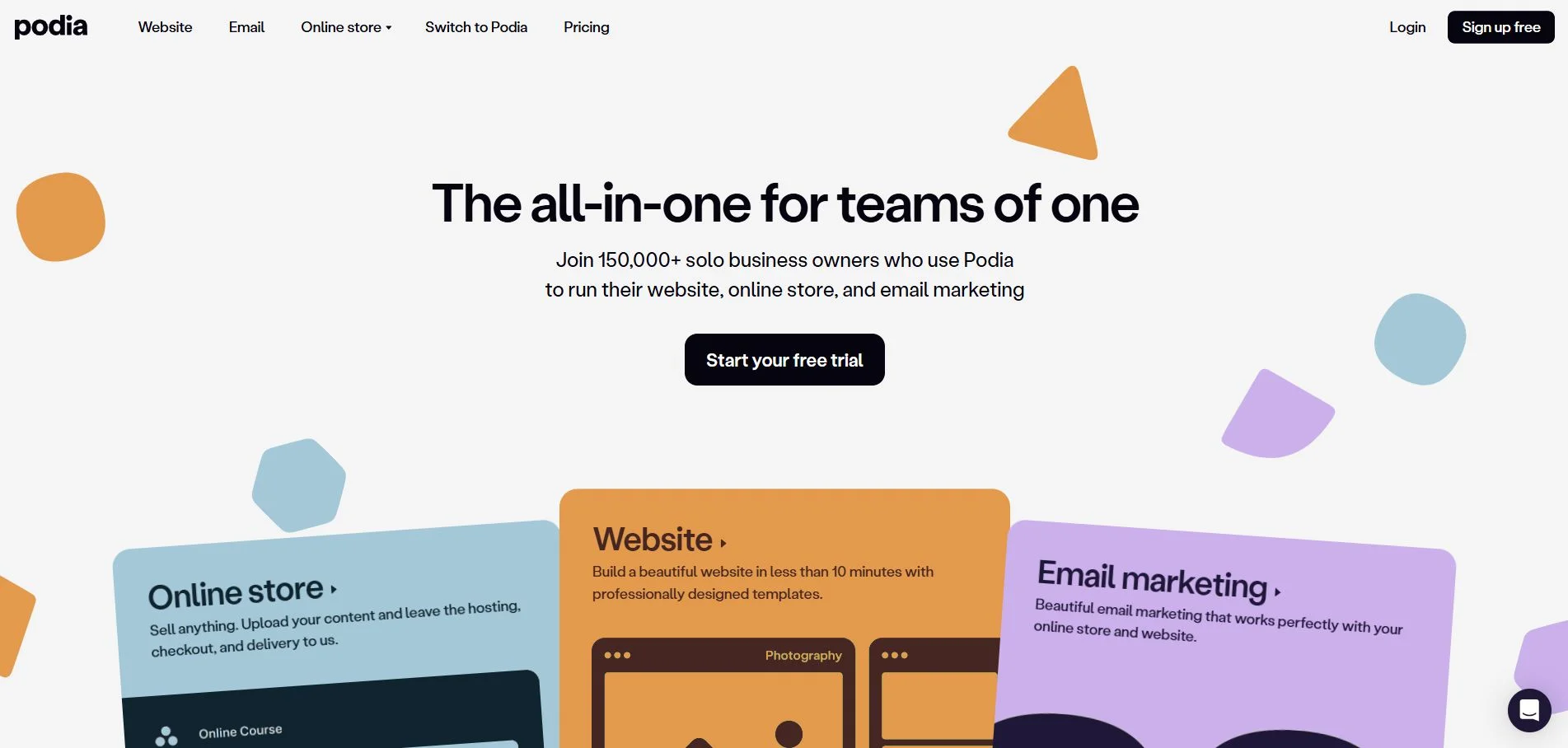
Key features that Podia offers:
- Native support for online courses, digital downloads, webinars, and bundled offers.
- Strong support for subscriptions, payment plans, and recurring billing for digital products and memberships.
- Simple, hosted storefront and product pages, so you don’t need separate hosting or a complex site setup.
- Support for coupons, upsells, and payment plans to increase order value and conversions.
Podia limitations to keep in mind:
- Design and layout customization options are more limited than full website builders.
- Less suitable if you primarily sell physical products or need a very complex multi‑store setup.
Podia pricing: From $39 to $89 per month
Best for:
Podia is the best eCommerce platform for digital products if you are course creators, educators, and community‑driven businesses that want to manage digital products, memberships, and audience engagement from one integrated platform.
9. Ecwid
Ecwid is a flexible ecommerce solution that lets you add a fully functional store to an existing website, social media profile, or marketplace, rather than forcing you to rebuild everything from scratch. It supports both physical and digital products, so you can layer digital downloads or simple digital services on top of a site you already own.
For creators or small businesses that want to “bolt on” selling capabilities while exploring the best eCommerce platform for digital products, Ecwid offers a convenient, channel‑agnostic approach.

Key features that Ecwid offers:
- Support for digital products with automatic file delivery after purchase.
- Embeddable store widgets you can add to existing sites (WordPress, Wix, custom HTML, and more).
- Built‑in tools for coupons, discounts, and basic marketing promotions.
- Multi‑channel selling across websites, social media, and marketplaces from one centralized dashboard.
Ecwid limitations to keep in mind:
- Digital product features are more basic than platforms built specifically around courses, memberships, or complex digital ecosystems.
- Storefront design customization is somewhat constrained by the embeded model and available themes.
Ecwid pricing: From $5 to $149 per month
Best for:
Ecwid is best for website owners and small businesses that already have an online presence and want to add digital product selling without rebuilding their site. It’s particularly useful if you value multi‑channel selling and convenience over highly specialized digital‑only features.
10. SendOwl
SendOwl is a digital‑first ecommerce platform focused on secure file delivery, license management, and automation, making it popular with software developers, authors, and creators who prioritize reliable fulfillment. Instead of acting as a full website builder, it handles the “behind‑the‑scenes” selling infrastructure, such as checkout, delivery, and access, while you control the front‑end experience via your own site or landing pages.
For more technical or growth‑oriented sellers assessing the best eCommerce platform for digital products, SendOwl often stands out for its delivery automation and integration strengths.
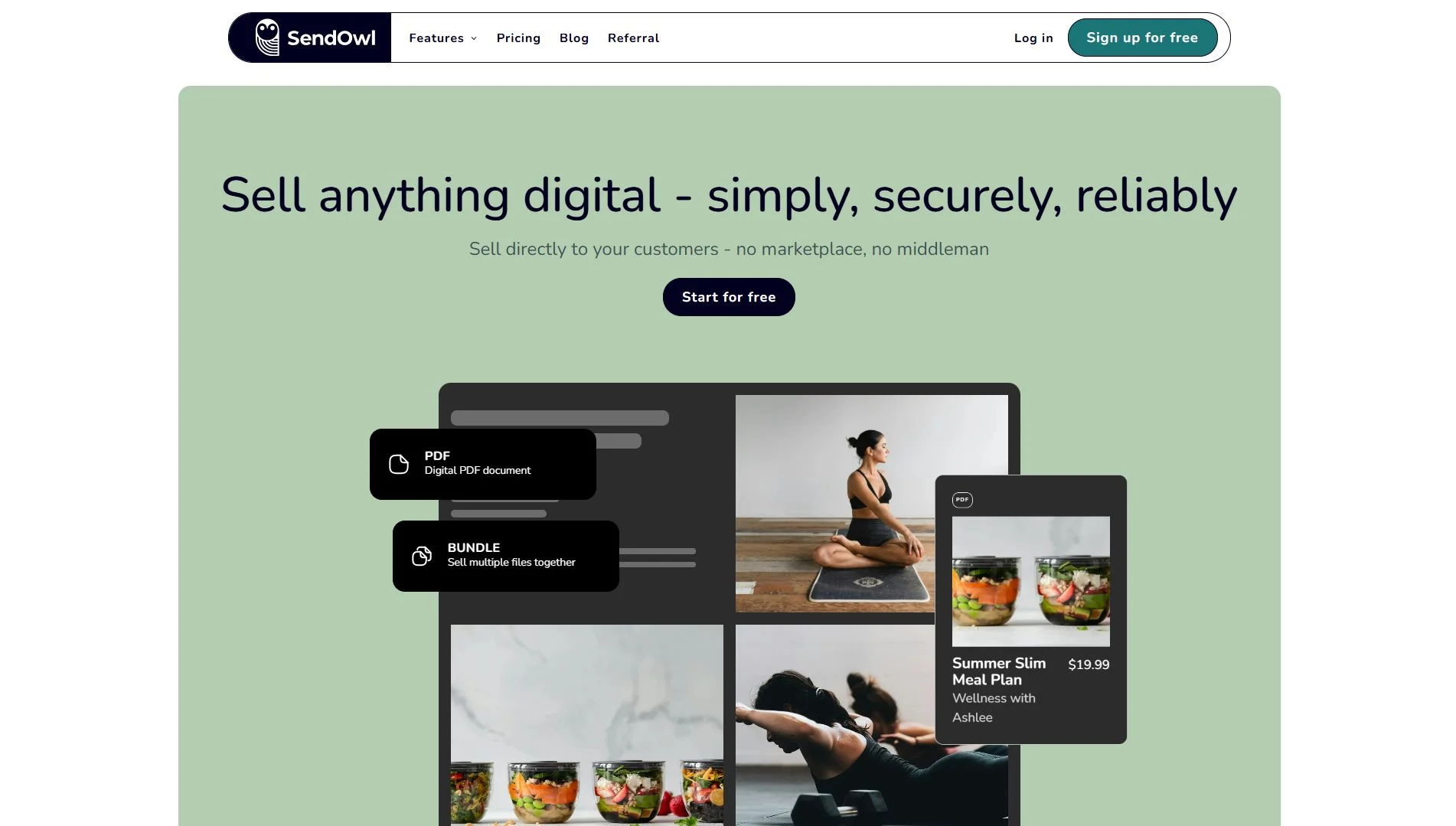
Key features that SendOwl offers:
- Robust digital file delivery with secure links, download limits, and expiration controls.
- License key generation and management for software and other license‑based products.
- Support for subscriptions, payment plans, and recurring billing models.
- Embeddable checkout and buttons that integrate with existing websites, sales pages, or funnels.
SendOwl limitations to keep in mind:
- Interface and setup can feel more technical compared to beginner‑oriented creator platforms.
- The platform may be overkill for very simple digital product catalogs or first‑time sellers who just need a basic storefront.
SendOwl pricing: From $39 to $159 per month
Best for:
SendOwl is best for developers, tech‑savvy creators, and growing digital businesses that need reliable file delivery, license handling, and flexible integrations rather than an all‑in‑one website solution.
Criteria of the Best eCommerce Platform for Digital Products
Choosing the best eCommerce platform for digital products isn’t just about picking a popular name; it’s about matching specific features to the way you sell. These are the core criteria you should weigh before committing to any tool.
1. Ease of use and setup
A good platform should let you upload products, set prices, and go live without a steep learning curve. If you’re a solo creator or small team, an intuitive dashboard, clear onboarding, and minimal technical setup are crucial to avoid “tool fatigue” before you even launch.
2. Features to support digital product selling
Not every ecommerce tool is built with digital goods in mind, so look for features like secure file hosting, automatic download delivery, license key generation, and access control. If you sell courses, memberships, or recurring content, you’ll also want support for content dripping, member areas, and recurring billing.
3. Pricing and total cost
Price isn’t only about the monthly subscription; it’s also about transaction fees, revenue share, paid add‑ons, and your expected sales volume. Flat‑fee tools can be better for higher revenue, while fee‑based models can be great for testing and early stages when you want low upfront risk.
4. Customization and branding
Your platform should give you enough control to reflect your brand, at least on key pages like your homepage, product pages, and checkout. Hosted tools often trade deep customization for simplicity, while WordPress‑based or developer‑oriented solutions offer more flexibility but require more time and skill.
5. Marketing and growth tools
The right platform should grow with you, handling more products, more customers, and more traffic without breaking. Consider whether it can support additional product lines (courses, memberships, bundles), higher order volume, and more advanced workflows as your business matures.
6. Support and reliability
When something breaks, you’ll want responsive support, clear documentation, and an active user community. Check what’s available and whether the platform has a solid reputation for uptime and long‑term product development.
These criteria work together to give you a practical decision‑making framework instead of relying on hype or brand familiarity. When you evaluate each option through this lens, it becomes much easier to identify which tool is truly the best eCommerce platform for digital products for your specific business model, rather than in the abstract.
Best eCommerce Platform for Digital Products – FAQs
Where can I sell digital products online?
You can sell digital products on dedicated creator platforms (like Gumroad, Sellfy, Payhip, Podia, SendOwl), website builders with ecommerce (such as Wix and Squarespace), and plugin‑based setups on WordPress (like WooCommerce and SureCart).
Can I sell digital products on Shopify?
Yes, you can sell digital products on Shopify by using built‑in settings and apps that enable digital downloads, license delivery, or access‑based products. However, because Shopify was originally built with physical products in mind, you’ll often rely on third‑party apps to match the level of digital‑specific features that some more specialized platforms offer out of the box.
What types of digital products can I sell?
You can sell a wide range of digital products, including ebooks, PDFs, design templates, stock photos, music, software and license keys, online courses, memberships, print‑on‑demand files, and even premium newsletters or communities. The key is choosing the best eCommerce platform for digital products that supports your format (downloads, streaming, gated access, recurring billing) and delivers a smooth experience both for you as the creator and for your customers.
Final Words
In short, choosing the best eCommerce platform for digital products is less about chasing a single “winner” and more about finding the tool that fits your products, workflow, and growth plans. Some platforms prioritize simplicity and speed‑to‑launch, others give you deep customization or powerful course and membership features, and a few are ideal bolt‑ons for sites you already have. Therefore, make sure to use the criteria above to narrow your options to truly match how you sell.
If you like this article, please don't forget to check out other articles on our LitExtension Blogs and Resources for more expert tips and insights on eCommerce platforms.