In recent years, building a professional website or online store is no longer limited to developers. Modern platforms like Wix vs Duda now promise faster setup, easier customization, and AI-powered tools that can help beginners launch websites with minimal technical experience!
So, which platform is actually the better choice for your needs? To help you answer this question, we’ll break down the most important criteria, including:
- Website builders & templates
- Ease of use
- eCommerce features
- CMS
- Apps & integrations
- SEO & marketing
- Security & support
- Pricing
By the end, you’ll have a much clearer understanding of where each platform excels. Let’s get started!
Wix vs Duda: Quick Verdict
Overall, Wix wins this comparison because it offers a broader ecosystem, stronger eCommerce infrastructure, larger app and template marketplaces, and more beginner-friendly onboarding.
Still, Duda performs exceptionally well for agencies and professional workflows, as seen in the comparison table below:
Criterion | Wix | Duda | Winner |
Website Builders & Templates | 2,000+ templates, multiple builders, strong AI onboarding | Structured responsive builder with reusable systems | Wix |
Ease of Use | Beginner-friendly onboarding and centralized dashboard | Cleaner interface for agencies and teams | Wix |
eCommerce Features | Broader native ecommerce ecosystem and larger commerce infrastructure | Strong operational ecommerce workflows with 0% transaction fees | Wix |
CMS | Beginner-friendly CMS for single-site management | Strong reusable systems and multi-site workflows | Duda |
Apps & Integrations | 800+ apps and large native ecosystem | Smaller curated ecosystem with stronger developer focus | Wix |
SEO & Marketing | Larger native marketing ecosystem and automation tools | Strong technical SEO structure and responsive consistency | Wix |
Security & Support | Massive support ecosystem and broad SMB support | More granular permissions and agency-oriented support | Tie |
Pricing | Better all-in-one value for SMBs | Stronger agency-oriented modular pricing | Tie |
Wix vs Duda: Pros & cons
Wix is a highly flexible all-in-one website builder designed for SMBs, creators, eCommerce stores, and beginners who want a large ecosystem with minimal setup complexity. Its biggest strengths lie in its accessibility and app variety, as discussed in our Wix review:
Wix Pros | Wix Cons |
- 2,000+ templates across many industries | - Dashboard can feel crowded as sites scale |
On the other hand, Duda is a more structured website platform focused on agencies, professional designers, and teams managing multiple websites. The platform is recognized for its reusable workflows, responsive consistency, permissions, and operational scalability:
Duda Pros | Duda Cons |
- Cleaner and more structured interface | - Much smaller template ecosystem |
Website Builders & Templates (Wix Wins)
The Verdict
Between Wix vs Duda, Wix offers a significantly broader website-building ecosystem, including multiple builder types, stronger beginner-oriented AI workflows, and over 2,000 templates across a huge range of industries.
On the other hand, Duda is more specialized and operationally efficient for agencies. Let’s see how they approach website building in more detail:
Wix’s website builder & templates
Wix currently operates several different website-building systems inside the same ecosystem, each targeting different user types and workflow needs.
The classic Wix Editor remains the platform’s main drag-and-drop builder, giving users full visual control over layouts with highly flexible positioning. However, for more professional responsive workflows, Wix now pushes Wix Studio, which integrates much of the technology previously associated with Editor X and focuses more heavily on responsive layouts, advanced breakpoints, animations, and collaborative workflows.
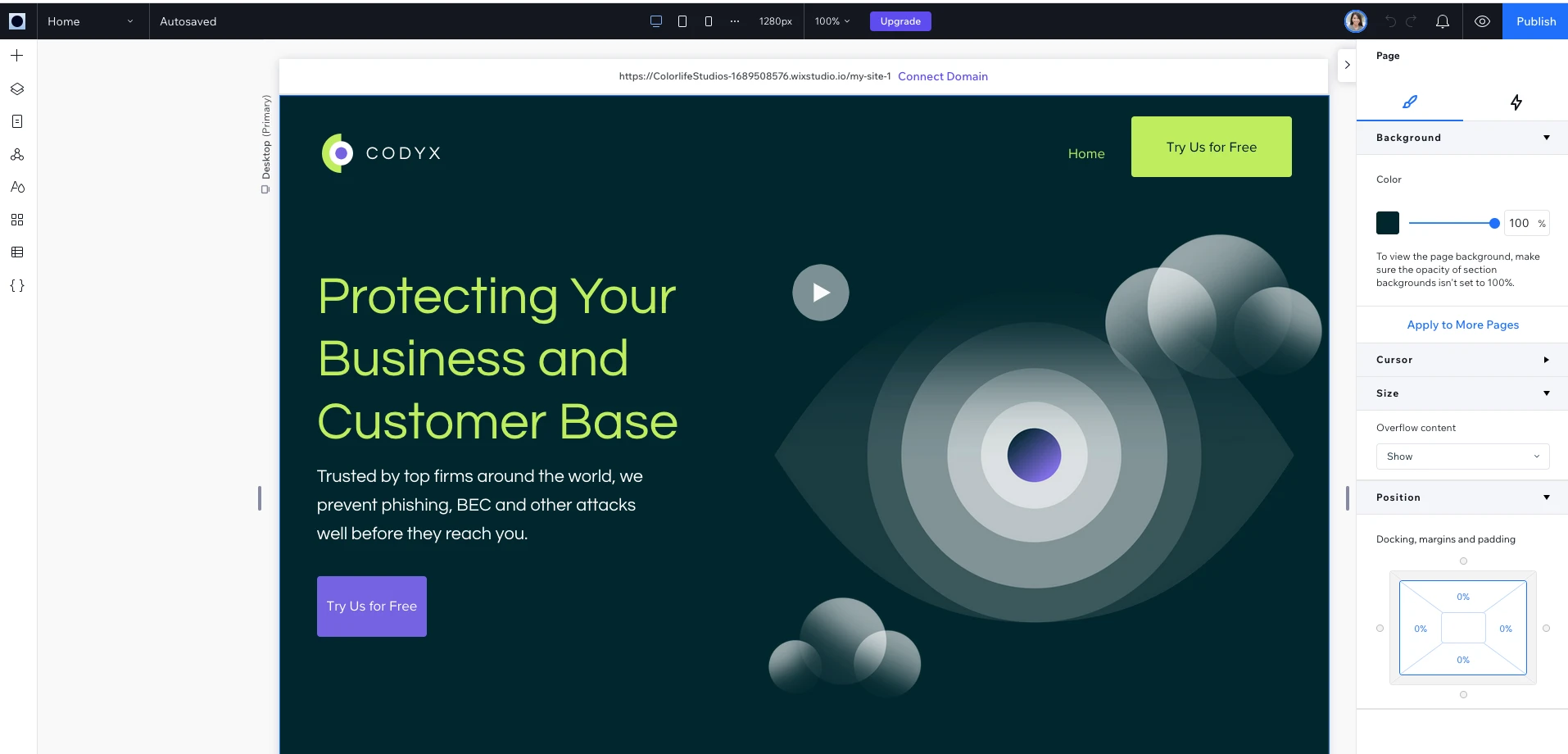
At the beginner end, Wix also heavily promotes AI-assisted building tools, such as Wix AI Website Builder. These systems guide users through setup questions about business type, goals, and desired features before automatically generating site structures, sections, starter copy, and feature recommendations. Wix recently expanded this even further through “Wix Harmony” (formerly Wix ADI), which integrates conversational AI workflows into website creation and management.
And that’s not all; for advanced users and developers, Wix also offers Velo by Wix, which adds custom coding capabilities, APIs, databases, and backend logic inside the Wix ecosystem. This gives Wix unusually broad flexibility compared to many traditional website builders, as it supports both beginner no-code users and professional designers and developers.
Templates are another major advantage. Wix officially advertises over 2,000 website templates, including more than 500 eCommerce-specific templates. The platform covers an enormous range of industries and use cases, including restaurants, real estate, photography, fitness, consulting, events, online courses, portfolios, nonprofits, blogs, and online stores.
Duda’s website builder & templates
Rather than offering several distinct builders like Wix, Duda focuses on one responsive builder architecture optimized for scalable workflows, reusable systems, and operational consistency.
The platform includes systems such as Dynamic Pages, Connected Data, Shared Libraries, Reusable Sections, and White Label tools directly inside the builder experience. These features make Duda particularly efficient for agencies managing multiple websites or clients simultaneously.
Duda has also significantly expanded its AI capabilities in recent years. The company now positions itself as an “AI-ready website platform built for pros” and includes AI-powered site generation, AI-generated sections, AI-generated content, AI alt-text generation, AI SEO assistance, and workflow-oriented AI assistants. Unlike Wix, however, Duda’s AI systems are designed more to accelerate agency production workflows rather than heavily guide beginners through onboarding.
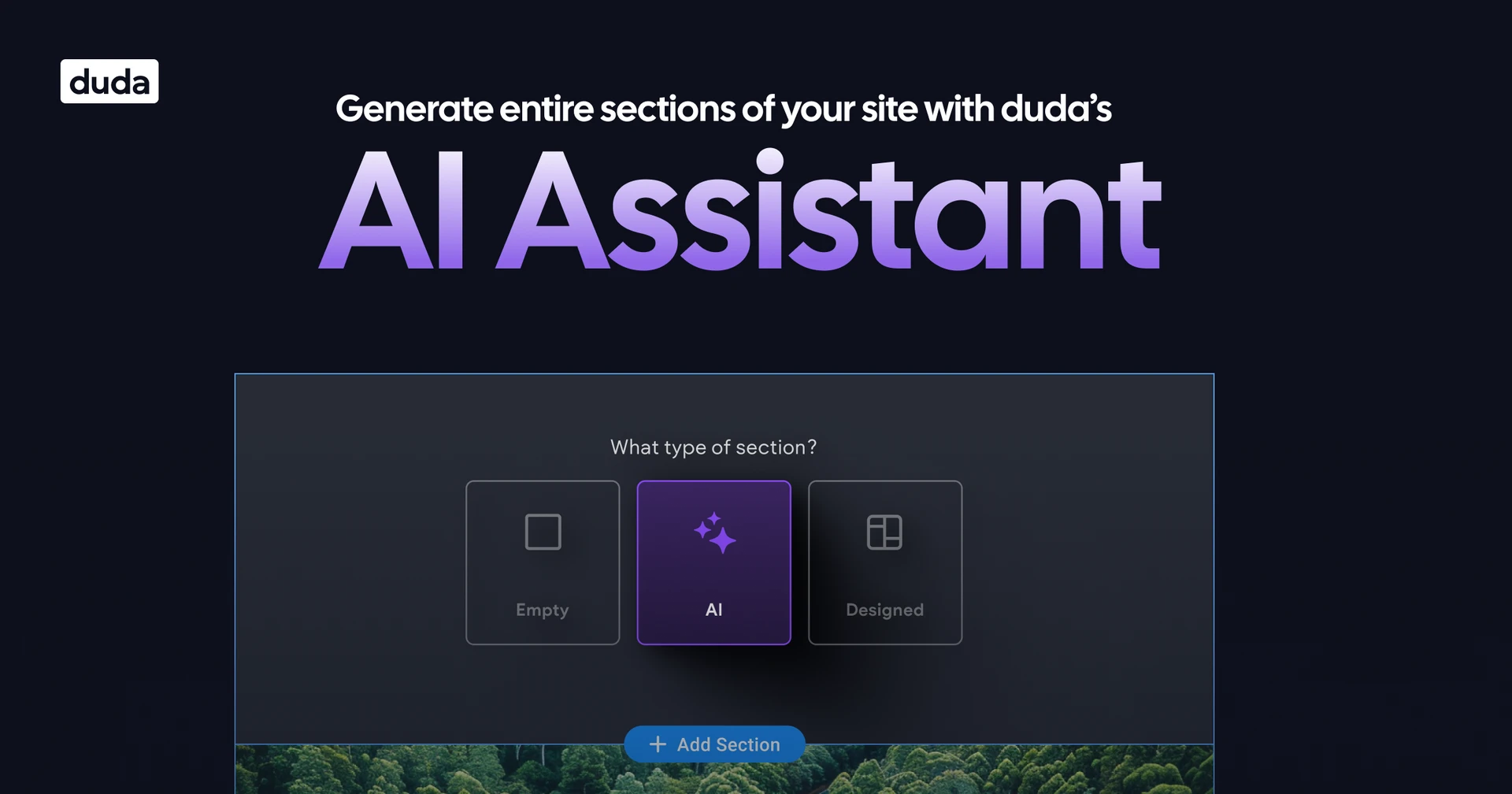
Regarding templates, Duda offers fewer than 100 options so far, with less variety for niche SMB industries compared to Wix. However, on the bright side, the templates are generally highly polished, natively responsive, and built with consistency in mind.
Ease of use (Wix wins)
The Verdict
Wix offers a more beginner-friendly onboarding experience, stronger setup assistance, and a more centralized dashboard structure. Sure, Duda’s interface is cleaner and more operationally efficient for agencies, but Wix still reduces learning friction more effectively for first-time users.
Let’s break down this Wix vs Duda difference in more detail:
Wix’s ease of use
All in all, Wix is heavily optimized for beginner onboarding. After account creation, users are guided through a setup flow that asks about business type, website goals, and required functionality before recommending tools and features relevant to those needs.
The platform also invests aggressively in AI-assisted onboarding and setup systems through tools such as Wix AI Website Builder, Wix ADI, and SEO Setup Checklist. Better yet, Wix recently expanded this even further with its ChatGPT integration and “Wix Harmony” workflow, allowing users to create and manage websites using conversational prompts.

Navigation is another major strength. Wix centralizes most major tools (including website management, ecommerce, CRM, marketing, analytics, and bookings) inside one dashboard structure. The interface also includes onboarding tooltips, setup prompts, contextual recommendations, and in-dashboard explanations that continuously guide users as they navigate the platform.
Duda’s ease of use
Duda approaches usability differently. Rather than heavily guiding users through onboarding like Wix, Duda focuses on workflow efficiency and operational clarity for agencies and professional users. After signing up, users typically select a template and configure the site instead of going through a deeply guided onboarding flow.
On the bright side, one of Duda’s biggest usability strengths is interface cleanliness. Because the platform focuses more narrowly on website operations rather than becoming an all-in-one SMB ecosystem, its menus and settings are generally more streamlined than Wix’s. Professional users often find Duda easier to manage long-term because there are fewer overlapping systems competing for attention.
Duda also integrates workflow-oriented features directly into the interface, including Team Collaboration, Client Permissions, Shared Libraries, and White Label Dashboard functionality. These systems make navigation more efficient for agencies managing multiple client sites simultaneously.
eCommerce Features (Wix Wins)
The Verdict
Wix is the winner between Wix vs Duda, as it provides a broader native eCommerce ecosystem with stronger built-in inventory management, wider payment gateway support, and more extensive shipping integrations.
Duda supports eCommerce decently for agencies building stores for clients. Nevertheless, it relies much more heavily on external systems such as Ecwid for advanced eCommerce functionality:
Inventory management (Wix wins)
Wix clearly leads in raw eCommerce scale. Even its entry-level Core ecommerce plan supports up to 50,000 products (while Duda’s highest native tier supports up to 20,000 products only). In short, Wix offers much more room to scale inventory without upgrading into enterprise territory.
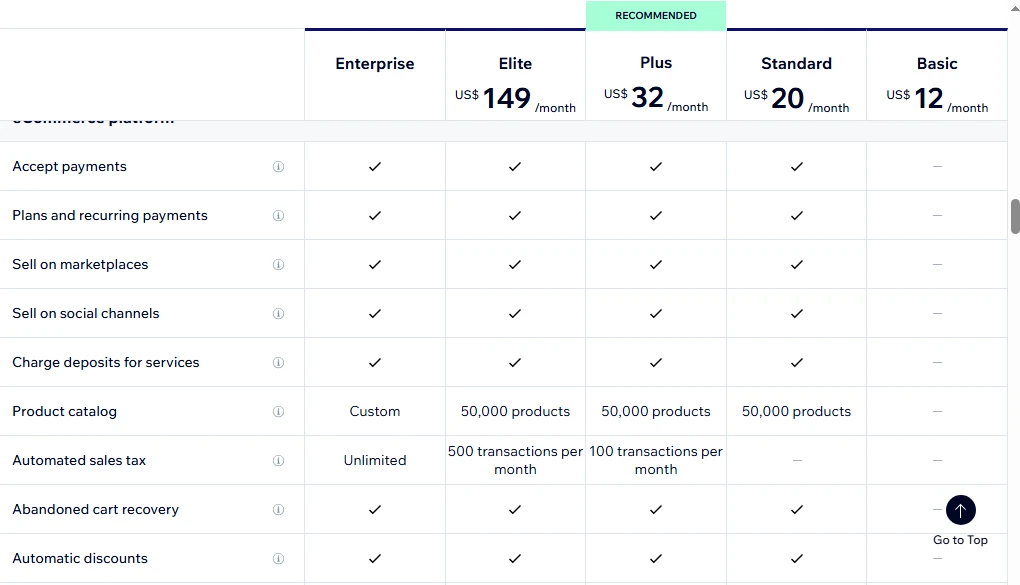
Wix also includes a broader native ecommerce ecosystem overall. The platform supports physical products, digital products, subscriptions, recurring payments, product variants, SKU management, low-stock alerts, and bulk editing directly inside the platform.
Duda, on the other hand, does not currently offer anything close to that level of native dropshipping scale. However, it performs surprisingly well in product configuration depth while also supporting product import/export, inventory tracking, cart customization, product sorting/filtering, and more.
Payment gateways (Wix wins)
Wix also wins payment flexibility by a long slide. The platform officially supports over 80 payment providers globally (depending on region), including Wix Payments, PayPal, Stripe, Square, Apple Pay, Google Pay, Klarna, and many local payment gateways.
Duda’s payment ecosystem, on the other hand, is much smaller by comparison. Native support primarily includes:
- Stripe
- PayPal
- Square
- Mollie
- Major credit cards, Apple Pay, and Google Pay.
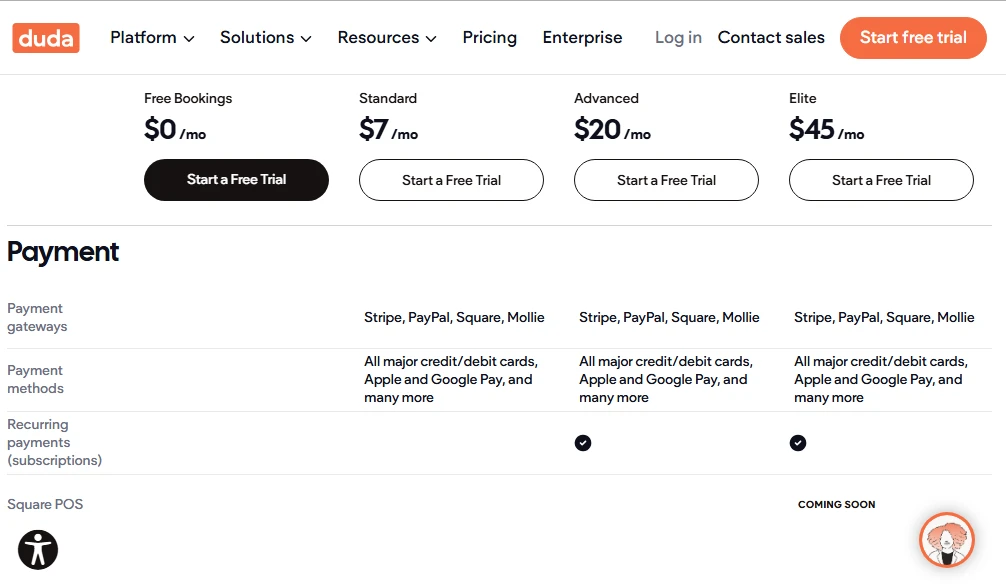
In compensation, Duda’s payment workflows are relatively clean and streamlined. Plus, the platform also supports recurring subscriptions natively and integrates Square POS for businesses managing online and offline sales simultaneously.
Shipping (Wix wins)
Shipping is another category where Wix holds a noticeable ecosystem advantage. The platform includes real-time shipping rates, local delivery, local pickup, shipping labels, automated shipping rules, tax automation, and integrations with services such as Shippo, Modalyst, and Printful directly inside its ecosystem.

Its dropshipping and fulfillment infrastructure is also much larger overall. Modalyst scaling alone grows from 25 products on Core to 50,000 products on Business Elite, which makes Wix substantially more viable for serious SMB dropshipping operations than many casual website builders.
And how about Duda’s shipping system? Though not as comprehensive as Wix’s, it is still pretty strong.
Specifically, the platform integrates automated taxes through Avalara and automated shipping through Easyship directly into higher eCommerce tiers.
For instance, Duda’s Advanced plan includes:
- 500 Avalara API calls/month
- 50 tax documents/month
- 100 shipping labels/month.
Meanwhile, Elite increases those limits to:
- 2500 Avalara API calls/month
- 250 tax documents/month
- 200 shipping labels/month.
All in all, these integrations give Duda a quite professional operational shipping backend for SMB and agency eCommerce workflows.
CMS (Duda Wins)
The Verdict
Overall, Wix offers a strong beginner-friendly CMS for individual websites. Nevertheless, Duda provides more advanced reusable systems, granular permissions, and multi-site management capabilities for agencies and professional teams.
The biggest Wix vs Duda difference here is that Wix’s CMS is optimized primarily for single-site management. Meanwhile, Duda’s CMS is designed around operational efficiency across many sites, collaborators, and reusable assets:
Wix’s CMS
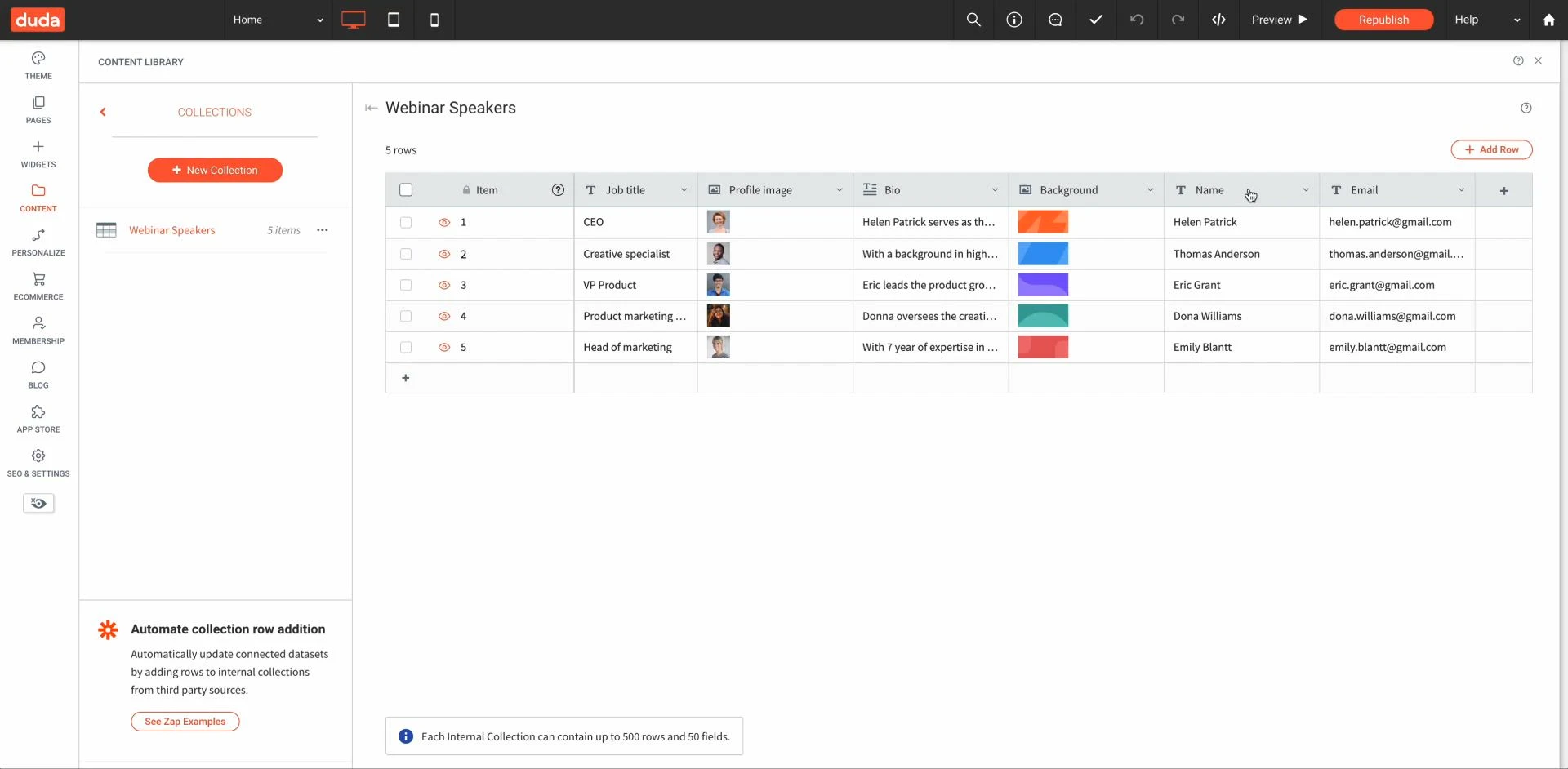
Wix CMS is highly accessible for SMB websites and non-technical users. The platform includes tools such as Wix CMS, Dynamic Pages, Content Collections, Repeaters, Reference Fields, and Media Manager, allowing users to create structured content without learning a separate backend system.
Dynamic collections can automatically generate pages for blogs, directories, portfolios, or product listings. For example, users can create a “Team Members” collection containing names, bios, and images, then automatically generate profile pages from those entries instead of manually building each page.
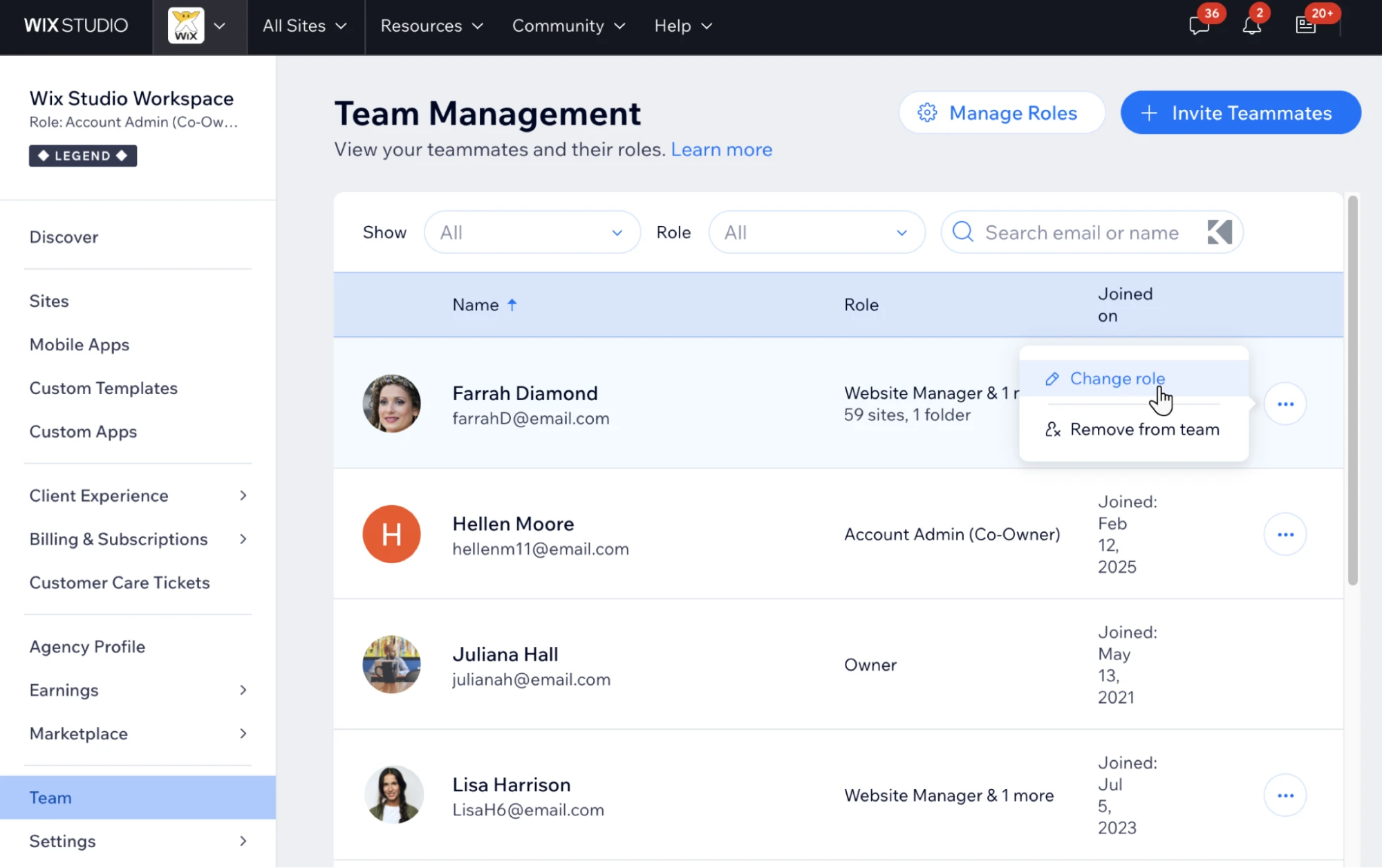
Furthermore, one of Wix’s biggest strengths is how tightly the CMS integrates into the visual editor. Users can manage content directly in the page-building environment, without switching between separate content dashboards and frontend editors. This design makes content management feel significantly less technical for beginners.
On the other hand, keep in mind that Wix’s CMS architecture is still largely optimized around individual website ownership rather than centralized multi-site workflows. Reusable systems exist, but they are not as operationally powerful or centralized as Duda’s reusable infrastructure. Agencies managing many websites may therefore encounter more repetitive editing and synchronization work over time.
Duda’s CMS
Duda’s CMS is built around scalability and reusable workflows. The platform includes systems such as Connected Data, Dynamic Pages, Reusable Sections, Shared Libraries, Client Permissions, and Team Collaboration, all designed to reduce repetitive work across projects and teams.
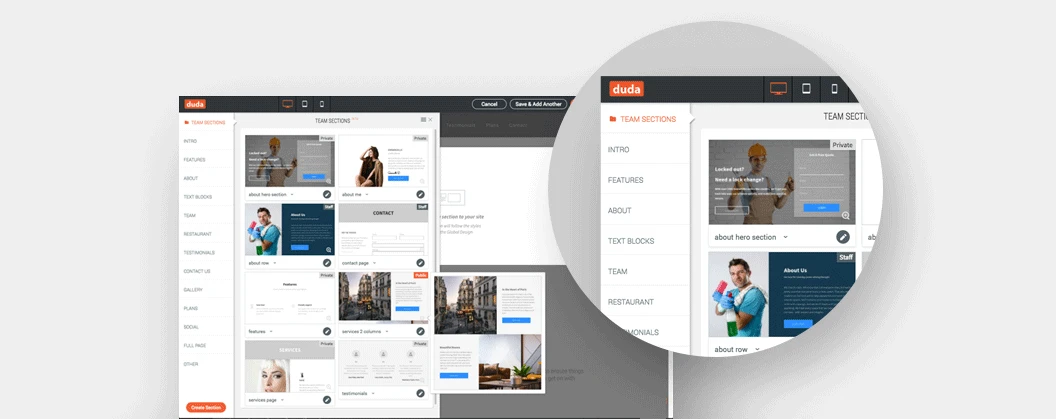
In addition, Duda provides a reusable section architecture. Specifically, agencies can save entire sections, rows, layouts, or assets and reuse them across multiple sites instead of rebuilding them manually each time. Shared Libraries further centralize reusable design assets and operational consistency.
And that’s not all; Duda also offers significantly more granular permission management than Wix. Agencies can control access to:
- Content editing
- Publishing
- eCommerce settings,
- Developer access,
- Bookings,
- Connected data,
- AI assistant tools.
Another major strength is Duda’s Connected Data system, which allows structured content to populate multiple areas dynamically across websites. Combined with reusable sections and multi-site workflows, this makes Duda much more efficient for franchises, agencies, and enterprise-scale operations managing large website portfolios.
Apps & Integrations (Wix Wins)
The Verdict
Duda’s ecosystem is more curated and developer-friendly. Nevertheless, Wix still wins because it provides more plug-and-play functionality with fewer external setup steps required.
Note that the Wix vs Duda difference here is not only about app quantity, as detailed in the section below:
Wix’s apps & integrations
Wix App Market officially advertises 800+ apps, services, and features.
The platform supports integrations across:
- eCommerce
- Bookings
- CRM
- Marketing
- Automation
- Accounting
- Shipping
- Loyalty systems
- Live chat
- Print-on-demand
- Analytics.
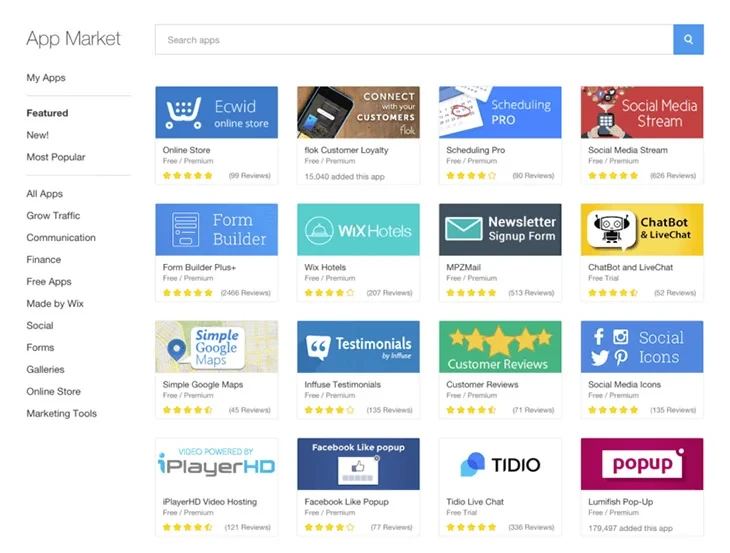
Popular integrations include Mailchimp, HubSpot, Printful, Modalyst, QuickBooks, Shippo, TikTok Ads, WhatsApp Chat, and OpenTable. Most apps can be installed within a few clicks directly from the dashboard, which creates an even faster setup experience for SMB users. Check out our curated list of the best Wix apps here.
Duda’s apps & integrations
Duda’s App Store is significantly smaller than Wix’s (fewer than 100 apps).
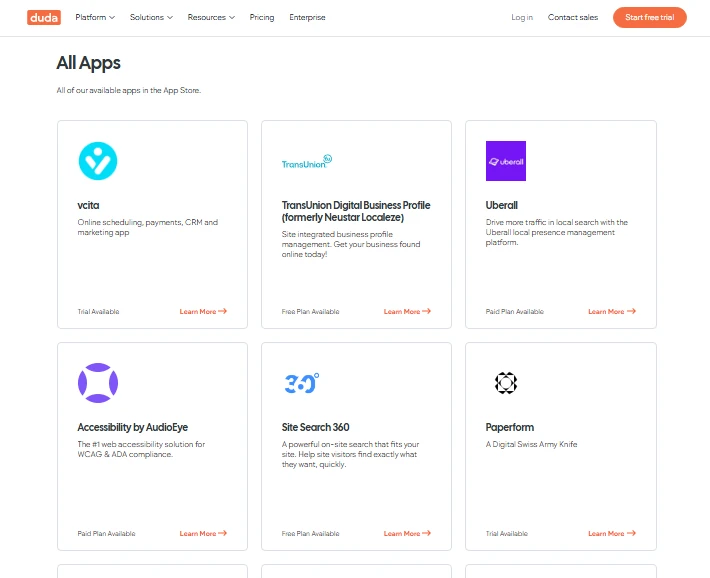
However, the platform explicitly states that it selects “best-of-breed providers” and monitors quality assurance across integrations. It also heavily emphasizes developer tools and APIs through Duda Connectors, API integrations, and widget-building systems. Compared to Wix’s native ecosystem, this feels cleaner and more operationally focused, though it does require additional setup steps and technical configuration.
SEO & Marketing (Wix Wins)
The Verdict
Wix wins because it combines modern technical SEO support with a significantly larger native marketing ecosystem. Duda performs very well in technical SEO structure and responsive consistency, but Wix offers more built-in tools for customer management, email marketing, automation, and ecommerce growth.
The variation between Wix vs Duda is essentially breadth versus specialization. Let’s discuss further:
Wix’s SEO & marketing
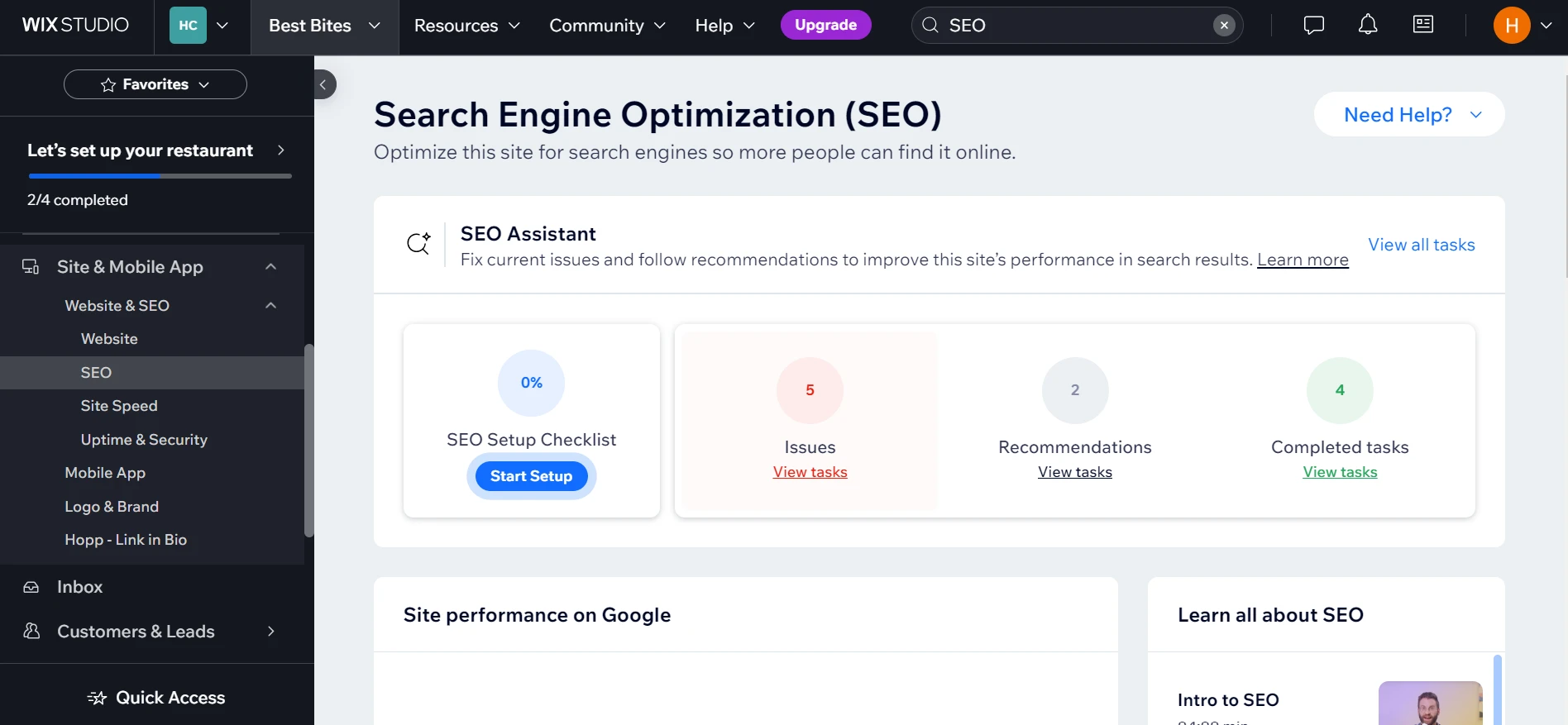
Wix supports all major modern SEO essentials, including custom meta titles and descriptions, canonical tags, redirects, XML sitemaps, structured data support, and Google Search Console integration. Plus, features such as SEO Setup Checklist and SEO Assistant actively guide users through core SEO tasks instead of assuming prior technical knowledge.
Wix’s larger advantage, however, is its integrated marketing ecosystem. The platform includes native tools for CRM management, email marketing, lead capture, automations, abandoned cart recovery, customer segmentation, coupons, and social integrations through products like Wix CRM, Wix Email Marketing, Wix Automations, Wix Forms, and Wix Chat.
This allows SMB users to manage marketing operations inside the same dashboard used to build the website itself. Businesses can also collect leads, trigger email workflows, recover abandoned carts, and manage customer communication without assembling multiple external systems.
Duda’s SEO & Marketing
Duda supports all core technical SEO features, including metadata editing, redirects, HTTPS security, XML sitemaps, responsive design, and alt text editing.
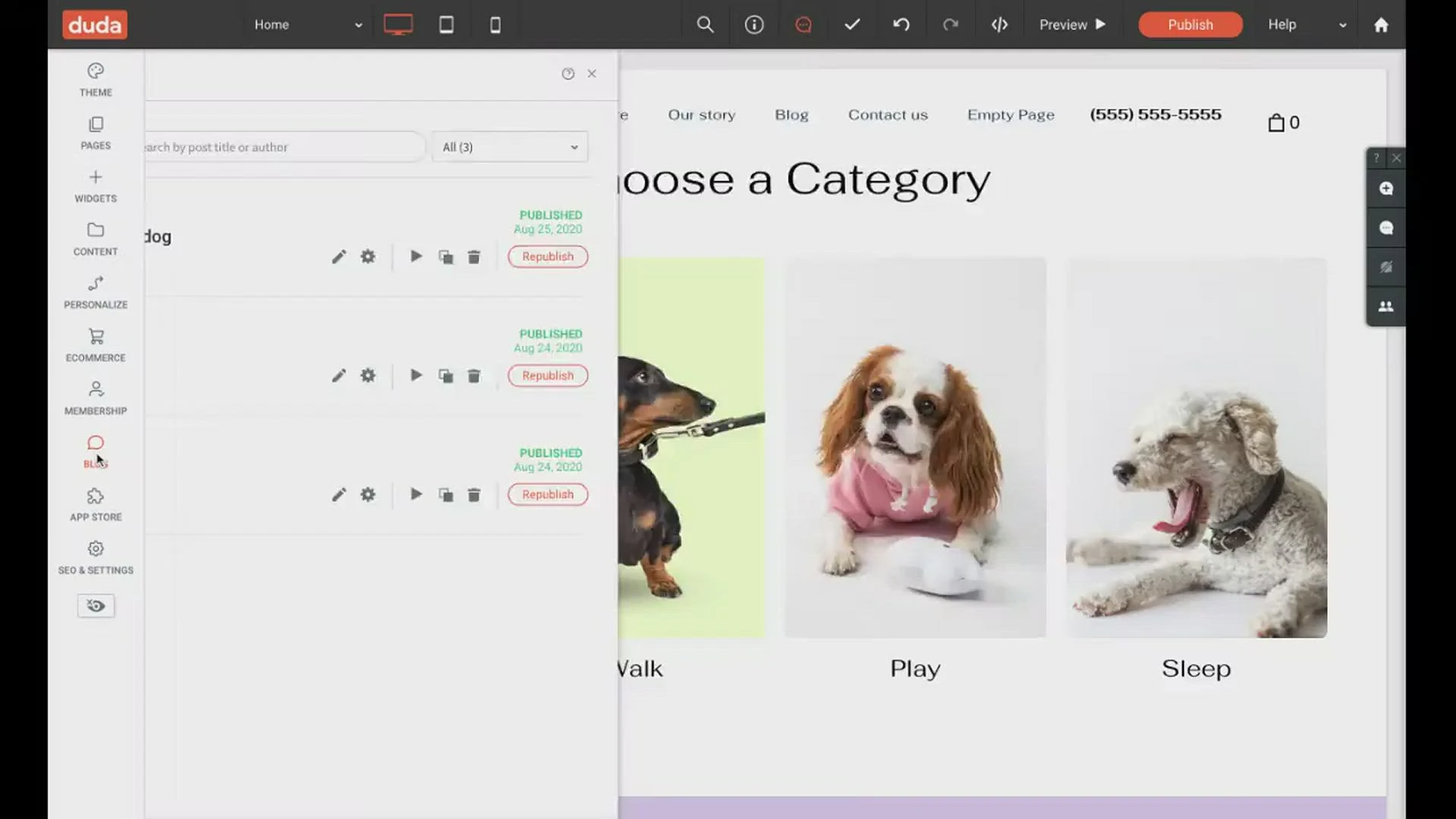
Responsive consistency is also another strength worth mentioning. Because the platform relies more heavily on structured layouts and operational controls, websites often maintain cleaner mobile rendering and more stable responsive behavior than highly customized Wix sites.
This indirectly benefits SEO by improving UX consistency and reducing layout instability across devices. Duda’s structured editing environment also helps agencies maintain standardized SEO workflows across multiple websites.
Regarding marketing, the platform does integrate well with external marketing and analytics systems. Nevertheless, compared to Wix, its native marketing features and apps are significantly more limited since website building remains its main focus. As a result, it has to rely much more heavily on third-party tools for CRM, automation, and email marketing workflows, which creates greater flexibility for professional teams but less convenience for SMB users.
Security & Support (A Tie)
The Verdict
Both Wix vs Duda provide strong SaaS-level security and managed hosting infrastructure. Wix has a significantly large support ecosystem and educational resources, while Duda offers strong operational permission controls for agencies.
Keep scrolling for a further breakdown:
Wix’s security & support
Wix handles hosting, infrastructure maintenance, automatic updates, SSL certificates, HTTPS encryption, DDoS protection, and two-factor authentication directly inside the platform.
Users therefore do not need to manage server security or manual software patching themselves. Not to mention, because the platform has millions of users worldwide, users can easily find tutorials, walkthroughs, YouTube guides, forum discussions, and troubleshooting documentation for almost any problem they encounter. Wix also provides live chat support, callback phone support, AI chatbot assistance, and an extensive Help Center covering everything from onboarding tutorials to advanced ecommerce configuration.
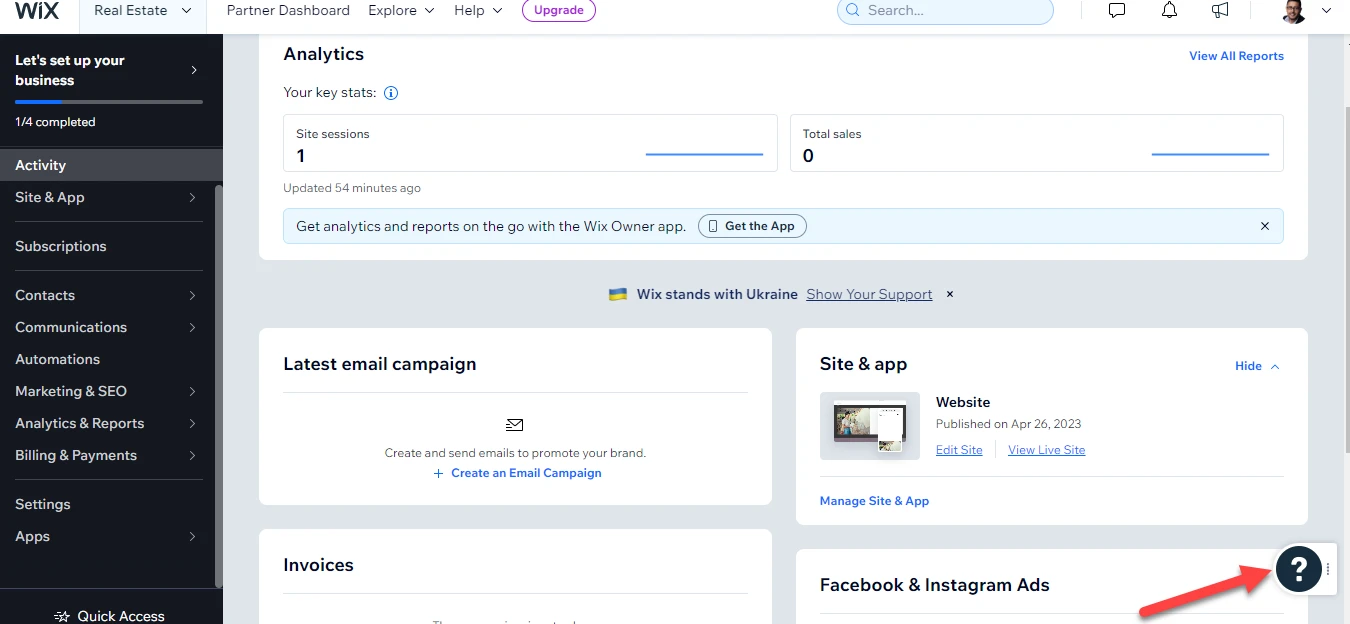
However, keep in mind that the size of Wix’s ecosystem can occasionally create inconsistency in support quality and app reliability, since some third-party integrations are more polished than others.
Duda’s security & support
Like Wix, Duda also provides fully managed hosting, SSL certificates, HTTPS security, and automatic updates as part of its SaaS infrastructure. Plus, as mentioned above, its advanced permission and collaboration system are among its strongest points. Since the platform offers granular role-based access controls, agencies can safely collaborate with clients while protecting site structure and operational settings.
Duda’s customer support strategy is also quite agency-oriented. The platform offers live chat support, email support, onboarding assistance, dedicated account managers for enterprise tiers, customer success managers, and white-label support options for agencies. Since Duda serves a smaller and more professional user base, its support is often considered more specialized and workflow-focused than Wix’s broader SMB-oriented approach.

Pricing (A Tie)
The Verdict
Neither platform is universally cheaper. Wix generally offers lower entry pricing and a more feature-packed all-in-one ecosystem for SMB users. Meanwhile, Duda’s pricing is more agency-oriented, with stronger collaboration and white-label infrastructure built into higher tiers.
Below, we’ll break down how both Wix vs Duda structure their pricing and where each one provides better value.
Wix’s pricing
Regarding Wix pricing, the platform has one of the broadest pricing ecosystems among website builders, as it now offers both traditional Wix plans and Wix Studio plans for professional users.
For standard Wix plans:
- Free ($0/month): Includes hosting, drag-and-drop editor, and templates, but keeps Wix branding and does not include a custom domain.
- Light ($17/month): Entry-level premium plan focused on basic websites with 2GB storage and 2 collaborators, but no ecommerce selling features.
- Core ($29/month): First ecommerce-enabled tier with payments, basic ecommerce, 50GB storage, 5 collaborators, and support for up to 50,000 products.
- Business ($39/month): Adds stronger ecommerce scaling tools, including loyalty tiers, referral programs, unlimited back-in-stock notifications, and 100GB storage.
- Business Elite ($159/month): Enterprise-oriented SMB tier with unlimited storage, 100 collaborators, advanced ecommerce, customized reports, priority customer care, and support for up to 50,000 Modalyst dropshipping products.
Meanwhile, Wix Studio introduces a more agency-oriented pricing structure:
- Basic ($12/month): Includes responsive design tools, 10GB storage, and 3 collaborators.
- Standard ($20/month): Adds payments support and 4,000 CMS items.
- Plus ($32/month): Expands to 20,000 CMS items, 120GB storage, and priority support.
- Elite ($149/month): Includes 10 million CMS items, 100 collaborators, priority support, and dedicated infrastructure.
- Enterprise: Custom pricing for large-scale organizations.
Wix’s biggest pricing advantage is ecosystem consolidation. Even lower tiers include many native business features that would require additional paid services elsewhere. However, the downside is that costs can scale quickly for businesses needing advanced eCommerce, storage, or collaboration features.
Duda’s pricing
Duda structures pricing much more around agencies, teams, and professional site management workflows. Unlike Wix, Duda separates its core website-builder plans from eCommerce and booking subscriptions, which creates a more modular pricing structure.
Duda’s core website-building plans include:
- Basic ($25/month): Includes 1 site, AWS hosting, unlimited storage, AI SEO Assistant, and AI Building Assistant.
- Team ($39/month): Adds 3 team members, client management, code access, and AI Content Collection.
- Agency ($69/month): Includes 4 sites, priority support, 6 team members, code export, Custom Widget Builder, and AI Connector tools.
- White Label ($199): Adds full white-label functionality, branded client communication, custom domains, and white-labeled support portals.
- Custom: Enterprise-oriented pricing with SSO, APIs, advanced AI systems, dedicated account managers, and unlimited team members.
One major advantage is that Duda includes unlimited storage even on lower plans, whereas Wix reserves larger storage allocations for higher tiers. Duda also bundles advanced collaboration and client-management systems much earlier in the pricing ladder than Wix does.
However, eCommerce and bookings functionality are priced separately from the main builder plans:
- Stanard eCommerce ($7/month): Supports 100 products and 0% transaction fees.
- Advanced ($20/month): Expands to 1,000 products, 300 variants per product, subscriptions, automated taxes, and automatic shipping.
- Elite ($45/month): Supports 20,000 products, 400 variants per product, and more advanced automation limits.
This modular structure can be either a strength or a weakness, depending on the business. Agencies building mostly content websites may save money because they only pay for ecommerce when needed. However, SMB businesses seeking a deeply integrated, all-in-one ecosystem may ultimately find Wix simpler and more cost-effective overall.
Wix vs Duda: Which One Is Suitable for You?
If you value beginner-friendly onboarding, a large app ecosystem, built-in marketing tools, and strong eCommerce functionality without relying heavily on third-party services, Wix will generally feel more accessible and feature-rich.
The platform is especially suitable for:
- Small-to-medium eCommerce stores
- Creators and freelancers
- Restaurants and local businesses
- Portfolios and service websites
- Businesses wanting built-in CRM and marketing tools
- Users with little technical experience.
On the other hand, Duda becomes more attractive when operational structure matters more than ecosystem breadth. Agencies, web professionals, and teams managing multiple client websites may prefer Duda because of its reusable systems, granular permissions, cleaner workflows, and white-label infrastructure.
Duda is especially suitable for:
- Agencies managing multiple client sites
- Franchises or multi-location businesses
- Professional web designers
- Teams requiring advanced collaboration controls
- Businesses prioritizing structured responsive workflows.
- Users already relying on external marketing stacks.
In short, Wix is generally stronger for all-in-one SMB growth, whereas Duda excels in agency-oriented workflow management and scalable operational consistency.
Wix vs Duda FAQ
Is Duda better than Wix?
Not necessarily. Duda and Wix are both powerful website builders, but they serve different primary needs. Duda is superior for agencies, web designers, and professionals managing multiple clients. Wix excels for individual small businesses, creatives, and beginners looking for immense creative freedom.
Why don't people use Wix?
Some people avoid using Wix due to its proprietary, closed platform that makes it nearly impossible to export sites, rigid design templates that can look "cookie-cutter," and slower loading speeds caused by heavy code.
Is there anything better than Wix?
Yes, several platforms are considered "better" than Wix depending on your specific needs. For instance, Squarespace is widely regarded as the best alternative for superior design and user experience. Meanwhile, Webflow is superior for advanced, high-performance, or custom-coded sites.
Our Methodology
To make this Wix vs Duda comparison as practical and unbiased as possible, we evaluated both platforms through real-world business workflows instead of relying solely on feature lists or marketing pages:
Step 1. Identifying the most important comparison criteria
First, we identified the areas that actually influence platform decisions for most users. The comparison was built around the categories that have the biggest impact on long-term website management, including website building flexibility, eCommerce capabilities, CMS structure, and more.
In addition, we also evaluated both platforms from multiple business perspectives. For example, some tests focused on beginner SMB users launching their first business website. Others focused on agencies managing multiple client projects or eCommerce stores scaling product catalogs and fulfillment workflows.
Step 2: Testing both platforms in realistic workflows
Next, we created and managed websites directly on both Wix and Duda to evaluate how each platform performs during actual day-to-day usage. This included account setup, onboarding, template selection, responsive editing, eCommerce configuration, and long-term content updates.
The evaluation intentionally extended beyond the initial setup because many platform strengths and weaknesses only become obvious over time. We therefore also assessed:
- How manageable large websites become
- How responsive workflows behave across devices
- How smoothly integrations and automations work
- How scalable each eCommerce ecosystem feels.
Support quality, onboarding guidance, documentation, and troubleshooting resources were also considered since these directly affect long-term usability for both beginners and professional teams.
Step 3: Applying weighted evaluation scores
Finally, after testing, we assigned weights to each category based on how strongly it affects real business use, rather than treating every feature equally. Hence, the final scoring distribution was:
- Website Builders & Templates: 20%
- eCommerce Features: 20%
- Ease of Use: 15%
- CMS: 10%
- Apps & Integrations: 10%
- SEO & Marketing: 10%
- Security & Support: 7.5%
- Pricing & Overall Value: 7.5%
All in all, this approach helped ensure the final verdict reflects how Wix vs Duda actually perform in realistic business environments.