Businesses today have a wealth of options when it comes to a website builder that seamlessly integrates eCommerce functionality. Two major players in this arena are Ecwid vs Shopify. But with both offering seemingly strong features, how do you choose the right platform for your business needs?
Well, LitExtension can help you find the answer. In this article, I will dive deep into the topic following these key points:
- Pricing
- Ease of use
- Inventory management
- AI and automation
- Point of sale (POS)
- Design & customization
- Multiple selling channels
- SEO & marketing
- Payment options
- Internationalization
- Apps
- Support
Are you excited? Because I am. Let’s get right into it!
Ecwid vs Shopify: Quick Verdict
Overall, Shopify is the stronger choice for businesses planning to build and scale a dedicated online store. However, if your goal is simply to add eCommerce functionality to an existing website while keeping costs low, Ecwid may be the better fit. Let’s see how the two platforms compare across the features that matter most:
| Features | Shopify | Ecwid | Verdict |
|---|---|---|---|
|
Pricing
*Monthly paid
|
$5 – $2,300+ | $5 – $119 | Ecwid |
| Ease of use | Drag-and-drop design & visual clues | Simple yet visually appealing control panel interface | Ecwid |
| Inventory management | Robust stock management tools | Basic inventory tracking at product level only | Shopify |
| Point of sales |
|
Square, Clover, Alice
(Not available in all countries)
|
Shopify |
| Design & Customizability | 1,100+ website templates available | 70+ eCommerce templates | Shopify |
| Multiple selling channels | Popular social platforms & marketplaces | Popular social platforms & marketplaces | A Tie |
| SEO & Marketing |
|
|
Shopify |
| Payment options | 100+ payment options and built-in Shopify Payments | 100+ integrated payment gateways | A Tie |
| Internationalization | Requires third-party translation apps & a multi-language compatible theme | Built-in translation system supporting 36 languages | Ecwid |
| Apps | 13,000+ apps | Less than 500 apps | Shopify |
| Support | Support available to all paid plans | Email, chat, phone, or priority support based on pricing tier | Shopify |
All in all, as highlighted in our Shopify Review, Shopify is the most popular eCommerce website builder, allowing you to build your website from scratch with tons of options. It is the whole package, a complete solution for your online store to be up and running seamlessly.
Ecwid, on the other hand, is an eCommerce platform whose main purpose is to help small businesses expand their market. Even though releasing a few years later, its integration capabilities and affordable pricing make it a strong competitor for Shopify.
|
Choose Ecwid if… |
Choose Shopify if… |
|
You already have a website and only need to add an online store. |
You want to build a complete eCommerce website from scratch. |
|
You’re a small business with a limited budget. |
You expect your business to grow and need a scalable platform. |
|
Built-in multilingual support is a top priority. |
You need advanced inventory management and automation. |
|
You only need essential selling features without extensive customization. |
You want access to thousands of apps and advanced customization options. |
|
You mainly sell a small product catalog. |
You sell across multiple channels and require robust eCommerce tools. |
1. Ecwid vs Shopify: Pricing (Edwid Wins)
Quick verdict:
Ecwid might have an edge over Shopify in terms of pricing. Though both platforms offer different pricing plans and features, Ecwid is more affordable overall.
To compare Ecwid vs Shopify pricing, I will examine its plan offers. On Shopify, you can choose from up to 5 pricing packages. On the other hand, Ecwid only provides 3 options with lower costs.
Here are the key differences between the pricing plans on both platforms:
|
Shopify pricing |
Ecwid pricing |
|
3 days free trial |
Free plan |
|
Starter Plan ($5/month): Sell on Facebook & connect with customers via Messenger and Buy Button (no standalone store). |
Starter ($5/month): 10 products, website integration, free company.site domain, email support. |
|
Basic Plan ($39/month): Basic tools to start an online business, 2 staff accounts. |
Venture Plan ($29/ month): 100 products, mobile inventory management apps, social media integration. |
|
Grow Plan ($105/month): Features for growing business, professional report, gift cards, 5 staff accounts. |
Business Plan ($49/month): 2500 products, marketplace integration, 2 staff accounts, abandoned cart recovery, etc. |
|
Advanced Plan ($399/month): Features for scaling business, 15 staff accounts, real-time carrier shipping, advanced report builder. |
Unlimited Plan ($119/month): Unlimited products, Additional POS options, unlimited staff accounts. |
|
Shopify Plus (from $2300): Complete customization, high volume traffic, Merchant Success Program. |
2. Ecwid vs Shopify: Ease of Use (Edwid Wins)
Quick verdict:
Ecwid is the winner. With a few clicks, your Ecwid store will be ready to start selling.
First of all, the Ecwid control panel is simple yet visually appealing. Offering various settings, the Ecwid dashboard ensures users follow the wizard’s instructions to set up their store.
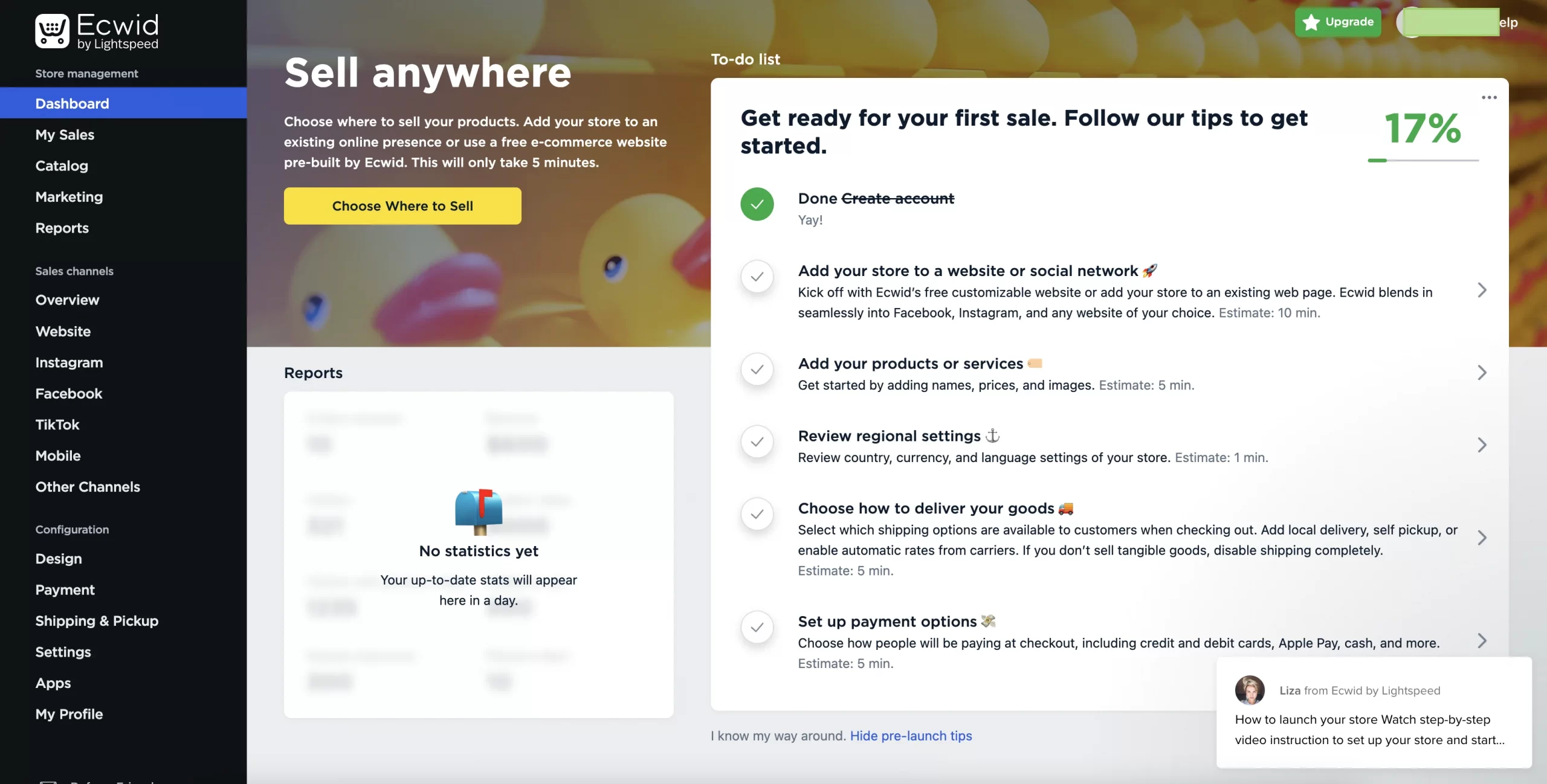
In addition, you can explore other eCommerce features that Ecwid offers from its left-hand sidebar. It is cleverly divided into three sections: Store Management, Sales Channels, and Configuration, which makes it easy to switch between them. You can also upload or manage products by navigating to these menu sections.
Whereas, with Shopify, it takes lots more effort since you’re creating an entire online store from scratch. Similarly, it also offers new users a setting-up guide. However, this guide doesn’t cover all the steps to launch your Shopify store, such as configuring shipping, which is crucial for selling physical products. Thus, you will have to figure things out on your own.
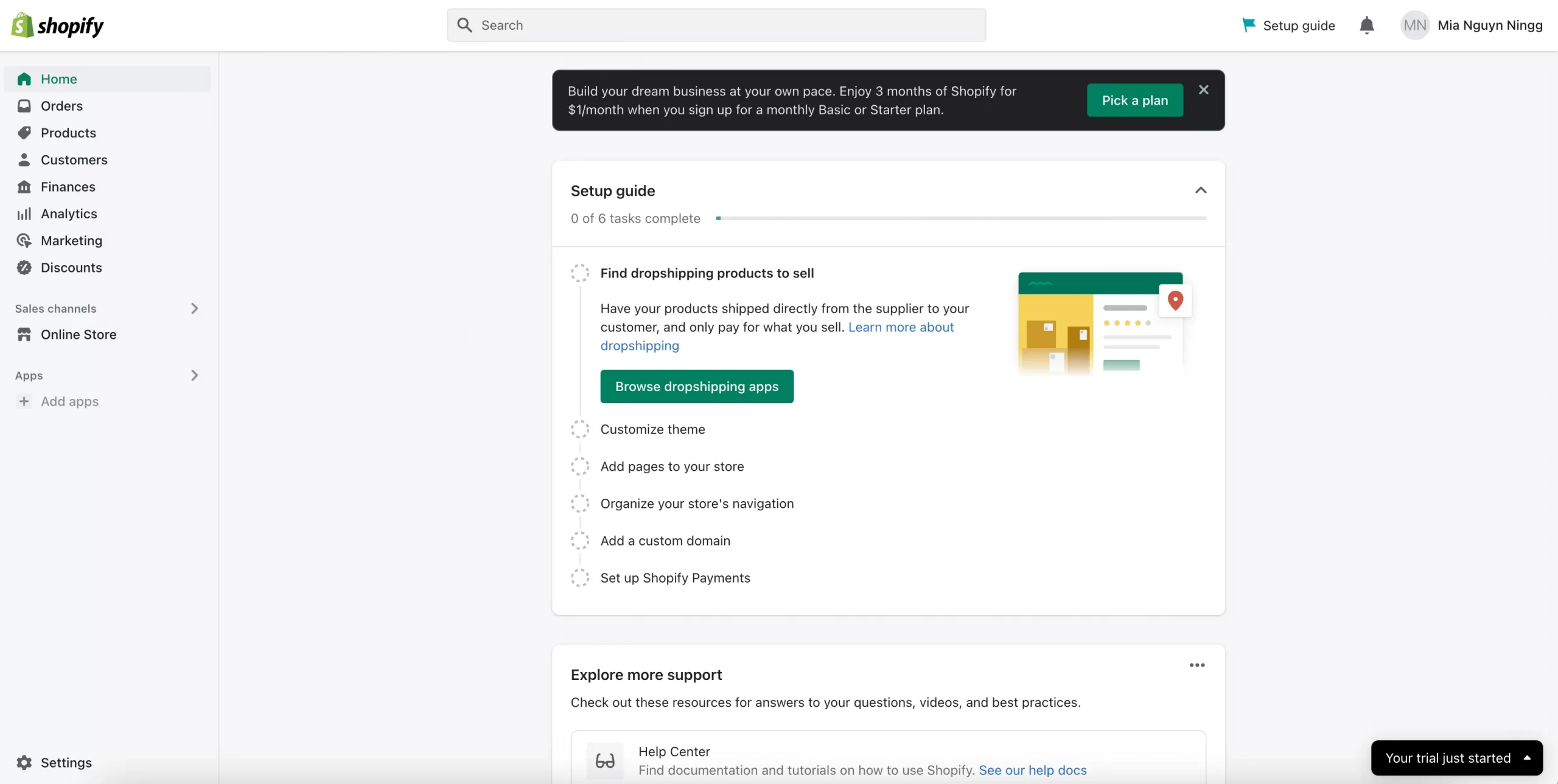
Yet, Shopify will impress any user with its logical structure and endless choice of designs. Whether you are a beginner or a web design expert, you will definitely find joy in the web-building process. It is not only visually appealing but also triggers the urge to keep working with it.
3. Shopify vs Ecwid: Inventory Management (Shopify Wins)
Quick verdict:
Shopify wins in terms of Shopify vs Ecwid inventory management. It packs you with a more fully featured and flexible inventory system for tracking across channels.
Both Ecwid vs Shopify facilitate storeowners with full functionalities to manage sales and supervise their inventory on the go (both for iOS and Android).
With Ecwid, you only access basic inventory tracking at the product level. Though you can track stock quantity, there’s no location or variant management. If you are selling across multiple channels, these can be easily managed on your single dashboard.
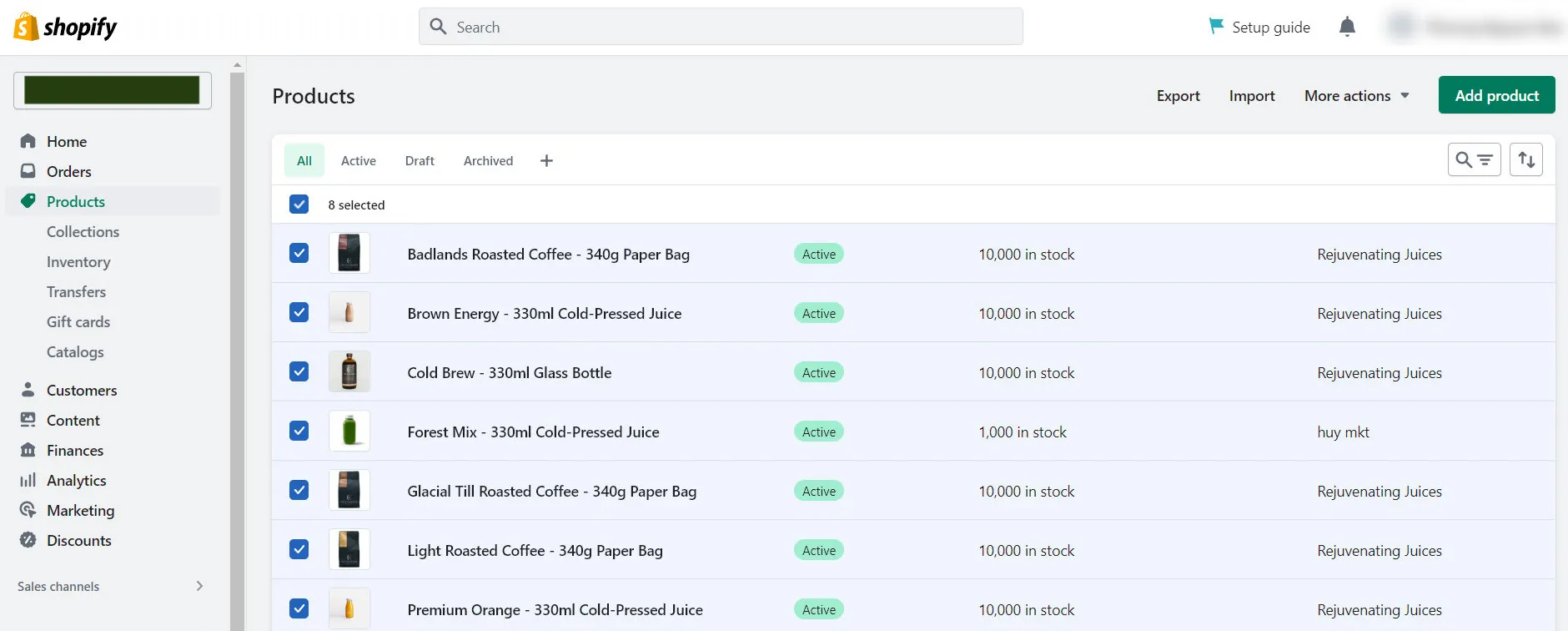
Now coming to Shopify. this platform stands out by offering robust stock management tools for tracking individual item quantities. Users can manage inventory across locations and warehouses. Additionally, Shopify uses the Buy Button to allow store owners to sell products across different marketplaces (more information in this section) and manage them all in Shopify’s control panel.
4 Shopify vs Ecwid: AI and Automation (Shopify Wins)
Quick verdict:
When comparing Ecwid vs Shopify on AI and automation, Shopify is the clear winner. It offers native AI infrastructure through Shopify Magic and the Sidekick AI assistant, delivering capabilities that span content generation, personalized shopping experiences, store management, predictive analytics, and no-code automation workflows.
Shopify AI and Automation
When it comes to automation, Shopify AI strategy is anchored by two pillars: Shopify Magic (the background AI engine) and Shopify Sidekick (the conversational AI assistant). Shopify Magic is an AI engine woven across the entire Shopify platform. On the content side, it writes and rewrites product descriptions, email subject lines, and marketing copy while keeping everything on-brand. It also handles AI image editing and assists with multilingual localization for stores targeting international customers.

Additionally, Sidekick functions as a 24/7 AI business consultant and operations co-pilot deeply embedded in the Shopify dashboard. Merchants can issue complex, multi-step prompts, and Sidekick executes the entire chain automatically. On top of that, through conversational commands, Sidekick can even build and update storefront theme sections and generate custom apps on demand.
Need Help To Migrate to Shopify?
LitExtension provides a well-optimized All-in-One migration service for your data transfer!
START FREE DEMO
Ecwid AI and Automation
On the other hand, while Ecwid has made meaningful strides in AI, its toolkit remains more focused on content creation and website building rather than store-wide intelligence. The platform can generate and format product descriptions based on the product name, first image, and category, available in both the web admin and mobile app. It also supports AI-powered product translation, converting product names and descriptions into multiple languages, as well as generating SEO meta tags and optimized content for product pages.
For merchants who primarily need AI to help produce product content and build out their storefront, it covers the basics well. However, users who demand more than that will quickly find Ecwid’s native capabilities falling short. Unlike Shopify, Ecwid largely outsources advanced automation to third-party tools like Zapier and Beam AI, meaning merchants end up stitching together a patchwork of external services rather than working within a cohesive, intelligent platform. The result is added cost, added complexity, and a less seamless experience, a real limitation for growing businesses that want their platform to scale intelligently alongside them.
5. Shopify vs Ecwid: Point of Sale (POS) (Shopify wins)
Quick verdict:
Shopify wins in Ecwid vs Shopify POS comparison. It provides merchants with more built-in POS features, thus saving the extra costs needed to run both your physical and digital storefronts.
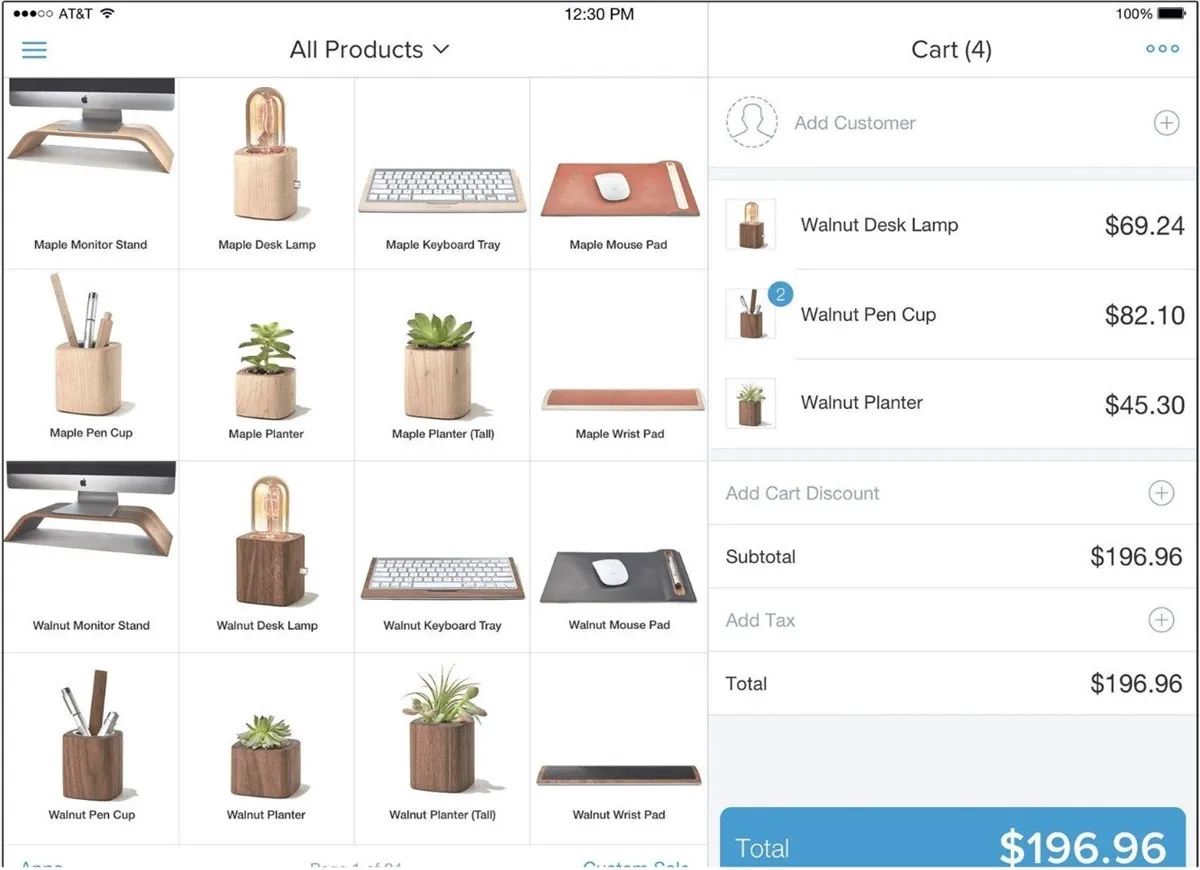
Starting with Ecwid, even though it does offer POS features, these are rather limited. What’s more, you need to be on the Ecwid Unlimited plan to access POS. From my viewpoint, it’s rather limited, with only 3 options: Square, Clover, and Alice, which are not available in all countries. Hence, you might have to expand your integrations for more POS services.
To compare, Shopify itself has built-in Shopify POS features (Starter and Retail). With Shopify, the POS features are integrated into all paid subscription plans. However, you need to be on the POS Retail Plan ($89/month) to take advantage of POS’s full features.
6. Ecwid vs Shopify: Design & Customization (Shopify wins)
Quick verdict:
Between Ecwid vs Shopify in this round, Shopify wins overall, as it provides a far modern selection of themes and customization flexibility.
As I have mentioned above, Ecwid is tailored for merchants who already have their own websites. Therefore, Ecwid has shortened the process as much as possible.
Ecwid doesn’t offer a traditional theme selection but provides over 70 customizable templates for their New-Gen Instant Site, many of which are niche-specific. A nice feature is the ability to preview templates before activating them on your store, and the best part is that all templates are entirely free.
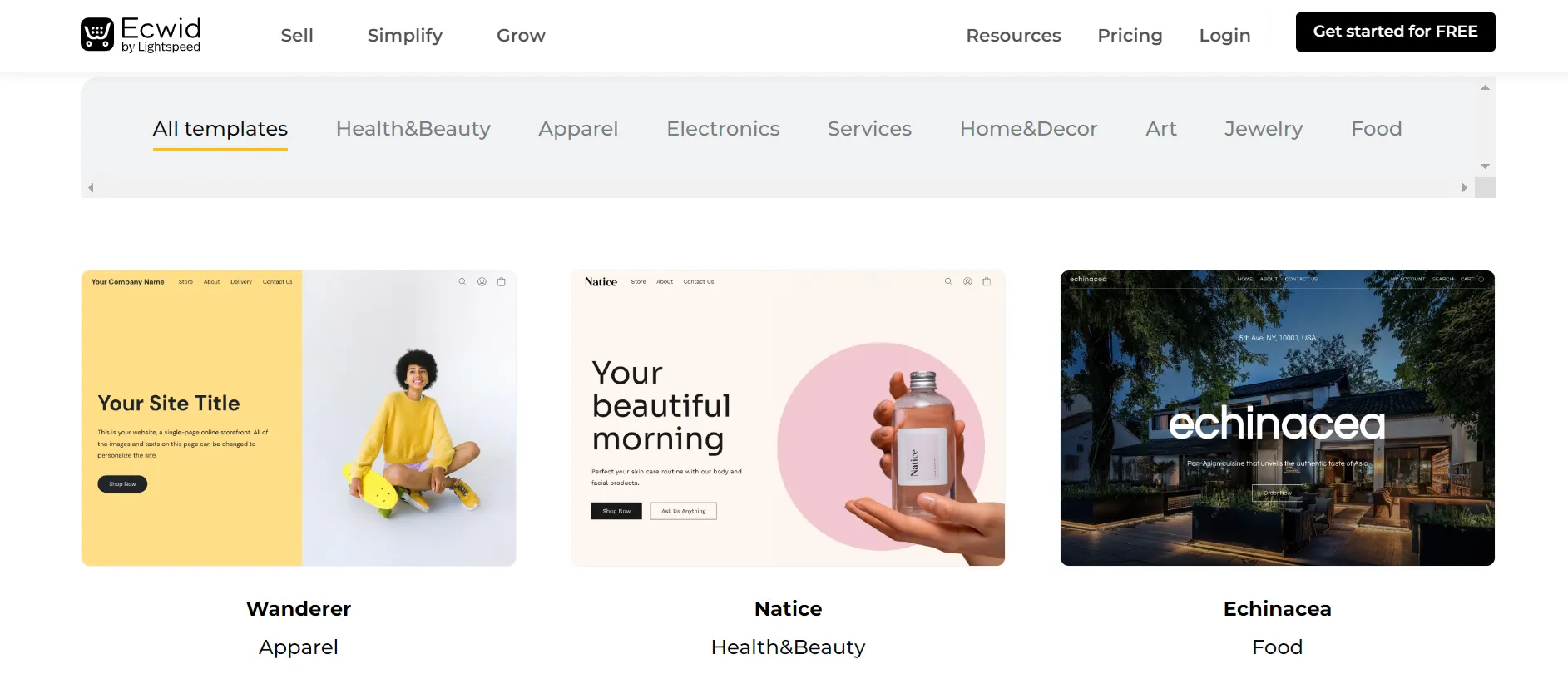
Ecwid features a live theme customizer, a handy tool that uses section-based templates, allowing you to add, remove, and rearrange sections on your page, with a variety of sections to choose from. Nevertheless, this customizer only apply for homepage, which is also its biggest disadvantage.
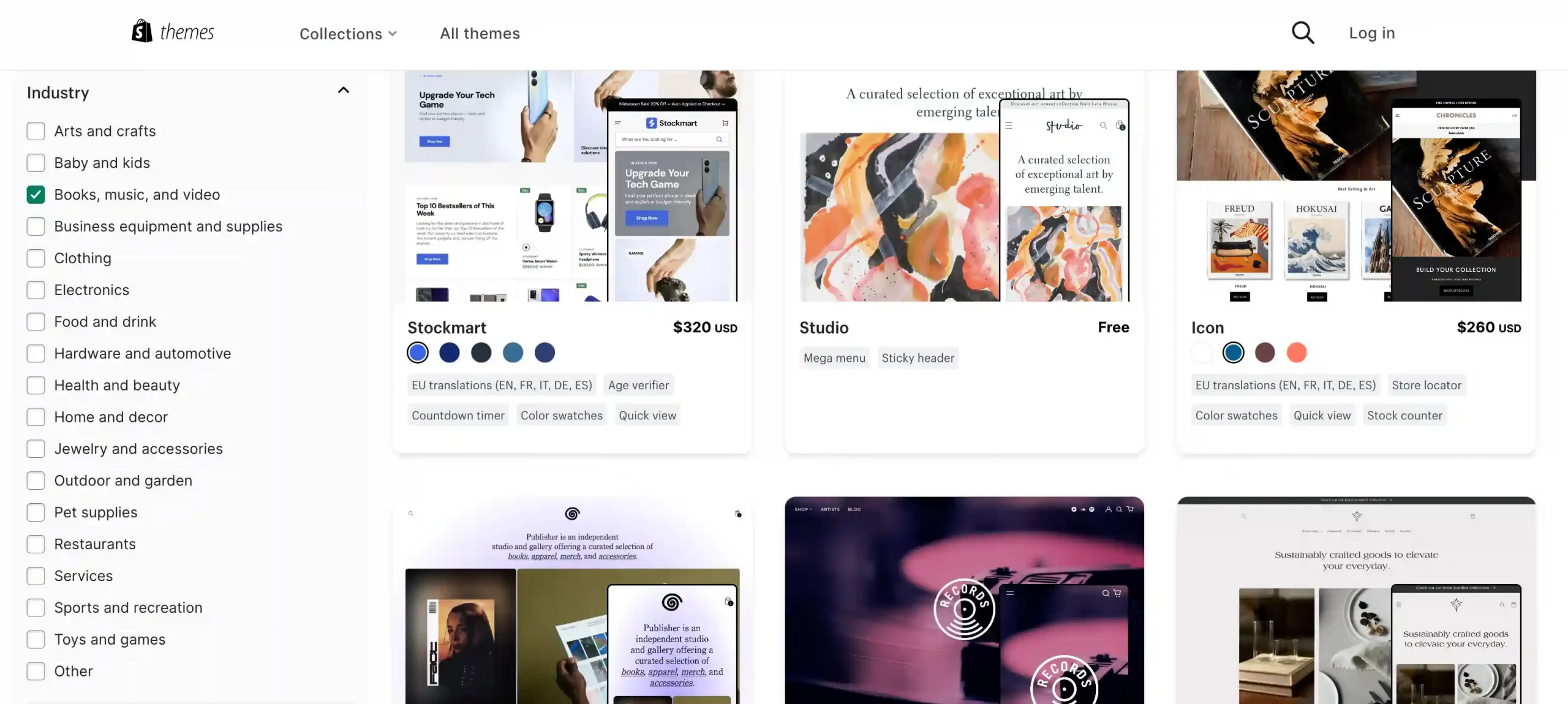
On the other hand, Shopify is very flexible when it comes to design. There are 1100+ website templates available on the Shopify Theme Store. These can cost you anywhere from $0 – $450/theme.
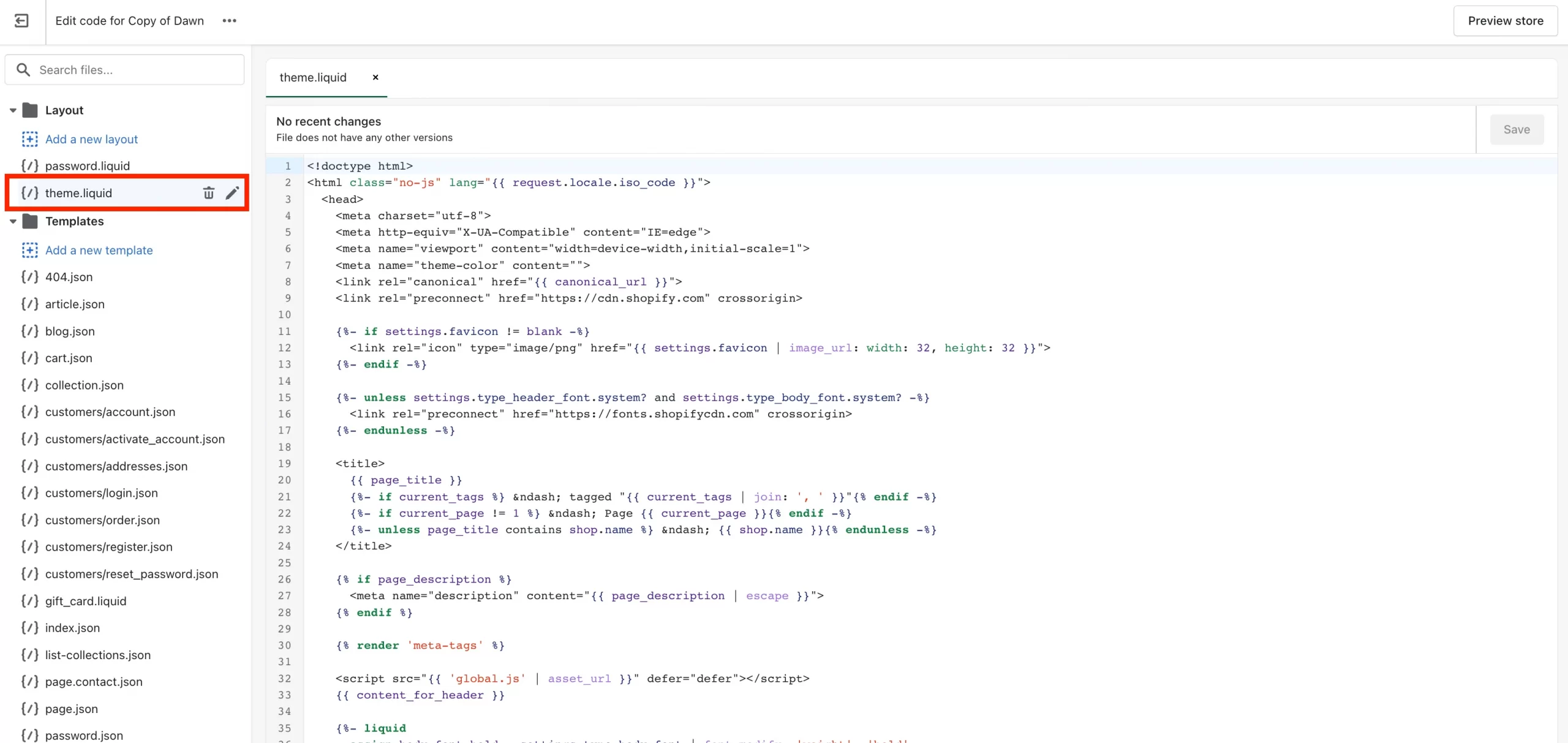
Besides utilizing Shopify’s drag-and-drop customization system, you can always add your personal touch through its Liquid code. Thanks to this, you can customize fonts, buttons, and colors by modifying the CSS or HTML source code.
7. Ecwid vs Shopify: Multiple selling channels ( A Tie)
Quick verdict:
It’s a draw between Ecwid vs Shopify in multiple selling channel comparison. Both platforms allow you to generate higher sales via a multichannel setup.
Let’s first talk about Ecwid. You can expand your current audience base by selling on social media platforms like Facebook and Instagram and even popular marketplaces like Amazon and eBay. However, you need to be on the Venture plan to sell on social platforms (Facebook, Instagram, Messenger) and the Business plan for eBay and Amazon.

In the meantime, Shopify’s Buy Button allows customers to conduct online purchases on any marketplace, social platform, or other eCommerce platform (Wix, WordPress, Weebly, or Squarespace) without having to visit Shopify’s store.
This is extremely convenient for retailers to boost their sales. Just imagine when customers read a blog on “Why sunscreens are important,” and at the bottom of the blog pops up an excellent 50+++ SPF sunscreen product with that Buy Button; they are very likely to go for it.
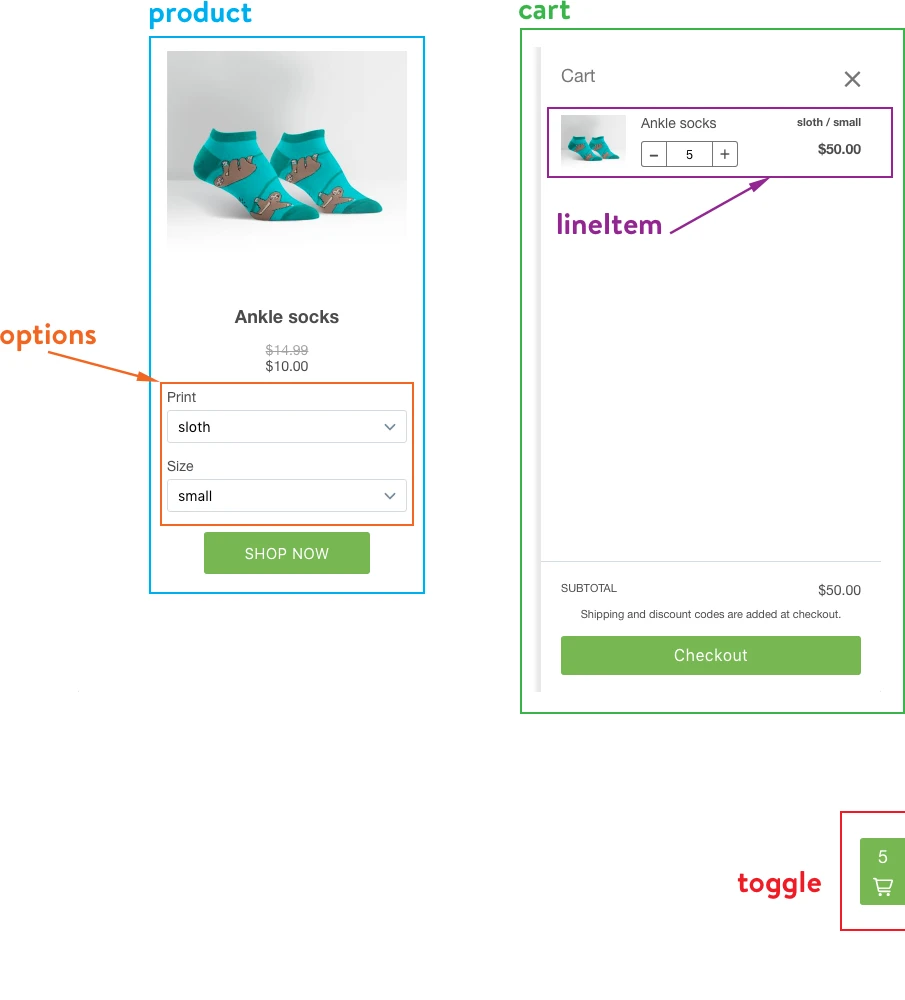
Furthermore, many merchants integrate Shopify into a central platform for better management. Whether you are selling through marketplaces, social commerce channels, or physical retail locations, you can easily connect your shopping cart with multiple marketplaces.
8. Ecwid vs Shopify: SEO & Marketing (Shopify Wins)
Quick verdict:
Shopify takes the trophy in this SEO and marketing competition. It provides all the essential tools and features for online stores to get found and convert visitors into customers.
Mind that online stores launched by Ecwid are considered by the search engines as JS script due to the use of AJAX. Therefore, such platforms are not suitable for standard SEO promotion.
Ecwid has a “Promotion” settings, but it only includes partners-related features such as the Facebook app, external trading platforms, etc. This means Ecwid doesn’t have standard SEO settings for online retailers. With marketing, Ecwid only offers basic email tools that require more robust apps. Its analytics are limited without integrating third-party tools.
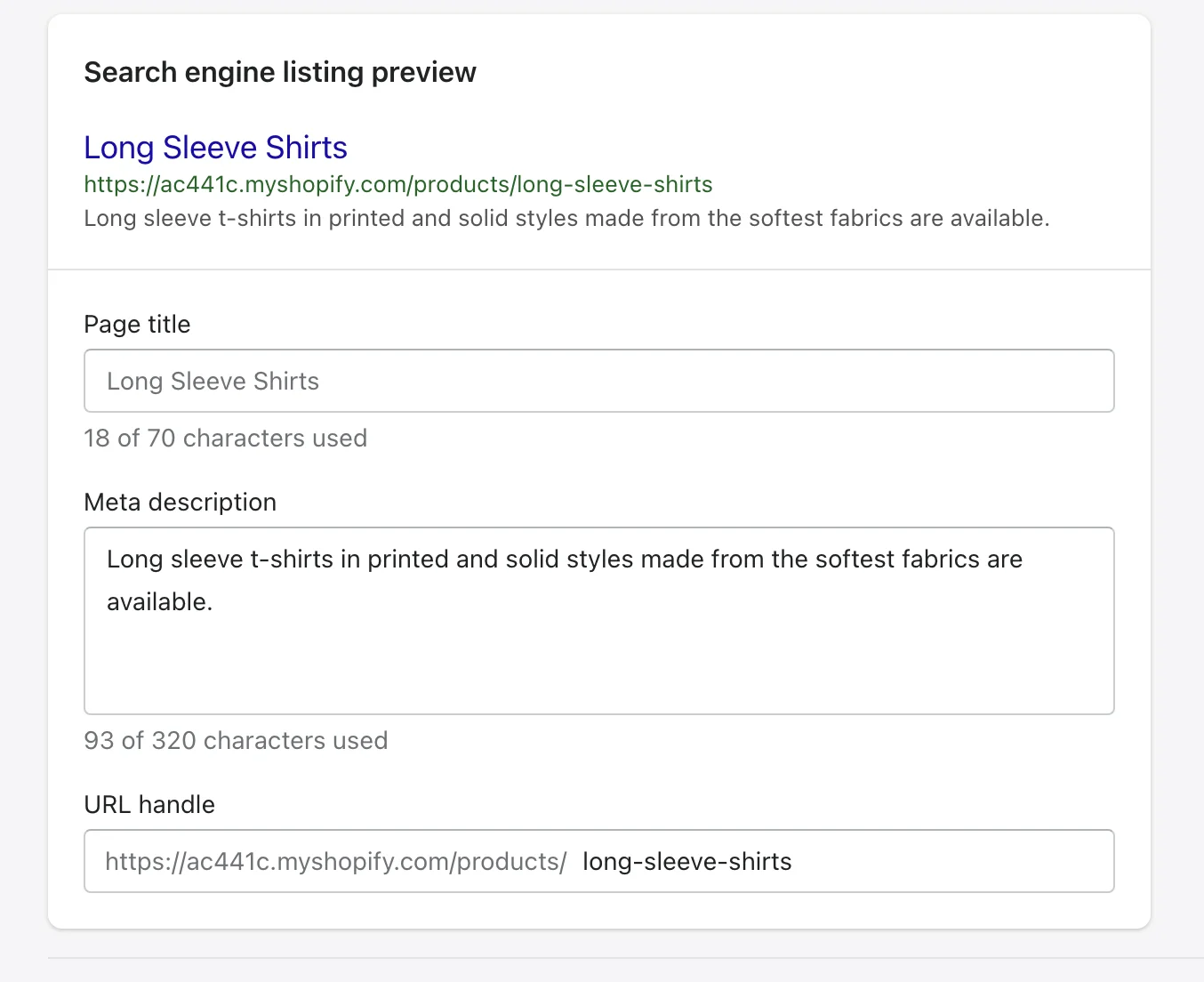
On the contrary, Shopify’s SEO feature set is generally stunning and favorably compared to other SaaS platforms. Everything on-page SEO in Shopify is easy to manage, from changing titles and meta descriptions to adding headings and alt text.
When it comes to email marketing, Shopify makes it simple to set up automated abandoned cart emails and email campaigns. This platform also includes several detailed analytics and reporting options.
9. Shopify vs Ecwid: Payment Options ( A Tie)
Quick verdict:
It’s a tie. Both platforms offer over 100 payment gateways, allowing you to cater to diverse customer preferences and regional payment habits.
With Ecwid, you can process credit cards with Paypal, one of the top payment gateways, with no extra charge other than Paypal’s fee. Besides, there are about 100 other payment gateways you can connect to Ecwid. Some of the payment gateways are country-specific, so the exact tax and fee will depend on your location.
Shopify also provides more than 100 options in this regard. Specifically, you can use Shopify Payments, which is the in-house payment system. Should you use this method, there are no transaction fees at all, which is excellent. However, there is still a “credit card rate” to consider with the fee (the more expensive the plan, the lower the rate).
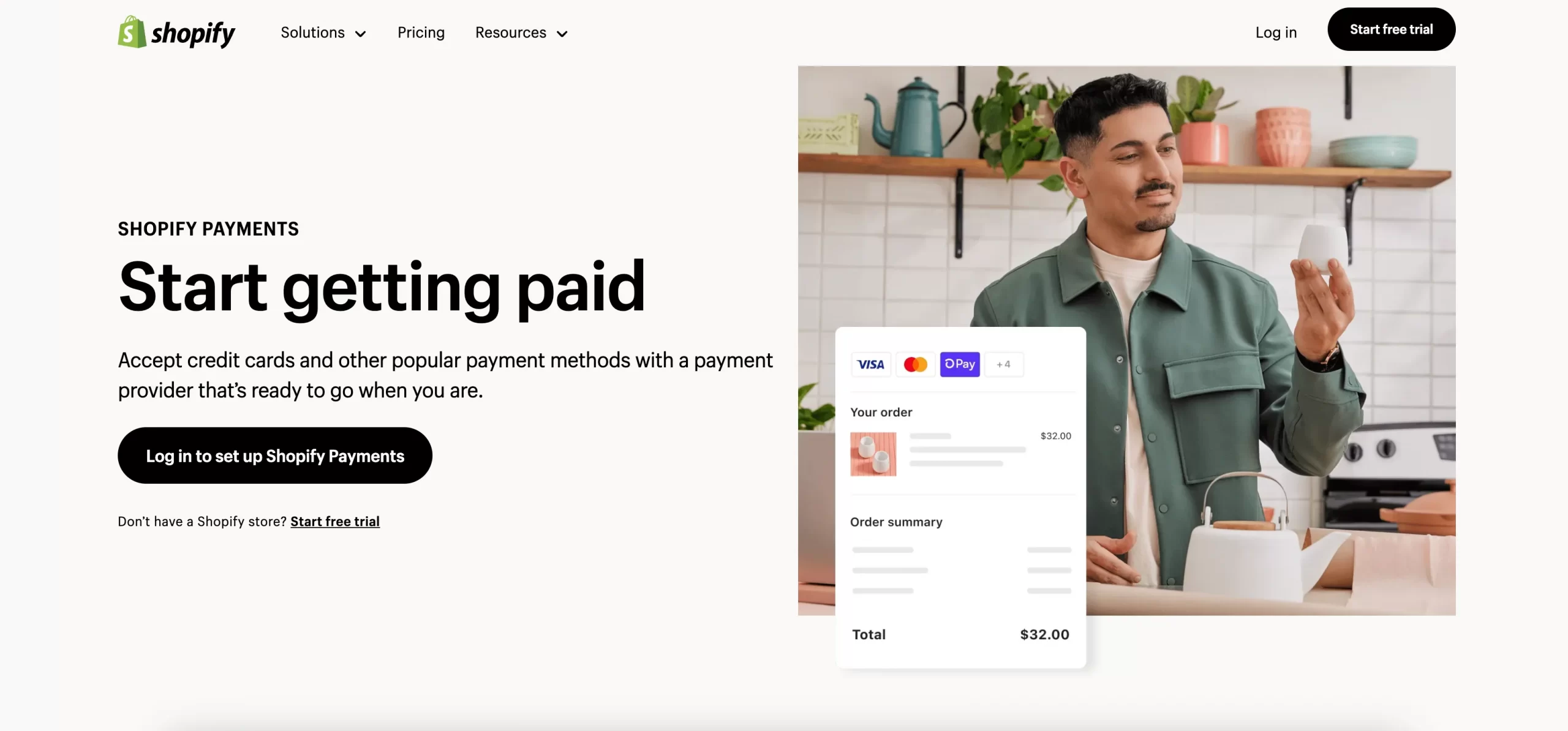
Alternatively, you can use a third-party payment gateway to process card transactions. If you use a payment gateway, bear in mind that Shopify will apply a transaction fee as well.
10. Ecwid vs Shopify: Internationalization (Ecwid wins)
Quick verdict:
In this language translation competition, Ecwid has a competitive edge. Its built-in multilingual support and user-friendly interface make global selling a breeze.
In terms of language flexibility, due to Ecwid’s multilanguage detection and translation ability, you are free to choose among 36 languages to translate your sites, which certainly draws more traffic worldwide. Apart from the built-in translation tool, you can always add custom text translation for your product details, including names, descriptions, variations, options, shipping methods, and more.
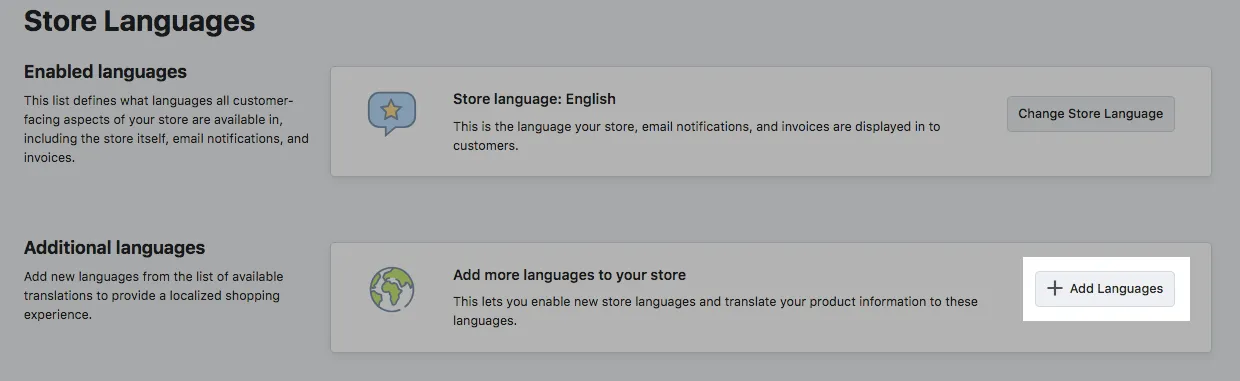
On the other hand, Shopify has made significant improvements to its localization capabilities through Settings > Languages and the official Translate & Adapt app. These tools enable merchants to translate store content, manage multiple markets, support local currencies, and deliver localized shopping experiences.
What’s more, Shopify also supports selling to new international markets. Through Shopify Markets, you can access tools built directly into Shopify to help localize your online store for international customers. This includes translating content, displaying prices in local currencies, and accepting popular local payment methods.
However, keep in mind that merchants typically need to configure several features before their international storefront is fully optimized, which results in a much steeper setup process than Ecwid overall.

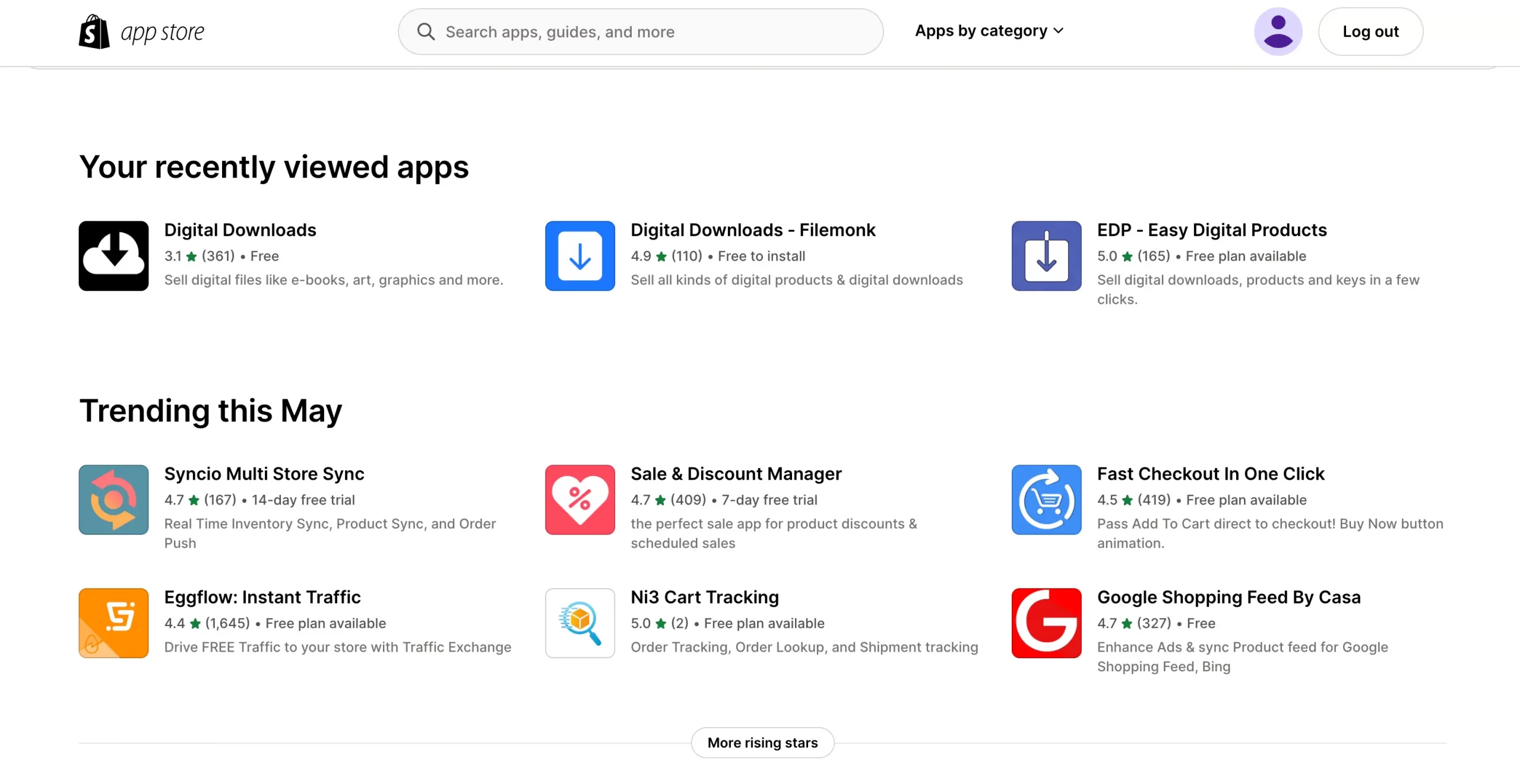
11. Shopify vs Ecwid: Apps (Shopify wins)
Quick verdict:
Shopify spares more room for development than Ecwid does. You can easily find your suitable integrations from its enormous app store.
Like other eCommerce platforms, Ecwid provides a number of integrations with other web apps, allowing purchases via its App Market. Well-known extensions are arguably limited, but integrations exist with fundamental tools like Mailchimp, Xero, ShipStation, or Taxjar.
By contrast, Shopify is packed with over 13,000 apps developed by both in-house teams and third-party developers, ensuring ongoing feature improvements based on user feedback.
12. Ecwid vs Shopify: Support (Shopify Wins)
Quick verdict:
The crown goes to Shopify in terms of Ecwid vs Shopify support. Their commitment to 24/7 availability across all paid plans ensures you have the resources to navigate any technical problems.
Ecwid vs Shopify both offer comprehensive customer service. Users are entitled to access email, live chat, or phone support 24/7.
Both platforms provide their own YouTube channel, a blog with a rich selection of educative videos, tips, and FAQs, and a forum filled with thousands of topics related to users’ experience with the platform.
While support is provided for all Shopify’s paid plans, Ecwid’s level of support depends on the type of plan you are on; here are the details:
- Starter Plan: Email.
- Venture Plan: Email and live chat.
- Business Plan: Email, live chat, and phone.
- Unlimited Plan: Email, live chat, and priority phone support.
In short, Ecwid only provides full-on support for the Unlimited plan. Meanwhile, Shopify is more generous, with full support available to all paid plans.
Ecwid vs Shopify: Which is better for you?
All in all, when it comes to Ecwid vs Shopify, both solutions are strong and competitive in the eCommerce market. However, they possess distinct features and purposes.
- Ecwid is more suitable for small businesses on a budget with basic eCommerce needs.
- Shopify excels for online businesses, both large and small, due to its flexibility, easy management, and robust sales capabilities.
Hopefully, my article today has helped you decide which platform best fits your business. My final advice is to consider your budget, technical expertise, growth plans, and target audience when making the final decision.
Should you have any questions regarding Ecwid or Shopify migration, the LitExtension support team is more than happy to help! You can also check out LitExtension blog and join our Facebook Community to gain more eCommerce knowledge.
Ecwid vs Shopify: FAQs
Is Ecwid as good as Shopify?
Actually, the answer depends. Ecwid is an eCommerce plugin, its main purpose is to help small businesses expand their market. Meanwhile, Shopify is a whole package, a complete solution for your online store to be up and running seamlessly.
What are the downsides of Ecwid?
Some disadvantages of Ecwid are:
- Limited customization options for store themes and templates.
- The lacks catalog organization & product filtering tools.
- Limited SEO capabilities.
Can I switch from Ecwid to Shopify?
Yes, of course. LitExtension offers an excellent migration service from Ecwid to Shopify for you. You can transfer important data, including products, customers, orders, blogs, and other related entities, to Shopify automatically, securely, and accurately.
Which platform is better for a beginner, Shopify or Ecwid?
From our viewpoint, both platforms, Shopify and Evwid, are good for beginners.
Who is the biggest competitor of Shopify?
Shopify’s biggest competitors depend on your business scale: WooCommerce dominates overall eCommerce market share (roughly 60%+); BigCommerce is the largest direct out-of-the-box competitor. For enterprise clients, Adobe Commerce (Magento) and Salesforce Commerce Cloud are the primary rivals, and smaller businesses often favor Wix.