
Choosing between osCommerce and OpenCart is one of the most common decisions facing anyone building a self-hosted, open-source eCommerce store. Both platforms are free, PHP-based, and have been serving online merchants for well over a decade, yet they take noticeably different approaches to ease of use, security, features, and long-term cost.
In this guide, I will break the osCommerce vs OpenCart comparison down into the criteria that actually matter for running a store. The table below summarizes how each platform performs across these factors, followed by a short breakdown of what’s driving each verdict.
| Criteria | osCommerce | OpenCart | Winner |
|---|---|---|---|
| Ease of Use & Setup | Functional but dated admin panel; installation can trip up non-technical users, and version upgrades are considerably difficult. | Includes a public demo and a more modern, intuitive dashboard than osCommerce. | OpenCart |
| Scalability | Adaptable through its open-source architecture, with businesses able to add functionality and integrate new payment/shipping options as they grow. | Native multi-store management from a single admin panel, plus a lightweight, extensible framework built for adding features as the business scales. | OpenCart |
| Product Configuration & Management | A leaner “bare skeleton” out of the box, requiring plugins for advanced functionality. | Ships with more built-in functionalities, reducing early reliance on extensions. | OpenCart |
| Internationalization Support | Multi-language and multi-currency support is available, though it often relies on community add-ons. | Multi-language and multi-currency support built into the core platform. | Tie |
| Payment Gateways | Supports several well-known processors, plus gateway add-ons like Checkout and Dwolla. | Ships with roughly 35 built-in payment methods with broader third-party integration options. | OpenCart |
| Store Design & Customization | Deep code-level customization for teams comfortable editing HTML/CSS directly, though the default template is dated. | Broader out-of-the-box design options with a modern, mobile-responsive base theme and a large third-party theme marketplace. | Split |
| App, Plugin & Extension Ecosystem | Over 9,000 free community add-ons. | Over 13,000 extensions and themes. | OpenCart |
| SEO & Marketing Capabilities | Known for generating long, non-unique URLs and weak default meta title handling, making optimization harder without extra work. | Includes stronger native SEO tooling and more straightforward content management. | OpenCart |
| Security & Compliance | Self-hosted flexibility, but it has a documented history of past security incidents. | Self-hosted flexibility with confirmed strong data encryption and PCI compliance, backed by regular security patches. | OpenCart |
| Customer Support & Community | Live chat and ticket support are only available through a paid Community Sponsorship (roughly $65/year), alongside forums and social channels. | Larger active forum community plus an optional premium support plan (around $99/month), and reviewers rated its support experience higher overall. | OpenCart |
| Pricing & Total Cost of Ownership | Free core software; real costs come from hosting, custom development, and security upkeep. | Free core software; real costs come from hosting, premium extensions, and developer fees. | Tie |
In the next sections, I’ll unpack each of these criteria in more depth, so you can choose the best-fit option between osCommerce vs OpenCart.
osCommerce vs OpenCart – What You Need to Know
Before comparing features criterion by criterion, let’s take a moment to understand where each platform in this osCommerce vs OpenCart comparison comes from and how users think of them.
osCommerce overview
osCommerce is one of the earliest open-source eCommerce platforms still in active use today. It was first launched in 2000 and built to give merchants a free, self-hosted way to run an online store without licensing fees. Over more than two decades, it built up a large community of developers and store owners, currently powering 19,000+ websites across the world, according to BuiltWith.
Below is a brief overview of what osCommerce does well and where it falls short, so you can have a better view of this platform.
| osCommerce Pros | osCommerce Cons |
|---|---|
| Free and open source, with no licensing cost for the core platform | Admin panel and default templates feel dated compared to more modern platforms |
| Large library of community-built add-ons (over 9,000 available) | Version upgrades are difficult, since different releases aren’t always compatible with each other |
| Deep code-level customization for teams comfortable editing HTML/CSS directly | Installation and setup require more technical know-how than some competitors |
| Long-standing, established community with active forums and documentation | Has a documented history of past security vulnerabilities, requiring extra vigilance |
| Flexible self-hosting, giving full control over server and infrastructure choices | Native reporting and analytics are limited without extensions or custom development |
OpenCart overview
OpenCart is a Hong Kong-based, open-source eCommerce platform launched in 2005, positioned as a lighter, more modern alternative within the same free, self-hosted category as osCommerce. It’s built on PHP and MySQL, ships with more built-in functionality out of the box, and has grown a considerably larger extension marketplace over time.
As reported by BuiltWith, this platform is currently the home for nearly 185,000 online stores and is mostly favored by European store owners.
Now, let’s take a look at the OpenCart pros and cons. For a detailed feature breakdown and opinion about this platform, please check out our OpenCart review article.
| OpenCart Pros | OpenCart Cons |
|---|---|
| More modern, intuitive admin dashboard, rated easier to use by independent reviewers | Advanced customization still typically requires developer involvement |
| Larger extension and theme marketplace (over 13,000 modules and themes) | Many of the best extensions and themes come at a paid cost |
| More features included natively, including multi-store, multi-language, multi-currency, coupons, and more | Official/dedicated support is limited without a paid support plan |
| Stronger built-in SEO tooling and cleaner default URL structure | Hosting still requires some technical setup to configure correctly for performance and security |
| Confirmed PCI compliance and strong data encryption support | Vast number of extensions can be overwhelming for first-time users to sort through |
Ease of Use and System Requirements
Quick verdict:
In this part of the osCommerce vs OpenCart comparison, OpenCart wins on ease of use, thanks to a more intuitive admin panel and a smoother setup process.
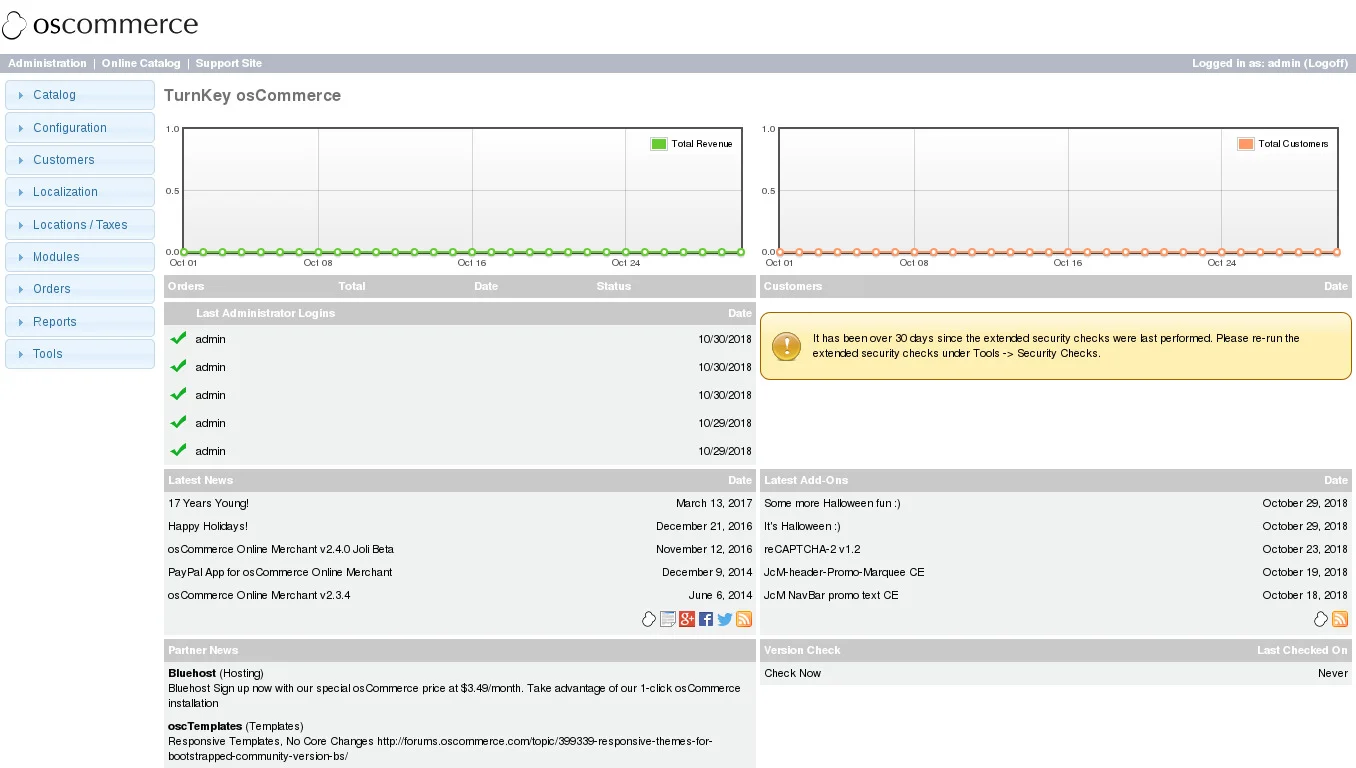
When I installed osCommerce for this comparison, the first thing I noticed was how much the setup process still leans on manual configuration. The installer itself is straightforward enough, but I ran into the platform’s well-known upgrade problem almost immediately: different osCommerce versions aren’t fully compatible with each other, so moving from an older release to a newer one isn’t a simple update.
Once inside the admin panel, I found the interface functional but visibly dated, with a layout that hasn’t changed much in years. Basic tasks like adding products or managing orders are doable, but nothing about the workflow feels streamlined, and I could see a non-technical store owner needing developer help just to get comfortable navigating it.
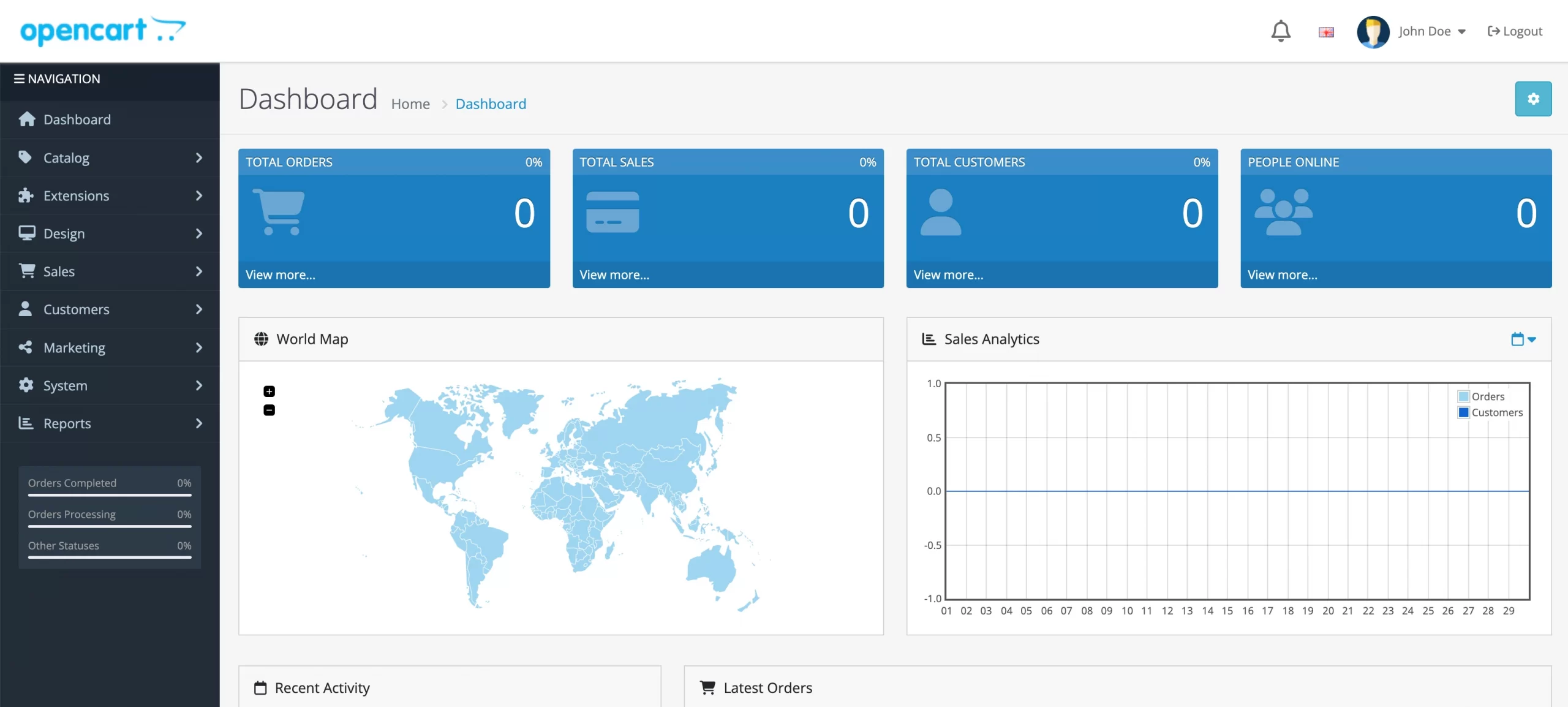
Moving over to OpenCart, the difference in day-to-day usability was immediate. OpenCart provides a public demo store and admin panel that anyone can test before committing, which made it easy for me to get a feel for the platform without a full install first.
Once I finished the OpenCart tutorial, the dashboard felt noticeably more modern, and everyday tasks like managing products, orders, and settings were easier to find and complete. For anyone weighing this specific factor in the osCommerce vs OpenCart decision, that gap in daily usability is hard to ignore.
Scalability for Growth
Quick verdict:
OpenCart takes the edge for scalability in this osCommerce vs OpenCart comparison, mainly due to its native multi-store management, though osCommerce can still scale reasonably well for teams willing to build out that capability themselves.
Testing osCommerce’s scalability meant looking past the base install and into how much of that growth capacity depends on manual work. The platform’s open-source architecture is genuinely flexible, and I could see a clear path to adding new payment gateways, shipping methods, and features as a store’s needs expand.
What I didn’t find, however, was anything resembling built-in multi-store management. If you want to run several storefronts from osCommerce, you’re generally looking at separate installations or third-party solutions layered on top, which adds real overhead for a growing business managing more than one brand or region.
By contrast, OpenCart handles this particular growth scenario natively. With a robust set of OpenCart features out-of-the-box, I was able to manage multiple storefronts from a single admin panel without needing extra plugins or a separate installation for each one.
Beyond multi-store support, the platform’s lightweight core combined with its much larger extension ecosystem (over 13,000 extensions and themes) made it easier for me to imagine bolting on new functionality incrementally as a store’s traffic and catalog size grow, rather than needing a heavier custom build from the start.
eCommerce Features and Functionality
Across this section of the osCommerce vs OpenCart comparison, OpenCart consistently ships with more functionality built into the core platform, while osCommerce tends to lean on extensions to reach the same level of capability.
Product configuration and management
Quick verdict:
OpenCart wins in this round of osCommerce vs OpenCart, offering a more complete set of product and catalog tools out of the box.
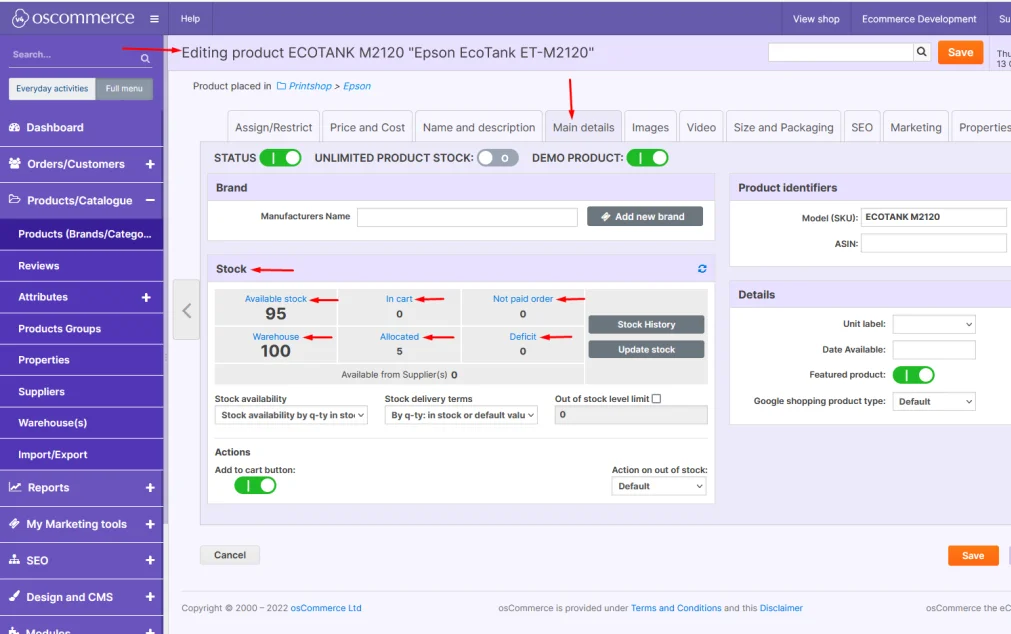
osCommerce product management feels more like a bare skeleton than a fully equipped catalog system. Adding basic products was simple enough, but the moment I looked for anything more advanced, the functionality either wasn’t there natively or required sourcing and installing a community add-on first. That’s not necessarily a dealbreaker, but it does mean more setup time before the catalog feels complete.
OpenCart, by comparison, felt considerably more built out the moment I started adding products. Features like product reviews, ratings, guest checkout, and discount/coupon codes were already available without touching a single extension. For a store owner trying to launch quickly, that difference matters: I was managing a functional, feature-complete catalog in OpenCart well before I’d finished replicating the same setup in osCommerce.
Internationalization support
Quick verdict:
Both platforms support multi-language and multi-currency selling reasonably well, making this a close call in the osCommerce vs OpenCart comparison.
Testing osCommerce’s internationalization options, I could get multi-language and multi-currency support running, but it leaned more heavily on community-built add-ons to get there smoothly, particularly for less common languages or region-specific currency formatting. It’s workable, but it took more configuration than I expected going in.
OpenCart, by contrast, has multi-language and multi-currency support built directly into its core rather than bolted on afterward. I found switching store language and currency settings more straightforward, without needing to hunt down a third-party module first. That said, once osCommerce’s add-ons are in place, the day-to-day experience for shoppers ends up fairly similar between the two, which is why this category comes closer to a tie.
Payment gateways
Quick verdict:
OpenCart edges ahead in this comparison of osCommerce vs OpenCart, offering a noticeably wider range of built-in payment options.
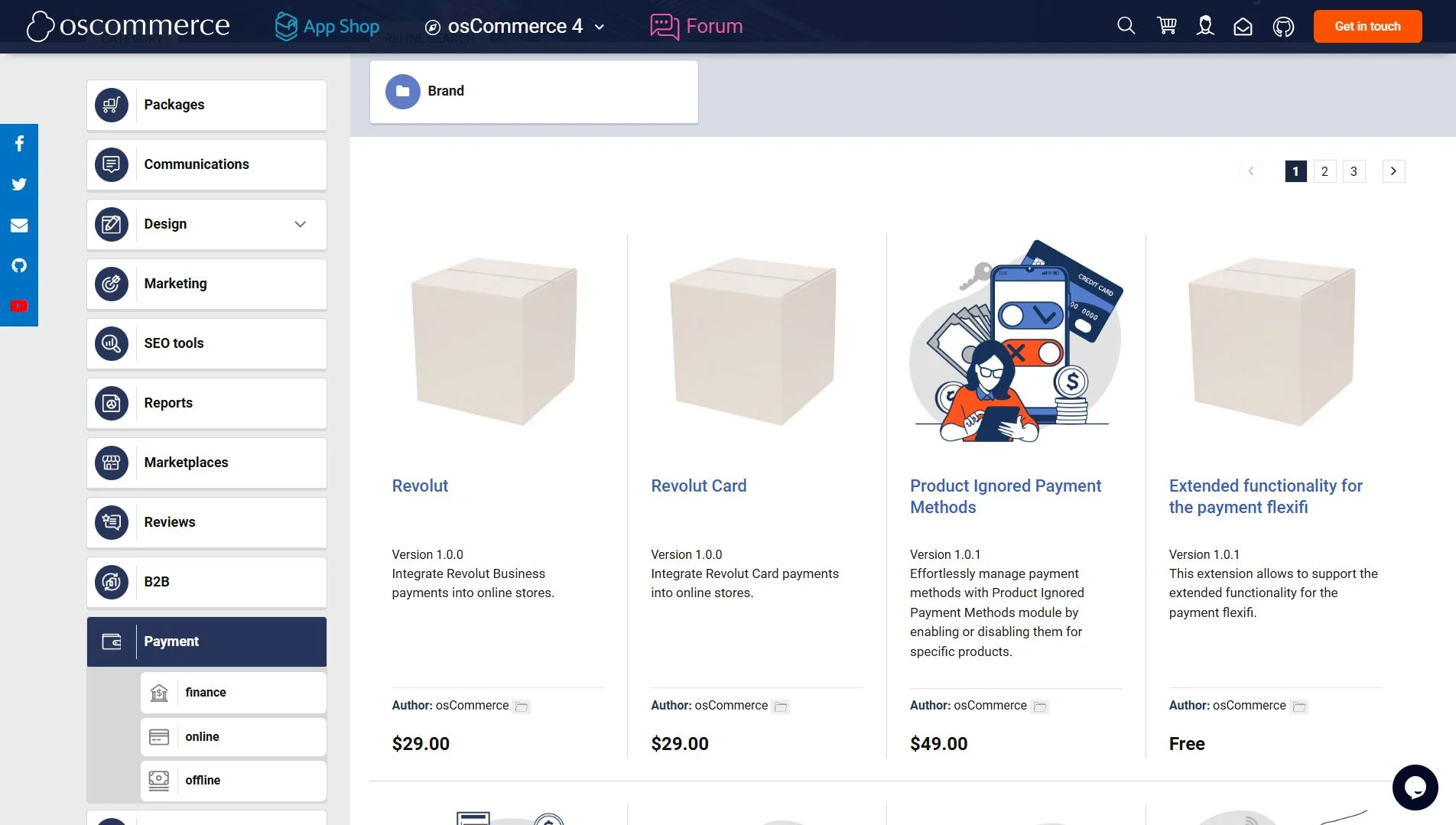
In osCommerce, I found support for a handful of established processors like PayPal and SagePay, along with additional gateway add-ons such as Checkout and Dwolla available through the community library. It covers the basics well enough for most standard use cases, but expanding beyond that shortlist meant going back to the extensions marketplace.
OpenCart, meanwhile, ships with roughly 35 of the best eCommerce payment gateways available natively, alongside broader third-party integration options through its extension ecosystem. Setting up multiple payment options felt noticeably faster in OpenCart because so many were already available without additional installation. For merchants selling internationally, or planning to offer several payment choices at checkout, that built-in range gives OpenCart a real practical edge.
As you may see, OpenCart certainly outshines its counterpart in terms of eCommerce features and functionalities. Therefore, if you are currently on osCommerce and want to leverage the power of OpenCart, making the switch is a good choice for you. In this case, LitExtension can be your trusted partner in osCommerce to OpenCart migration, where we transfer your essential store data accurately, securely, and quickly to the new platform.
Want to Migrate Your Store from osCommerce to OpenCart?
LitExtension Automated Migration Tool transfers products, customers, and orders
from osCommerce to OpenCart – fast, accurate, and hassle-free.

Store Design and Customization
Quick verdict:
This category splits in the osCommerce vs OpenCart comparison. OpenCart wins on accessibility and out-of-the-box design quality, while osCommerce still holds an edge for teams who want unrestricted, code-level control.
Working with osCommerce’s default template, there’s not much to discuss here. The base theme functions fine, but it doesn’t feel like something you’d want to launch without customization first. Where osCommerce redeemed itself was underneath the surface. Because the platform gives direct access to its HTML and CSS structure without much abstraction, I could make granular, code-level changes without fighting the system to do it.
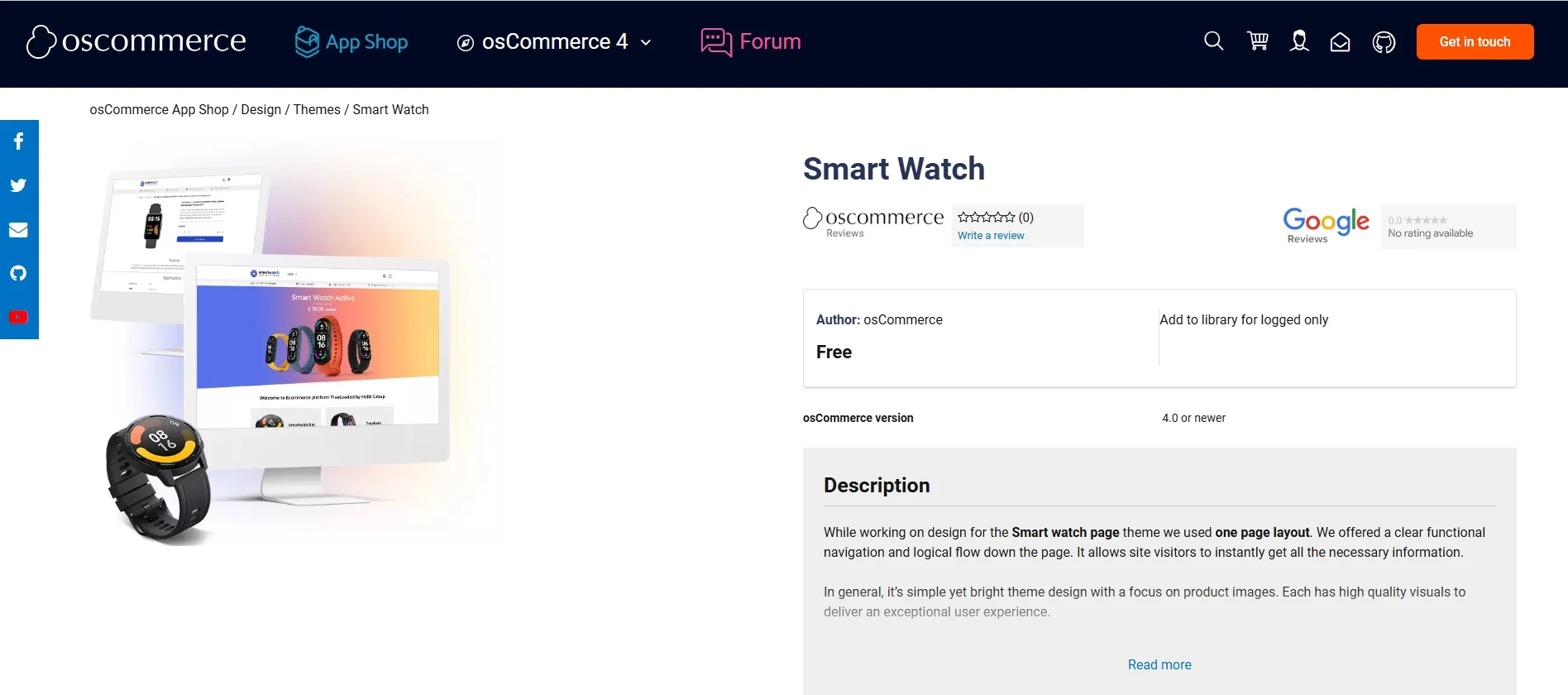
From there, moving into OpenCart’s design options felt like a different experience almost immediately. The default theme is noticeably more modern and mobile-responsive right out of the box, so a new store already looks reasonably presentable before any customization happens. The trade-off is that OpenCart’s theming system adds more of its own structure and conventions, which can feel slightly more restrictive if you want unrestrained, low-level control over every element.
App, Plugin, and Extension Ecosystem
Quick verdict:
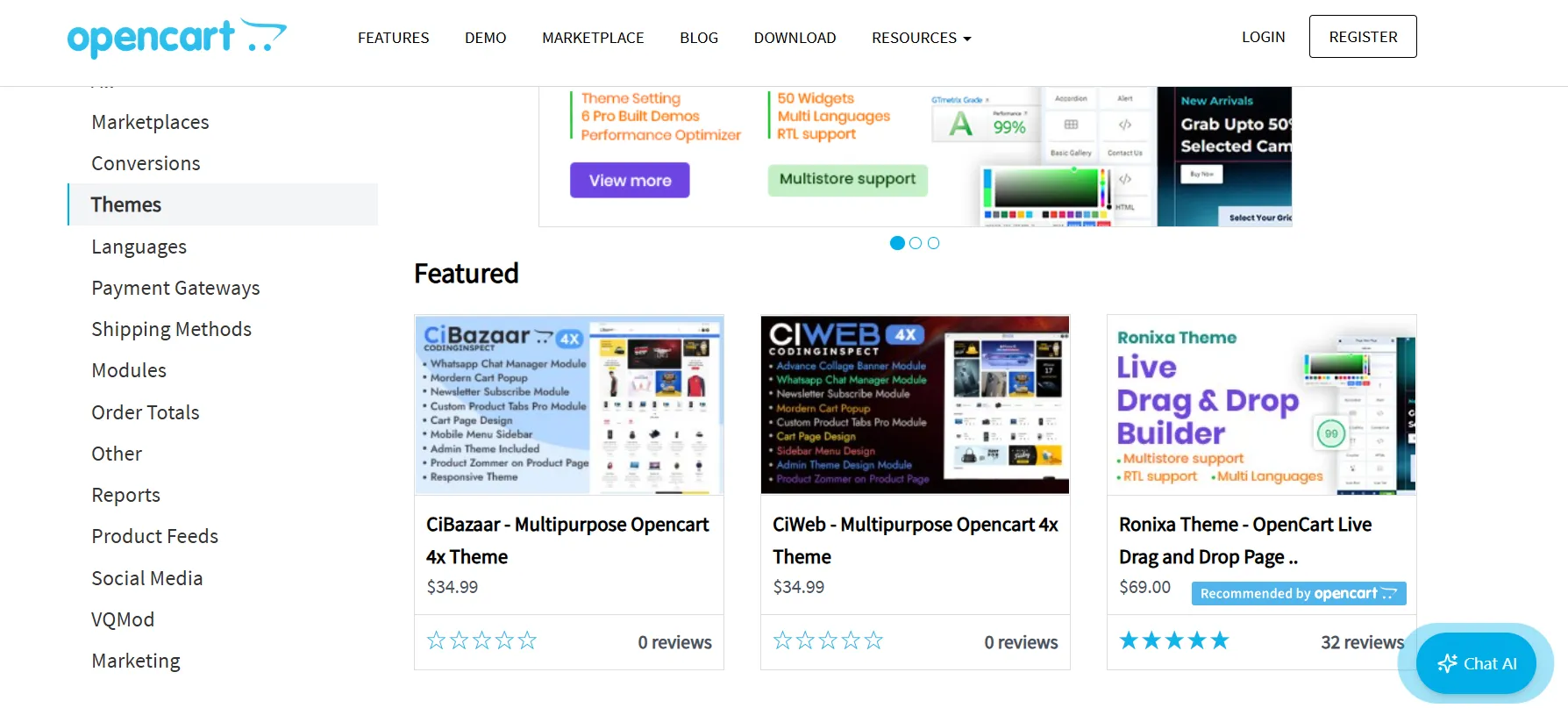
OpenCart wins decisively on this criterion of osCommerce vs OpenCart, backed by a considerably larger extension library and marketplace than osCommerce currently offers.
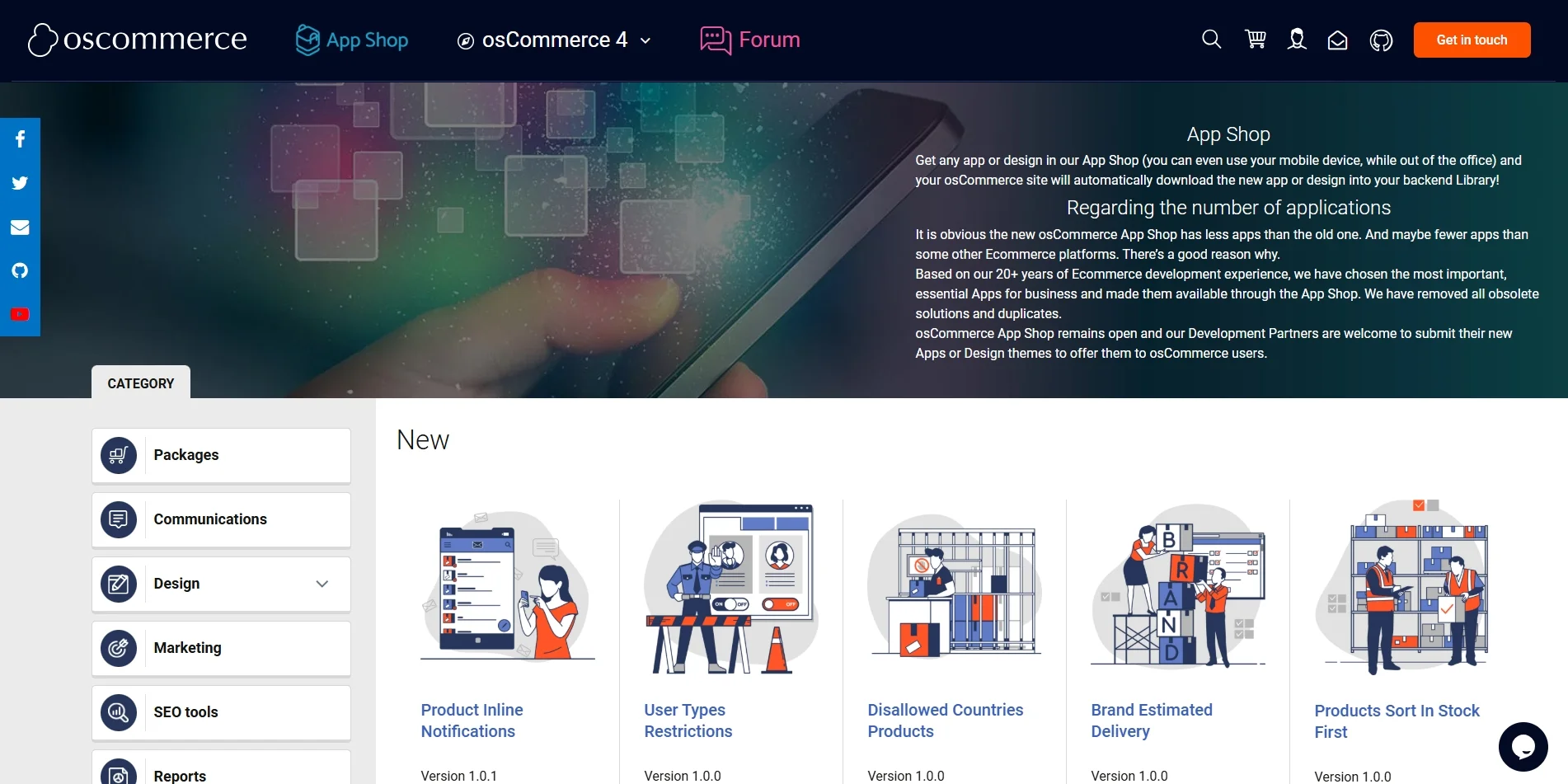
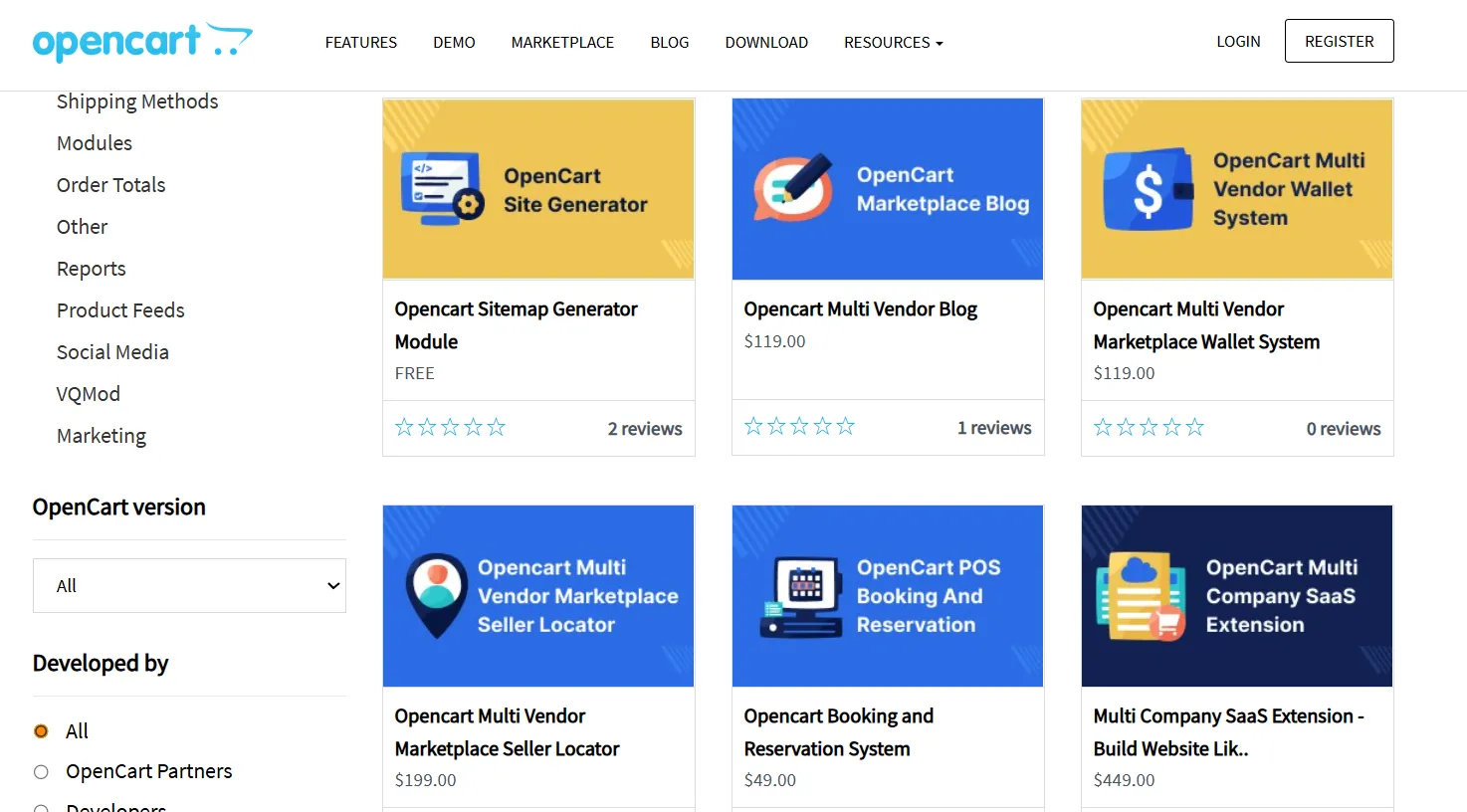
Browsing osCommerce’s add-on library, I found a large, long-standing collection of over 9,000 free, community-built add-ons to extend the platform. The catch is that quality and maintenance vary noticeably from one add-on to the next, since these are almost entirely community-contributed, so I found myself checking update dates and user feedback before installing anything into a live store.
Shifting over to OpenCart’s marketplace, the difference in scale was immediately obvious. OpenCart plugins come in more than 13,000 extensions, giving me a much wider pool to pull from for nearly any functionality I wanted to add. That gap in ecosystem size lines up with the platform’s broader adoption numbers as well, which naturally fuels a larger, more active developer community building for the platform.
SEO and Marketing Capabilities
Quick verdict:
OpenCart takes this category in the osCommerce vs OpenCart comparison, with stronger native SEO tooling and more accessible marketing features baked into the core platform.
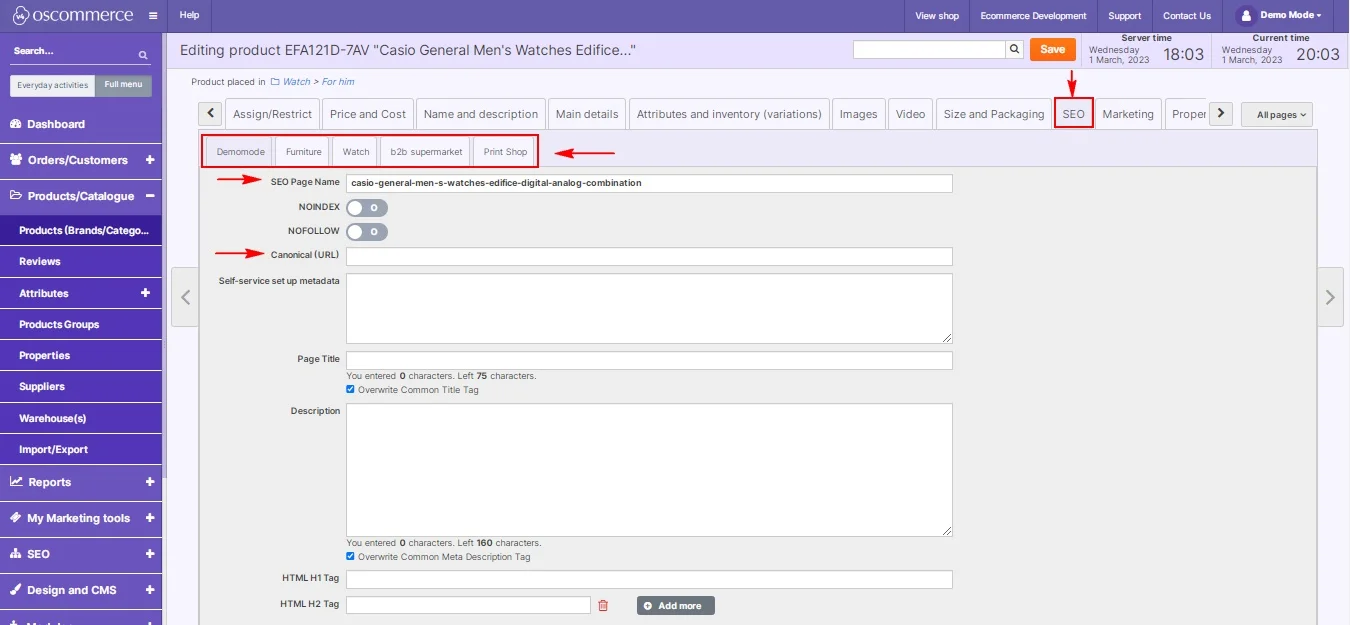
Digging into osCommerce’s default SEO behavior, I quickly ran into one of its more well-documented weak points: the platform tends to generate long, non-unique URLs by default, and meta title handling isn’t particularly refined out of the box. Marketing-wise, osCommerce covers the basics like discount codes and coupons, but anything beyond that typically means sourcing an add-on from its community library, similar to the pattern I ran into throughout the features comparison earlier.
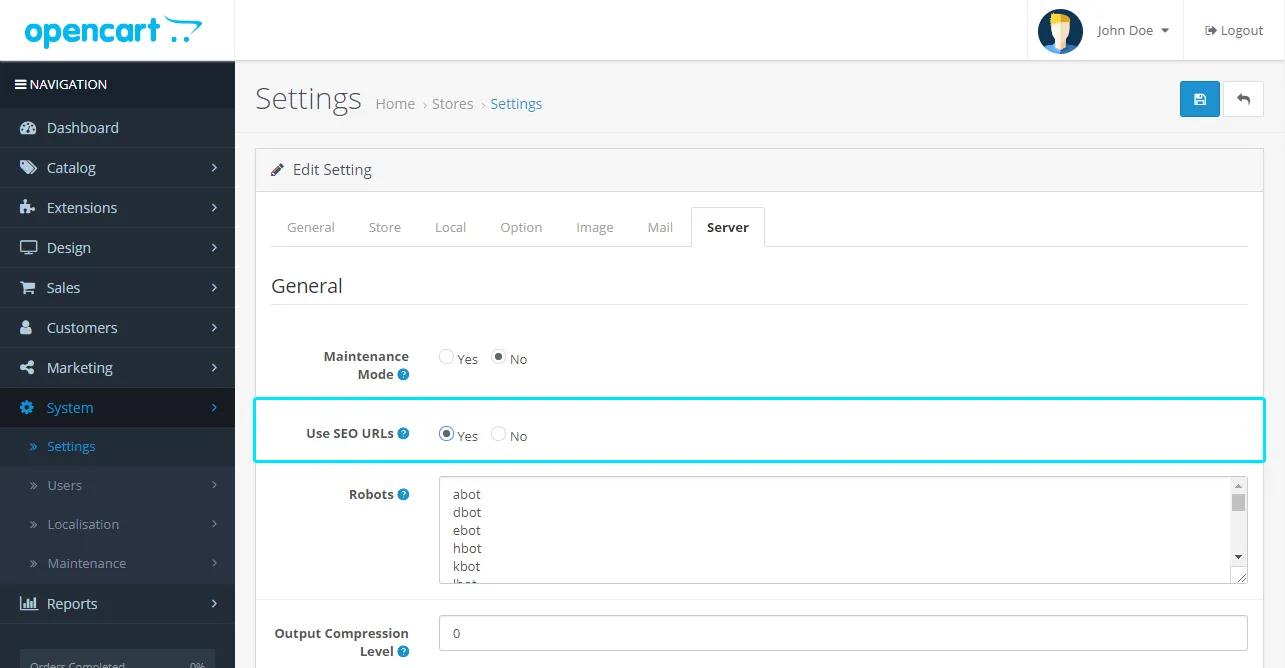
Testing OpenCart’s SEO setup felt noticeably more straightforward by comparison. The platform’s URL structure and meta tag controls were easier to configure cleanly, and I didn’t need to go searching for a third-party fix just to get a reasonably optimized product page. On the marketing side, OpenCart’s native tools for coupons, discounts, and promotional pricing were available immediately, giving me a faster starting point for running campaigns without waiting to install an extension.
Security and Compliance
Quick verdict:
OpenCart wins on security and compliance between osCommerce vs OpenCart, with confirmed PCI compliance and encryption support that osCommerce can’t currently match with the same confidence.
Looking into osCommerce’s security posture, the platform’s self-hosted nature gives you full control over your server environment. But that control comes with more responsibility, and osCommerce has a documented history of security vulnerabilities that any team adopting it should factor into their maintenance planning. osCommerce’s PCI compliance and data encryption status is unconfirmed, which means you might need to actively verify and configure it manually.
Moving to OpenCart, I found a platform with a clearer, more confirmed security story. This platform offers strong built-in data encryption and PCI compliance, backed by more regular security patches from its development community. That doesn’t mean OpenCart requires zero effort on the store owner’s part, since self-hosted platforms always carry more security responsibility than fully managed SaaS solutions, regardless of which one you pick.
Customer Support and Community
Quick verdict:
OpenCart edges ahead in this osCommerce vs OpenCart comparison, with a larger active community and support options that reviewers rated more favorably than osCommerce’s.
When I reached out for help within the osCommerce ecosystem, I found forums and social channels active enough to answer most common questions, but the platform’s more direct support options are gated behind a paid Community Sponsorship, priced at roughly $65 per year, for access to things like live chat and ticketing. Outside of that, you’re mostly relying on community goodwill and documentation, which works but isn’t always fast.
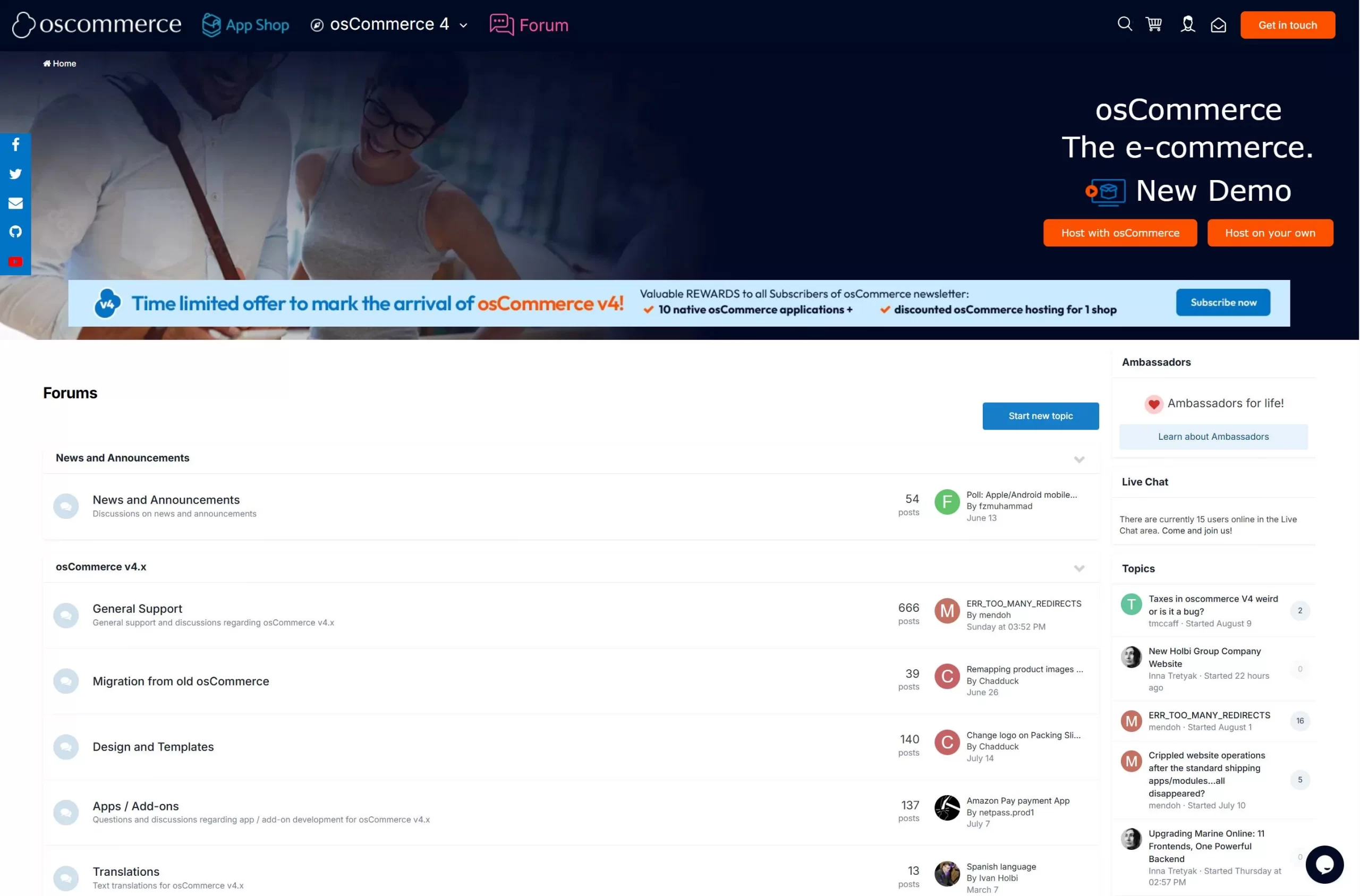
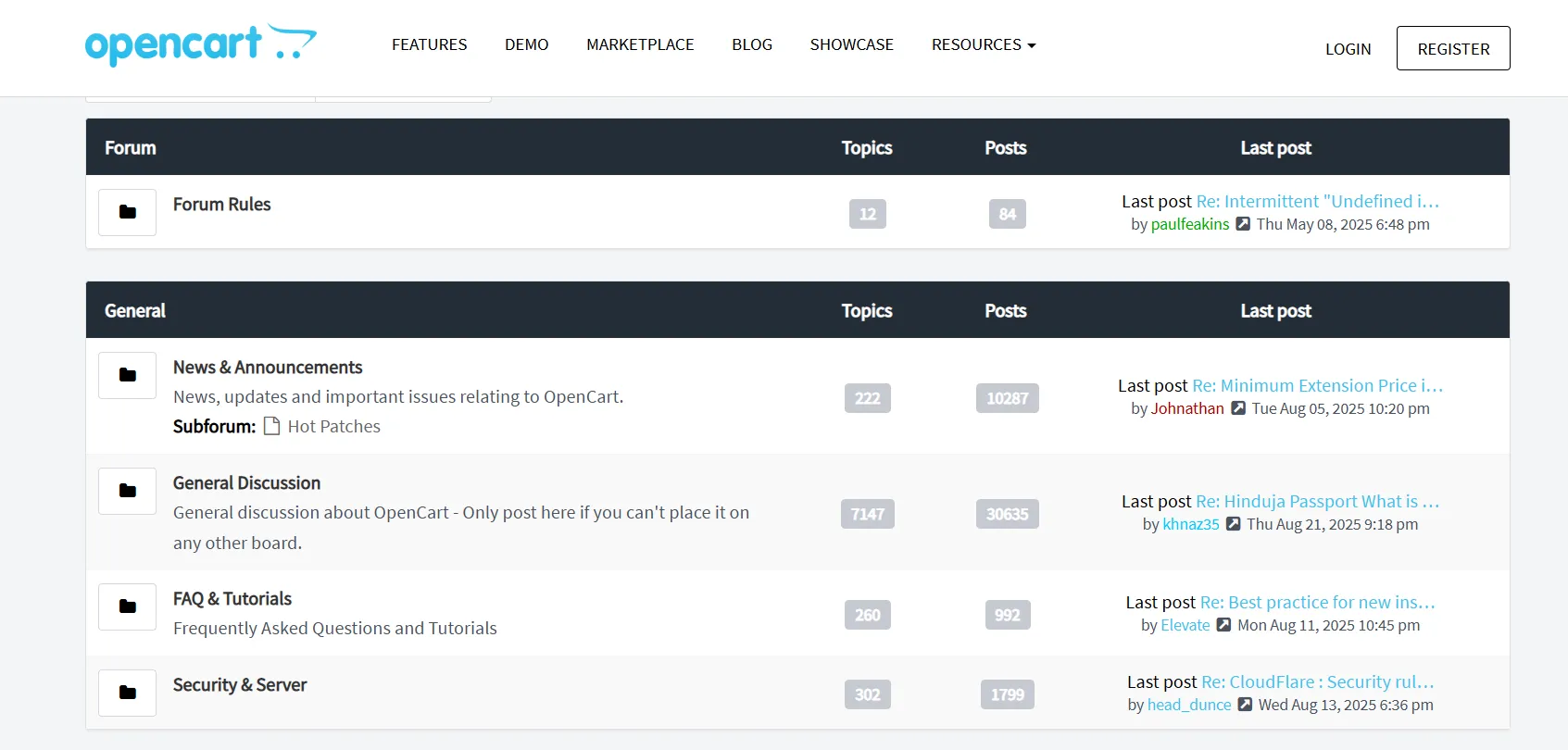
OpenCart’s community felt noticeably larger and more active when I went looking for answers to setup questions. OpenCart also offers an optional premium support plan, priced around $99 per month, for store owners who want dedicated help rather than relying solely on the forums. It’s a higher price point than osCommerce’s sponsorship tier, but paired with the larger community already surrounding the platform, I found it easier to get unofficial help quickly even before considering the paid option.
Pricing and Cost of Ownership
Quick verdict:
Both platforms are free at the core, making this one of the closer calls in the osCommerce vs OpenCart comparison. The real cost difference shows up in hosting, extensions, and developer time rather than the software itself.
Real spending happens in hosting, custom development to fill in missing features, and the ongoing security upkeep that comes with maintaining an older, self-hosted platform. I also found the optional $65-per-year Community Sponsorship worth factoring in if direct support access matters to your team, though it’s not required to run the platform.
OpenCart pricing follows the same free-core model, but its cost of ownership is shaped a bit differently in practice. Hosting requirements are slightly higher, and while OpenCart ships with more functionality natively, filling remaining gaps often means paying for premium extensions and themes rather than free community add-ons. Add in the optional $99-per-month premium support plan, OpenCart’s total cost can climb a bit faster depending on how much of the marketplace you end up using.
Put together, neither platform has a clear pricing advantage on its own. The actual total cost of ownership in this osCommerce vs OpenCart comparison depends less on the software itself and more on how much customization, support, and premium tooling you need.
| Cost Component | osCommerce (Estimated) | OpenCart (Estimated) |
|---|---|---|
| Core Software | Free | Free |
| Hosting | $60 – $900/year | $150 – $1,000/year |
| Themes | Free through the community library | $30 – $150 one-time for a premium theme |
| Extensions & Add-ons | Mostly free, with occasional paid extensions ($200 – $1,000/year) | $500 – $1,500/year |
| Development & Customization | $2,500 – $8,000 since more functionality has to be custom-built | $2,000 – $7,000, mostly for setup and integration work |
| Support & Maintenance | ~$65/year for the optional Community Sponsorship, or $500 – $2,000/year if using paid specialist support | ~$99/month for the premium support plan, or roughly $1,200/year |
| Estimated Total (Year 1, Typical Store) | Roughly $3,500 – $12,500 | Roughly $4,000 – $12,500 |
osCommerce vs OpenCart – Which Should You Choose?
After testing both platforms across every category in this osCommerce vs OpenCart comparison, OpenCart is the stronger overall pick for most store owners, though osCommerce still makes sense for a specific type of team.
From our experience, you should choose osCommerce if:
- You have in-house development resources or a developer comfortable working directly with PHP and HTML/CSS.
- You want unrestricted, code-level control over your storefront rather than working within a theming system’s constraints.
- You’re already running an older hosting stack and want a platform that doesn’t require newer infrastructure.
Meanwhile, OpenCart will be a better fit if:
- You want a faster, more intuitive setup without needing deep technical expertise.
- You plan to run multiple storefronts and want native multi-store management from day one.
- You’d rather have core features like reviews, coupons, and reporting built in rather than added afterward.
osCommerce vs OpenCart – FAQs
Is osCommerce still used?
Yes, osCommerce is still used, though its market share has declined relative to newer eCommerce platforms. According to BuiltWith, osCommerce still powers 19,000+ live websites globally, particularly among smaller, longer-established online stores that haven’t migrated to a newer platform.
What are some good alternatives to OpenCart?
Several open-source and hosted platforms are commonly considered as the best OpenCart alternatives, depending on a store’s size and technical needs. WooCommerce and PrestaShop are popular open-source alternatives with larger plugin ecosystems and stronger native content management, while Magento suits larger catalogs that need more advanced customization. For store owners who’d rather avoid self-hosting altogether, Shopify is a frequently recommended hosted alternative that trades some flexibility for a fully managed setup and support experience.
Is OpenCart better than osCommerce?
Based on the criteria covered in this osCommerce vs OpenCart comparison, OpenCart comes out ahead in most categories. That said, “better” depends on what a store owner values most: osCommerce still offers deeper code-level customization for teams with development resources, which OpenCart’s more structured theming system doesn’t match as freely.
What are the cons of OpenCart?
OpenCart’s main drawbacks center on cost and support access rather than core functionality. Many of the best themes and extensions in its marketplace cost money, so store owners often end up spending more than expected to fully build out a store. Dedicated support is also limited unless you opt into OpenCart’s paid premium support plan.
Conclusion
In conclusion, there’s no universal winner in the osCommerce vs OpenCart debate. But based on everything tested across this guide, OpenCart comes out ahead for most store owners. osCommerce still holds real value for teams that specifically want deep, code-level customization and already have the development resources to make the most of it.
Ultimately, the right choice in this osCommerce vs OpenCart comparison comes down to how much setup time you’re willing to invest versus how much you want available immediately out of the box. If you’re currently running one platform and considering a move to the other, LitExtension can walk you through what an osCommerce to OpenCart migration looks like before you commit to the switch.
For more eCommerce platform reviews, comparisons, and expert insights, please check out more articles on the LitExtension Blog and Resources.

