Choosing the right platform can significantly impact your business, especially when comparing two very different solutions like Odoo vs Wix. Odoo is an open-source business suite that combines eCommerce with powerful backend tools such as CRM, accounting, and inventory management. In contrast, Wix is a hosted website builder designed to help users quickly create websites without technical knowledge.
Since these platforms cater to different needs, understanding their strengths and limitations is essential before you commit. In this article, we’ll break down the key differences between Odoo vs Wix, covering:
- Ease of use
- Scalability
- Product and inventory management
- Marketing and promotion
- Payment gateway
- Integration capabilities
- Design and customization
- Customer support
- Pricing
Without further delay, let's get started!
Odoo vs Wix – Our Quick Verdict
At a glance, Odoo vs Wix comes down to flexibility versus simplicity. Odoo is an open-source, modular platform designed for businesses that need more than just a website;it combines eCommerce with powerful backend tools like inventory, CRM, and accounting. Wix, on the other hand, is a hosted website builder that prioritizes ease of use, visual design, and fast setup, making it ideal for non-technical users.
Here’s a quick comparison of Odoo vs Wix across key criteria:
Criteria | Odoo | Wix | The verdict |
Ease of use | More complex setup and admin, so non‑technical users usually need training or partner help. | Very beginner‑friendly with drag‑and‑drop editor and guided setup flows | Wix wins |
Scalability | Highly scalable ERP stack for multi‑warehouse, multi‑company, complex workflows | Scales fine for small–mid online shops, but can feel limited for complex catalogs | Odoo wins |
Product and inventory | Strong inventory, purchasing, warehouses, manufacturing and back‑office flows | Basic product and stock features suitable for small catalogs and simple stock tracking | Odoo wins |
Marketing and promotion | Built‑in email marketing, marketing automation, CRM and loyalty | Rich marketing suite for small brands: email, automations, SEO tools, social integrations,... | Wix wins |
Payment gateway | Supports multiple providers via modules; but setup requires technical knowledge | 80+ payment gateways plus native Wix Payments and integrated POS | Wix wins |
Integration capabilities | Very strong APIs, large module ecosystem, and native integration with all Odoo apps | App Market and APIs (including Velo), but custom integrations are more limited | Odoo wins |
Design and customization | Decent site builder, but design flexibility is not as good as Wix | Very strong visual editor, many templates and design freedom | Wix wins |
Customer support | Support quality depends on edition, less “self‑service” for non‑technical users. | Centralized vendor support, extensive help center, community, and priority help on higher plans. | Wix wins |
Pricing | Flexible and can be cost‑effective at scale, especially if you use many ERP modules | Clear tiered subscriptions per site; but costs rise with multiple sites or high‑tier plans. | Odoo wins |
In short, we would recommend Odoo if you are:
- Medium to large businesses
- Teams that need ERP features or custom workflows
- Developers or businesses with technical resources
On the other hand, Wix is the better solution for:
- Small businesses and solopreneurs
- Users who want to launch quickly with no coding
- Anyone prioritizing visual design and ease of use
Odoo vs Wix – Pros and Cons Breakdown
Since Odoo and Wix follow different models, open-source versus hosted, their advantages and limitations vary depending on your business size, technical skills, and long-term needs. Let’s explore how each platform stacks up at a high level before moving into detailed comparisons of Odoo vs Wix.
Odoo pros and cons
Odoo is a modular business platform that bundles CRM, sales, inventory, accounting, HR, marketing, project management, and website/eCommerce into one integrated system. You start with core apps and can add more as you grow, so it works well for small to mid‑size businesses that want to centralize operations instead of stitching together many separate tools.
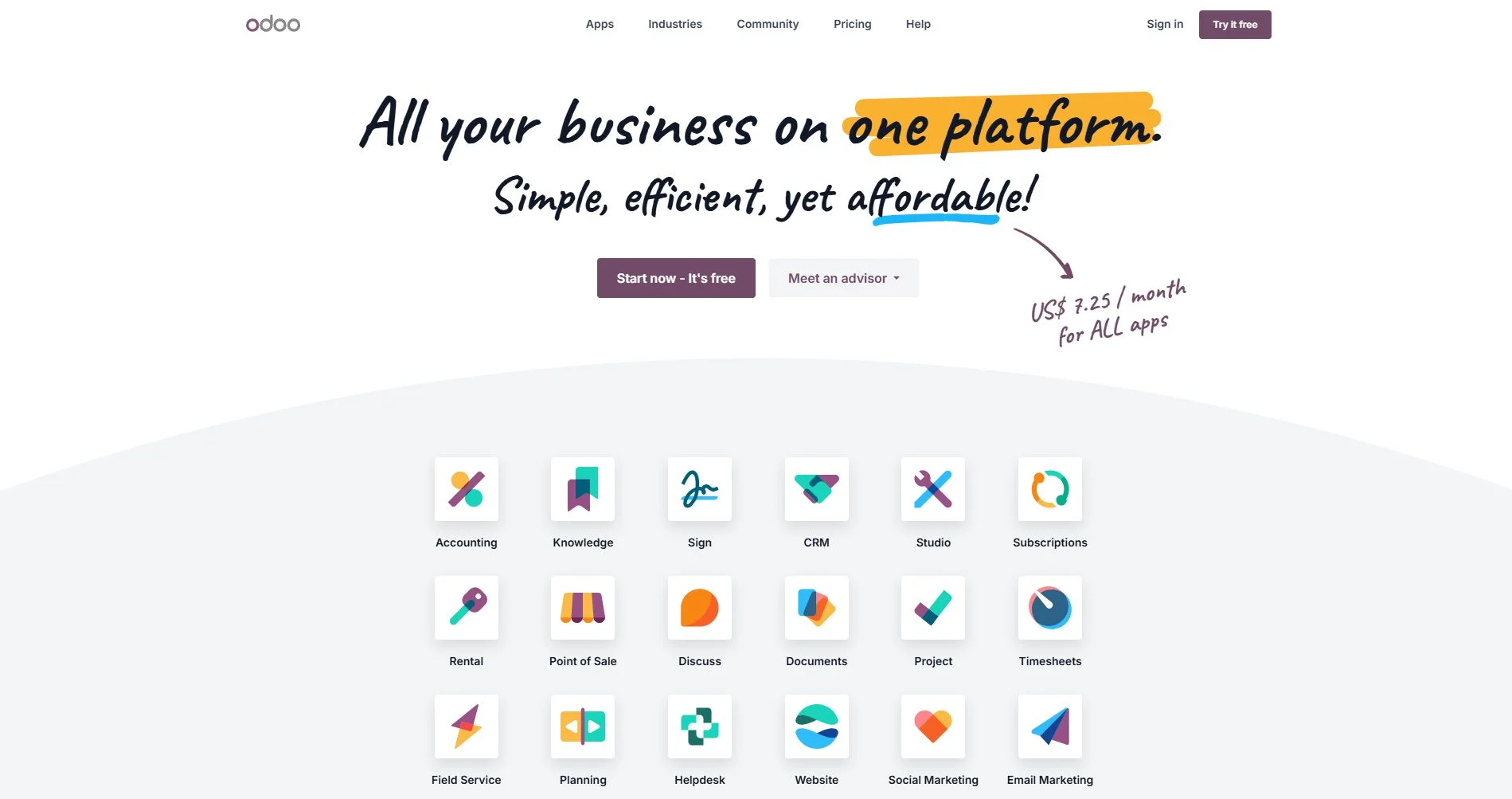
Technically, Odoo is built on an open‑source framework, which gives companies flexibility in hosting (cloud or on‑premise) and in how deeply they customize the system. This makes Odoo attractive if you have specific workflows, need integrations with other systems, or expect to scale and automate more complex back‑office operations over time.
Here are the pros and cons of Odoo for your consideration
Pros | Cons |
- All‑in‑one suite reducing the need for multiple tools. - Tight integration between modules centralizes data and automates cross‑department workflows - Highly customizable with an open‑source base, a large app store, and strong development and integration capabilities. - Scales well for growing companies and can be deployed on‑premise or in the cloud for more control. | - Deep customization often requires experienced developers or partners. - Total cost can become expensive as you add users, modules, infrastructure, and implementation/consulting services. - Steep learning curve for non‑technical teams, especially around configuration, workflows, and advanced features. |
Wix pros and cons
On the other hand, Wix is a cloud‑based website builder designed so non‑technical users can create professional‑looking sites. It is especially popular among freelancers, small businesses, and creatives who need to get online quickly without touching code or managing servers.

Beyond basic websites, Wix supports blogs, small online stores, bookings, and marketing tools via its app market, but it mainly covers front‑end needs and light eCommerce rather than deep ERP‑style operations. For advanced users and agencies, Wix also offers developer tools (like Velo) to extend functionality with custom JavaScript, though that comes with a much steeper learning curve.
Here are the pros and cons of Wix for your consideration. And, for an in-depth review of this platform, please check out our Wix review article here.
Pros | Cons |
- Very intuitive drag‑and‑drop editor; no coding required. - Large theme library of 2,000+ modern templates available for free. - Transparent subscription tiers, including a free plan and low‑cost starter options for simple sites. - Good creative control for experienced designers with custom coding via Velo | - Advanced layouts and heavy pages can feel slow to edit. - Unable to switch templates after publishing, which limits redesign flexibility. - Some advanced features are locked behind paid walls. - Steep learning curve for deep custom development with Velo. |
With nearly 4.5 million users across the world (according to BuiltWith), Wix is one of the most used eCommerce platforms in the world. Our 2025 eCommerce Migration Report also predicts that Wix will continue its momentum in the upcoming years, becoming a prominent choice for merchants. If you want to read more insights on this, please don't forget to check out our ebook now!
Ease of Use – Wix Wins
Our verdict:
In the comparison of Odoo vs Wix, Wix is the clear winner when it comes to ease of use. Wix is built for simplicity, offering a streamlined experience that allows users to create and manage websites without technical skills.
Odoo is designed as an open-source, all-in-one business solution. While this makes it highly customizable and scalable, it also means users are responsible for setting up hosting, installing modules, managing system configurations, and learning how different apps integrate with each other.
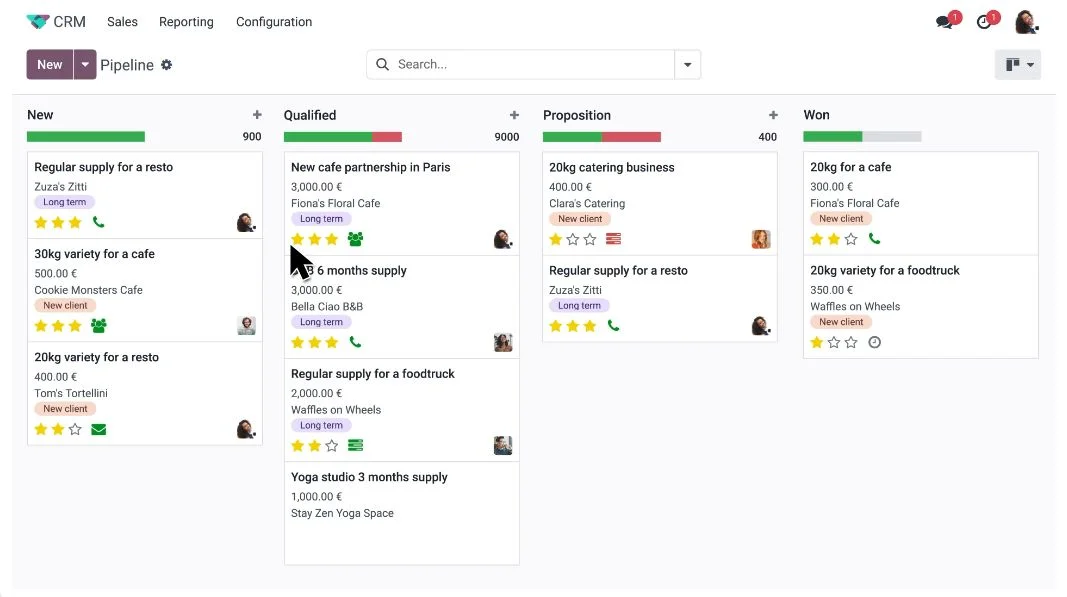
The admin interface is rich in features but not always intuitive, especially for users unfamiliar with ERP systems or backend workflows. Even basic tasks like creating a product page or setting up email automation may require guidance or developer support. As a result, Odoo is more suitable for companies that have technical teams in-house or are working with Odoo consultants.
On the other hand, Wix focuses on delivering a no-code experience from start to finish. It provides built-in hosting, pre-designed templates, and an easy drag-and-drop editor that lets users visually build and edit their site. The onboarding process is beginner-friendly, with helpful prompts, AI-powered suggestions, and step-by-step guides that walk users through setup.
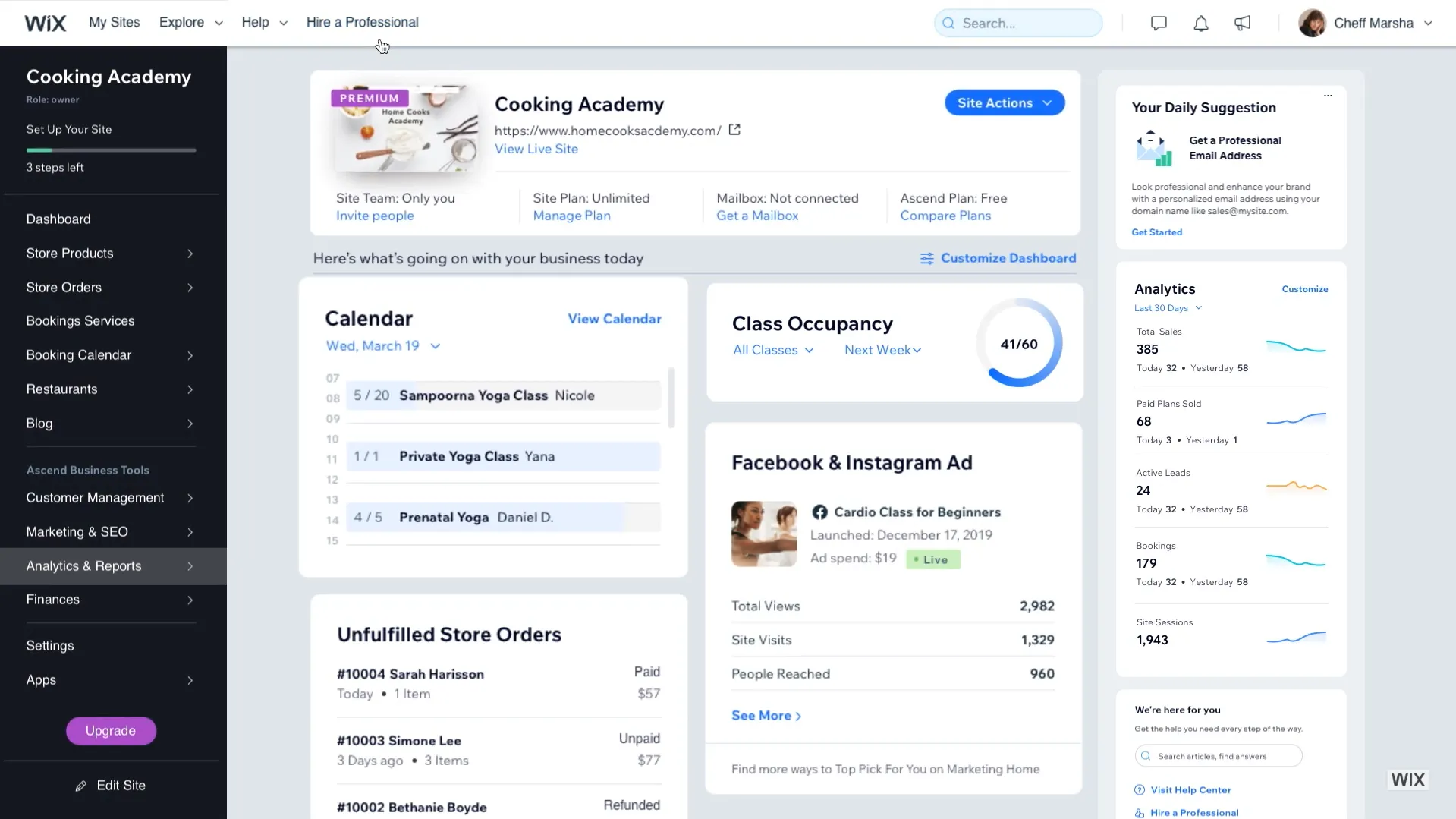
Unlike Odoo, there’s no need to worry about server configurations or installing separate features manually. Because of its user-focused design, Wix is ideal for small business owners, solo entrepreneurs, and creatives who want to launch a site quickly and manage it independently.
In summary, for users who prioritize speed, convenience, and a gentle learning curve, Wix stands out in the Odoo vs Wix comparison. Odoo may offer more power in the long run, but it comes with a steeper learning curve and setup complexity that can slow down early progress.
Scalability – Odoo Wins
Our verdict:
In the Odoo vs Wix comparison, Odoo clearly wins on scalability because the platform is built to support growing and complex business operations, while Wix is better suited for small to mid-sized setups.
Odoo is designed with long-term growth in mind. The platform follows a modular architecture, so businesses can start with basic eCommerce features and gradually add more apps as their needs evolve. As traffic, product catalogs, or internal operations grow, Odoo can handle more users, larger databases, and multi-location operations, provided the hosting infrastructure is properly managed.
Wix, in contrast, focuses on simplicity rather than enterprise-level growth. The platform works well for small businesses that want to scale moderately; however, Wix has limitations when businesses need advanced backend logic, complex inventory rules, or deep system integrations. Since it's a closed, hosted platform, users have less control over the infrastructure, which can become a constraint as operational complexity increases.
Overall, when scalability is a top priority in the Odoo vs Wix decision, Odoo is the stronger choice for businesses planning significant growth or operational expansion. Wix remains a practical option for users who expect stable, manageable growth and prefer a platform that handles most technical aspects automatically.
eCommerce Features
In this section, we’ll explore the eCommerce features of Odoo vs Wix, focusing on how each platform handles core functions like product management, marketing, and payment processing. Since both platforms offer eCommerce capabilities but target different types of users, their features vary significantly in terms of depth, flexibility, and ease of use.
Let’s break down the key components to see which one better supports your online selling strategy.
Product and inventory management – Odoo wins
Our verdict:
Between Odoo vs Wix in product and inventory management, Odoo comes out ahead in product and inventory management due to its robust backend capabilities, warehouse control, and advanced stock handling features.
Odoo provides an advanced inventory management system that goes far beyond basic product listings. Users can manage multiple warehouses, track stock levels in real-time, set automated reordering rules, and configure barcode scanning or batch/lot tracking. The system also supports variants, bundles, and product attributes, making it ideal for businesses with large or diverse product catalogs.
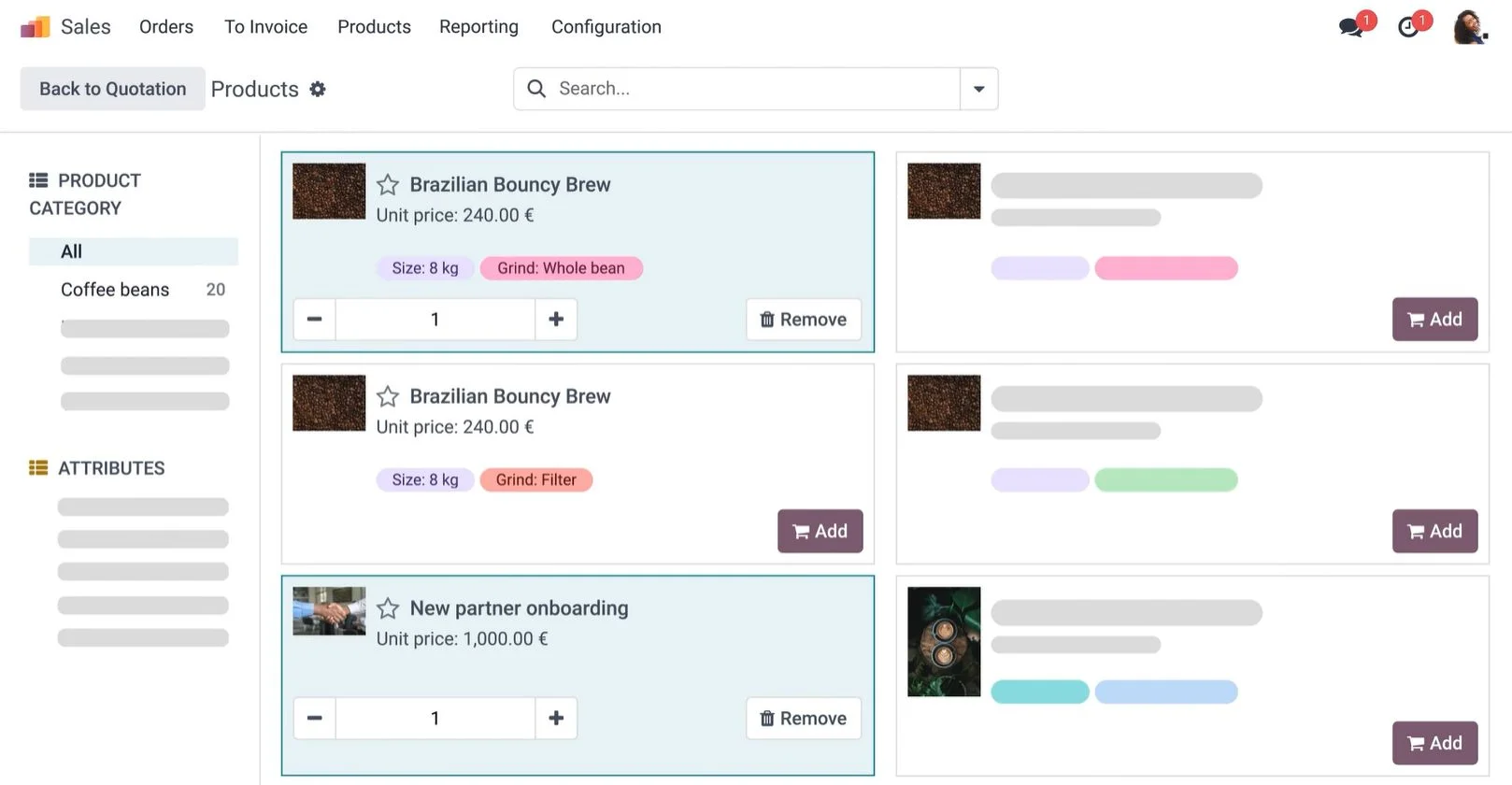
Additionally, because all inventory data integrates seamlessly with other Odoo modules like Sales, Purchase, and Manufacturing, businesses benefit from a centralized and synchronized backend. For companies handling physical goods at scale, Odoo’s flexibility and automation tools offer a major advantage.
On the flip side, Wix is designed for simplicity and speed. Its product management tools are easy to use and cover the basics well; users can add products, manage options like size and color, track inventory, and set low-stock alerts.
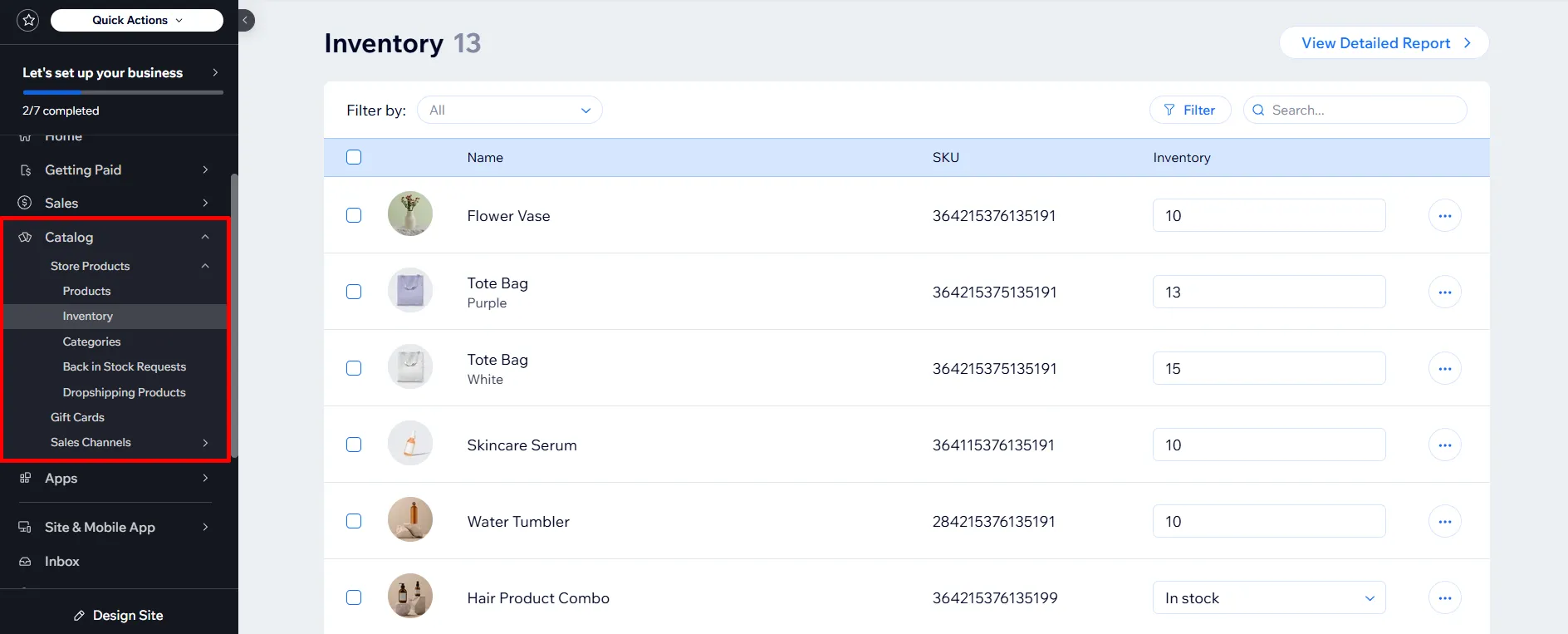
However, Wix does not support advanced features like multi-warehouse tracking, batch management, or automated replenishment as a built-in function. This makes Wix a great fit for small shops with a straightforward inventory structure, but less suitable for businesses with complex supply chains or fulfillment needs.
In short, if your business requires detailed control over stock movement, warehouse management, or fulfillment workflows, Odoo is the better choice in this part of the Odoo vs Wix comparison. Wix will meet the needs of users with simpler product management requirements and a preference for ease of use.
Marketing and promotion – Wix wins
Our verdict:
When comparing Odoo vs Wix in terms of marketing and promotion, Wix takes the lead thanks to its built-in, beginner-friendly tools designed to help users launch campaigns quickly and effectively.
Odoo includes a wide range of marketing tools through its modular apps, such as Email Marketing, Marketing Automation, and Social Marketing. These tools allow users to create segmented campaigns, set up email workflows, schedule social media posts, and even track performance analytics. However, since Odoo is modular, each tool must be installed separately and often needs some customization to align with your marketing strategy.
By contrast, Wix makes marketing accessible right out of the box. The platform offers built-in SEO settings, email marketing with pre-designed templates, pop-ups, social post generators, and even a logo maker.

Wix’s marketing suite, Wix Ascend, also allows users to automate emails, set up chatbots, manage contacts, and track campaign performance from a single dashboard. Everything is designed to be easy to use, which helps business owners and solo entrepreneurs launch promotions without external help.
In short, Wix is the better option in the Odoo vs Wix debate if you want fast, user-friendly marketing tools. Odoo can be more powerful in the long run, but it requires a steeper learning curve and more effort to unlock its full potential.
Payment gateway – Wix wins
Our verdict:
In the Odoo vs Wix comparison, Wix wins in the payment gateway category thanks to its wide range of built-in payment options and effortless setup process.
Odoo supports multiple payment gateways, including PayPal, Stripe, Authorize.net, and various localized providers. However, setting up these gateways often involves manual installation, API configuration, and integration with other Odoo modules. While this gives you more control over how payments are processed, it can be time-consuming and may require developer assistance for advanced custom features.
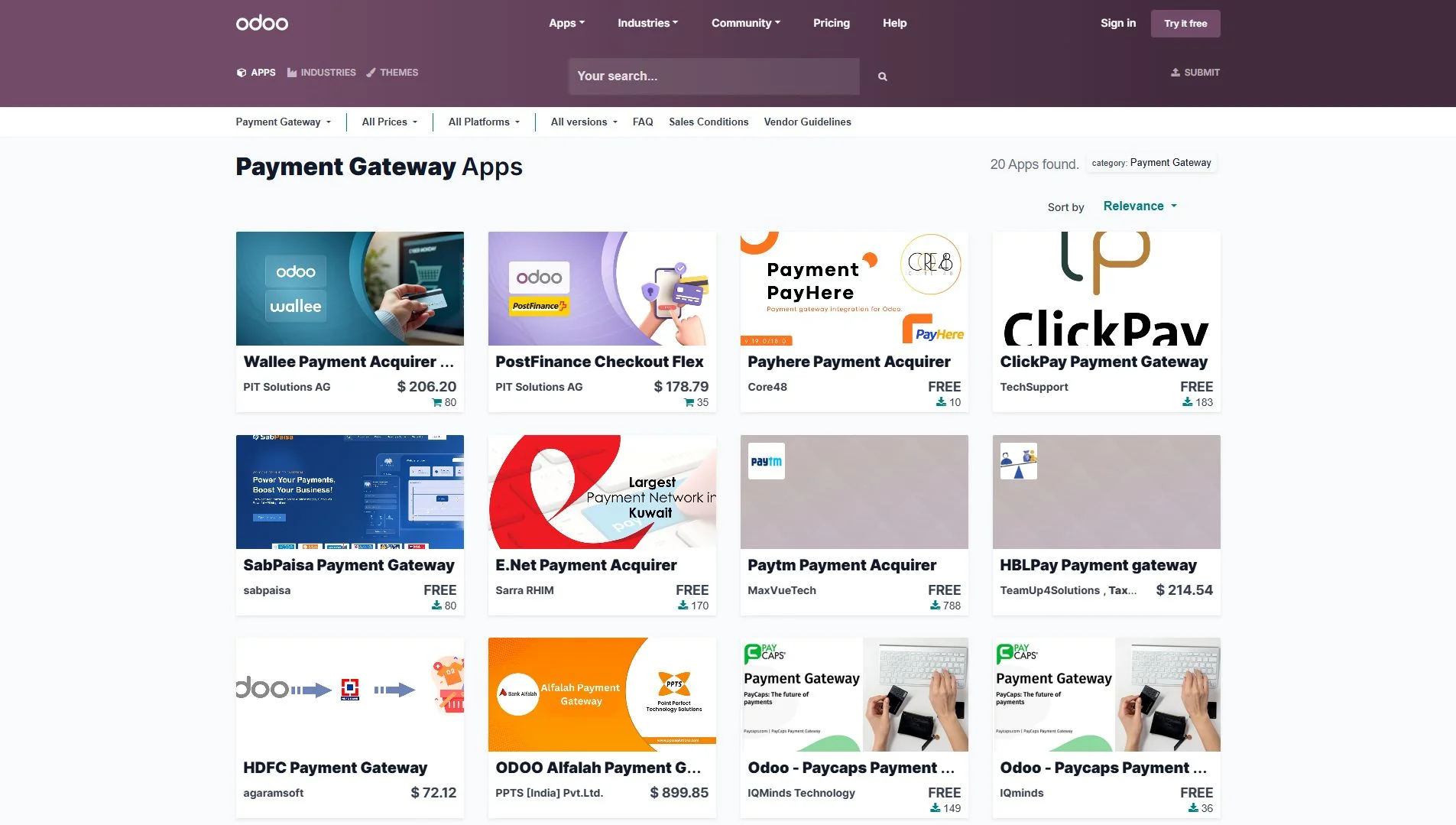
By contrast, Wix supports a wide variety of options out of the box, including the best payment gateways like PayPal, Stripe, and Wix Payments – its own native solution. With Wix Payments, users can start accepting credit cards, digital wallets, and recurring payments with just a few clicks. The setup is fully guided and includes fraud protection, multi-currency support, and automatic tax calculation for certain regions.

For most small to mid-sized businesses, this streamlined approach is more than enough to handle their payment needs.
Ultimately, if your priority is quick activation and minimal technical complexity, Wix is the better choice in this area of the Odoo vs Wix comparison. Odoo, while more customizable, is better reserved for businesses with advanced requirements and access to technical resources.
Integration Capabilities – Odoo Wins
Our verdict:
In the Odoo vs Wix comparison, Odoo is the clear winner when it comes to integration capabilities. Thanks to its open-source architecture and modular design, Odoo offers far greater flexibility for connecting with third-party tools, internal systems, and external services.
Odoo is built for businesses that need to connect various parts of their operations. It offers a robust API, making it easy for developers to create custom integrations with ERP systems, shipping providers, accounting tools, CRMs, or virtually any external software.
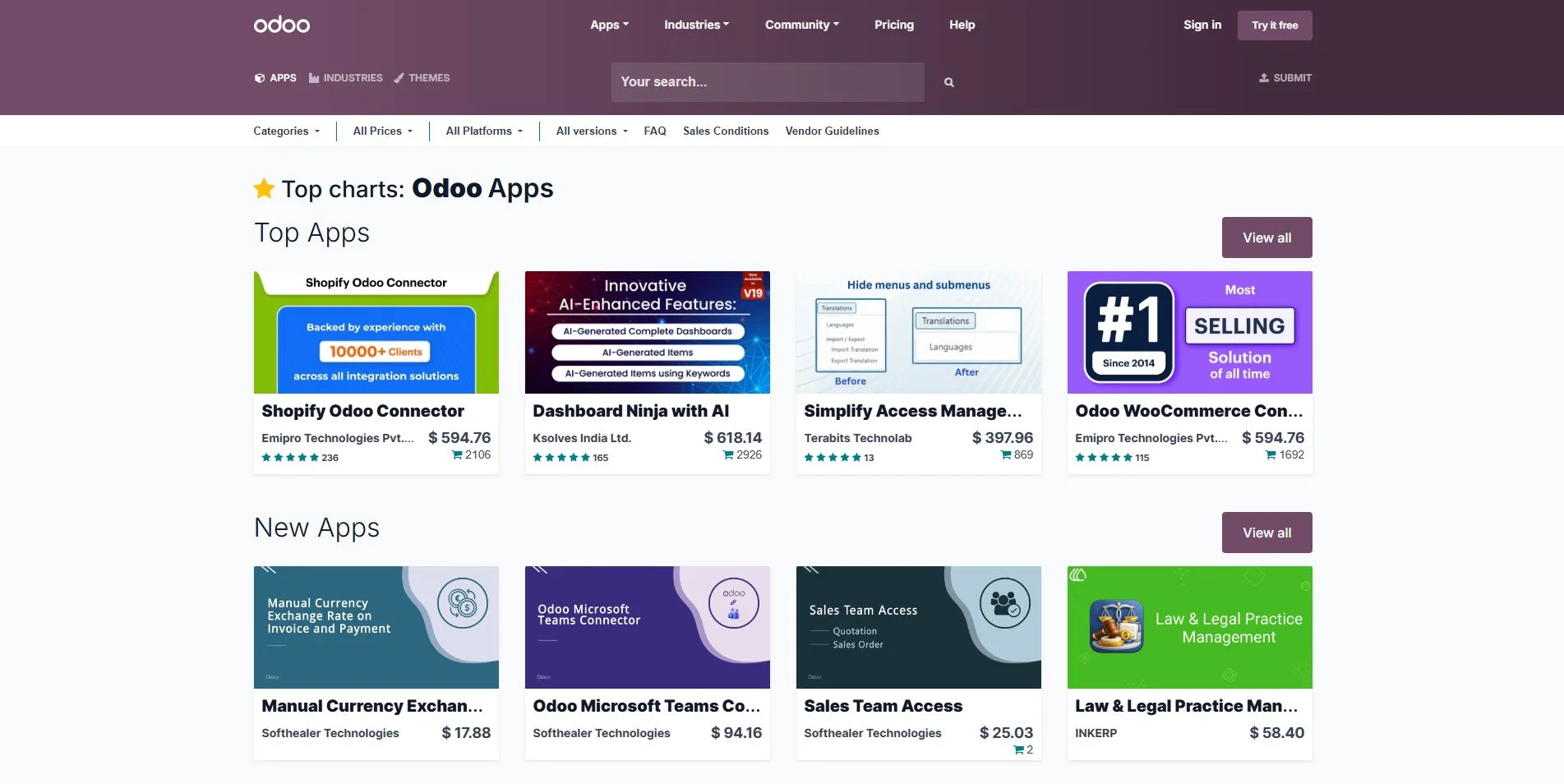
Beyond that, Odoo’s ecosystem includes hundreds of official and community-developed modules that allow for seamless extensions across marketing, logistics, finance, HR, and more. This gives businesses full control to build a highly customized system that evolves with their needs.
Wix, on the other hand, focuses on ease of use and quick plug-and-play integrations through its Wix App Market. It offers more than 300 apps that connect your site to popular tools like Google Analytics, Mailchimp, Printful, and social media platforms.

Wix also allows limited API access through its Velo by Wix development environment, which gives developers the option to build custom apps and workflows. However, Velo is more suitable for front-end interactions and smaller-scale customizations rather than large, backend integrations.
In summary, Odoo offers deeper and more scalable integration capabilities, especially for businesses with complex operations and evolving needs. Wix is ideal if you want simple, ready-made integrations and don’t need access to deeper backend systems.
Design and Customization – Wix Wins
Our verdict:
When comparing Odoo vs Wix, Wix takes the lead in design and customization for most users, especially those who value visual flexibility and ease of use.
Odoo provides a basic website builder that allows for design adjustments through blocks and themes, but it’s not as intuitive or flexible as Wix. The platform includes a few pre-built themes, and users can customize page layouts using Odoo’s drag-and-drop editor.
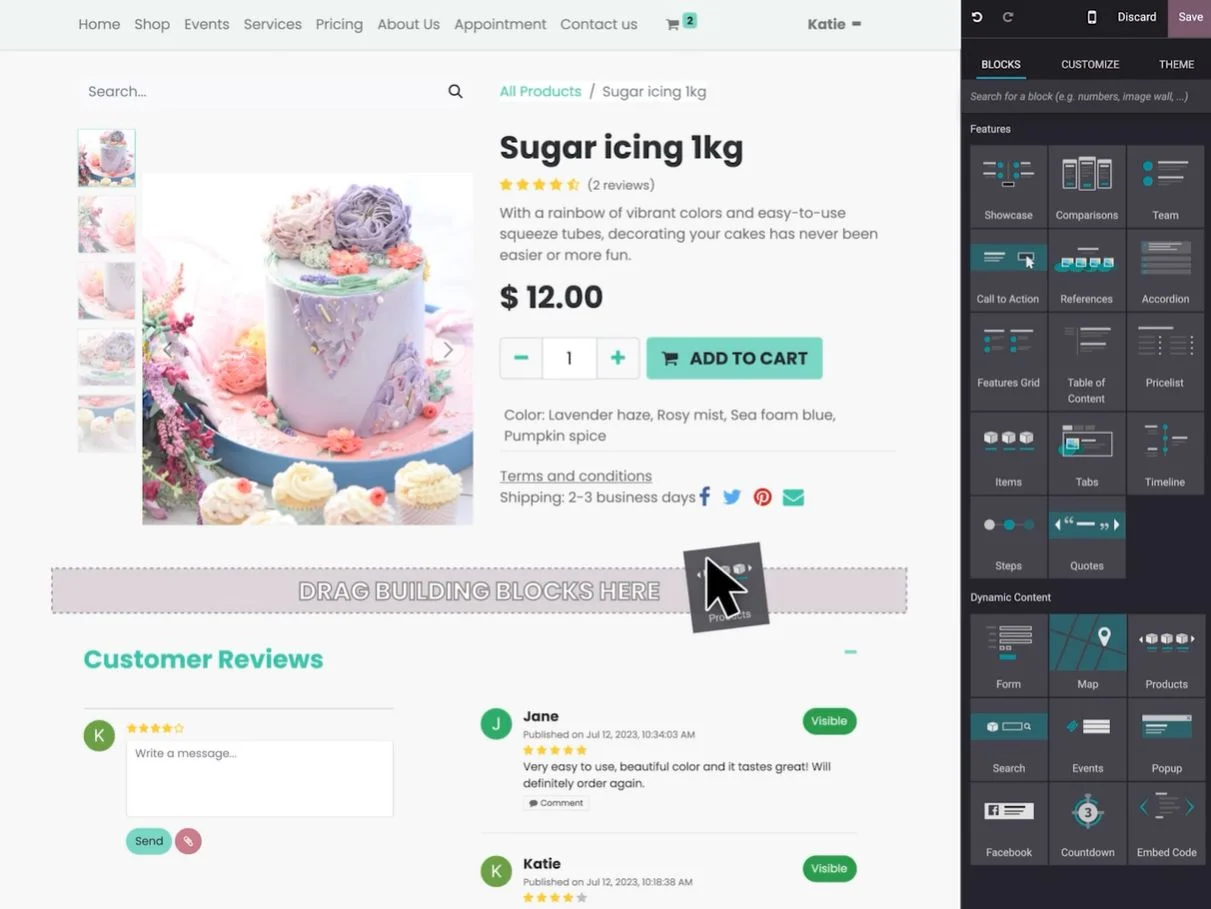
However, the visual editing experience is limited, and deeper design customization typically requires coding in HTML, CSS, or using Odoo Studio (a paid tool for more advanced customizations). This approach gives technical teams full control but may feel complex for non-designers or solo entrepreneurs.
By contrast, Wix is built to empower users at any skill level to create beautiful, fully customized websites. With a large collection of FREE Wix templates and a true drag-and-drop interface, Wix allows complete control over layout, fonts, colors, and content positioning, no coding required.
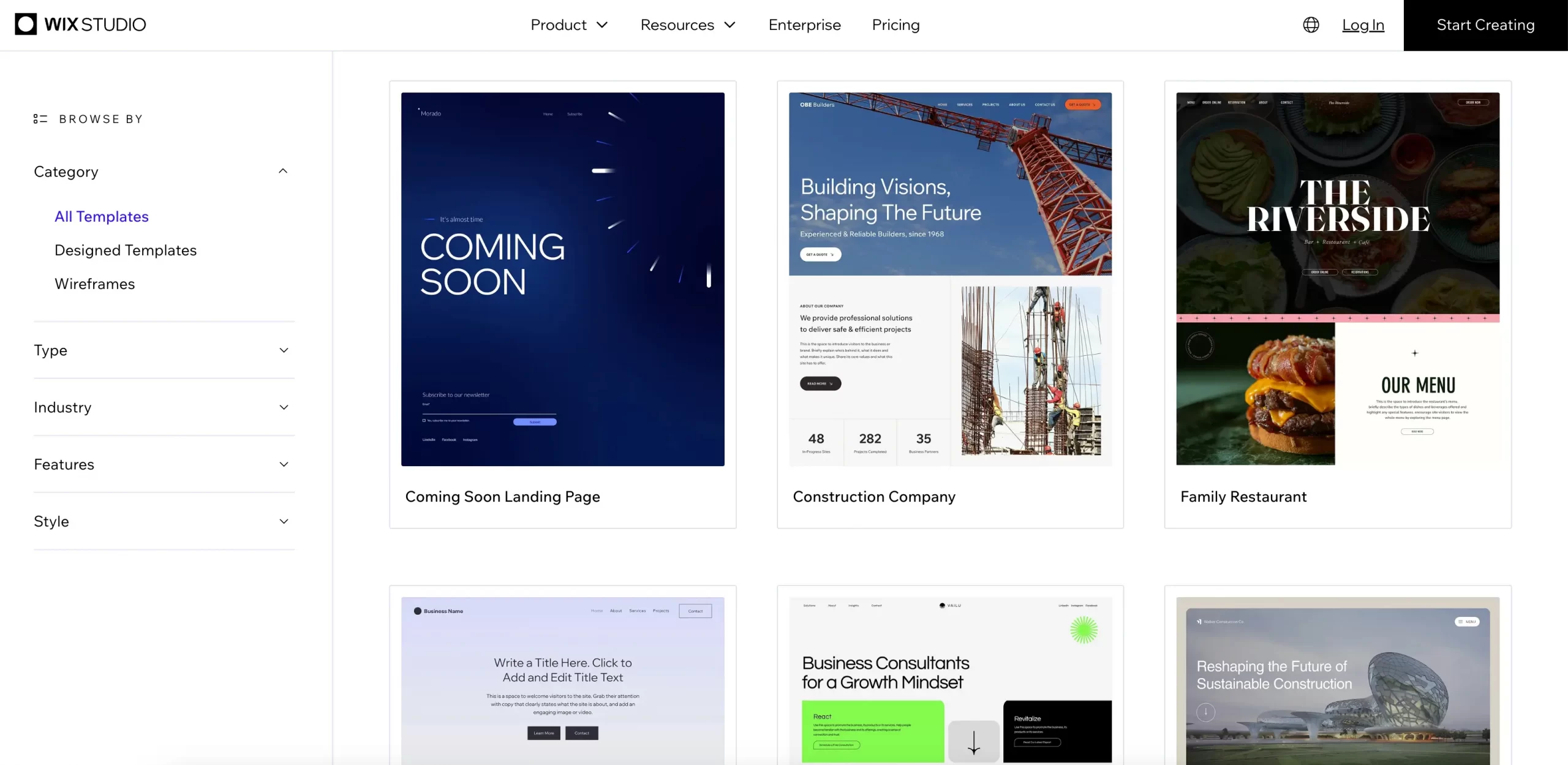
For those with coding experience, Wix’s Velo development platform opens the door for custom scripts and dynamic content, all while retaining the ease of a visual editor.
To sum up, Wix offers a faster, easier, and more flexible design experience in the Odoo vs Wix comparison. While Odoo may appeal to businesses that prioritize backend logic and deep customization with developer resources, Wix is the stronger choice for users who want visually polished results without touching code.
Customer Support – Wix Wins
Our verdict:
In the Odoo vs Wix comparison, Wix is the winner in customer support thanks to its responsive, multi-channel assistance and user-friendly help resources.
Odoo provides two different support experiences depending on the version you choose. For users on the free, open-source Community version, there is no direct support from Odoo’s official team. Instead, users rely on community forums, documentation, and third-party partners for help. While the community is active, responses can vary in speed and quality.
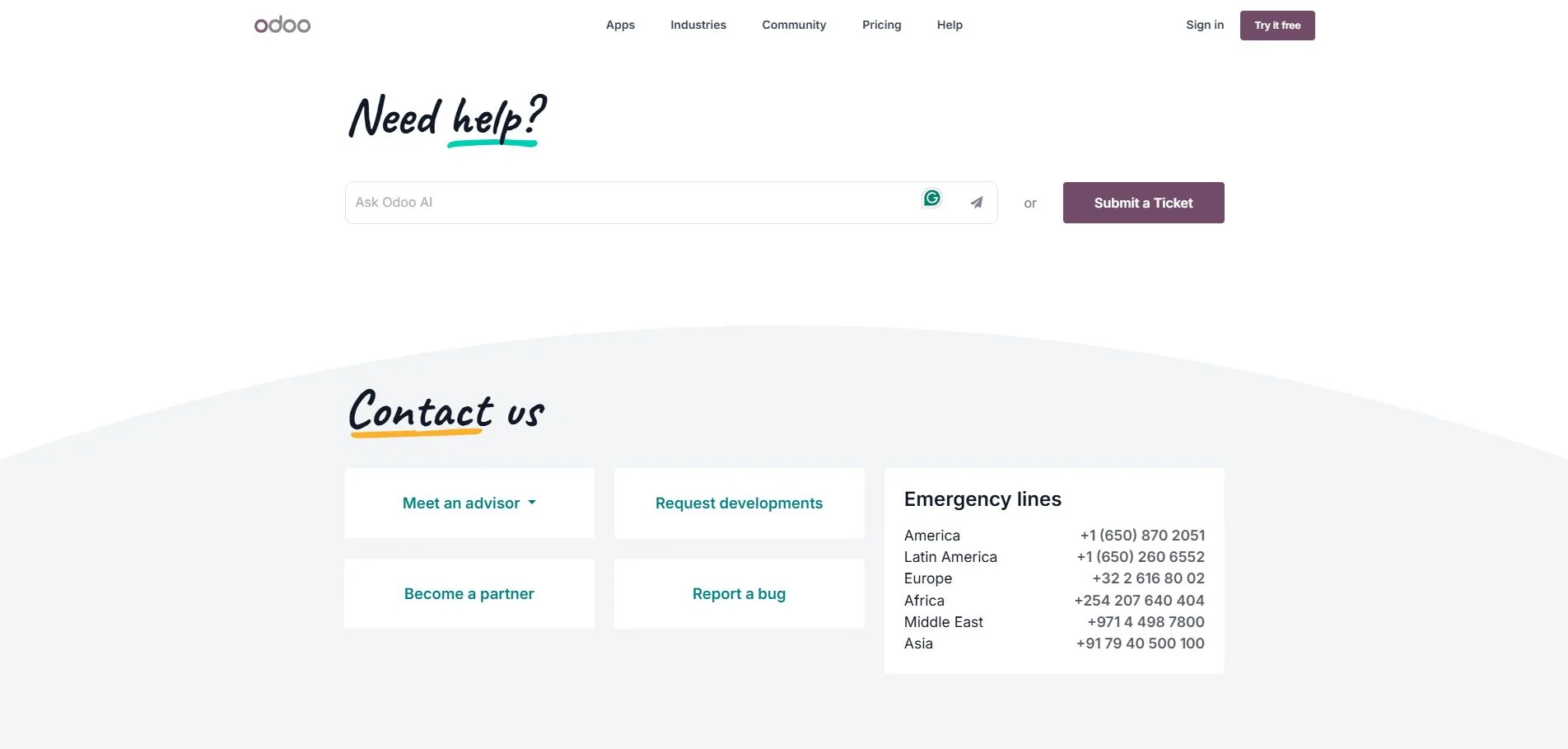
For businesses using the paid Odoo Online (Enterprise) plan, Odoo offers professional support via email or ticketing systems, but live chat or phone support is not always available, and response times can vary based on your plan.
Wix, on the other hand, provides a much more accessible support system for users across all pricing plans. It offers phone callbacks (in select regions), email support, and a comprehensive Help Center filled with tutorials, videos, and step-by-step guides.

The support experience is designed to help users of all levels resolve issues quickly, whether they’re building a site, troubleshooting a feature, or asking about billing. In addition, Wix includes contextual help directly inside the dashboard, which makes it easier to find answers without leaving the page.
In short, Wix delivers a smoother and more user-friendly support experience, making it a better choice for users who expect fast, guided assistance. Odoo can provide quality support for enterprise users, but smaller teams and self-hosted users may find it harder to get the help they need without additional resources.
Pricing – Odoo Wins
Our verdict:
In the Odoo vs Wix competition, Odoo offers more flexible and potentially cost-effective pricing for businesses that only need specific tools, while Wix provides fixed, all-inclusive plans that are easier to understand but may become expensive as your needs grow.
Odoo uses a modular pricing system that gives you the freedom to pay only for what you use. If you only need one app (like Website, CRM, or Sales), Odoo offers it completely free for unlimited users under the One App Free plan. For broader needs, the Standard plan costs $9.10/user/month and includes access to all apps via Odoo Online. If you require advanced features like Odoo Studio, multi-company support, or external API access, you’ll need the Custom plan at $13.60/user/month.
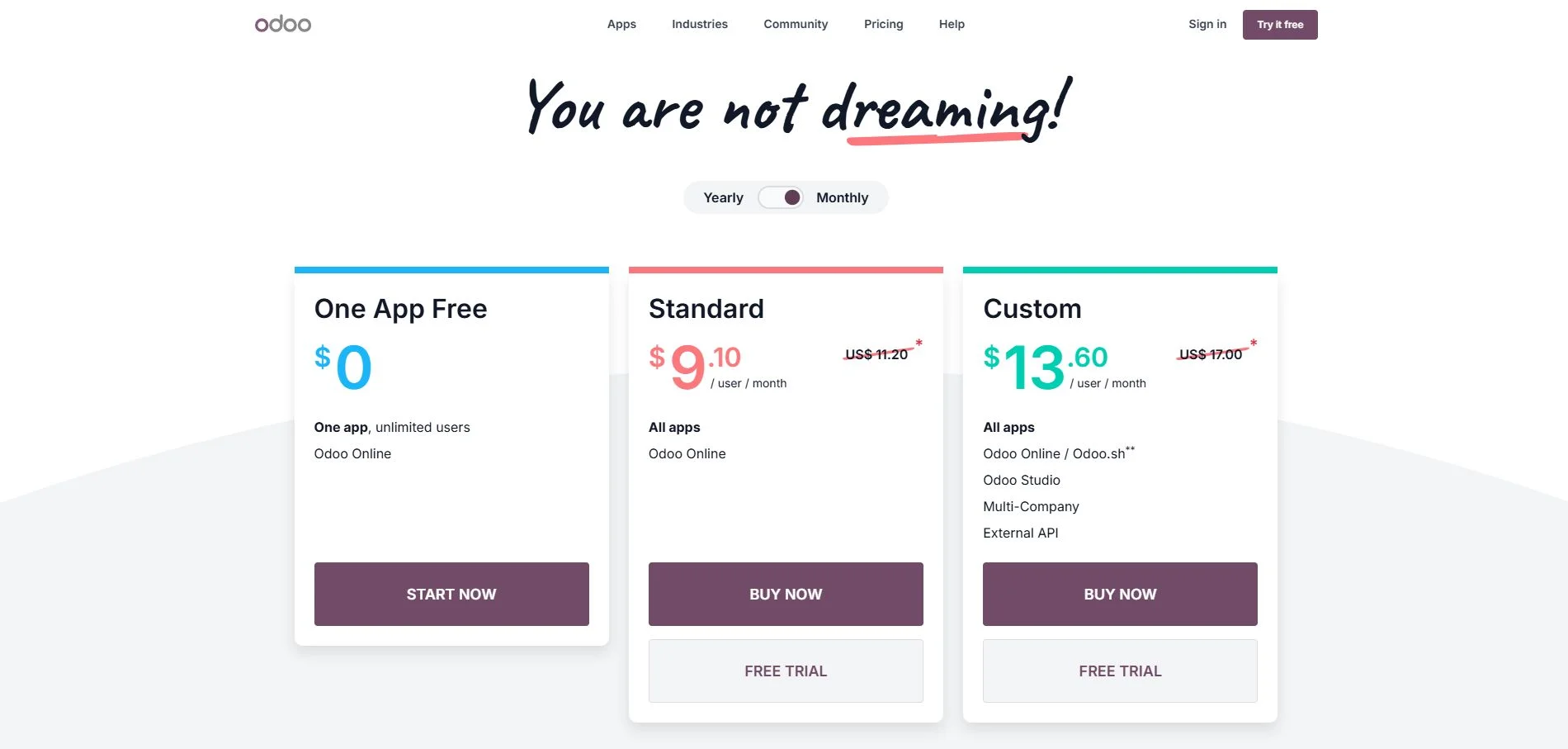
This approach allows businesses to scale costs based on user count and required modules, which can be highly economical for teams with specific use cases or internal development resources.
On the other hand, Wix follows a tiered subscription model with flat monthly fees. Plans range from $17/month (Light) to $159/month (Business Elite). Each plan includes web hosting, a domain (free for 1 year), and varying levels of storage, marketing tools, eCommerce capabilities, and collaborator access.
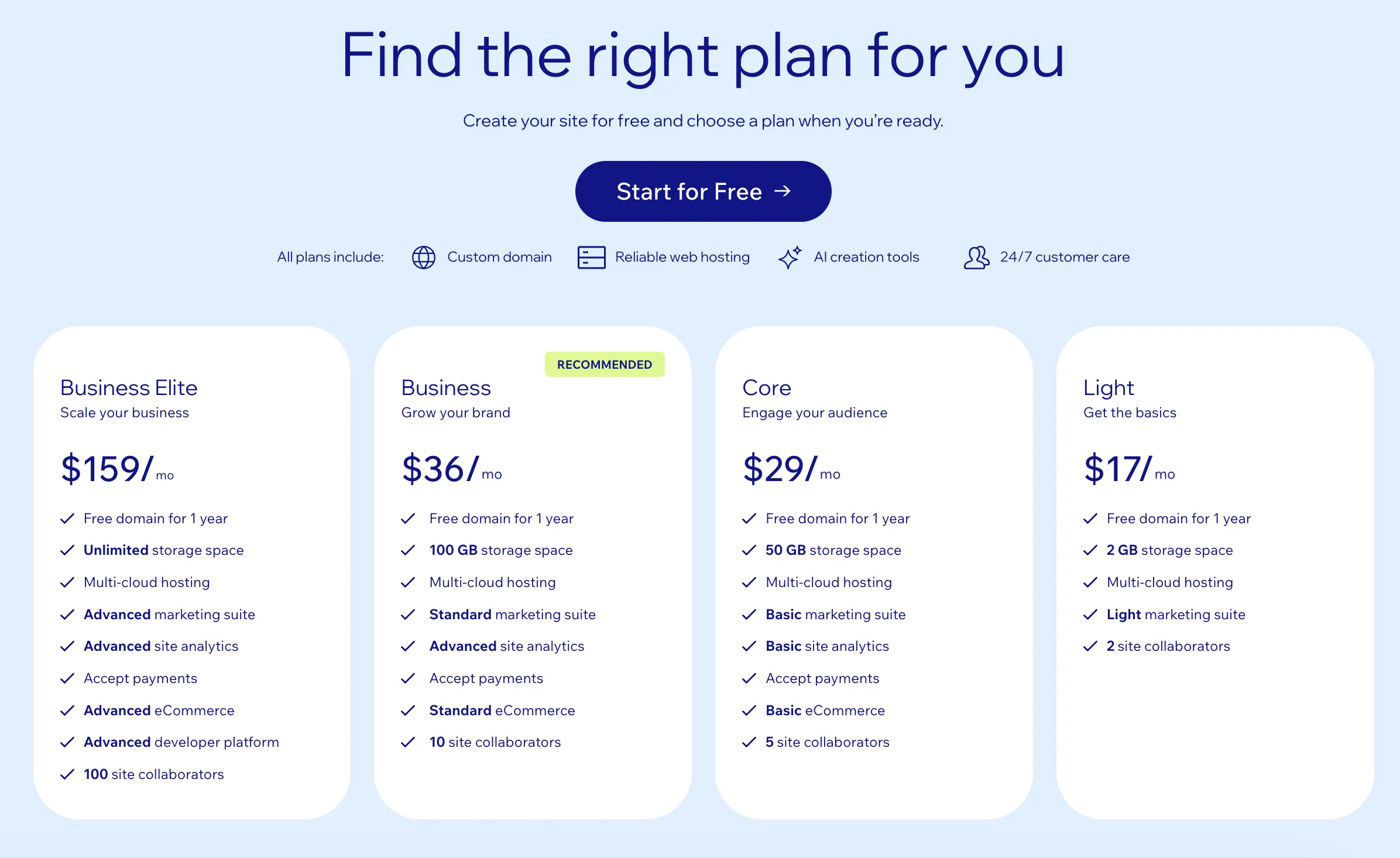
While Wix simplifies budgeting with its all-in-one pricing, costs can rise quickly for larger teams or businesses needing more advanced functionality. For everything you need to know about the total cost of ownership on this platform, please check out our Wix pricing analysis here.
In short, Odoo gives you pricing flexibility and powerful tools for less if you only need a few apps, but it requires managing user-based billing and setup. Wix offers simplicity and predictability, which may be more attractive to non-technical users or businesses that want everything included without additional configuration.
Integrate Odoo with Wix: Is It Possible?
Yes, it’s possible to integrate Odoo with Wix. However, since Odoo does not offer a native integration with Wix, you might need to involve a complex technical setup or third-party tools.
Fortunately, Odoo provides a powerful API and flexible architecture that allow developers to connect its backend modules (like inventory, sales, or CRM) with external platforms. Businesses can use middleware services such as Zapier, Make (Integromat), or custom-built connectors to sync data between the two systems.
While this type of integration isn’t suited for beginners, it’s a practical solution for businesses that want to keep Wix as their front-end storefront while managing operations through Odoo’s backend. For best results, you may want to work with a developer or integration partner familiar with both platforms.
Our Methodology – How We Test Odoo vs Wix
To deliver a fair and practical comparison of Odoo vs Wix, we followed a structured evaluation process based on real business use cases. Our methodology focuses on how each platform performs in everyday scenarios, not just on paper.
- Platform setup and onboarding: We created accounts on both platforms and reviewed the initial setup process, onboarding flow, and overall usability from a new user’s perspective.
- Feature and eCommerce testing: We tested core features such as product management, payment setup, marketing tools, and basic store operations to understand how each platform supports online selling.
- Scalability and performance: We assessed how each platform handles business growth, including user limits, feature expansion, and long-term operational flexibility.
- Pricing and value assessment: We analyzed pricing structures, plan limitations, and overall value to determine the real cost of using each platform at different stages.
This streamlined approach allows us to present a balanced and realistic comparison of Odoo vs Wix, helping businesses choose the platform that best fits their needs.
Odoo vs Wix – FAQs
No schema found.Final Verdict
To conclude, Odoo is the stronger option for businesses that need scalability, deep backend control, and ERP-level functionality. On the other hand, Wix is ideal for small businesses, solo entrepreneurs, and non-technical users who want to launch and manage a website quickly.
If your priority is long-term growth and operational depth, Odoo is the better fit. If you want speed, simplicity, and an all-in-one hosted solution, Wix is the more suitable choice in the Odoo vs Wix comparison.
Want more articles like this? Don't forget to check out our LitExtension Resource and Blogs to unlock more expert tips and eCommerce insights.