Choosing among BigCommerce payment gateways involves more than comparing transaction rates. Your decision affects which payment methods customers can use, how smoothly they check out, and whether BigCommerce charges an additional Open Payment Provider Fee.
In this guide, we will provide a comprehensive overview of BigCommerce payment gateways, including:
- What is a BigCommerce payment gateway and how it works;
- Types of BigCommerce payment gateways;
- Top 6 best BigCommerce payment gateways;
- Detailed breakdown of BigCommerce payment gateways fees;
- Steps to add a payment gateway to your BigCommerce store.
Now, let’s get into it!
What are BigCommcerce Payment Gateways?
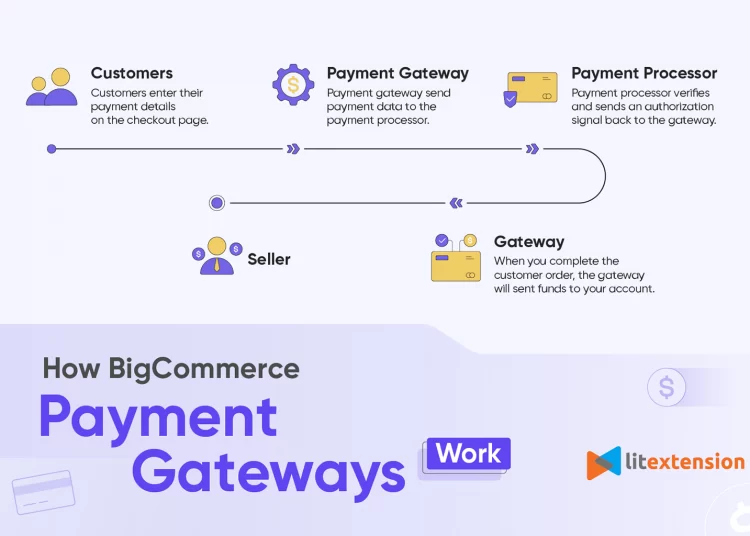
A BigCommerce payment gateway is a service that securely connects your store’s checkout with the financial institutions involved in a transaction. When a customer submits their payment details, the gateway encrypts the information and sends it for authorization. It then returns the approval or decline response to BigCommerce, allowing the store to complete the order.
Using a supported BigCommerce payment gateway can benefit your store in several ways:
- Secure transactions: Encryption, tokenization, authentication, and fraud-detection tools help protect sensitive payment information.
- More payment choices: Depending on the provider, you can accept credit and debit cards, digital wallets, bank transfers, Buy Now, Pay Later options, and local payment methods.
- A smoother checkout: Customers can pay through a checkout experience connected directly to your BigCommerce store, although the exact flow may be embedded or redirect them to the provider.
- Simplified payment management: Integrated providers can help you manage authorizations, captures, refunds, and transaction records from connected systems.
- Support for international selling: Some gateways let you accept multiple currencies and region-specific payment methods, helping you serve customers in different markets.
In short, the gateway handles the secure transfer of payment data, while the processor and banking network handle authorization and fund movement. Together, they allow your BigCommerce store to accept and manage online payments.
Types of BigCommerce Payment Gateways
As of this writing, there are three types of BigCommerce supported payment gateways: hosted payment gateways, on-site payment gateways, and off-site payment gateways (with on-site checkout).
Hosted (redirect) payment gateways
Hosted gateways redirect customers from your store to a secure page where they enter their payment details. Since the provider handles sensitive payment information, this option reduces the merchant’s security responsibilities but offers less control over the checkout experience.
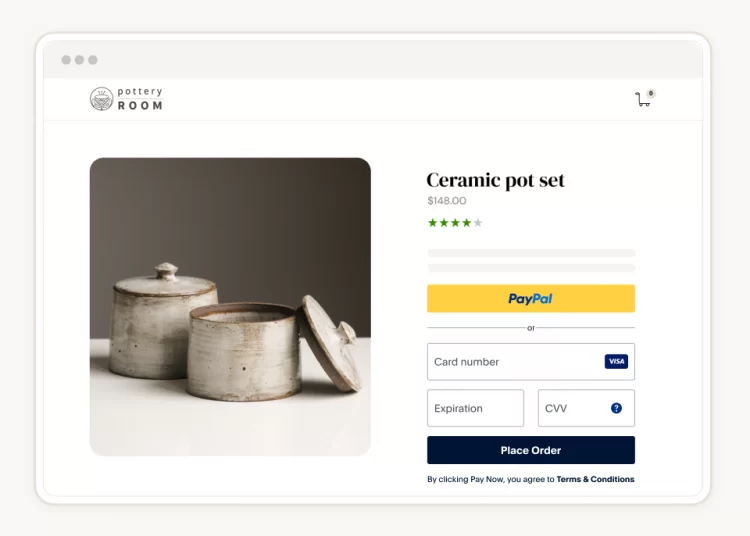
A common example of a BigCommerce hosted payment gateway is PayPal. It allows you to collect payments in 100+ currencies across 200 markets. Moreover, its risk management tools can help you prevent fraud and minimize chargebacks.
On-site payment gateways
On-site gateways let customers enter their payment details directly on your BigCommerce checkout page without leaving the store. This creates a more consistent shopping experience across custom and free BigCommerce themes, but it also requires greater attention to payment security.
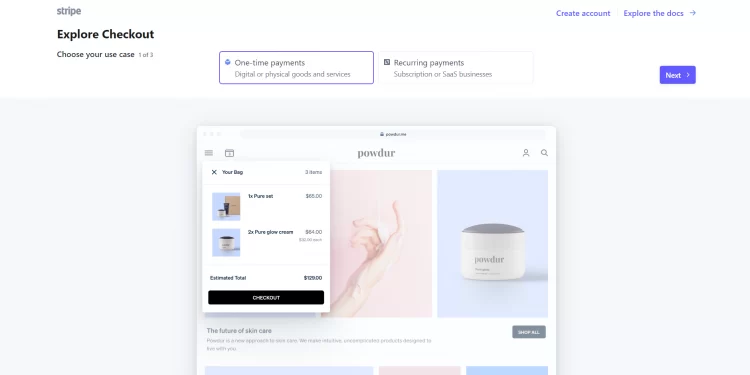
Popular examples of on-site payment gateways for BigCommerce stores include Stripe and Authorize.net. These two services are two of the easiest payment gateways to set up with BigCommerce. In addition, they allow you to offer several digital wallet payment methods on your storefront.
On-site checkout with off-site payments
This method combines elements of the other two types. Customers complete most of the checkout process on your store, while sensitive payment information is handled through the provider’s external system. It balances checkout convenience with reduced payment-data handling, although merchants have less control over the entire experience.
One of the most popular payment gateways of this method is Stripe. By using Stripe, you can manage customers’ order details without having to protect their payment information yourself.
6 Best BigCommerce Payment Gateways For Your Store
With many providers available, the best BigCommerce payment gateway depends on how and where you sell. To help you narrow down the options, the table below gives a quick overview of 6 notable providers before we examine their features, fees, and ideal use cases in detail.
| Provider | Best for | Gateway type | Key payment options | Availability | BigCommerce payment fee status |
| BigCommerce Payments | Centralized payment management | On-site | Cards, PayPal, Pay Later, wallets | US merchants | Embedded provider |
| Stripe | Global and customizable checkout | On-site | Cards, wallets, BNPL, local methods | Multiple markets | Embedded provider |
| PayPal | Brand recognition and PayPal users | Hosted/on-site, depending on product | PayPal, cards, Venmo, Pay Later | Multiple markets | Embedded provider |
| Authorize.net | Merchants with an existing merchant account | On-site | Cards, eChecks, wallets | Selected markets | Open provider |
| Square | Combined online and in-person selling | On-site | Cards and digital wallets | Selected markets | Open provider |
| Amazon Pay | Faster checkout for Amazon customers | Hosted wallet | Amazon-stored payment methods | Selected markets | Embedded provider |
Let’s look at each one in more details!
1. BigCommerce Payments (Powered by PayPal)
Best for:
US merchants who want to manage their store, payments, balances, and payouts within BigCommerce.
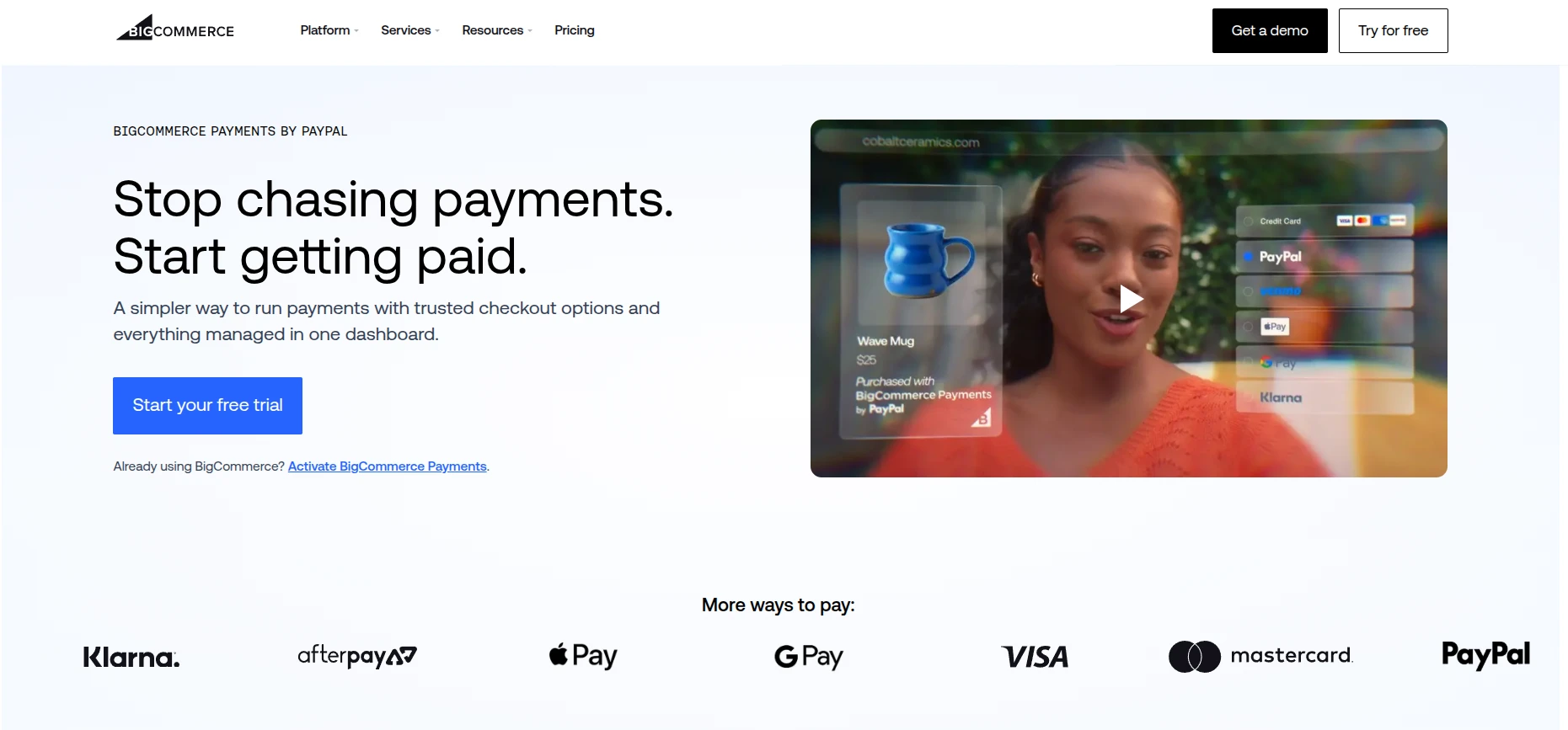
If you want to keep payment management as close to your store as possible, BigCommerce Payments is the most native option on this list. Powered by PayPal, it brings payments, balances, and payouts into the BigCommerce control panel instead of requiring you to manage everything through a separate provider dashboard.
Key features:
- Accept cards, PayPal, Pay Later, alternative payment methods, and invoices.
- Accelerate guest checkout with Fastlane.
- Monitor transactions and real-time balances through the Money dashboard.
- Manage payouts, bank connections, cards, and currency activity.
- Support stored payment methods for returning customers.
BigCommerce does not charge an additional payment provider fee for orders processed through BigCommerce Payments. You only pay the applicable PayPal processing fees, which vary by payment method and your plan, starting from 2.89% + $0.30 per transaction.
2. Stripe
Best for:
International and growing businesses that need broader payment coverage and checkout flexibility. Its advanced features can increase costs and configuration requirements.
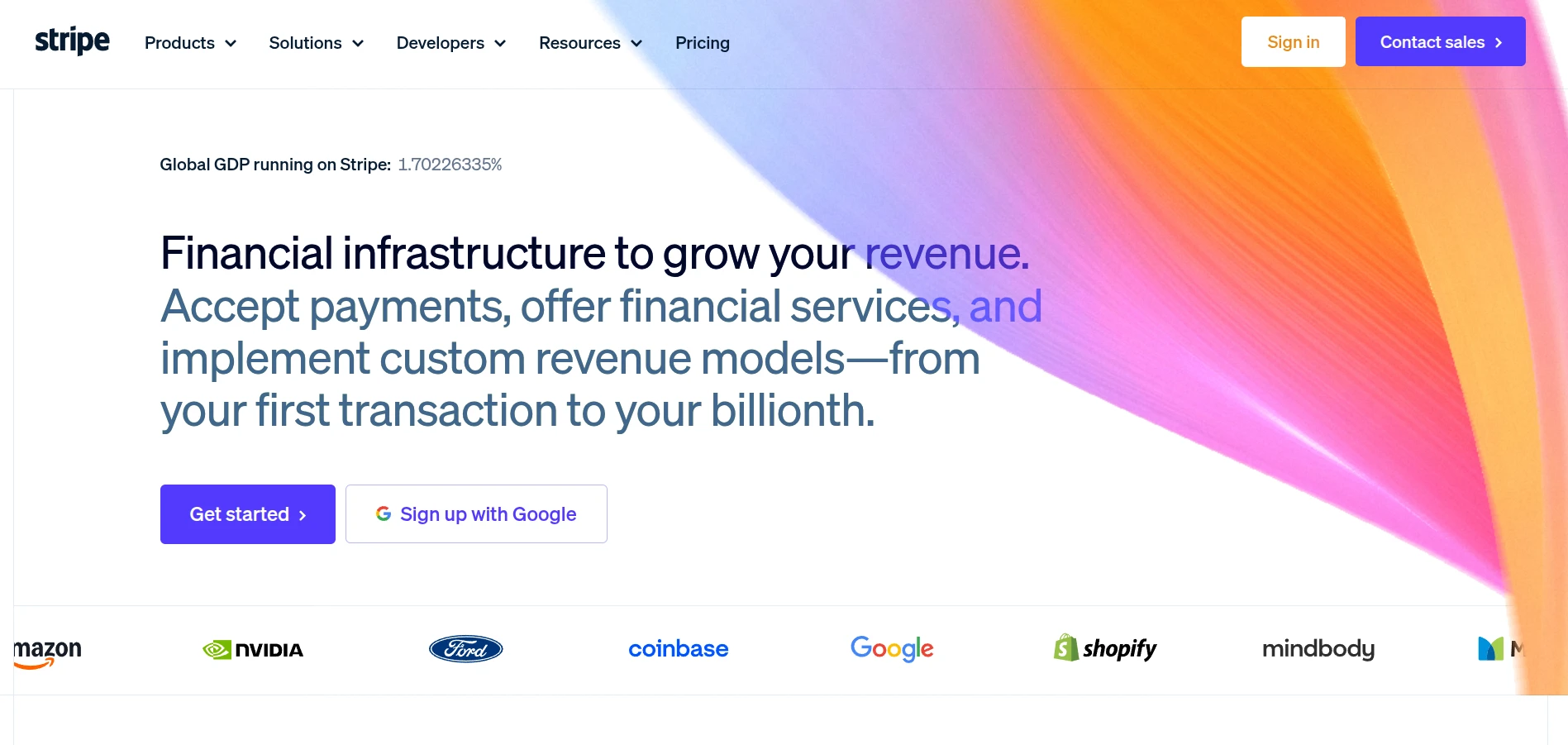
For merchants selling across multiple markets, Stripe provides a broader and more customizable payment setup. Its Optimized Checkout Suite extends BigCommerce checkout with localized payment methods, accelerated checkout, and automatic payment-method optimization without requiring merchants to redesign the entire checkout flow.
Key features:
- Accept cards, ACH, BNPL, and 30+ local and alternative payment methods.
- Speed up repeat purchases with Link.
- Offer localized pricing in more than 150 countries through Adaptive Pricing.
- Save customers’ bank details with ACH vaulting.
- Detect fraud and reduce false declines using Stripe Radar.
- Dynamically display payment methods based on each shopper.
Stripe charges 2.9% + $0.30 per successful domestic card transaction in the US. Additional fees apply to international cards and currency conversion.
3. PayPal
Best for:
Merchants who want to offer a familiar payment option trusted by PayPal users. The main drawback is that wallet and cross-border fees can be higher than standard card-processing rates.
For merchants who want to add a familiar payment method without rebuilding their checkout, PayPal Checkout is a straightforward option. Customers select PayPal on your BigCommerce store, complete the payment through PayPal’s secure interface, and then return to the order confirmation page.

Key features:
- Accept payments from customers’ PayPal accounts.
- Offer Pay Later to eligible shoppers.
- Support Venmo for eligible US mobile customers.
- Allow guest card payments when available.
- Provide mobile-friendly accelerated checkout.
- Include fraud monitoring and Seller Protection for eligible transactions.
PayPal Checkout generally charges US merchants 3.49% + $0.49 per domestic transaction, with additional fees for international payments and currency conversion.
4. Authorize.net
Best for:
Established businesses that already have a merchant account or need greater control over payment processing. Its monthly charge and additional BigCommerce fee make it less suitable for low-volume stores.
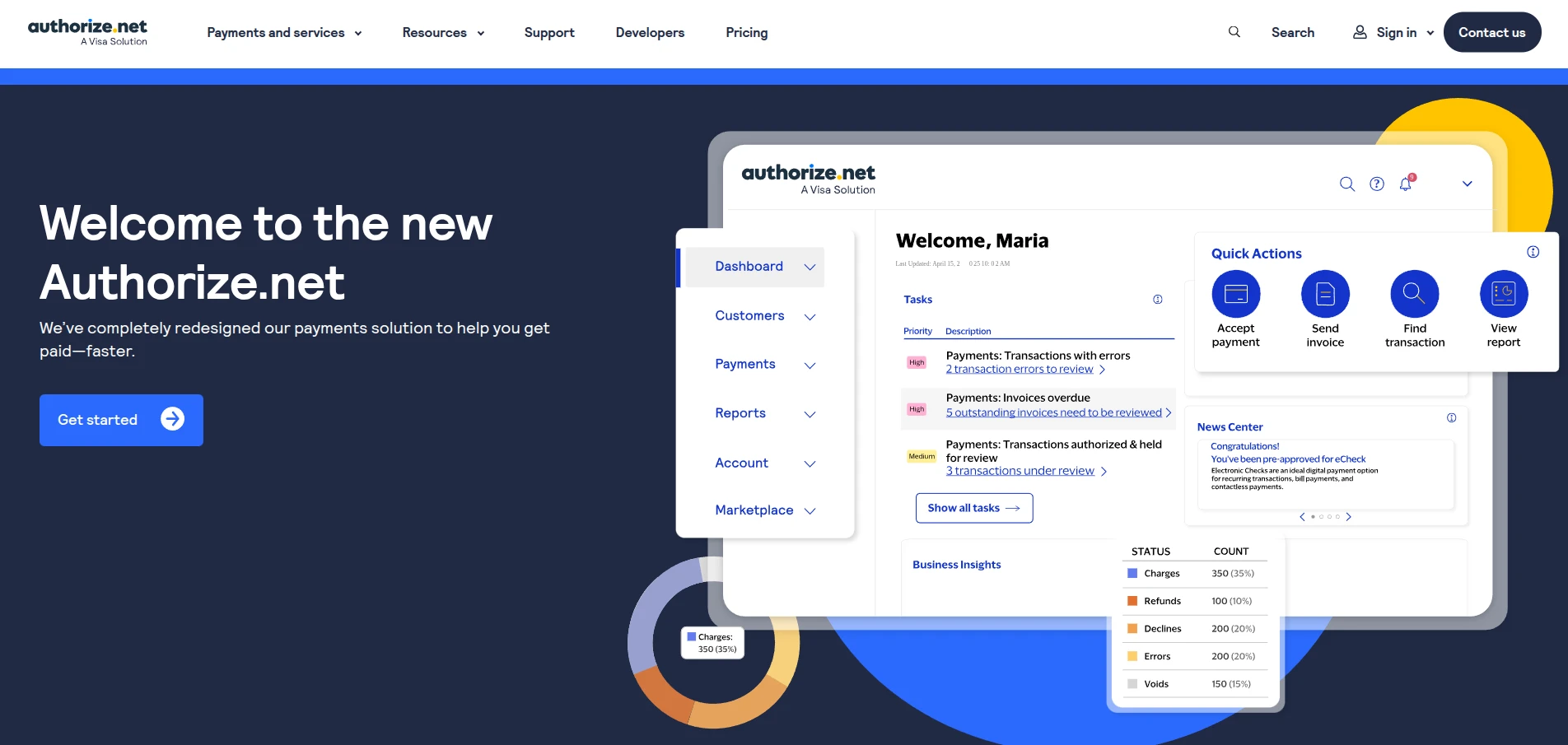
Unlike all-in-one providers that bundle most payment services together, Authorize.net gives merchants more flexibility over their merchant account. You can use its complete payment-processing package or connect the gateway to an existing merchant account, making it more suitable for established payment arrangements.
Key features:
- Accept major cards, eChecks, and Apple Pay.
- Store billing and payment details in customer profiles.
- Support authorizations, captures, voids, and refunds.
- Set up recurring payments through Automated Recurring Billing.
- Screen transactions with the Advanced Fraud Detection Suite.
- Process stored payment instruments and new cards through BigCommerce.
The US all-in-one plan costs $25 per month plus 2.9% + $0.30 per transaction. Authorize.net is currently an Open Payment Provider, so eligible orders may also incur a BigCommerce fee of 0.6%–2%, depending on your plan.
5. Square
Best for:
Small and medium-sized retailers that already use Square for physical sales. Its main limitations are regional availability and the additional BigCommerce provider fee.
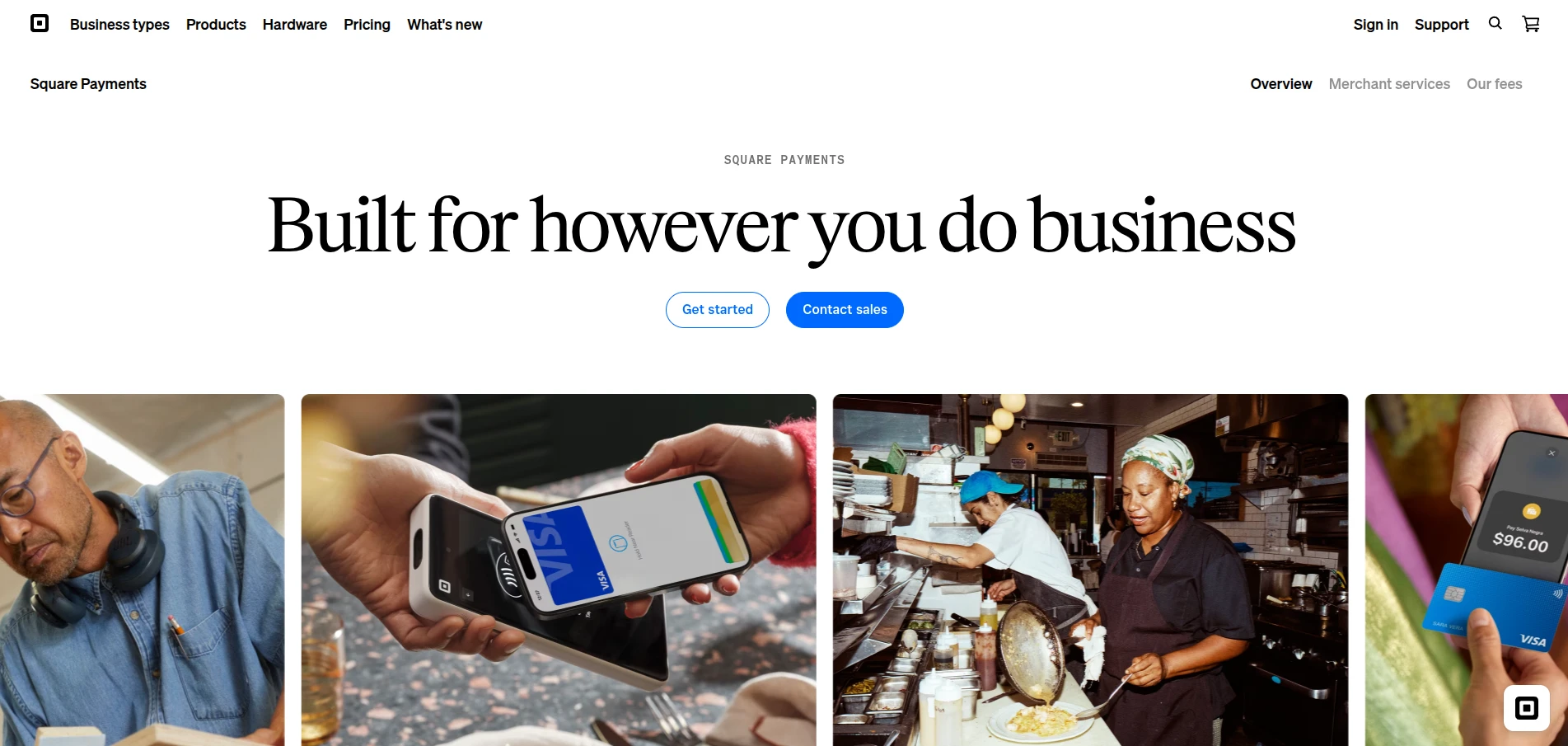
The next option for you to choose from is Square – built around the connection between online and in-person sales. BigCommerce merchants already using Square can continue processing online payments through the same broader ecosystem they use for POS, payouts, and transaction management.
Key features:
- Accept major credit and debit cards online.
- Allow returning customers to use stored cards.
- Manage payments, refunds, disputes, and payouts through Square.
- Apply built-in fraud monitoring and PCI-compliant payment handling.
- Connect BigCommerce selling with Square’s in-person payment tools.
- Use the same Square account across supported sales channels.
Square’s US Online API rate is 2.9% + $0.30 per transaction. Square is currently an Open Payment Provider, meaning eligible orders may also incur BigCommerce’s 0.6%–2% provider fee, depending on the store plan.
6. Amazon Pay
Best for:
US stores with customers who regularly use Amazon. However, it should supplement another gateway because it only serves shoppers paying through their Amazon accounts.
Instead of replacing your main gateway, Amazon Pay adds another convenient way for customers to complete checkout. Its native BigCommerce integration lets shoppers reuse the payment and shipping details stored in their Amazon accounts, reducing the information they need to enter manually.
Key features:
- Use saved Amazon payment and shipping information at checkout.
- Enable Amazon Pay from BigCommerce without custom development.
- Provide a faster mobile checkout experience.
- Protect transactions using Amazon’s fraud-detection technology.
- Cover eligible purchases through the Amazon A-to-z Guarantee.
- Use Amazon Pay without selling products on Amazon.
Amazon Pay charges US merchants 2.9% + $0.30 for domestic web and mobile transactions. Cross-border payments cost 3.9% + $0.30.
Overall, your final choice should also account for costs beyond the advertised transaction rate. The next section explains the payment gateway fees that may affect your total expense.
BigCommerce Payment Gateway Fees Explained
The lowest advertised transaction rate does not always produce the lowest total cost. To compare BigCommerce payment gateways properly, you need to consider the pricing model, additional charges, and your store’s average order value.
Common payment gateway pricing models
| Pricing model | How it works | Main consideration |
| Flat-rate | Charges one fixed percentage plus a fee per transaction. | Predictable and easy to calculate, but fixed fees can be costly for low-value orders. |
| Interchange-plus | Adds the provider’s markup to card-network interchange fees. | More transparent and potentially cheaper at scale, but monthly costs fluctuate. |
| Tiered | Groups transactions into qualified, mid-qualified, and non-qualified rates. | The initial rate may look low, but many transactions can fall into more expensive tiers. |
Flat-rate pricing generally suits smaller stores that value predictability. Interchange-plus becomes more attractive as payment volume grows, while tiered pricing requires closer analysis because the final rate depends on how transactions are classified.
Additional fees to check
Processing fees are only the starting point. Your total may also include:
- Monthly or setup fees
- Chargeback and dispute fees
- Cross-border and currency-conversion fees
- PCI compliance or fraud-protection fees
- Instant payout and recurring billing fees
- Non-refundable fees when an order is refunded
BigCommerce may also charge an Open Payment Provider Fee on eligible orders: 2% on Core, 1% on Growth, and 0.6% on Scale. This fee does not apply when an Embedded Payment Provider processes the order.
How to calculate your effective payment rate
The effective rate shows how much payment processing actually costs relative to your revenue:
Effective rate = Total payment-related costs ÷ Total payment volume × 100
For example, your store processes $10,000 across 200 orders using a gateway that charges 2.9% + $0.30:
- Percentage fee: $290
- Per-transaction fees: $60
- Monthly fee: $25
- Chargeback fees: $30
- Total cost: $405
- Effective rate: 4.05%
Although the advertised rate is 2.9%, the store effectively pays 4.05%. This is the figure you should use when comparing BigCommerce payment gateways.
How to Add a Payment Gateway to Your BigCommerce Store?
After providing a comprehensive overview of BigCommerce payment gateways, we’ll guide you through a step-by-step BigCommerce tutorial to integrate a payment gateway into your BigCommerce store.
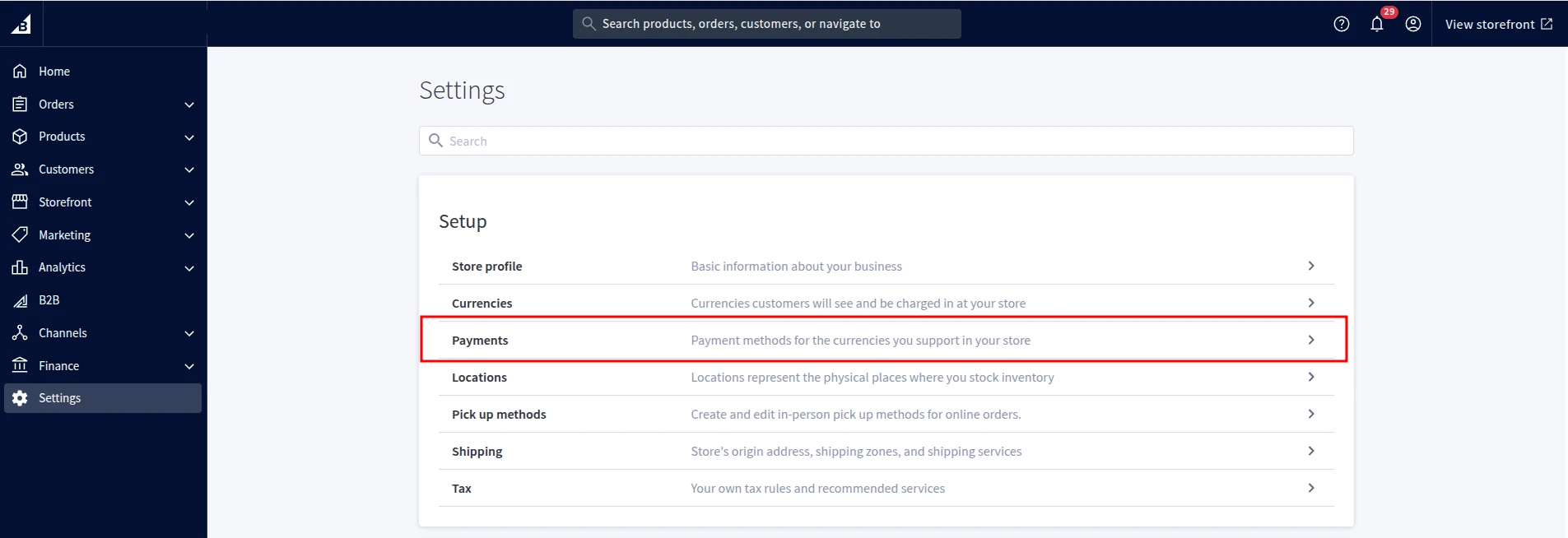
Step 1: Open the payment settings
Sign in to your BigCommerce control panel and go to Settings > Payments. In some interface versions, the path appears as Store Setup > Payments > Online Payment Methods.
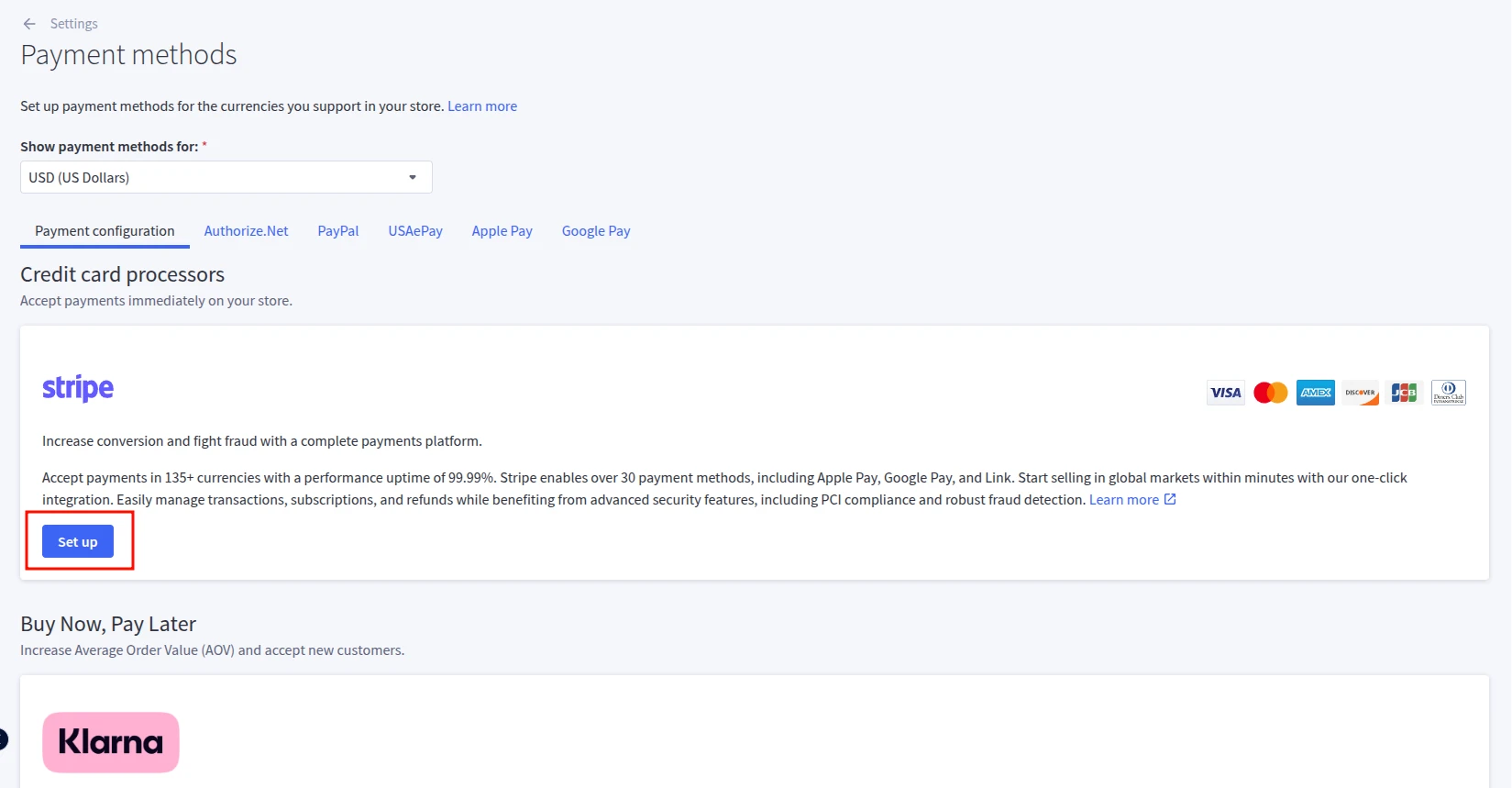
Step 2: Choose a payment provider
Find the BigCommerce payment gateways you want to use, such as BigCommerce Payments, PayPal, Stripe, or Authorize.net, then click Set up. You can also enable supported digital wallets or offline methods from this page.
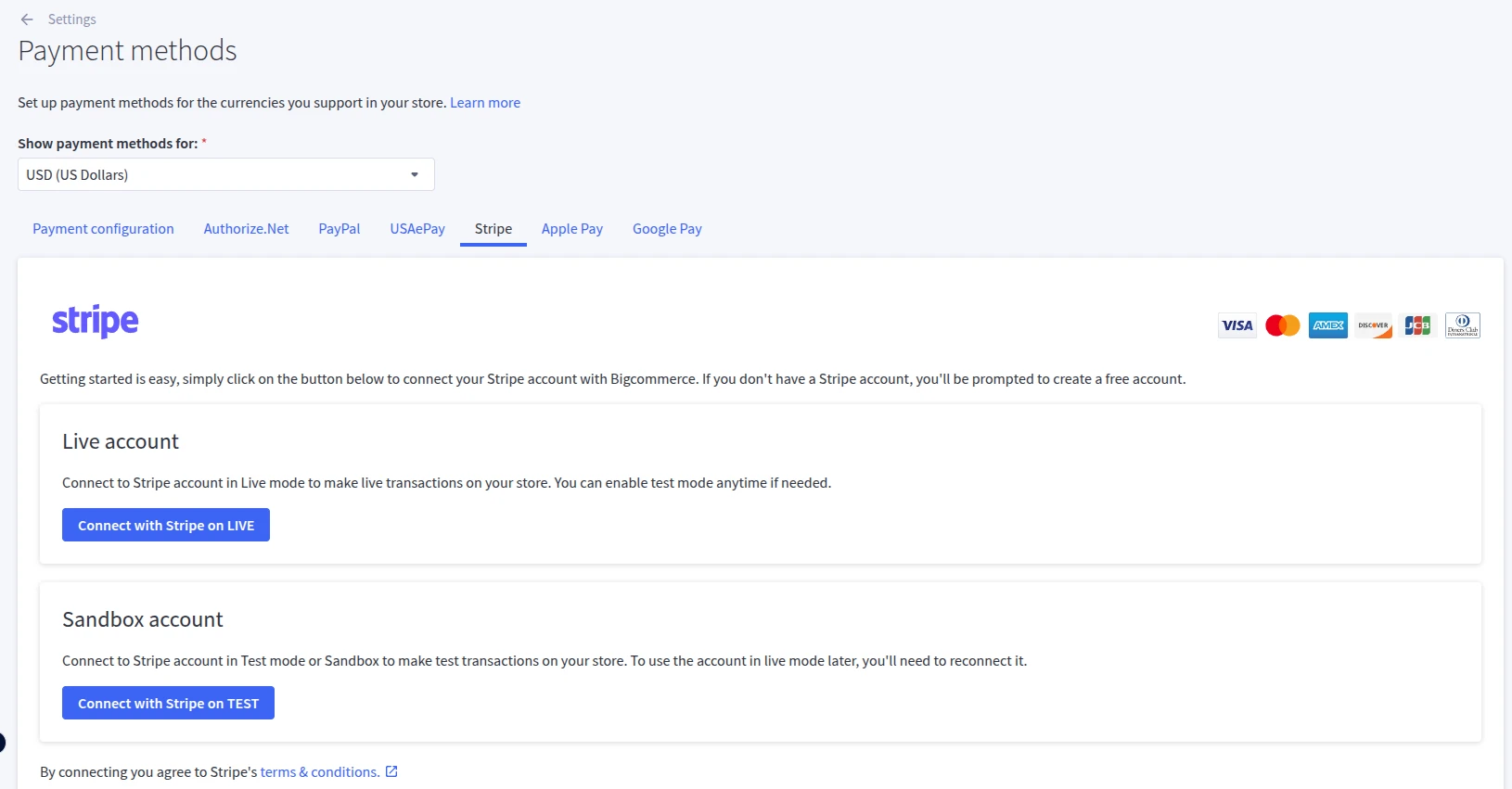
Step 3: Connect your merchant account
Select Connect or Log in and authorize BigCommerce to access your provider account. Some gateways instead require credentials such as a merchant ID, API key, client ID, or secret key.
Step 4: Configure the gateway
Complete the provider settings:
- Choose Authorize only or Authorize and capture.
- Enable supported cards, wallets, or BNPL methods.
- Confirm that the gateway supports your checkout currency.
- Configure fraud protection or stored payments where available.
- Click Save.
Step 5: Test the payment flow
Enable the provider’s sandbox mode and place a test order. Confirm that the amount, currency, and payment status match in both BigCommerce and the provider dashboard.
Once the test succeeds, switch to production credentials and place a low-value live order. If both systems record the transaction correctly, your payment gateway is ready to use.
Setting up a payment gateway is only one part of preparing your new BigCommerce store. Products, customers, orders, categories, URLs, and other important data must also be transferred and checked before launch.
With our BigCommerce migration service, LitExtension experts handle the migration based on your store structure and requirements, helping you reduce manual work and focus on configuring your new store.
BigCommerce Migration Made Easy With LitExtension!
LitExtension offers great migration solutions that help you transfer your data from the current eCommerce platform to BigCommerce accurately, painlessly with utmost security.

What to Consider When Choosing the Best Online Payment Gateway for Your BigCommerce Store?
Choosing the best payment gateway for eCommerce is crucial for the success of your BigCommerce store. With plenty of options available, here’s a breakdown of key factors to consider:
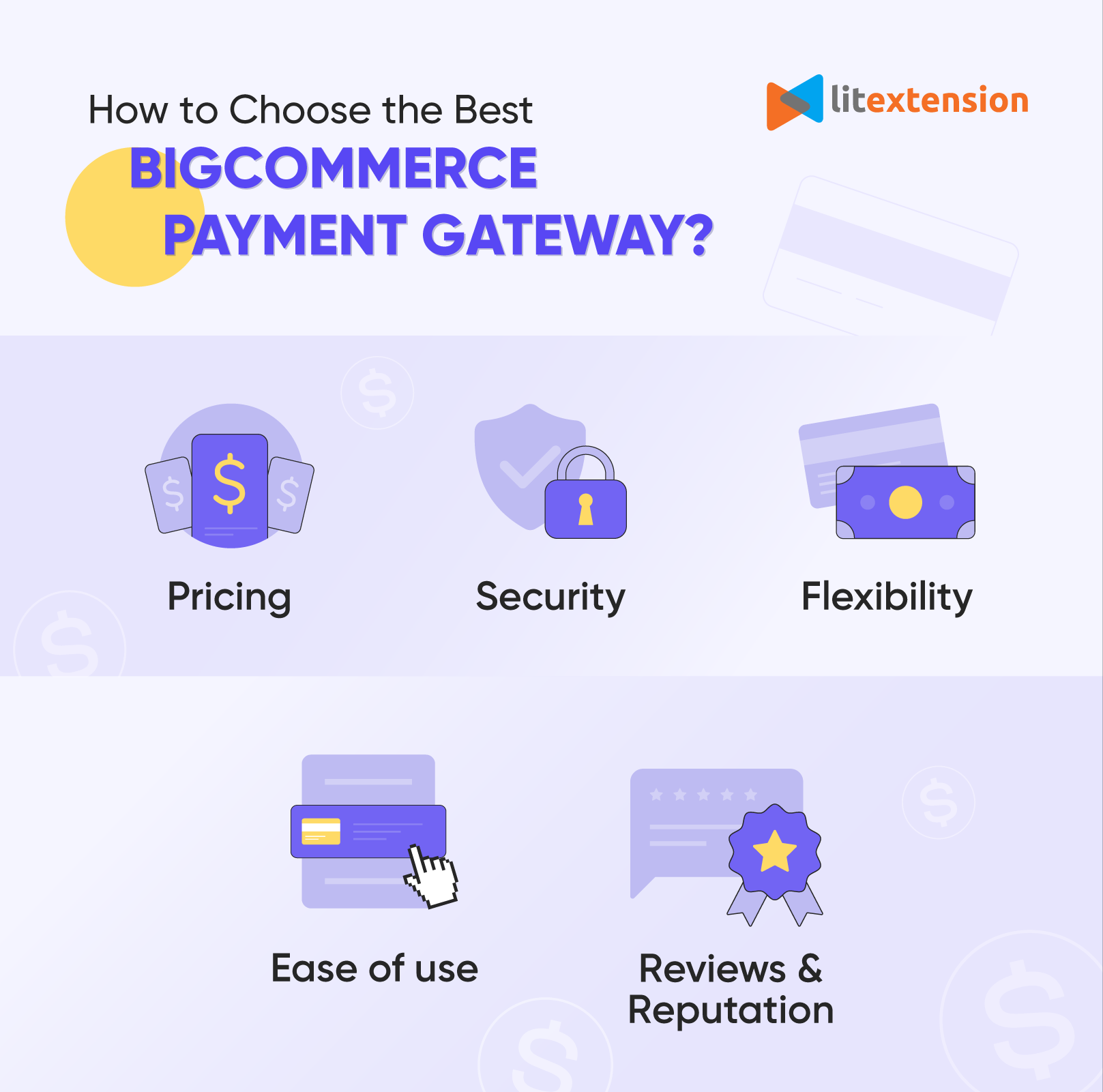
- Pricing: Compare transaction, monthly, setup, cross-border, and potential BigCommerce provider fees based on your sales volume. See our BigCommerce pricing guide for related platform costs.
- Ease of use: Check how easily the gateway connects with BigCommerce, handles refunds and payouts, and fits your existing BigCommerce apps.
- Security: Prioritize PCI DSS compliance, encryption, tokenization, 3D Secure, and fraud-prevention tools.
- Flexibility: Confirm support for your currencies, countries, cards, digital wallets, BNPL, and recurring payments.
- Reviews & reputation: Examine merchant feedback, service reliability, payout performance, and customer support before committing. You can also explore our full BigCommerce review.
BigCommerce Payment Gateways: FAQs
Does BigCommerce charge fees for using a payment gateway?
It depends on the provider:
- Embedded Payment Provider: BigCommerce charges no additional payment provider fee, but the provider’s processing fees still apply.
- Open Payment Provider: BigCommerce charges 2% on Core, 1% on Growth, and 0.6% on Scale. Performance plans follow contracted terms.
What is the BigCommerce Open Payment Provider Fee?
It is a monthly fee charged on eligible order GMV processed through providers outside BigCommerce’s Embedded Payment Provider program. The fee is separate from the gateway’s own processing charges and is calculated at the order level.
Which payment gateways are on BigCommerce’s Embedded Payment Providers list (fee-free)?
The list includes BigCommerce Payments, Stripe, PayPal, Adyen, Amazon Pay, and Checkout.com, among others. Check the full and latest Embedded Payment Providers list, as availability may change.
Does BigCommerce require a separate merchant account?
No. You can connect your own merchant account or use an all-in-one payment provider that supplies the processing and merchant-account functions. The requirements depend on your selected provider.
Are offline payments (POs, bank deposit, cash on delivery) subject to the new fee?
Yes. BigCommerce states that offline orders, including purchase orders, are subject to the Open Payment Provider Fee. This can also apply to manual methods such as bank deposits and cash on delivery because an Embedded Payment Provider does not process those orders.
Conclusion
In summary, we have just given you the whole picture of BigCommerce payment gateways.
A payment gateway is a crucial part of eCommerce, and BigCommerce is no exception. Fully understanding the details of BigCommerce payment gateways, especially how they function, will make running your BigCommerce store much easier.
If you’re looking for more eCommerce ideas and techniques, feel free to check out other LitExtension blog posts!