
For many new OpenCart store owners, importing and exporting data seem simple at first. Yet, once they’re deep into the process, it quickly becomes clear just how tedious and error-prone OpenCart import export really is!
That’s why it’s essential to know the smartest way forward. In this article, we’ll walk you through three effective ways to perform OpenCart import/export using:
Without further ado, let’s get started!
OpenCart Import Export: How to Do It Manually
Let’s say you’re switching to a new store or just want a backup of your current data. The most common method many store owners turn to is OpenCart’s built-in backup feature, since it’s straightforward and doesn’t require any extra tools.
However, when it comes to manual OpenCart product import, things take a very different turn. You’ll need to input everything by hand, entry by entry. Sure, this approach gives you full control, but be warned: it can be incredibly time-consuming and exhausting, especially if you’re dealing with a large catalog.
Still, if you’re ready to tackle it the manual way, here’s how the OpenCart import export process works:
Step 1: Export data from OpenCart
To start, log in to your OpenCart admin dashboard. In the latest version (OpenCart 4.1.0.4), head over to System > Maintenance > Backup/Restore.
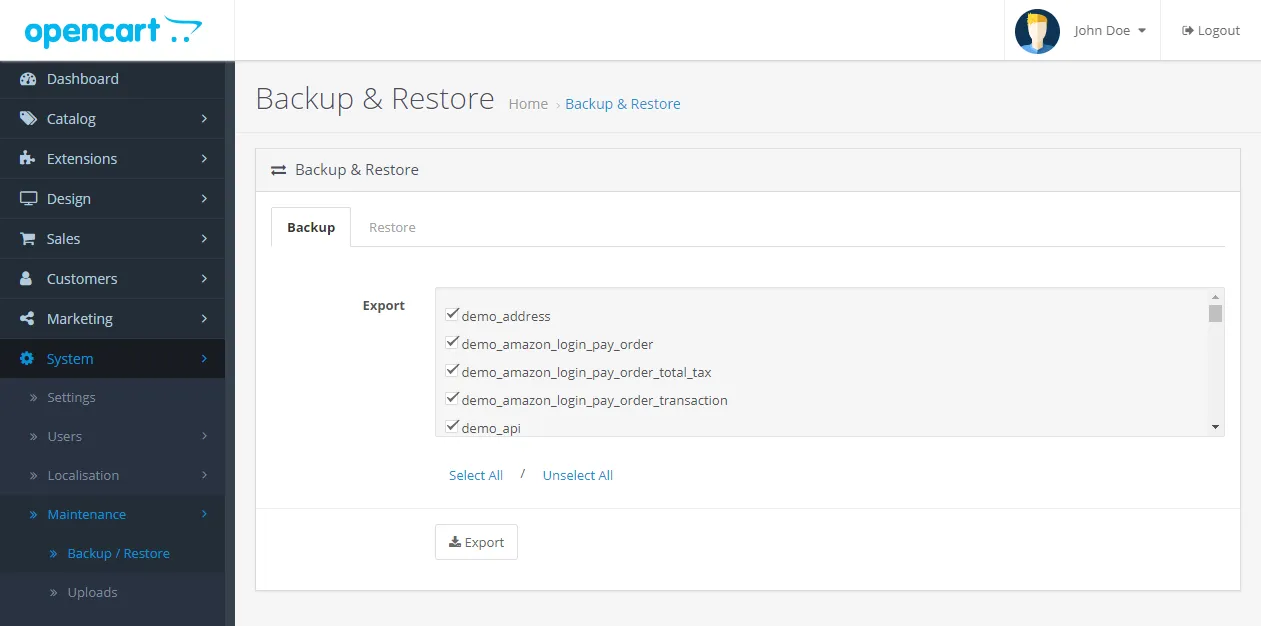
In this section, you’ll see a list of database tables, which include products, categories, customers, orders, and more. All tables are selected by default, so untick the ones you don’t need; for example, if you’re only interested in products and categories, just keep those.
Once you’ve made your selection, click Backup. When the progress bar finishes, OpenCart saves a .sql file containing the data from your selected tables under Backup History. Click the Download button next to it to save the file to your computer.
This file doesn’t have a friendly spreadsheet format since it’s structured mainly for database restoration. So, while you can’t open it in Excel and browse through clean columns and rows, you can still use it as a reference when manually entering the data into your new system.
Step 2: Manually re-enter product data for import
Now comes the real manual labor of the OpenCart import export process.
In your new OpenCart store (or any other platform you want to import information to), log in to the admin panel. Go to Catalog > Products, then click Add New to start recreating your products one at a time.
Using the exported data as your reference, begin filling in the details:
- General tab: Product name, description, meta title, meta description, and tags
- Data tab: Model, product codes (such as SKU), price, quantity, dimensions, weight
- Links tab: Categories, manufacturer, related products
- Attribute and Option tabs: If your products had technical specs or variations, you’ll need to manually rebuild those too.
- Image tab: Main and additional product images
- SEO tab: The SEO keyword (URL) for each store and language
Repeat this process for each product in your catalog. If you have a dozen (or worse, hundreds) of products, this step will likely take the most time.
Step 3: Recreate orders (if needed)
Many eCommerce platforms (OpenCart included) do not let you add full order history manually from the admin panel. So, you can consider creating new orders on behalf of customers using Sales > Orders > Add New.
Still, keep in mind that each recreated order gets a new order ID and today’s date, so order history from a previous store will have to be skipped or saved in offline records and cannot be fully recreated.
LitExtension: The Ultimate Solution
As you can see, manual OpenCart import export is incredibly time-wasting, especially when you’re juggling large amounts of data. So if you have bigger goals in mind (say, migrating to an entirely new platform), then relying on such a tedious, error-prone approach just isn’t the best idea!
Instead, why not let expert-led services like LitExtension take care of the heavy lifting for you? It’s faster, safer, and far more efficient this way. At the moment, depending on your needs, LitExtension offers two different options: the Automated Migration package for those who want to stay hands-on, and the All-in-One service for anyone who prefers to sit back and let experts handle everything. Both are one-time payments.
Let’s take a closer look at how each option works for import export OpenCart:
LitExtension Automated
As mentioned, this option is ideal if your store has a moderate amount of data and you prefer to manage the migration yourself while keeping control over the OpenCart import export process. The process is relatively simple to follow and doesn’t require any technical knowledge at all!
Step 1: Set up your Source Cart (OpenCart) and Target Cart
To get started, head over to the LitExtension website, then fill in your name, email, and password to register. Or, if you already have an account, simply click Log in and sign in using Google for convenience.
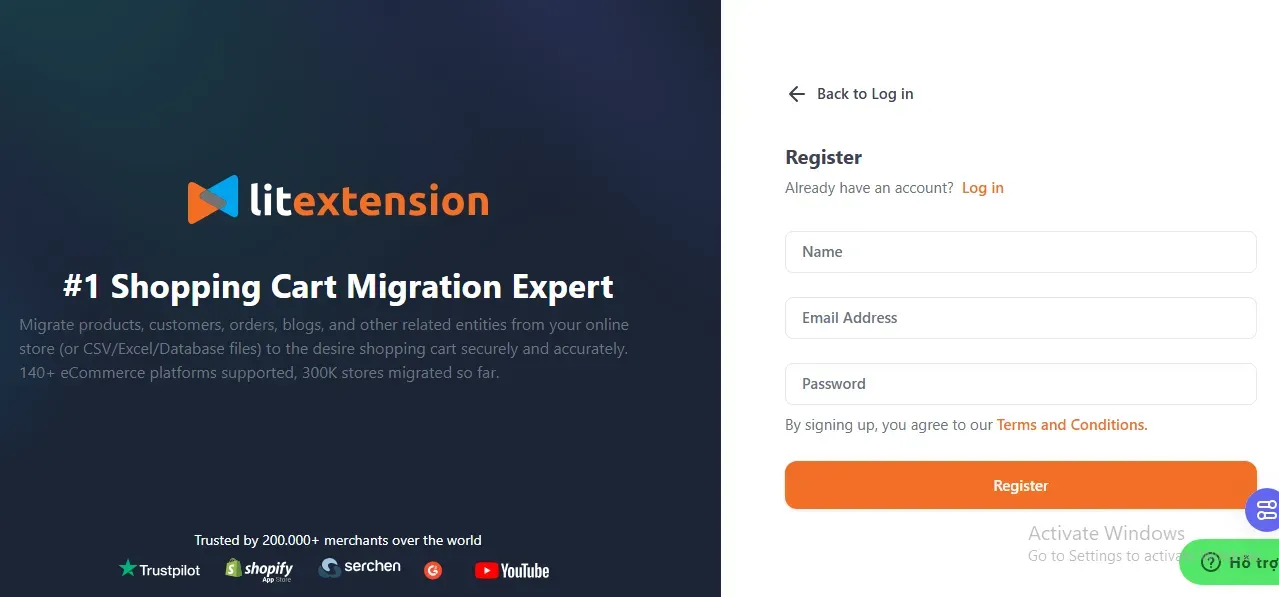
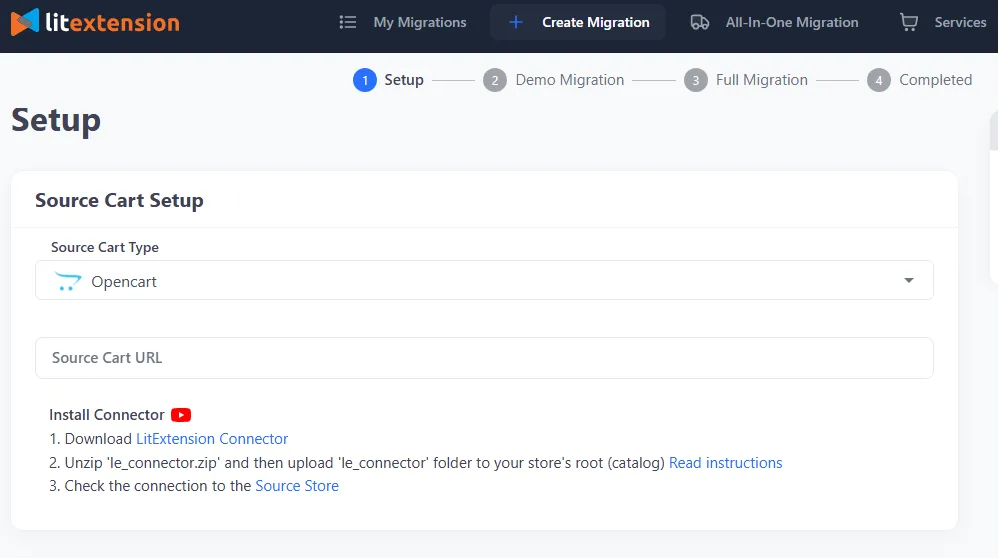
Once you’re in, go to the Migration tab and select Create New Migration.
From the dropdown menu, choose OpenCart as your Source Cart and enter your OpenCart store’s URL. You’ll be asked to download and install the LitExtension Connector onto your store’s root directory. But no worries; simply follow the clear step-by-step prompts on the screen to establish a connection.
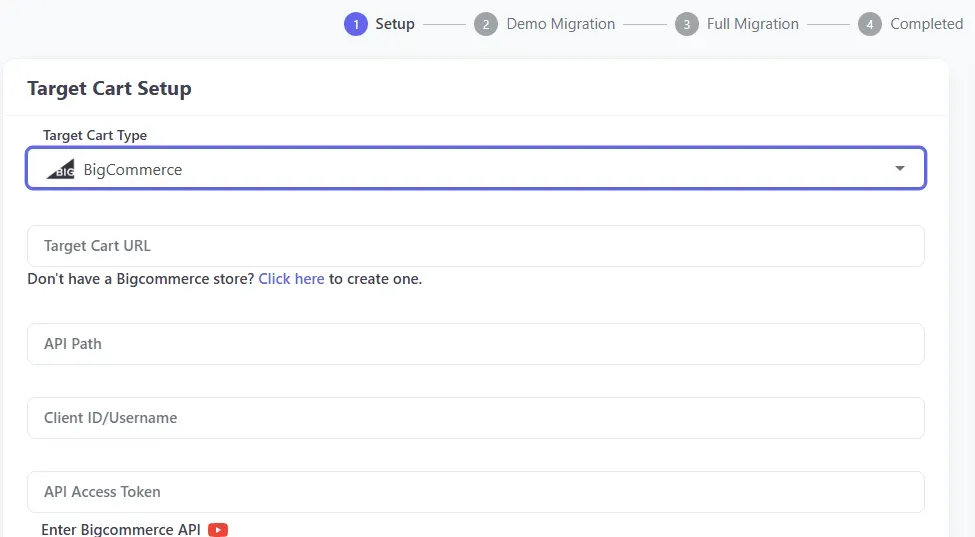
Next, it’s time to choose where your data will go!
Select your Target Cart (this could be another OpenCart store, or a different platform like WooCommerce, Shopify, or BigCommerce). After that, enter the URL for that store and complete the connection process by following the on-screen instructions.
Step 2: Choose the entities you want to migrate
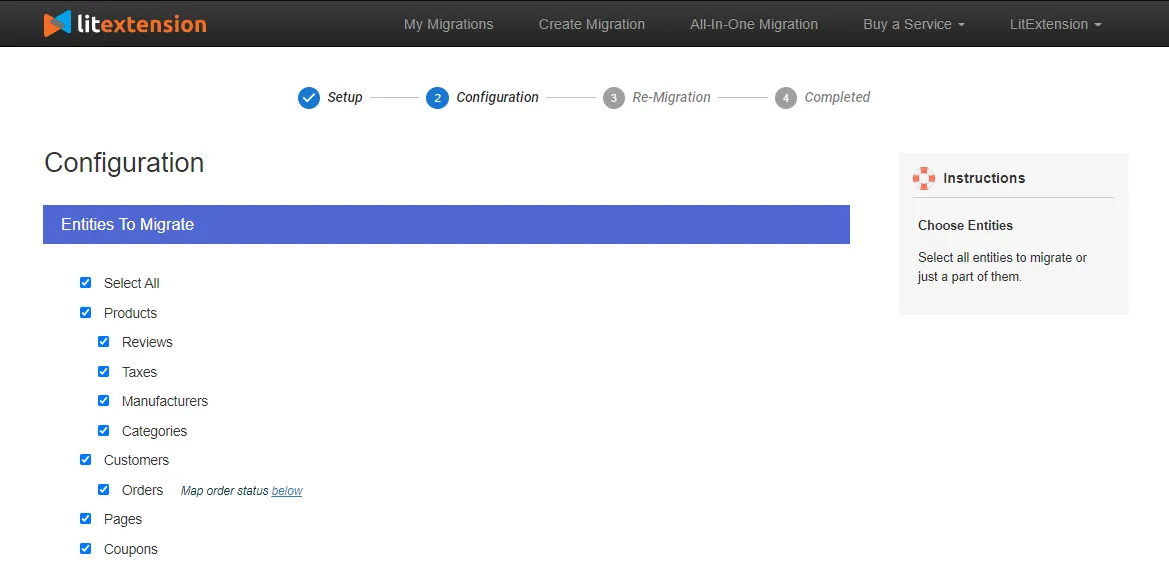
Once both stores are connected, you’ll see a checklist of all the data types available for migration. This includes products, categories, customers, orders, and more. You can select specific entities or simply click Select All for a full migration.
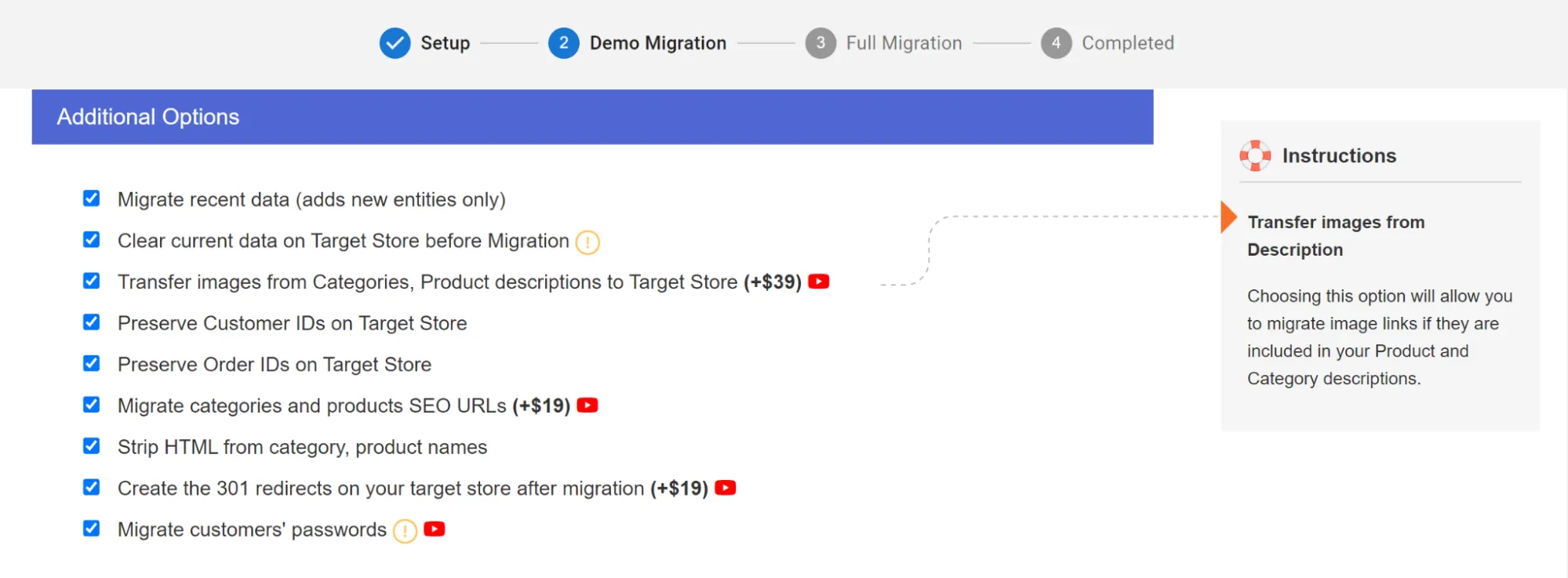
Additionally, scroll down to view a list of additional options, such as preserving order IDs, clearing data on the target store before migration, or migrating images in the product descriptions. Up to 6 of these options are free with the Automated package, while the rest come with a small extra cost; keep that in mind!
Step 3. Perform the migration
Now, before going all in, you’ll have the chance to run a Free Demo Migration. It will transfer up to 20 entities per data type (like 20 products, 20 customers, etc.), so you can preview how everything will appear in your new store. Here’s your chance to double-check formatting, data accuracy, and category structure! And if your store has fewer than 100 entities in total, the full migration is completely free.
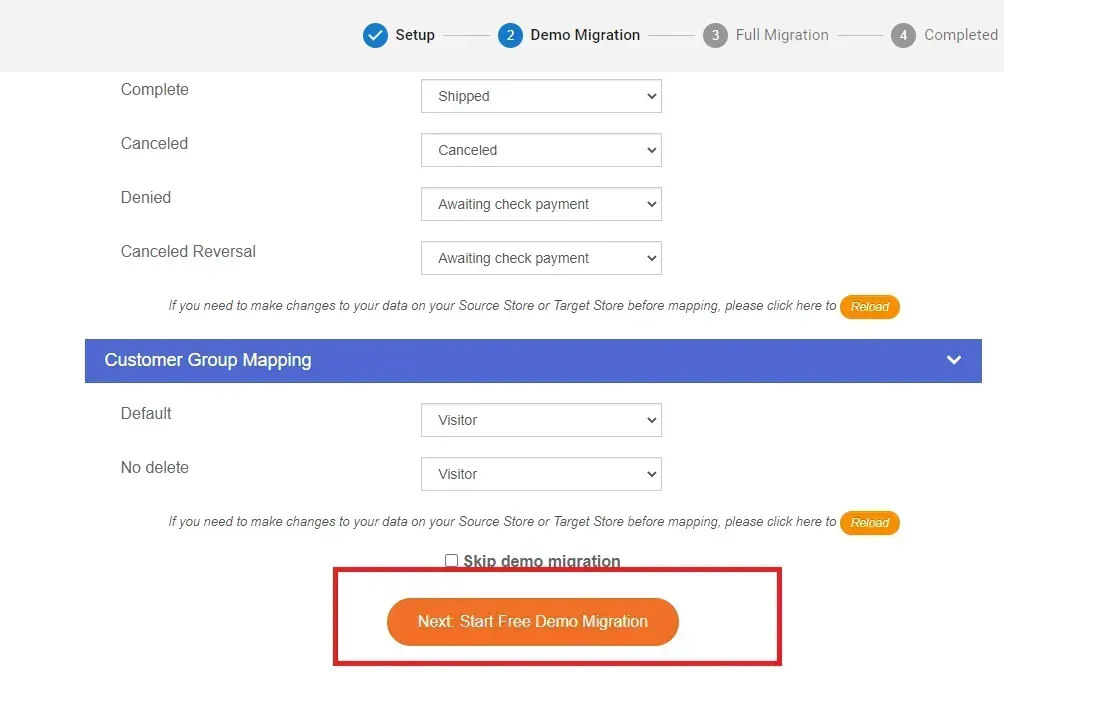
If you’re happy with the demo results, simply proceed to the full migration with a single click. And the best part? You don’t need to keep your browser open or monitor the entire process since it all runs smoothly in the cloud. Just relax and wait for a confirmation email once it’s done!
And don’t worry; the support doesn’t stop after migration. With every Automated plan, you’ll receive 60 days of support after your full migration, along with:
- Unlimited, free re-migrations
- Unlimited, free Recent data migrations (to sync new data added to the source store after the initial migration)
- Unlimited, free Smart updates (for updating modified data).
LitExtension All-in-One
All in all, the Automated Migration package above is a great choice when your stores have moderate to simple catalogs, and there are many similarities between OpenCart and your new platforms. But what if things become more complicated, not to mention all the unique customizations that might get in the way?
That’s where the All-in-One package truly shines! LitExtension’s expert team takes over completely, handling every detail from setup to post-migration clean-up so you can focus on running your business.
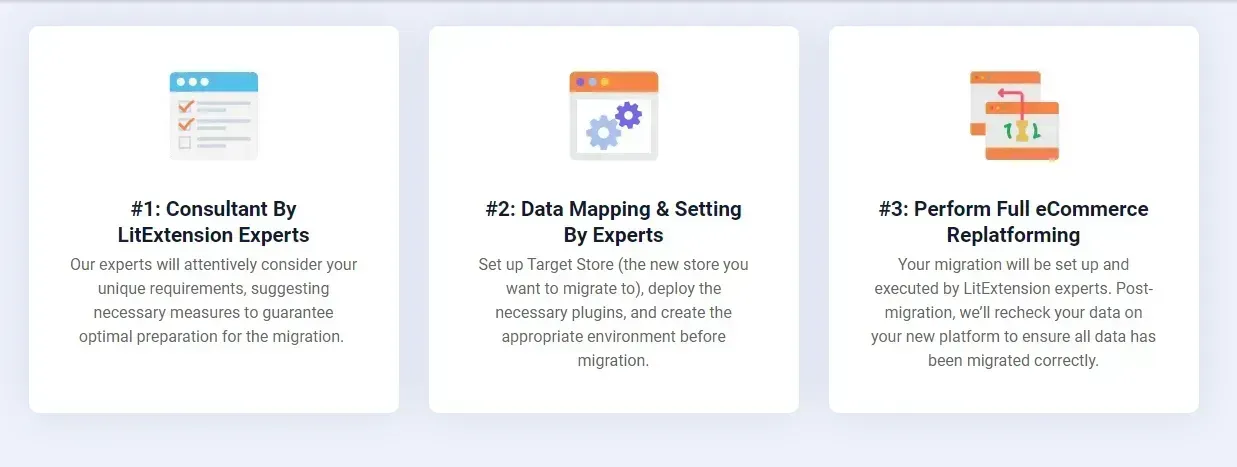
Step 1: Consultation by LitExtension experts
The OpenCart export import and migration process starts with our consultation. As you reach out, our team will schedule a one-on-one session to better understand your OpenCart store, your target platform, and what exactly needs to be migrated (such as product data, customer records, order history, categories, or even OpenCart-specific configurations).
After the consultation, you’ll receive a Service Level Agreement (SLA) outlining the scope of work, along with a dedicated Personal Assistant who will be your point of contact throughout the project. Once that’s signed and payment is completed, we’ll take the wheel from here!
Step 2: Data mapping and setting by experts
Before we move any data, our specialists prepare your target store to ensure a smooth transition. This includes:
- Creating store backups to prevent data loss
- Cleaning and organizing the existing structure
- Installing required extensions or plugins (if applicable)
- Setting up SEO-friendly redirects to preserve traffic
- Adjusting configurations to ensure everything works post-migration
We also provide unlimited demo migrations during this stage. That means you can preview exactly how your data will appear on the new platform and request modifications (if necessary) before we move forward!
Step 3: Perform full eCommerce replatforming
Once your setup is ready and approved, we move on to the full migration. As mentioned earlier, our team will carry it out from start to finish, run several rounds of checks with our in-house automated testing system, and keep you in the loop with regular status updates.
If you have questions or requests along the way, your Personal Assistant is always there to answer them. And unlike the Automated package, there are no extra fees for additional migration options: everything is included!
Most importantly, LitExtension’s support doesn’t stop when the migration ends. For up to 60 days after your full migration, we will continue to offer:
- Recent Data Migration: If new orders, customers, or product updates appear on your OpenCart store, we’ll re-import that data for free (as long as it’s no more than 5% of the original volume).
- Re-Migration: Need to start over? No problem. You get two free re-migrations.
- Smart Update: We’ll sync any updates made to your OpenCart store with your new one, so that nothing gets out of sync if you’re still operating both during a transition period.
Move Your OpenCart Data in Just a Few Clicks
Skip the manual re-entry. LitExtension Automated Migration Tool transfers your products, customers, and orders automatically, starting from just $29. Try a free demo to see how your data looks on the new store first.

Bonus: OpenCart Import Export Extensions
All in all, LitExtension remains the most complete and hassle-free way to handle your OpenCart migration. Nevertheless, we understand that some users might be exploring alternative tools, perhaps to save on costs or handle a simpler job.
If that sounds like you, then OpenCart’s own marketplace offers several import/export extensions that can help lighten the OpenCart import export workload compared to doing everything manually:
Export/Import Tool by JNeuhoff (Free)
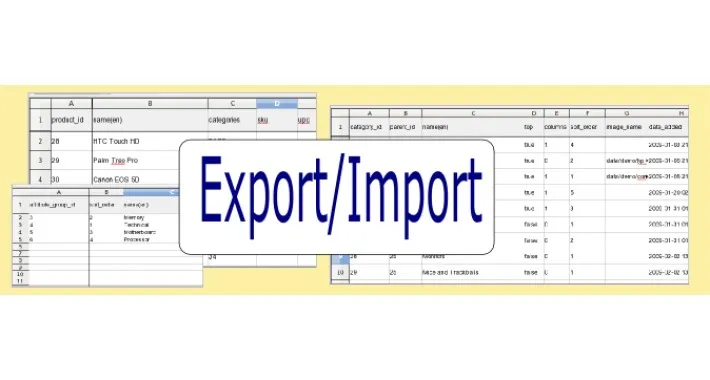
One of the most popular and widely recommended OpenCart extensions is the Export/Import Tool by JNeuhoff, which has been tested on every major OpenCart version up to 4.1.
This free tool allows you to import and export key store data like products, categories, options, attributes, filters, and customers using Excel spreadsheets. It supports both incremental imports (updating or adding data) and full imports (which delete all old data first), works well with multi-language setups, and also lets you export a specific range of products or categories (e.g., only rows 10 to 100). Quite handy for partial updates or selective editing!
That said, memory requirements can be quite high. On a basic shared hosting plan, only a few thousand products can be exported or imported at a time, so you may need to work in smaller batches. Also, from our research, the extension doesn’t validate your data or flag errors for you, so you’ll need to double-check everything manually.
Product Import Export ($20)
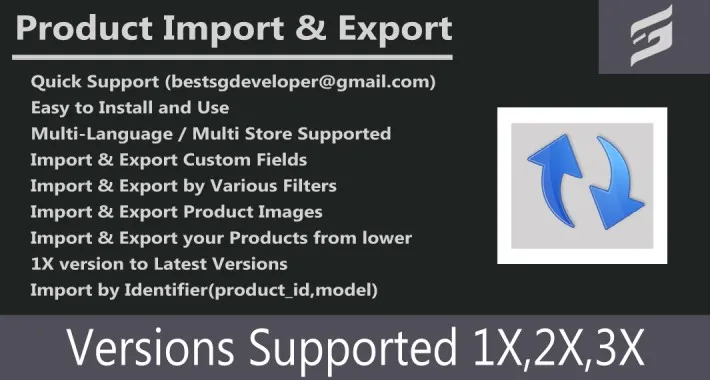
Priced at $20, this extension is designed to handle bulk product upload OpenCart and export using Excel files in .xls or .xlsx formats.
Many users recommend it for switching between OpenCart versions (for example, from version 1.5.x to 3.x) and multi-language and multi-store configurations. The extension also includes filtering features (by price range, product ID, manufacturer, category, or model), so you can narrow down which products you want to move or update.
However, at the moment, its functionality is limited to products (including product images and custom fields). It doesn’t support the migration of other critical data types like categories, customers, or orders. Additionally, you’ll need to pay close attention to Excel formatting, as even small errors in the file structure can break the import.
Import/Export PRO ($99.99)
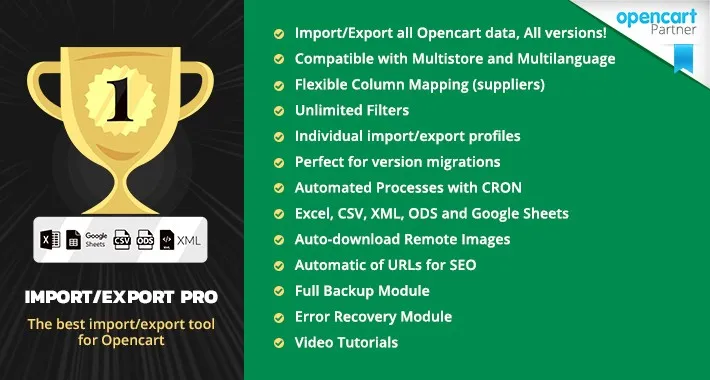
Lastly, users looking for a more advanced OpenCart import export tool may consider Import/Export PRO, which offers a significant upgrade in features compared to the other two. Specifically, this extension supports full shop data updates, which means you can export and import everything from products and categories to orders, customers, coupons, and beyond in a single file.
Plus, as this OpenCart import export tool can work with Google Sheets, FTP servers, and custom URLs, as well as XLSX, XLS, CSV, ODS, XML, and JSON files, it’s not exaggerating to say Import/Export PRO is one of the most flexible import/export tools in the OpenCart ecosystem. Even better, Import/Export PRO comes with over 500 built-in filters that give you precise control over what gets moved and how, and it automatically restores your data if an import fails. That’s very ideal for large-scale data transfers or complex setups involving multiple data types. However, at $99.99 (plus $29.99 for the optional Custom Columns add-on), it’s clearly the most expensive option on this list.
Takeaway:
In short, all three of these OpenCart import export extensions offer more convenience than manually entering data item by item. They’re also cost-effective for basic or focused tasks. Still, if you’re planning a full-scale migration (plus the peace of mind that everything will be handled professionally), LitExtension always remains the best choice overall.
OpenCart Import Export: FAQs
How can I export my OpenCart products to a CSV file?
By default, OpenCart doesn’t provide a native option to export products directly into a CSV file. However, you can use a third-party extension like Export/Import Tool by JNeuhoff to export your products to an Excel file, then save it as CSV in Excel or Google Sheets. Import/Export PRO can also export to CSV directly.
Can I import customer and order data into OpenCart from another platform?
Technically, yes, but not through OpenCart’s default admin panel. OpenCart doesn’t allow direct importing of customer or order data unless you use an extension or work with a professional migration service like LitExtension.
What should I watch out for when importing data into OpenCart?
There are a few important things to keep in mind for any OpenCart import export task:
- First, formatting is everything; even a small typo or misplaced value can break the import or cause corrupted records.
- Second, always make a full backup of your site before attempting any import. That way, if something goes wrong, you can quickly roll back.
- Also, be aware of version compatibility; some extensions may not work across all OpenCart versions.
Conclusion
When it comes to OpenCart import export, your time and data deserve more than a patchwork process. Manual entry might work for small jobs, and extensions can be helpful in certain cases, but neither provides the flexibility, accuracy, or support needed for a smooth, future-proof migration.
That’s where LitExtension makes all the difference! With 15+ years of experience, 300,000+ migrations, and the trust of 200,000+ customers worldwide, it is the go-to solution for anyone looking to migrate OpenCart data with confidence. Be it the Automated package or the expert-led All-in-One service, you’ll get a fast, secure, and worry-free transition, all without any of the guesswork.
For more information, check out our OpenCart guide and subscribe to our newsletter.
Let Experts Handle Your OpenCart Migration
Our All-in-One Migration service takes care of everything from setup to testing, with every additional option included. Book a free consultation to plan your move.

