Choosing between Gambio vs Shopify can feel surprisingly complicated because the two platforms are built for quite different types of merchants. On the surface, both help you create and manage an online store. But once you start looking deeper, the differences become much more noticeable.
In this Shopify vs Gambio comparison, we will break down the key differences across these areas:
- Pricing;
- Ease of use;
- Themes & customization;
- Apps & integrations;
- eCommerce features;
- Multichannel & omnichannel selling;
- SEO & marketing;
- Security & support.
Keep reading for the details!
Gambio vs Shopify: Quick Overview
Before comparing Gambio vs Shopify in detail, it is important to understand that these two platforms are built with fairly different philosophies. While both support eCommerce sales, the overall experience, target audience, and long-term growth direction differ.
What is Gambio?
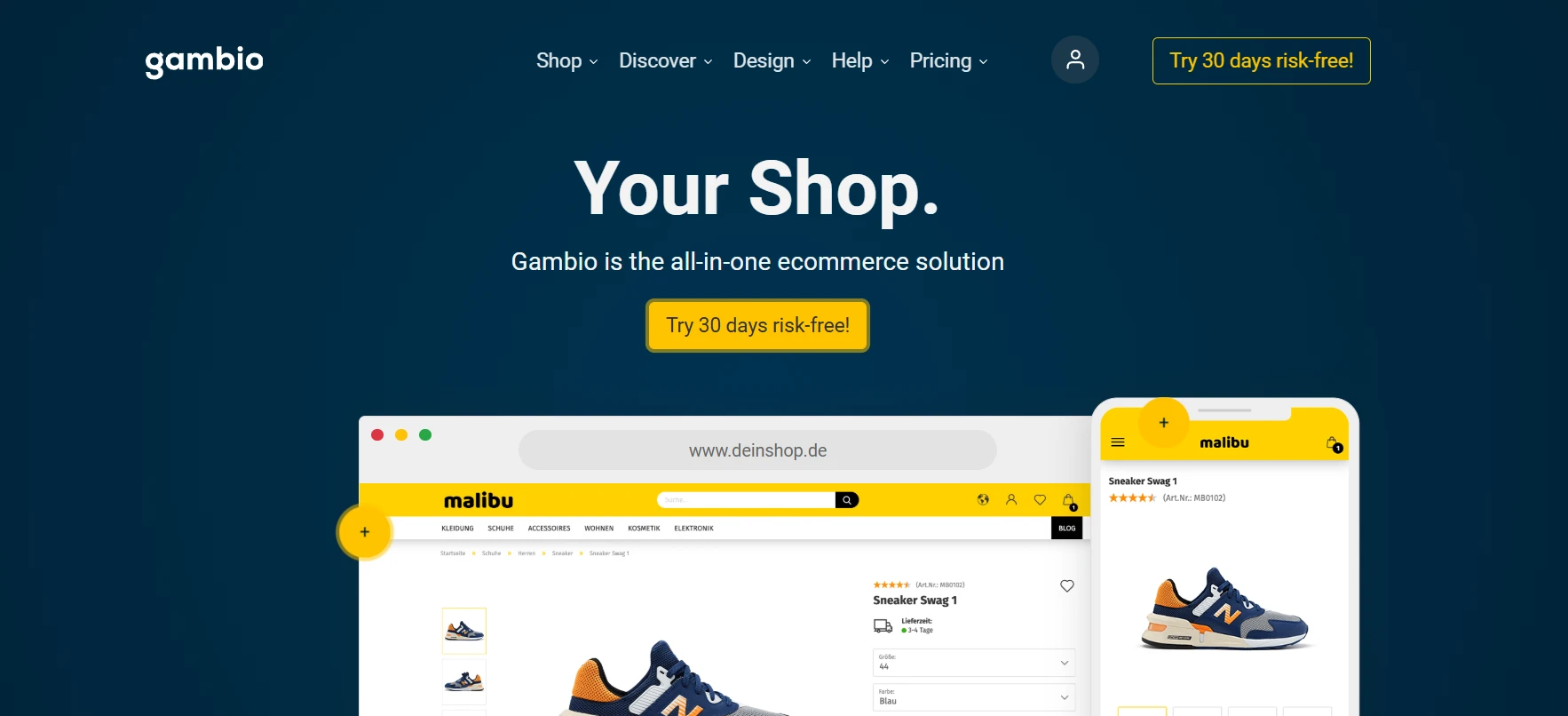
Gambio is a German eCommerce platform founded in 2007 and primarily focused on merchants in the DACH region. The platform was originally built to meet the needs of small- and mid-sized European businesses, especially those requiring strong localization and legal compliance support. Today, Gambio powers nearly 10,000 online stores across Germany, Austria, and Switzerland, with a reputation for being a practical and cost-efficient solution for regional merchants.
What is Shopify?
Shopify was founded in 2006 in Canada and has since grown into one of the largest eCommerce platforms globally. The platform currently powers millions of businesses across more than 175 countries, ranging from small startups to major international brands.

Over the years, Shopify has evolved far beyond a basic online store builder, positioning itself as a broader commerce ecosystem and becoming the home of nearly 7 million websites. Compared to Gambio, Shopify’s user base and ecosystem are significantly larger overall.
Pros & cons showdown
Platform | Gambio | Shopify |
Pros | • Strong EU/DACH compliance • Straightforward admin with many built-in core features • Low starting price | • Extremely user-friendly • Huge app ecosystem • Strong scalability and omnichannel selling • Modern storefront experience • Strong automation & AI tools |
Cons | • Limited deep customization and ecosystem • Design and UX feel less modern | • Higher long-term costs • Heavier reliance on apps for some features • Less localized for German compliance out of the box |
Pricing & Cost Structure (Gambio Wins)
The Verdict
In this Gambio vs Shopify comparison, Gambio wins on pricing thanks to its more flexible setup options and lower overall costs. You can even start with self-hosting and later switch to a cloud plan without migrating your store data.
Gambio
Gambio offers two options: SaaS (cloud) plans or a cheaper self-hosted license for greater control and lower software costs.
With the cloud version, Gambio currently offers plans ranging from around $33/month to $278/month. However, the pricing model also includes additional transaction surcharges once your monthly revenue exceeds the plan’s included threshold.
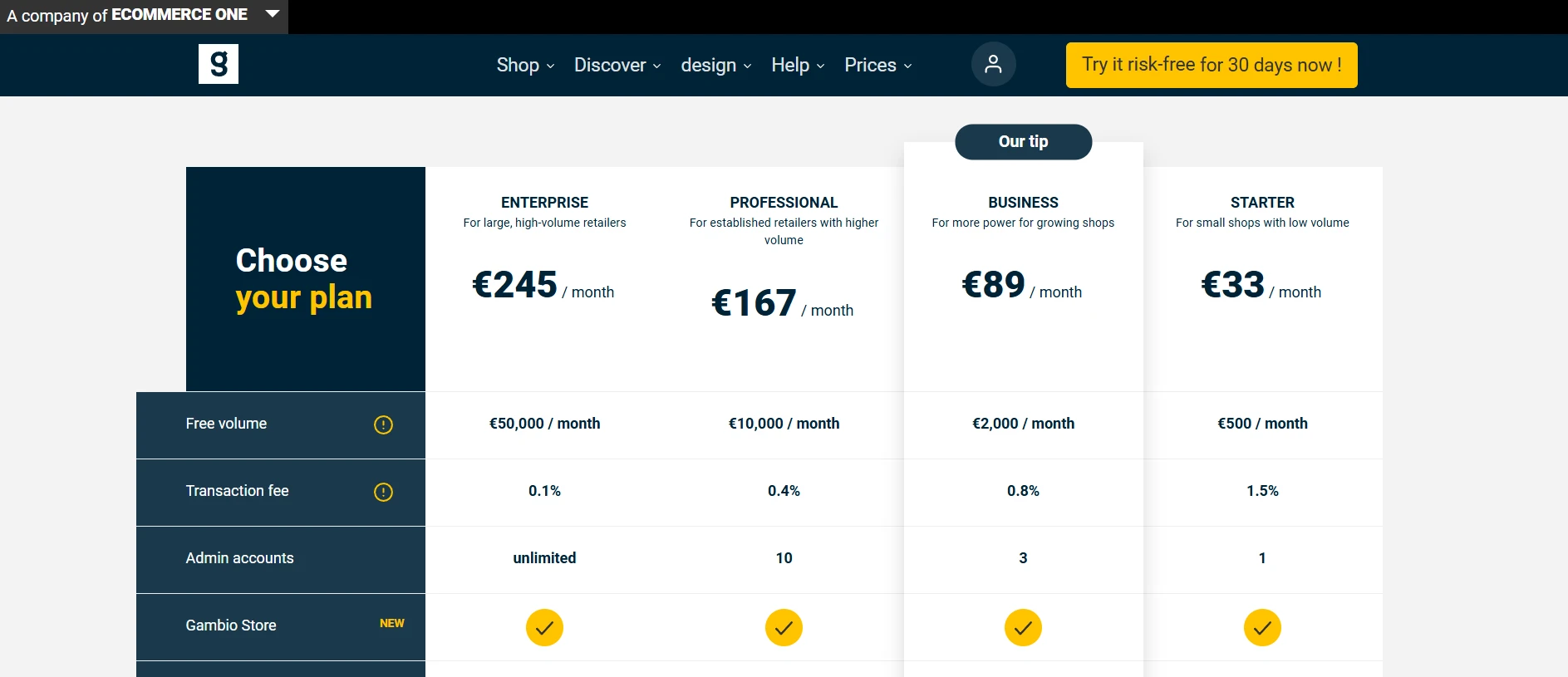
For most SMB to midmarket stores, total yearly costs typically land around $1,100–4,400/year after combining the base subscription and Gambio’s own transaction fees. If you are still unsure, Gambio also offers a 30-day free trial so you can test the platform before committing to a paid plan.
If you are more technically comfortable and want to keep recurring costs lower, Gambio also offers a self-hosted option. Under the newer pricing model:
- Shop + Gambio Hub + Support: $285/year
- Additional 0.2% transaction fee via Gambio Hub
- No free transaction volume included
At lower to mid-level GMV, this usually results in an overall cost of around $550–1,210/year.
From what we have seen, Gambio’s pricing makes the most sense if you prioritize lower upfront costs and are willing to handle more of the technical side yourself. For smaller DACH-focused businesses, that trade-off can work well. But as your operations become more complex, the extra maintenance and management workload can start adding up.
Shopify
On the other hand, Shopify takes a much simpler SaaS approach. Hosting, security, maintenance, and updates are already included, so you can focus on selling rather than managing the platform. Currently, Shopify is offering 4 pricing plans:
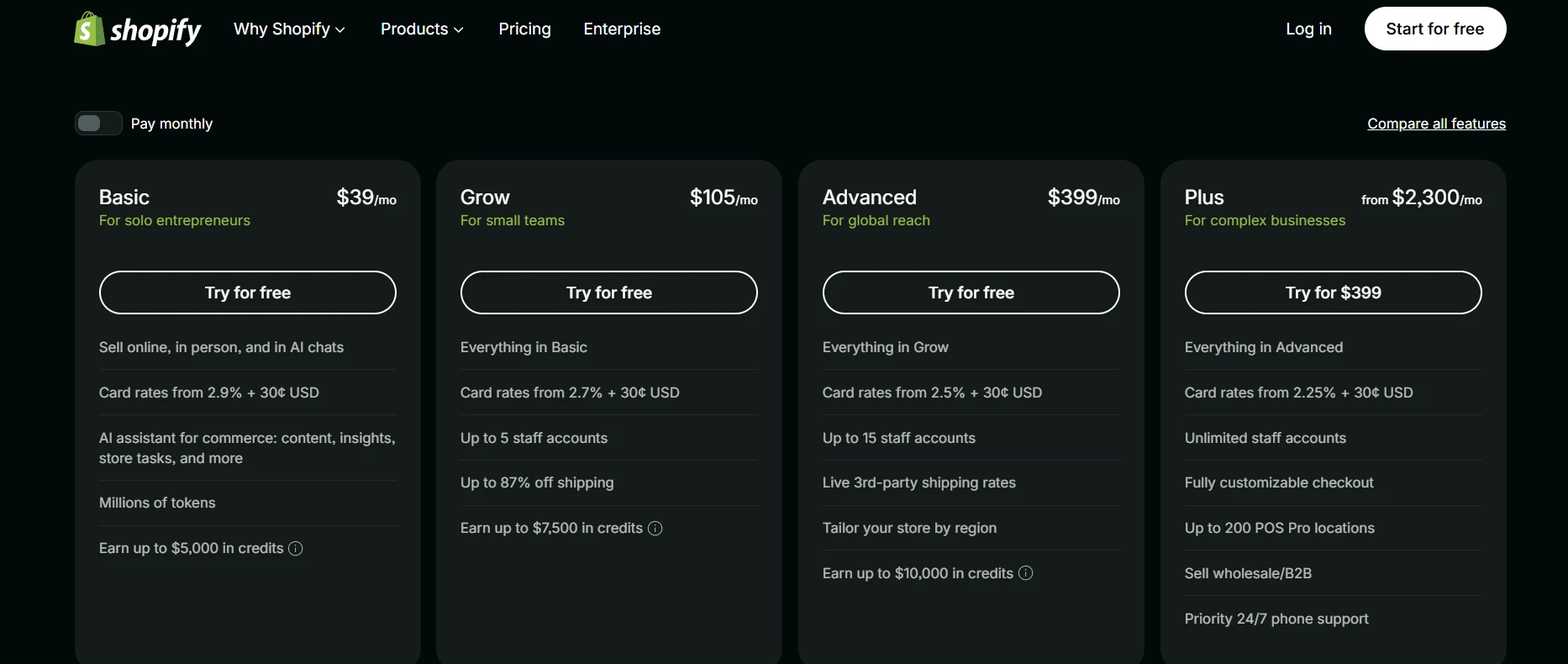
With apps, premium themes, and additional Shopify fees, serious small-to-mid-sized stores commonly spend around $1,000–7,000/year in total. Meanwhile, Shopify Plus for enterprises can often cost around $40,000–100,000/year.
At first glance, Shopify can feel more expensive than Gambio, especially as merchants add apps. We have seen this concern come up quite often. But in reality, many growing brands are paying for speed, ecosystem quality, and reduced technical complexity rather than just software access.
Ease of Use (Shopify Wins)
The Verdict
In this Gambio vs Shopify comparison, Shopify clearly wins on ease of use thanks to its smoother setup process, cleaner dashboard, and a more beginner-friendly overall experience.
Gambio
Setting up a Gambio store is relatively straightforward, especially if you choose the cloud version. The platform already includes many essentials for German-speaking merchants, such as preconfigurefd templates, payment methods, VAT display, imprint pages, and cancellation policies.
If you choose self-hosting, the setup is slightly more technical, as you need to set up your own server environment. Still, compared to many traditional open-source platforms, Gambio keeps the installation process fairly beginner-friendly.
Once you enter the dashboard, the experience feels practical and structured. The backend separates products, customers, orders, and marketing into clear sections, so most SME merchants can navigate it comfortably after some initial use.
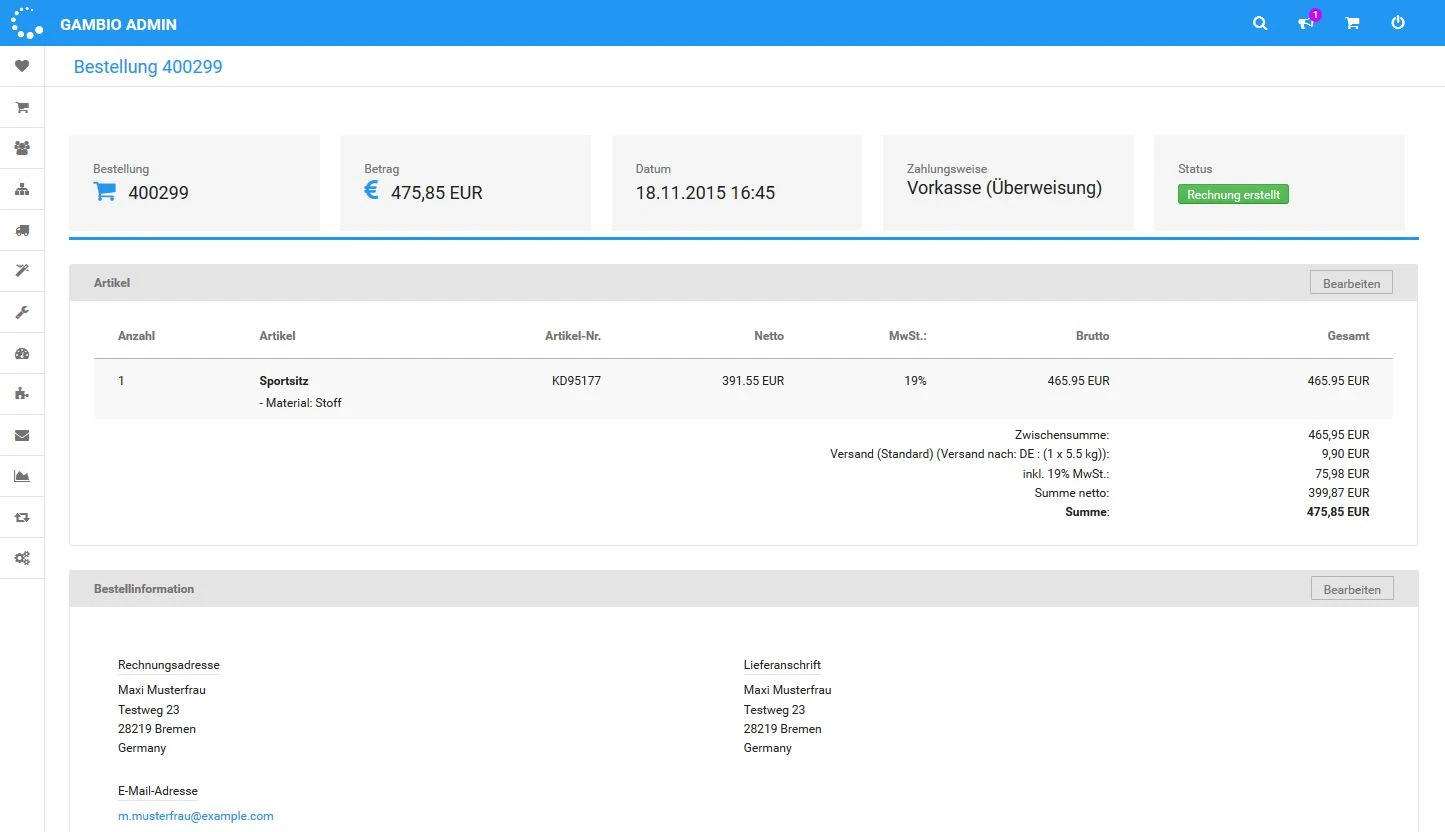
Functionally, it gets the job done, but visually and operationally, it does not feel as polished as newer eCommerce platforms. You will also notice that the platform is much more optimized for German-speaking users, while the English experience feels less refined.
Shopify
Meanwhile, Shopify offers a much smoother onboarding experience from the start. You can create an account, pick a theme, add products, configure payments, and connect your domain in just a few guided steps, often within a single day.
The platform is especially beginner-friendly because Shopify guides you through the setup process with checklists and built-in recommendations. Even if you have never built an online store before, the learning curve feels manageable.
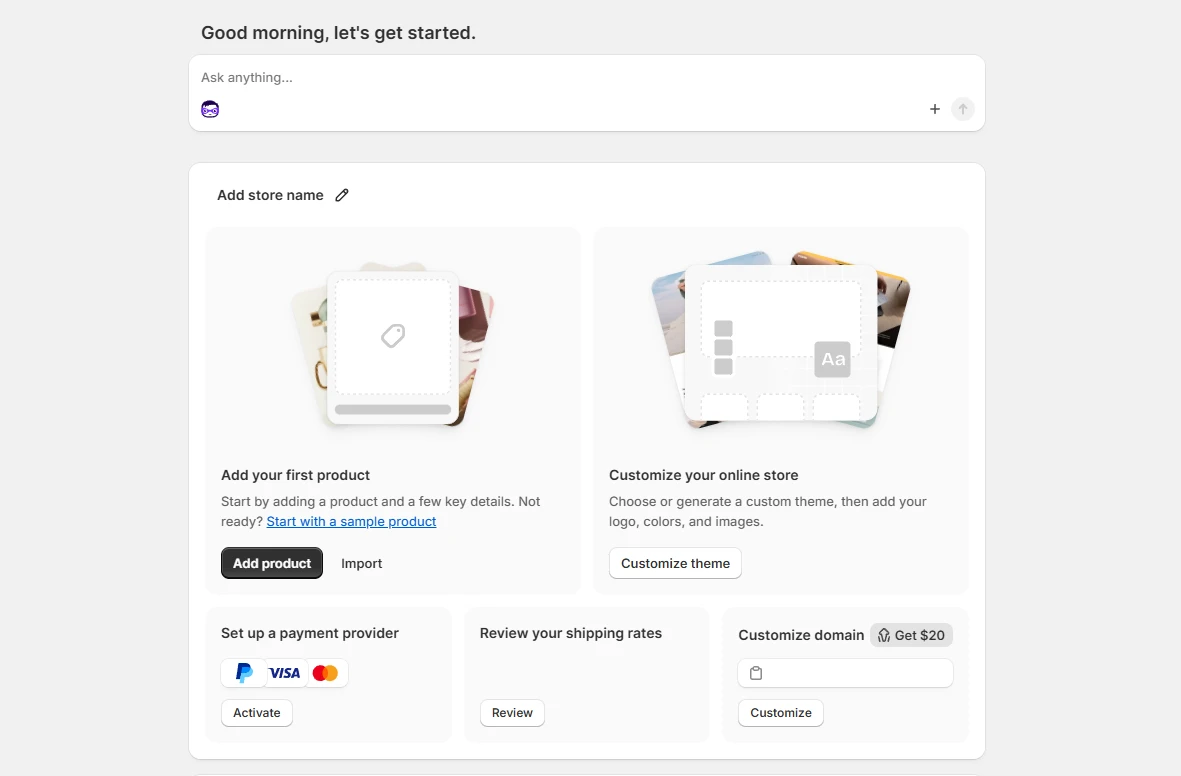
The dashboard navigation is intuitive, analytics are easy to read, and most tasks require very little training. Managing products, orders, discounts, or marketing campaigns feels streamlined even for non-technical teams.
Another advantage is Shopify Sidekick, Shopify’s AI assistant. If you are unsure how to configure something or improve your store, you can simply ask Sidekick directly inside the admin panel instead of searching through tutorials manually.

Templates & Customization (Shopify Wins)
The Verdict
Between Gambio vs Shopify, Shopify is the stronger choice for templates and customization. Its larger theme marketplace and more flexible design system make it a much better fit for modern, fast-growing brands.
Gambio
Gambio comes with only 8 free built-in templates. The selection is fairly practical and functional, especially for traditional SMEs, but the designs feel more conservative than those of modern eCommerce platforms.
If you want more variety, third-party Gambio themes from vendors like gambio-styles.de usually cost around $80–125 as a one-time purchase. Meanwhile, fully custom storefront designs often start from around $900+ one time.
For customization, Gambio mainly relies on its built-in “StyleEdit” tool inside the admin dashboard. This allows you to adjust colors, fonts, layouts, and some visual elements without coding, which works well for merchants who just want to make small branding changes quickly.
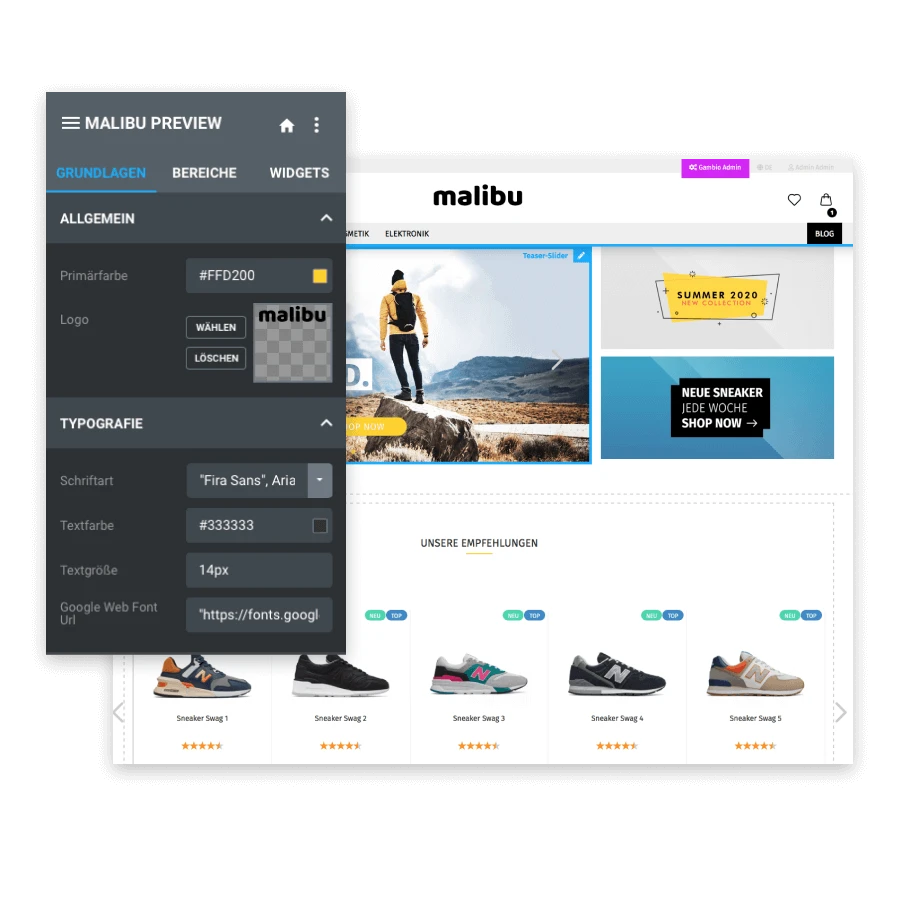
For deeper customization, though, you will likely need developer support. Gambio allows direct editing of HTML/Smarty template files and CSS, giving advanced users more control over layouts and storefront structure.
From our experience, Gambio offers enough flexibility for functional business storefronts, but it is not the strongest option for highly design-driven brands or merchants seeking very modern storefront experiences.
Shopify
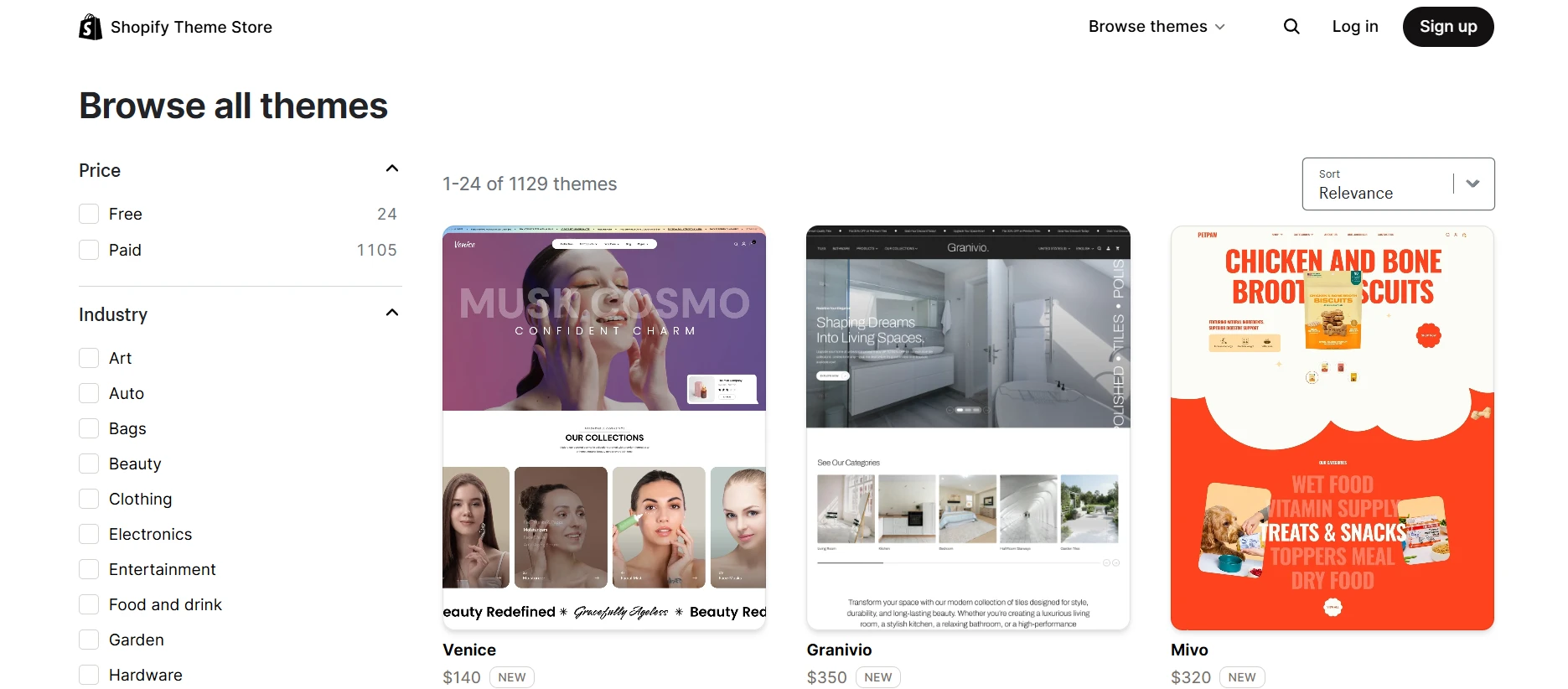
Compared to Gambio, Shopify offers a much larger theme ecosystem with more than 1,000 free and paid themes available. Most premium ones are priced around $100–500 as a one-time purchase.
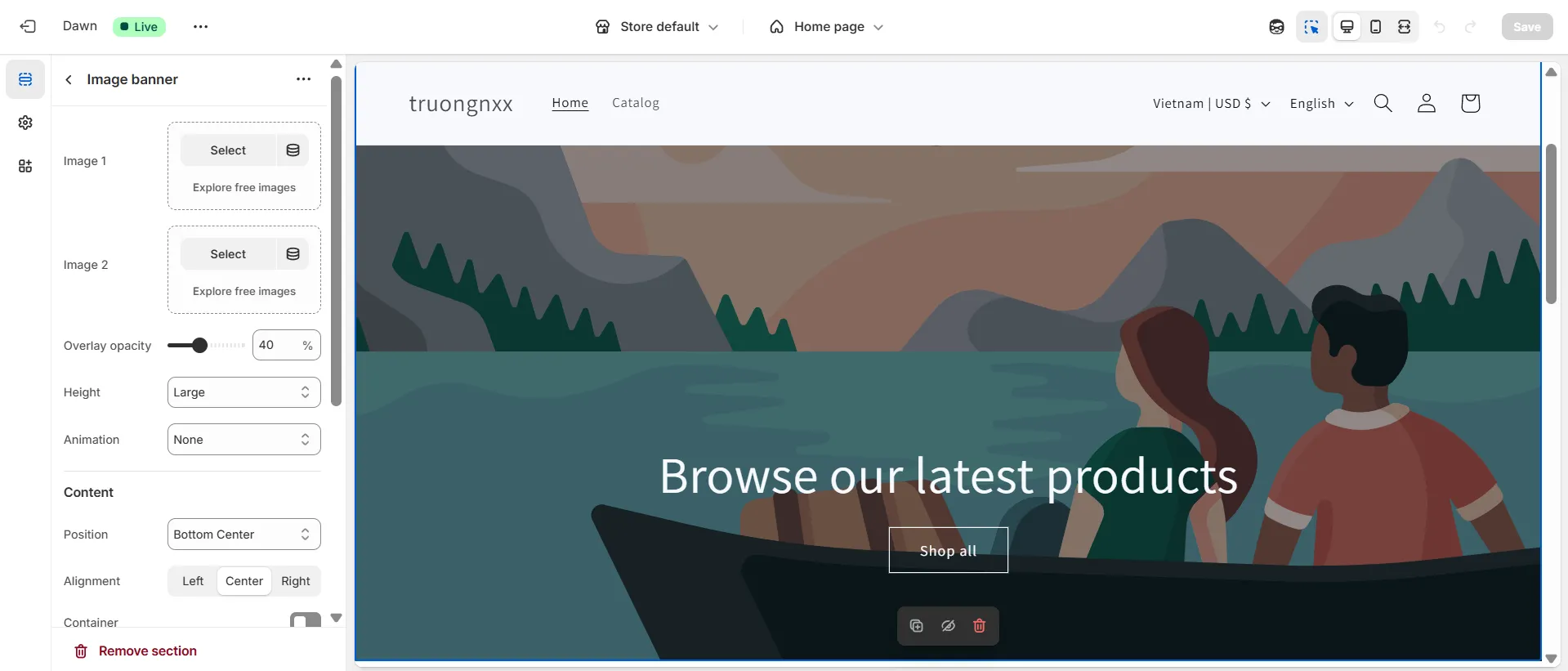
Shopify’s drag-and-drop theme editor lets you rearrange sections, customize page layouts, adjust typography and colors, and create different templates for products, collections, or landing pages without touching code.
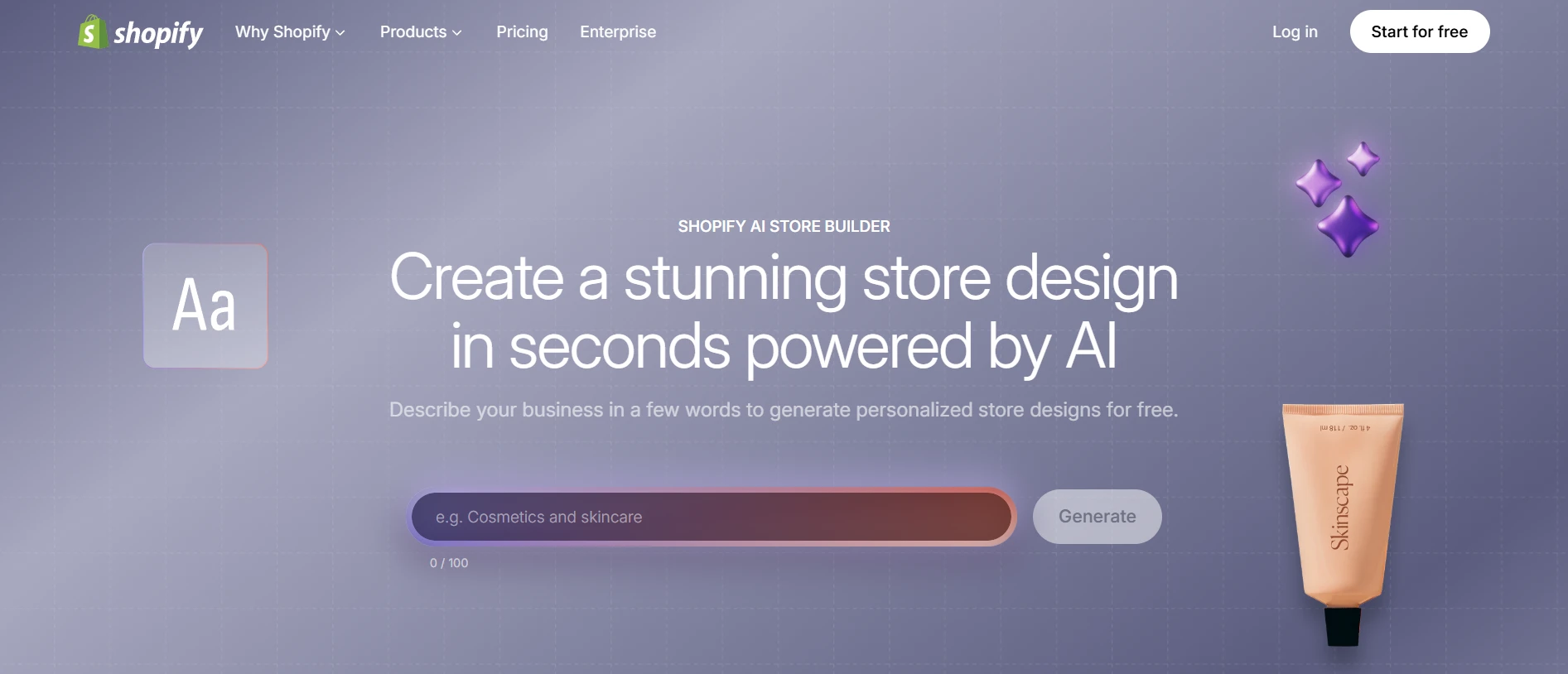
Shopify Magic makes this even more beginner-friendly. The AI tools can help generate personalized theme setups and even create custom theme blocks from simple text prompts, which lowers the barrier for merchants who want more unique storefront elements without hiring developers immediately.
If you eventually need advanced customization, Shopify scales much further as well. Between Liquid templates, custom CSS/JS, Shopify Plus checkout customization, and the massive app ecosystem, the platform offers far more flexibility for design-heavy and fast-growing brands.
App & Integrations (Shopify Wins)
The Verdict
If apps, automation, and third-party integrations are important to your growth strategy, Shopify is simply operating on another level. The ecosystem is far larger, more innovative, and much better prepared for complex scaling needs long term.
Gambio
Beyond the native features, Gambio currently offers 200+ integrations and technology partners through its ecosystem. These include payment gateways, shipping providers, marketplaces, accounting systems, ERP tools, and marketing software.
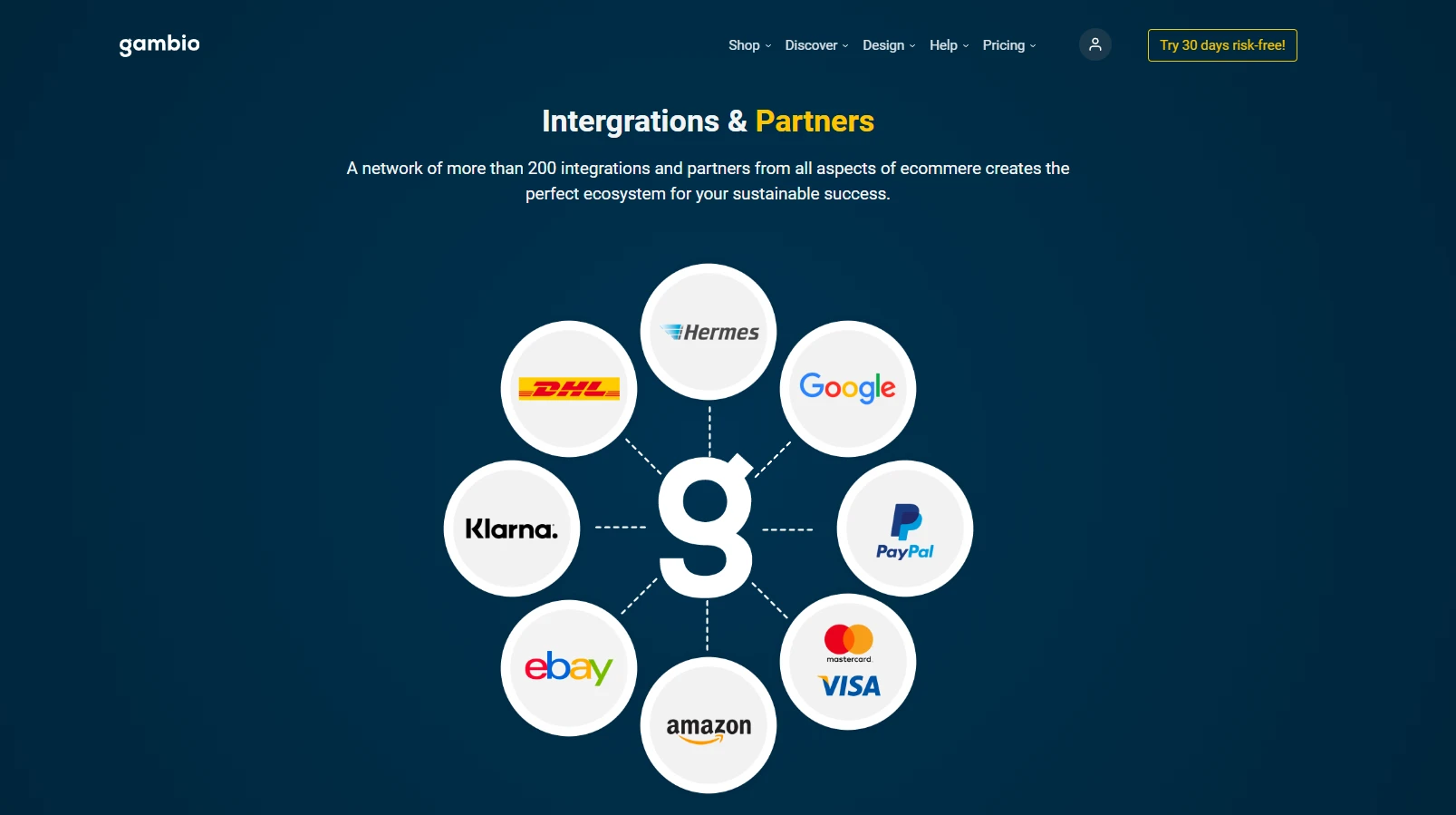
For many small and mid-sized merchants, this ecosystem is usually sufficient, especially if your operations are mainly focused on the DACH market. However, compared to larger eCommerce ecosystems, the overall app variety still feels relatively limited. You may also find fewer modern AI, automation, or niche integrations available compared to Shopify.
Shopify
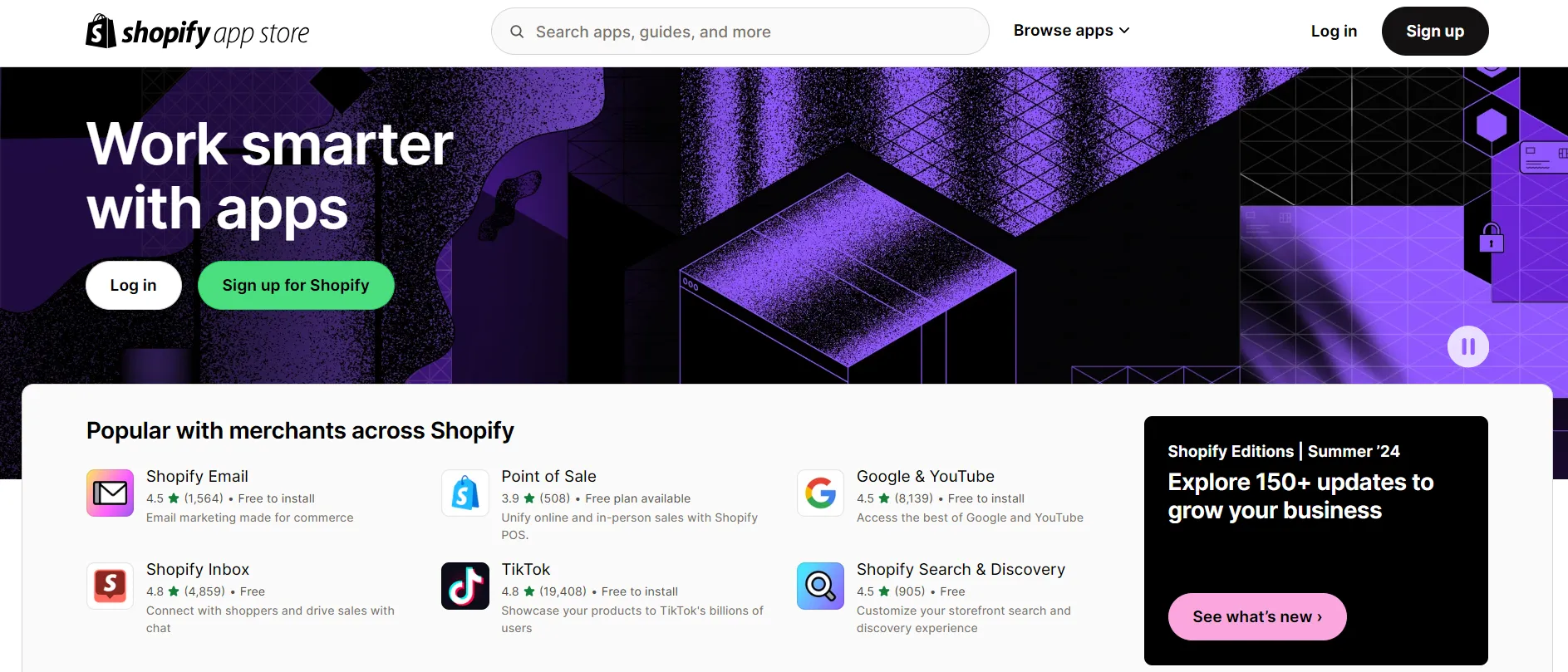
Similar to themes, Shopify also operates on a much larger app ecosystem in the Gambio vs Shopify comparison. Its official App Store currently includes more than 16,000 apps across categories like SEO, subscriptions, loyalty programs, shipping, POS, AI tools, accounting, and marketing automation.
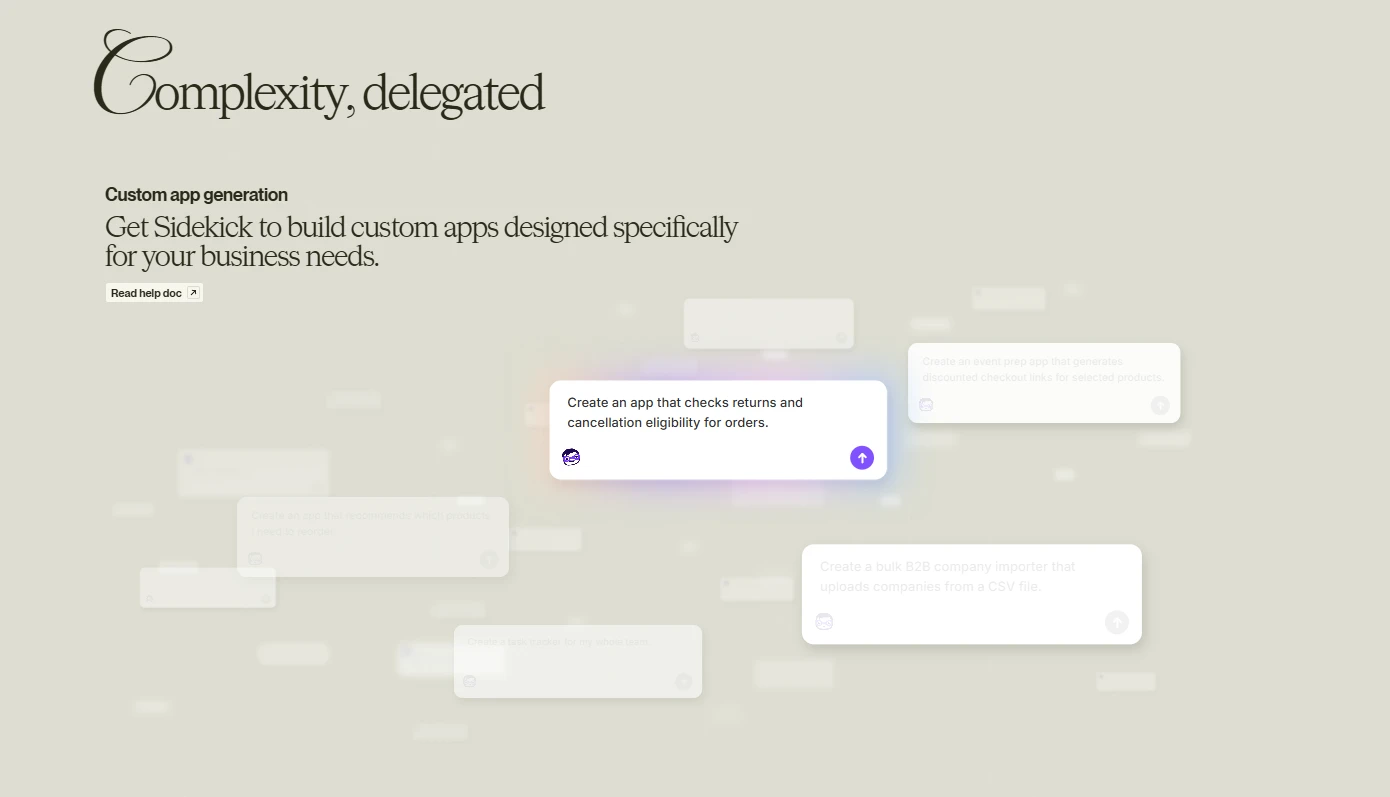
If you are on the Grow plan or higher, Shopify Sidekick can even help generate simple internal custom apps through natural-language prompts. For example, you can ask Sidekick to create a small workflow tool for tagging specific orders automatically, without needing to build the app manually yourself.
For developers and scaling businesses, Shopify also offers a much more extensive API ecosystem. Between the Admin API, Storefront API, Shopify Functions, and Webhooks, integrations can connect deeply with products, orders, customers, checkout flows, and storefront experiences.
If you are currently using Gambio but planning for stronger scalability, migrating to Shopify may be the next step worth considering.
Need Help to Migrate Your Store from Gambio to Shopify?
LitExtension Automated Migration Tool transfers products, customers, and orders
from Gambio to Shopify – fast, accurate, and hassle-free.
eCommerce Features (Shopify Wins)
The Verdict
Looking at the overall eCommerce feature set, Shopify slightly comes out ahead. Gambio already covers many important essentials well, especially for DACH merchants, but Shopify offers a more modern, scalable, and future-ready ecosystem for long-term growth.
Besides pricing and usability, core eCommerce capabilities are another important area to evaluate in the Gambio vs Shopify comparison. This is where you start seeing how each platform actually supports daily store operations as your catalog, customers, and selling channels grow over time.
Category | Gambio | Shopify |
Product types | Physical products, digital/downloads. | Physical products, digital products, gift cards; subscriptions via apps. |
Product variants | Variants via attributes/options; typical support for sizes, colors, etc. | Up to 100 variants per product and up to 3 options per product by default. |
Collections / categories | Category tree, subcategories, manufacturer/brand filters. | Manual and automated collections, tags, metafields for flexible grouping. |
Pricing rules | Customer‑group pricing, graduated prices, special prices, coupons. | Price lists, discounts, B2B price lists on Plus. |
Tax handling | EU/DACH VAT handling, gross/net display, OSS support, legal text helpers. | Automated tax calculation for many regions, inclusive/exclusive tax display, advanced tax and OSS features on higher tiers. |
Checkout | Standard checkout with EU‑compliant fields and consent, invoice/SEPA support via gateways. | Checkout Extensibility, Functions for further customization |
Payment gateways | 20+ payment integrations via plugins (e.g., Unzer, Novalnet, PayPal, Klarna, SOFORT, Giropay, etc.). | - 100+ payment gateways integration globally - Built-in Shopify Payments alone covers dozens of local methods. |
Customer accounts | Customer account creation, address management, order history. | New customer accounts, classic accounts, customer profiles, saved addresses, order history. |
B2B features | Customer groups, net/gross pricing, VAT ID handling, basic B2B catalog logic. | Native B2B on Plus (companies, locations, B2B catalogs, volume pricing, net terms) |
Promotions & discounts | Vouchers, coupons, discounts by customer group or cart rules. | Discount codes, automatic discounts, BOGO, threshold discounts, apps for loyalty and advanced promo logic. |
Gift cards | Available via modules or custom setup (not always standard in all editions). | Native gift card products on most core plans. |
Shipping rate management | Shipping zones, weight‑ and price‑based rates, integrations to shipping/label tools. | Shipping profiles, zones, weight/price/item‑based rates, carrier‑calculated rates (on higher plans) |
Inventory management | Stock levels per product/variant, stock alerts, basic warehouse handling. | Multi‑location inventory, per‑variant stock, incoming transfers, inventory reports. |
Analytics for sales | Standard reports for orders, revenue, products, plus export options. | Detailed analytics dashboards, reports by sales channel, cohort/marketing reports; advanced reports on higher plans. |
Overall, Gambio’s eCommerce features feel more practical and are built around essential operational needs, especially for smaller DACH merchants. Shopify, meanwhile, approaches eCommerce in a more ecosystem-driven way, giving merchants more flexibility to expand workflows, sales channels, and customer experiences over time.
Multichannel & Omnichannel Selling (Shopify Wins)
The Verdict
For multichannel and omnichannel selling, Shopify is comfortably ahead. The platform offers a far more unified ecosystem for managing online, offline, social, and international sales from one centralized system.
Gambio
Gambio promotes multichannel sales as a core feature. In practice, though, you will usually need third-party plugins or marketplace connectors to actually sync products, inventory, and orders across channels like Amazon, eBay, or Google Shopping. Depending on how many channels you sell on, this can also add extra monthly costs and management complexity over time.
For many SMEs, this setup is already practical enough to expand beyond a standalone online store. If your goal is mainly connecting to a few marketplaces or price-comparison platforms, Gambio can handle that reasonably well.
That said, the overall experience still feels less unified than larger ecosystems. Managing multiple channels depends more heavily on external tools, and the omnichannel capabilities remain relatively limited overall.
Shopify
Shopify natively integrates with more than 20 sales channels, including Amazon, eBay, Facebook, Instagram, TikTok, and Google Shopping, all managed directly from a centralized Shopify admin.
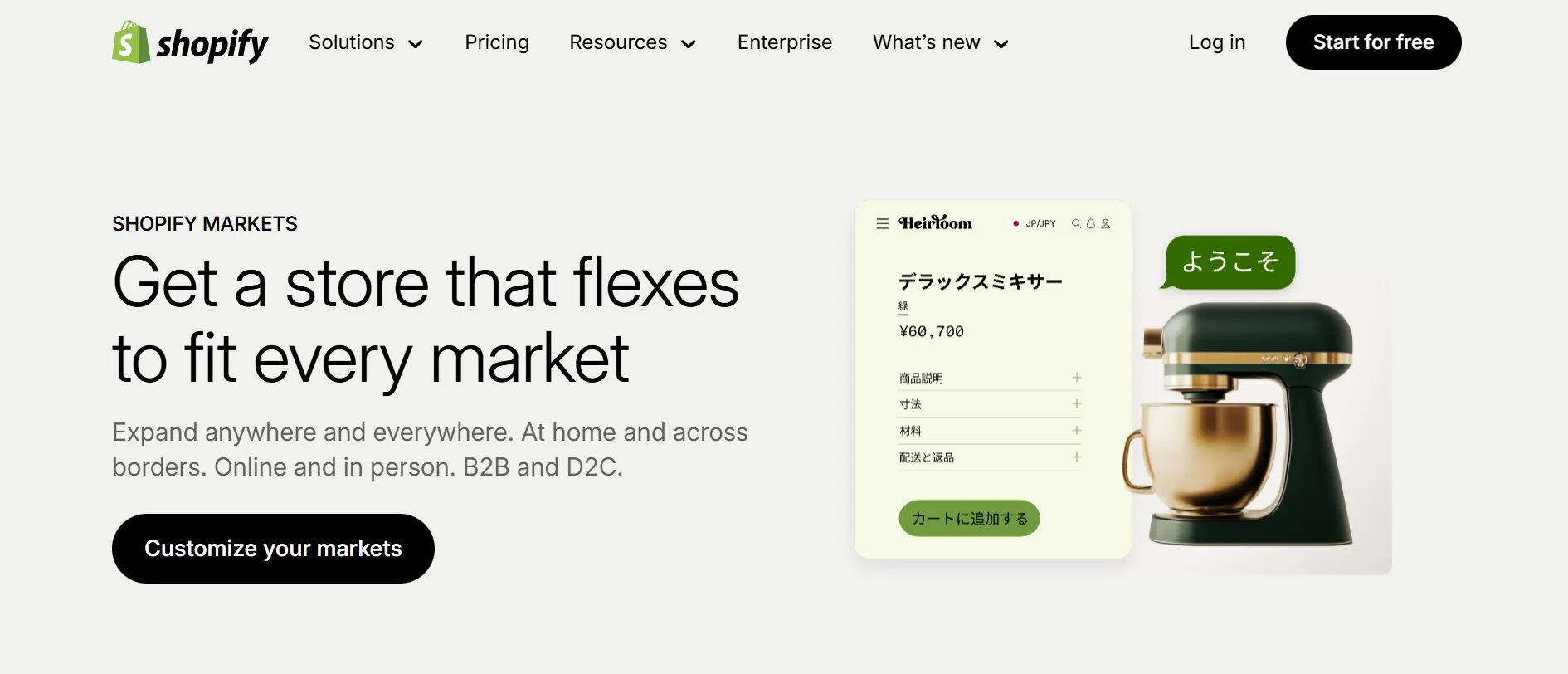
Another major advantage is Shopify Markets. This allows you to localize currencies, languages, domains, and storefront experiences for different countries while still managing orders and inventory centrally.
Where Shopify really separates itself in this Gambio vs Shopify comparison is omnichannel selling. Shopify POS tightly connects online and offline operations, syncing inventory, customer profiles, and order data in real time.
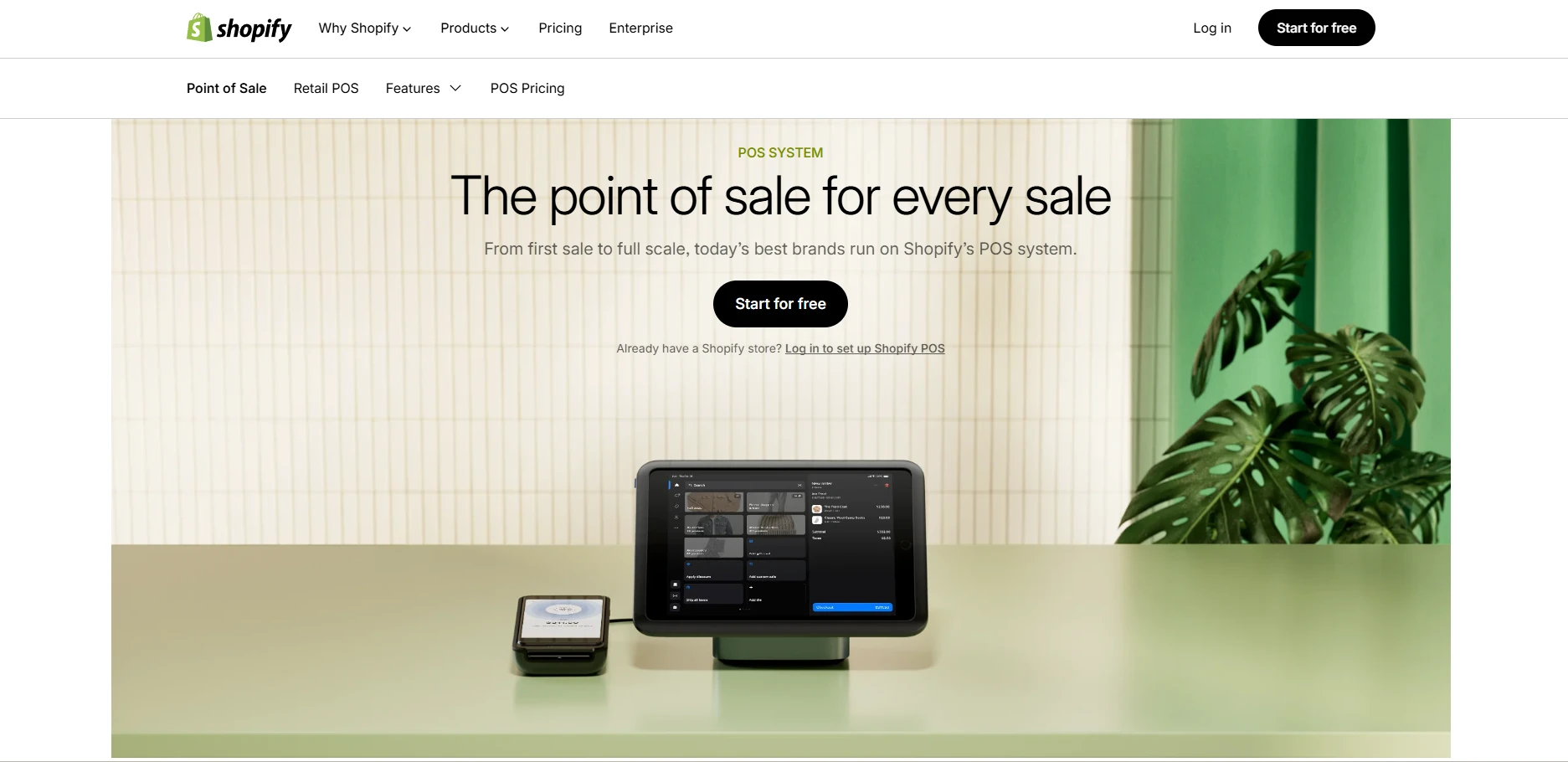
This makes workflows like click-and-collect, ship-from-store, and in-store ordering of online inventory much easier to manage. You can also build unified customer profiles across channels, helping you run more consistent loyalty programs, promotions, and personalized marketing campaigns.
SEO & Marketing Tools (Shopify Wins)
The Verdict
Shopify is the stronger platform for SEO and marketing overall. Gambio handles the basics well, but Shopify offers a much more scalable environment for content marketing, automation, and long-term customer growth.
Gambio
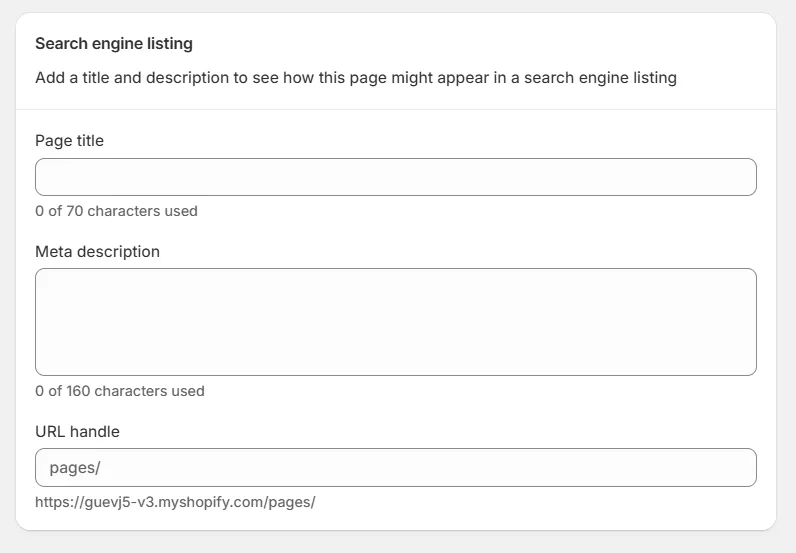
For SEO basics, the platform does a solid job. You can edit meta titles, meta descriptions, SEO-friendly URLs, headings, and page content individually. XML sitemaps are also generated automatically, while the templates themselves are generally structured in a search-engine-friendly way.
The limitation starts appearing once your marketing operation becomes more sophisticated. Features like advanced automation, deeper analytics, customer journeys, or conversion optimization usually require additional external tools and integrations.
So overall, Gambio feels practical for merchants who want straightforward SEO management without building a heavily content-driven or automation-focused marketing strategy.
Shopify
Shopify, meanwhile, feels much more growth-oriented from an SEO and marketing perspective.
Beyond the standard SEO controls like meta tags, URL handles, alt text, canonical tags, XML sitemaps, and robots.txt, the platform also benefits from a very strong technical performance infrastructure. Shopify handles CDN delivery, caching, and performance optimization automatically, reducing much of the technical SEO overhead for merchants.
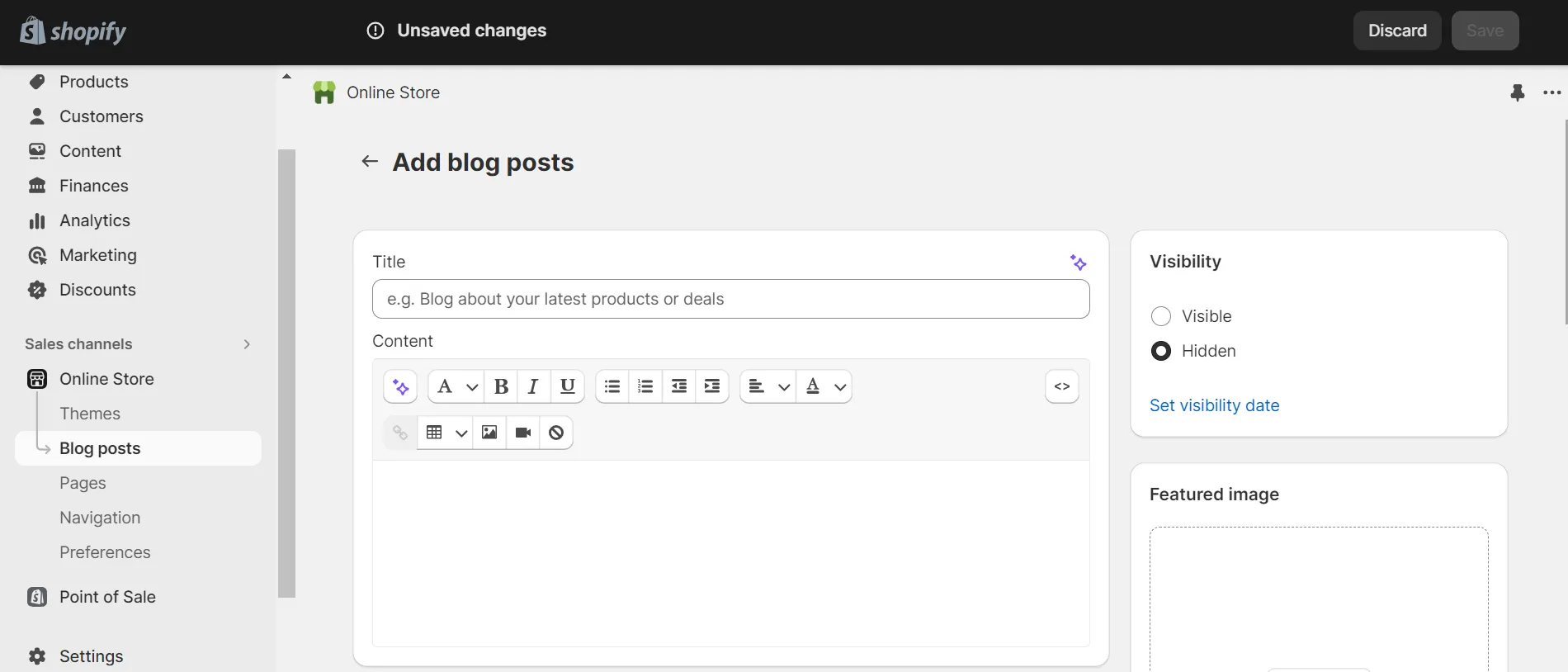
One thing we particularly like in this Gambio vs Shopify review is Shopify’s native blogging system. Instead of separating your blog onto another platform, you can publish guides, FAQs, tutorials, and SEO content directly inside the same domain as your store. For brands investing seriously in organic traffic, this becomes a major advantage over time.
Shopify also integrates marketing much more tightly into the platform itself. You already get tools for email campaigns, discounts, abandoned cart recovery, and customer segmentation without immediately needing third-party software.
Security & Support (Shopify Wins)
The Verdict
Gambio performs very well for GDPR-focused compliance and localized DACH support. Still, Shopify offers a far more mature security infrastructure and support ecosystem overall, especially for growing international brands.
Gambio
If you use Gambio Cloud, automatic updates and legal audits are already included to help keep your store aligned with changing EU regulations. The platform also supports tools like consentmanager’s plugin for GDPR-compliant cookie consent flows.
The overall support ecosystem feels quite localized as well. Besides official documentation and forums, many merchants rely on German-speaking agencies and ecosystem partners for day-to-day support and store maintenance.
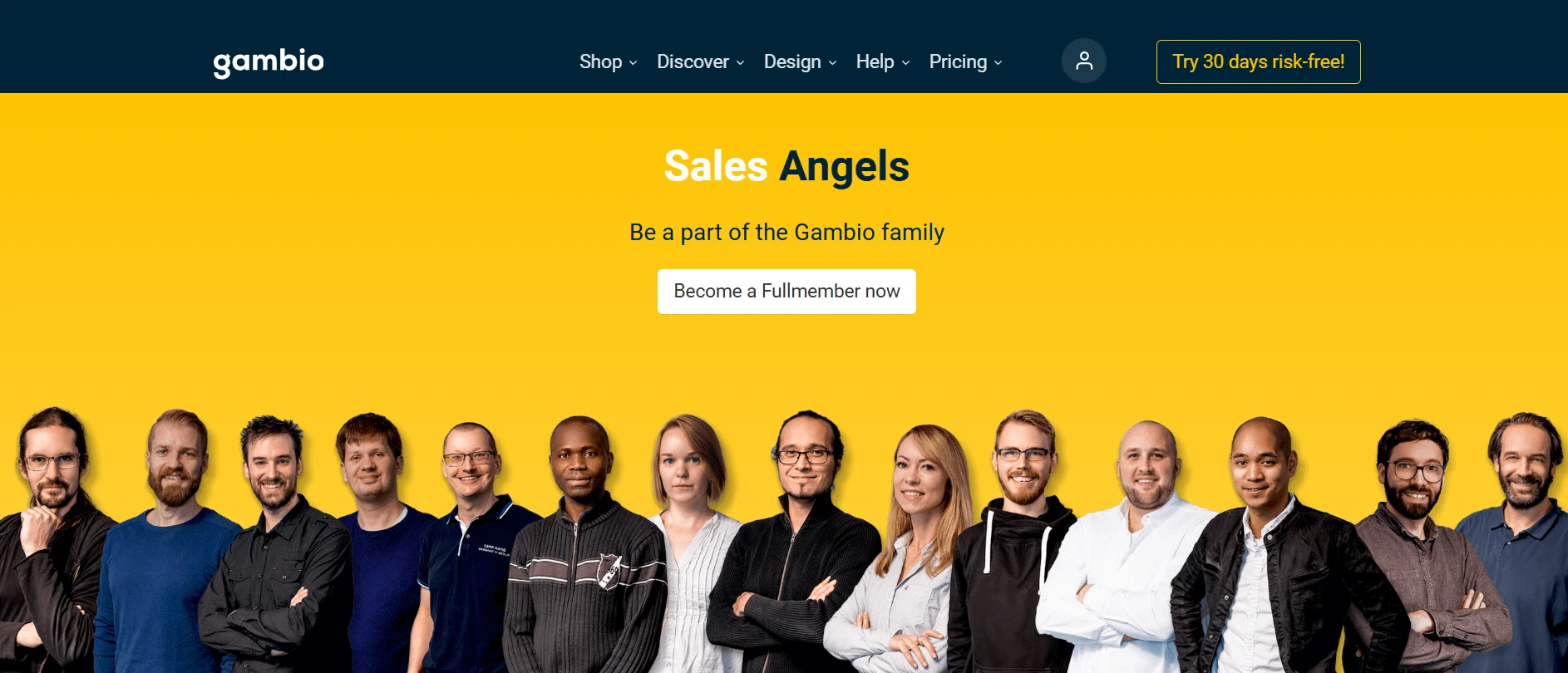
Official support itself is more limited compared to Shopify, with email being the main communication channel. That said, Gambio’s cloud plans do include legal text services and configuration assistance, which can be genuinely useful for smaller merchants operating mainly in Germany.
Shopify
With Shopify, security feels much more hands-off from the merchant side. SSL certificates, PCI DSS compliance, DDoS protection, infrastructure monitoring, and platform updates are all handled automatically in the background.
Every Shopify store comes with a free 256-bit SSL certificate, while the platform itself is certified Level 1 PCI DSS compliant, the highest standard for secure payment processing. From our experience, this becomes especially valuable once your business starts scaling because your team spends far less time worrying about technical maintenance or infrastructure security directly.
Support is also one of Shopify’s strongest advantages. Merchants can access 24/7 support through live chat, email, and phone support in many regions.
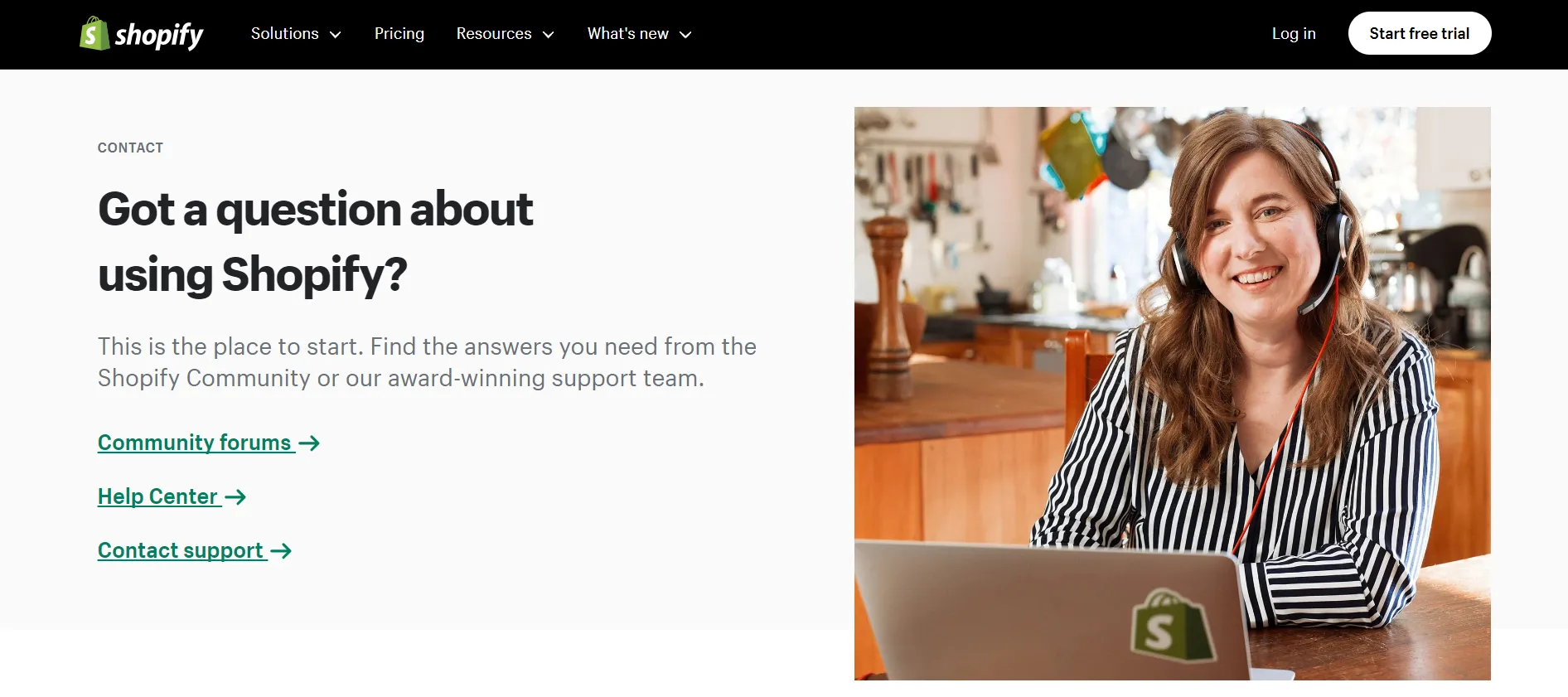
Beyond the official support team, Shopify also benefits from a massive ecosystem of tutorials, documentation, developers, agencies, and community forums. In practice, this usually makes troubleshooting and finding implementation guidance much faster compared to smaller platforms.
Gambio vs Shopify: Which One Should You Choose?
After going into the details of Shopify or Gambio, it becomes clear that the right platform really depends on the type of business you run, your growth plans, and how complex your operations are expected to become over time.
To make the decision easier, here is a clearer breakdown of which types of businesses each platform fits best.
Gambio is best suited for:
- Small to mid-sized businesses operating mainly in the DACH market
- Traditional SMEs prioritize lower operational costs
- Local retailers and wholesalers with relatively stable product catalogs
- Businesses prefer built-in core features over large app ecosystems
Shopify is best suited for:
- Fast-growing eCommerce brands planning long-term scaling
- DTC brands invest heavily in branding and storefront experience
- Businesses selling across marketplaces, social commerce, and physical retail
- International stores managing multiple regions, currencies, and languages
- Merchants relying on automation, integrations, and app-based workflows
If your business is planning for long-term growth and operational expansion, Shopify will usually give you more room to scale. But for smaller regional businesses with simpler operational needs, Gambio can still be a very practical and cost-efficient choice.
Gambio vs Shopify: FAQs
Is Gambio or Shopify better?
Gambio is better for smaller DACH-focused businesses prioritizing lower costs and built-in compliance features. Shopify is better for scalability, omnichannel selling, automation, and long-term growth.
Can I migrate from Gambio to Shopify?
Yes. At LitExtension, we support secure Gambio to Shopify migration for products, customers, orders, categories, and other important store data with minimal downtime.
Does Gambio have a product or inventory limit?
Gambio does not publicly enforce a strict product or inventory limit. However, performance still depends on hosting resources, server setup, and store optimization.
Which is more scalable, Gambio or Shopify?
Shopify is generally the more scalable platform overall. Its fully hosted infrastructure, larger app ecosystem, stronger APIs, and built-in omnichannel capabilities make it much better suited for high-growth businesses and complex operations.
Final Verdict
After comparing Gambio vs Shopify in detail, the better platform ultimately depends on where your business is today and how you plan to grow it in the future.
- Choose Gambio if: lower costs, DACH-focused operations, and straightforward store management are the main priorities.
- Choose Shopify if: scalability, automation, omnichannel selling, and long-term ecosystem flexibility matter more for your growth strategy.
For more eCommerce insights, platform comparisons, and migration tips, feel free to check out other blog posts or join our community group to connect with other merchants and experts.