
As eCommerce competition has grown in recent years, many merchants are expanding across multiple platforms and marketplaces through multi-channel solutions like CedCommerce. But is this platform really worth it? No worries; you will find the answer in our detailed CedCommerce reviews.
Keep scrolling for more!
An Overview of CedCommerce
What is CedCommerce?
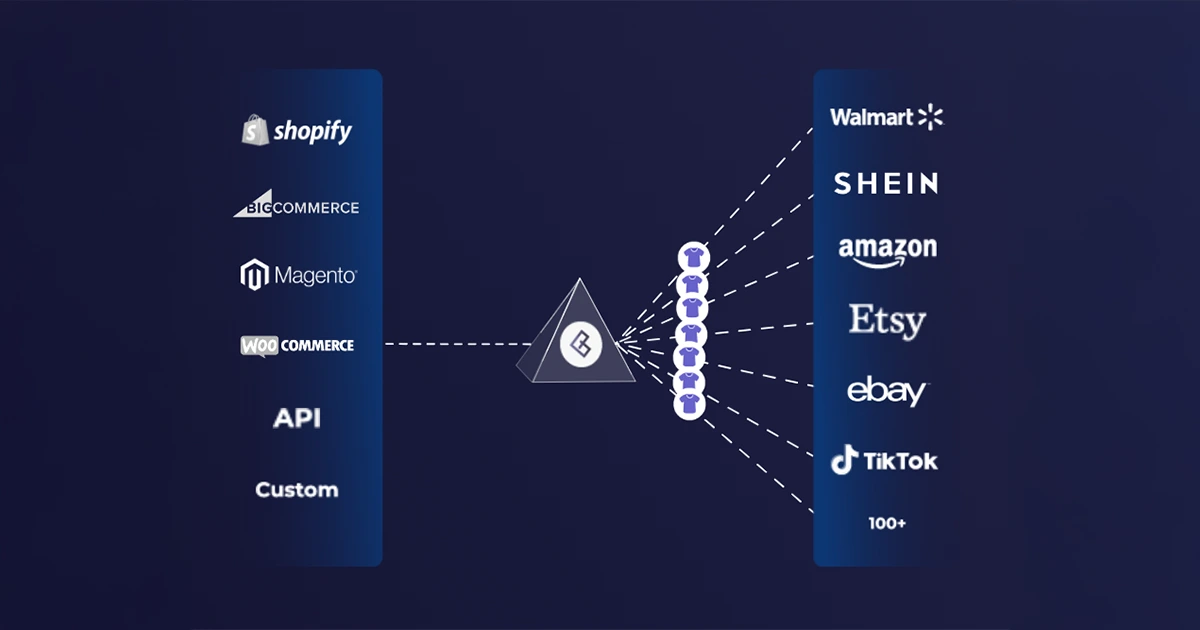
CedCommerce is a multi-channel eCommerce integration platform designed to help online sellers connect their stores with different marketplaces and manage selling operations from one place. Instead of manually uploading products, updating inventory, or processing orders separately on each channel, merchants can use CedCommerce connectors to automate these workflows.
Currently, CedCommerce supports 70+ global marketplaces, including Amazon, Walmart, eBay, Etsy, TikTok Shop, AliExpress, and Google Shopping. It also provides dedicated integrations for major eCommerce platforms like Shopify, WooCommerce, Magento, BigCommerce, OpenCart, and PrestaShop. Since its launch, CedCommerce has grown into one of the more established marketplace integration providers, expanding its global reach across 25+ countries.
CedCommerce pros & cons
Overall, CedCommerce’s biggest advantage lies in its marketplace coverage and specialized connectors, making it a strong choice for sellers planning multi-channel expansion. However, its connector-based structure also means some workflows can feel fragmented compared with all-in-one platforms.
Pros | Cons |
- Supports 70+ marketplaces, including major and niche selling channels - Dedicated marketplace apps built for specific platforms instead of one generic connector - Strong product listing, inventory sync, and order management capabilities - Integrates with fulfillment and shipping tools like ShipStation and Amazon MCF - Supports international selling with multi-currency and marketplace-specific features - 24/7 customer support with hands-on setup assistance | - Separate connector-based pricing can become expensive as more channels are added - No single centralized dashboard for managing every CedCommerce integration together - Advanced inventory workflows may still require external systems - Works more as a shipping connector than a complete shipping solution - Payment and currency handling still depend heavily on each marketplace’s system - No clearly published SLA for response or resolution times |
Methodology: How We Conducted Our CedCommerce Reviews
To ensure our CedCommerce reviews are as practical and unbiased as possible, our team went beyond feature lists to explore how the platform works in real eCommerce environments.
Specifically, our members set up test stores on major platforms like Shopify, WooCommerce, and BigCommerce. We then connected them with CedCommerce integrations to evaluate the actual setup process, marketplace syncing, and day-to-day management experience.
From there, we rated CedCommerce based on the factors that matter most to growing sellers. Below are our findings after testing each area.
CedCommerce Reviews: Pricing (3/5)
To evaluate CedCommerce pricing, we looked beyond the initial subscription fees and tested how the cost structure changes as a seller expands.
So far, based on our findings, CedCommerce doesn’t offer a single unified plan. Pricing is per-connector, meaning each marketplace integration (Amazon, Etsy, Walmart, etc.) is billed as its own separate subscription.
For example, the Amazon Channel app for Shopify runs three tiers:
- Free: $0/month
- Beginner: $19/month
- Growth: $99/month
Once a plan’s order cap is hit, overage is billed at $0.25 per extra order, up to a fixed ceiling per cycle.
The Etsy integration follows a similar five-tier structure, starting at $9/month (or $108/year), stepping up to Beginner at $29/month ($313.20/year), and continuing into Growth ($59/month).
The tradeoff is that this per-connector structure makes costs stack rather than scale smoothly. A merchant active on three marketplaces is paying three separate bills, each with its own order cap, so growth across channels multiplies subscription costs rather than moving up one clean pricing ladder.
Taken together, the entry-level pricing is genuinely accessible and commission-free, which counts for something. But as a business grows, fragmented per-channel billing and caps that trigger overage fees need to be calculated carefully.
Verdict: CedCommerce keeps the barrier to entry low with affordable starter plans. However, the separate pricing structure becomes less predictable as you expand.
Multi-Channel Integration (4/5)
For marketplace integration, our CedCommerce reviews team tested how the platform connects an online store with different sales channels. We also evaluated both the number of supported marketplaces and the depth of each connector.
All in all, breadth is where CedCommerce genuinely earns its reputation. The platform supports 70+ marketplaces and channels, including Amazon, Walmart, eBay, AliExpress, Etsy, TikTok Shop, Google Shopping, and dozens more. It’s also backed by 50+ dedicated connector apps built specifically for Shopify, WooCommerce, Magento, BigCommerce, OpenCart, and PrestaShop. That’s a noticeably wider net than comparable tools like Sellbrite, which cover a fraction of the channel count.
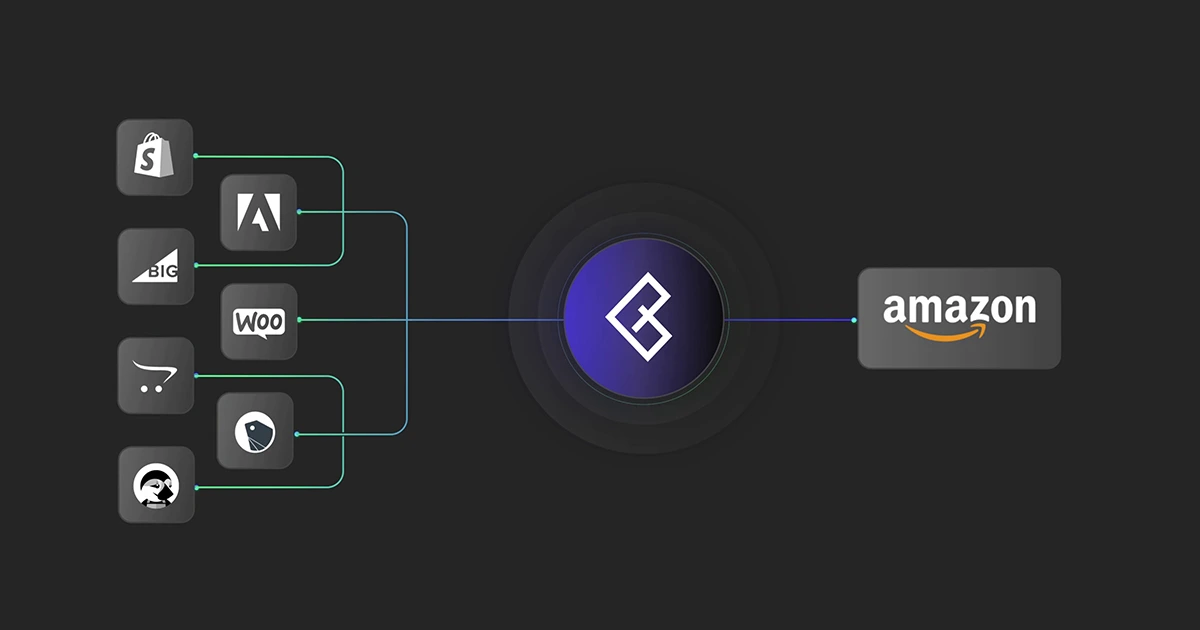
The depth of individual marketplaces also matches the breadth. For instance, the Amazon connector can manage seller accounts across 22+ regional Amazon marketplaces from a single dashboard. As a result, sellers can run multiple storefronts (US, UK, EU, etc.) and consolidate account management rather than juggling separate logins.
Another example is that on the Shopify App Store, CedCommerce runs 13+ individual marketplace-specific apps, each purpose-built rather than a generic one-size-fits-all connector. Such a specialization is a strong point since it allows each app to handle the quirks of its specific marketplace’s API (fulfillment rules, category mapping, variant structures, etc.)
On another note, the sync itself runs on scheduled polling rather than instant, event-driven updates, so “real-time” is closer to “near real-time” in practice. But overall, if reach and marketplace-specific depth are your priority, CedCommerce’s channel coverage and per-marketplace specialization are hard to match at this price point.
Verdict for CedCommerce reviews: CedCommerce is easily one of the stronger options when it comes to marketplace variety and channel-specific functionality.
Migrate Easily with LitExtension!
With the All-in-One Migration Service, our experts take care of everything, ensuring a seamless and stress-free migration.

Inventory Management (3.5/5)
To assess CedCommerce’s inventory management capabilities, we checked how the platform handles common multi-channel challenges, including stock synchronization, bulk updates, inventory rules, and more.
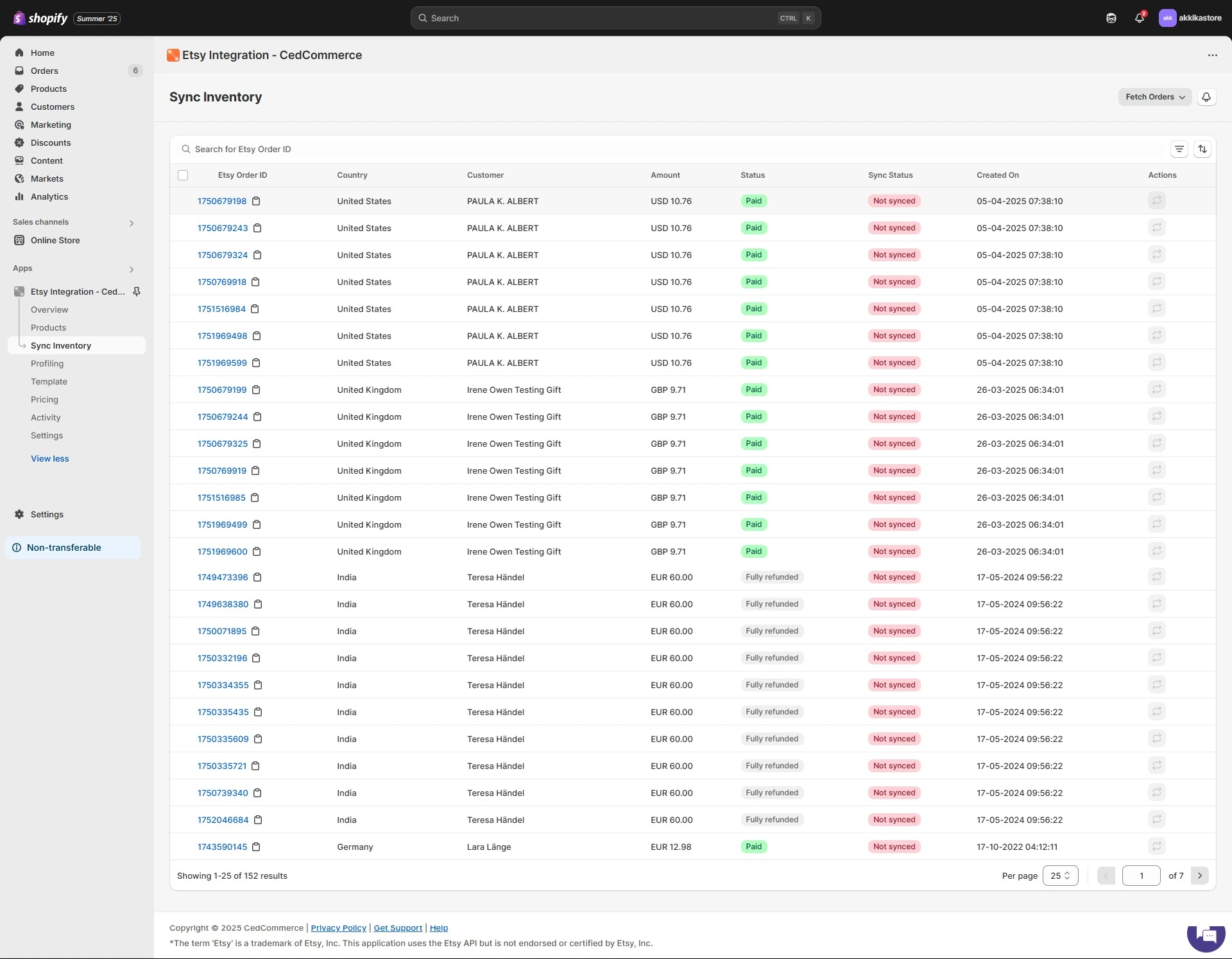
So far, CedCommerce offers some fairly robust inventory management features. A few notable examples include:
- Threshold/low-stock inventory setting: available across connectors (Etsy, Wish, Amazon, WooCommerce Multichannel). It auto-flips a listing to “Out of Stock” once inventory hits that value, preventing overselling.
- Real-time-labeled stock/price sync: This feature strengthens the sync between store and marketplace. But per the note above, it’s mechanically driven by scheduled crons rather than instant webhooks in most integrations.
- Bulk operations: CedCommerce allows CSV-based bulk update of price, inventory, barcode, shipping details, and “advanced attributes” (specifically for the Walmart connector). There is also a bulk import/edit/list for Amazon and Etsy apps.
- Vendor-level inventory control: individual vendors can set their own minimum-quantity thresholds; status auto-changes to “low stock” or “out of stock” per vendor.
Together, these features give sellers a real path from basic single-location inventory control up to centralized, multi-warehouse management, depending on which platform and add-ons they’re running.
On the other hand, one caveat is that there’s no native, CedCommerce-built dashboard that centralizes inventory across all connected channels at once. You will need to rely on layering a third-party backend, such as Zoho or Magento MSI, on top. Plus, the multi-location inventory for the Amazon-Shopify connector is still not available and is only listed as an upcoming feature.
Verdict: CedCommerce provides reliable inventory tools for everyday marketplace selling. Still, sellers managing complex multi-location operations may need extra systems.
Payment & Currency (4/5)
CedCommerce builds multi-currency and multi-language support into its integrations as a way to let merchants sell internationally.
One of the clearest concrete examples is the Etsy integration’s VAT handling, which folds VAT directly into Shopify-side pricing without duplicating tax lines. On the marketplace-building side, the Magento multi-vendor extension supports 10+ payment gateways and can pay out vendors in their own local currencies. This gives marketplace operators real flexibility in how they settle payments with a global vendor base. Plus, CedCommerce also supports 170+ currencies with automatic conversion to the shopper’s local currency.
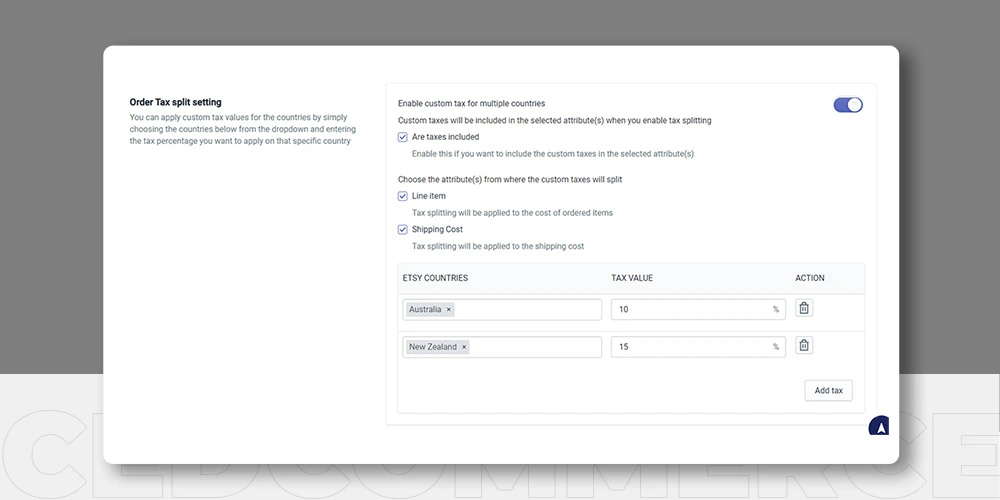
Even so, keep in mind that the actual payment processing and currency conversion still run through each marketplace’s own native checkout system. So a seller listing the same product on Amazon.com and Amazon.de, for instance, isn’t getting CedCommerce-driven currency conversion. Pricing and currency handling for each channel still have to be set and managed independently.
Verdict: CedCommerce offers solid international selling support. Still, it cannot entirely replace the native payment and currency systems of each marketplace.
Shipping Options (3.5/5)
Overall, CedCommerce acts as a connector layer between your store, marketplaces, and fulfillment providers. Instead of locking merchants into a proprietary shipping system, it maps store-side shipping carriers to marketplace-recognized carrier names so order tracking and fulfillment data stay consistent across platforms.
The strongest example is its Amazon Multi-Channel Fulfillment (MCF) integration, which allows sellers to fulfill orders from Shopify, eBay, TikTok Shop, and other non-Amazon channels using Amazon’s fulfillment network. It also comes with useful controls like delivery speed mapping, selectable fulfillment policies, automatic tracking assignment, and product kitting for bundle-based inventory. Beyond that, CedCommerce’s partnership with ShipStation extends access to major carriers like USPS, UPS, FedEx, and DHL for label printing and carrier management.
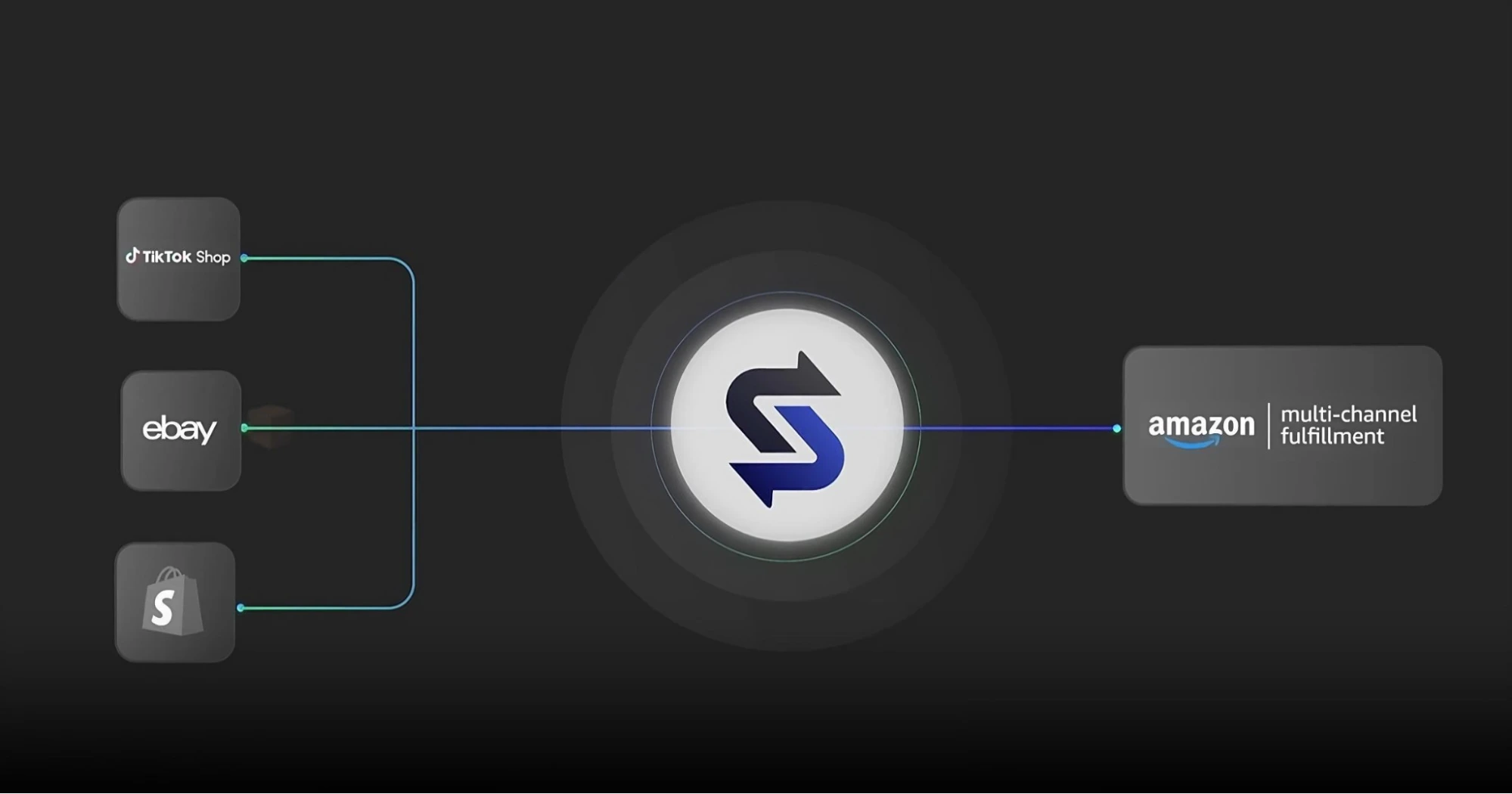
Platform-specific support is also available. For instance, the WooCommerce connector supports multiple shipping carriers for order tracking. Similarly, Magento users can access dedicated extensions for providers like Aramex, Australia Post, Singapore Post, and more.
That said, CedCommerce is not a full shipping management solution on its own. It doesn’t natively calculate shipping rates or handle label generation across most connectors. In short, merchants still rely on ShipStation, Amazon MCF, or marketplace-native shipping systems.
Verdict: The shipping setup is flexible and works well for marketplace sellers. However, it functions more as a shipping bridge than a complete shipping solution.
Reporting & Analytics (2.5/5)
When it comes to reporting, CedCommerce focuses mainly on operational visibility rather than deep business analytics. Its dashboards are built to help sellers understand whether their marketplace operations are running correctly, with information around products, orders, synchronization status, and errors.
For example, a Walmart connector provides an overview dashboard where merchants can monitor uploaded products, total orders, canceled orders, generated revenue, pending shipments, and failed order issues. Similarly, CedCommerce’s feed-tracking system records bulk actions like product uploads, inventory updates, and price changes, allowing sellers to check whether each sync has been processed successfully.
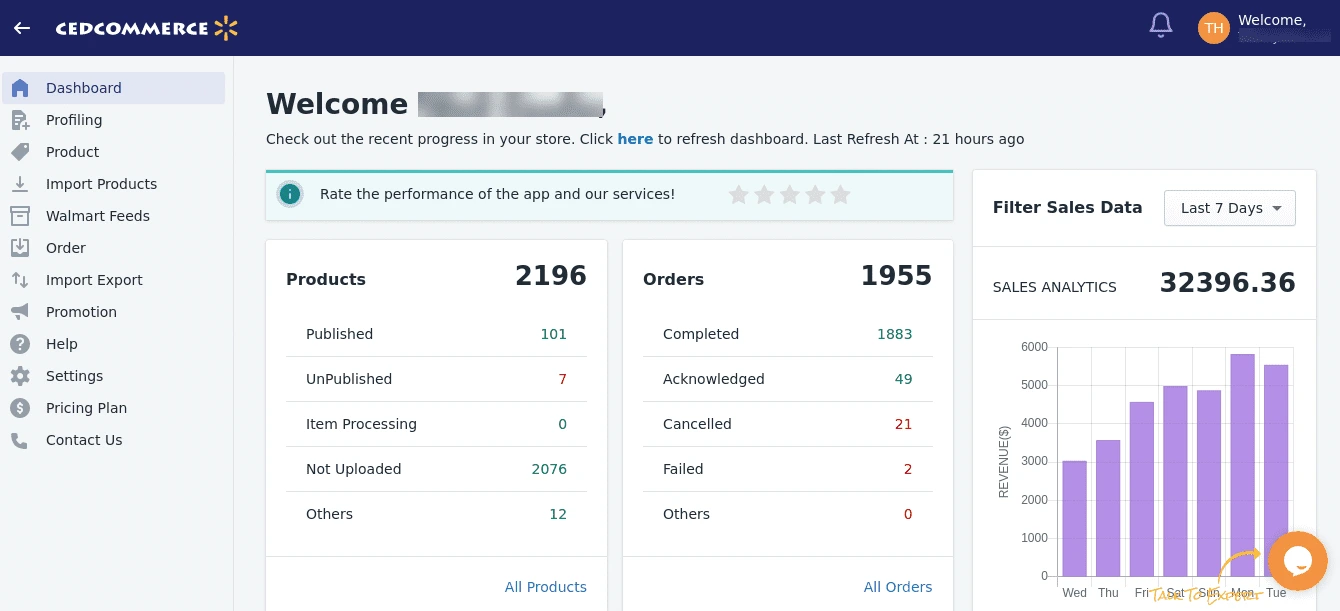
This type of reporting is especially helpful for multi-marketplace operations where the main concern is keeping listings, inventory, and orders properly synchronized. Instead of manually checking each marketplace, sellers can identify operational problems directly from the connector dashboard.
However, CedCommerce is not designed to replace a dedicated analytics platform. It does not offer advanced reporting features like customer lifetime value tracking, attribution modeling, profit analysis, etc. For those insights, you will still need a separate BI or analytics tool.
Verdict: CedCommerce covers the essential reporting needed to manage marketplace operations. Still, its analytics capabilities remain fairly basic.
Third-party App Integrations (4/5)
Third-party connectivity is an area where CedCommerce performs strongly. Since the platform’s main purpose is connecting different commerce systems together, it has built a broad ecosystem of specialized integrations rather than trying to be an all-in-one tool.
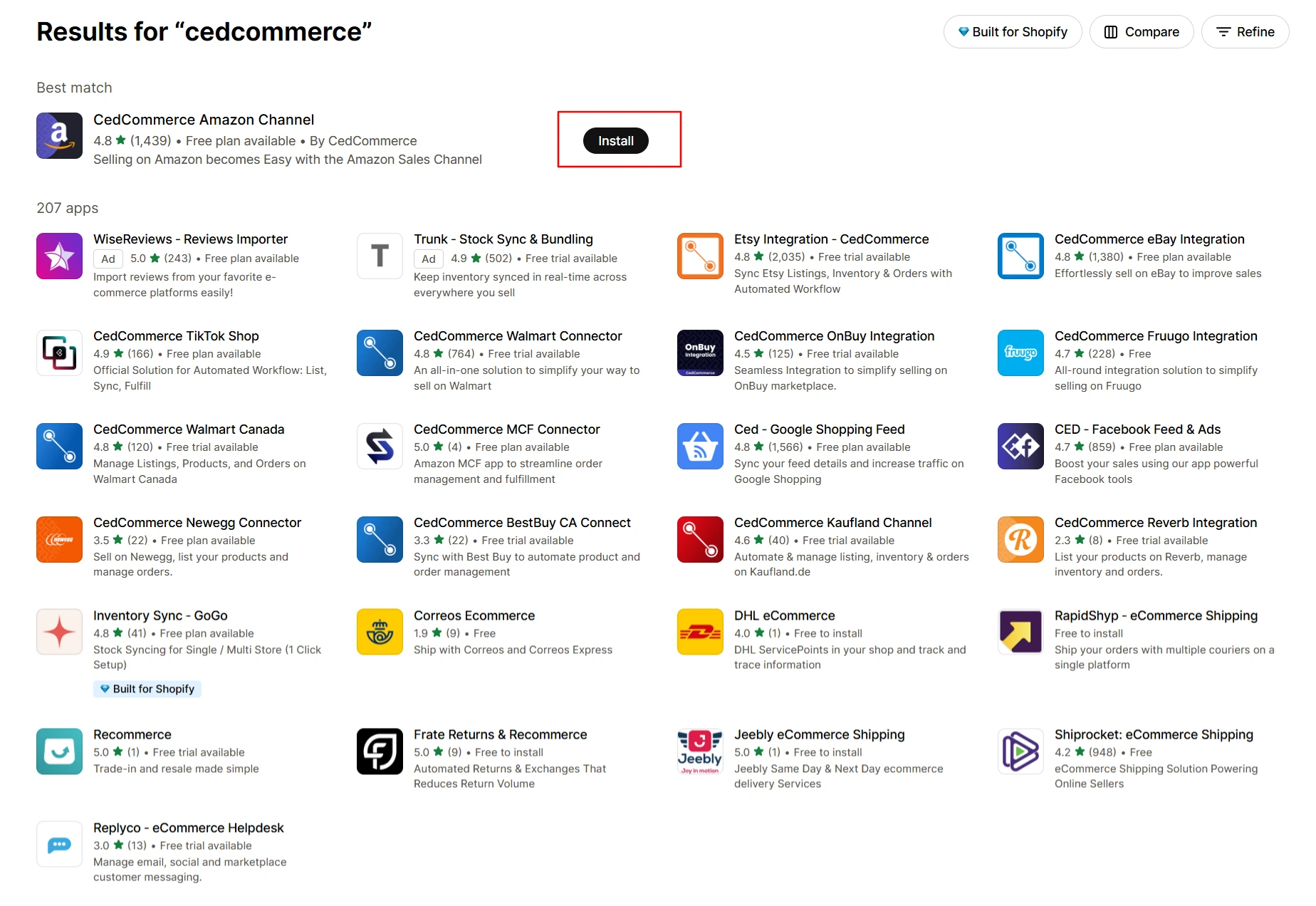
On the inventory side, CedCommerce integrates with Zoho Inventory to bring more advanced stock management capabilities like serial and batch tracking into platforms such as BigCommerce, Magento, and WooCommerce. For fulfillment workflows, its ShipStation partnership gives sellers access to external carrier management and label printing, while the 71lbs integration helps automate shipping invoice auditing and refund recovery.
CedCommerce also stands out with its marketplace-focused integrations. Its adoption of Amazon Selling Partner API (SP-API) enables automated authentication, order handling, fulfillment workflows, reports, and catalog management without relying on manual Seller Central processes. Beyond major marketplaces, it also supports niche channels like OnBuy, Cdiscount, Overstock, Pricefalls, and Best Buy through dedicated connectors.
The main limitation is that CedCommerce’s ecosystem leans heavily toward marketplace operations. We couldn’t find native CedCommerce-built integrations for major CRM, marketing automation, or accounting platforms, so tools like QuickBooks or Xero may require additional middleware.
Verdict: The ecosystem is excellent for marketplace sellers and fulfillment-heavy businesses. However, merchants looking for a fully connected marketing or finance tech stack may find some gaps.
Security (4.5/5)
From a security perspective, CedCommerce covers the core standards expected from a marketplace integration platform handling sensitive store and customer data.
For data protection, CedCommerce documents the use of TLS 1.3 encryption for data transferred between systems and AES-256 encryption for protecting stored information. These are current security standards and provide a stronger level of transparency compared to platforms that only make general claims about secure infrastructure.
CedCommerce also follows GDPR compliance requirements, including maintaining a Data Protection Officer contact, Data Processing Agreement processes, and privacy impact reviews. Another positive point is its migration to Amazon’s Selling Partner API, which replaces older manual authentication methods with OAuth-based authorization. This reduces the need for sellers to manually share or repeatedly verify sensitive account credentials.
Verdict: CedCommerce provides reliable baseline security with modern encryption standards and better authentication practices.
Customer Support (4.5/5)
Across its product ecosystem, CedCommerce provides 24/7 assistance through multiple channels, including live chat, email, ticketing, and scheduled support sessions. Since many integrations involve complex marketplace rules, having direct access to support like this can make a noticeable difference for sellers setting up channels for the first time.
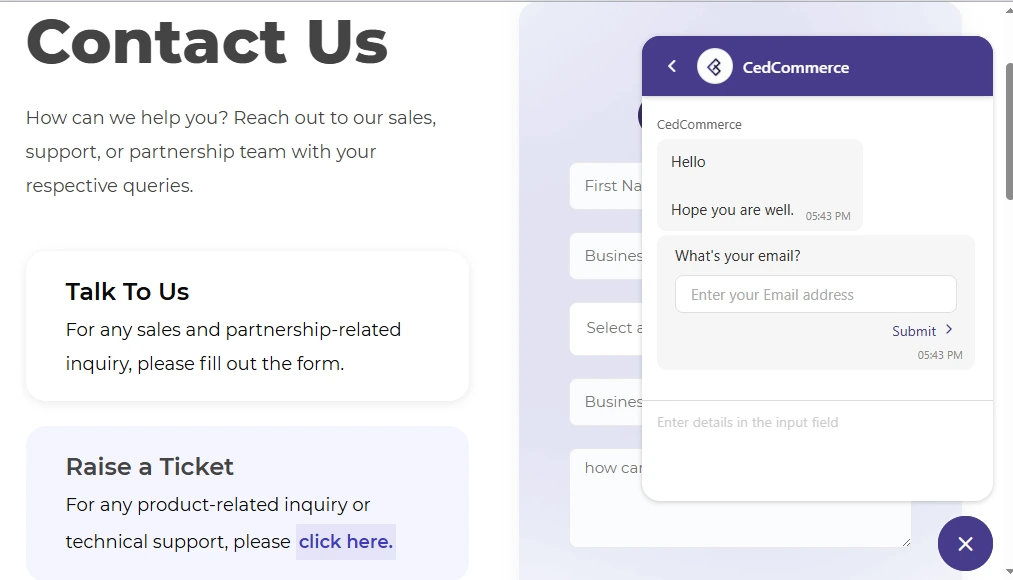
CedCommerce’s support also appears more hands-on than standard documentation-based assistance. Setup walkthroughs, configuration guidance, and troubleshooting help are all available, which fits well with its product model since many merchants using marketplace connectors are not necessarily technical users.
Verdict: CedCommerce provides accessible and hands-on support that is especially useful during setup and migration.
Who Should Choose CedCommerce?
Overall, considering CedCommerce’s strength in multi-channel integration and global selling support, we can conclude that CedCommerce is a strong choice for:
- Sellers who mainly focus on marketplace expansion and need dedicated connectors for channels like Amazon, Walmart, Etsy, TikTok Shop, and more.
- Businesses that want to add new marketplaces gradually and only pay for the specific integrations they use instead of committing to a larger platform upfront.
- Merchants managing marketplace-specific requirements, such as product mapping, category rules, regional accounts, and listing synchronization.
- Growing sellers who need reliable product, inventory, and order syncing across channels but are not ready for an enterprise-level commerce management system.
On the other hand, CedCommerce may not be the best fit for businesses looking for complete control from one centralized system. Since each marketplace runs through a separate connector, managing multiple channels can become more fragmented as your operation grows. Plus, CedCommerce still relies on external solutions for areas like advanced inventory workflows, in-depth analytics, and end-to-end shipping management.
If all these limitations sound like deal-breakers for your business, the CedCommerce alternatives below may offer a better fit.
Bonus: CedCommerce Alternatives
LitCommerce
LitCommerce is one of the closest CedCommerce alternatives. The platform connects major eCommerce platforms with 10+ marketplaces, such as Amazon, Etsy, TikTok Shop, and more.
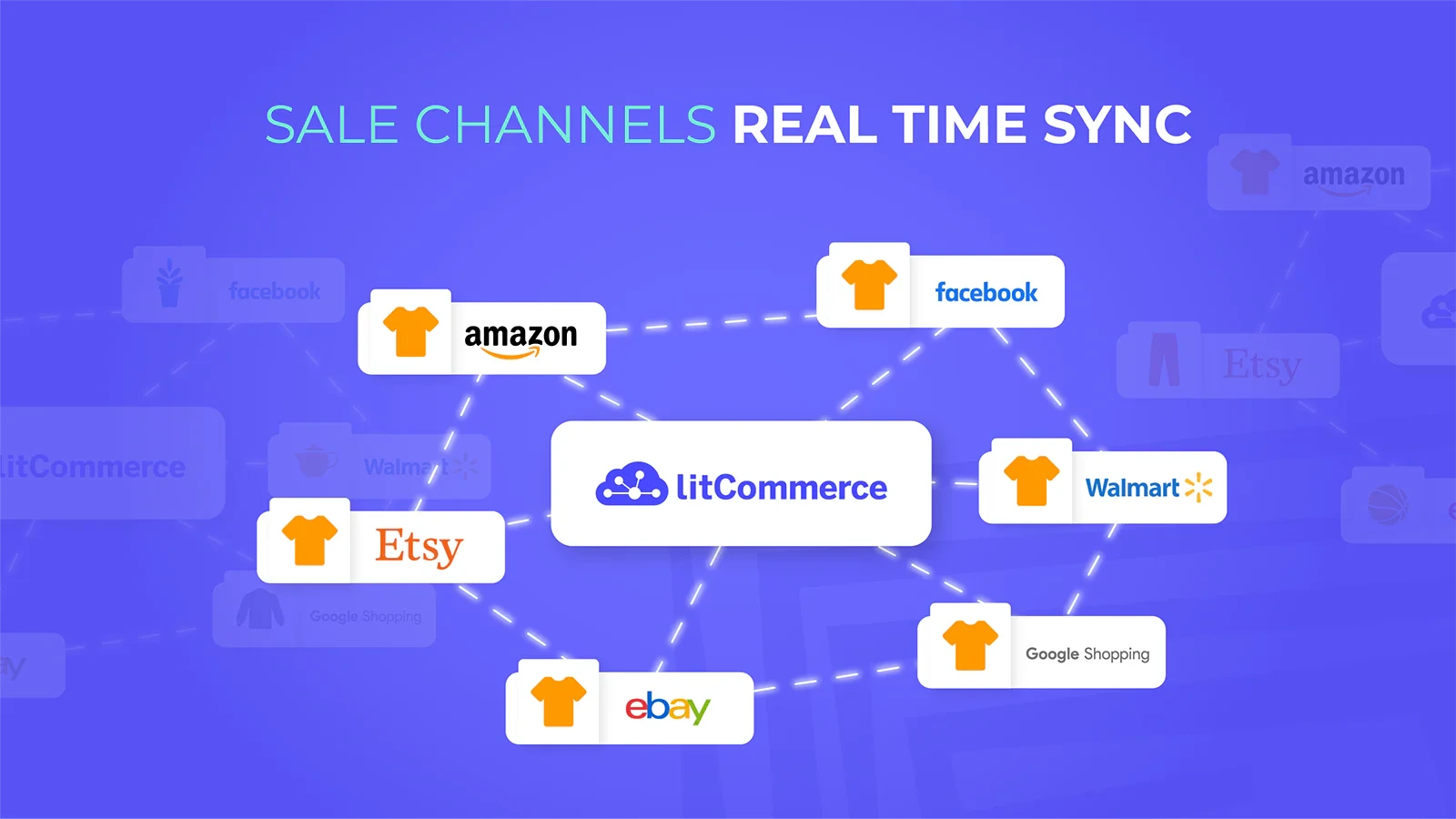
One of LitCommerce’s biggest strengths is centralized channel management. Instead of switching between different marketplace apps, sellers can manage listings, sync inventory, adjust prices, and process orders from one dashboard. Features like bulk listing, template-based product editing, automatic inventory sync, and order synchronization make it easier to maintain consistency across multiple sales channels.
Compared with CedCommerce’s separate connector approach, LitCommerce feels more unified since multiple channels can be managed within the same workspace. This makes it particularly suitable for growing sellers who want multi-channel expansion without managing several independent integrations.
Pricing: Unlike CedCommerce, which requires separate connectors for different marketplaces, LitCommerce allows you to choose a single plan based on your number of channels and listings.
Your monthly subscription is calculated based on two factors:
- Number of channels (from 3 to 15 channels): $0 to only $89/month
- Number of listings (from 1K to 200K listings): $34 to $434/month
You can also get 20% off by choosing annual billing. Hence, in the long run, LitCommerce can help you significantly reduce your multi-channel selling costs.
Feedonomics
Feedonomics takes a more enterprise-focused approach to multi-channel commerce. Rather than simply connecting stores to marketplaces, the platform specializes in product feed optimization, data transformation, and large-scale catalog management across hundreds of advertising channels and marketplaces.
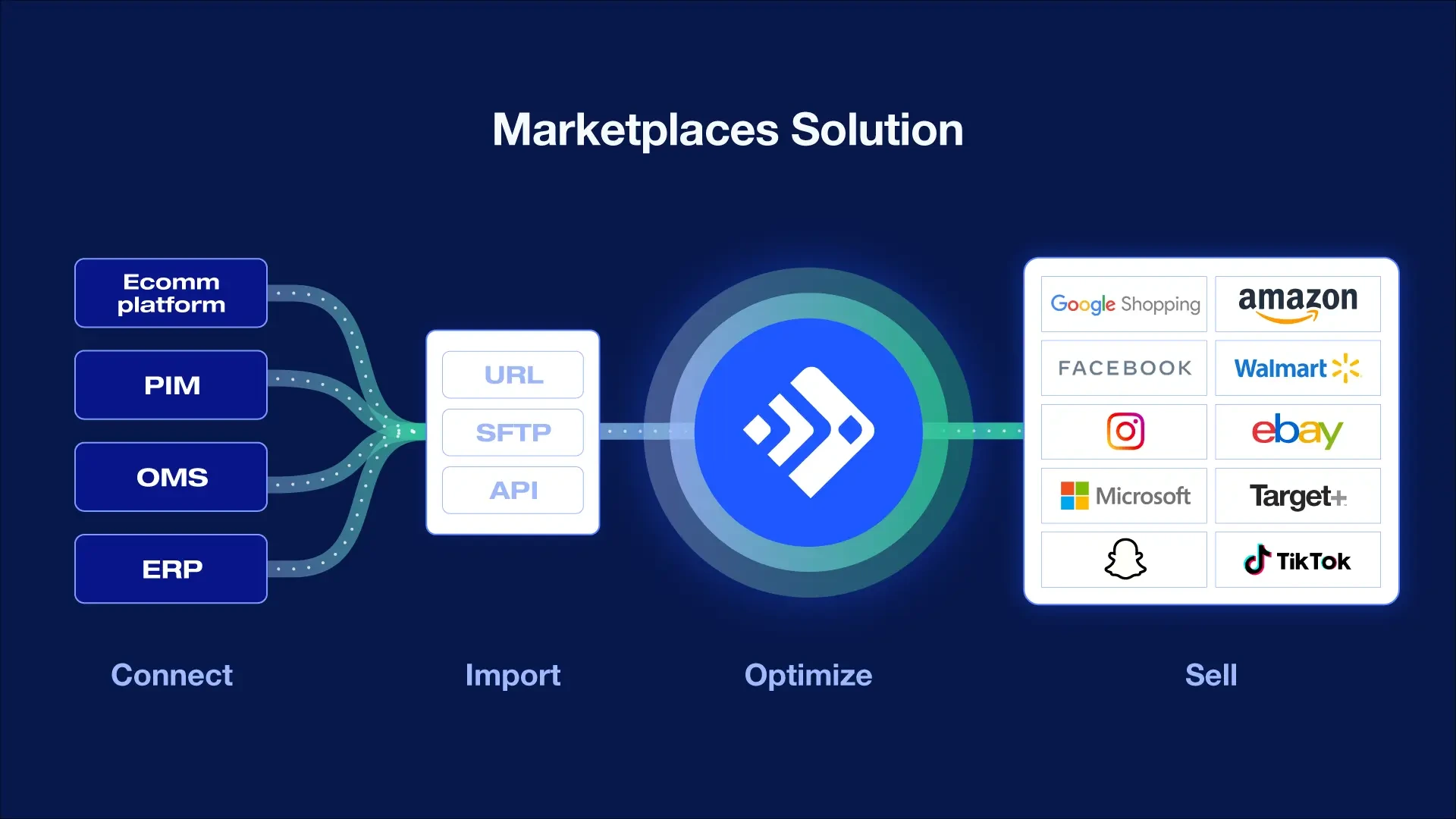
Its biggest advantage lies in advanced feed control. Feedonomics can clean, categorize, optimize, and automatically update complex product catalogs, making it especially useful for brands with thousands or millions of SKUs. The platform also supports marketplace order synchronization, product data governance, and managed-service assistance from feed specialists.
This makes Feedonomics a stronger fit for enterprise retailers that need a high level of customization and hands-on feed management. However, smaller sellers may find it more advanced than necessary compared with plug-and-play marketplace tools like CedCommerce.
Pricing: Feedonomics does not offer fixed pricing; instead, they customize each plan based on your business’s specific needs. The final cost depends on several factors, including your required service level, catalog size, marketplace requirements, and the number of channels you manage. Feedonomics also does not charge a percentage of your revenue.
Salestio
Salestio is another CedCommerce alternative built mainly for merchants who want to expand marketplace selling directly from their existing store. It connects platforms like Shopify and BigCommerce with marketplaces, including Amazon, eBay, and Etsy, while keeping the original store as the central management point.
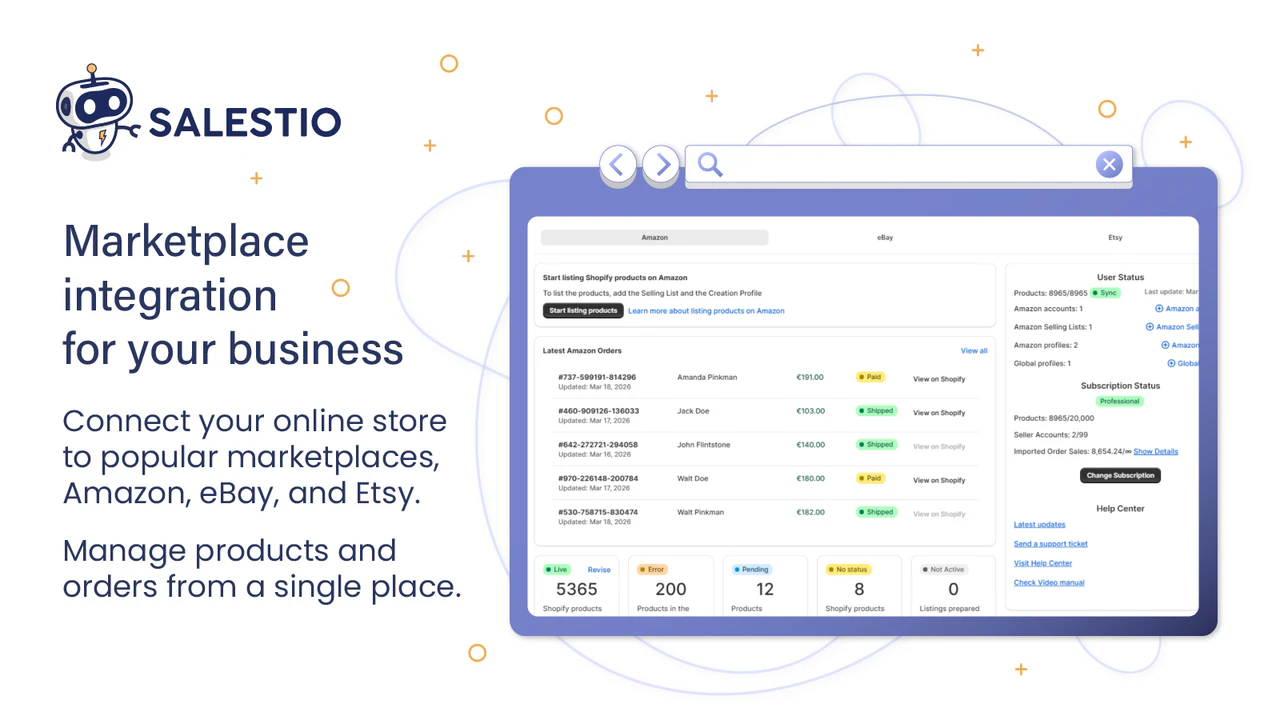
The platform focuses on essential marketplace automation features, including product listing creation, inventory synchronization, price updates, and order importing. Sellers can create listing profiles, customize marketplace settings, and automate repetitive tasks without having to manually update each channel.
Compared with CedCommerce, Salestio has a narrower marketplace ecosystem but provides a more streamlined experience for merchants focused primarily on major channels. It works best for sellers who do not need dozens of niche marketplace integrations but want reliable synchronization for the biggest sales platforms.
Pricing: Salestio offers three main pricing plans:
- Starter ($29/month): For small sellers with 100 orders/month, 5,000 products, and 2 marketplace accounts. Covers basic order and product automation.
- Growth ($79/month): For growing sellers with higher limits (500 orders/month, 10,000 products, 5 accounts) and faster order syncing.
- Scale ($199/month): For high-volume sellers with 3,000 orders/month, 20,000 products, 15 accounts, plus real-time syncing and advanced order features.
As you can see, its Starter and Growth plans (supporting 2 and 5 marketplace accounts, respectively) are roughly in the same price range as the higher-tier plans of a single CedCommerce connector. In other words, you pay a similar amount while connecting to far more marketplaces than you would with CedCommerce.
FAQs
Is CedCommerce legit?
Yes, CedCommerce is a legitimate eCommerce solution known for building marketplace integrations and multi-channel solutions. They are official partners with platforms like Shopify and Amazon.
How much does CedCommerce cost?
CedCommerce does not have a single flat rate because pricing varies depending on the specific eCommerce marketplace integration you choose. However, their standard multi-channel subscription plans generally range between $9 and $299 per month, depending on your listing count and monthly order volume.
What are the benefits of using CedCommerce?
CedCommerce helps online merchants expand their business across global marketplaces. It seamlessly integrates existing eCommerce stores (like Shopify, WooCommerce, and Magento) with over 50 sales channels such as Amazon, Walmart, eBay, and Etsy.
CedCommerce Reviews: Final Verdict
Overall, CedCommerce is worth considering if marketplace expansion is your main priority. With extensive channel coverage, dedicated marketplace connectors, reliable inventory synchronization, and strong integration capabilities, it gives merchants a practical way to manage multi-channel selling without rebuilding their entire eCommerce workflow.
That said, CedCommerce’s connector-based structure means costs and management complexity can increase as you add more marketplaces. Plus, some areas, such as advanced analytics, centralized inventory control, and end-to-end shipping management, still rely on external solutions.
Ultimately, CedCommerce works best for sellers who want to expand across multiple marketplaces and need a specialized tool to handle product listings, orders, and synchronization. But if you are looking for a complete all-in-one commerce management platform, you may need to pair it with additional tools.
For more reviews and insights on multi-channel integration and eCommerce solutions in general, don’t forget to check out the LitExtension blog. You can also subscribe to our newsletter for the latest insights and eCommerce updates!

