As the best way to learn something is to learn it from the best, let’s explore our list of the 50+ best Shopify store examples to inspire your own. To ensure a comprehensive list, we’ll review stores in the five most popular niches, including:
Let’s see what to learn (and perhaps steal) from this list of successful Shopify store examples!
Best Fashion Shopify Store Examples
1. Decathlon
Decathlon is one of the world’s largest sporting goods retailers, offering everything from fitness and camping gear to cycling and outdoor equipment. The brand’s shift to Shopify demonstrates its commitment to innovation, creating an intuitive online platform that simplifies shopping for customers worldwide. Their inspiring journey and use of technology make Decathlon a shining example among successful Shopify store examples.
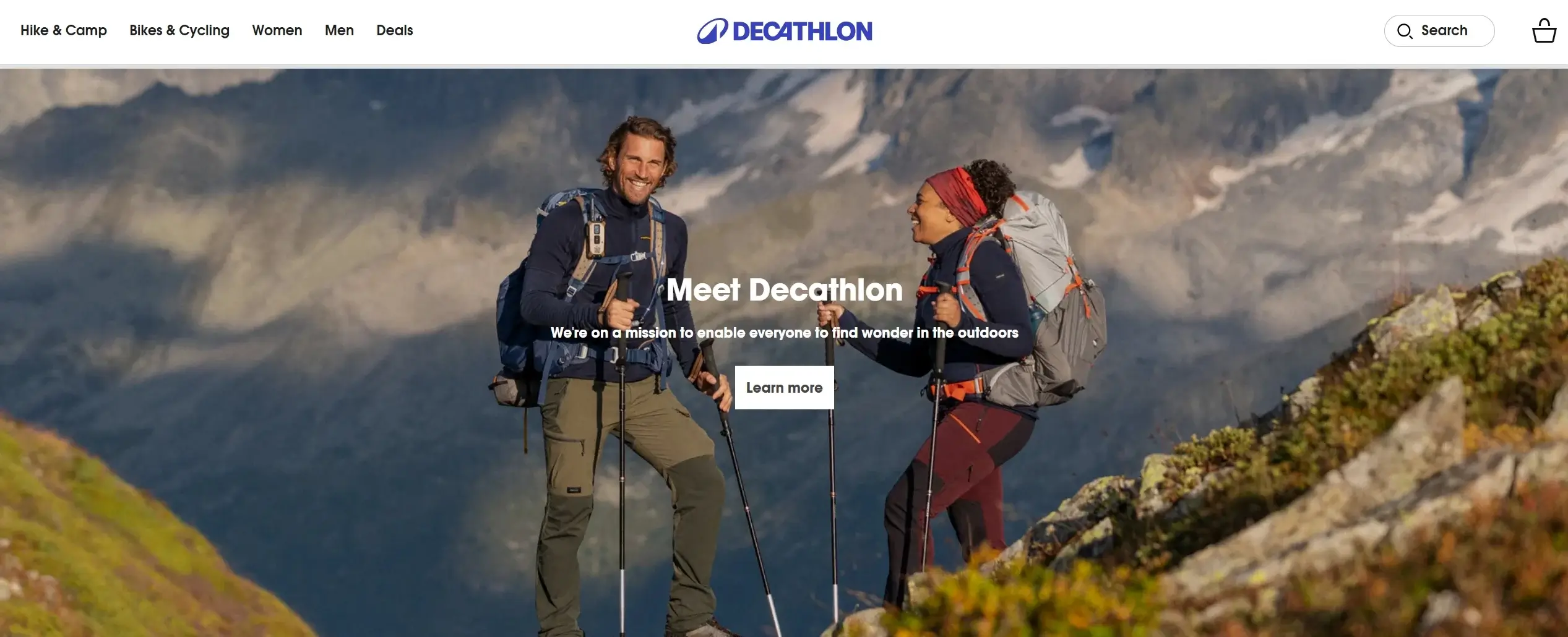
Lesson to learn: Decathlon is a great example of how Shopify’s collection and filtering system can improve product discoverability for large catalogs. Instead of overwhelming shoppers with too many options at once, the brand uses structured categories and intuitive filters to guide customers toward the right products faster.
2. Gymshark
Gymshark is a UK fitness apparel brand founded in 2012 by Ben Francis, which grew from a garage operation into a billion-dollar global powerhouse. This is one of the best Shopify store examples of a brand scaling alongside the platform itself – from an early-stage entrepreneur business to an enterprise-level brand powered by Shopify Plus.
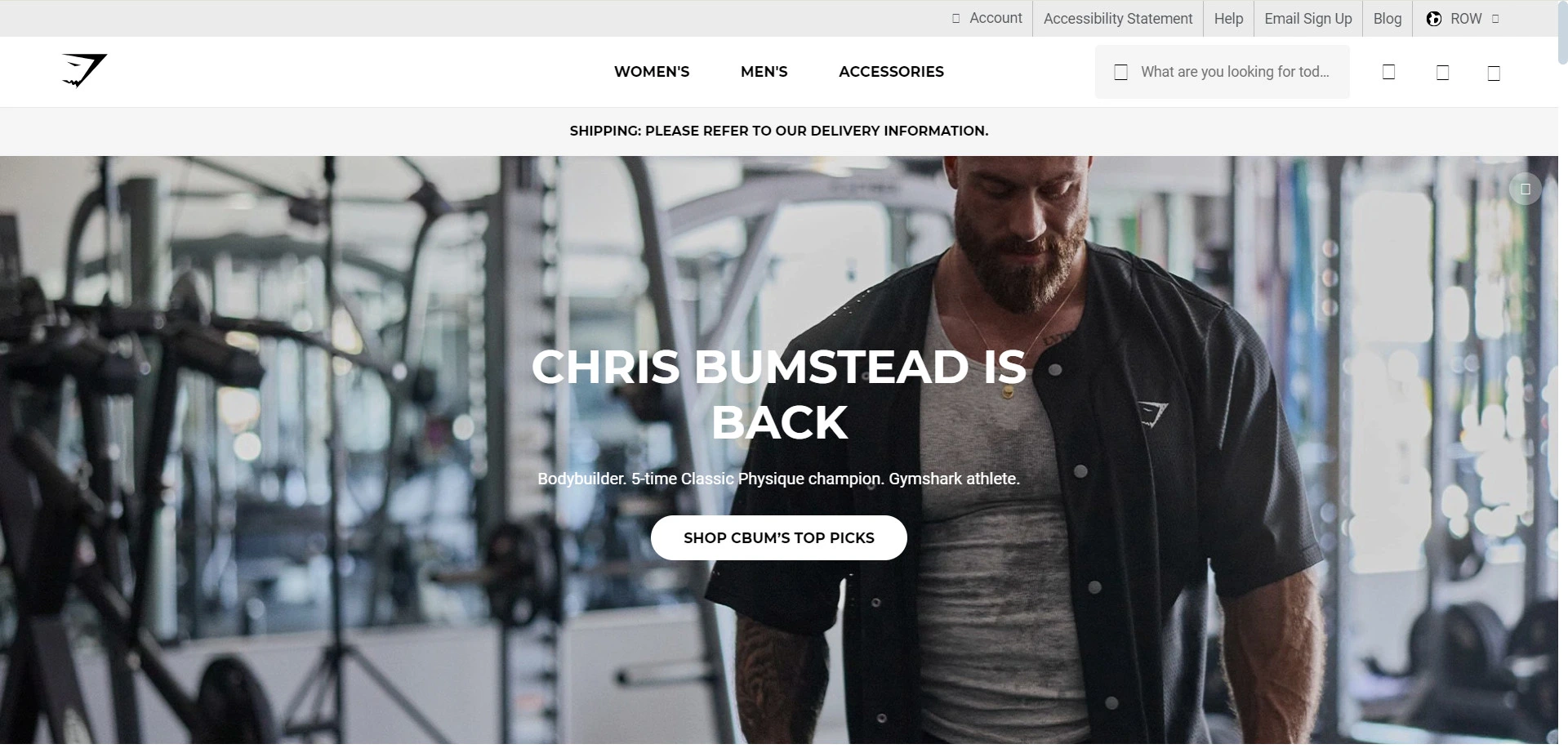
Lesson to learn: The brand uses Shopify Functions to create personalized checkout offers like dynamic discounts, limited-time deals, and free gifts based on cart value. Gymshark also takes advantage of Shopify’s flexible storefront customization to build detailed product pages with videos, reviews, and size guides that make shopping more engaging and trustworthy.
3. Fashion Nova
Fashion Nova, founded in 2006 by Richard Saghian, began as a single store in Los Angeles, specializing in affordable “clubwear.” Recognizing the potential of eCommerce, Saghian launched the online store in 2013, propelling the brand to global prominence. By leveraging social media and influencer partnerships, Fashion Nova became a leading name in Shopify store examples, offering trendy apparel for diverse body types and styles.
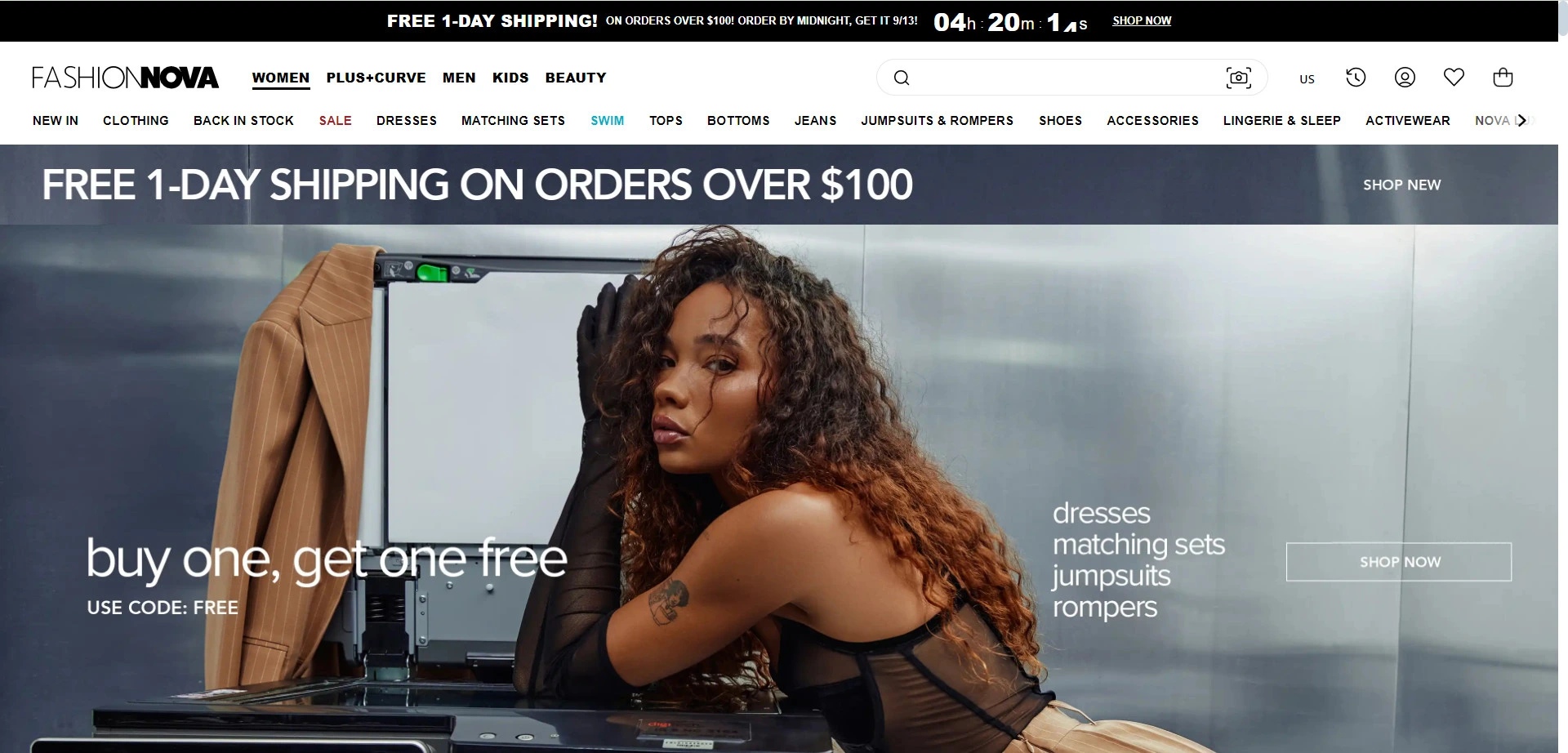
Lesson to learn: The brand combines loyalty rewards, discount automation, flash sales, and first-order promotions to keep shoppers engaged beyond a single purchase. These features also work especially well with its social-media-driven strategy, helping Fashion Nova turn impulse traffic into returning customers more effectively.
4. The Hideout Clothing
If you’re looking for some Shopify online store examples to learn from, The Hideout Clothing is a brand you should definitely check out. The Hideout Clothing (THC) is a streetwear brand founded in 2012 in Trinidad. It has evolved from a local retailer of exclusive brands to a global streetwear label with its own collections and a flagship store in Paris.

Lesson to learn: The Hideout Clothing keeps its catalog clean by separating products into clear streetwear categories and curated collections. The brand also adds high-quality images from multiple angles to its product pages so customers can better visualize products before purchasing.
5. Adored Vintage
Adored Vintage, established in 2012 by Rodellee Bas, began as an online boutique curating romantic and feminine vintage clothing for the modern woman. Over time, it expanded to include vintage-inspired apparel and accessories, drawing inspiration from art, history, and bucolic landscapes. This evolution reflects a commitment to timeless, feminine style, making Adored Vintage a notable example among successful Shopify store examples.
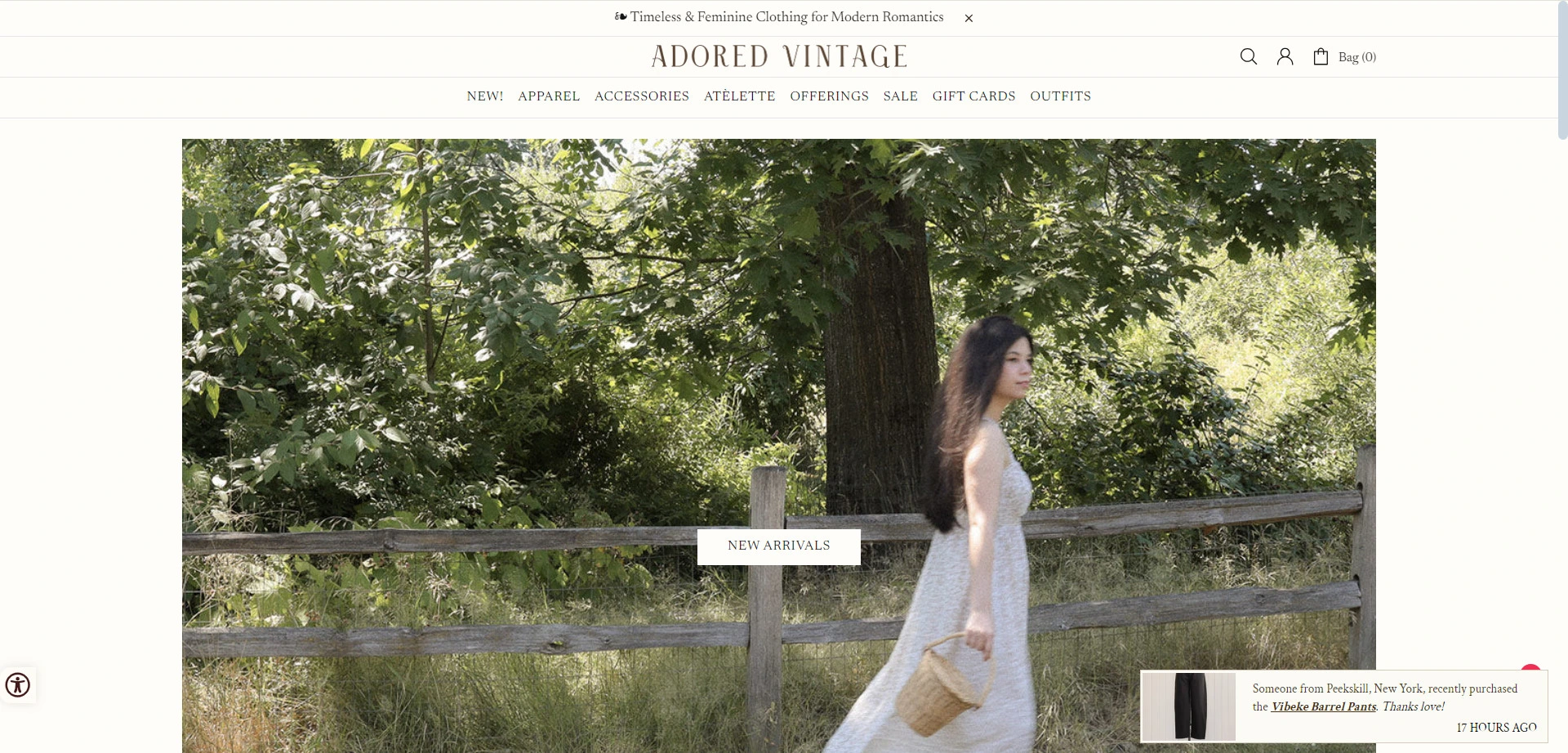
Lesson to learn: The store features a blog integrated with Shopify, offering style tips, vintage care guides, and the founder’s personal insights. Combined with their storytelling vibe, this builds an emotional connection with shoppers, turning them into loyal brand supporters.
6. Kenny Flowers
Kenny Flowers, founded in 2015 by Kenny Hadfield, began as a digital-native resort wear brand offering modern takes on Hawaiian shirts. Over time, the brand expanded its product line to include women’s resort wear, swimwear, and accessories, all reflecting a vibrant, tropical aesthetic. By leveraging Shopify’s comprehensive platform, Kenny Flowers has seamlessly integrated online and offline shopping experiences, making it a notable example among successful Shopify store examples.
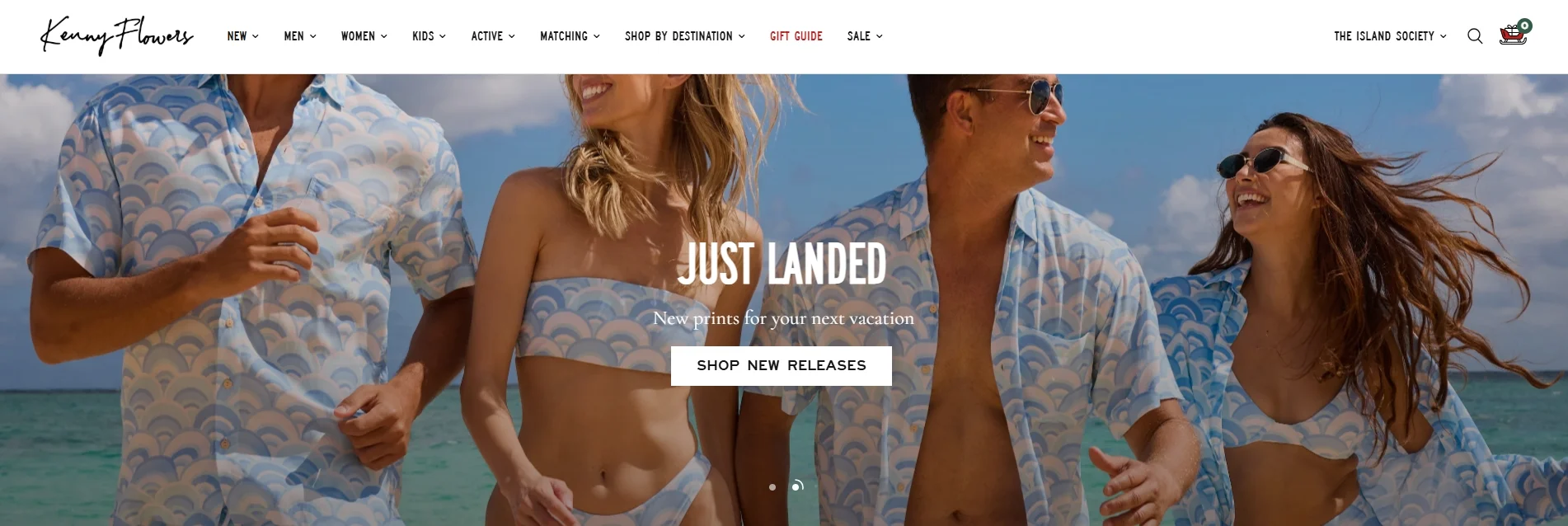
Lesson to learn: Kenny Flowers connects its online and offline shopping journey through Shopify POS and an integrated loyalty system. Customers can earn and redeem rewards both online and at physical stores, helping the brand create a much more connected omnichannel experience instead of treating each sales channel separately.
8. Boston Proper
Boston Proper, established in 1992, has long been recognized for its chic and sophisticated women’s apparel, primarily reaching its audience through a successful print catalog. In 2021, aiming to transition from a catalog-driven retailer to a leading digital brand, Boston Proper migrated to Shopify. This strategic move has significantly enhanced their online presence, making them a notable example among successful Shopify store examples.
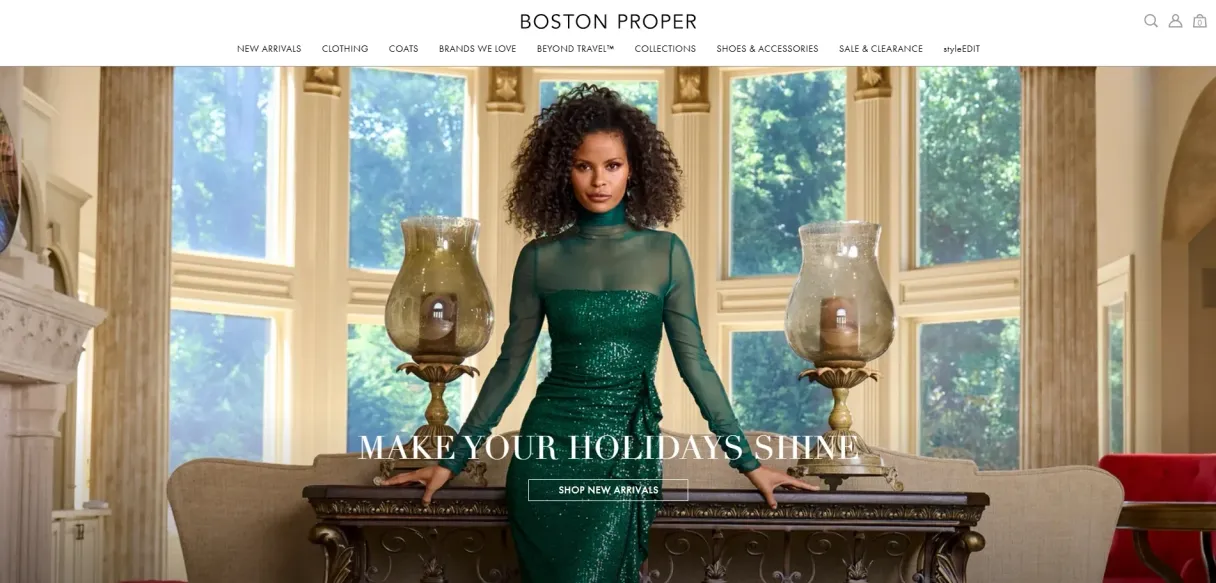
Lesson to learn: By adopting Shopify, Boston Proper can implement new features in minutes, a significant improvement over the previous timeline of 6-9 months. This agility allows the brand to swiftly adapt to market trends and customer preferences, enhancing the overall shopping experience.
8. Represent
Represent, founded in 2012 by brothers George and Michael Heaton, began as a college project creating graphic T-shirts for friends. Inspired by the American streetwear movement, they invested £150 to produce 25 T-shirts, which quickly gained popularity. This grassroots approach propelled Represent into a globally recognized luxury streetwear brand, becoming a successful Shopify store example.
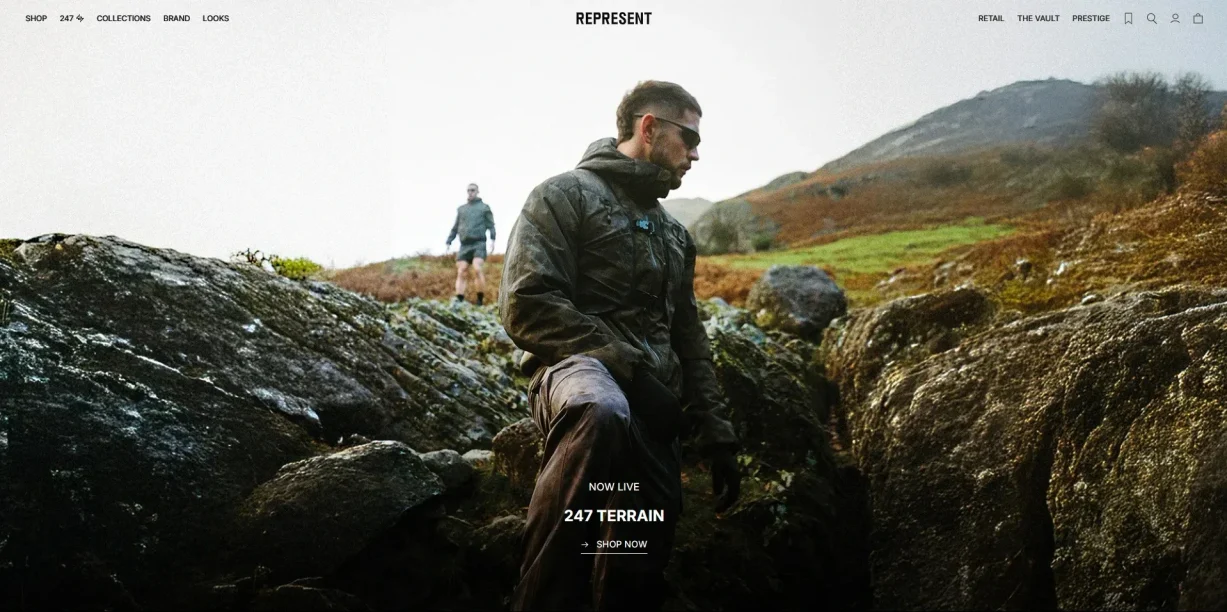
Lesson to learn: Represent uses Shopify’s international selling tools to localize currencies, languages, and shopping experiences for different markets. At the same time, the brand maintains strong Core Web Vitals and site speed optimization, showing how Shopify can still support high-performing storefronts with visually rich designs.
9. Psycho Bunny
Psycho Bunny, founded in 2005, began as a necktie company operating primarily through wholesale channels. In 2016, the brand underwent a transformation into a high-end clothing retailer with a direct-to-consumer model. This strategic shift, supported by Shopify, has propelled Psycho Bunny into a notable example among successful Shopify store examples.
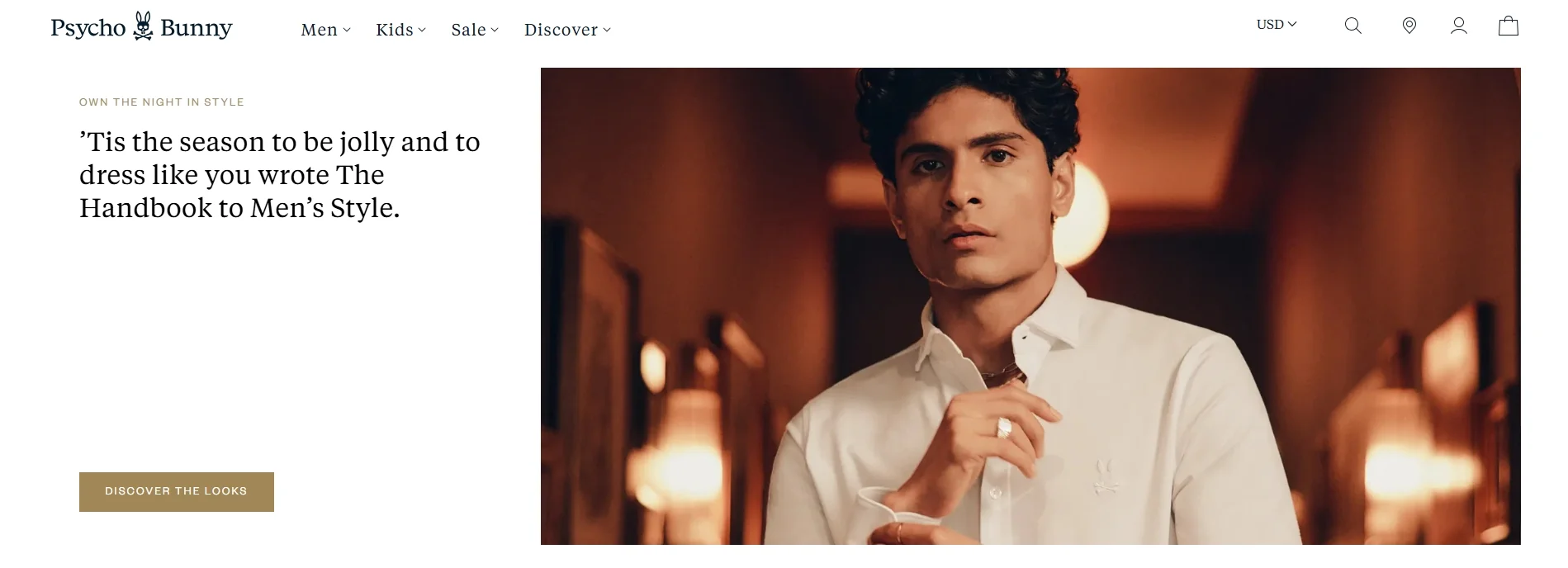
Lesson to learn: Psycho Bunny connects Shopify with Fluent Order Management to unify inventory and operations across retail and wholesale channels. This setup gives the brand real-time inventory visibility across locations, making large-scale expansion much easier to manage operationally.
Best Health And Beauty Shopify Store Examples
10. Kylie Cosmetics
When talking about successful Shopify store examples in the beauty niche, it is hard not to mention Kylie Jenner and Kylie Cosmetics. Launched in 2015 with the famous Kylie Lip Kits, the brand quickly grew from a celebrity-driven makeup line into a global beauty business offering everything from lip products and eyeshadows to skincare.
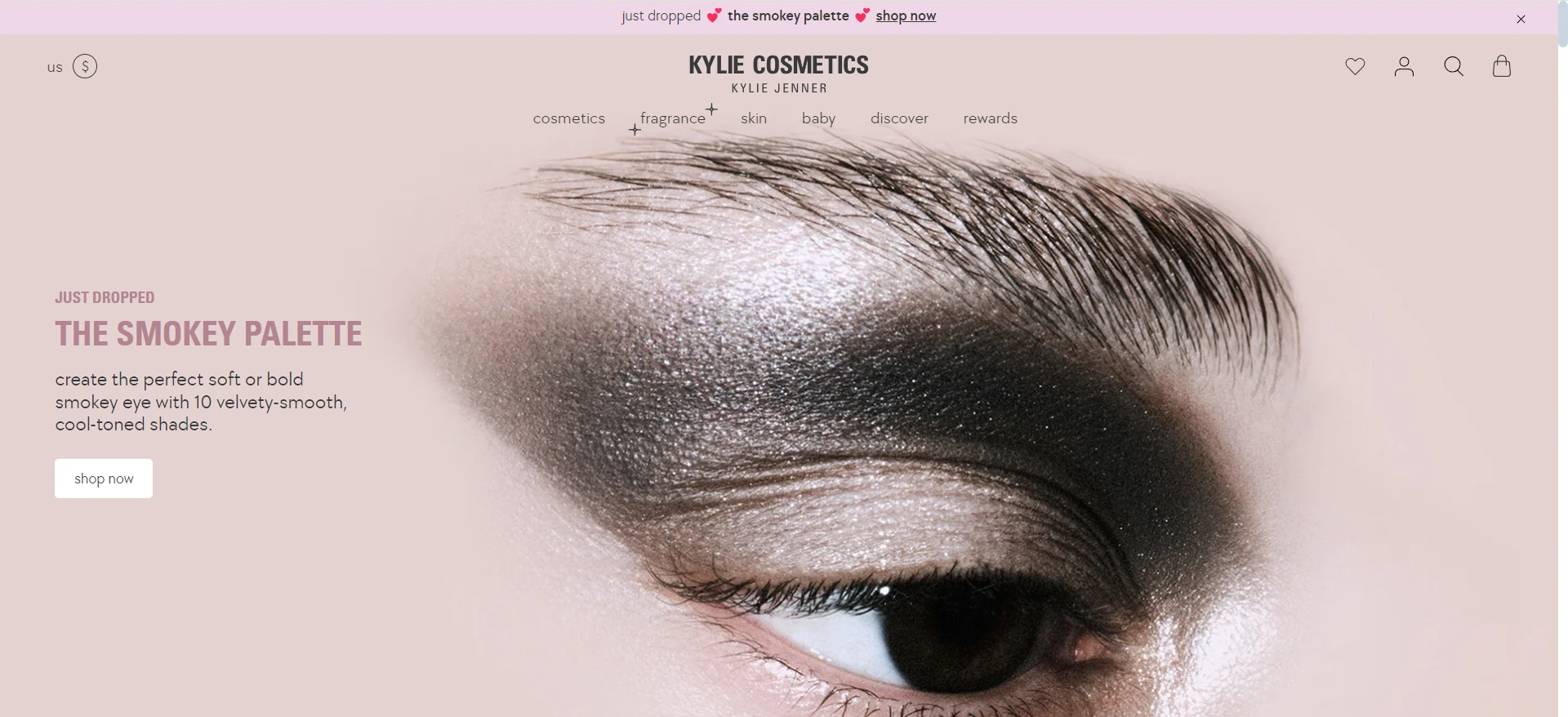
Lesson to learn: Kylie Cosmetics turns Shopify into a high-converting launch platform through limited-edition drops, countdown-style promotions, and scarcity-driven campaigns. Combined with influencer-led marketing and fast mobile shopping, these features help the brand create strong FOMO and drive massive traffic spikes during product releases.
11. ColourPop
Up next, we have ColourPop – one of the very good Shopify store examples we’d love to mention in this list. ColourPop ColourPop is a cosmetics company founded in 2014 in Los Angeles. After ten years, it has gone all the rage for its affordable makeup products and effective influencer marketing campaigns.
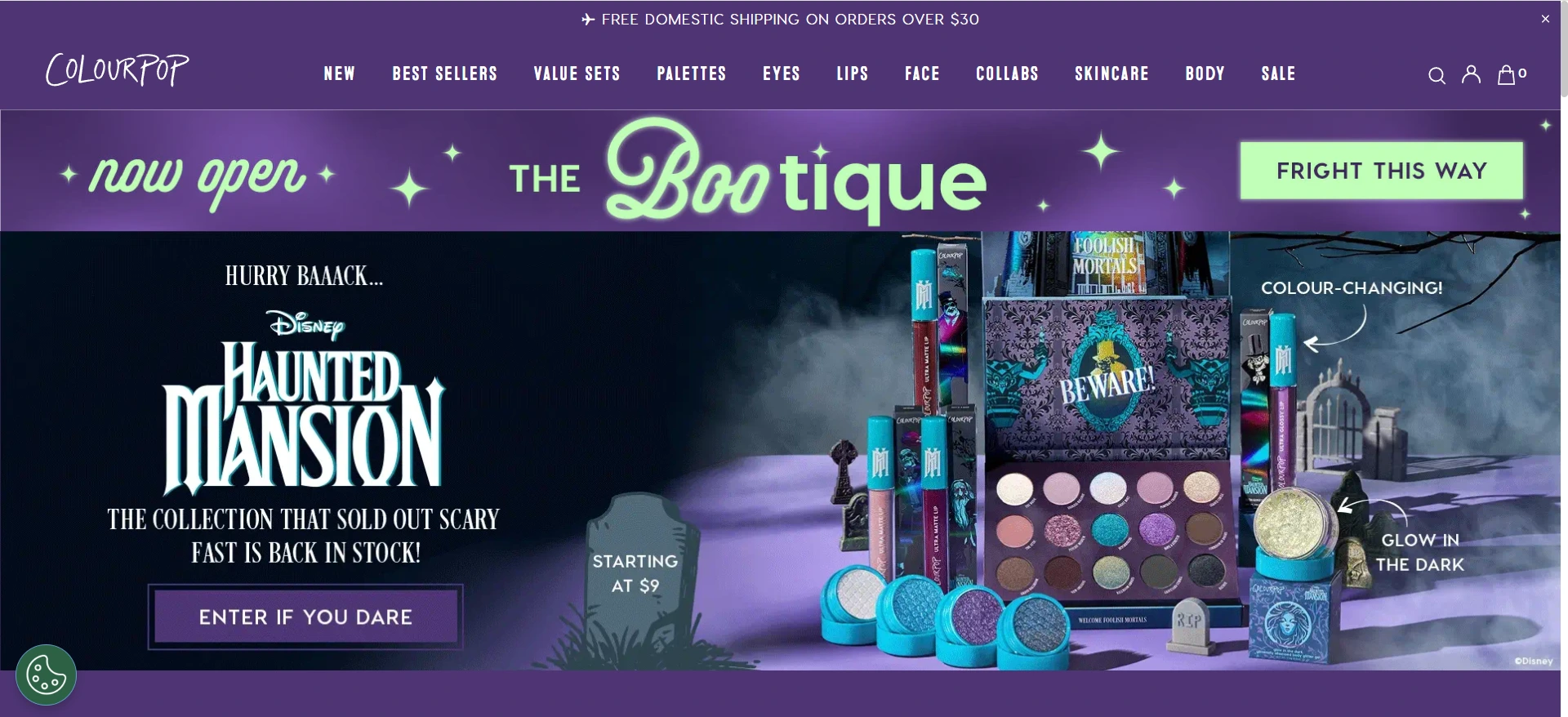
Lesson to learn: The brand engages in limited-edition collaborations with influencers and pop culture entities, creating buzz and driving sales. These partnerships expand their reach and resonate with diverse consumer segments.
12. Tiege Hanley
Tiege Hanley, founded in 2016 by Kelley Thornton, Rob Hoxie, and Aaron Marino, began with a simple mission: to revolutionize men’s skincare by making it uncomplicated, high-quality, and affordable. The brand’s commitment to innovation and customer-centric solutions has established Tiege Hanley as one of the most inspiring Shopify store examples for businesses looking to create meaningful connections with their audience.
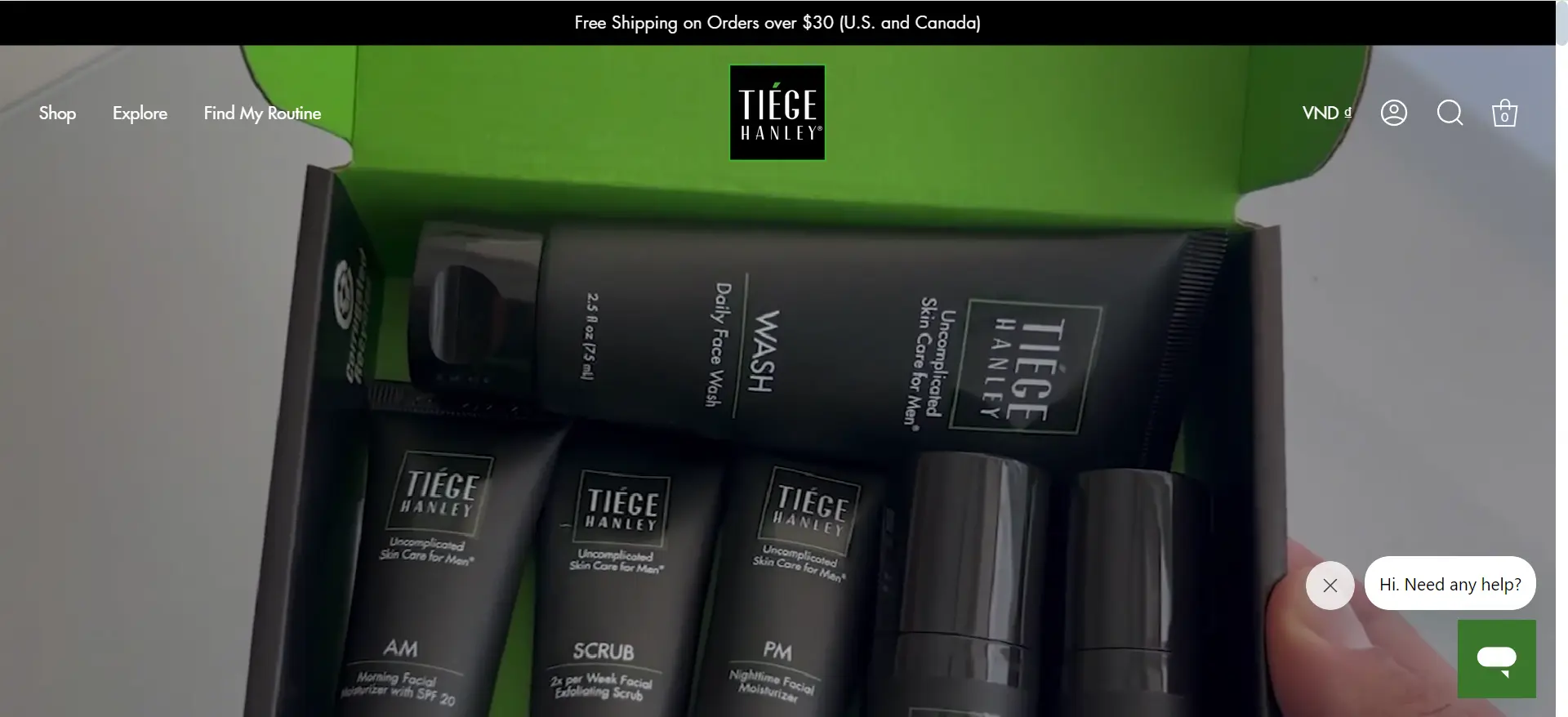
Lesson to learn: Shopify’s subscription and bundling features fit naturally with Tiege Hanley’s simplified skincare model for men. The brand structures its storefront around guided skincare systems and recurring delivery plans, making repurchase easier and more consistent for customers who prefer simple routines.
13. Glossier
Before becoming one of the most recognizable beauty brands online, Glossier actually started as the beauty blog Into the Gloss. Founded by Emily Weiss in 2014, the brand grew by turning beauty conversations and community feedback into actual products. Its “Skin First. Makeup Second.” philosophy also helped Glossier stand apart from more traditional beauty brands focused on heavy glamor and complex routines.
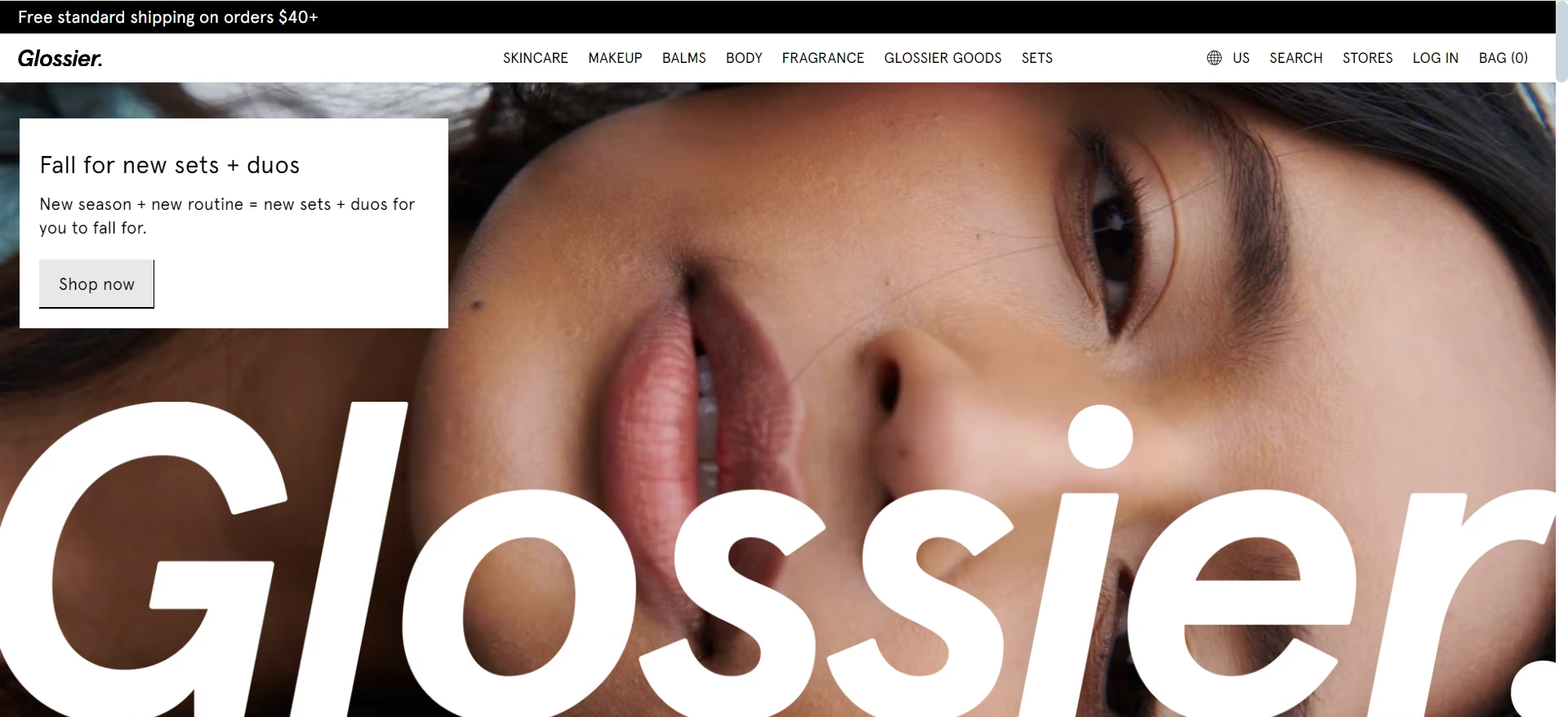
Lesson to learn: Rather than separating content and commerce, Glossier uses Shopify to keep editorial storytelling, customer feedback, and product discovery closely connected throughout the storefront. This approach makes the shopping experience feel much more community-driven and conversational.
14. The Honey Pot
Our list of the top Shopify store examples would be incomplete without The Honey Pot Company – a plant-based feminine care company founded by Bea Dixon in 2014. The company offers a wide range of natural, chemical-free products for menstrual, vaginal, and overall feminine care.
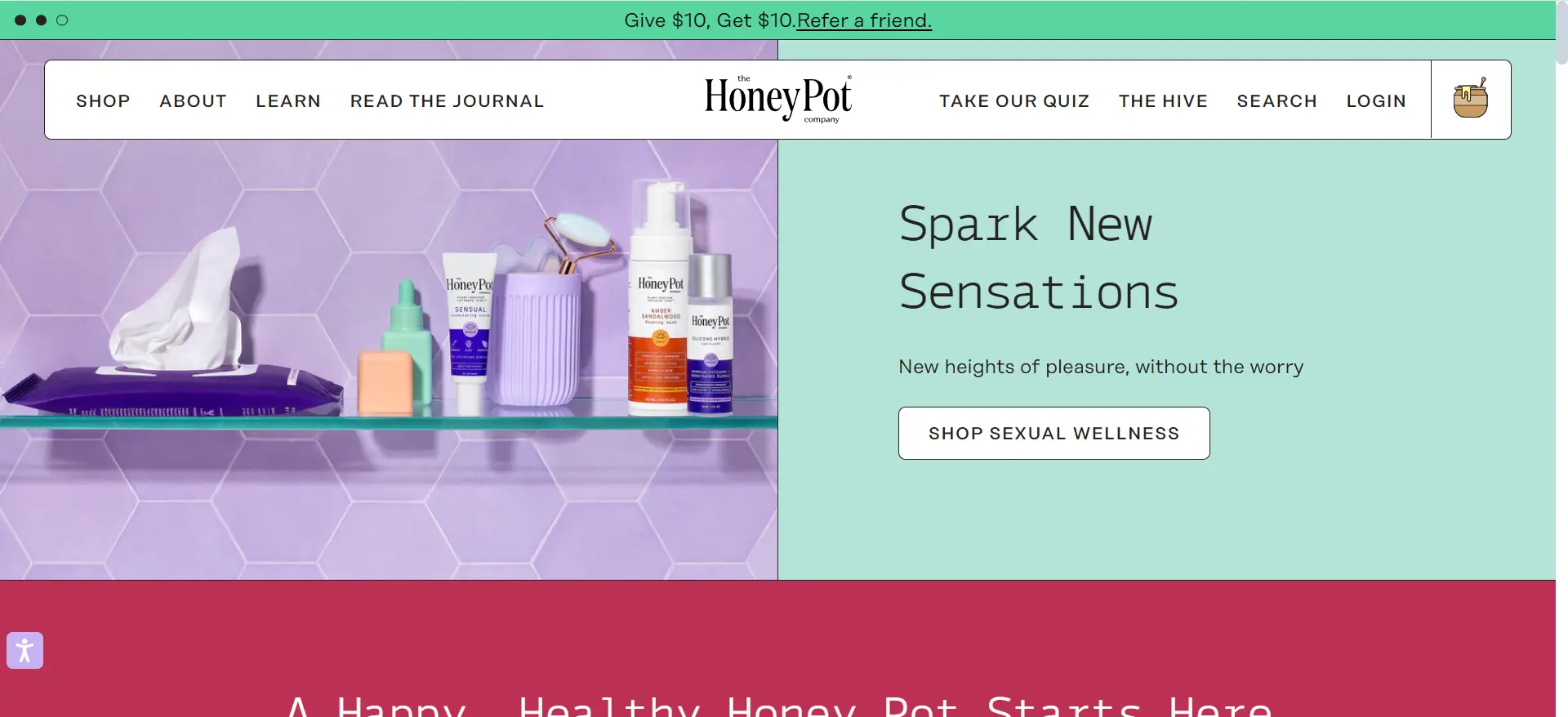
Lesson to learn: As the company expanded into major retail chains like Target, Walmart, and Walgreens, Shopify helped maintain a consistent shopping experience and brand identity across channels. This stronger retail presence significantly increased the brand’s visibility and helped transform it into a widely recognized feminine care brand.
15. Dermalogica
Dermalogica, founded in 1986 by skin therapist Jane Wurwand, has become a leading professional skincare brand, trusted by over 100,000 skin therapists in more than 100 countries. The brand emphasizes education and personalized skincare solutions, offering products free from artificial colors, fragrances, and common irritants.
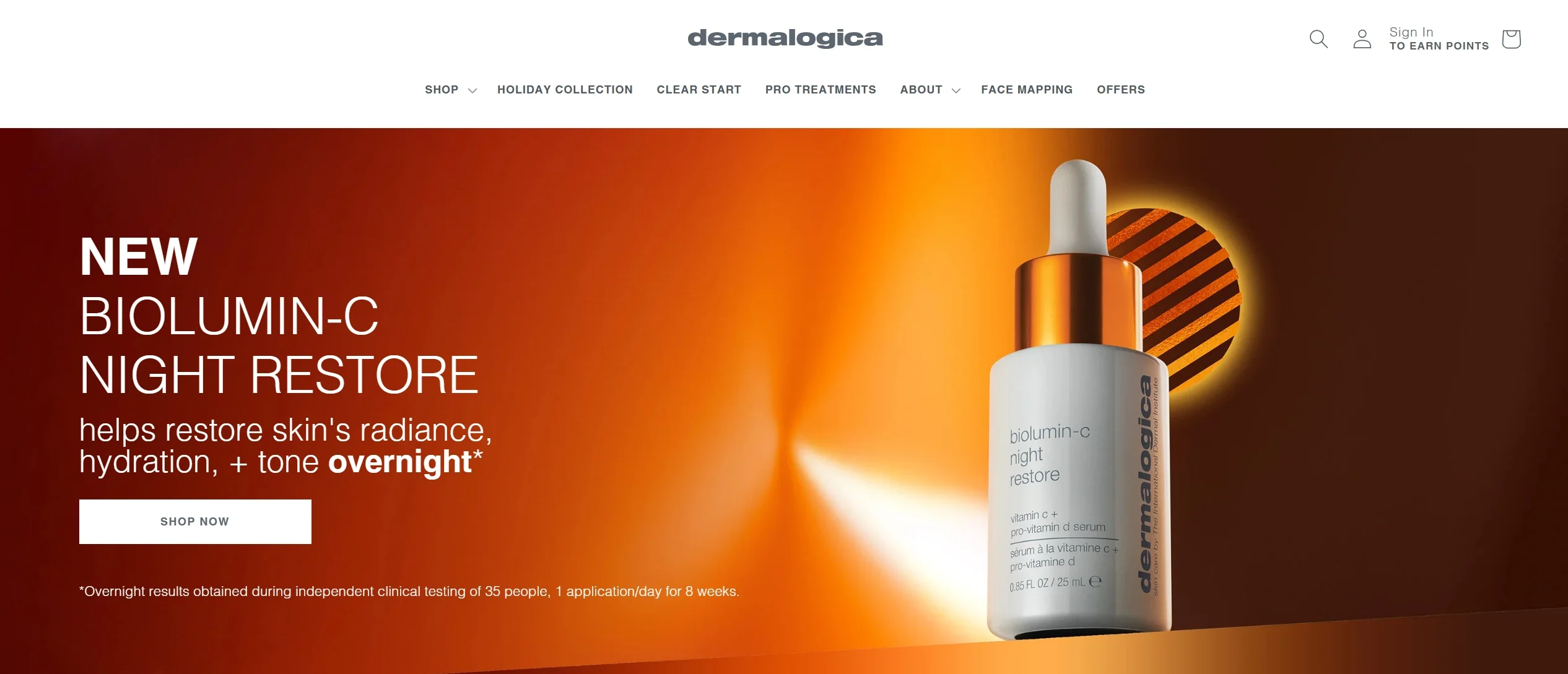
Lesson to learn: Using Shopify Flow, Dermalogica automated product sample suggestions based on customer conversion data. This innovative use of Shopify tools optimized marketing campaigns, further solidifying its status among notable Shopify online store examples.
16. SWATI Cosmetics
SWATI Cosmetics, founded by Swedish entrepreneur Vishal Nanda and Indian makeup artist Swati Verma, emerged from their shared passion for beauty and personal expression. Inspired by Swati’s use of colored contact lenses to enhance her appearance, the duo launched SWATI Cosmetics to offer high-quality, natural-looking colored lenses suitable for all skin tones. Their mission is to empower individuals to express their unique beauty confidently.
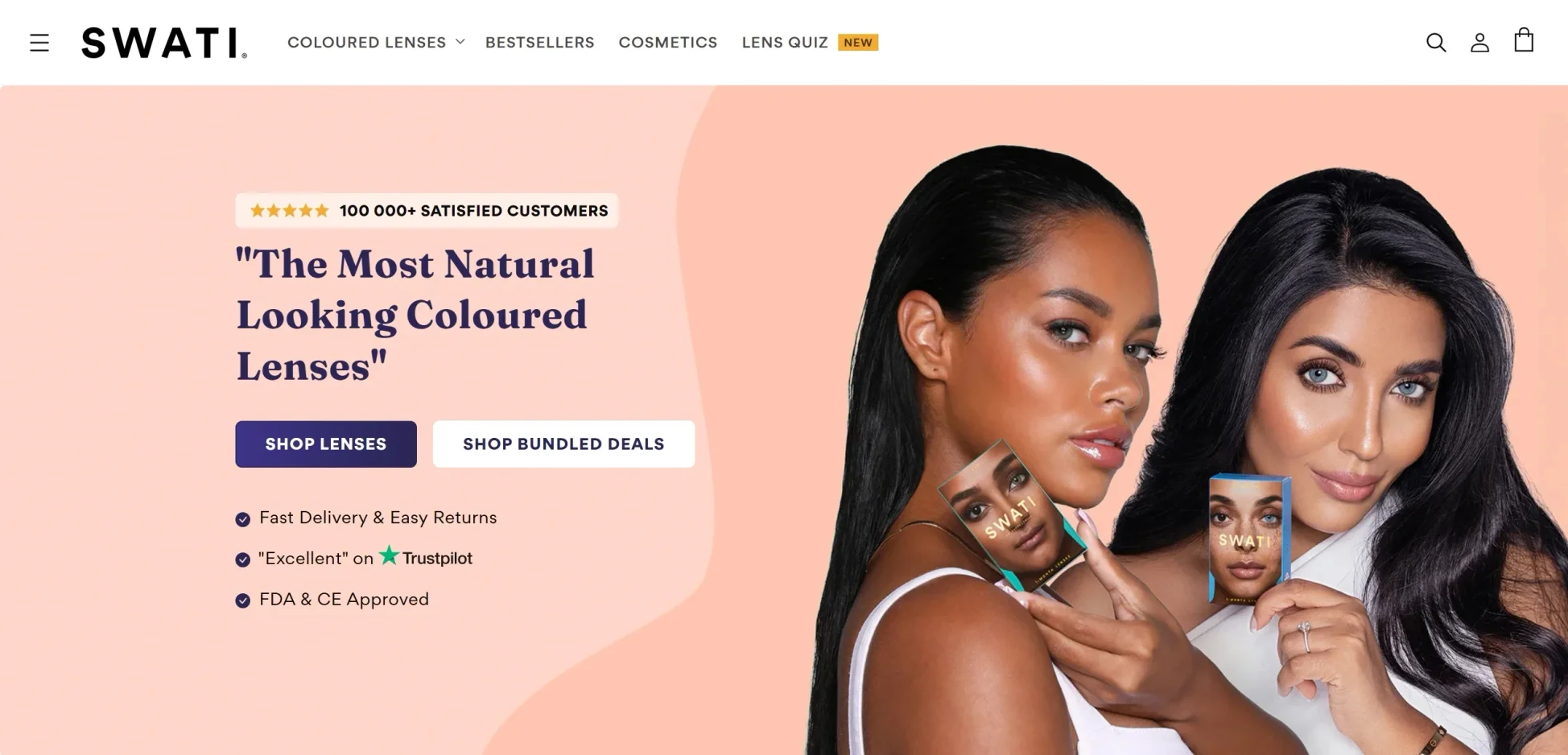
Lesson to learn: Shopify Plus enabled SWATI Cosmetics to expand globally with ease. The platform’s scalability and international capabilities have allowed the brand to reach a diverse customer base, making it a prime example among Shopify online store examples.
17. Esmi Skin Minerals
Esmi Skin Minerals, founded in 2013 by Evette Hess-McEwan, emerged from her extensive experience in the beauty industry and a desire to create makeup products that wouldn’t exacerbate skin issues. With a commitment to cruelty-free, vegan-friendly formulations and a focus on natural ingredients, Esmi has gained international acclaim.
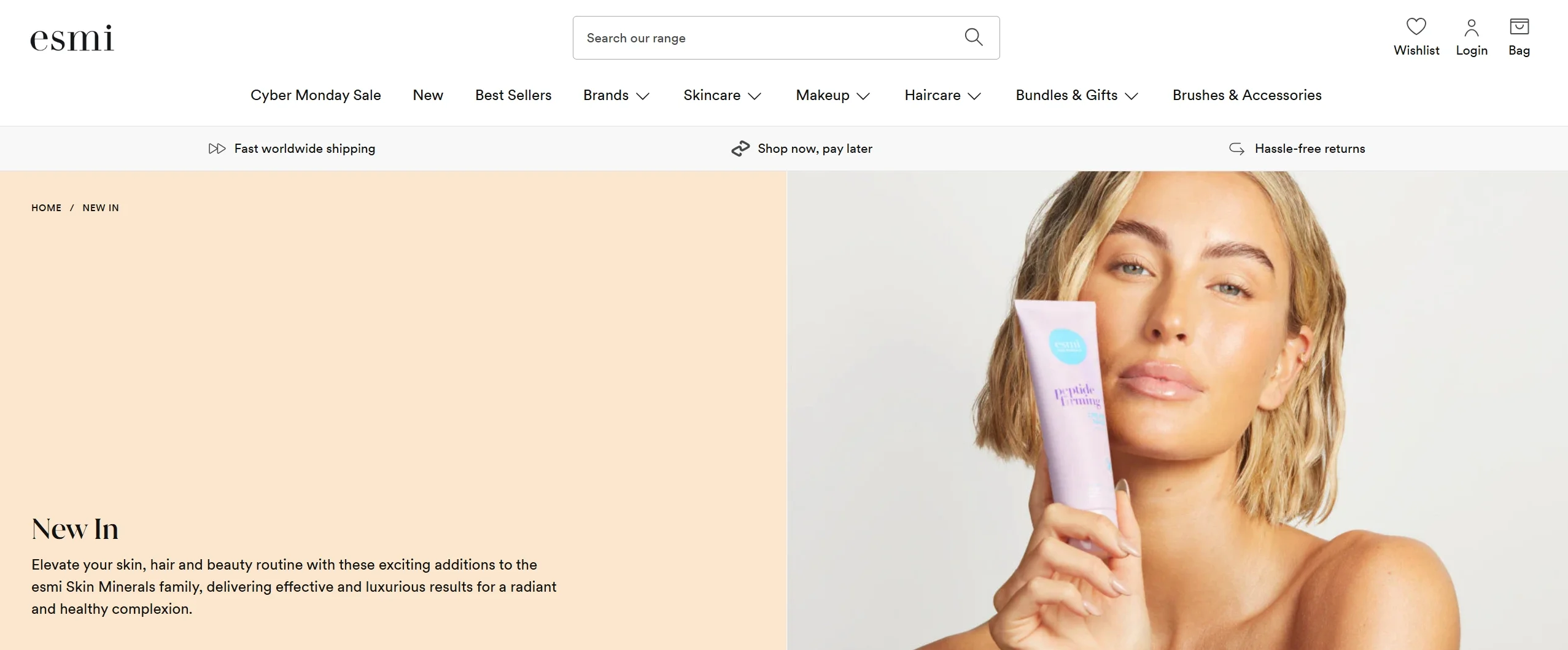
Lesson to learn: Esmi combines Shopify’s customizable themes with flexible product page layouts to maintain a clean and calming storefront aesthetic. Shopify’s scalability also supports the brand’s international growth, helping Esmi expand into larger retail partnerships such as Sephora Southeast Asia.
18. Dollar Shave Club
Dollar Shave Club, founded in 2011 by Mark Levine and Michael Dubin, revolutionized men’s grooming by delivering high-quality razors directly to consumers through a subscription model. This approach disrupted traditional retail, offering convenience and affordability. Over time, the company expanded its product line to include skincare, haircare, and oral care items, becoming a comprehensive personal care brand among successful Shopify store examples.
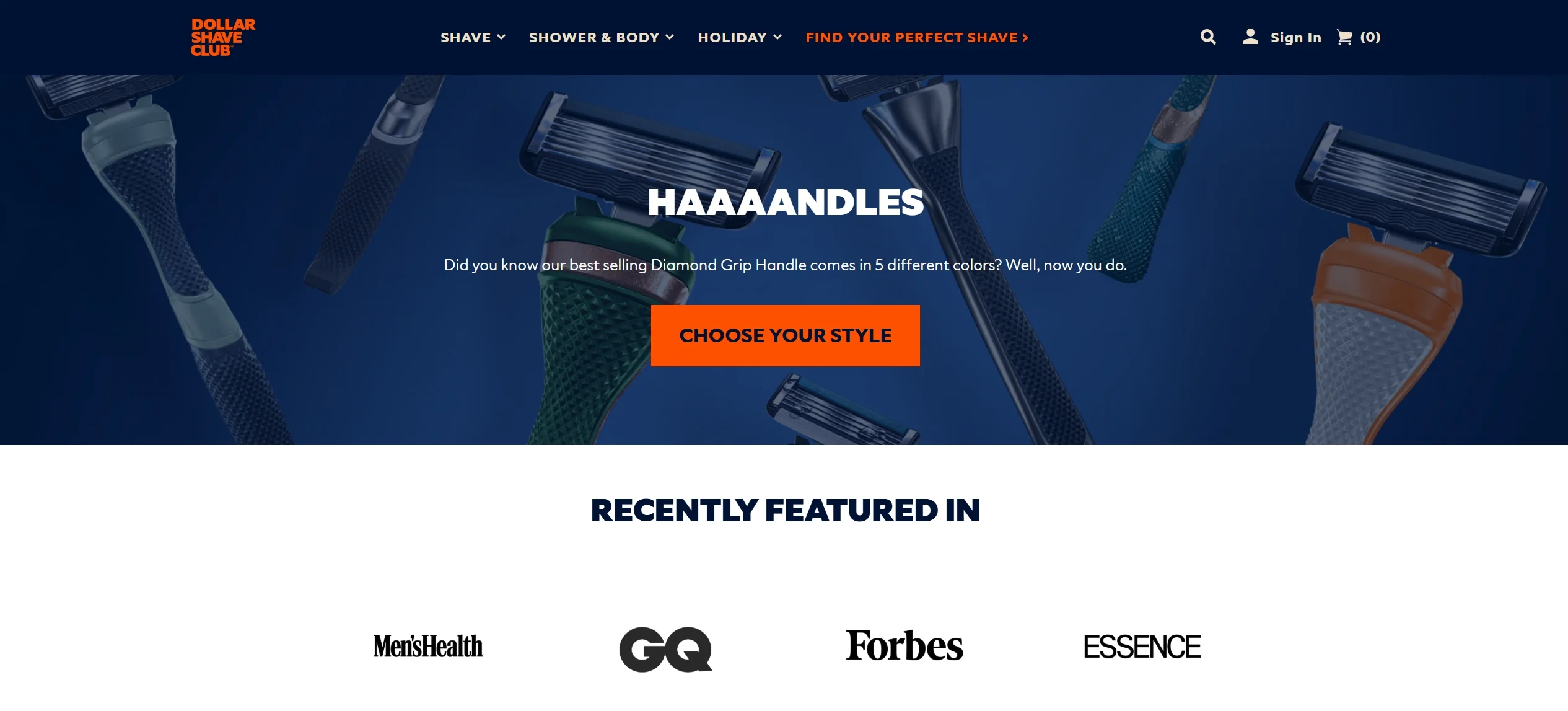
Lesson to learn: By integrating Klaviyo, Dollar Shave Club leveraged data from its tech stack to develop and send highly personalized emails at scale. This strategy enhanced customer engagement and retention.
19. AMR Hair & Beauty
Ending this category with a much larger catalog-focused business, AMR Hair & Beauty operates as one of Australia’s leading suppliers of professional hair and beauty products. Founded in 2004, the company serves both salon professionals and everyday retail customers through a mix of physical stores and a large Shopify-powered online catalog.
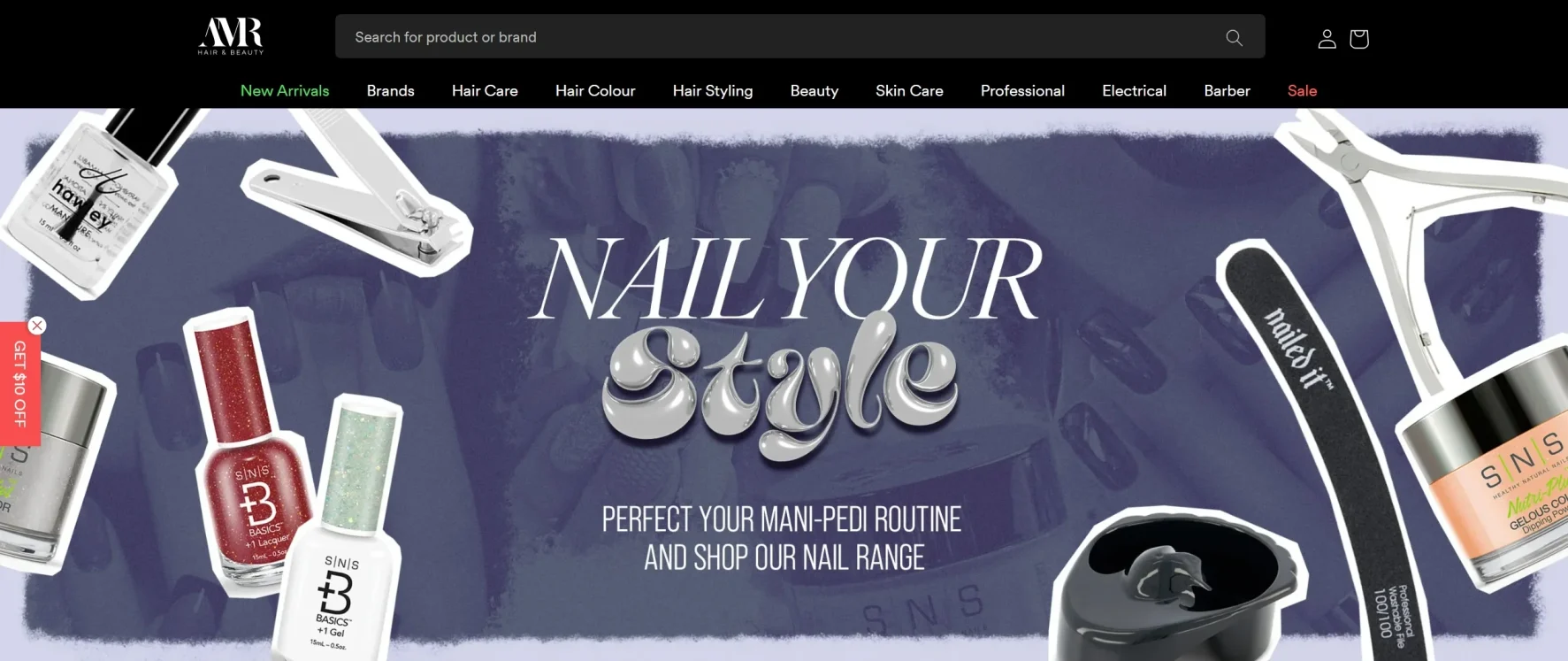
Lesson to learn: Utilizing Shopify’s B2B features, AMR implemented ten distinct pricing tiers for wholesale customers. The system automatically displays appropriate pricing based on customer status, streamlining the purchasing process and improving the user experience for B2B clients.
Best Jewelry Shopify Store Examples
20. Daniel Wellington
Founded in 2011 by Filip Tysander, Daniel Wellington is a global brand renowned for its minimalist, elegant designs in watches and accessories. The brand’s signature watches feature interchangeable NATO straps, offering customers the freedom to personalize their look.
By leveraging Shopify, Daniel Wellington successfully scaled its operations and maintained its customer-first approach, solidifying its place as one of the top Shopify store examples in the luxury fashion sector.
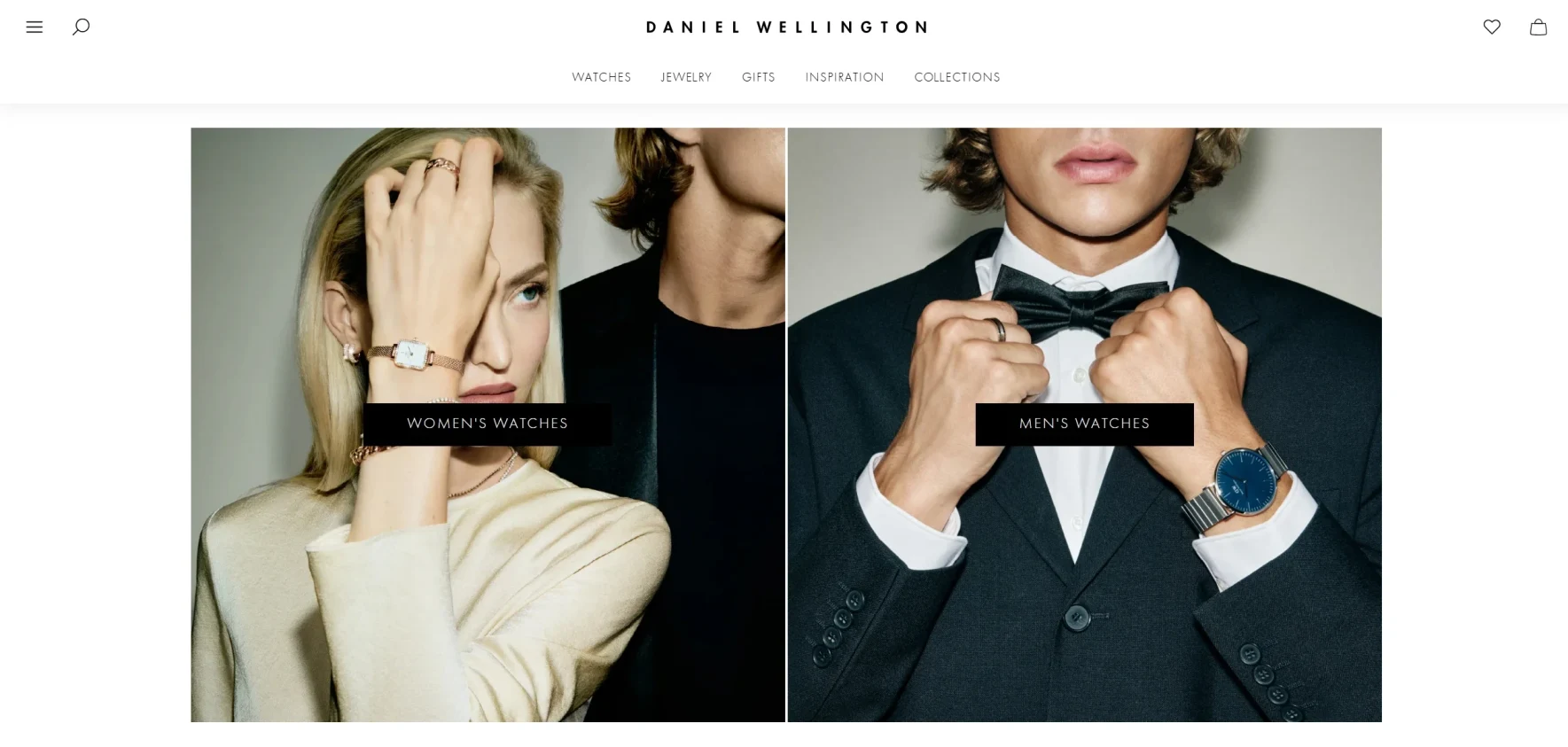
Lesson to learn: Daniel Wellington makes strong use of Shopify’s multi-currency and multi-language capabilities to create a smoother global shopping experience. The brand also integrates Klaviyo with Shopify to automate personalized email flows based on customer behavior, helping increase repeat purchases and drive significant revenue from email campaigns.
21. SHASHI
SHASHI is known for handcrafted jewelry that blends contemporary fashion with cultural influences. Over the years, the brand has gained strong visibility through celebrity exposure, with names like Taylor Swift, Rihanna, and Katy Perry spotted wearing its designs. The storefront itself keeps a clean and fashion-forward aesthetic that matches the brand’s premium positioning.
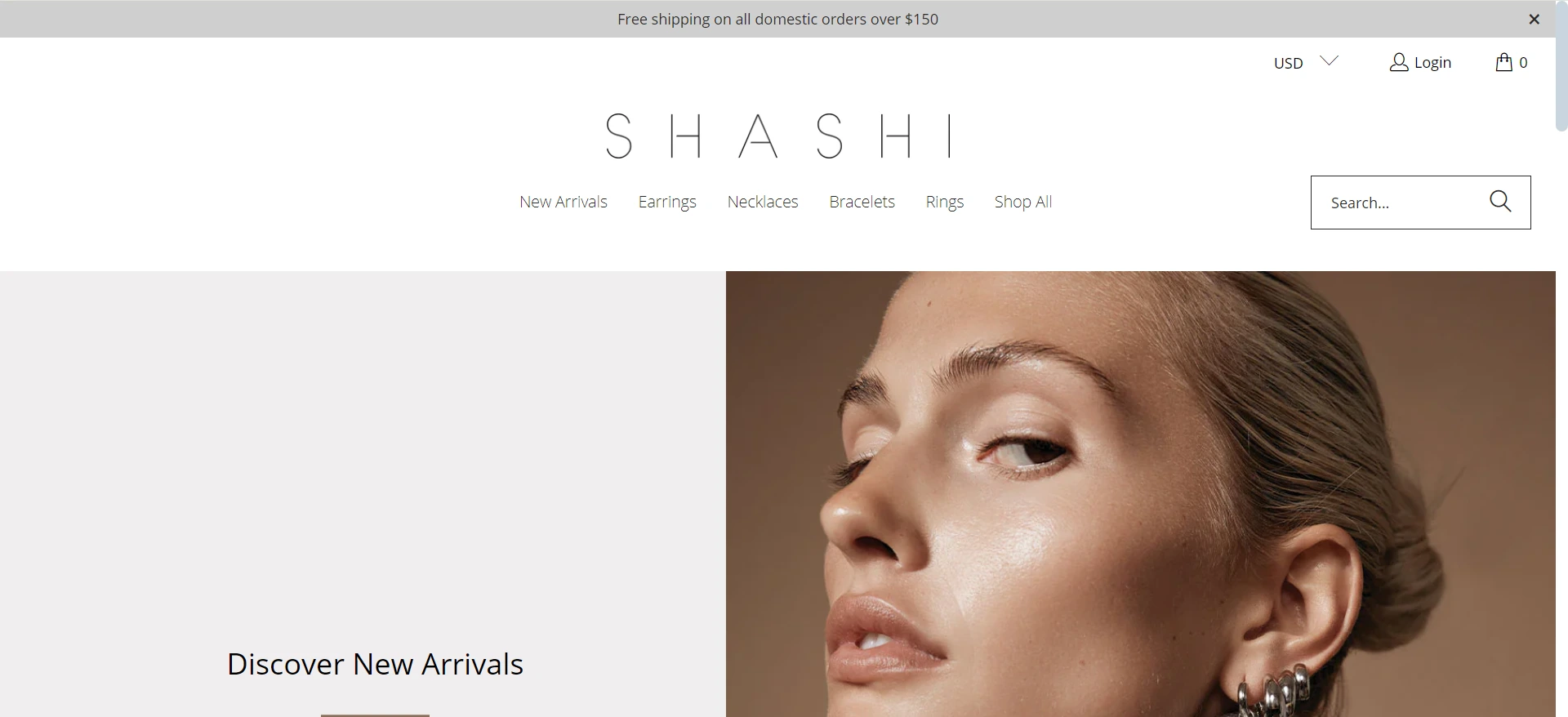
Lesson to learn: Shopify gives SHASHI enough flexibility to maintain a visually polished storefront while scaling globally. Clean product categorization, mobile-friendly layouts, and streamlined navigation help the brand showcase handcrafted jewelry collections without making the browsing experience feel overcrowded.
22. Pura Vida Bracelets
Pura Vida Bracelets, founded in 2010 by Griffin Thall and Paul Goodman, began as a small venture to support local artisans in Costa Rica. This initiative blossomed into a thriving accessory brand that not only offers vibrant, handcrafted jewelry but also supports artisans worldwide. By embracing Shopify eCommerce platform, Pura Vida has scaled its operations and become a notable instance among the best Shopify store examples.
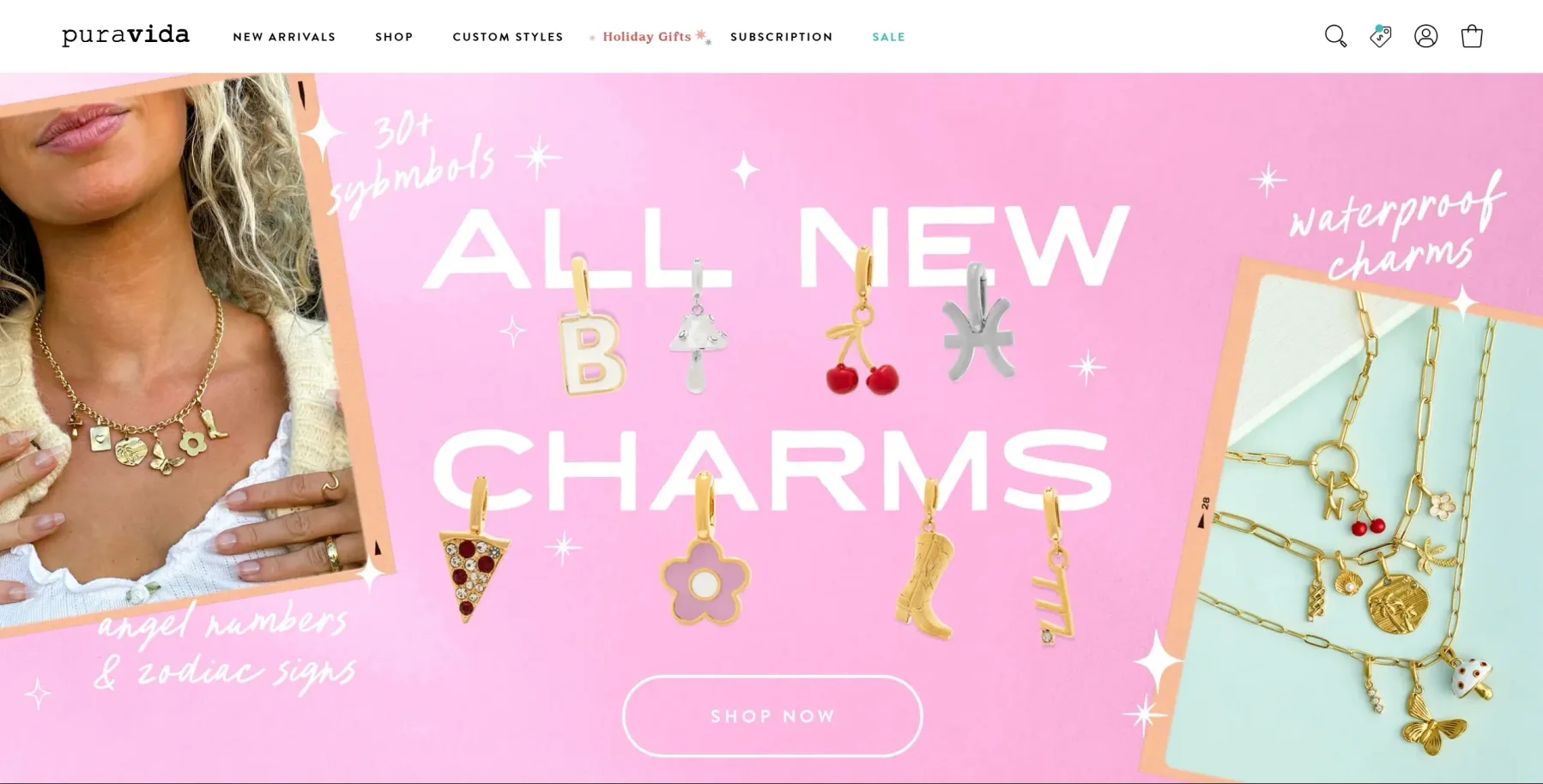
Lesson to learn: Pura Vida integrates with Shopify apps like Email Aptitude, Bronto, and Bluecore to personalize email campaigns based on customer history and shopping behavior. The brand also scales customer acquisition through a massive ambassador program featuring thousands of micro-influencers.
23. Ana Luisa
Founded in 2018 by David Benayoun and Adam Bohbot, Ana Luisa focuses on sustainable, affordable jewelry made from recycled materials and lab-grown diamonds. The brand positions itself as an ethical fashion brand while maintaining a modern, trend-conscious product lineup that strongly appeals to younger consumers.
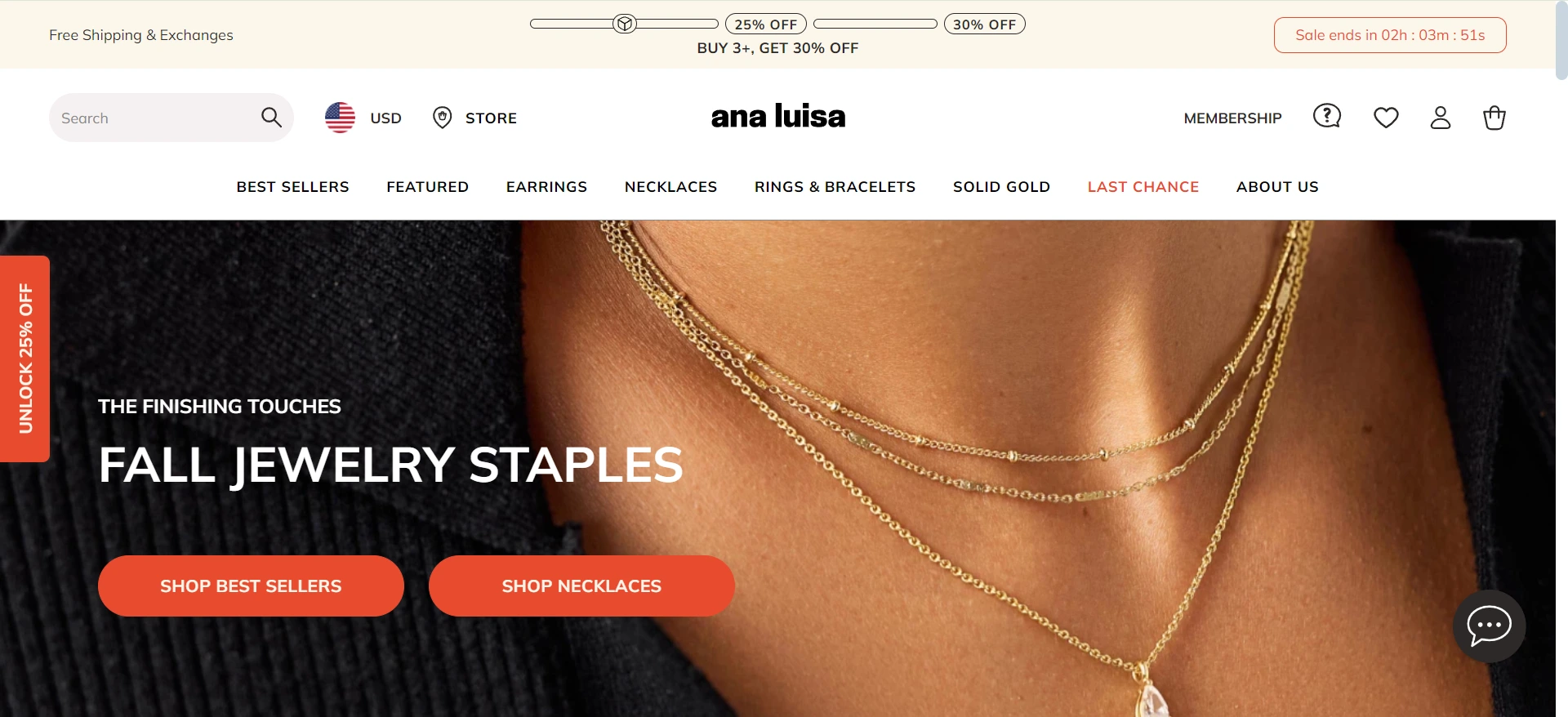
Lesson to learn: Ana Luisa keeps its Shopify storefront highly dynamic through weekly small-batch product releases and limited-run collections. Frequent product updates help the storefront feel consistently fresh while also creating stronger urgency around new arrivals without relying on aggressive discounting.
24. PDPAOLA
PDPAOLA is a Barcelona-based brand known for bold yet feminine jewelry designs that combine modern aesthetics with strong craftsmanship. With Shopify, PDPAOLA has expanded internationally, reaching customers across Europe, North America, and beyond. This makes PDPAOLA one of the standout Shopify store examples in the luxury jewelry market.
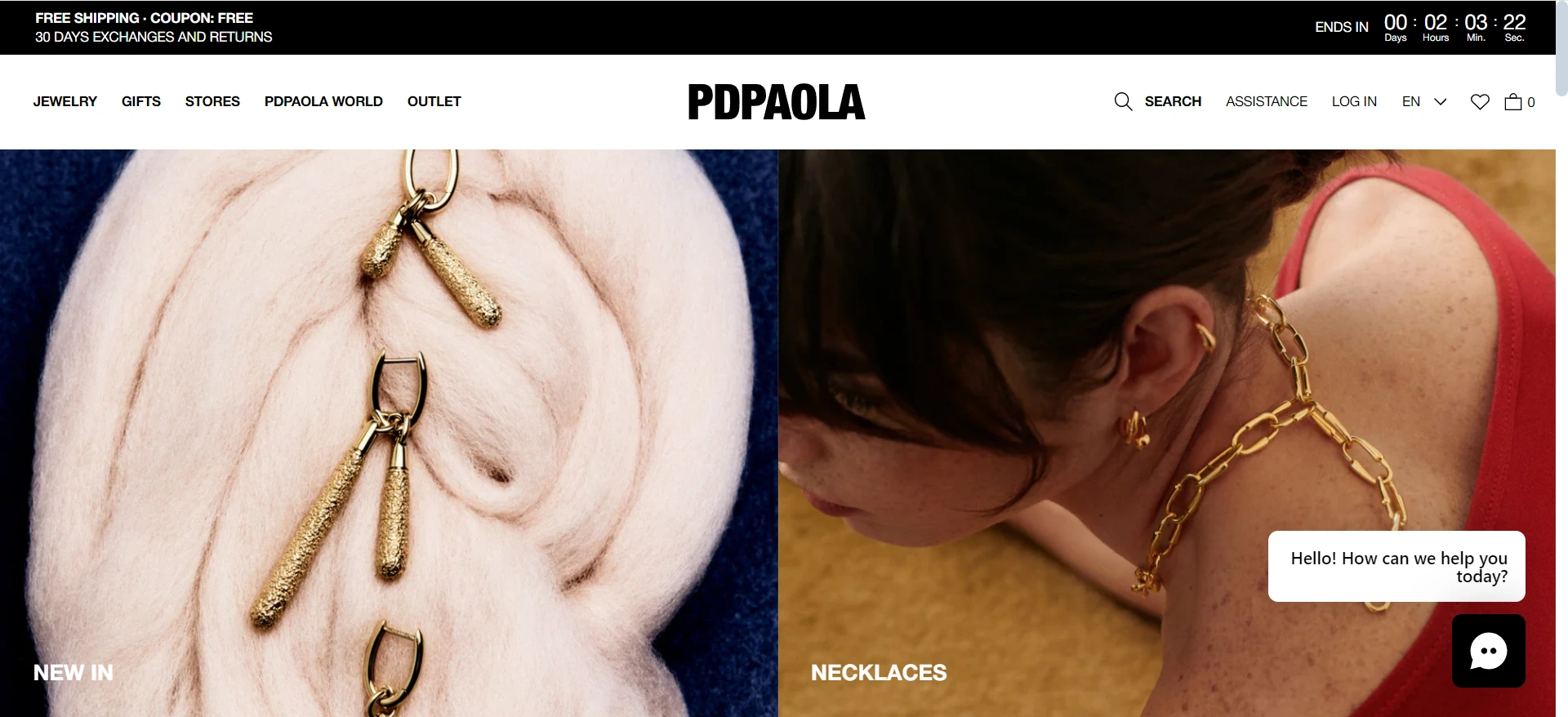
Lesson to learn: PDPAOLA combines Shopify’s advanced analytics with personalized shopping features to create a more tailored customer experience. Product personalization options like engraved jewelry work alongside customer behavior tracking and email campaign optimization, helping the brand improve both engagement and retention.
25. YCL Jewels
YCL Jewels, founded in 2013 by a mother-daughter duo, has quickly established itself as a prominent jewelry brand in the Australian market. Known for its handmade, minimalist designs, YCL Jewels blends timeless elegance with contemporary style. Their storefront focuses heavily on handcrafted details, engraving options, and elegant product presentation instead of trend-driven merchandising.
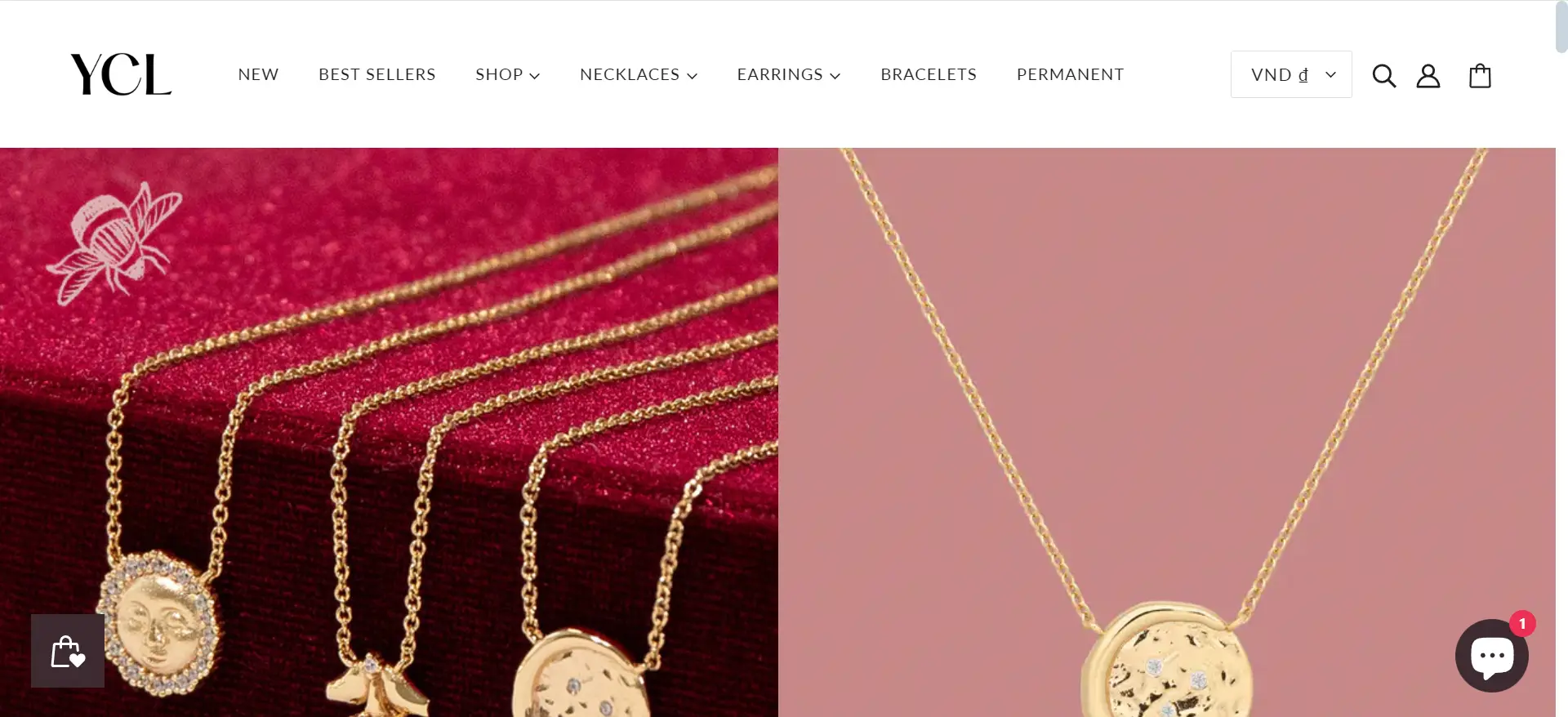
Lesson to learn: Shopify’s customizable product pages allow YCL Jewels to offer engraving options and personalized jewelry selections in a much more intuitive way. Shopify’s multi-currency and multi-language capabilities also support the brand’s growing international customer base without making the storefront experience feel fragmented.
27. Little Words Project
Unlike traditional jewelry brands focused mainly on aesthetics, Little Words Project builds its identity around emotional connection and positive messaging. Every bracelet carries an inspirational word, turning the shopping experience into something much more personal and community-oriented. With Shopify, Little Words Project has expanded its reach, becoming a notable example among successful Shopify jewelry stores.
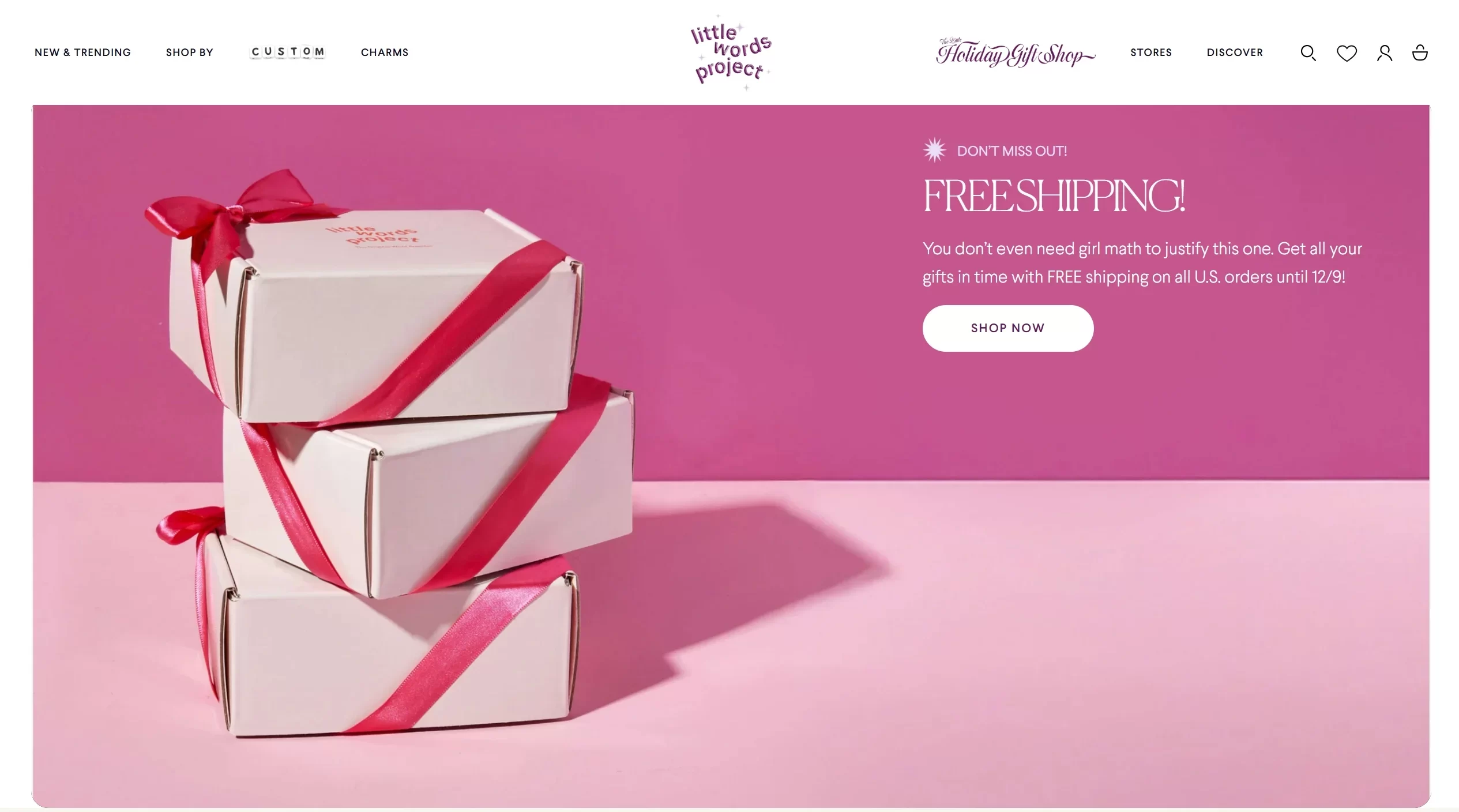
Lesson to learn: By implementing Shopify’s email capture at checkout feature, the brand increased in-store email capture rates by over 20% on average, with some locations seeing up to a 95% increase. This improvement allowed for more targeted and effective marketing campaigns.
27. Astrid & Miyu
Astrid & Miyu, founded in 2012 by Connie Nam, is a London-based jewelry brand renowned for its contemporary designs and innovative customer experiences. Drawing inspiration from the city’s rich arts and architecture, the brand offers pieces that blend modern aesthetics with timeless elegance.
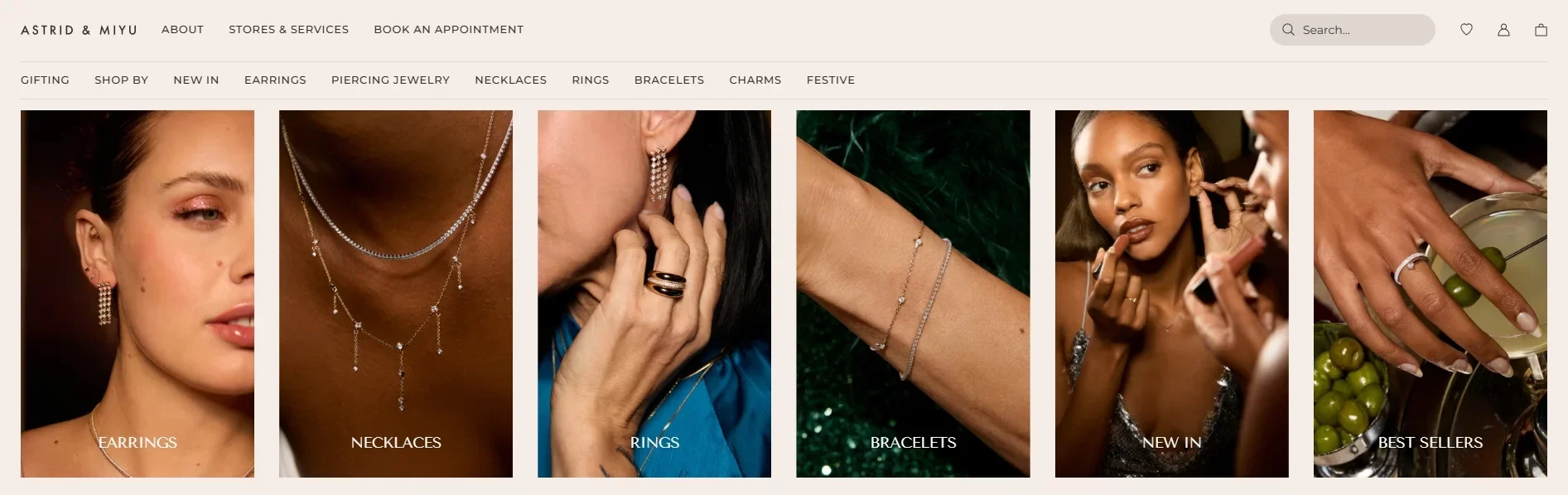
Lesson to learn: Utilizing Shopify’s analytics, the brand personalizes marketing efforts, leading to a 40% higher lifetime value among customers who shop both online and in-store. This data-driven approach ensures relevant and engaging customer interactions.
28. Missoma
Layered jewelry became a huge trend over the past decade, and Missoma positioned itself right at the center of that movement. Through Shopify, the brand combines luxury aesthetics with interactive shopping experiences that make styling jewelry combinations feel much more approachable online. This approach helped Missoma scale internationally and become one of the most inspiring Shopify store examples in the jewelry industry.
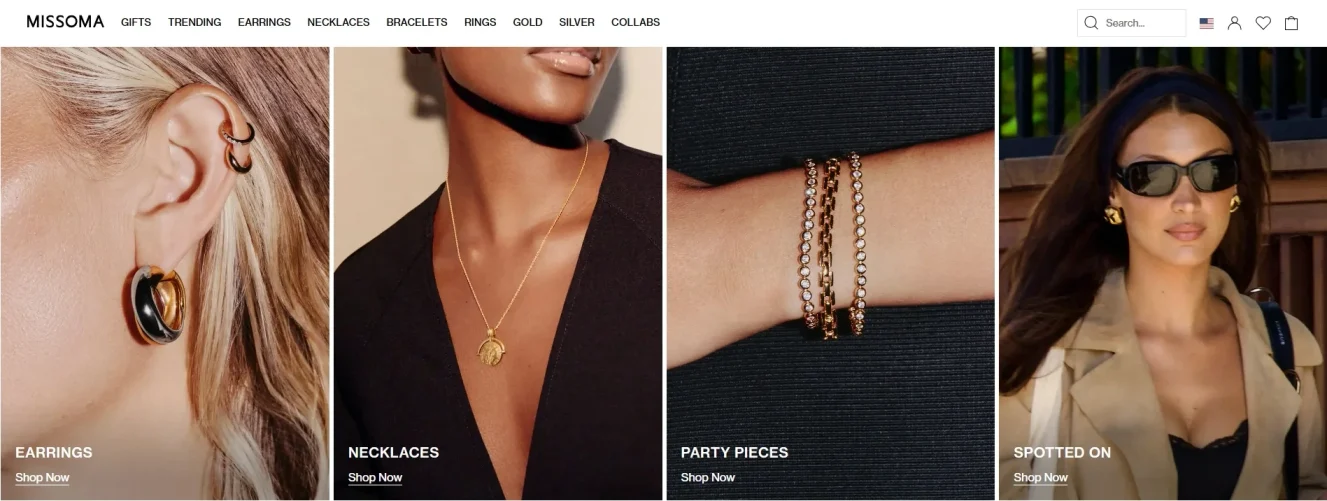
Lesson to learn: Missoma uses Shopify’s scalable infrastructure to support international expansion while maintaining a highly interactive shopping experience. Features like the necklace layering tool let customers experiment with styling combinations directly on the storefront before purchase.
29. GIVA
Compared to many heritage jewelry brands, GIVA represents a newer generation of digital-first fine jewelry companies. Inspired by sterling silver’s success in markets like the U.S., they aimed to make authentic, elegant, and fine jewelry accessible to a broader audience. Thanks to the robust Shopify features, GIVA has rapidly expanded its reach, becoming a notable example among successful Shopify jewelry stores.
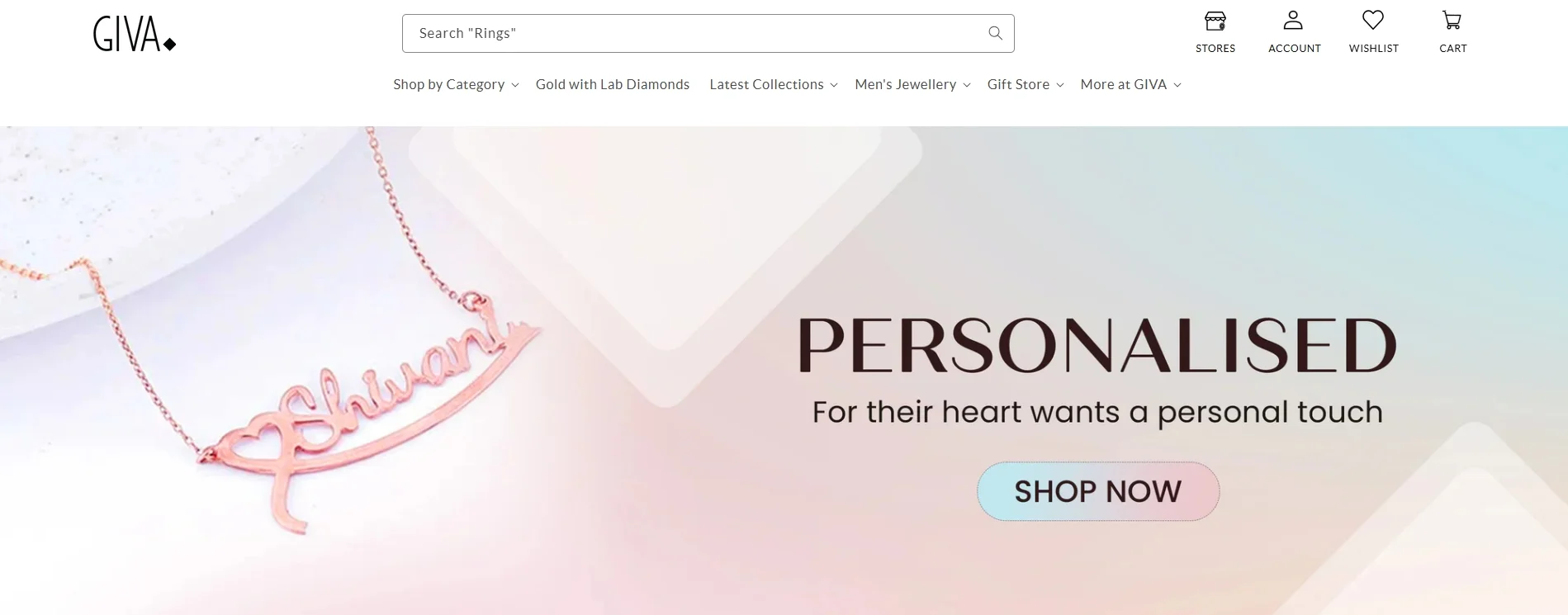
Lesson to learn: With Shopify Plus’s higher API rate limits, GIVA enhanced its Shopify inventory management game, maintaining real-time views across online and retail stores and optimizing operations.
Best Electronic Shopify Store Examples
30. JB Hi-Fi
JB Hi-Fi, one of Australia’s leading electronics retailers, showcases a successful Shopify store example that offers a wide range of consumer electronics, home entertainment, and appliances. With a strong presence both in physical stores and online, JB Hi-Fi has effectively translated its brand to the eCommerce world, offering an easy-to-navigate online presence.
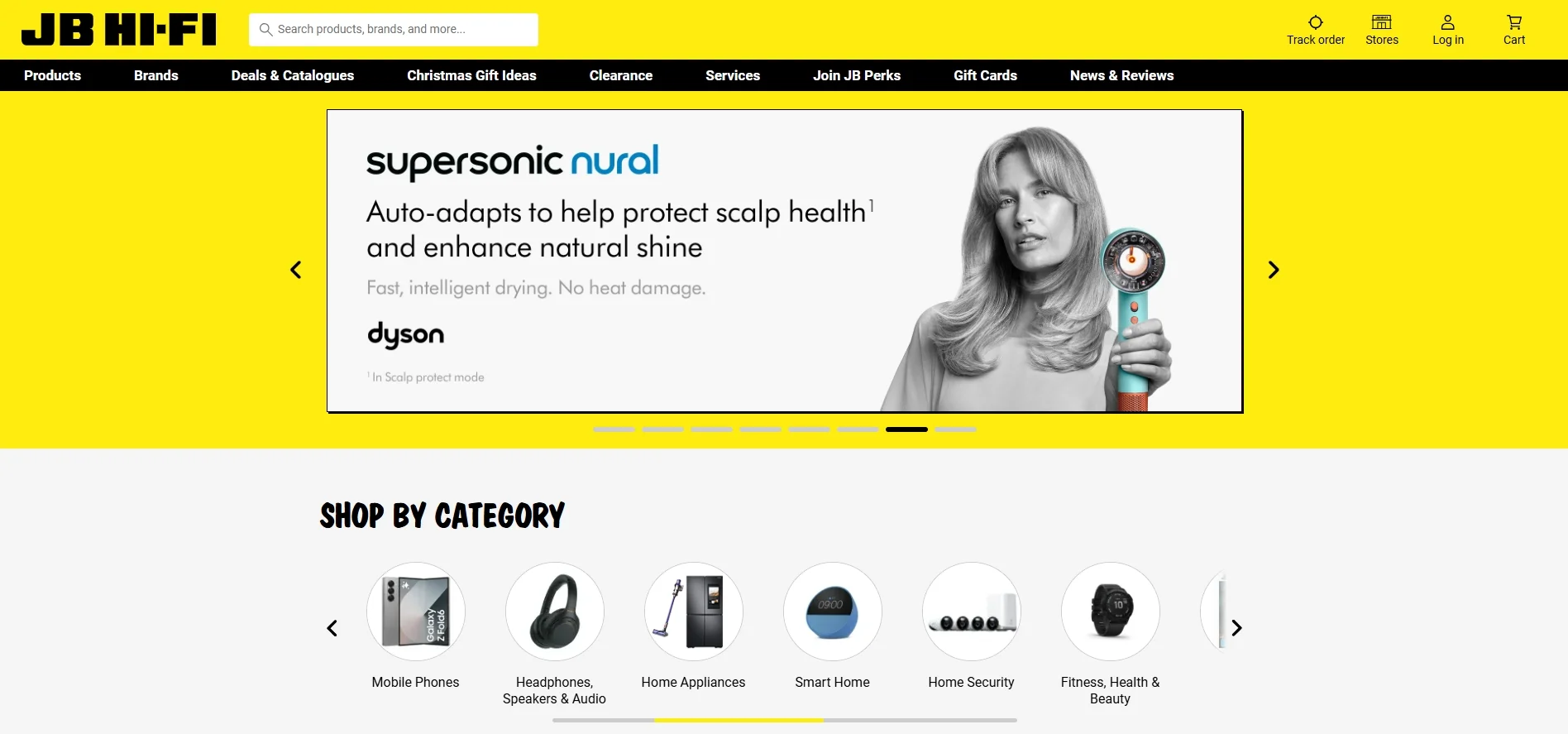
Lesson to learn: JB Hi-Fi makes strong use of Shopify’s advanced search and filtering capabilities to simplify large-scale product discovery. Customers can quickly compare products by brand, price, specifications, and ratings, while Shopify’s streamlined checkout flow and multiple payment options help reduce friction during purchase.
31. Molekule
Molekule is a pioneering brand in the air purification industry, founded with the mission to provide cleaner, healthier air for everyone. Its Shopify store perfectly reflects its commitment to innovation and customer care, offering an easy-to-navigate platform where consumers can purchase the latest air purifiers for different needs and environments.
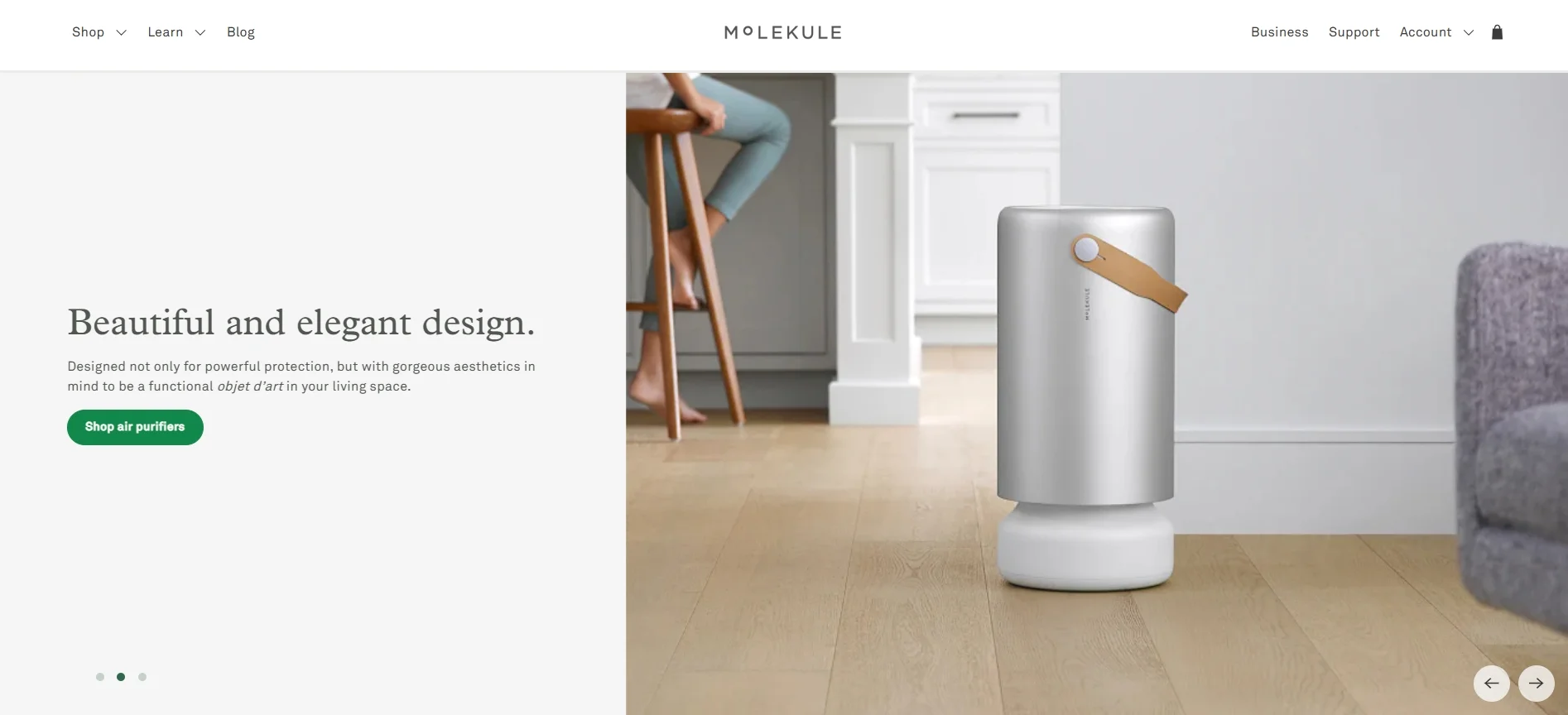
Lesson to learn: One of the standout features of Molekule’s Shopify store is the subscription service for regular filter replacements. This feature ensures customers are reminded when it’s time to replace their filters, making maintenance easier and enhancing the customer experience over the long term.
32. Skullcandy
While some audio brands lean toward minimalism, Skullcandy takes the opposite direction with a much more energetic and lifestyle-focused storefront. Bold visuals, colorful product options, and multimedia-heavy product pages help the Shopify store feel closely connected to youth culture and everyday entertainment.
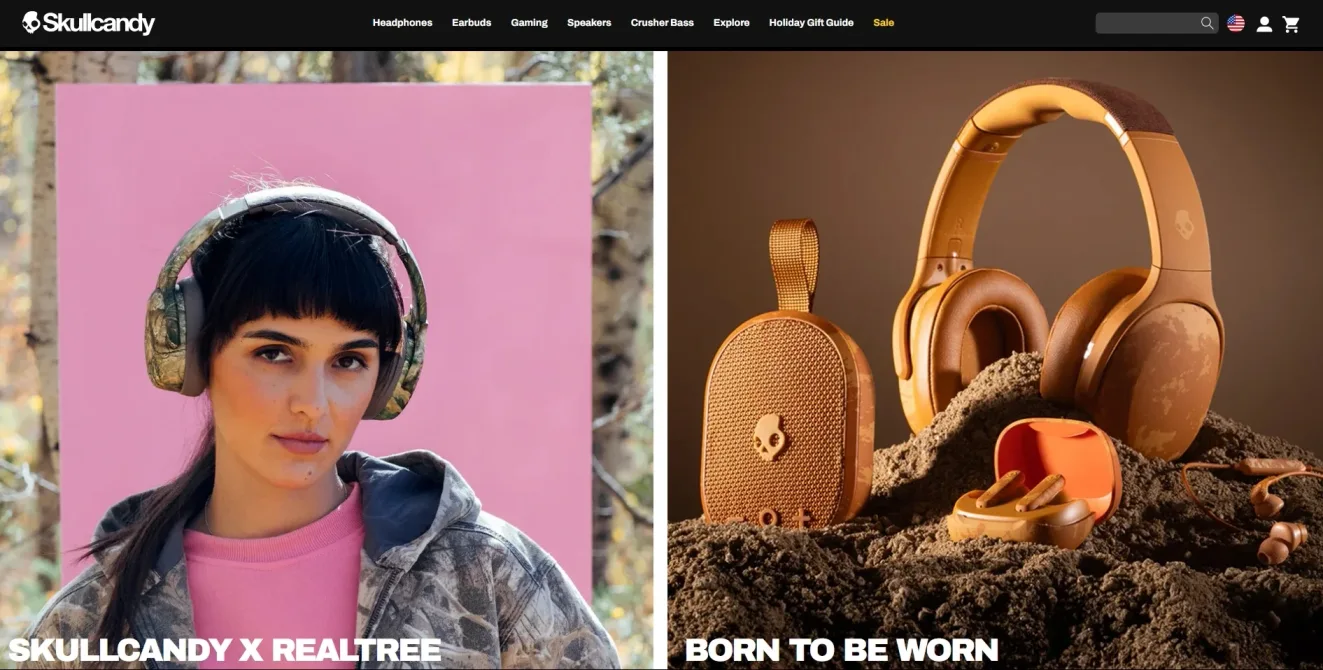
Lesson to learn: Customizable product options give Skullcandy shoppers the flexibility to personalize headphones and earbuds with different colors and finishes. At the same time, video-heavy product pages and interactive media sections make the storefront feel more energetic and lifestyle-oriented rather than overly technical.
33. Turtle Beach
Turtle Beach, established in 1975, is a leading global manufacturer of gaming headsets and audio accessories. The company offers a diverse range of products compatible with various gaming platforms, including consoles and PCs.
By migrating to Shopify Plus, Turtle Beach has effectively scaled its global operations and enhanced its direct-to-consumer (DTC) sales, positioning itself among successful Shopify store examples.
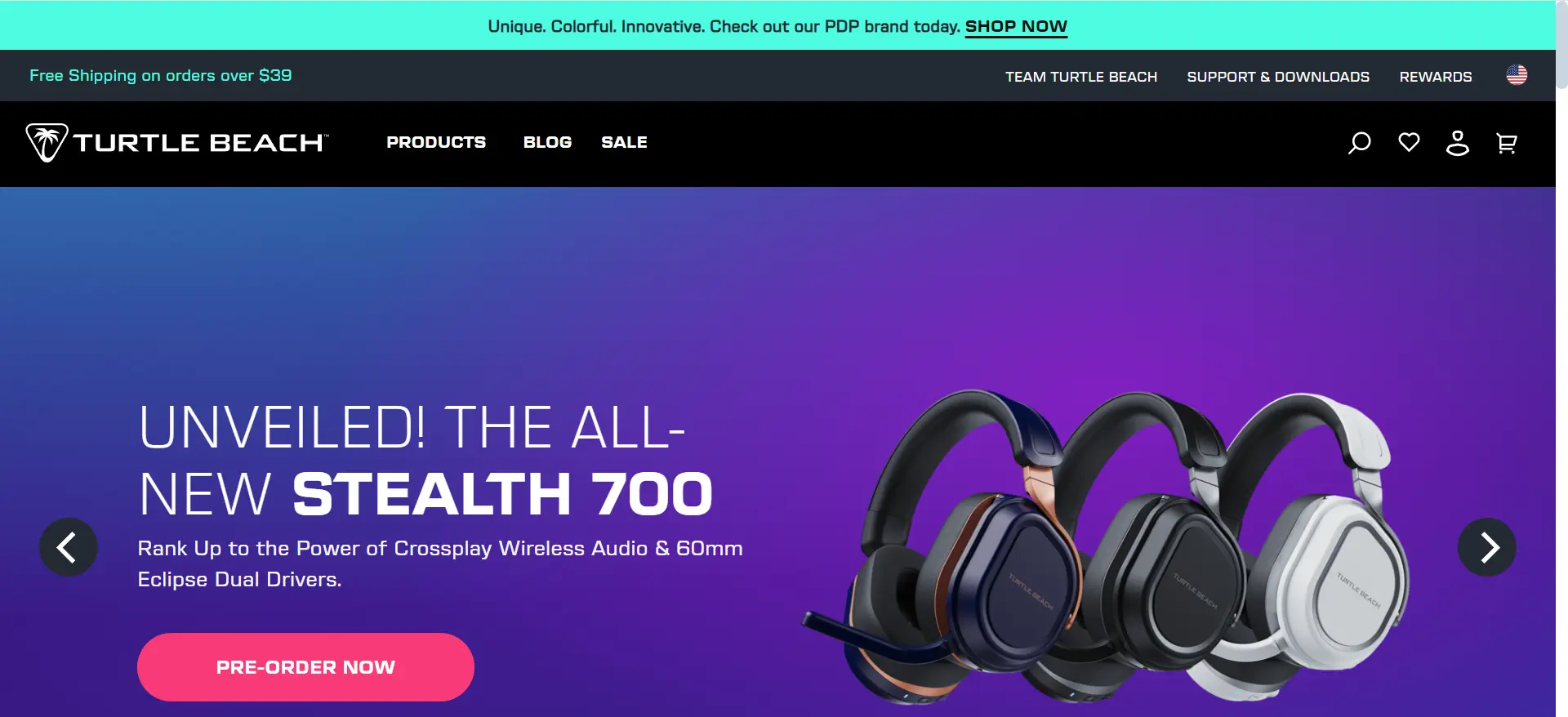
Lesson to learn: Turtle Beach improves international sales through Shopify Payments, helping reduce foreign transaction complications and streamline global checkout. The brand also optimized navigation and product presentation after moving to Shopify Plus, making technical gaming products easier to browse and compare.
As more enterprise brands using Shopify Plus for scalability and flexibility, many merchants are also reconsidering their current platforms. If you are planning a migration to Shopify, LitExtension can help you transfer your store data accurately with minimal downtime.
Let Our Experts Handle Your Store Migration!
With the All-in-One Migration Service, our experts take care of everything, ensuring a seamless and stress-free migration.
34. Paperlike
Some of the best Shopify store examples focus on solving one very specific problem extremely well, and Paperlike is a strong example of that. The brand built its reputation around iPad screen protectors designed to recreate the feel of writing on paper for artists, students, and digital creators.
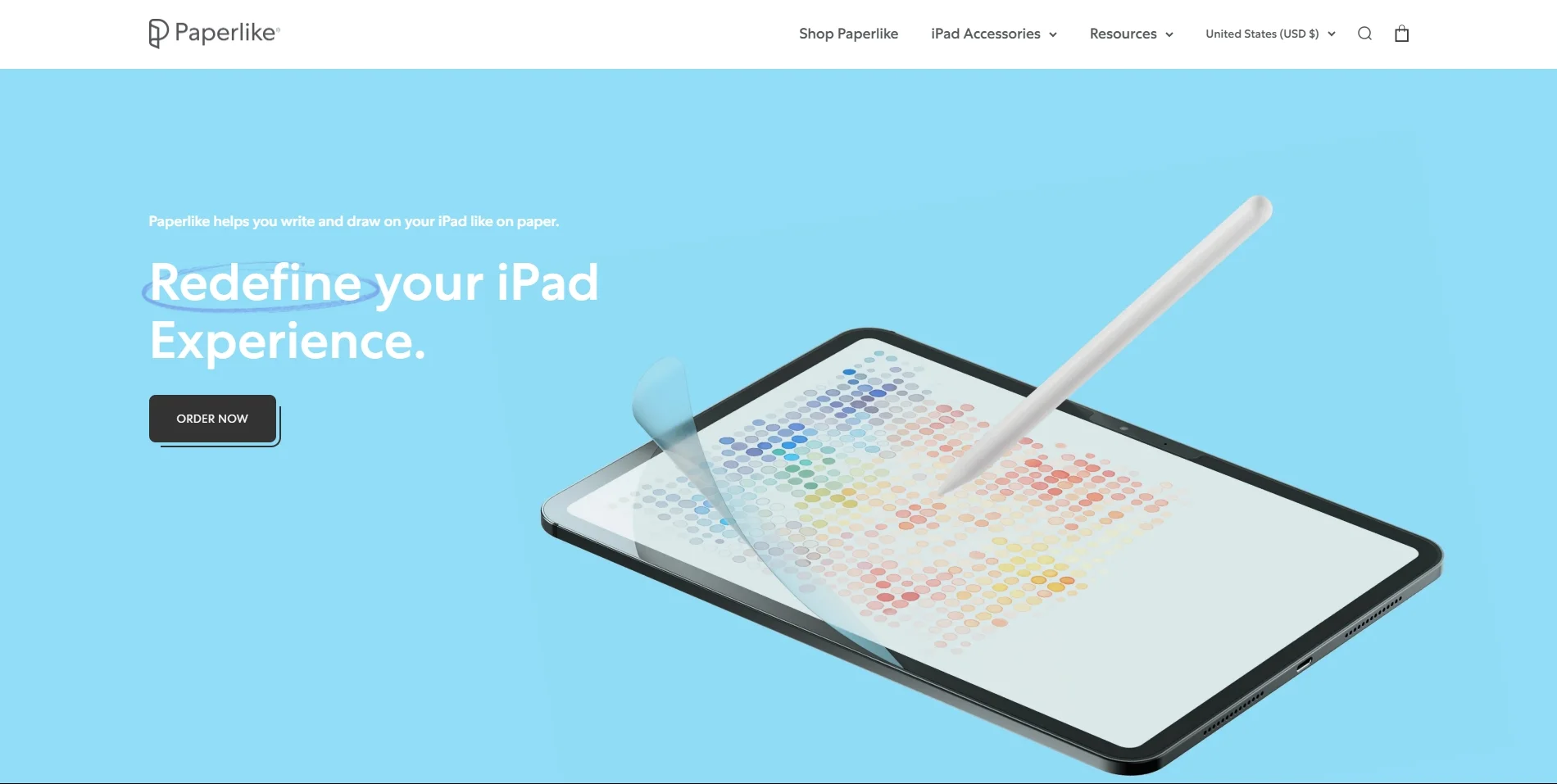
Lesson to learn: Instead of operating separate regional stores, Paperlike uses a single Shopify storefront to serve customers across more than 176 countries. The brand also connects Shopify with multiple third-party logistics systems to automate inventory and global fulfillment more efficiently at scale.
35. Supernote
Supernote, developed by Ratta, is a distinguished brand in the e-ink tablet market, offering devices that emulate the tactile sensation of writing on paper. These tablets cater to professionals, students, and creatives seeking a distraction-free digital note-taking experience. By adopting Shopify, Supernote has effectively scaled its operations, achieving a 200% surge in sales and exemplifying a successful Shopify store in the consumer electronics industry.
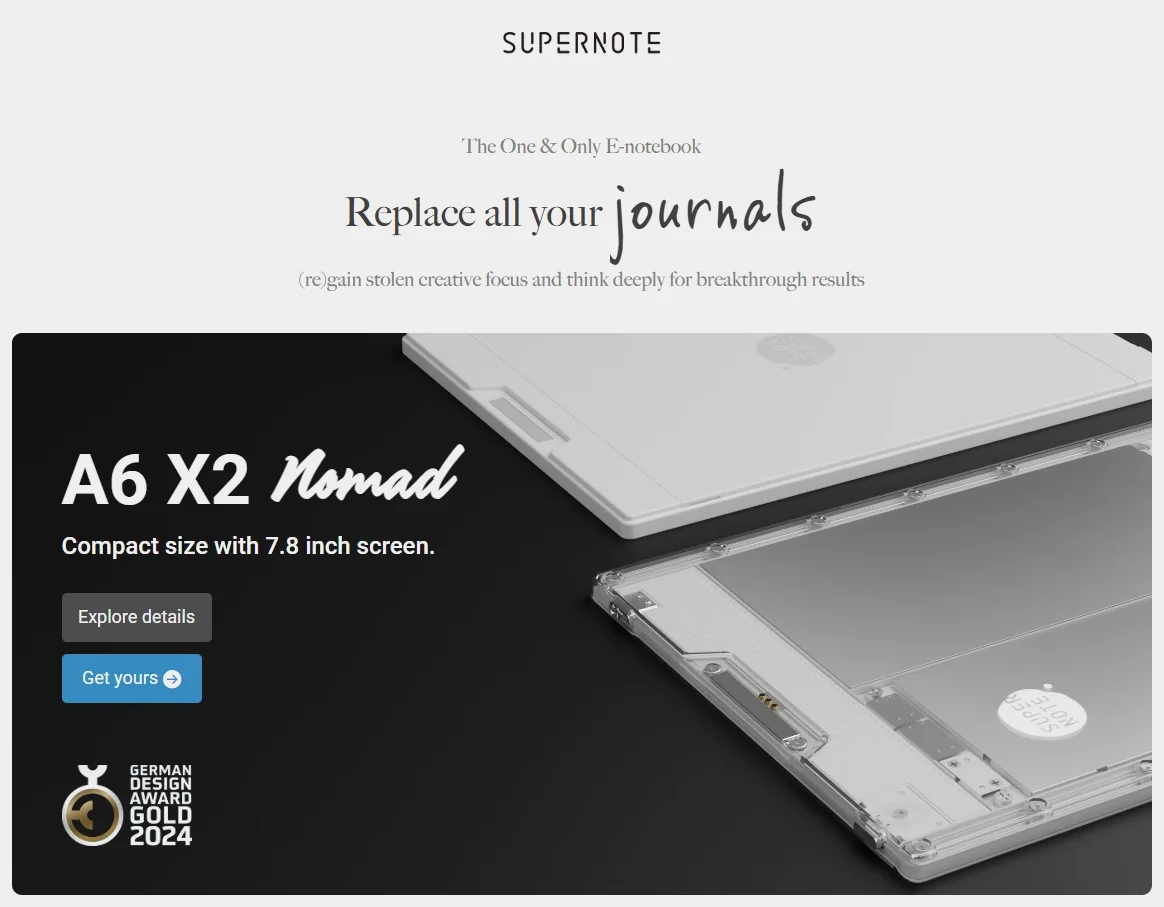
Lesson to learn: Shopify Plus gives Supernote much more flexibility at checkout through Checkout Customizations and integrations like Easy Student Discounts. Combined with Shop Pay installment options, the brand can offer tailored discounts and more flexible payment plans for students and long-term buyers.
36. Shokz
Shokz, formerly known as AfterShokz, built its reputation on bone-conduction headphones that let users listen to audio while remaining aware of their surroundings. To support its global expansion and provide tailored experiences across diverse markets, Shokz adopted Shopify Plus, exemplifying a successful Shopify store in the consumer electronics industry.
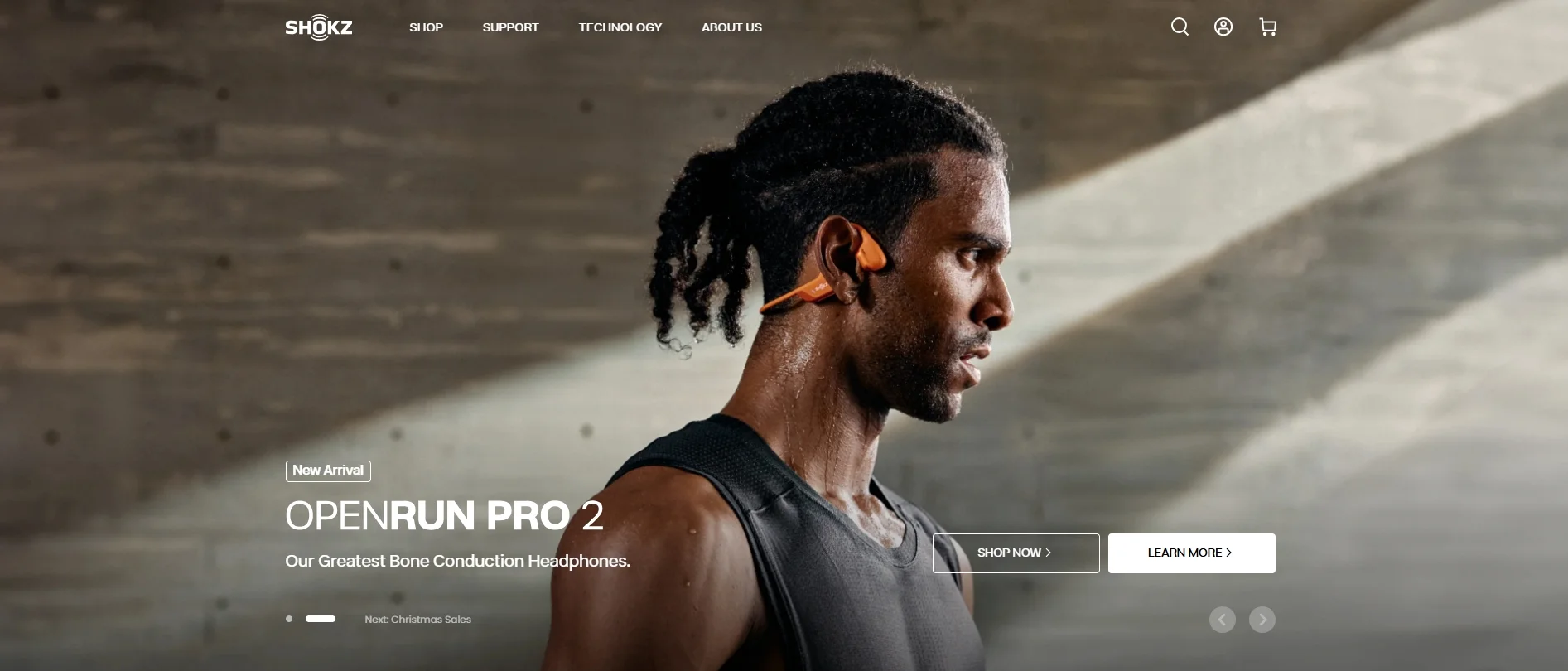
Lesson to learn: Addressing the challenges of insufficient and insecure payment methods, Shokz leveraged Shopify Plus to implement secure and user-friendly payment terminals and checkout processes. This improvement has been crucial in building customer trust and facilitating smooth transactions globally.
37. Glowforge
Glowforge targets creators, designers, and small businesses looking for accessible desktop laser cutting technology. Even though the products themselves are highly technical, the Shopify storefront keeps the shopping experience surprisingly approachable and creator-focused.
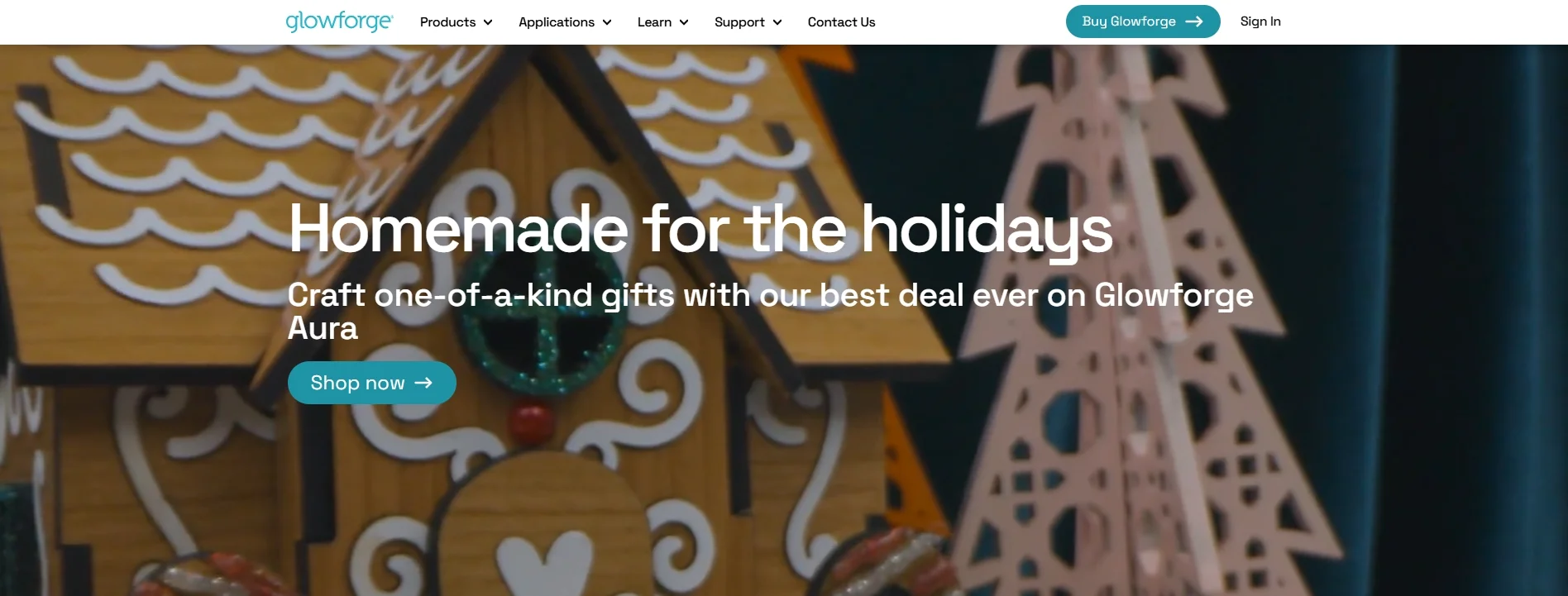
Lesson to learn: The streamlined operations afforded by Shopify Plus reduced the necessity for a large eCommerce development team. This efficiency allowed Glowforge to allocate resources more effectively, concentrating on core product innovation and customer service.
38. Blendjet
BlendJet, founded in 2017 by Ryan Pamplin and John Zheng, revolutionized the portable blending market with their innovative, battery-powered blenders designed for on-the-go convenience. Their mission to promote healthier lifestyles through accessible nutrition has resonated globally, leading to rapid growth and a customer base spanning 195 countries. By leveraging Shopify Plus, BlendJet has effectively scaled its operations, proudly standing among the best Shopify store examples in the consumer electronics sector.
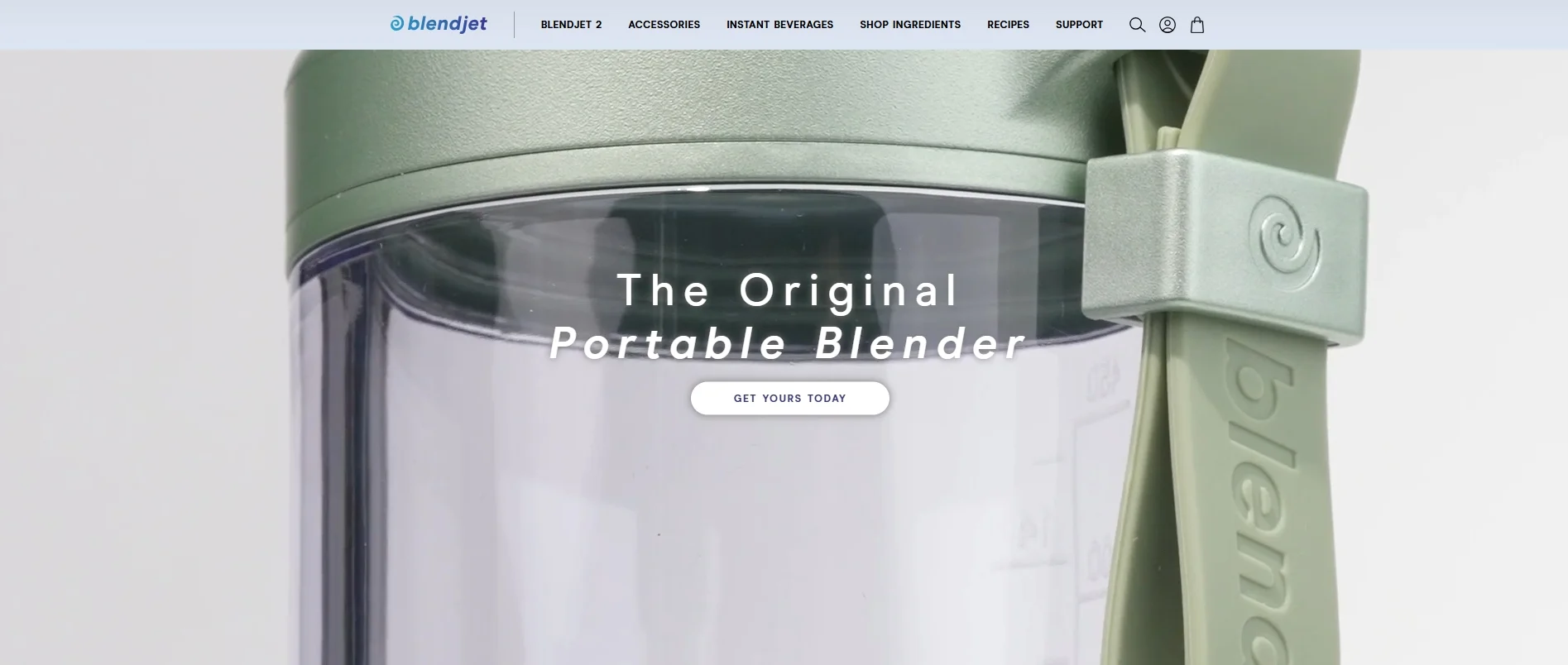
Lesson to learn: BlendJet combines Shopify’s extensible checkout with ReBuy upsell widgets to increase average order value during checkout. The brand also uses OptiMonk popups for aggressive email capture campaigns, helping turn large volumes of traffic into long-term subscribers and repeat customers.
Best Home Decor Shopify Store Examples
39. Pier 1
With thousands of products sourced from more than 60 countries, Pier 1 manages one of the largest home decor catalogs in this list. Despite the massive product range, their Shopify storefront still feels organized and easy to browse, especially for shoppers exploring different decor styles and seasonal collections.
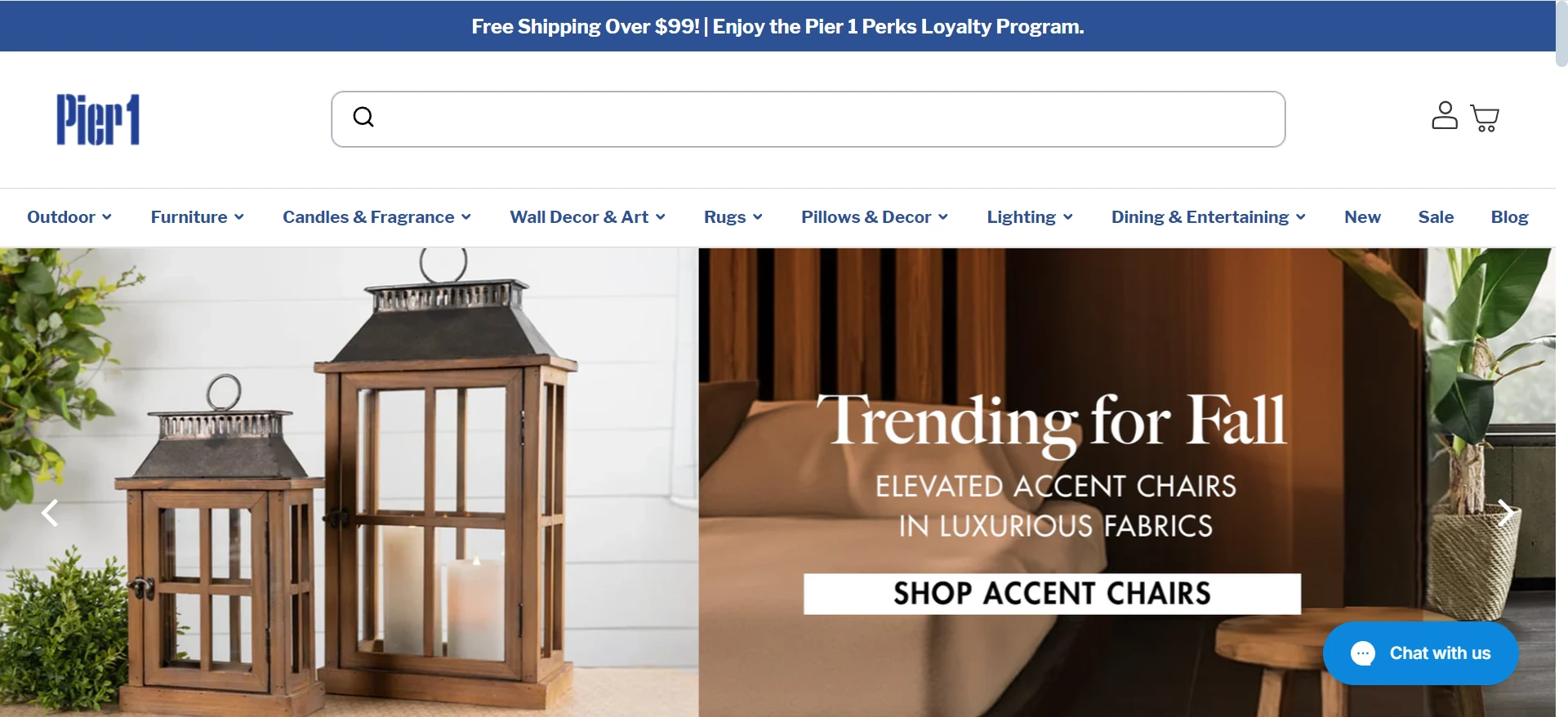
Lesson to learn: Suggestive search functionality helps Pier 1 customers find products much faster by surfacing relevant items while typing. The brand also builds customer retention through a dedicated Shopify-powered loyalty and VIP membership system with personalized rewards and exclusive benefits.
40. McGee & Co.
McGee & Co. showcases a stunning collection of designer furnishings that bring authentic beauty and charm to homes. The store has carved out a niche in the vintage-inspired decor market, with a strong emphasis on true beauty and charm in their product offerings.
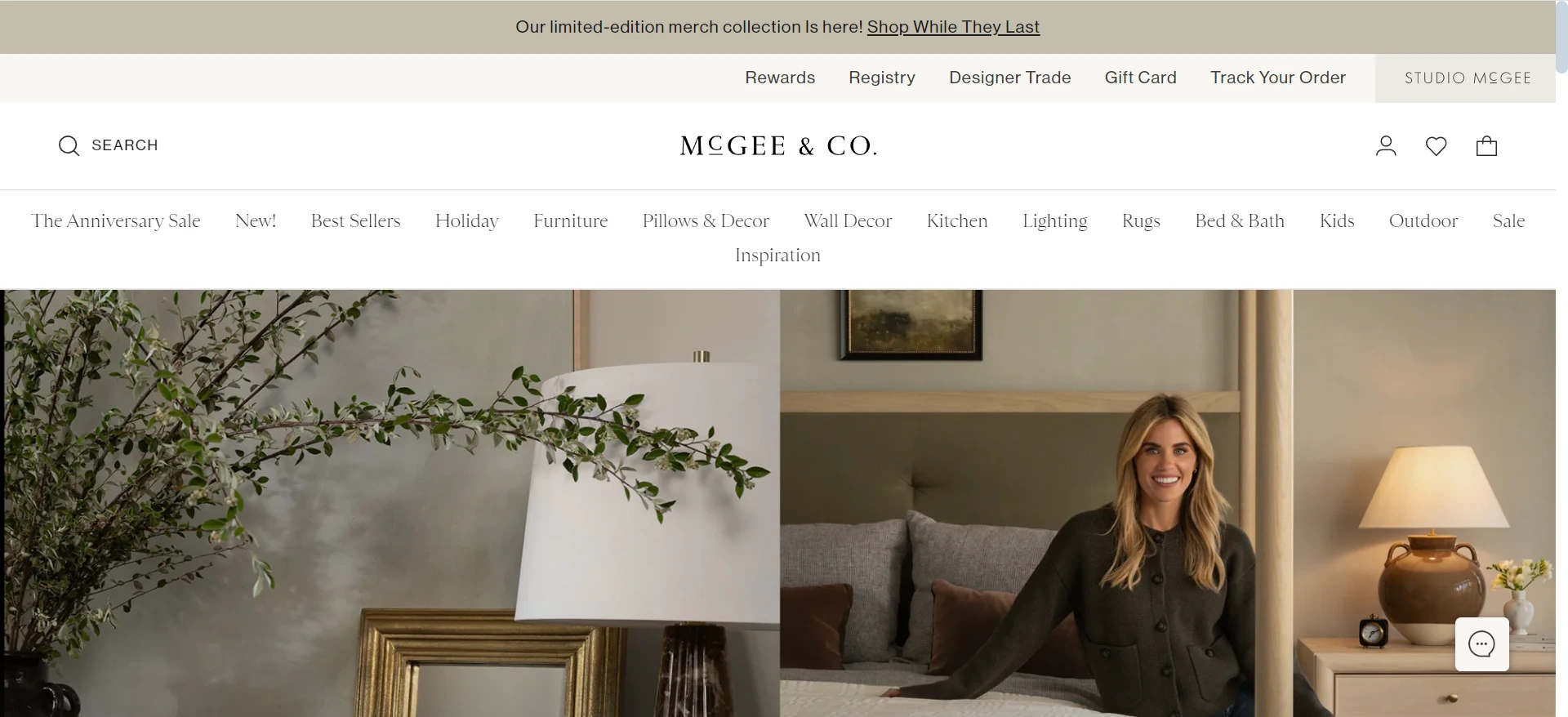
Lesson to learn: Rather than relying only on product pages, McGee & Co. connects Shopify with content platforms like Studio McGee to inspire customers through styling ideas and home design content. The brand also strengthens engagement through a loyalty system that rewards purchases, reviews, and social interactions across channels.
41. Scandinavian Designs
Scandinavian Designs offers a curated selection of modern furniture and home decor inspired by Scandinavian design principles. Being on top decor Shopify store examples, they focus on clean lines, functionality, and minimalist aesthetics.
-

Scandinavian Designs
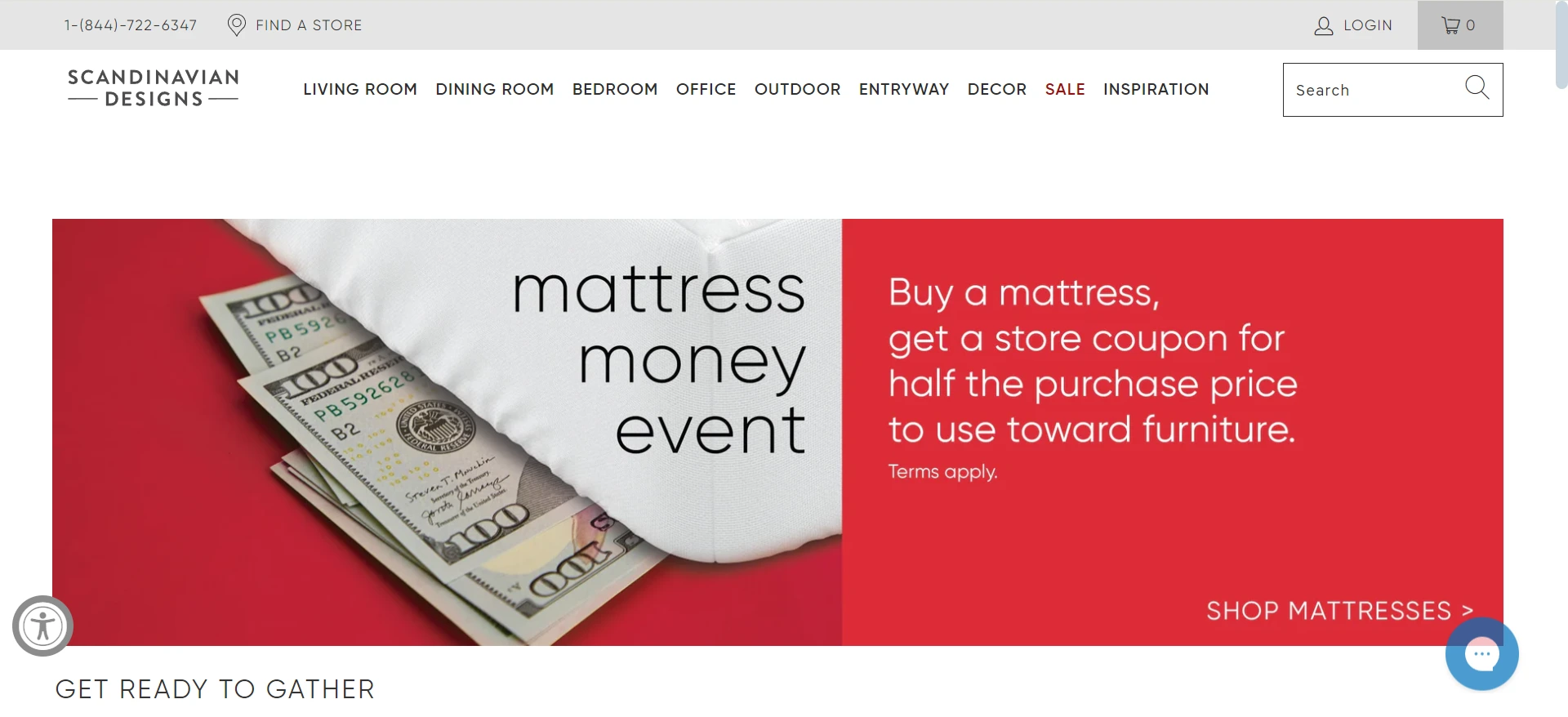
Lesson to learn: Room planning tools on the Shopify storefront help customers visualize furniture placement before purchasing, which is especially valuable for larger home decor products. The brand also highlights sustainability-focused product details, including responsibly sourced materials and eco-friendly packaging, directly throughout the shopping experience.
42. High Fashion Home
And last but not least, High Fashion Home is the last name we bring to this list. As one of the best Shopify store examples, the luxury home decor and furniture retailer offers a wide range of stylish and contemporary pieces for the discerning customer.
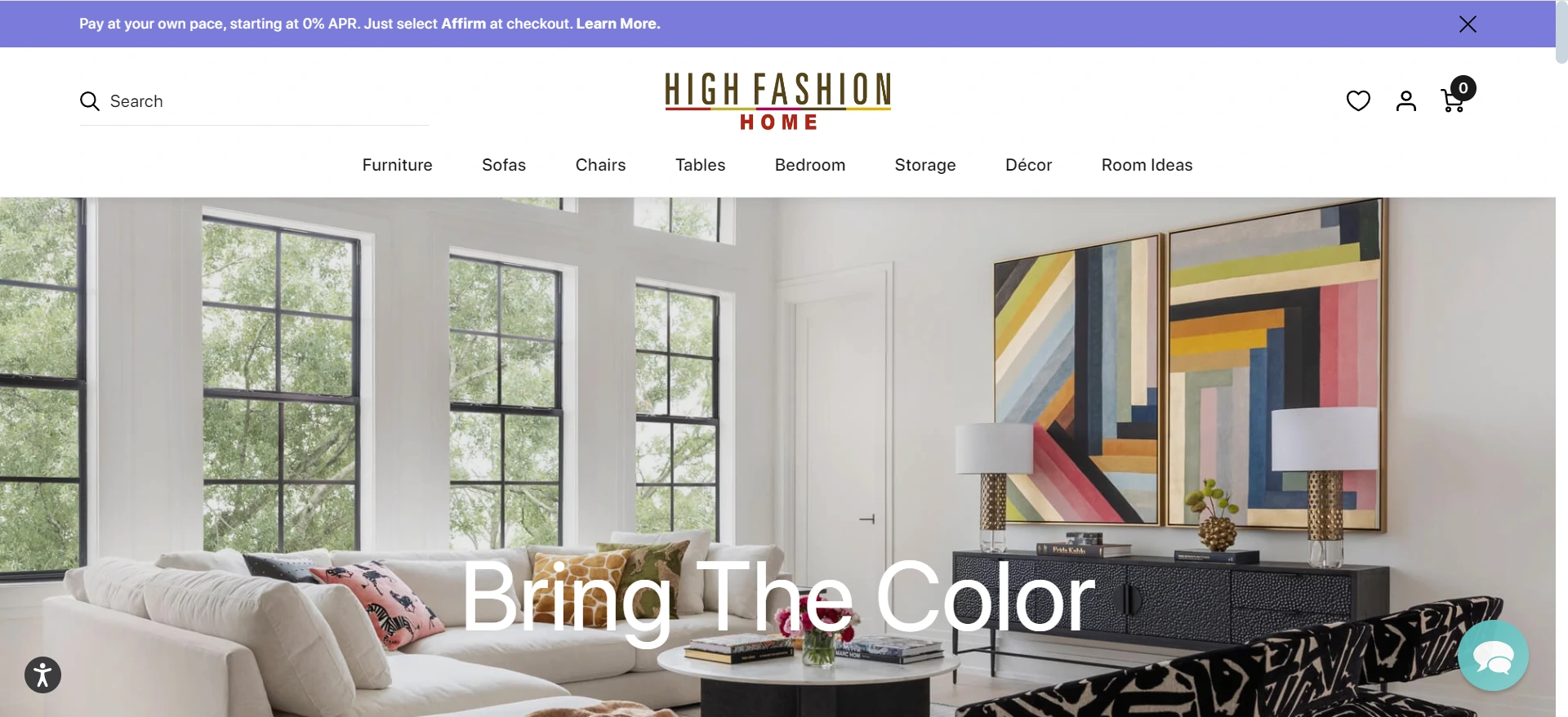
Lesson to learn: Virtual design consultation features allow High Fashion Home customers to work remotely with interior designers directly through the Shopify storefront. Curated collections and trend-focused merchandising also help shoppers explore products based on complete design aesthetics rather than individual furniture pieces alone.
Other Most Successful Shopify Plus Stores for Inspiration
43. Omy Lab
Omy Laboratories, founded in 2018 by Andrea Gomez and Rachelle Séguin, specializes in personalized skincare solutions. By integrating artificial intelligence (AI) and 3D skin analysis technology, Omy offers customized skincare products, setting a new standard in the beauty industry. Leveraging Shopify’s eCommerce platform, Omy Laboratories has enhanced its digital presence and stands tall among the best Shopify store examples.
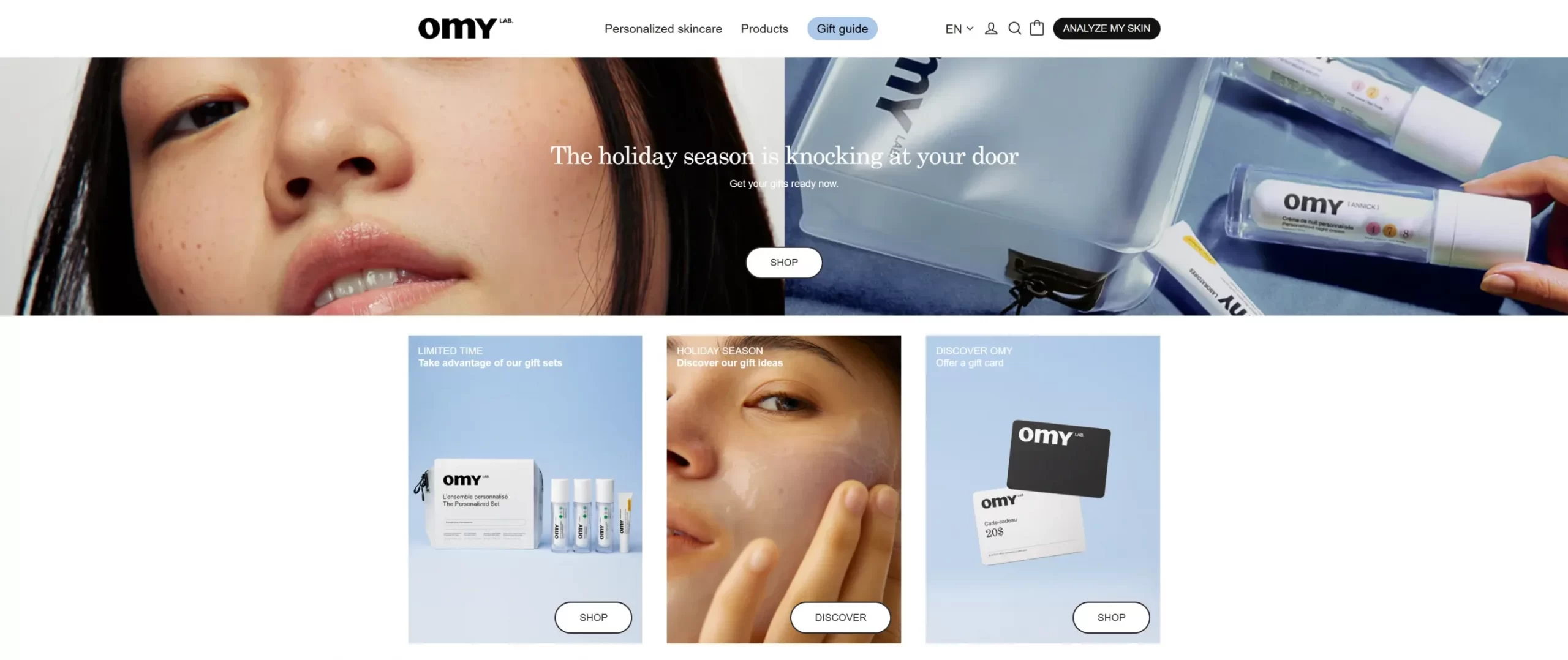
Lesson to learn: AI-powered skin analysis and personalized product recommendations help Omy turn Shopify into a much more data-driven shopping experience. At the same time, Shopify’s reliable infrastructure supports the brand’s operational stability with consistent uptime and smoother storefront performance.
44. Bombas
At the moment, there are very few Shopify Plus brands connect social impact with eCommerce as naturally as Bombas. Inspired by this need, they launched a brand that combines high-quality socks with a “buy one, donate one” model. Over the years, Bombas expanded its product range to include underwear, t-shirts, and slippers while staying committed to its core mission of giving back.
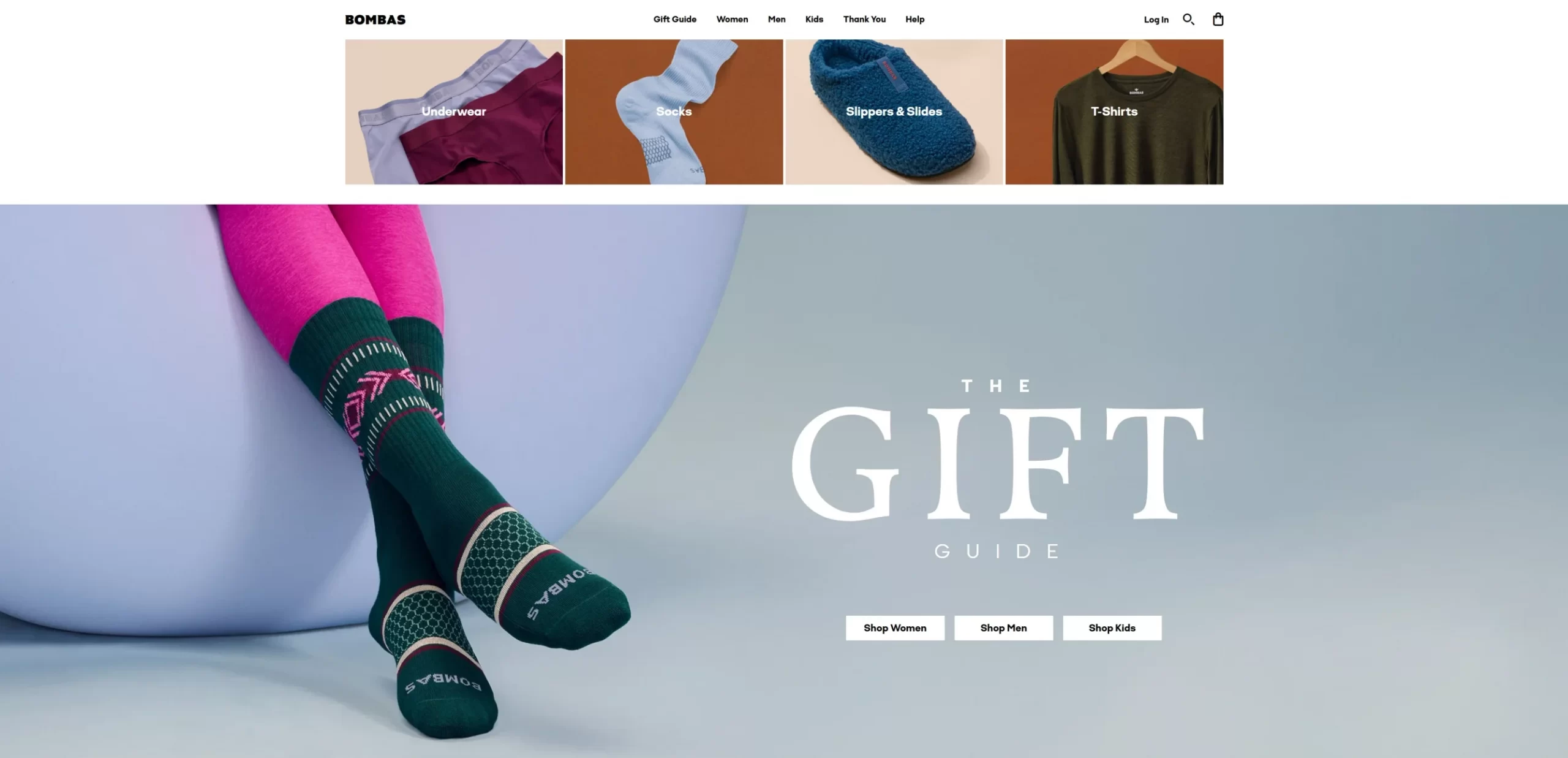
Lesson to learn: Bombas integrates its donation mission directly into the storefront through impact-focused messaging and real-time campaign storytelling. Shopify Plus also helps the brand maintain fast and stable site performance during massive traffic spikes like Black Friday and Cyber Monday campaigns.
45. SuitShop
SuitShop, founded in 2016 by Jeanne Foley and Diana Ganz, emerged from a personal need for affordable, well-fitting suits. Recognizing a gap in the market, they established a brand offering high-quality, size- and gender-inclusive suiting options for men, women, nonbinary individuals, and children. Thanks to Shopify, SuitShop has expanded its reach and become one of the most inspiring Shopify store examples.
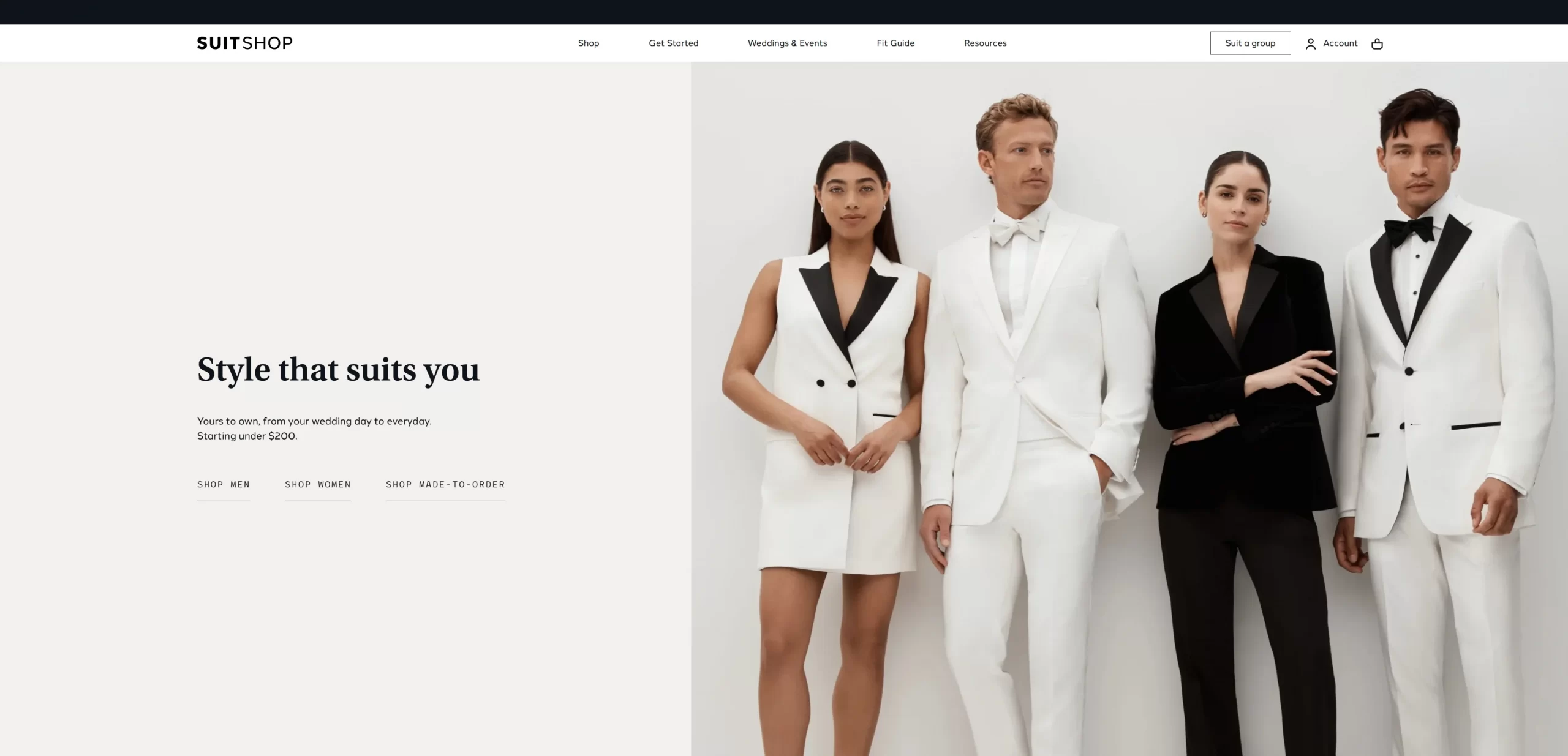
Lesson to learn: Shopify’s customizable shopping flows allow SuitShop to support free fabric swatches, at-home try-on programs, and more personalized purchasing experiences. The storefront also accommodates a wide range of sizing and gender-inclusive product categories without making navigation feel confusing or fragmented.
46. Venus et Fleur
Founded in 2015 by Seema Bansal and Sunny Chadha, Venus et Fleur became famous for its Eternity® Roses, preserved roses designed to last for more than a year without losing their appearance. Beyond floral arrangements, the brand later expanded into luxury centerpieces and gifting collections with a storefront experience that feels closer to premium fashion retail than a traditional flower shop.
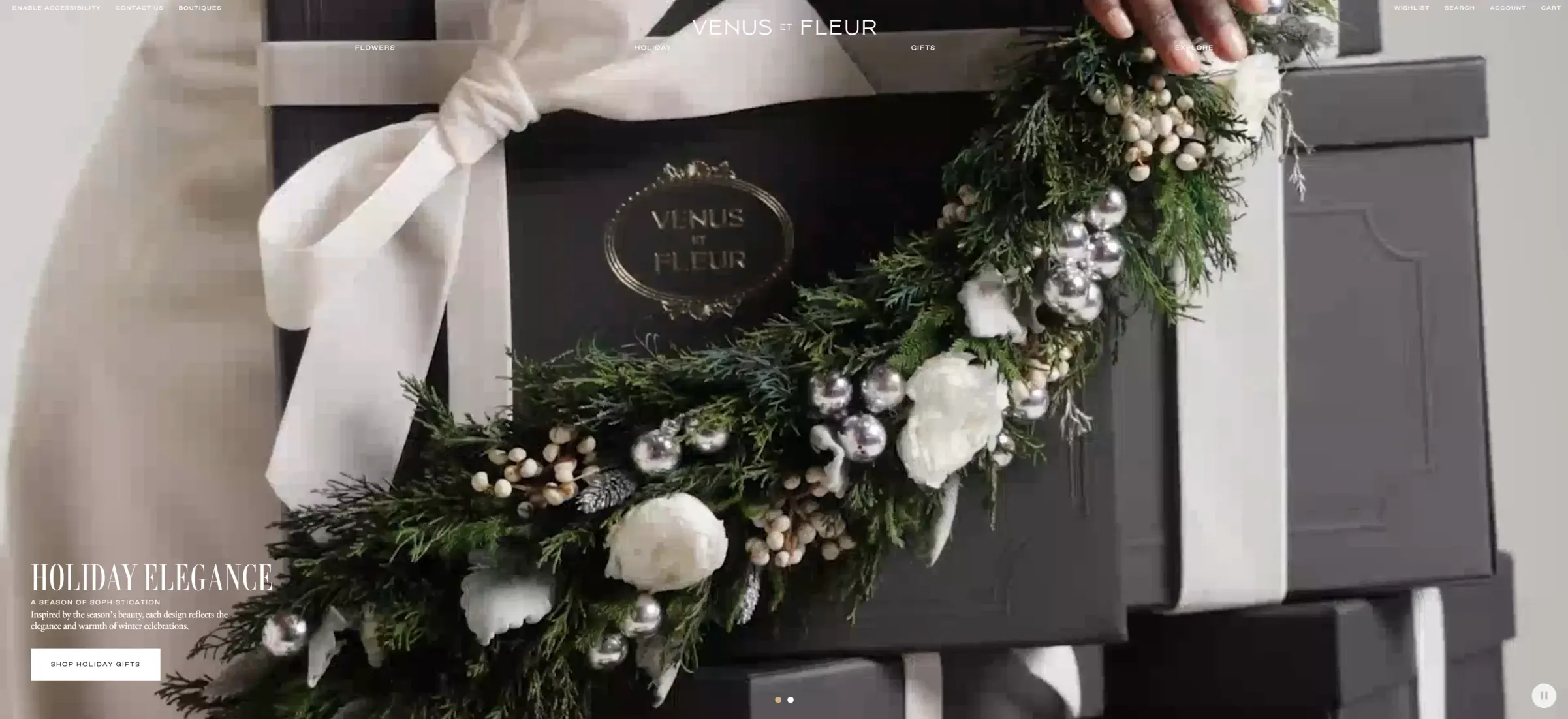
Lesson to learn: Shopify analytics help Venus et Fleur track customer behavior more closely and personalize marketing campaigns around gifting occasions and customer preferences. Optimizations through Shopify Plus also improve storefront performance and create a more refined luxury shopping experience overall.
47. BattlBox
Built on a passion for outdoor adventure and survival gear, BattlBox launched a monthly subscription service that delivers curated outdoor equipment to enthusiasts. Their strong community-driven approach and rapid growth later turned the brand into one of the more successful Shopify store examples.
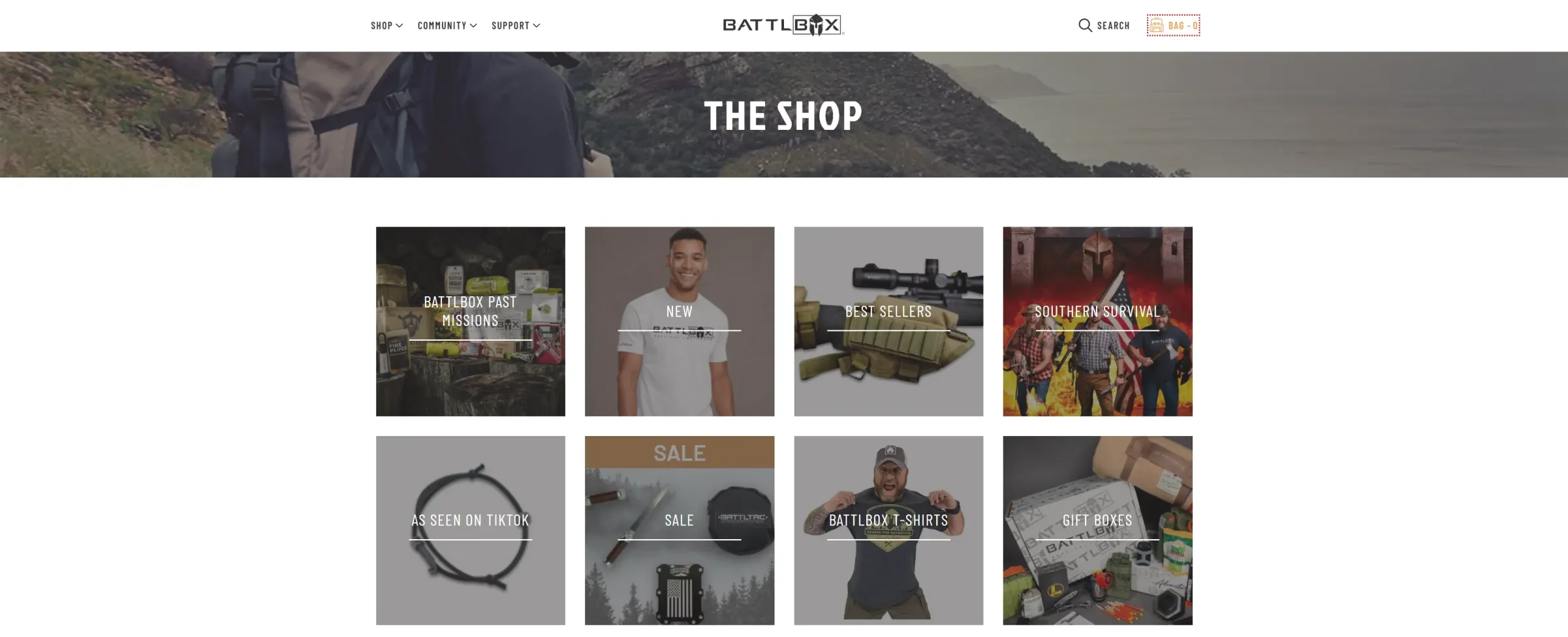
Lesson to learn: Shopify’s flexible content management system enables BattlBox to integrate unboxing videos, survival guides, and detailed product education directly into the storefront. Combined with Shopify’s scalable infrastructure, the site remains fast and responsive even during major launches and seasonal demand spikes.
48. Coravin
Pouring wine without removing the cork sounds almost impossible at first, but that innovation is exactly what made Coravin stand out globally. Since its launch, Coravin has transformed the way people enjoy and store wine globally. Powered by Shopify, Coravin has seamlessly scaled its operations, making it a standout among Shopify store examples in the wine and beverage industry.
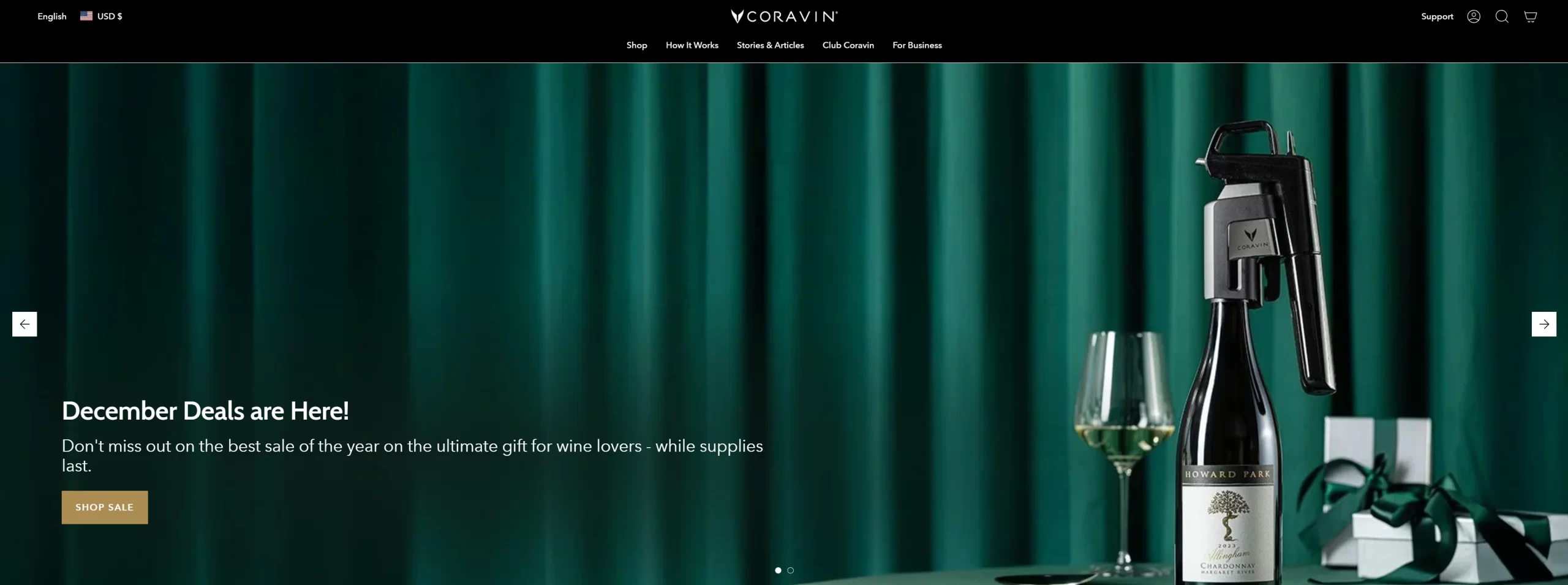
Lesson to learn: Dynamic product pages and educational Shopify content sections help Coravin explain highly technical products in a much more approachable way. Responsive storefront design and guided product education also make it easier for first-time customers to understand the value behind the technology.
49. The Somewhere Co
The Somewhere Co., established in 2020, has quickly become a go-to destination for vibrant, functional lifestyle products. Catering to the modern individual, the brand offers a diverse range of items for home, work, baby, and play, all designed to infuse daily routines with color and joy. With a commitment to both retail and wholesale customers internationally, The Somewhere Co. has expanded its reach, providing beautifully bright and fun products that resonate with a broad audience.
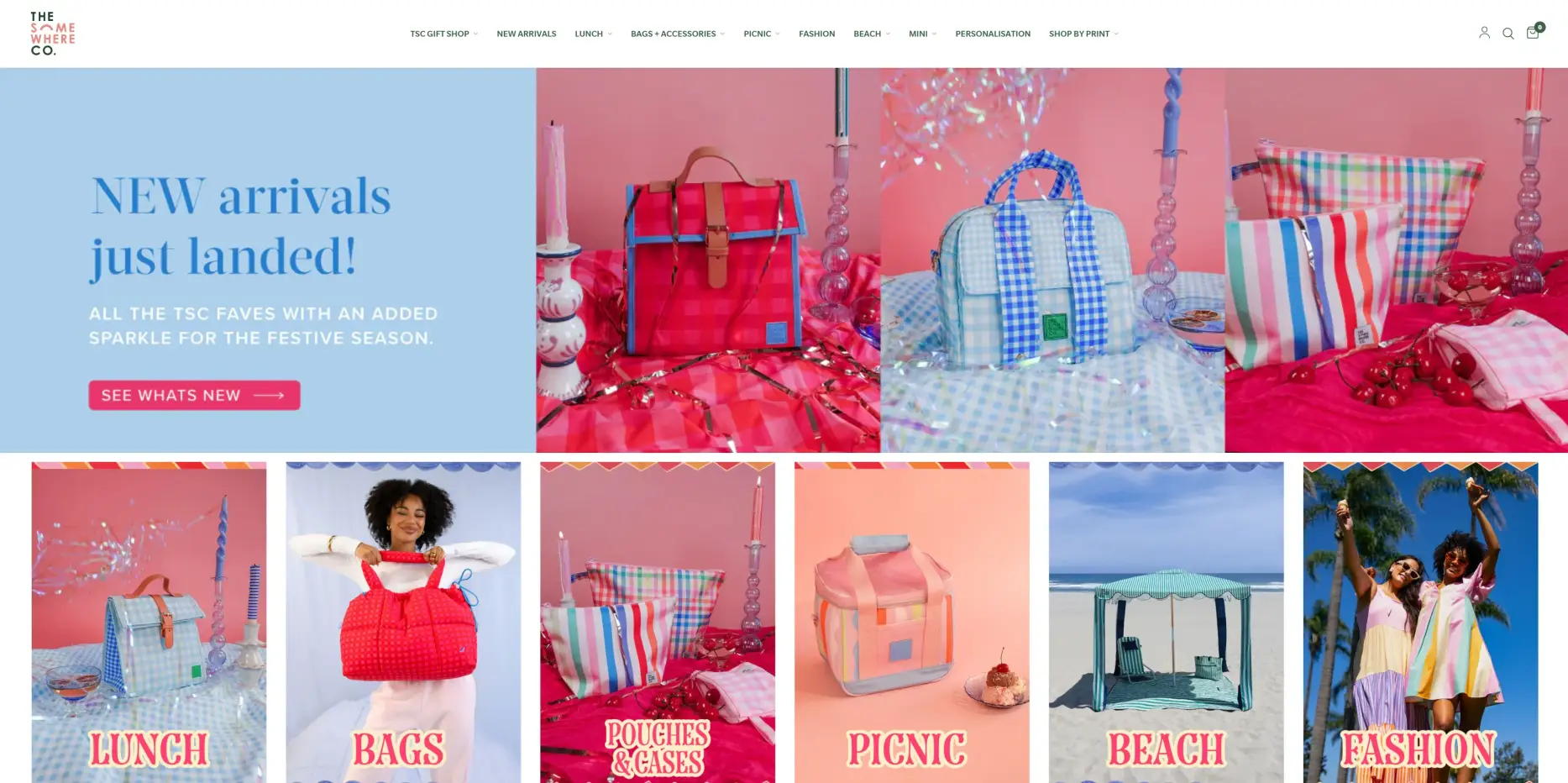
Lesson to learn: Shopify’s B2B functionality helps The Somewhere Co. manage wholesale and retail operations more efficiently from the same ecosystem. Faster B2B order processing and simplified product listing management also make scaling wholesale partnerships much easier operationally.
50. SilkSilky
Next on our list of successful Shopify store examples is SilkSilky. Instead of positioning silk products purely as luxury fashion, the brand focuses much more heavily on sleep quality, wellness, and daily comfort. From pajamas to pillowcases and bedding sets, the storefront feels more lifestyle-oriented than fashion-driven.
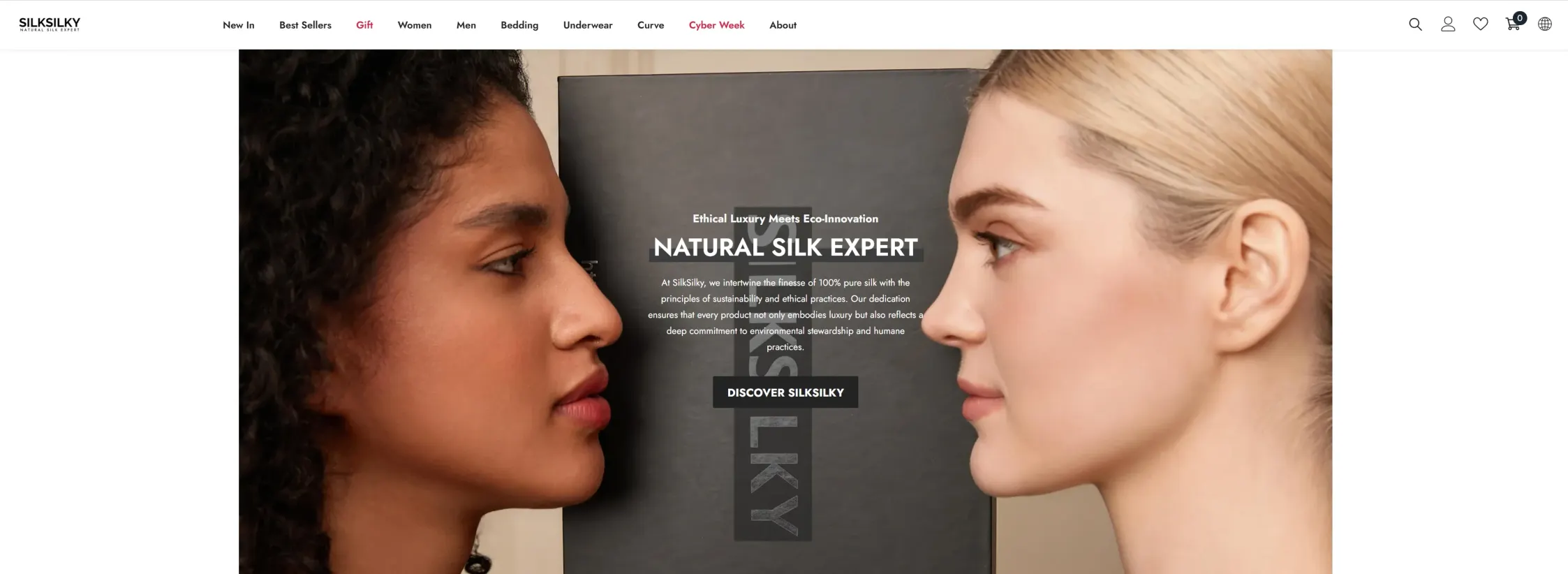
Lesson to learn: Shopify Plus supports SilkSilky’s international expansion through multi-site management and localized storefront experiences. Checkout customization also allows the brand to prioritize region-specific payment methods, helping improve conversion rates across different markets.
51. Bauer
Bauer Hockey, founded in 1927 in Kitchener, Ontario, has consistently set the standard for hockey equipment innovation. The brand introduced the first skate with a blade permanently attached to the boot, revolutionizing the sport. Over the decades, Bauer has remained a leader in the hockey equipment industry, known for its commitment to cutting-edge technology and athlete performance. To enhance its global reach and deliver an exceptional shopping experience, Bauer transitioned to Shopify Plus, making it a standout among Shopify store examples in the sports equipment sector.
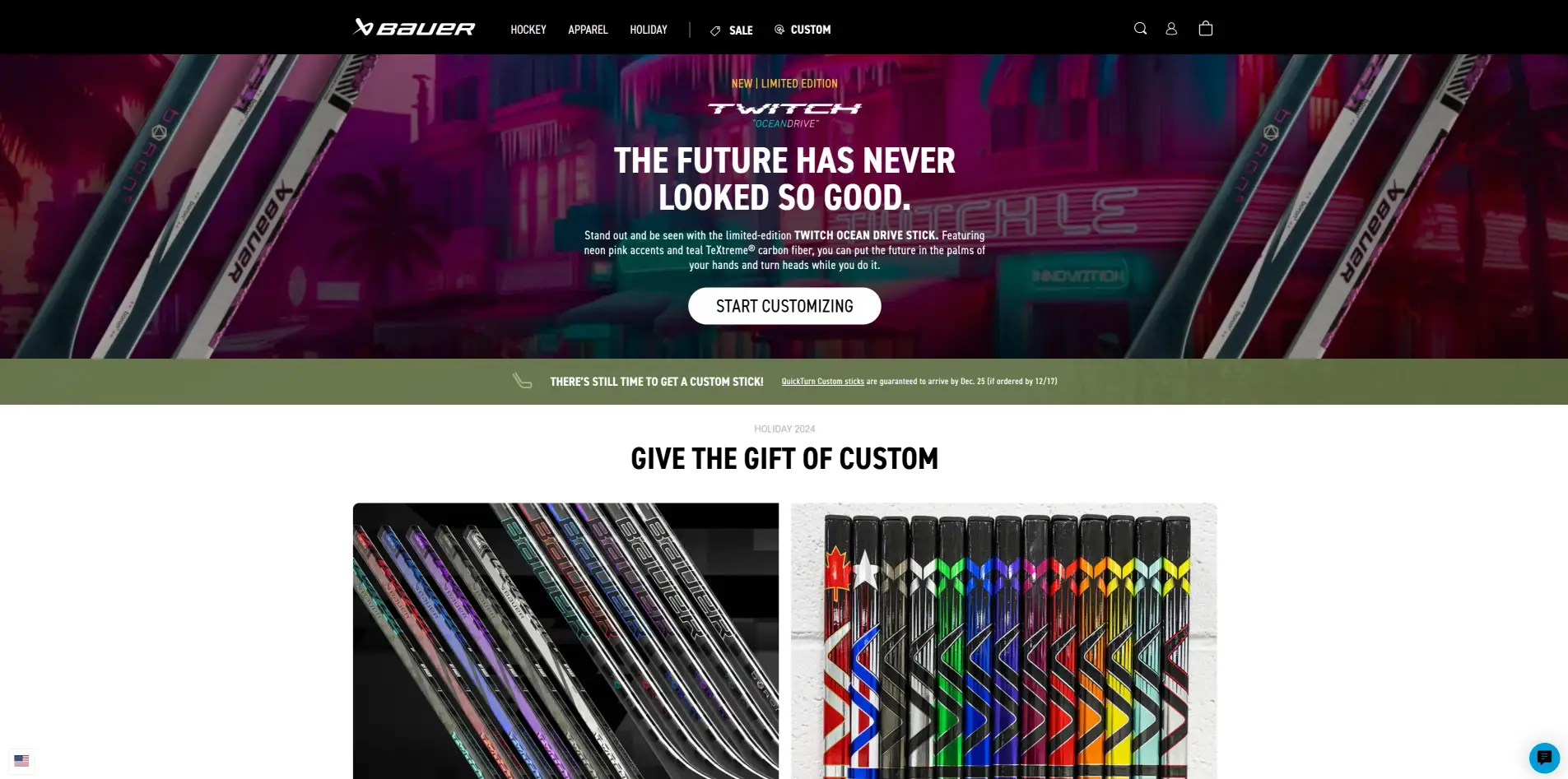
Lesson to learn: Searchspring integration significantly improves Shopify search functionality by making hockey equipment easier to discover through smarter merchandising and search filtering. The MVP loyalty program, powered through Yotpo integrations, also helps Bauer strengthen long-term customer retention through rewards and referrals.
52. Snuggle Hunny
Last on our Shopify store examples list is Snuggle Hunny. Founded in 2015, this business has become Australia’s premier brand for birth announcements and organic baby essentials. Specializing in beautifully designed baby wraps, outfits, and accessories, the company emphasizes sustainability by using Global Organic Textile Standard (GOTS) certified materials and ethical production processes. Their unique, artist-created prints draw inspiration from Australia and the natural world, offering parents distinctive and eco-friendly options for their little ones.
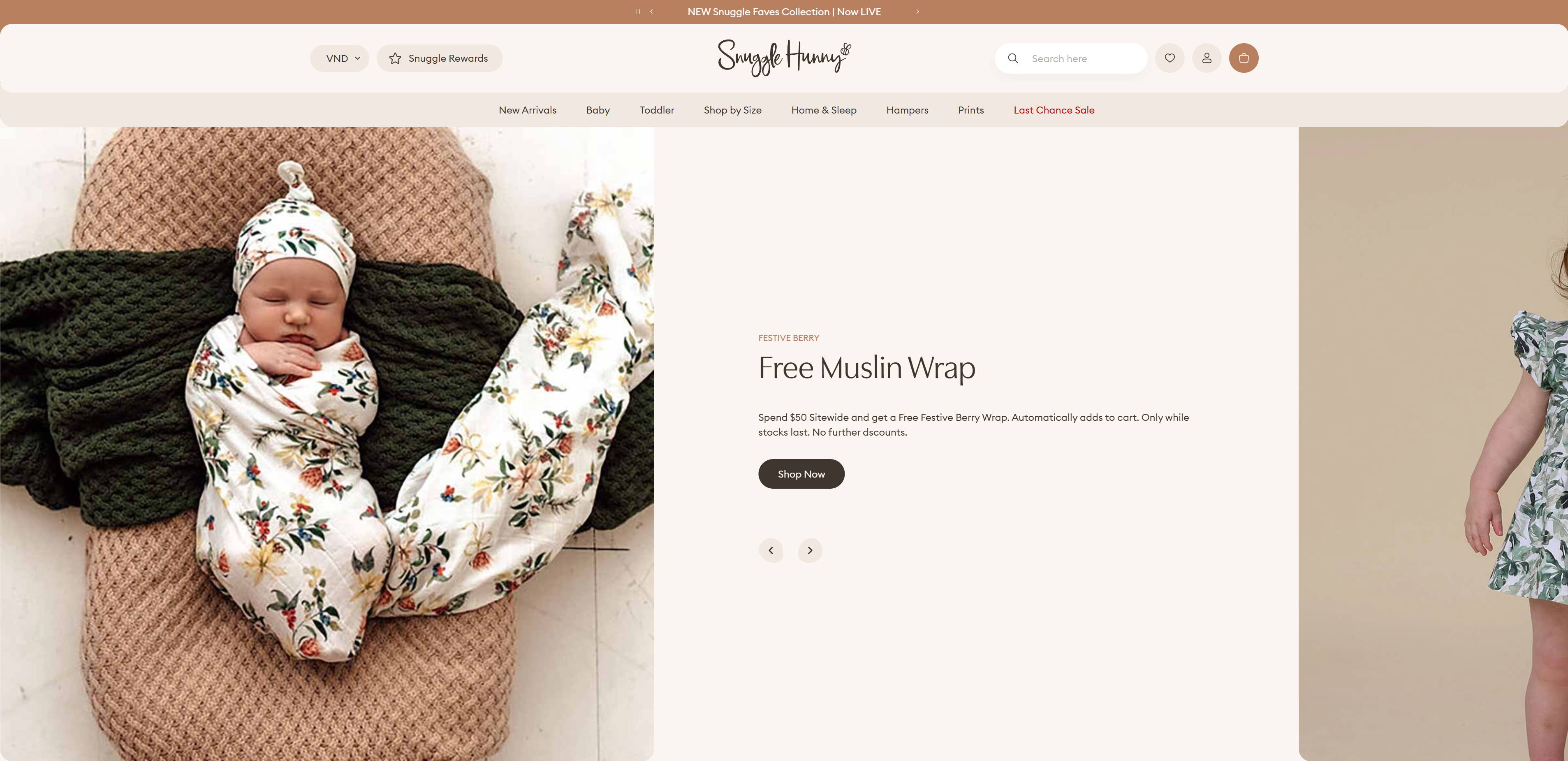
Lesson to learn: Shopify’s app ecosystem helps Snuggle Hunny build a stronger retention strategy through rewards programs and loyalty-driven customer journeys. International selling tools like localization and currency conversion also support the brand’s growing cross-border customer base more seamlessly.
Trendy Features That Make Shopify Stores Successful
Looking across the 50+ Shopify store examples above, a few patterns repeat often enough to call them structural – not trends you can ignore, but capabilities that separate the brands scaling on Shopify from the ones that plateau.
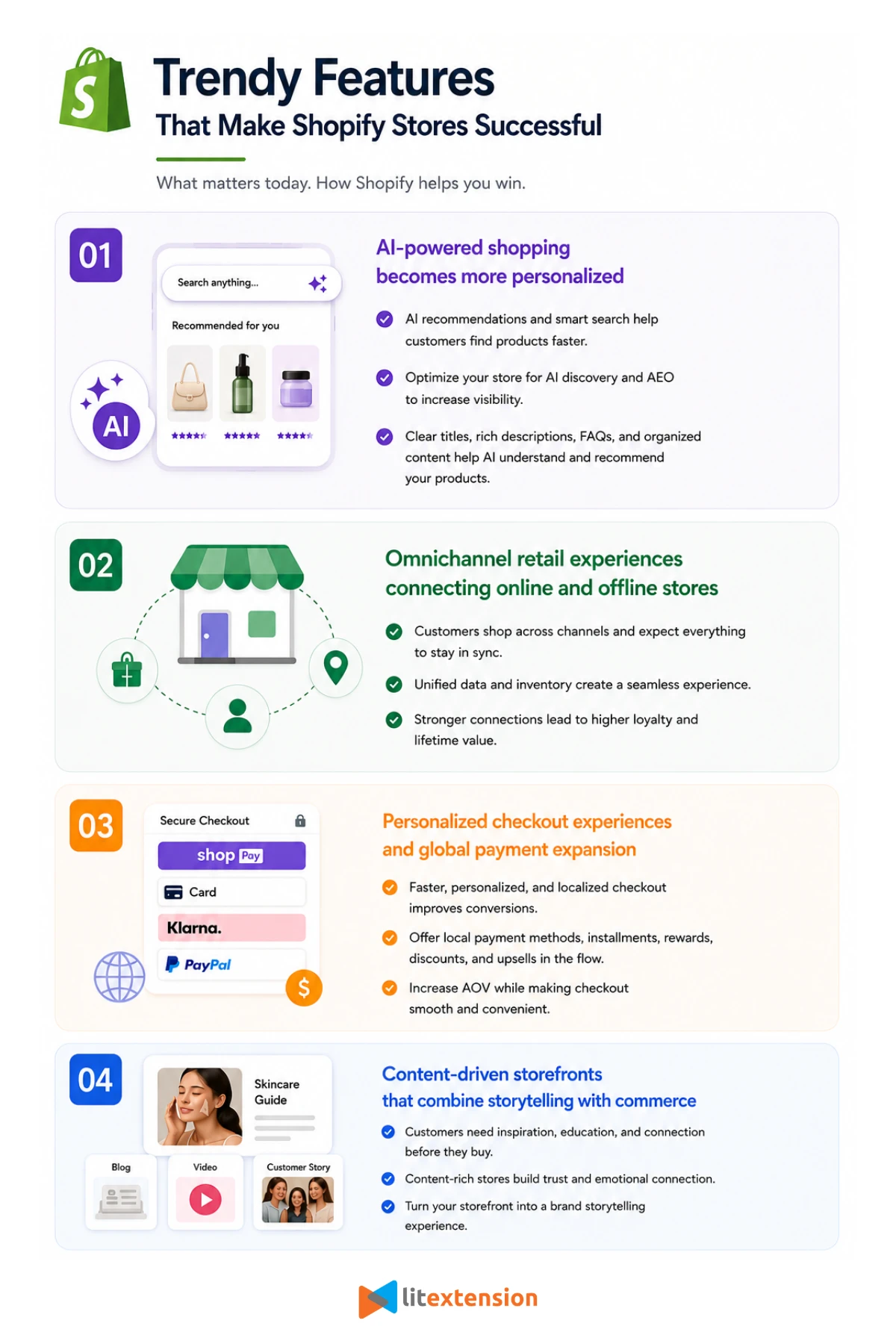
1. AI-powered shopping becomes more personalized
Many successful Shopify stores are already integrating AI-powered features directly into the shopping experience instead of only using AI behind the scenes. Features like personalized product recommendations and AI-driven search help customers discover products faster, especially in stores with large catalogs or highly customizable products.
At the same time, we think you should also start optimizing your storefront for AI-driven discovery and AEO (Answer Engine Optimization). More shoppers now rely on AI tools and conversational search to find products online. As a result, clearer product titles, contextual descriptions, structured FAQs, and better-organized storefront content can help AI systems better understand and recommend your products.
2. Omnichannel retail experiences connecting online and offline stores
The line between online and physical retail has effectively disappeared for top brands. Customers expect to browse online, buy in store, return anywhere, and have their rewards and history follow them across every channel – and the brands that deliver this win on loyalty.
To support that behavior, there are Shopify POS, unified customer profiles, and cross-channel loyalty systems to connect online stores, retail locations, pop-ups, and wholesale operations. These all help inventory, customer data, rewards, and purchase history stay synchronized across channels, creating a much more seamless shopping experience overall.
3. Personalized checkout experiences and global payment expansion
After customers decide to purchase, checkout becomes the stage where many brands either win or lose conversions. That is why we are seeing more successful Shopify stores invest heavily in creating faster, more personalized, and more localized checkout experiences instead of keeping the process generic.
Shopify supports this through tools like Shop Pay, Checkout Extensibility, multi-currency checkout, and localized payment integrations. With these features, you can offer region-specific payment methods, installment options, loyalty rewards, dynamic discounts, and upsell offers directly inside the checkout flow. This helps customers complete purchases more naturally while also increasing your average order value.
4. Content-driven storefronts that combine storytelling with commerce
Not every customer lands on your store ready to buy immediately. In industries like beauty, fashion, home decor, and lifestyle, people often need inspiration, education, or emotional connection before they feel confident enough to purchase.
That is why content-driven storefronts are becoming much more important on Shopify. The platform allows you to integrate blogs, styling guides, educational videos, creator content, and customer stories directly into the shopping experience. Instead of separating content and commerce into different spaces, you can turn your storefront itself into part of the brand storytelling journey.
Shopify Store Examples: FAQs
Can big brands really use Shopify?
Yes, and many already do. Brands like Gymshark, Fashion Nova, and Cettire run major operations on Shopify, handling massive traffic spikes, international selling, and complex catalogs without performance issues.
What is the most successful store on Shopify?
There's no single official answer, since "most successful" can mean highest revenue, fastest growth, or strongest brand. That said, Gymshark is one of the most frequently cited success stories – it grew from a garage operation into a fitness apparel brand valued at over a billion dollars while running on Shopify Plus.
What makes a Shopify store successful?
It's rarely the storefront alone. The winning stores share a few traits: a clear niche, a frictionless shopping experience, strong customer retention, and smart use of Shopify's features. The best brands treat Shopify as a growth engine, not just an online catalog.
What types of businesses use Shopify?
Fashion, luxury, beauty, food and beverage, digital-native startups, and legacy retailers moving online all use Shopify. It supports online-only stores, physical shops via Shopify POS, and hybrid models. That's why both one-person boutiques and billion-dollar brands run on it.
Do I need Shopify Plus to build a store like these examples?
Not necessarily. Most strategies here – strong product pages, loyalty programs, good navigation, and content – work on standard plans. Shopify Plus matters once you scale up or need advanced features like deep checkout customization and high-volume international selling. Start on a standard plan, then upgrade when your volume justifies it.
Conclusion
Launching a Shopify store is easy; the real art lies in optimizing your store. If you’re a newbie who plans to build an eCommerce website with Shopify, don’t rush your way into it. Instead, take your time, and look around for inspiration from the stores that already rock in their respective industry.
For that reason, hopefully, you’ll steal some good ideas from our list of the best Shopify store examples above.
Find this blog helpful? Explore more articles like it at LitExtension’s articles on Shopify. Also, join our active Facebook Community to stay in the loop with 20,000+ eCommerce entrepreneurs worldwide.