Choosing between NetSuite vs Shopify is not always straightforward, especially for growing and enterprise ecommerce businesses. While NetSuite SuiteCommerce Advanced focuses more on ERP-connected operations, Shopify Plus prioritizes storefront flexibility and faster eCommerce growth.
In this guide, we will break down the Shopify vs NetSuite comparison on the following aspects:
Category | NetSuite | Shopify | Winner |
~5,000 USD/month + ERP costs | Starts ~2,300–2,500 USD/month | NetSuite | |
Strong ERP-connected commerce and operational scalability | Stronger storefront experience, checkout, and app ecosystem | Shopify | |
More mature native B2B workflows and ERP-connected operations | Modern B2B experience with easier management | NetSuite | |
Native ERP integration inside one ecosystem | Requires middleware or external integrations | NetSuite | |
Usually 3–6+ months | Usually 4–12 weeks | Shopify | |
Deep customization but more developer-dependent | Easier day-to-day design management and theme flexibility | Shopify | |
Strong enterprise security with heavier technical responsibility | More centralized platform-managed security and support | Shopify |
Let’s get started!
NetSuite vs Shopify: At a Glance
At first glance, NetSuite vs Shopify may seem like a comparison between an ERP system and an eCommerce platform. However, for businesses operating at a larger scale, the more relevant comparison is usually NetSuite SuiteCommerce Advanced vs Shopify Plus.
What is NetSuite?
Developed by Oracle, NetSuite is a cloud-based ERP system that also includes eCommerce capabilities through SuiteCommerce. Instead of separating accounting, inventory, CRM, and order management into different tools, NetSuite keeps everything connected in one centralized system.
For enterprise merchants, NetSuite also offers SuiteCommerce Advanced. This version provides more customization, stronger integration with NetSuite ERP, and advanced capabilities for larger-scale eCommerce operations.
Below is a quick overview of where NetSuite performs well and where merchants may face challenges:
Pros | Cons |
- Strong support for multi-country operations - Advanced inventory and financial tools | - Requires more training for new users - Expensive implementation and maintenance |
What is Shopify?
On the other hand, Shopify takes a much more commerce-first approach. The platform is designed to make online selling simple, even if you have no technical experience.
Shopify handles hosting, updates, security, and performance for you behind the scenes. As a result, you can focus more on products, marketing, and customer experience rather than on system management.
For larger businesses, Shopify offers Shopify Plus. This enterprise version includes more advanced automation, customization, B2B features, and support for high-volume stores.
To help you evaluate the platform more clearly, here are Shopify’s main advantages and drawbacks:
Pros | Cons |
- Large app and integration ecosystem | - Limited native ERP functionality - Complex workflows may need external systems |
If Shopify Plus feels like the better direction for your business, the next step is making the transition without disrupting your existing operations. That’s where LitExtension can help you securely and accurately migrate your store data to Shopify with minimal downtime.
Let Our Experts Handle Your Shopify Migration!
With the All-in-One Migration Service, our experts take care of everything, ensuring a seamless and stress-free migration.
Pricing & Total Cost of Ownership: NetSuite Wins
The Verdict
In this NetSuite vs Shopify pricing comparison, NetSuite takes the win. Although the upfront cost is higher, its native ERP setup can reduce integration and maintenance expenses over time.
NetSuite
If you choose NetSuite SuiteCommerce Advanced, you should expect a larger upfront investment. The platform is built for businesses with more complex operations, so pricing usually reflects that level of depth and customization.
Here is a general breakdown of the costs you may encounter:
- SuiteCommerce Advanced license: Around 5,000 USD/month
- NetSuite ERP license: Roughly 1,500–3,000+ USD/month
- SCA implementation: Around 50,000–100,000+ USD one-time
- NetSuite ERP implementation: Commonly 25,000–100,000+ USD
- Integration costs: Usually minimal due to native architecture
- Ongoing development & optimization: Around 1,000–3,000 USD/month
For a typical mid‑market deployment of NetSuite with SuiteCommerce Advanced, a realistic annual TCO often falls in the roughly 120,000–250,000 USD/year range.
At first, NetSuite may seem more expensive than Shopify Plus. However, if your business already needs ERP, inventory management, financial tools, and advanced operational workflows, the platform can become more cost-efficient over time.
Shopify
In contrast, Shopify Plus usually gives you a lower barrier to entry. You can launch faster, manage your store more easily, and avoid the large implementation timeline that often comes with enterprise ERP systems.
Here is a general overview of the costs you should plan for:
- Shopify Plus license: Around 2,300–2,500 USD/month
- High-volume pricing: Roughly 0.25–0.35% of GMV after scaling
- Shopify Plus implementation: Around 15,000–200,000 USD one-time
- App stack: Commonly 1,000–3,000 USD/month
For a mid-market brand, a realistic annual total cost of ownership is typically 150,000–300,000 USD, with the first year higher. In many cases, this ends up being more expensive than running NetSuite SuiteCommerce Advanced natively, especially for businesses with complex operational requirements.
eCommerce Capabilities: Shopify Wins
The Verdict
Shopify Plus stands out more clearly in this NetSuite vs Shopify comparison. The platform delivers a smoother storefront experience, faster deployment, stronger checkout optimization, etc.
Although both platforms support enterprise-level selling, they are built with very different priorities. In the NetSuite vs Shopify comparison, this difference becomes especially clear once you look at the actual eCommerce experience – from storefront flexibility to checkout optimization and omnichannel selling.
Area | NetSuite SuiteCommerce Advanced | Shopify Plus |
Storefront theming | Customizable HTML/CSS/JS, fewer ready‑made themes, more dev‑driven | 1100+ themes in Theme Store, faster to launch and iterate |
Checkout & CRO | Stable checkout; changes/tests often require developers | Highly optimized checkout; A/B tests and CRO flows are easier |
Headless options | Possible via NetSuite/SuiteCommerce APIs | Mature headless stack (Hydrogen, Storefront API, apps) |
Catalog complexity | Strong with large catalogs, variants, and ERP‑driven attributes | Great for standard DTC; very complex models need workarounds |
Storefronts per license | Multiple sites/domains are possible under one account | Often 1 main store; extra brands use additional stores |
Built‑in blogging/CMS | Basic CMS for pages and blog | Basic blog + pages; many brands add a headless CMS |
Promotions & discounts | Advanced rule engine tied to ERP pricing | Discount codes + automatic discounts, extended via apps |
Search & faceting | Good faceted navigation; leverages ERP data | Native search OK; advanced search/facets usually via apps |
Inventory locations | Many locations supported via NetSuite (warehouse‑first) | Multiple locations per store; complex setups via apps |
Omnichannel operations | Unified with NetSuite inventory, orders, CRM, and finance | Strong online + POS; ERP‑grade omnichannel via external systems |
Multi‑language support | Multi‑language sites via NetSuite config | Multi‑language via Shopify Markets + translation apps |
Looking at the table, the biggest difference is how each platform defines “scalability.” NetSuite SuiteCommerce Advanced is built to scale operational complexity. Meanwhile, Shopify Plus focuses more on scaling the customer-facing commerce experience. Because of that, your decision depends largely on whether your growth challenges are on the operational or sales side.
B2B-specific Features: NetSuite Wins
The Verdict
In the B2B category, NetSuite takes the lead. Its native connection between commerce and ERP makes complex workflows feel much smoother to manage.
Both NetSuite SuiteCommerce Advanced vs Shopify Plus are strong options for B2B ecommerce, but they are built with very different approaches in mind.
B2B area | NetSuite SuiteCommerce Advanced | Shopify Plus |
Company accounts | Company records with multiple contacts under one customer; roles set in NetSuite | Company profiles with multiple locations and buyers per company |
Account management | Sales reps manage accounts, pricing, terms, and credit | Merchants manage B2B customers, catalogs, and price lists |
Customer‑specific pricing | Contract / customer‑specific price levels and discounts | Price lists assigned to specific companies or locations |
Bulk ordering | B2B ordering grid, quick order by SKU, reorder from past orders, and lists | Quick order forms, bulk order tools, and reorder from past orders |
Payment terms | Net terms, credit limits, and invoice payments in the self‑service portal | Native B2B payment terms (e.g., Net 30) per company/location |
Self‑service portal | Customers view orders, quotes, invoices, and pay online | B2B customers log in to view company pricing, catalogs, and past orders |
Catalog control | Show/hide products and categories per customer or group.developers. | Multiple B2B catalogs, assigned to specific companies/locations |
The one thing we can notice is that NetSuite handles payment terms and invoice-based purchasing much more naturally because they are already integrated with the ERP system. With Shopify Plus, those workflows need extra apps or custom setup to work smoothly at scale.
ERP & Backend Integration: NetSuite Wins
The Verdict
For ERP and backend integration, NetSuite clearly wins in this NetSuite vs Shopify comparison. Because commerce and ERP already live inside the same ecosystem, you avoid much of the integration complexity.
NetSuite
With NetSuite SuiteCommerce Advanced, your eCommerce store and ERP already work inside the same system. Orders, inventory, customers, and financial data all live in one centralized database, so there is no need for a separate ERP connector.
Because of that, data stays much more consistent across the business. Changes to pricing, stock levels, fulfillment workflows, or invoicing rules update directly inside NetSuite and automatically reflect across the commerce side as well.
Shopify
Shopify Plus relies more heavily on integrations to connect with external ERP systems like NetSuite or SAP. The platform offers strong APIs and integration flexibility, but you will usually need middleware, apps, or custom connectors to sync operational data properly.
This setup gives you more freedom to build your own tech stack. However, it also means you are managing two separate systems instead of operating inside a single unified database like NetSuite SuiteCommerce Advanced. As a result, Shopify setups often involve more ongoing work, including syncing, middleware maintenance, integration monitoring, and troubleshooting, as your operations grow.
Implementation Complexity & Time-to-Launch: Shopify Wins
The Verdict
If your goal is to launch quickly and stay flexible, Shopify Plus is the stronger option in this NetSuite vs Shopify comparison. You can get to market much faster, and ongoing platform maintenance is significantly lighter compared to NetSuite SuiteCommerce Advanced.
NetSuite
Implementing NetSuite SuiteCommerce Advanced usually takes around 3–6 months, and projects can run even longer if you are also rolling out or restructuring NetSuite ERP at the same time.
The process tends to be much more complex because it involves ERP workflows, inventory structure, pricing logic, accounting setup, and data migration alongside the eCommerce build itself. As a result, most businesses rely on NetSuite specialists or implementation partners throughout the project.
Shopify
Shopify Plus is much faster to launch. Many standard implementations go live within 4–12 weeks, and even more advanced builds often stay under 3–4 months.
The platform itself is relatively straightforward to set up. Products, themes, payments, and shipping can all be configured quickly, which allows you to start selling much earlier. Most of the complexity usually comes later through custom apps, integrations, or conversion optimization work rather than from the core platform itself.
As a result, Shopify Plus is usually a better fit for brands that prioritize speed, flexibility, and easier day-to-day management. Meanwhile, NetSuite SuiteCommerce Advanced is often better suited for enterprises that need deeper ERP integration and can handle a more complex implementation process.
Design Flexibility: Shopify Wins
The Verdict
Shopify Plus is much more flexible in day-to-day storefront management. Your team can update layouts, launch campaigns, and test new experiences much faster without constantly involving developers.
NetSuite
If you choose NetSuite SuiteCommerce Advanced, you will have access to a relatively small set of base themes like Threads, Horizon, and Posh. In practice, most businesses treat these themes as a technical starting point rather than a finished storefront design.
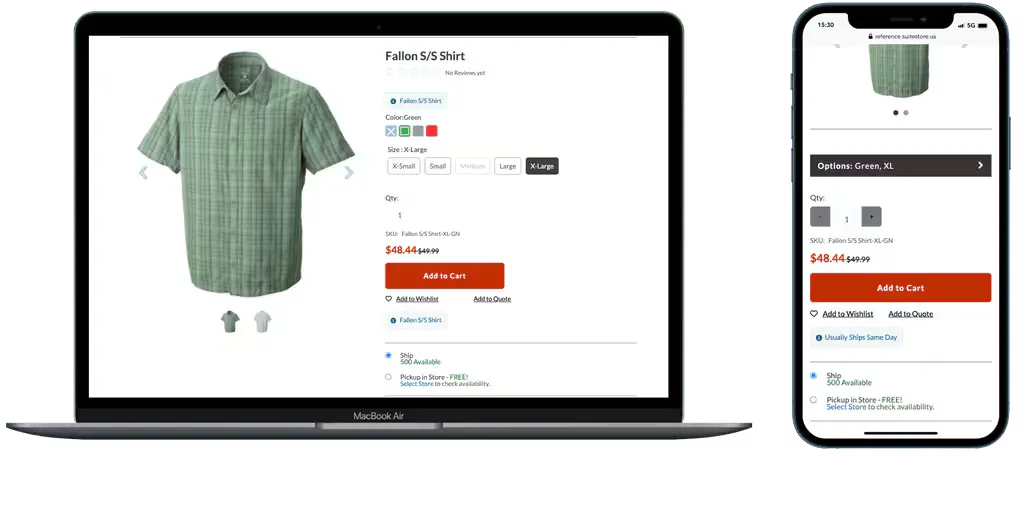
As a result, larger design or UX changes usually require developers who understand SCA’s frontend structure and NetSuite theme tools. You also get less freedom to make day-to-day visual updates directly inside the admin without technical support.
On the AI side, NetSuite has been expanding features across the broader ecosystem through tools like predictive analytics, generative AI APIs, and AI-powered recommendations. These capabilities can support personalized storefront experiences, but most AI implementation still happens through developers and custom configuration rather than no-code visual editing tools.
Shopify
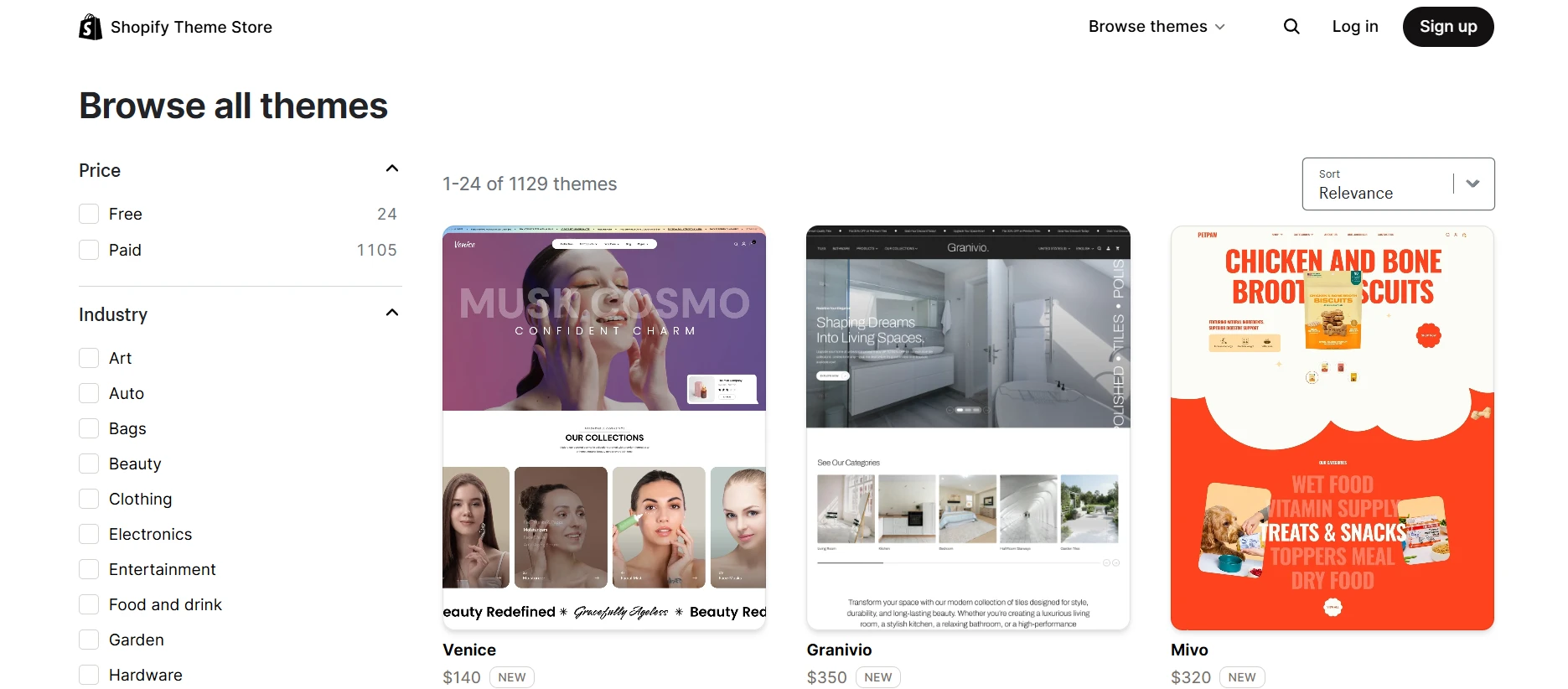
Meanwhile, Shopify Plus gives you much more design flexibility out of the box in the NetSuite vs Shopify debate. The platform offers more than 1100 free and paid themes, so you can usually find a starting point that already fits your brand style or industry.
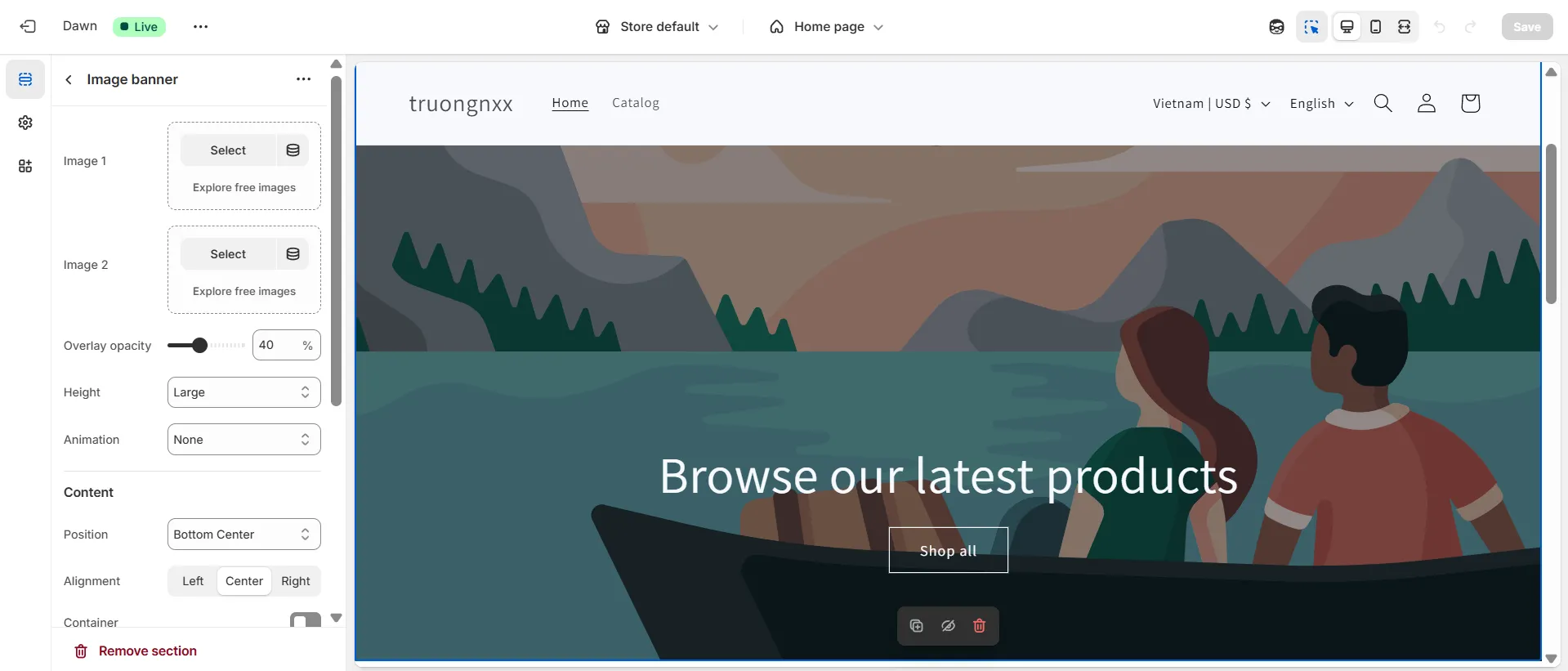
You can also use Shopify’s visual Theme Editor to rearrange sections, update layouts, add campaign content, and test variations without touching code. If you need more advanced customization later, developers can still extend the storefront using Liquid, custom CSS/JS, and Shopify apps.
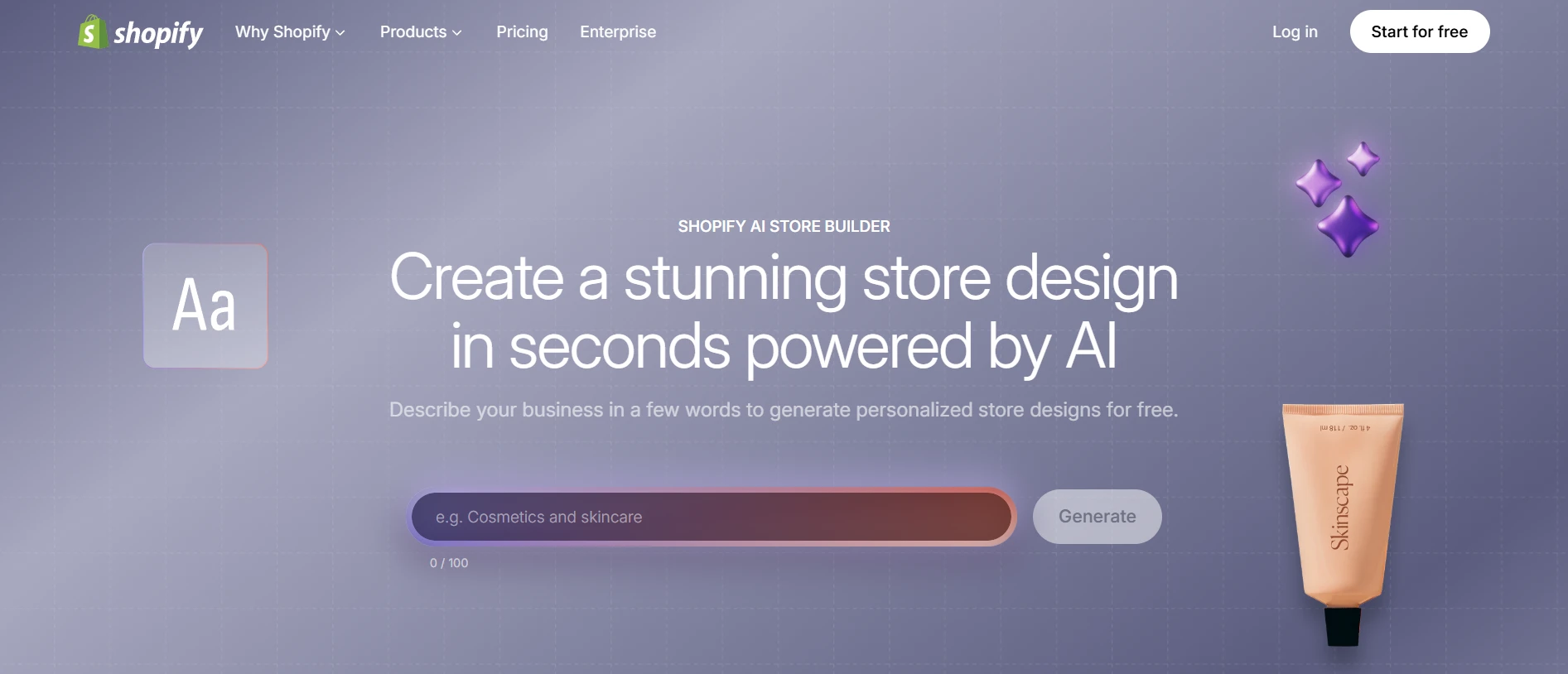
Shopify Plus also benefits from Shopify’s broader AI ecosystem. You can use built-in tools like Shopify Magic and AI-powered store setup to generate content, improve search and recommendations, and launch storefronts faster.
Security & Support: Shopify Wins
The Verdict
In this NetSuite vs Shopify comparison, Shopify Plus wins for security and support. The platform handles much more infrastructure and maintenance for you, while support is simpler and more centralized for everyday operations.
NetSuite
From a security perspective, NetSuite SuiteCommerce Advanced provides strong enterprise-grade protection through role-based access, strict permissions, audit trails, encryption, and advanced payment security options like tokenization and 3D Secure. However, because SCA stores are usually heavily customized, your team also needs to manage security more actively over time, especially around custom code, integrations, and platform updates.
For support, NetSuite mainly handles core platform issues, while most storefront-related work is usually managed by your implementation partner or internal developers. This setup gives you deeper technical flexibility, but daily support often depends heavily on the quality of your partner team.
Shopify
With Shopify Plus, most security management is handled directly by the platform. Shopify manages PCI compliance, SSL certificates, server-side patching, and infrastructure updates automatically, while also providing built-in tools like fraud analysis and 2FA. As a result, your team spends much less time managing infrastructure-level security manually.
Support is also more centralized and beginner-friendly. Shopify Plus includes 24/7 priority support, dedicated success resources for larger merchants, and a very large documentation ecosystem. While many brands still work with agencies for theme or app customization, Shopify itself handles most core platform maintenance behind the scenes.

In addition, Shopify Plus merchants are usually assigned a Merchant Success Manager (MSM). The MSM acts as a strategic advisor rather than day-to-day tech support. They help merchants explore growth opportunities, understand new Shopify Plus features, and choose suitable apps or agency partners.
Meanwhile, theme customization, CRO work, and advanced development are often handled by Shopify Plus agencies and app partners. Shopify itself remains responsible for maintaining the security, stability, and performance of the core platform.
Who Should Use NetSuite vs Shopify?
After going through this detailed NetSuite vs Shopify comparison, you may already notice that these two platforms are built for very different types of businesses. To make the decision easier, here are the business profiles that usually fit each platform best.
NetSuite SuiteCommerce Advanced is usually a better fit for:
- Manufacturers, wholesalers, and large B2B businesses with complex operational workflows
- Companies managing multiple warehouses, subsidiaries, or large inventory systems
- Businesses already running on NetSuite ERP and wanting a fully connected ecosystem
- Enterprise teams comfortable with heavier implementation and technical customization
Meanwhile, Shopify Plus tends to work better for:
- Fast-growing DTC and omnichannel ecommerce brands
- Businesses prioritizing speed-to-market, flexibility, and storefront experience
- Marketing-driven teams that want easier day-to-day store management
- Companies that prefer a lighter technical setup with a large app ecosystem
At the same time, the honest middle ground is that many mid-market B2B businesses actually use Shopify Plus as their storefront while keeping NetSuite as their ERP system. That is not a compromise – it is a very common architecture for companies that want Shopify’s commerce experience together with NetSuite’s operational depth.
NetSuite vs Shopify: FAQs
Can NetSuite replace Shopify?
Yes, NetSuite can replace Shopify if you use NetSuite SuiteCommerce Advanced as your eCommerce platform. Since it combines ecommerce with ERP, inventory, accounting, CRM, and order management in one ecosystem, some businesses prefer running everything directly inside NetSuite instead of maintaining separate systems.
Does Shopify integrate with NetSuite?
Yes, Shopify integrates with NetSuite through APIs, middleware platforms, and third-party connectors. Businesses commonly sync orders, inventory, customers, pricing, and fulfillment data between the two systems.
What is SuiteCommerce Advanced, and who is it for?
SuiteCommerce Advanced (SCA) is NetSuite’s enterprise eCommerce platform that connects directly with NetSuite ERP. It is mainly built for mid-sized and large businesses that need deep backend integration, complex workflows, and centralized management for ecommerce, inventory, orders, and financial operations.
Which is easier to implement and use, NetSuite or Shopify?
Shopify is generally much easier and faster to implement. Most Shopify Plus stores can launch within weeks, while NetSuite SuiteCommerce Advanced projects often take several months because of ERP setup, customization, and backend configuration.
Which is better for B2B eCommerce: NetSuite or Shopify?
In this NetSuite vs Shopify comparison, NetSuite usually delivers stronger native B2B functionality because it is deeply connected to ERP workflows, customer accounts, payment terms, and operational data.
Final Verdict
As you can see from this detailed NetSuite vs Shopify comparison, the better platform depends heavily on how your business operates.
- NetSuite SuiteCommerce Advanced suits businesses needing strong ERP integration and complex B2B operations.
- Shopify Plus is better for flexible storefronts, faster setup, and simpler ecommerce management.
Hopefully, this breakdown has helped you understand the strengths, trade-offs, and ideal use cases of each platform more clearly. Once you identify where your biggest challenges actually sit, choosing between NetSuite SuiteCommerce Advanced and Shopify Plus becomes much easier.
If you found this comparison helpful, be sure to explore our other blog posts on eCommerce platform breakdowns and join our community group to stay updated on the latest trends.