
Gumroad is one of the easiest ways to start selling digital products, but at some point, it might become limited. That’s why so many independent creators, course educators, and digital entrepreneurs are actively looking for Gumroad alternatives.
From what we tested and experienced, the top 10 best Gumroad alternatives are:
- Sellfy
- Lemon Squeezy
- Podia
- Payhip
- Fourthwall
- ThriveCart
- MemberPress
- Teachable
- Paddle
- SendOwl
- Patreon
- WooCommerce
Keep on scrolling for more!
12 Best Gumroad Alternatives – A Quick Verdict
With so many platforms available, choosing the right substitute to Gumroad can feel overwhelming. To help you cut through the noise, we’ve tested and compared 10 of the best Gumroad alternatives, evaluating each one on pricing, standout strengths, notable weaknesses, and the type of creator it suits best.
If you’re short on time, use the table below to find your match at a glance.
|
Platform |
Pricing |
Where it outshines Gumroad |
Best for |
|
Sellfy |
$29–$159 per month, or $22–$119 per month when billed annually |
– No additional platform transaction fees on paid subscription plans; payment processor fees still apply. – Built-in email marketing. – Supports digital products, subscriptions, physical products, and print-on-demand merchandise. |
Creators looking for a straightforward, hosted storefront to sell digital products, subscriptions, and merchandise. |
|
Lemon Squeezy |
5% + $0.50 per transaction, with additional fees for certain transactions and payment methods. |
– Acts as a Merchant of Record and handles applicable indirect tax collection and remittance. – Supports software license management and SaaS subscriptions. – Provides hosted checkout, recurring billing, and additional commerce features. |
SaaS founders and software sellers who need a hosted payment solution with built-in tax compliance. |
|
Podia |
$42 – $150 per month when billed annually |
– Mover includes a 5% platform transaction fee; Shaker and Earthquaker have no Podia platform transaction fees. – Built-in email marketing, website, and community features. – Product limits vary by plan, with unlimited products available on Earthquaker. |
Course creators and membership-based businesses who want website building, email marketing, digital products, and community features in one platform |
|
Payhip |
$0 – $99 per month |
– Pays directly to your connected Stripe or PayPal account. – Offers a free plan with unlimited products and no monthly subscription. – Includes a built-in affiliate program on all plans.
|
Beginners and budget-conscious creators who want to start selling without a monthly subscription and upgrade as their business grows.
|
|
Fourthwall |
$0 – $15 per month |
– Free plan available with no monthly subscription. – Supports physical merchandise, digital products, and memberships. – Includes integrations with YouTube, Instagram, and TikTok. |
YouTubers, streamers, and social creators who want to sell merchandise, digital products, and memberships through a creator-focused storefront. |
|
ThriveCart |
From $37/month billed annually or $47/month billed monthly
|
– Offers subscription-based plans, with a 30-day free trial for new customers. – Includes built-in upsells, order bumps, and A/B testing. – Combines checkout and sales funnel tools with additional course and community features through ThriveCart Academy. |
Creators and online businesses looking for conversion-focused checkout tools, sales funnels, and integrated creator features |
|
MemberPress |
$399–$999 per year at regular prices; promotional prices may be lower, |
– Provides membership access controls and tiered membership options. – Supports content protection, subscriptions, and course delivery, with features varying by plan. – Integrates with tools across the WordPress ecosystem. |
WordPress users building membership sites, subscription-based content businesses, or online course platforms. |
|
Teachable |
$29 – $139/month when billed yearly; plus a Custom plan. |
– Purpose-built course builder with quizzes, certificates, and drip content. – Includes built-in sales and marketing tools, with features varying by plan. – Offers four subscription plans: Starter, Builder, Growth, and Custom. |
Online course creators who prioritize structured learning experiences, student management, and course-specific selling tools |
|
Paddle |
5% + $0.50 per Checkout transaction |
– Acts as a Merchant of Record, handling applicable payment-related tax collection and remittance. – Provides subscription billing features for software businesses, including support for trials and plan changes. – Offers global payment processing, tax compliance, and billing infrastructure. |
SaaS founders and software businesses that need a hosted payment and billing solution with Merchant of Record services. |
|
SendOwl |
$39–$159 per month when billed monthly, or $32.50–$132.50 per month when billed annually |
– Automated digital delivery, including supported PDF stamping and software license key delivery. – No platform commission on sales; payment gateway fees still apply. – Includes the same core feature access across plans, with pricing tiers differentiated primarily by usage limits such as annual order volume and sales volume. |
Creators who already have a website and just need a reliable, lightweight digital delivery |
Now that you have a glimpse of our best Gumroad alternatives picks, let’s discuss each of them in detail.
1. Sellfy
Being among the best eCommerce platforms for digital products, Sellfy is an ideal alternative to Gumroad that you should not ignore. It’s a fully hosted eCommerce platform built from the ground up for creators, designed to let you sell digital products, subscriptions, and print-on-demand merchandise from a single, clean storefront. Thanks to the fast setup and creator-first feature set, Sellfy is now the home for 1,000+ websites across the world, according to BuiltWith.
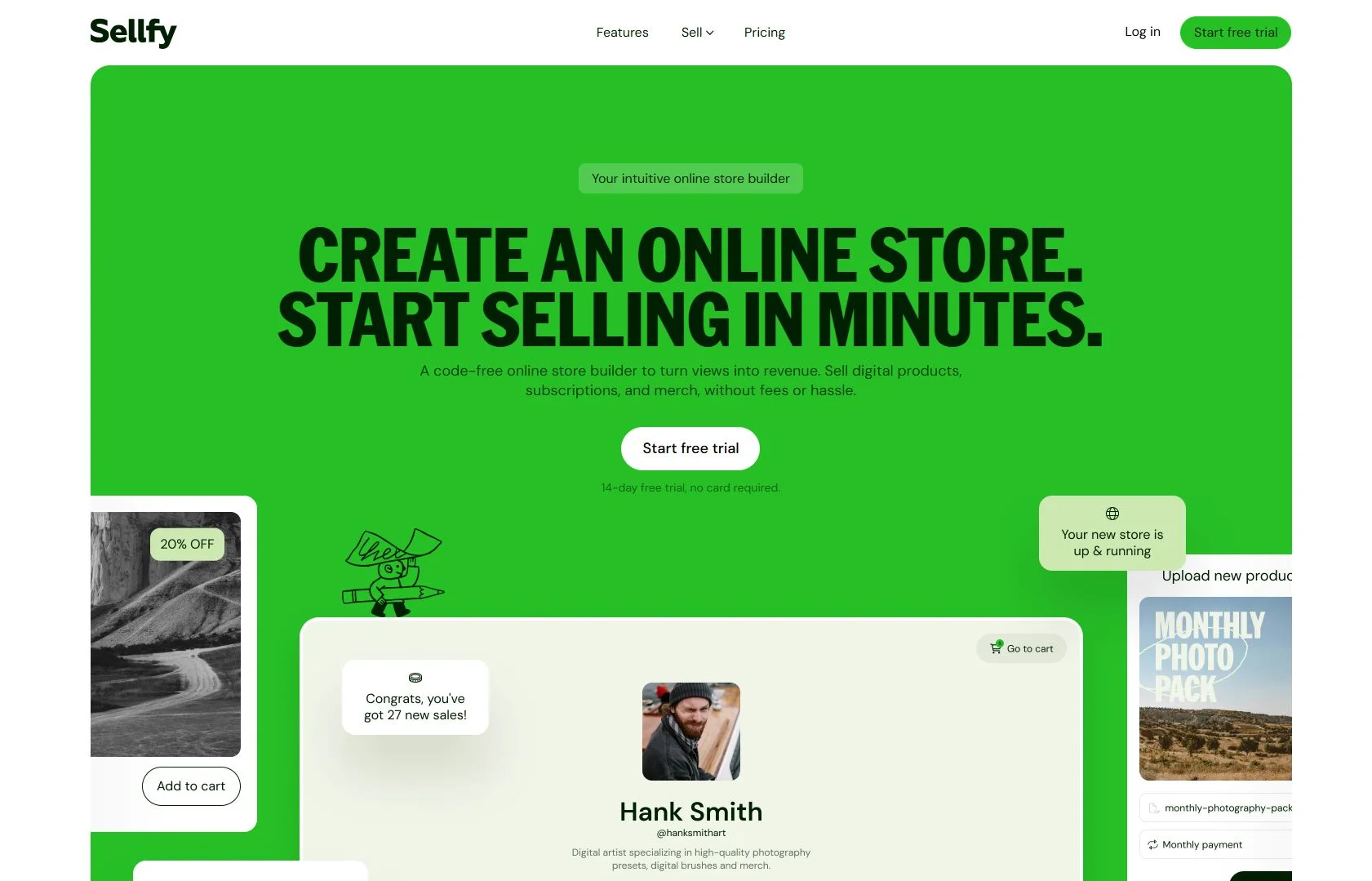
Why Sellfy is among the best Gumroad alternatives:
- Zero platform transaction fees on paid plans: Unlike Gumroad, which charges 10% + $0.50 on sales through direct links or a creator’s profile, Sellfy does not charge an additional platform transaction fee on paid subscription plans. Payment processing fees still apply.
- Built-in email marketing: Create, send, and automate campaigns to your customer list without paying for a separate tool.
- Print-on-demand support: Sell custom merchandise alongside your digital products in the same storefront, something Gumroad cannot do natively.
- Embeddable buy buttons: Sell directly from your existing website or landing page without redirecting customers to a separate storefront
That said, Sellfy isn’t perfect for every creator. Here’s an honest look at where it falls short:
- No free plan: A paid subscription is required before you can make your first sale.
- Annual revenue caps per tier: The Starter plan caps at $10K/year and Business at $50K/year in revenue, which can force an early upgrade as you scale.
- “Powered by Sellfy” branding: You can only remove the Sellfy badge on the Business plan and above.
Sellfy pricing: $29–$159 per month when billed monthly, or $22–$119 per month when billed annually. The Starter plan costs $29/month (when billed monthly) or $22/month (annually); Business costs $79/month or $59/month, respectively; and Premium costs $159/month or $119/month.
Best for:
Independent creators selling digital downloads, POD merchandise, or subscriptions who want a direct Gumroad replacement with zero transaction fees and minimal setup
Read more: Sellfy vs Gumroad Comparison.
2. Lemon Squeezy
If your main concern with Gumroad is managing international payments and indirect taxes, Lemon Squeezy is worth considering. It is a hosted digital commerce platform that acts as a Merchant of Record, handling applicable sales tax, VAT, and GST collection and remittance for transactions processed through its service.
There is no monthly subscription fee for Lemon Squeezy’s standard payment processing service. Instead, the platform charges 5% + $0.50 per transaction, with additional fees potentially applying to certain payment methods, international transactions, and other eligible transactions. Sellers should check the current pricing terms to calculate their actual costs.

Why Lemon Squeezy is among the best Gumroad alternatives:
- Merchant of Record service: Lemon Squeezy handles applicable indirect tax collection and remittance for transactions processed through its platform, along with payment processing and related transaction administration.
- Software license and SaaS subscription support: Manage free trials, upgrade/downgrade flows, and seat-based pricing that Gumroad simply wasn’t designed for.
- Hosted checkout: Provides a checkout experience for digital products and software, with available commerce features depending on the product and payment configuration.
- Built-in affiliate tools: Set up an affiliate program to help promote your products without relying on a separate affiliate platform. However, affiliate-related fees may apply, so sellers should factor them into their total selling costs.
While Lemon Squeezy is a strong platform, it does have some limitations worth knowing before you switch:
- No native course builder: There’s no drip content, lesson sequencing, or student progress tracking, making it a poor fit for course educators.
- Digital and software products only: If you sell physical merchandise or print-on-demand, you’ll need to look at a different platform.
- Limited storefront customization: The checkout experience is clean but rigid; you can’t build richly branded product pages the way you could with a full website builder.
Lemon Squeezy pricing: 5% + $0.50 per transaction, with additional fees potentially applying to certain payment methods and eligible transactions. The platform also charges a 3% fee on affiliate commissions, deducted from the affiliate’s payout.
Best for:
SaaS founders and software sellers who need automatic global tax compliance and a full Merchant of Record service behind every sale, with no monthly fee to get started.
3. Podia
Coming up next on our list of the best Gumroad alternatives is Podia. The platform combines website building, email marketing, digital product sales, and community features, helping creators manage several parts of their business from one dashboard. Its pricing structure varies by plan: Mover charges a 5% platform transaction fee, while Shaker and Earthquaker do not charge this platform fee. Podia also offers a 14-day free trial, allowing you to explore the platform before committing to a subscription.
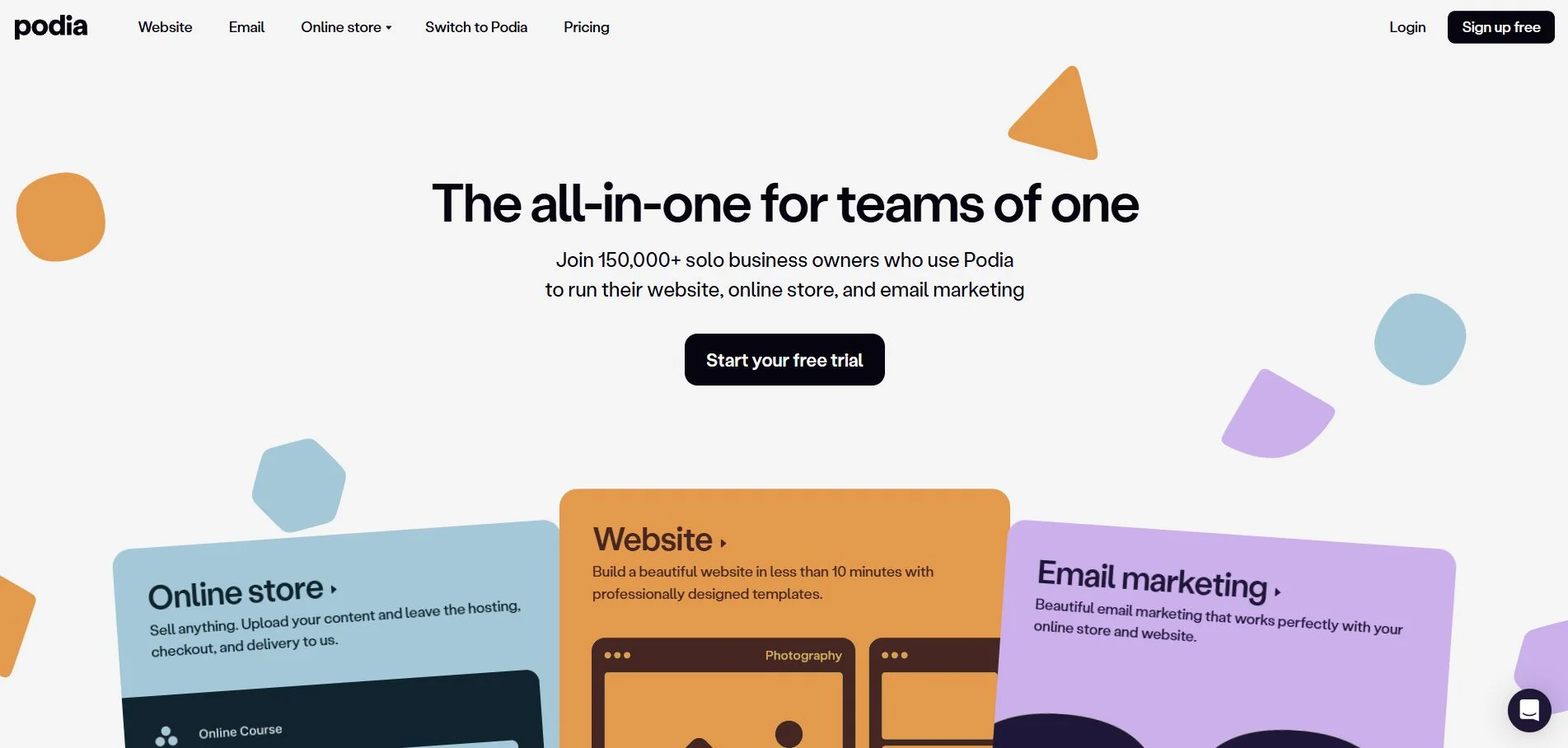
Why Podia is among the best Gumroad alternatives:
- Transaction fees depend on your plan: Mover charges a 5% platform transaction fee, while Shaker and Earthquaker have no Podia platform transaction fee. Payment processing fees may still apply depending on your payment provider and transaction.
- Built-in course builder: Create structured, lesson-based courses with videos, text, quizzes, and drip content scheduling, all natively, without a third-party tool.
- Membership and community support: Gate exclusive content behind membership tiers and run a built-in community forum.
- Coaching and webinar support: Sell one-on-one coaching sessions or live webinars alongside your digital products in the same storefront.
Although Podia covers a lot of ground, there are a few areas where it falls short:
- No free plan: Podia only offers a free trial; you’ll need a paid subscription before you can start selling.
- No print-on-demand or physical product support: Podia is built exclusively for digital products and services; if you sell merch, you’ll need another platform.
- Limited design customization: Storefront and landing page design options are functional but relatively basic.
Podia pricing: From $42 to $150 per month when billed annually. Mover costs $42/month, Shaker costs $84/month, and Earthquaker costs $150/month.
Best for:
Course creators and membership-based businesses who want to manage their website, email marketing, digital products, and community in one platform, with the option to choose a plan based on their product limits and transaction fee requirements.
4. Payhip
Payhip is a lightweight, fully hosted platform for selling digital products, courses, memberships, and physical goods online. It’s one of the very few Gumroad alternatives that lets you start selling for completely free, with no monthly fee, no product limits, and no time restrictions. Additionally, this platform also includes unlimited products, an affiliate program, and automatic EU VAT handling.
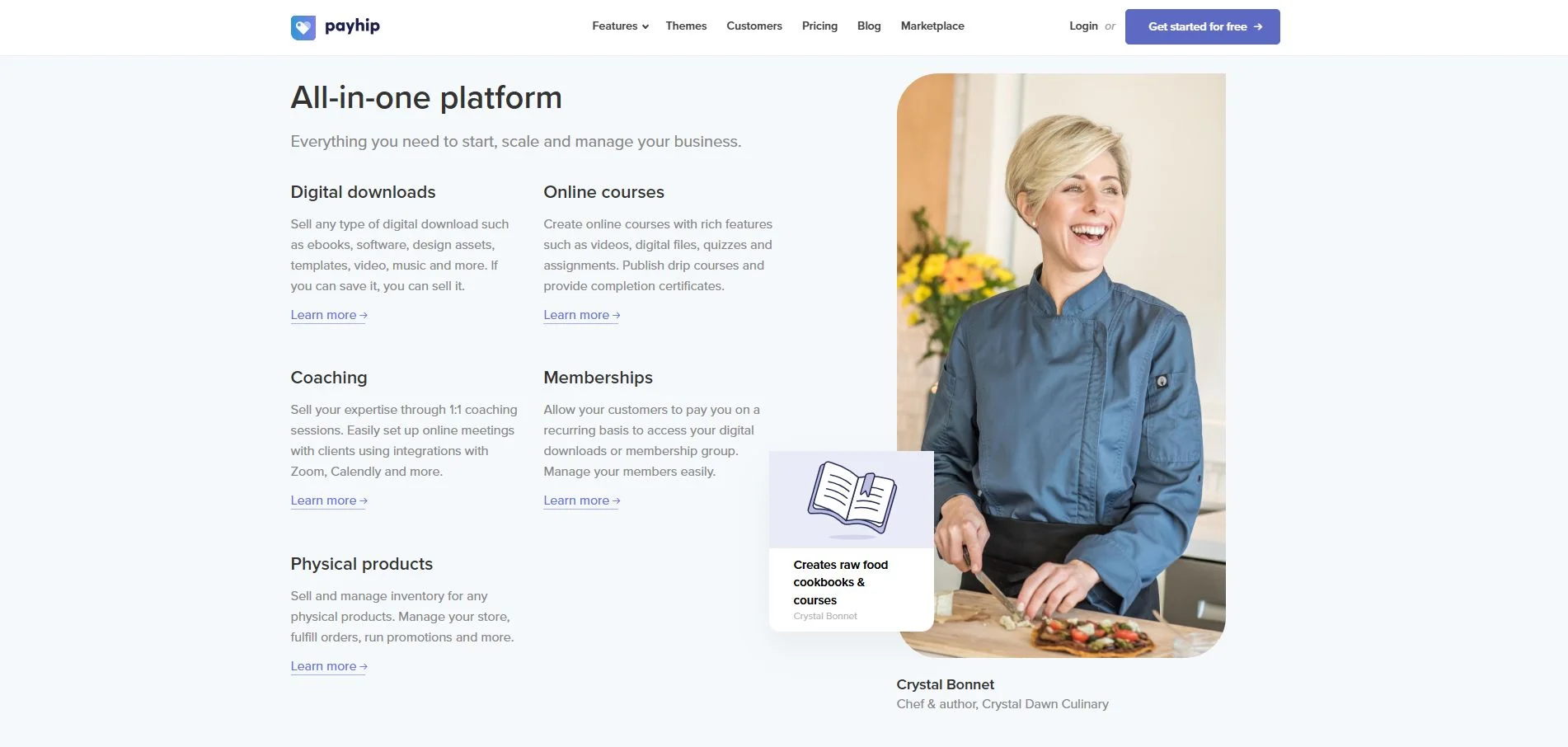
Why Payhip is among the best Gumroad alternatives:
- Generous free plan: Sell unlimited products with no monthly subscription and a 5% platform transaction fee. Upgrading to Plus reduces the platform fee to 2%, while Pro removes the platform transaction fee entirely. Standard payment processing fees still apply to every plan.
- Built-in affiliate program: Run your own affiliate marketing program on all plans, including the free tier.
- VAT and EU tax handling: Payhip automatically calculates and collects EU VAT on digital product sales, removing the compliance burden.
- Sell across multiple product types: Digital downloads, courses, memberships, coaching, and physical products are all supported under one storefront.
While Payhip is an excellent entry point, it does have limitations that may become apparent as your business grows:
- Limited storefront customization: Branding and design options are fairly basic; you can’t create a richly customized storefront experience the way you could with a full website builder.
- No native email marketing: Unlike Podia or Sellfy, Payhip doesn’t include a built-in email marketing tool; you’ll need to integrate a third-party service.
- Fewer advanced checkout features: There are no native upsells, order bumps, or A/B testing tools; creators focused on maximizing revenue per sale may find this limiting.
Payhip pricing: Free at $0/month with a 5% platform transaction fee, Plus at $29/month with a 2% platform transaction fee, or Pro at $99/month with no platform transaction fee. Payment processing fees still apply to all plans.

Best for:
Beginners and budget-conscious creators who want a free, low-risk way to start selling digital products with direct payout control from day one.
5. Fourthwall
Fourthwall is a hosted storefront platform built for online creators who want to monetize their audiences through digital products, memberships, and branded merchandise. Its Free plan lets creators launch a storefront without a monthly subscription, while Fourthwall manages production and fulfillment for supported physical merchandise.
Digital product fees depend on the plan: the Free plan charges a platform fee on digital product sales, while the Pro plan removes that fee. Payment processing costs and any applicable product-specific charges should be considered when comparing the total cost of selling.

Why Fourthwall is among the best Gumroad alternatives:
- Free storefront with an optional upgrade: Start selling with the Free plan at no monthly cost, then upgrade to Pro for $15/month to access additional benefits, including no platform fees on digital products. Payment processing fees may still apply.
- Physical and digital products in one store: Sell custom merch, apparel, and accessories alongside digital downloads and memberships.
- Automatic fulfillment and shipping: Fourthwall handles all print-on-demand production, packaging, and shipping for physical products, so you never touch inventory.
- Membership and exclusive content support: Offer tiered memberships with exclusive digital perks, early access content, or community benefits.
With that being said, Fourthwall is purpose-built for social creators, which means it has some meaningful gaps for other types of digital businesses:
- Limited advanced checkout optimization: Creators who need advanced features such as order bumps, sophisticated upsell flows, or A/B testing should verify whether Fourthwall supports their specific checkout requirements.
- Plan-dependent digital product fees: The Free plan charges a platform fee on digital product sales, while the Pro plan removes this fee. However, payment processing costs and other applicable charges may still affect the total cost of each sale.
Fourthwall pricing: Free plan at $0/month or Pro at $15/month. The Pro plan includes no platform fees on digital products, although payment processing costs may still apply.
Best for:
YouTubers, streamers, and social creators who want a branded storefront for digital products, memberships, and custom merchandise, with fulfillment handled for supported physical products and the option to upgrade as their business grows.
6. ThriveCart
ThriveCart is a hosted checkout and sales funnel platform designed to help creators and online businesses increase revenue through optimized checkout flows, upsells, and automation.
It now offers subscription-based plans, giving new customers the option to start with a monthly or annually billed subscription instead of committing to a lifetime license upfront. Its feature set also extends beyond checkout through ThriveCart Academy, which includes course and community tools. ThriveCart is particularly suitable for creators and businesses that want to optimize conversions and manage more of their sales process in one place.

Why ThriveCart is among the best Gumroad alternatives:
- Flexible pricing options: Choose a subscription-based plan with monthly or annual billing, allowing you to get started without paying a large lifetime license fee upfront. Review the terms of your selected plan to understand any applicable fees and payment processor charges.
- High-converting checkout templates: Purpose-built cart pages with proven layouts, trust badges, and urgency elements that outperform Gumroad’s basic checkout design.
- Native upsells and order bumps: Add one-click upsells, downsells, and order bumps to every checkout flow without any third-party tools.
- Ongoing platform development: ThriveCart continues to develop its checkout, sales funnel, and creator tools. Review the terms of your chosen license to understand which updates and features are included.
But keep in mind that though ThriveCart is a premium tool, its model isn’t the right fit for every creator:
- Subscription costs: Although subscription-based plans reduce the upfront commitment, recurring payments can add up over time. Creators should compare the total cost of monthly and annually billed plans against their expected sales volume and required features.
- Learning curve for beginners: The depth of features can feel overwhelming for creators who just want a simple selling experience.
- Storefront limitations: ThriveCart focuses on checkout, sales funnels, and creator tools rather than serving as a conventional full eCommerce storefront. Depending on your business model, you may still need a separate website or product discovery channel.
ThriveCart pricing: From $37/month when billed annually or $47/month when billed monthly for the Standard subscription plan. Pro+ plans are also available at higher prices.
Best for:
Creators and digital entrepreneurs who want a conversion-focused checkout platform with built-in upsells, sales funnel tools, and additional creator features, with subscription-based plans available to reduce the initial investment.
7. MemberPress
MemberPress is a WordPress plugin that transforms any WordPress website into a fully functional membership and subscription business. It gives you complete control over who can access what content on your site, letting you create tiered membership levels, gate premium content, deliver online courses, and manage recurring subscriptions all from your existing WordPress dashboard.

Why MemberPress is among the best Gumroad alternatives:
- Plan-dependent transaction fees: MemberPress does not charge a percentage-based platform transaction fee on every plan. The Launch plan applies a transaction fee to Stripe payments, whereas higher-tier plans such as Growth and Scale do not charge this plan-based transaction fee. (Standard payment processing fees still apply).
- Powerful content gating: Assign access to any page, post, video, course, or file on your WordPress site based on membership tier with granular rule-based control.
- Built-in drip content scheduling: Automatically release content to members on a schedule after they subscribe.
- Tiered membership levels: Create multiple membership tiers with different pricing, access levels, and content permissions.
However, while MemberPress is a powerful platform, there might be some limitations to keep in mind:
- Requires an existing WordPress site: MemberPress is not a standalone hosted solution. You need a WordPress site with hosting already set up before you can use it.
- More technical setup than hosted alternatives: Getting MemberPress fully configured requires more technical comfort than simply signing up for Payhip or Sellfy.
- Annual billing only: MemberPress plans are billed annually, so customers must account for the upfront yearly payment when budgeting for their membership site.
MemberPress pricing: Regular prices range from $399 to $999 per year. Promotional prices currently displayed on the official website range from $199.50 to $499.50 per year; offers may change.
Best for:
WordPress users building membership sites, subscription-based content businesses, or online course platforms who want complete ownership over their content, data, and revenue.
8. Teachable
Teachable is a fully hosted online course platform designed to help creators build, market, and sell structured online courses. It includes a no-code course builder, student management tools, payment options, and a customizable school storefront.
At the moment, the platform offers a 7-day free trial rather than a permanent free plan. Its four subscription tiers (Starter, Builder, Growth, and Custom) differ in price, available features, and platform transaction fees.

Why Teachable is among the best Gumroad alternatives:
- Purpose-built course builder: Create structured online courses with lessons and supported learning materials, using tools designed specifically for course delivery.
- Drip content scheduling: Release course content to students according to a schedule, subject to the features available on your plan.
- Completion certificates: Provide certificates to students who complete eligible courses, helping creators recognize learner progress.
- Flexible pricing options: Offer supported payment models such as one-time purchases, subscriptions, and payment plans, depending on your configuration and available features.
Teachable is excellent for course creators, but has notable limitations outside of that use case:
- Platform transaction fees on Starter: The Starter plan charges a 7.5% platform transaction fee. Meanwhile, the Builder, Growth, and Custom have no Teachable platform transaction fee, but payment processing fees may still apply on every plan.
- Not suited for simple digital downloads: Teachable is designed primarily for online courses and structured learning experiences. If you mainly sell eBooks, templates, or other simple digital files, a lighter digital product platform may be more suitable.
- Community features depend on your needs: Teachable includes community functionality, but creators should compare its available features with the specific discussion, engagement, and member-management tools they require.
Teachable pricing: Starter starts at $29/month (when billed annually) or $39/month (when billed monthly). Builder starts at $69/month or $89/month, respectively; Growth starts at $139/month or $189/month. A Custom plan is also available for high-volume education businesses, and the pricing is provided by the sales team.
The Starter plan charges a 7.5% Teachable platform transaction fee, while Builder, Growth, and the applicable higher-tier plan have no Teachable plan transaction fee. Payment processing fees still apply and vary depending on the payment method, transaction currency, and school location. Sellers should also check the current plan limits and any applicable usage fees.
Best for:
Online course creators and educators who want a hosted platform with structured course delivery, student management, and built-in sales tools, with pricing and transaction fees that vary by subscription plan.
9. Paddle
Paddle is a fully hosted commerce platform built specifically for software businesses and SaaS companies that need a complete billing, compliance, and payments infrastructure. As a licensed Merchant of Record, Paddle takes on full legal responsibility for payment processing, tax remittance, VAT collection, and fraud protection across 200+ countries and currencies. There’s no monthly subscription fee to get started; you pay only a per-transaction fee on each sale made through the platform.

Why Paddle is among the best Gumroad alternatives:
- Full Merchant of Record: Paddle legally owns the transaction on your behalf, collecting and remitting VAT, GST, and sales tax across every jurisdiction your customers are in, with zero admin required from you.
- Automatic global tax compliance: Handles tax obligations in 200+ countries and currencies automatically.
- SaaS-specific billing infrastructure: Supports free trials, paid trials, seat-based pricing, usage-based billing, and plan upgrade/downgrade flows natively.
- Localized checkout experience: Automatically display pricing in the customer’s local currency and payment method preferences.
With that being said, there are some disadvantages of Paddle that you need to keep in mind:
- Not designed for simple digital downloads: If you sell eBooks, templates, presets, or courses, Paddle is significant overkill.
- Developer-oriented setup: Getting the most out of Paddle, especially custom billing workflows, requires technical knowledge.
- Limited storefront and branding options: Paddle’s checkout and product pages offer minimal visual customization compared to creator-focused platforms like Podia or Sellfy.
Paddle pricing: 5% + $0.50 per Checkout transaction. Custom pricing may be available for high-volume businesses or more complex requirements.

Best for:
SaaS founders and software developers who sell to a global audience and need complete Merchant of Record coverage, automatic tax compliance, and enterprise-grade billing infrastructure without building it themselves.
10. SendOwl
SendOwl is a hosted digital delivery and checkout platform designed for creators who already have a website or audience and need a way to sell and deliver digital products.
Rather than replacing an entire storefront, SendOwl focuses on secure file delivery and order automation while an existing website or sales channel handles product discovery. Its plans offer the same core features, while pricing tiers are differentiated primarily by usage limits, including annual order volume and annual sales volume. Creators should choose a plan that fits their expected sales activity and review the current bandwidth policy before committing.
Why SendOwl is among the best Gumroad alternatives:
- Automated digital delivery: SendOwl delivers digital products through automated delivery workflows after a purchase is completed.
- PDF stamping: Supports PDF stamping to help creators discourage unauthorized sharing of eligible digital files.
- License key delivery: Supports license key generation and delivery for eligible software products.
- Embeddable buy buttons and checkout links: Add purchase links or buttons to an existing website, blog post, or landing page, allowing customers to buy digital products without requiring a complete storefront migration.
While being one of the lightest options in our list of the best Gumroad alternatives today, this platform has some limitations you should consider:
- No standalone storefront: SendOwl focuses on checkout and digital product delivery rather than providing a complete storefront, so creators generally need an existing website, landing page, or another sales channel.
- Limited product discovery: SendOwl does not provide a marketplace comparable to a dedicated product discovery platform, so sellers must bring their own audience or generate traffic through other channels.
- Usage limits vary by plan: Although SendOwl provides the same core feature access across plans, annual order volume and sales limits differ. Exceeding a plan’s limits may trigger an automatic upgrade, so sellers should compare their expected order volume and revenue with the current plan limits before choosing a subscription.
SendOwl pricing: $39–$159 per month when billed monthly, or $32.50–$132.50 per month when billed annually. Plans share the same core features but differ in annual order and sales limits. Check SendOwl’s current bandwidth policy and plan terms for any additional usage charges.

Best for:
Creators who already have an established website or landing page and need a lightweight, affordable checkout and digital delivery tool without migrating to an entirely new platform.
11. Patreon
Patreon is a creator-focused platform that helps artists, writers, podcasters, video creators, and other independent creators earn money directly from their audiences.
Rather than focusing solely on one-time digital downloads, Patreon combines recurring memberships with exclusive content, community features, and a shop for one-time purchases. Creators can offer monthly or annual memberships, publish members-only posts, and sell eligible digital products without building a separate eCommerce website.

One of Patreon’s main advantages is that it brings monetization and audience engagement together. Creators can use community chats, comments, polls, and audience insights to maintain relationships with paying supporters. They can also offer digital products such as downloadable files, images, videos, audio, posts, and content collections through Patreon’s Shop. However, the platform’s emphasis on memberships and creator communities means it may not be the best fit for sellers who need a fully customizable storefront or a conventional online shop with extensive product catalog controls.
Why Patreon is among the best Gumroad alternatives:
- Recurring membership revenue: Patreon allows creators to offer monthly and annual memberships with different prices and benefits. This makes it suitable for businesses that publish content regularly and want to build a more predictable income stream rather than relying exclusively on individual product purchases.
- One-time digital product sales: Creators can sell eligible digital products, posts, and collections through Patreon’s Shop. This lets them monetize individual pieces of work while also offering exclusive benefits to paying members.
- Built-in community and audience tools: Features such as community chats, comments, polls, and audience insights help creators engage with supporters and understand how their audience responds to their content.
- No upfront listing fee: Creators can start listing eligible digital products without paying an upfront listing fee. Patreon deducts applicable platform and payment processing fees when transactions are completed.
- Membership and product integration: Creators can connect their one-time product sales with their membership offerings. For example, they can sell a digital art collection individually while offering it as a benefit to eligible members.
That said, Patreon has several limitations worth considering before choosing it as your Gumroad alternative:
- Platform fees can reduce earnings: For creators who publish their page after August 4, 2025, the standard platform fee is 10% of successfully processed payments, plus applicable payment processing fees, taxes, and other charges. Existing creators may remain on different legacy pricing plans, so the actual cost depends on their account and applicable terms.
- Limited control over the storefront: Patreon provides a hosted creator page and shop rather than a fully customizable eCommerce website. Sellers who need extensive control over product pages, navigation, checkout, or the overall shopping experience may find it restrictive.
- Best suited to audience-driven businesses: Patreon works particularly well when creators already have an audience or can consistently publish content that motivates people to subscribe. Sellers who mainly want to sell standalone files without building a membership community may prefer a simpler digital product storefront.
- Not a full eCommerce solution: Although Patreon supports digital product sales, memberships, and community features, it is not designed to replace a comprehensive online store with broad physical product management and extensive storefront customization.
Patreon pricing: It is free to start, with no upfront fee for listing eligible digital products. Creators on the standard plan introduced for pages published after August 4, 2025, pay a 10% platform fee, plus applicable payment processing fees, taxes, currency conversion fees, and payout fees. Creators on eligible legacy plans may have different platform fees.
Best for:
Creators who want to monetize a loyal audience through recurring memberships, exclusive content, and one-time digital product sales, with community engagement tools built into the same platform.
12. WooCommerce
Last but not least, WooCommerce is a free, open-source eCommerce plugin for WordPress that lets businesses build and manage their own online stores. Unlike hosted creator platforms, WooCommerce gives sellers greater control over their website, product pages, checkout experience, and store functionality. It supports digital downloads as well as physical products, making it a flexible option for creators who want to expand beyond selling files and eventually operate a broader eCommerce business.

The platform’s flexibility comes from its integration with WordPress and its extensive ecosystem of themes, plugins, and extensions. Store owners can customize their storefront, connect payment providers, manage products and orders, and add functionality as their business grows. However, WooCommerce is not a ready-made creator marketplace or a fully managed storefront service. Sellers need to arrange hosting, configure their store, and handle maintenance and security, either themselves or with professional support.
Why WooCommerce is among the best Gumroad alternatives:
- No platform subscription or revenue share: The core WooCommerce plugin is free to download and use. WooCommerce does not charge a platform subscription fee or take a percentage of store revenue, although hosting, paid extensions, payment processing, and other services can add to the total cost.
- Full control over your storefront: Because WooCommerce runs on WordPress, sellers can customize their product pages, website structure, branding, and shopping experience. This is useful for creators who want their store to match an established brand rather than rely on a standardized creator storefront.
- Support for digital and physical products: WooCommerce supports downloadable products alongside physical goods. Creators can sell eBooks, templates, digital artwork, audio files, and other eligible downloads while also offering merchandise or physical products through the same store.
- Flexible payment integrations: Store owners can select from supported payment gateways and configure their checkout to suit their business. Payment processing fees depend on the selected provider and payment method rather than a mandatory WooCommerce platform transaction fee.
- Extensive plugin ecosystem: WordPress and WooCommerce offer extensions for subscriptions, memberships, email marketing, analytics, product delivery, and other store functions. This allows businesses to build a more specialized selling setup as their needs change, although some extensions require additional purchases.
Switch to WooCommerce with Confidence!
With the All-in-One Migration Service, our experts take care of everything, ensuring a seamless and stress-free migration.

Still, despite its flexibility, WooCommerce may not be the right choice for every creator:
- Hosting and maintenance are your responsibility: Unlike Gumroad, WooCommerce does not provide a complete hosted storefront out of the box. Store owners need to arrange hosting and manage updates, backups, security, and performance, or pay a service provider to handle them.
- Costs can increase with additional tools: Although the core plugin is free, a production-ready store may require paid extensions, premium themes, hosting, development, and ongoing maintenance. Sellers should calculate their expected total cost rather than assuming that a free plugin means a cost-free business.
- More technical setup: Setting up a WooCommerce store typically requires more configuration than opening a Gumroad account. Beginners may need to learn WordPress, choose suitable plugins, configure payments, and test their checkout and digital delivery workflows.
- No built-in creator marketplace: WooCommerce provides the infrastructure for your own online store, but it does not automatically bring an audience to your products. Sellers are responsible for driving traffic through SEO, social media, email marketing, advertising, or other channels.
WooCommerce pricing: The core plugin is free, with no monthly platform subscription or revenue-sharing fee. Hosting, domain registration, premium extensions, development, and payment processing are separate costs. WooCommerce estimates hosting at approximately 25–350 per month for many stores, while extensions commonly range from 29–299 per year each; actual costs depend on the store’s requirements and provider.
Best for:
Creators and businesses that want to own and customize their storefront, sell digital and physical products in one place, and build a flexible eCommerce operation on WordPress.
Why Look for Gumroad Alternatives?
Gumroad is a great place to make your first sale (check our Gumroad review for details), but it’s not built to scale with you. As your revenue grows, the platform’s limitations become harder to ignore. Here’s why so many creators go looking for Gumroad alternatives:
- Transaction fees can add up quickly as your revenue grows. Gumroad generally charges 10% + $0.50 per transaction for sales through your profile or direct links, while sales generated through its Discover marketplace incur a 30% fee. (*)
- Storefront customization is minimal. No custom checkout, limited branding, and little control over how your store looks and feels.
- Limited email marketing flexibility. Though Gumroad does offer built-in email features for communicating with customers and subscribers, creators who need more advanced segmentation, automation, or campaign management may still prefer a dedicated email marketing platform.
- Although Gumroad acts as a Merchant of Record and handles applicable indirect tax collection and remittance on sales made through its platform, sellers remain responsible for their own income tax obligations. They should verify any tax responsibilities that fall outside Gumroad’s services.
- The Discover marketplace charges a 30% fee. When a customer discovers and purchases your product through Gumroad’s Discover marketplace, Gumroad charges a flat 30% transaction fee, which includes payment processing. This fee remains unchanged even after you qualify for Gumroad’s high-volume discount on direct sales.
None of these are dealbreakers when you’re just starting out. But once your business gains traction, switching to a better platform is one of the highest-ROI decisions you can make.
(*) Once paid sales in a calendar month reach $20,000, new direct sales for the remainder of that month are charged 5% + $0.50 per transaction instead of the standard 10% + $0.50. Additional payment processing fees may apply to direct sales.
How to Choose the Best Gumroad Alternatives
Not every Gumroad alternative will be the right fit for your business. The best platform for a solo creator selling eBooks is very different from what a course educator or SaaS founder needs. Follow these steps to narrow down your options and make a confident decision.

1. Define your product type
Start by getting clear on what you’re actually selling. Some platforms are built specifically for digital downloads, while others excel at online courses, memberships, physical merchandise, or software licenses. If you sell a mix of product types, prioritize platforms that handle all of them natively rather than forcing workarounds.
2. Calculate what you’ll actually pay
Pricing models across Gumroad alternatives vary significantly, and the difference compounds fast at scale. Therefore, make sure to compare Gumroad’s flat charge against its competitors to see which fits your budget.
3. List your non-negotiable features
Before comparing platforms, write down the features you absolutely cannot do without. This prevents you from being swayed by flashy extras that won’t serve your actual workflow.
4. Assess your technical comfort level
Gumroad alternatives fall into two broad categories: fully hosted platforms and self-hosted solutions. If you want zero technical overhead, go hosted. If you want full control over your data, branding, and customization, go self-hosted.
5. Verify payout control and speed
Gumroad controls your entire payment flow, which means a single account suspension can freeze both your storefront and your earnings. Before committing to any Gumroad alternative, ask these three questions:
- Where does the money go?
- How fast do you get paid?
- Does the platform act as a Merchant of Record?
6. Test before you commit
Most top Gumroad alternatives offer a free plan or a trial period. Take advantage of this before migrating your entire product catalog to avoid wasting time and effort on the wrong solution.
Gumroad Alternatives – FAQs
What are the best alternatives to Gumroad?
The best Gumroad alternative depends entirely on what you sell and your budget. Based on our experience, here are the top 10 best Gumroad alternatives for your consideration:
1. Sellfy
2. Lemon Squeezy
3. Podia
4. Payhip
5. Fourthwall
6. ThriveCart
7. MemberPress
8. Teachable
9. Paddle
10. SendOwl.
What are the disadvantages of Gumroad?
The disadvantages of Gumroad include high transaction fees and strict payout rules. Gumroad charges a flat 10% fee plus $0.50 per direct transaction. This 10% does not include payment gateway fees (such as Stripe or PayPal processing rates around 2.9% + $0.30), bringing total cuts closer to 14% on standard sales. If a sale comes through Gumroad’s built-in “Discover” marketplace, the commission jumps to a flat 30% (plus processing fees).
Can I make money on Gumroad?
Yes. Thousands of creators make real, consistent income on Gumroad, and it remains a legitimate platform for selling digital products. Its simplicity and zero-setup experience make it particularly effective for getting your first sales quickly, validating a product idea, or selling to a small, established audience.
Final Words
We hope that this list of the best Gumroad alternatives in this guide covers virtually every creator type and business model. To make it easy, here’s a quick final recommendation by use case:
12 best Gumroad alternatives by user case:
- Closest Gumroad replacement: Sellfy
- Best free option: Payhip
- Best for online courses: Teachable or Podia
- Best for memberships: MemberPress or Podia
- Best for SaaS and software: Lemon Squeezy or Paddle
- Best for social creators and merch: Fourthwall
- Best for conversion-focused checkout and sales funnels: ThriveCart
- Best lightweight checkout add-on: SendOwl
- Best for creators building recurring income from a loyal audience: Patreon
- Best for a customizable online store with digital and physical products: WooCommerce
If you like this article, please don’t forget to check out our LitExtension Blogs and Resources for more expert tips and insights.

