Choosing the right eCommerce platform is an important step for any business looking to sell online. Two popular platforms that often come up in this decision-making process are BigCommerce vs Big Cartel. These two platforms may seem similar at first glance, but they serve very different types of users. BigCommerce is built for growing businesses that want powerful features, while Big Cartel focuses on simplicity and is a favorite among artists and small creators.
In this article, let's compare both platforms from several criteria, including:
- BigCommerce vs Big Cartel pros and cons
- Scalability
- eCommerce features
- Marketing & SEO
- Design & customization
- Apps and integrations
- Ease of use
- Customer support
- Pricing
So, if you're trying to decide between BigCommerce vs Big Cartel, this guide will walk you through all the key points in a simple and clear way.
BigCommerce vs Big Cartel – Our Quick Verdict
If you’re short on time and just want a quick answer, this section is for you. Below is a side-by-side comparison of BigCommerce vs Big Cartel, covering all the key areas that matter when choosing an eCommerce platform. From features and scalability to pricing and support, we’ve listed the winner in each category to help you decide faster.
Criteria | BigCommerce | Big Cartel | Winner |
Scalability | Built for growth with reliable infrastructure, unlimited products | Basic tools with product limits | BigCommerce |
Product & Inventory | Advanced management, bulk editing, automation | Simple setup, limited variants | BigCommerce |
Payment Gateways | Wide range of options, no additional fees for installation | Fewer integrations, limited choices | BigCommerce |
Reports & Analytics | Robust built-in analytics | Limited reporting tools | BigCommerce |
Marketing & SEO | Comprehensive SEO & marketing features | Basic tools, fewer options | BigCommerce |
Website Design | Customizable themes, developer-friendly | Simple themes, limited customization | BigCommerce |
Apps & Integrations | Large app marketplace, strong API support | Fewer integrations | BigCommerce |
Ease of Use | More complex due to advanced tools | Very easy for beginners | Big Cartel |
Customer Support | 24/7 live chat and support resources | Email support, no live chat | Big Cartel |
Pricing | $29 - $299/month Custom pricing available for larger businesses | $0 - $15/month | Big Cartel |
To conclude, if you’re looking for a powerful platform that can scale with your business and offer advanced features, BigCommerce is the clear choice. But if you’re just starting out, have a small product catalog, and prefer something simple and budget-friendly, Big Cartel could be a better fit.
An Overview of BigCommerce and Big Cartel
Before diving into detailed comparisons, it helps to understand what each platform is built for and who it serves best. Although both tools support online selling, they follow very different approaches. In this section, we take a closer look at BigCommerce and Big Cartel, along with their pros and cons for your consideration.
This overview will set the foundation for the BigCommerce vs Big Cartel comparison that follows, so make sure to check it out!
BigCommerce pros and cons
BigCommerce is a powerful, all-in-one eCommerce platform built to support growing and mid-sized businesses. It offers a wide range of built-in BigCommerce features, including advanced product management, SEO tools, and multi-channel selling options. This eCommerce powerhouse is currently the home for over 137,000 online stores across the world, according to BuiltWith.
However, with great power comes a steeper learning curve. BigCommerce is not the easiest platform for beginners, and its pricing may be higher than simpler tools designed for small stores or individual creators. But for those planning to grow fast and build a robust online presence, it’s a platform worth considering.
Here are the pros and cons of BigCommerce for your consideration:
BigCommerce pros | BigCommerce cons |
- Strong built-in eCommerce features - Excellent scalability with support for large product catalogs - No additional transaction fees on any plan - Powerful SEO, marketing, analytics tools - Flexible APIs and integrations for custom workflows | - Higher monthly pricing compared to beginner platforms - More complex interface for first-time sellers or entrepreneurs - Requires more setup time to use advanced features and customization - Not ideal for very small or hobby-based stores |
To dive deeper into features, pricing, and real user experiences, don’t miss our full BigCommerce review article.
Big Cartel pros and cons
Big Cartel is a lightweight eCommerce platform created for artists, makers, and small sellers who want a simple way to sell online. The platform focuses on ease of use and quick setup, which allows users to launch a store without technical skills or complex configurations. According to BuiltWith, Big Cartel is currently hosting over 90,000 websites all over the world, which shows its strong appeal among independent creators and small businesses.

Because Big Cartel prioritizes simplicity, it works best for stores with a small product catalog and basic selling needs. At the same time, this simplicity also means fewer advanced tools for scaling, marketing, and customization. Therefore, in our BigCommerce vs Big Cartel comparison, Big Cartel stands out for beginners but falls short for businesses with long-term growth plans.
Below are the pros and cons of Big Cartel so you can have a clear picture of this platform.
Big Cartel pros | Big Cartel cons |
- Very easy to use with a clean, beginner-friendly interface - Free plan available for small product catalogs - Quick store setup with no technical knowledge required - Affordable pricing for artists and solo sellers - Ideal for creatives and small-scale selling | - Limited features for growing or complex stores - Strict product limits on all plans - Basic SEO and marketing tools - Limited app integrations and customization - Not designed for high-volume or scaling businesses |
For our detailed thoughts and insights on Big Cartel, please check out our Big Cartel review article here.
Scalability – BigCommerce Wins
Our verdict:
In the BigCommerce vs Big Cartel comparison, BigCommerce is the stronger choice for anyone planning to scale their store over time. It is built to support businesses at every stage of growth, from startup to enterprise, offering the flexibility, infrastructure, and features needed to expand.
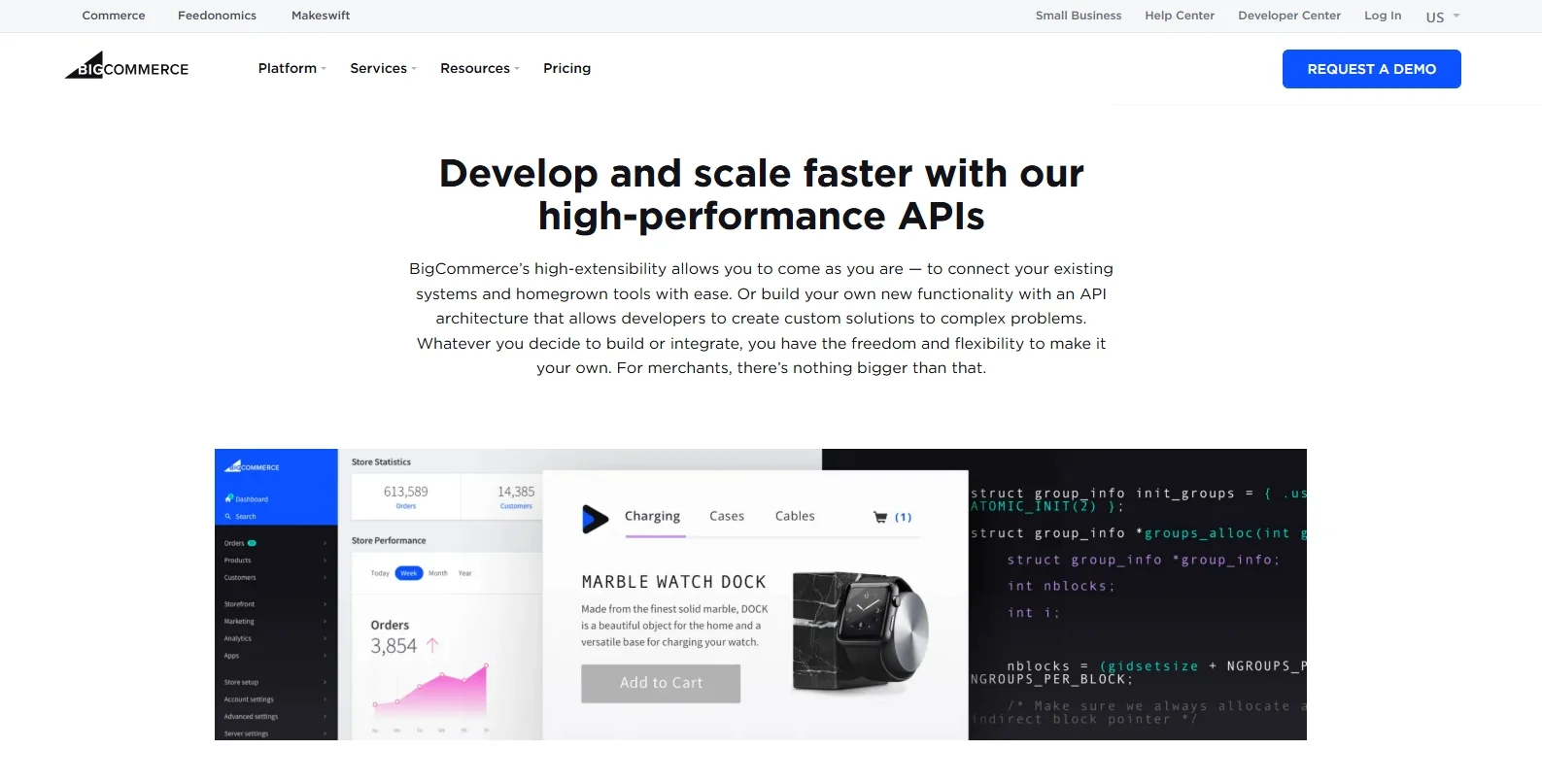
When it comes to scalability, BigCommerce was designed with growth in mind. The platform supports unlimited products, advanced inventory management, multi-storefront setups, and seamless integrations with major marketplaces like Amazon, eBay, and Google Shopping. As your business grows, you can connect more tools, manage multiple sales channels, and even sell globally with built-in multi-currency and multilingual support.
Moreover, BigCommerce’s open API structure allows developers to build custom solutions or automate tasks at scale. From backend flexibility to performance optimization under high traffic, everything about BigCommerce points to long-term scalability.
Big Cartel, on the other hand, focuses on serving individual creators and small businesses. While this simplicity makes it easy to get started, it also comes with clear limitations when it’s time to grow. The platform restricts the number of products you can list, capping at 500 products even on its highest plan. There’s no support for multi-channel selling, and customization options are minimal without coding.
In addition, Big Cartel doesn’t offer advanced reporting or automation features, which are essential as your operations become more complex. For artists or hobby sellers, this might not be a concern, but for businesses looking to expand, these limitations become a serious barrier.
eCommerce Features
In this section, we compare BigCommerce vs Big Cartel across three core eCommerce areas: product and inventory management, payment gateways, and reporting tools. Each of these features plays a key role in your store’s daily operations and long-term success, so it’s important to understand how both platforms perform before making your choice.
Product and inventory – BigCommerce Wins
Our verdict:
In the BigCommerce vs Big Cartel comparison, BigCommerce wins when it comes to product and inventory management. It offers more flexibility, better organization tools, and advanced features that are essential for managing a growing catalog.
BigCommerce allows you to add unlimited products on all plans, with full control over product variants, SKUs, and custom fields. You can manage large inventories using bulk editing tools, filter products with smart categories, and keep stock levels accurate with real-time tracking. It also supports digital products, subscription items, and complex product structures out of the box.
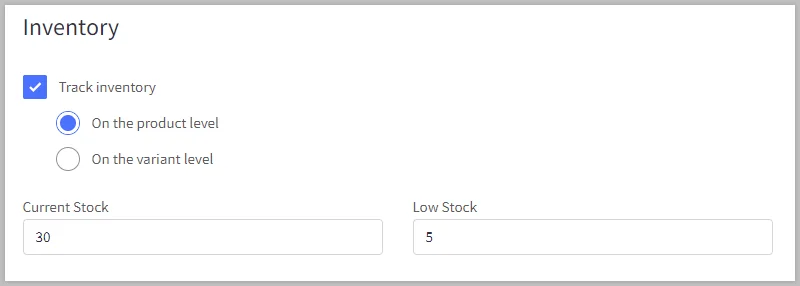
For sellers who deal with dozens or even thousands of SKUs, BigCommerce makes inventory control efficient. You can set low-stock alerts, use automation for restocking, and integrate directly with warehouse or fulfillment tools. These features help reduce errors and improve operational flow as your store scales.
Big Cartel is ideal for smaller stores, especially those selling a limited range of handmade goods or art pieces. On the free plan, you're restricted to just 5 products, and even the highest-tier plan only allows up to 500 products. While it supports basic options like product variants (e.g., size or color), there’s no bulk editing, advanced stock tracking, or automation.
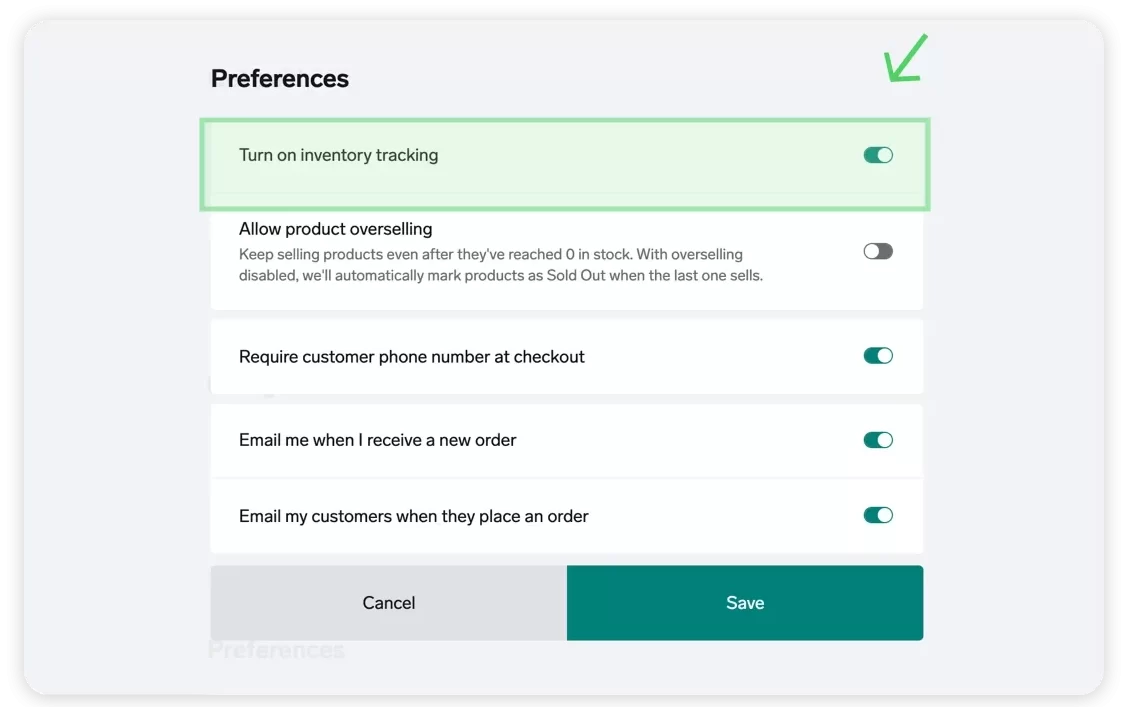
Inventory management is kept very simple, which works for sellers who don’t need much. However, if your product line grows or you need better organization, you’ll quickly find yourself outgrowing the platform.
Payment Gateways – BigCommerce Wins
Our verdict:
BigCommerce is the clear winner when comparing payment gateways. It supports a wider range of payment options, gives you more control over fees, and provides better tools for global transactions. Therefore, in the BigCommerce vs Big Cartel comparison, this flexibility gives BigCommerce a major edge for businesses looking to scale or serve customers worldwide.
BigCommerce payment gateways integrate with over 40 options, including popular options like PayPal, Stripe, Square, Authorize.Net, Braintree, and even digital wallets like Apple Pay and Google Pay. It also supports buy now, pay later (BNPL) services like Afterpay and Klarna, ideal for improving checkout flexibility.
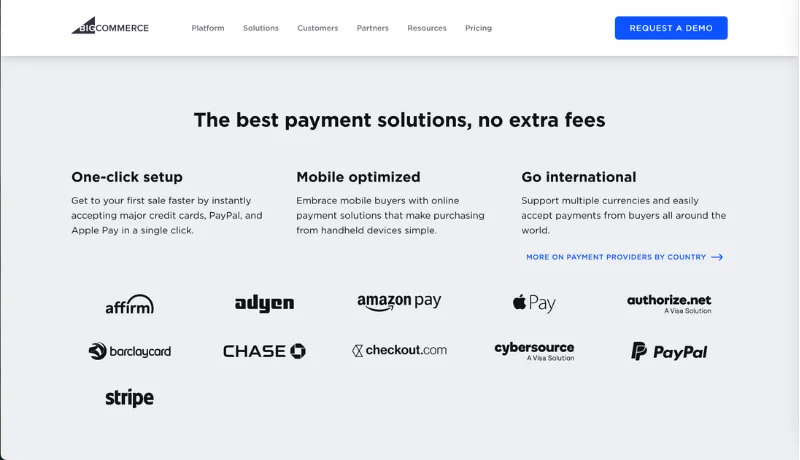
One of BigCommerce’s biggest advantages is that it doesn’t charge any additional transaction fees, no matter which gateway you use. This gives you more freedom to choose the best payment provider for your business without worrying about extra costs cutting into your margins. For international sellers, BigCommerce also allows multi-currency payments and localized checkout experiences, making it much easier to sell globally from day one.
On the other hand, Big Cartel takes a much simpler approach to payments. It supports only two major gateways: PayPal and Stripe, and you must use one of these to accept payments. While this setup works for many artists and small sellers, it lacks flexibility, especially if you want to explore better transaction rates or offer alternative payment methods.
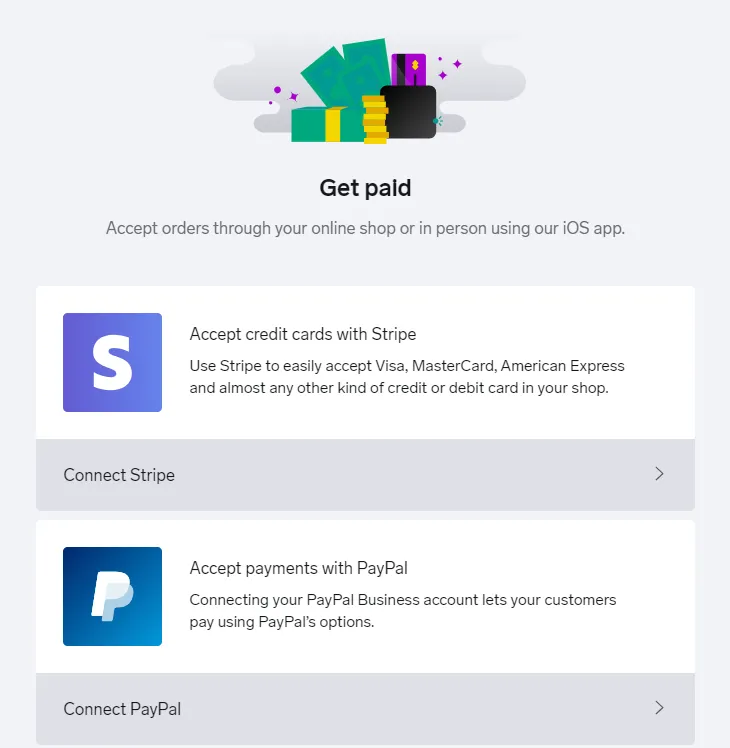
In addition, Big Cartel doesn’t offer native support for digital wallets, BNPL services, or multi-currency checkout. This limits your ability to serve diverse customer preferences, especially if you sell internationally or want to boost conversions through flexible payments.
Reports and Analytics – BigCommerce wins
Our verdict:
When it comes to tracking store performance, BigCommerce easily outperforms Big Cartel. It offers in-depth reporting and analytics tools that help you understand your sales, customer behavior, and overall business health. In the BigCommerce vs Big Cartel matchup, BigCommerce is the better choice for data-driven decision-making.
BigCommerce provides a comprehensive reporting dashboard even on lower-tier plans. You can access sales reports, customer reports, product-level performance, and storefront analytics. These tools allow you to track top-performing products, identify trends, monitor customer behavior, and forecast future performance.
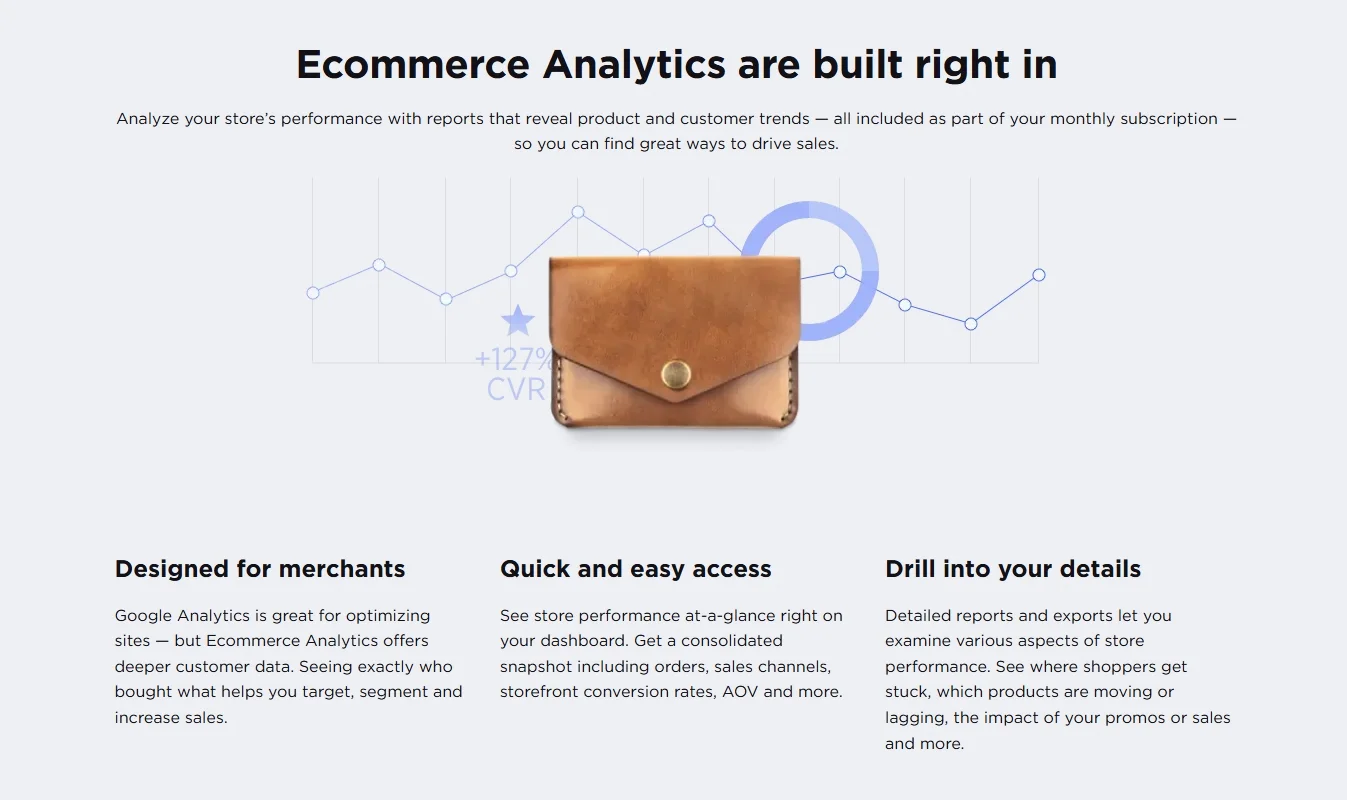
For businesses that want to grow, this level of insight is critical. BigCommerce also integrates with Google Analytics, Facebook Pixel, and third-party BI tools, so you can extend your data tracking even further. If you upgrade to a higher plan, you get access to advanced eCommerce insights, like customer segmentation and merchandising reports.
On the flip side, Big Cartel offers only very basic reporting tools. You can see limited information such as total sales, order volume, and traffic stats, but there’s no deep breakdown or analysis. While it does integrate with Google Analytics, the platform itself doesn’t support advanced reporting or customer insights.
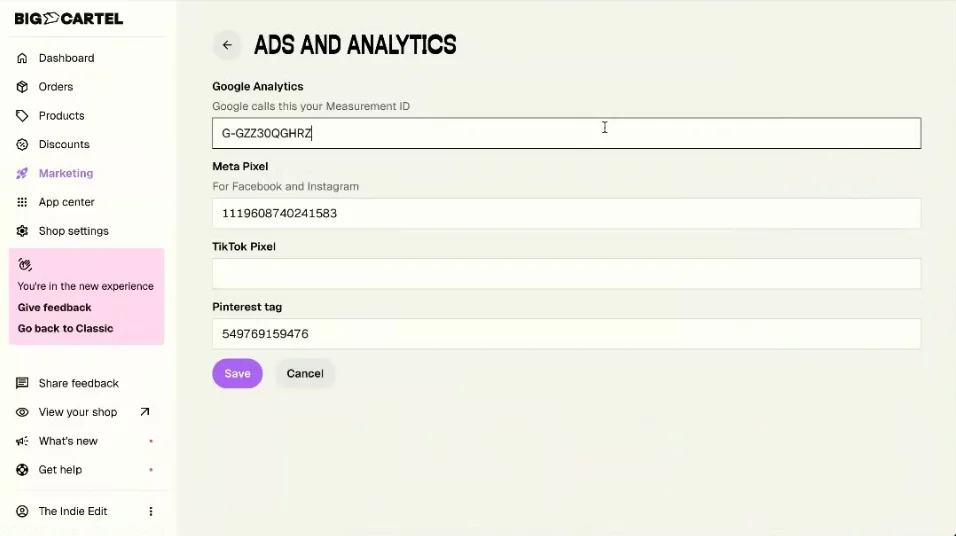
This might be enough for creators or hobby sellers who just want to track simple numbers. However, as your business grows, the lack of detailed reporting can make it harder to improve performance, optimize marketing, or identify areas for improvement.
Marketing and SEO Features – BigCommerce Wins
Our verdict:
When comparing BigCommerce vs Big Cartel in terms of marketing and SEO tools, BigCommerce is the clear winner. It offers built-in features that help you attract more traffic, run promotions, and improve search visibility, all essential for growing your online store.
BigCommerce provides a wide range of marketing and SEO features from the start. You can customize URLs, meta titles, and descriptions, generate automatic sitemaps, and enjoy fast-loading pages with built-in mobile optimization, all of which contribute to better rankings on search engines.
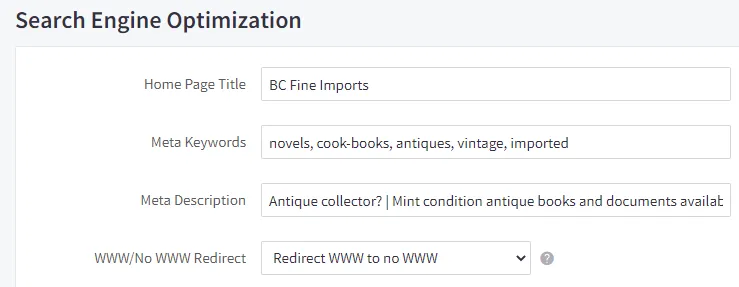
On the marketing side, BigCommerce supports built-in discount and coupon tools, abandoned cart recovery (on higher plans), and seamless integrations with email marketing platforms like Mailchimp and Klaviyo. You can also connect your store to Google Shopping, Facebook, and Instagram to reach more customers across channels. Thanks to this built-in flexibility, BigCommerce gives you full control over your brand’s online presence and makes it easier to convert visitors into paying customers.
By contrast, Big Cartel includes only limited SEO and marketing features. You can edit basic SEO fields like page titles and descriptions, but there’s no support for advanced settings, rich snippets, or content marketing tools. The platform does not include built-in features for abandoned cart recovery or email marketing, so you’ll need to rely on third-party workarounds or manual efforts.
For marketing, Big Cartel allows you to create simple discount codes and offers. These may be enough for creators running occasional sales, but they fall short for businesses that want to run multi-channel campaigns or optimize performance over time.
Website Design – BigCommerce Wins
Our verdict:
When it comes to building and customizing the look of your online store, BigCommerce is the stronger platform. It offers more design flexibility, a wider selection of themes, and deeper customization options, giving your brand the freedom to stand out. Hence, in the BigCommerce vs Big Cartel comparison, BigCommerce clearly wins in terms of website design capabilities.
BigCommerce provides a robust visual editor along with access to HTML, CSS, and JavaScript for full design control. You can choose from a variety of professionally designed BigCommerce themes, including both free and paid options, all of which are mobile-responsive and optimized for performance.
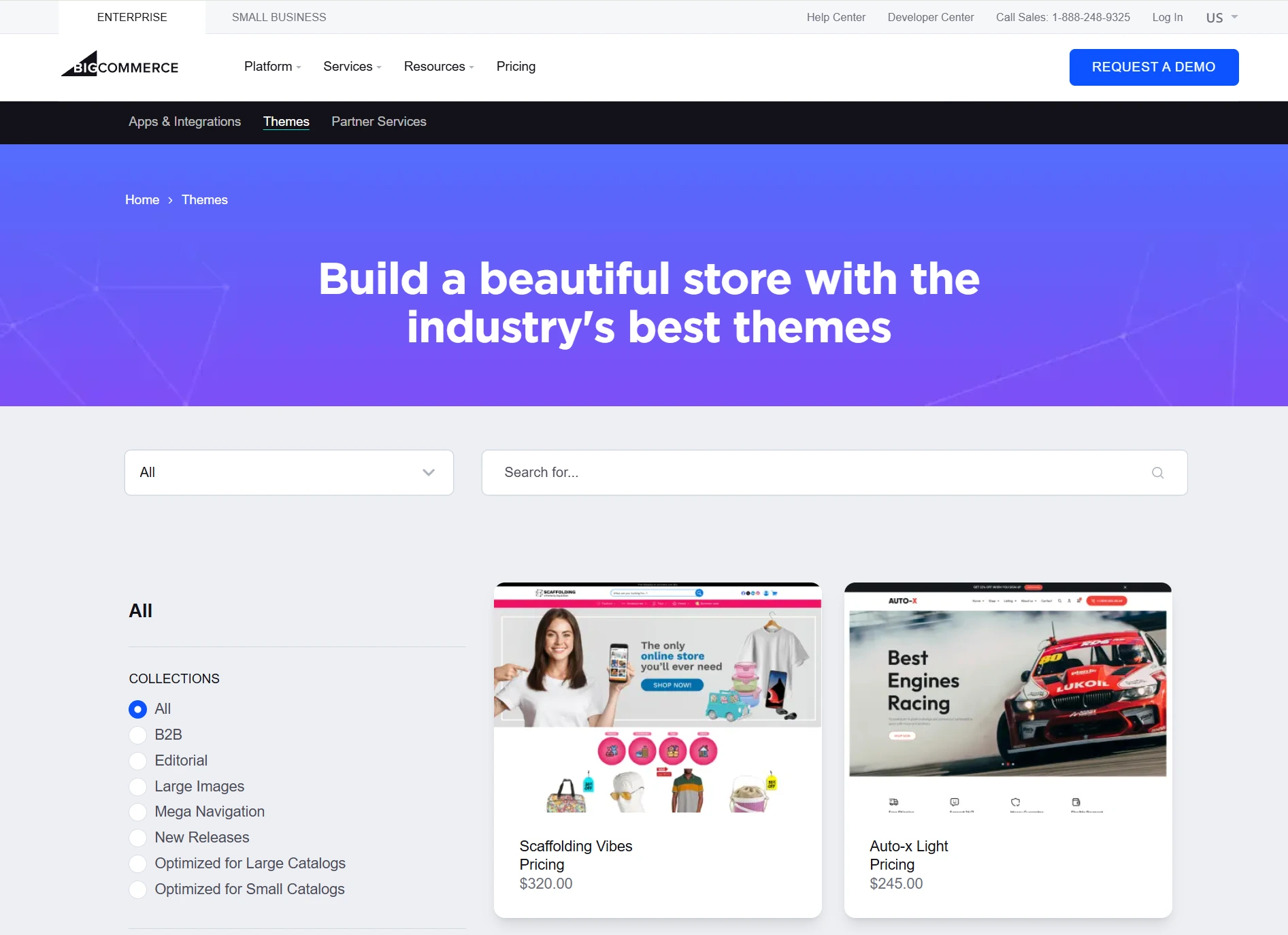
For non-technical users, the drag-and-drop Page Builder makes it easy to design custom pages without touching code. Meanwhile, developers can use the Stencil framework to build unique storefronts or make advanced layout changes. This makes BigCommerce ideal for businesses that want both ease of use and deep customization options. In addition, BigCommerce supports features like image zoom, product quick view, and video integration, tools that enhance the shopping experience and boost conversions.
On the other hand, Big Cartel offers a more minimal approach to store design. It includes a small set of free themes, most of which are simple and clean, perfect for artists or creators with a strong brand identity. However, customization options are quite limited unless you’re comfortable editing HTML and CSS directly.
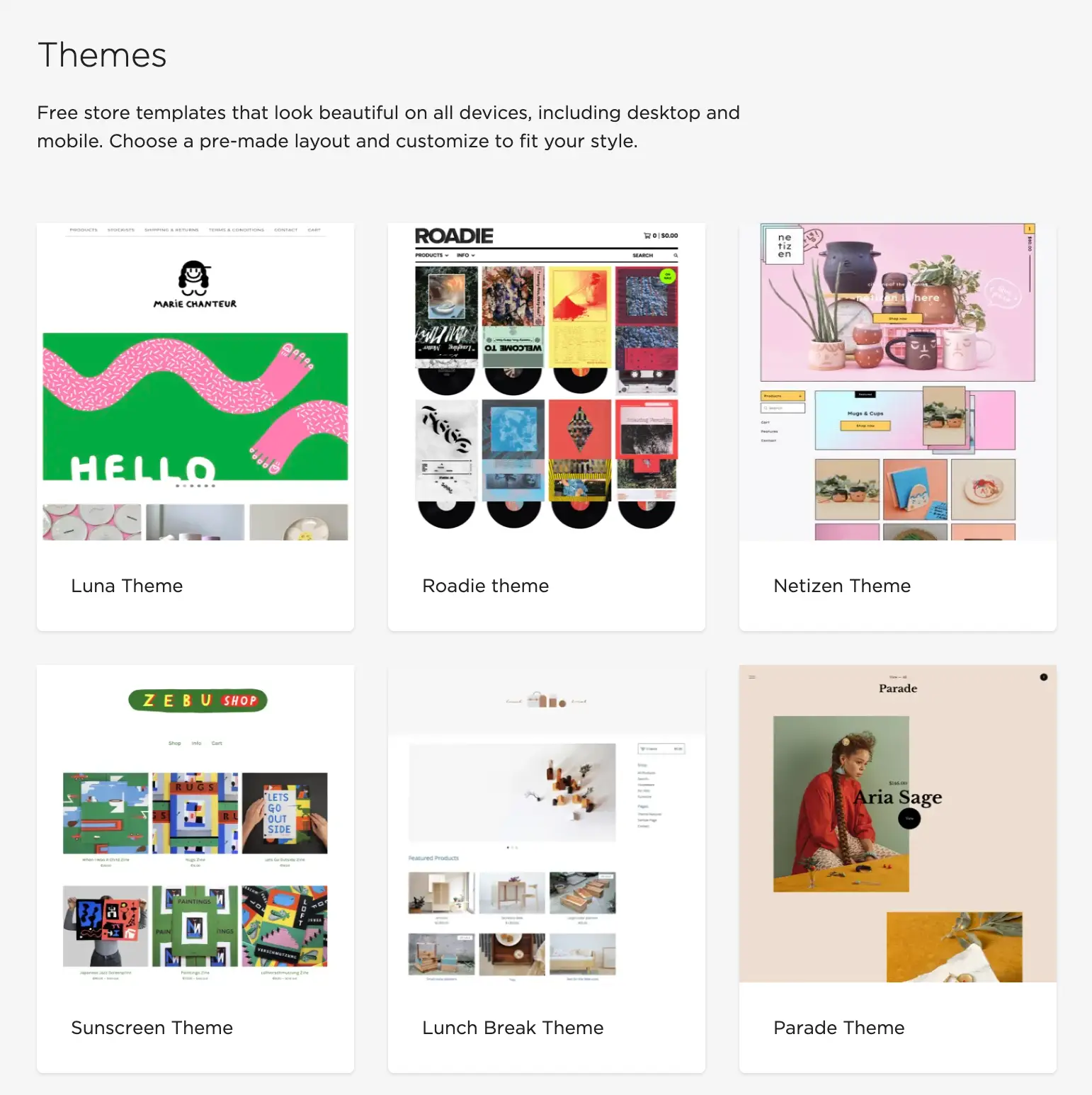
There’s no built-in drag-and-drop builder, and advanced features like video banners, mega menus, or product filtering are missing. For users who just need a clean storefront without much editing, Big Cartel works fine. But if you want to fully control the look and feel of your website, you’ll likely outgrow it quickly.
Apps & Integrations – BigCommerce Wins
Our verdict:
In the BigCommerce vs Big Cartel comparison, BigCommerce comes out ahead when it comes to apps and integrations. It connects with a wide range of third-party tools that help streamline your operations, automate tasks, and grow your business. Big Cartel, while easy to use, offers limited integration options and lacks an app marketplace.
BigCommerce has a large and well-organized App Marketplace with hundreds of integrations across key categories like shipping, marketing, accounting, customer service, loyalty programs, and inventory management. Popular apps like ShipStation, Klaviyo, QuickBooks, Mailchimp, and Yotpo are all easily accessible, and most can be installed with just a few clicks.
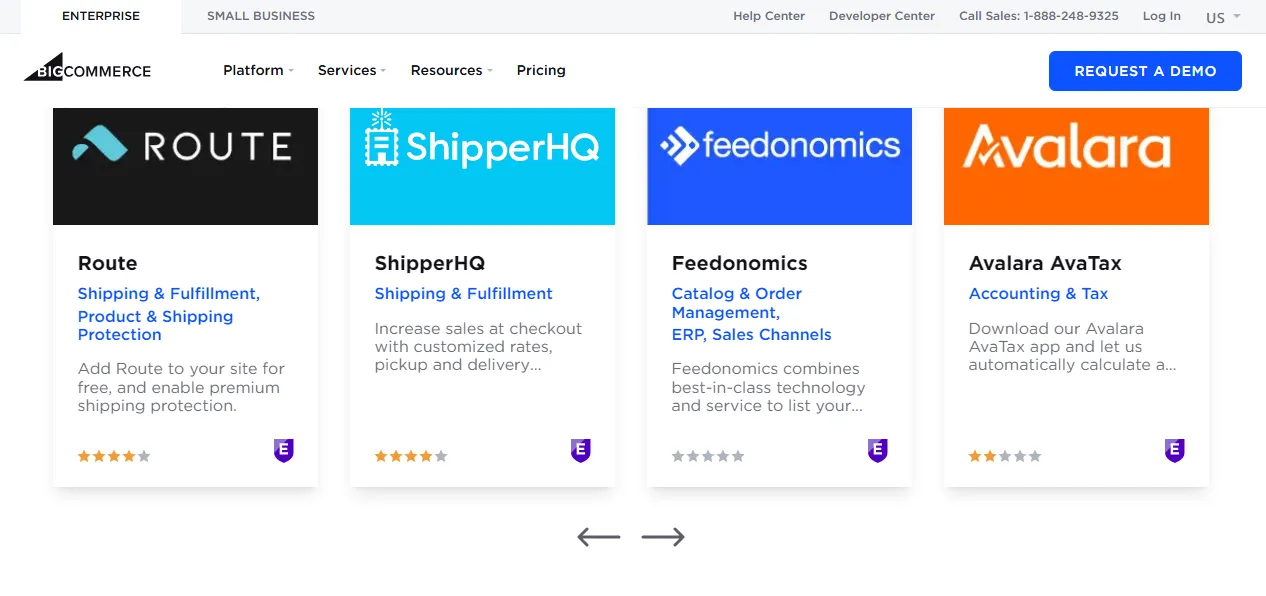
Moreover, BigCommerce’s open API gives developers the freedom to build custom apps or connect with internal systems. This is especially helpful for businesses with unique workflows or advanced automation needs. Whether you’re just starting out or running a high-volume store, these integrations can help you save time, reduce errors, and improve customer experience—all without switching platforms.
By comparison, Big Cartel keeps things very simple and that applies to integrations as well. It doesn’t have a centralized app marketplace. Instead, it offers a small list of supported services, such as Google Analytics, Facebook Pixel, and a few marketing or shipping tools. You can use Zapier to connect with other services, but this often requires additional setup and may not offer full functionality.
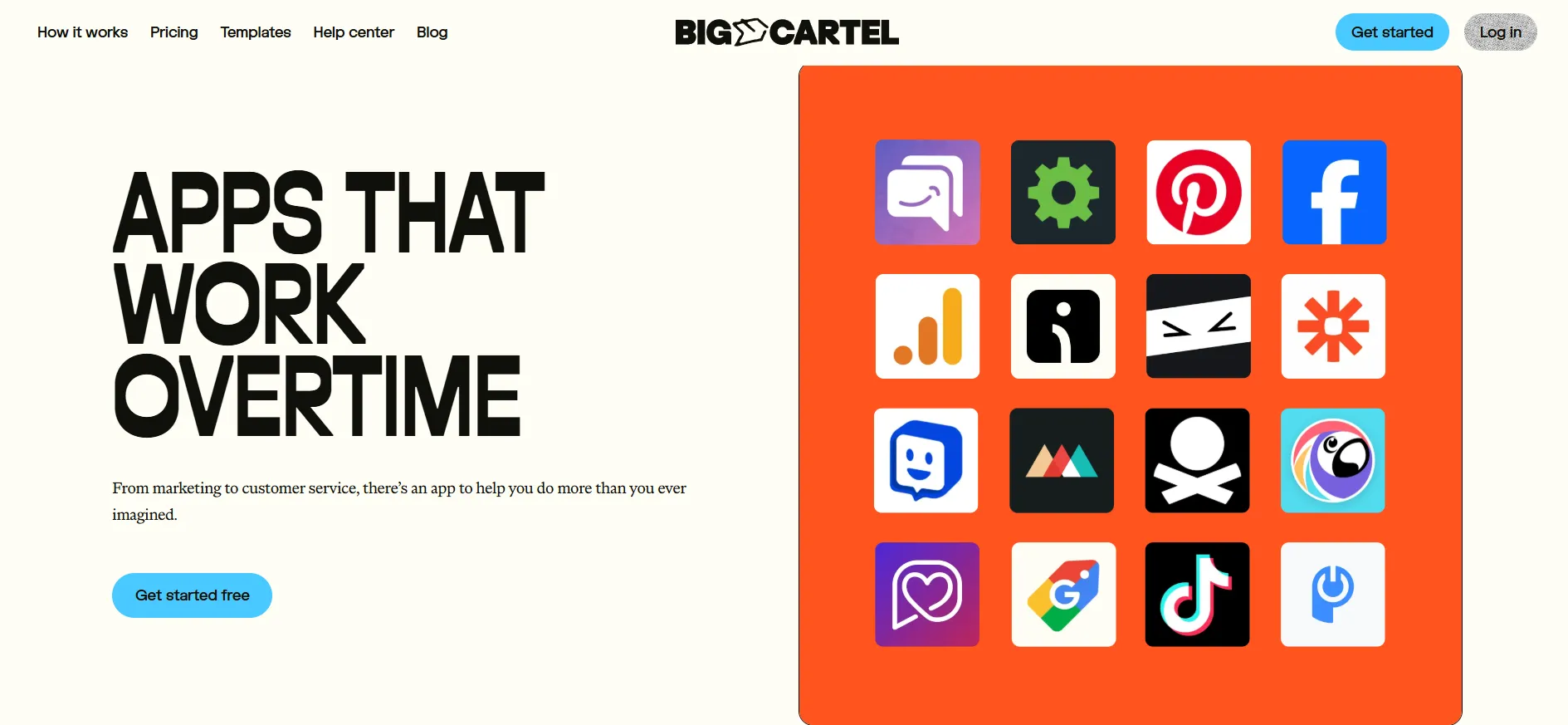
There’s also limited support for advanced tools like CRM systems, fulfillment apps, or customer loyalty platforms. For creators with basic needs, this may not be an issue. But as your business grows and operations become more complex, Big Cartel’s lack of integrations can become a major limitation.
Ease of Use – Big Cartel Wins
Our verdict:
In the BigCommerce vs Big Cartel comparison, BigCommerce comes out ahead when it comes to apps and integrations. It connects with a wide range of third-party tools that help streamline your operations, automate tasks, and grow your business. Big Cartel, while easy to use, offers limited integration options and lacks an app marketplace.
BigCommerce is designed for businesses that need more advanced tools and customization options. Its interface is clean and well-structured, but the sheer number of features, such as product filtering, discount rules, SEO settings, and app integrations, can be overwhelming for first-time users.
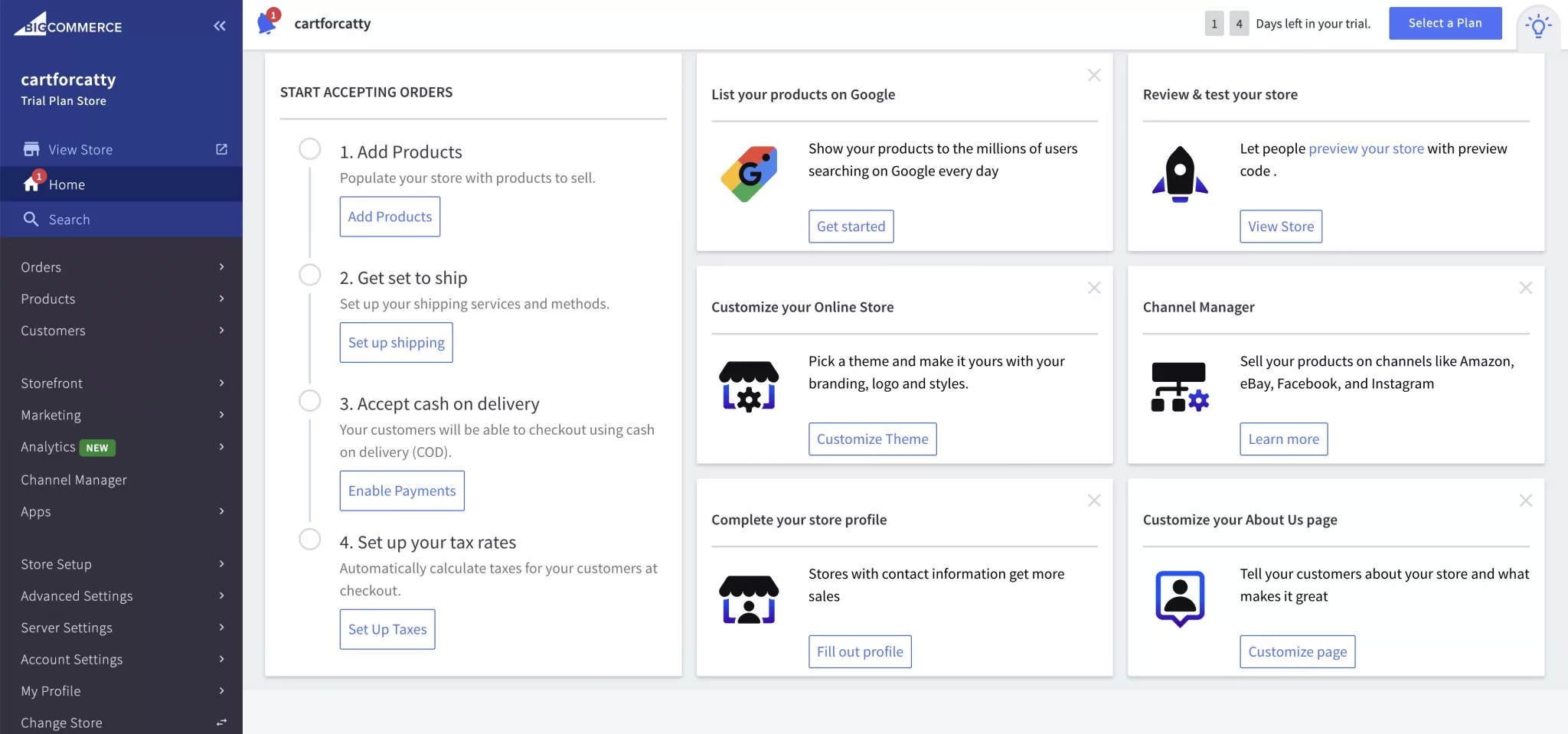
That said, BigCommerce does a good job of guiding users through the setup process with tutorials and support resources. It also includes a visual Page Builder for editing content without code. For experienced users or businesses with more complex needs, the extra effort is worth the control it provides.
In contrast, Big Cartel is made with small-scale sellers and independent creators in mind. Its clean dashboard, straightforward setup process, and minimal learning curve make it one of the easiest platforms to use. You can create a store, add products, and start selling in just a few steps, no coding or prior eCommerce experience needed.
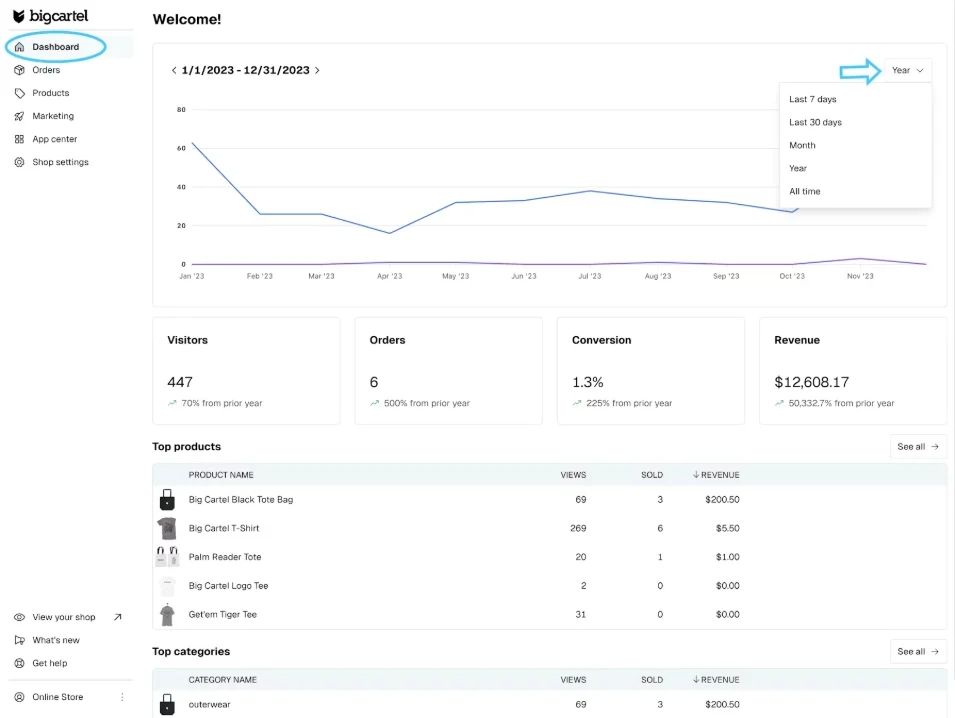
Even the settings and navigation are kept simple, which makes day-to-day tasks, like updating products or managing orders, easy and stress-free. For sellers who want to focus on their craft rather than learning a technical platform, Big Cartel is a great fit.
Customer Support – Big Cartel Wins
Our verdict:
Although BigCommerce vs Big Cartel offer helpful resources, Big Cartel wins in customer support thanks to its 24/7 live chat availability, which gives users direct access to real-time assistance at any time.
BigCommerce offers a variety of support options, including a knowledge base, help center, community forum, and email or phone support. Depending on your plan, you may also get access to live chat, but it’s not always available 24/7, especially for users on lower-tier plans.
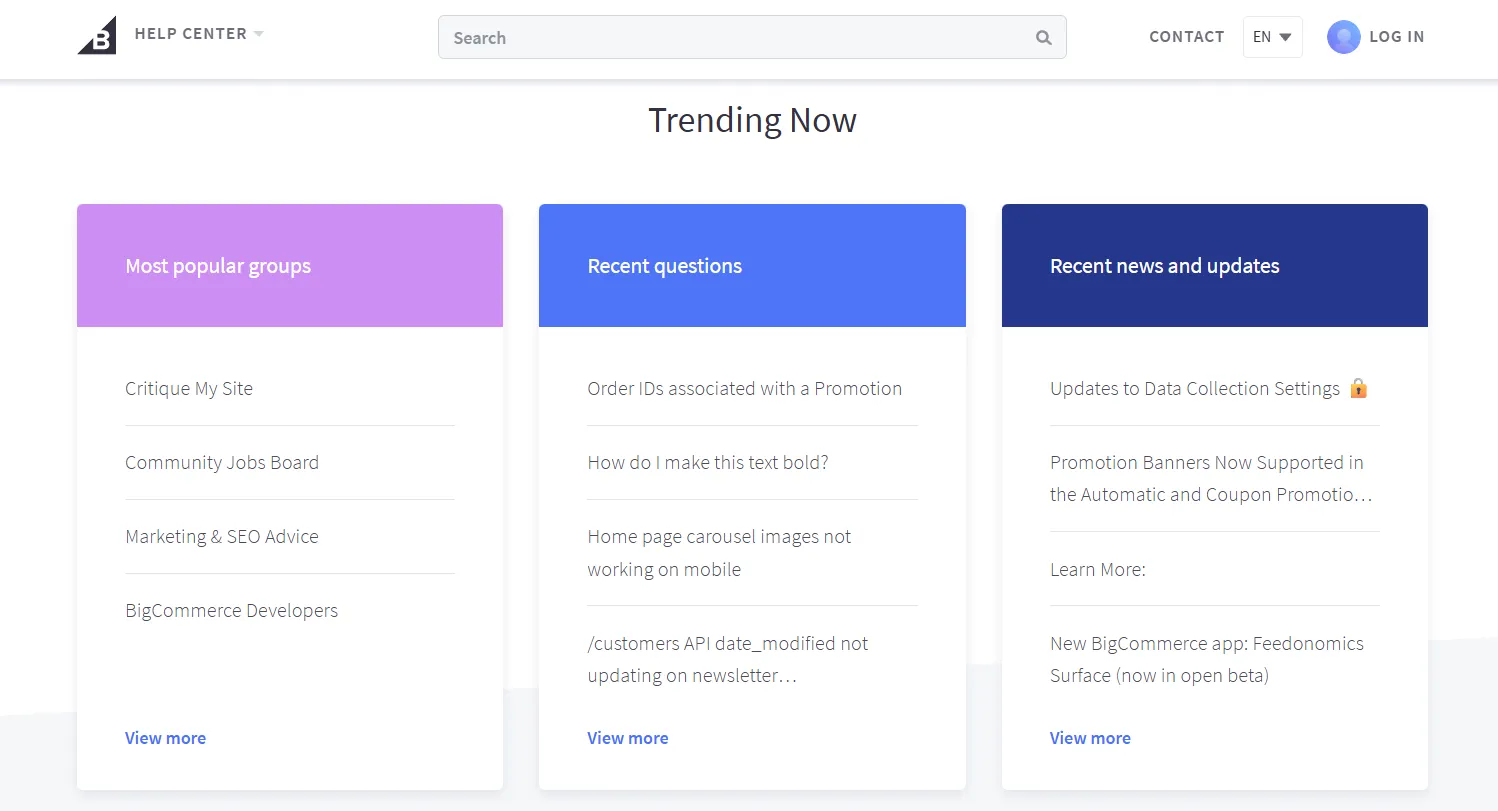
The platform also provides onboarding support and advanced help for Enterprise users, which is valuable for growing businesses. However, for new or small store owners, needing to upgrade for full support access can be a downside.
In contrast, Big Cartel offers live chat support 24/7 for all users, regardless of the plan. This is a big advantage for sellers who want quick answers without waiting for email replies or needing to upgrade to a higher plan. The team is known for being friendly, responsive, and helpful, especially for creative sellers who prefer simple, human support over technical documentation.
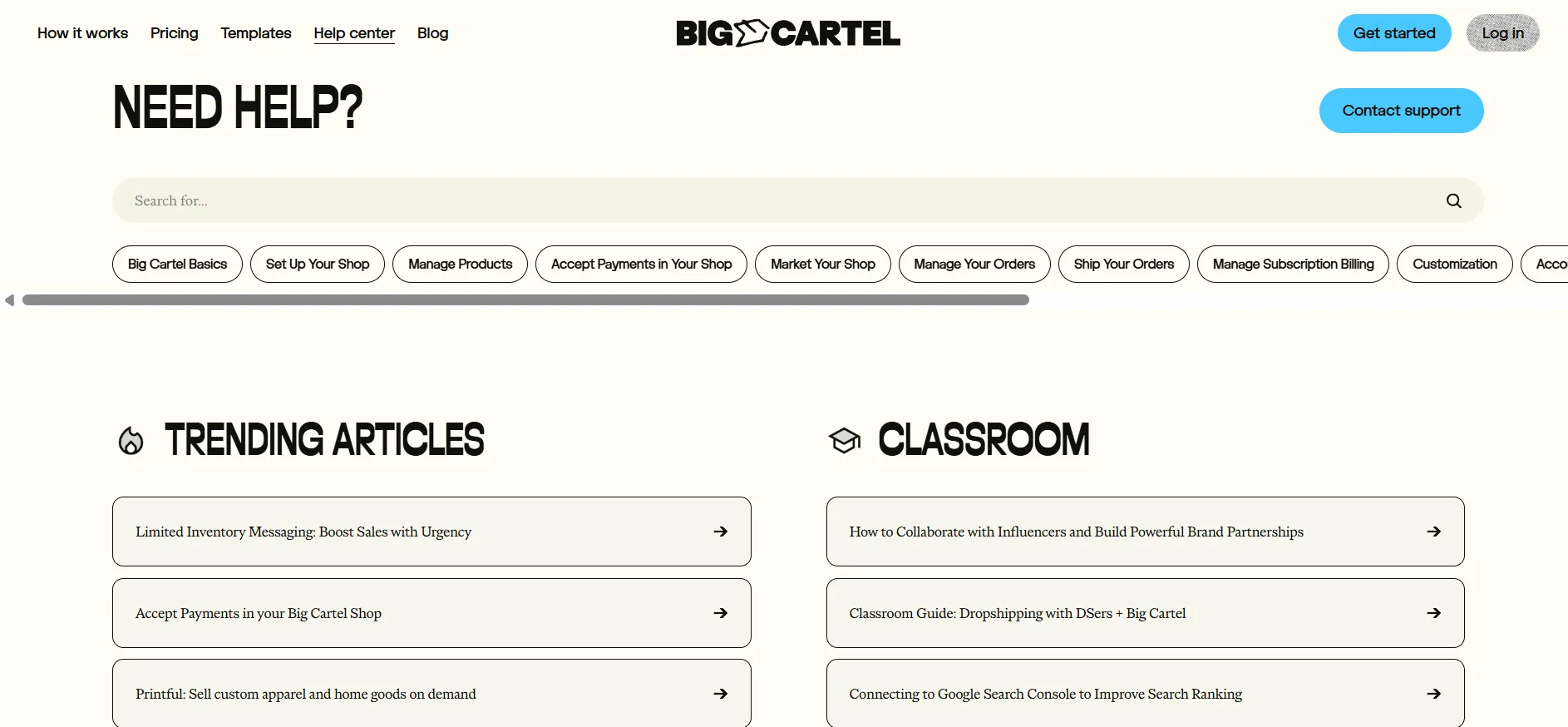
Big Cartel also offers a basic help center with guides and FAQs, but its standout feature is how easy it is to reach real support at any time.
Pricing – Big Cartel Wins
Our verdict:
When it comes to affordability between BigCommerce vs Big Cartel, Big Cartel takes the win. Its pricing is much more accessible for small businesses, creators, and beginners, especially with a free plan available.
BigCommerce pricing offers four different tiers, all of which are billed annually if you want to get the 25% discount:
- Standard – $39/month: Supports up to $50K in annual online sales
- Plus – $105/month: Supports up to $180K in annual online sales
- Pro – $399/month: Designed for stores making up to $400K+ in online sales
- Enterprise – Custom pricing: Best for businesses making $1M+ annually
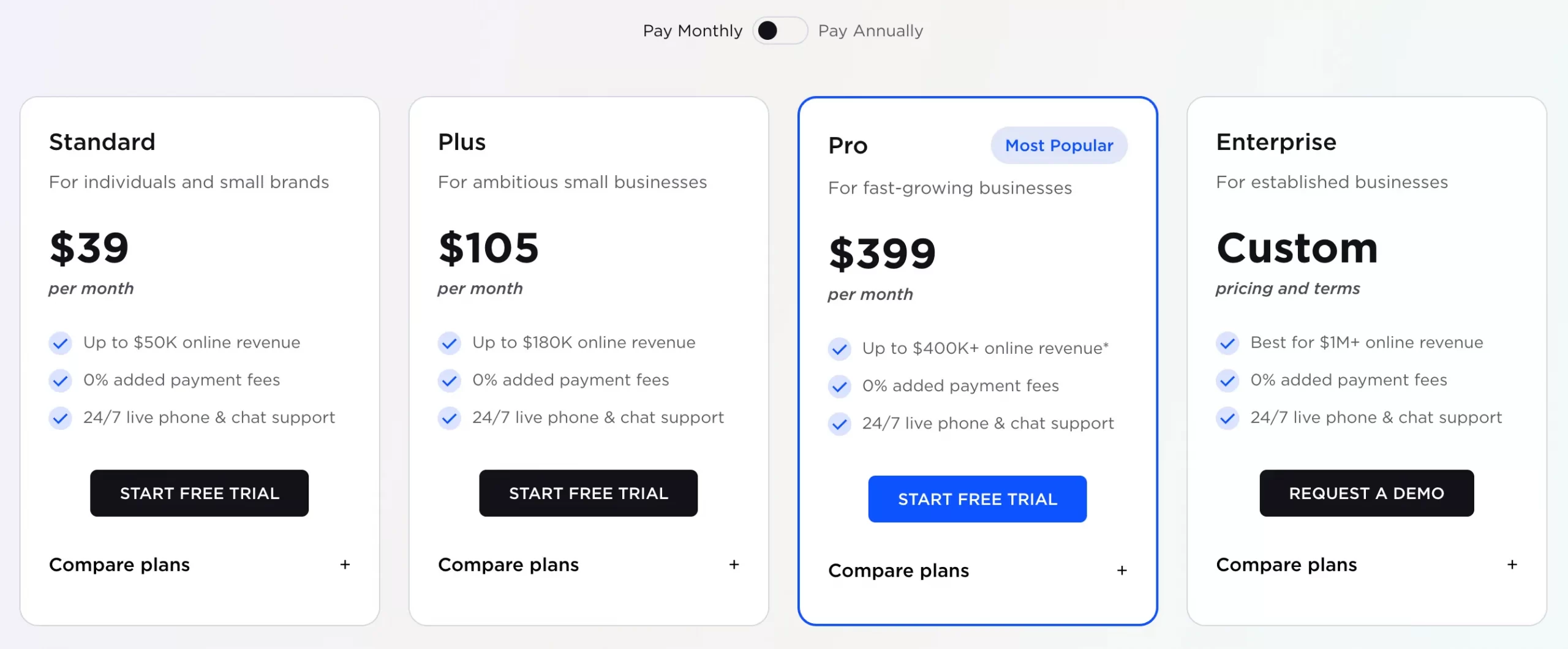
Every plan includes 0% added transaction fees, meaning you only pay your payment processor (e.g., Stripe or PayPal). You also get 24/7 live phone and chat support, as well as access to essential tools for SEO, product management, abandoned cart recovery (from Plus up), and more.
However, BigCommerce automatically pushes you to the next pricing tier as your revenue grows, which can increase your costs even if your store is only slightly over the limit. And while it offers powerful features for the price, it may not be cost-effective for those who just want to run a small shop with a few items.
On the other hand, Big Cartel pricing is made for simplicity. You can choose between three monthly plans, all with clear product limits and no hidden fees:
- Gold – $0/month: Includes up to 5 product listings, 1 image per product, access to 1 theme, and no credit card required
- Platinum – $15/month: Supports up to 50 products, 5 images per product, access to the full theme library, and the ability to sell digital products
- Diamond – $30/month: Offers up to 500 products, 25 images per product, and all premium design and product features
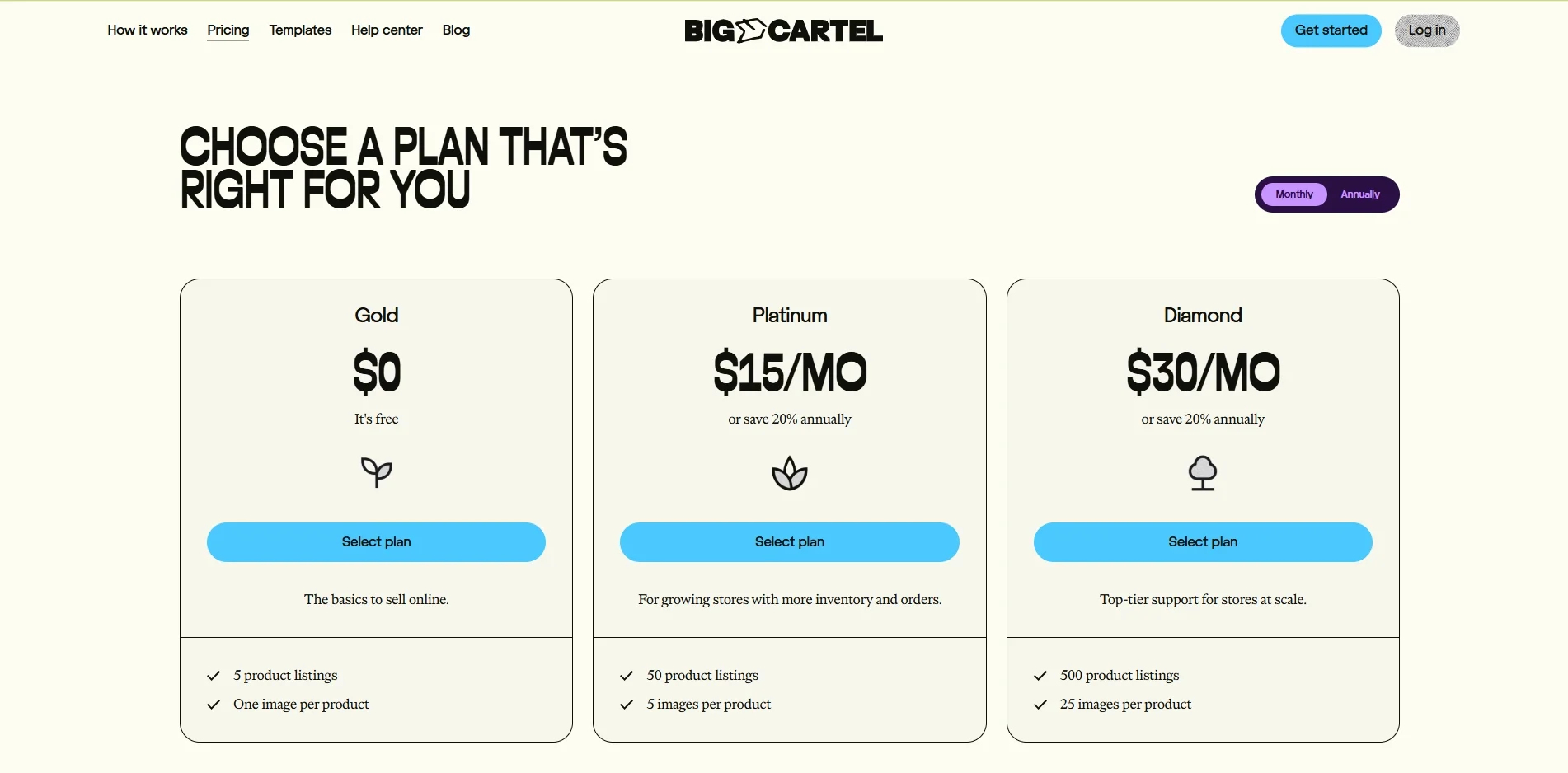
All plans include digital product support, access to essential customization features, and integrations with Stripe or PayPal, with no added platform fees. You can also save 20% by choosing annual billing, making it even more affordable in the long term.
This transparent pricing structure, paired with the free plan, makes Big Cartel one of the best options for hobby sellers, artists, and those testing an idea without a large upfront investment. It's also the reason why we chose Big Cartel as the winner in the BigCommerce vs Big Cartel pricing comparison.
Our Methodology: How We Test BigCommerce vs Big Cartel
To provide a fair and in-depth comparison between BigCommerce vs Big Cartel, we followed a structured testing process. Each platform was evaluated based on real-world usage, using the same criteria to measure performance, ease of use, and feature depth. Here's a step-by-step breakdown of how we conducted our review:
Step 1. Set up a test store on each platform
We started by creating a fresh account on both BigCommerce and Big Cartel. For BigCommerce, we used the 15-day free trial. For Big Cartel, we began with the free Gold plan and also tested the Diamond plan for full feature access.
Step 2. Add products and organize inventory
Next, we added a variety of test products, including items with multiple variants (size and color) and digital products. We tested each platform’s:
- Product listing process
- Variant setup and customization
- Inventory tracking and bulk editing tools
This helped us see how well each platform handles catalogs of different sizes.
Step 3. Set up payments and test checkout
We then connected available payment gateways, Stripe and PayPal on Big Cartel, and Stripe plus other options on BigCommerce. We completed test checkouts to evaluate:
- Payment setup experience
- Flexibility with payment providers
- Checkout flow speed and customization
Step 4. Design and customize the storefront
To test flexibility in design, we explored both free and premium themes on BigCommerce and used the built-in theme options on Big Cartel. We assessed:
- Theme quality and responsiveness
- Ease of editing with and without code
- Use of page builders or visual editors
Step 5. Explore built-in features and app integrations
We navigated through key tools like marketing features, SEO settings, reporting dashboards, and app marketplaces. We tested integrations like Google Analytics, email marketing platforms, and shipping tools to see how smoothly they connect and perform.
Step 6. Compare pricing and upgrade options
Lastly, we reviewed each platform’s pricing plans, billing options, and value based on the features offered. We also tested what happens when your store scales: Does pricing increase automatically, and are features worth the jump?
By using the same hands-on process for both platforms, we were able to deliver a well-rounded, side-by-side comparison of BigCommerce vs Big Cartel, helping you make the best decision based on your business needs.
BigCommerce vs Big Cartel – FAQs
Do people still use Big Cartel?
Yes, Big Cartel is still widely used, especially by artists, crafters, and small-scale sellers. It currently powers over 90,000 websites worldwide, thanks to its simplicity, free plan, and beginner-friendly interface. It remains a strong choice for those who want a no-fuss way to start selling online without technical complexity.
Is Big Cartel better than BigCommerce?
It depends on your needs. Big Cartel is better for individuals who want a simple, low-cost platform to sell a small number of products. However, BigCommerce is better for businesses that need more advanced features, scalability, and flexibility.
If you plan to grow your store and need built-in tools for SEO, analytics, and integrations, BigCommerce is the stronger option.
Who should use BigCommerce?
BigCommerce is ideal for growing or mid-sized businesses that want a platform built for scale. It’s best for sellers with large product catalogs, multiple sales channels, or a need for advanced customization. If you’re planning to expand your online store long term, BigCommerce gives you the tools to do it efficiently.
What are the limitations of Big Cartel?
Big Cartel is limited in several areas. The most notable ones include:
- Product limits: Up to 500 products, even on the highest plan
- Fewer payment gateways: Only supports Stripe and PayPal
- Basic design tools: Limited customization unless you know how to code
- Lack of advanced features: No built-in abandoned cart recovery, detailed analytics, or app marketplace
While it’s great for small sellers, these limitations make it less suitable for businesses aiming to scale.
Final Verdict
Long story short, the choice between BigCommerce vs Big Cartel depends on your business size, goals, and budget.
If you’re a creator, artist, or small seller who wants to launch a store quickly without spending much, Big Cartel is the better fit. Its free plan, easy setup, and 24/7 live chat support make it perfect for selling a small number of products with minimal hassle.
On the other hand, if you’re aiming for long-term growth, selling at scale, or need more advanced features, BigCommerce is the clear winner. It offers powerful tools for product management, SEO, marketing, reporting, and integration, everything you need to run a professional online business.
Last but not least, if you are looking for more insights to help you grow, please check out our LitExtension Resources and Blogs for expert tips, platform comparisons, and eCommerce guides.