
If you are weighing Big Cartel vs WooCommerce, you are likely torn between two different platforms. Big Cartel is a simple, hosted storefront built specifically for artists and small creators, while WooCommerce offers near-limitless customization and scalability for those willing to take on a bit more technical responsibility.
To help you decide between the two, we will compare Big Cartel vs WooCommerce across 10 essential criteria, including:
- Pricing
- Ease of use
- Customization
- Product and inventory management
- Payment gateways
- Apps and integrations
- Marketing and SEO tools
- Scalability and growth
- Data ownership and hosting
- Security and support
By the end of this guide, you will have a clear picture of which platform fits your specific needs, so you can move from research to a confident, well-informed decision.
Big Cartel vs WooCommerce – Key Takeaways
Before diving into the detailed breakdown, here is a quick summary of how Big Cartel vs WooCommerce stack up across the 10 criteria we evaluated.
To put it plainly, Big Cartel comes out ahead on pricing and ease of use. Its free-forever plan, flat paid tiers, zero platform transaction fees, and fully hosted no-code setup make it the most accessible starting point for small creators who want to sell online without any technical friction.
That said, when comparing Big Cartel vs WooCommerce, WooCommerce pulls ahead across the remaining eight criteria, including customization, product and inventory management, payment gateways, apps and integrations, marketing and SEO tools, scalability, data ownership, and security and support. If your business needs room to grow and demands more control, WooCommerce is the stronger long-term investment.
With that high-level picture in mind, the table below gives you a full, at-a-glance verdict on every category before we get into the details.
Big Cartel | WooCommerce | The Winner | |
Pricing | Free plan; flat $15 - $30/month paid tiers; no platform transaction fees | Free plugin, but hosting, domain, themes, and extensions add up to roughly $100–$3,000+/year | Big Cartel |
Ease of Use | No-code, fully hosted; launch a store in minutes without technical knowledge | Requires WordPress, web hosting, and plugin configuration before selling anything | Big Cartel |
Customization | 12 free themes with limited styling flexibility; code editing available on paid plans only | Thousands of themes; full code-level control via open-source architecture | WooCommerce |
Product & Inventory | Up to 500 products; basic inventory tracking on paid plans | Unlimited products; advanced inventory tools, bulk import, multi-location tracking | WooCommerce |
Payment Gateways | Stripe and PayPal only | Hundreds of gateways through native and extension support | WooCommerce |
Apps & Integrations | Small, curated app library covering core categories | Thousands of plugins and extensions covering nearly every business need | WooCommerce |
Marketing & SEO Tools | Basic tools; no native blog; discount codes on paid plans | Full WordPress SEO, native blogging, and advanced marketing plugin ecosystem | WooCommerce |
Scalability & Growth | Designed to stay small; 500-product cap limits business growth | No structural ceiling; scales through hosting upgrades and extensions | WooCommerce |
Data Ownership & Hosting | Fully hosted and closed; limited data portability | Self-hosted; full ownership and portability of all store data | WooCommerce |
Security & Support | Managed security with no configuration needed; weekday support hours | Self-managed security with a vast community and professional support ecosystem | WooCommerce |
Big Cartel vs WooCommerce – Pros and Cons
Since both solutions in this Big Cartel vs WooCommerce comparison take fundamentally different approaches to eCommerce, it helps to understand what each platform actually is and who it is built for. Knowing this context upfront makes every comparison that follows far easier to interpret.
Big Cartel pros and cons
Big Cartel is a fully hosted eCommerce platform built from the ground up for artists, makers, and independent creators who sell a small, curated range of products. Founded with simplicity as its core principle, it is one of the few platforms that lets you sell on a genuinely free plan, supporting up to 5 products at no cost. Rather than overwhelming users with features and settings, Big Cartel deliberately keeps its toolkit lean so that non-technical creators can get a store online quickly, without touching a line of code or managing a single server.
If you are a painter selling prints, a musician selling merchandise, or a maker selling handcrafted goods in limited runs, Big Cartel was essentially designed with you in mind.

Here are the pros and cons of Big Cartel for your consideration. In case you want a full feature breakdown of this platform, don’t forget to check out our detailed Big Cartel review here.
Big Cartel pros | Big Cartel cons |
- Free forever plan available - No platform transaction fees on any plan - Free themes on every plan - Extremely simple no-code setup, allowing users to launch in minutes - Flat, predictable monthly pricing with no hidden fees | - Hard product ceiling of 500 products even on the highest plan - Limited template library with restricted styling options, no deep customization available - Only two payment processors supported: Stripe and PayPal - Limited room to scale once the business begins to grow |
WooCommerce pros and cons
WooCommerce, on the other hand, is a free, open-source eCommerce plugin that transforms any WordPress website into a fully functional online store. It is aimed at users who want control, flexibility, and headroom to grow, and it powers a substantial share of eCommerce stores worldwide. Because it is self-hosted, the plugin itself costs nothing to download and install, but the real costs come from the surrounding infrastructure, including hosting, a domain name, a theme, and any premium extensions your store requires.
This makes WooCommerce a very different kind of investment in the Big Cartel vs WooCommerce comparison: more complex to set up, but far more powerful and extensible in the long run.
For a detailed breakdown of what this platform offers, please check out our WooCommerce review here. But if you want a brief overview of its strengths and weaknesses, the table below will help.
WooCommerce pros | WooCommerce cons |
- Free, open-source plugin with no recurring licensing fees - Unlimited product listings with no structural catalog cap - Full customization through thousands of themes and direct code access - Hundreds of payment gateways supported natively and via extensions - Powerful SEO through the WordPress content and plugin ecosystem | - Steeper learning curve; requires WordPress and hosting knowledge - Variable and sometimes unpredictable total cost of ownership - You are responsible for managing hosting, updates, and security - Premium extensions and plugins can add up quickly over time |
With both platforms’ identities clearly established, let’s now examine how Big Cartel vs WooCommerce perform against each criterion, starting with pricing.
#1. Pricing – Big Cartel Wins
Our verdict:
In the Big Cartel vs WooCommerce comparison for pricing, Big Cartel takes the win for small sellers. Its flat, transparent tier structure and a genuinely free entry point make it one of the most predictable eCommerce platforms available. WooCommerce, while technically free as a plugin, carries a variable and often underestimated total cost of ownership once you factor in every component needed to run a functional store.
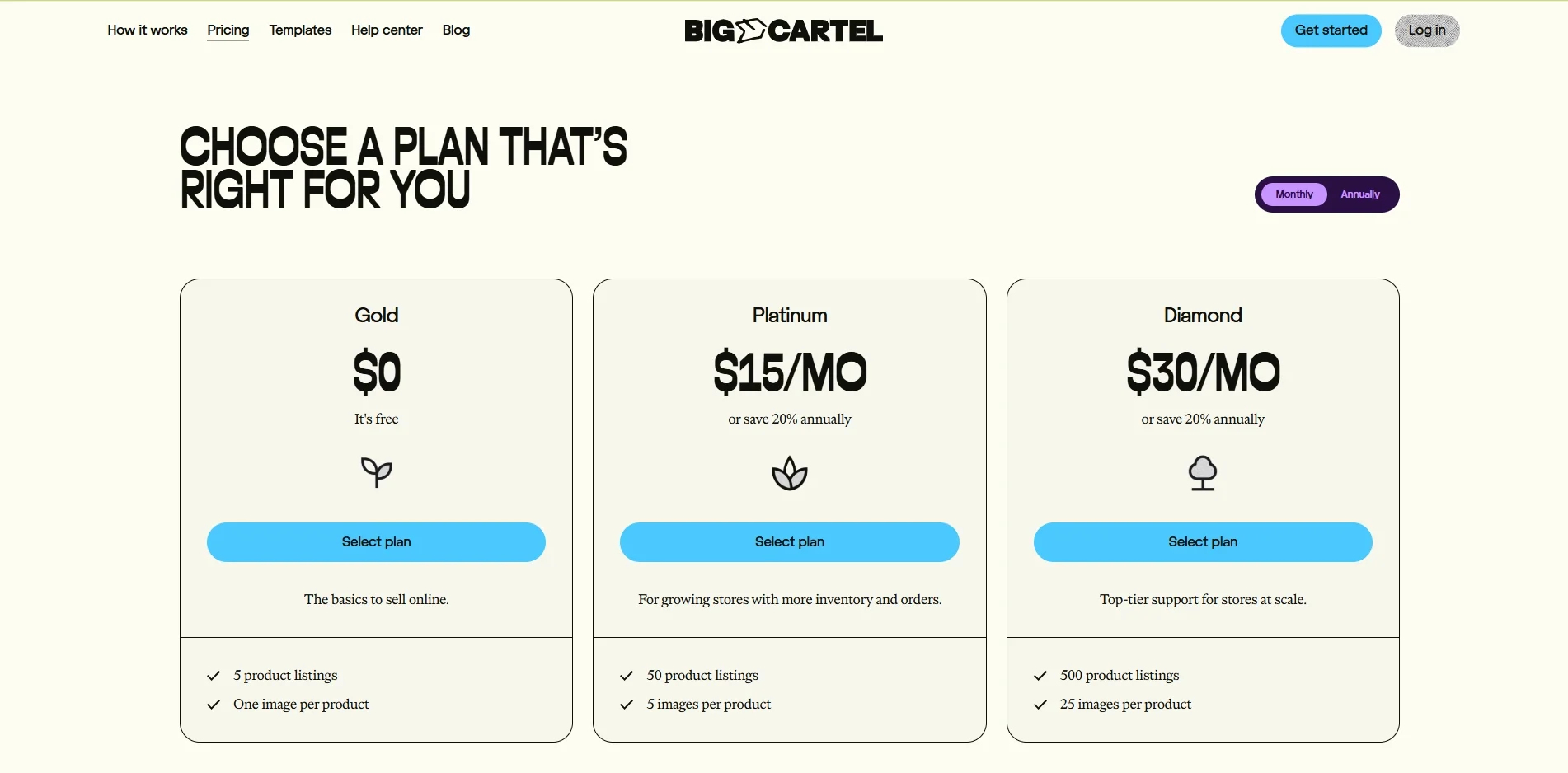
To start, Big Cartel pricing is remarkably simple. The platform currently offers three plans: Gold (free forever), Platinum ($15/month or $12/month billed annually), and Diamond ($30/month or $24/month billed annually). Each tier is structured around product capacity rather than gating core features behind higher price points, which means most essential selling tools are available from the entry level upward.
- Gold (Free): Up to 5 products, one image per product, core selling features including shipment tracking, real-time stats, and sales tax autopilot. Note that the Gold plan does not include a custom domain, though Big Cartel can help you connect one for $1 for the first year and $6–$20/year thereafter.
- Platinum ($15/month): Everything in Gold, plus up to 50 product listings, inventory tracking, bulk editing, a custom domain, advanced template customization, and ad support for Facebook and Google.
- Diamond ($30/month): Everything in Platinum, plus up to 500 product listings, 25 images per product, audience-targeted ad support, and prioritized customer support from the Big Cartel team.
Beyond the subscription fee, it is worth noting that Big Cartel doesn’t take a cut of your sales regardless of plan. That being said, you still have to pay for the payment processors’ fees, typically from 2.9% + $0.30 per transaction.
Transitioning to WooCommerce, the pricing story looks very different. The plugin itself is free to download and install, but that headline figure can be misleading for anyone budgeting a new store. Total WooCommerce costs for running a store usually range from $200 to $3,000+ per year, depending on your setup and growth stage, once you account for hosting, a domain, themes, plugins, and payment fees. Here is a breakdown of the core cost components you should plan for:
- Hosting: Your hosting choice is the single most important decision affecting your store’s cost, speed, and security, ranging from around $60/year on shared hosting up to $420+/year on managed eCommerce hosting.
- Domain name: A .com, .net, or .org domain typically costs between $10 and $20 per year when purchased from a registrar such as GoDaddy, Namecheap, or Bluehost.
- Theme: The official Storefront theme, built by the WooCommerce team, is free but offers very limited customization. Premium themes with fuller eCommerce feature sets typically cost more.
- Extensions and plugins: Additional costs come from tools needed to grow your business, such as email marketing, SEO plugins, security tools, and shipping extensions, all of which add to your monthly running costs.
In short, the key distinction in the Big Cartel vs WooCommerce pricing comparison is about cost predictability. Big Cartel gives you a single, fixed monthly fee with no infrastructure surprises, while WooCommerce offers modular flexibility but requires careful upfront budgeting to avoid unexpected expenses as your store grows.
#2. Ease of Use – Big Cartel Wins
Our verdict:
In the Big Cartel vs WooCommerce comparison for ease of use, Big Cartel is the clear winner. It’s a fully hosted, no-code environment that removes virtually every technical barrier between a new seller and their first sale, while WooCommerce requires configuring several settings before going live.
To begin with, Big Cartel is built around the principle that selling online should not require technical expertise. Because it is fully hosted, there is nothing to install and no server to configure. Once you sign up, pick from the available free themes, add your products, connect to Stripe or PayPal, and your store is essentially ready to sell. The entire setup process can be completed in a matter of minutes, which is precisely why the platform resonates so strongly with artists and makers who would rather spend their time on their craft than on eCommerce configuration.
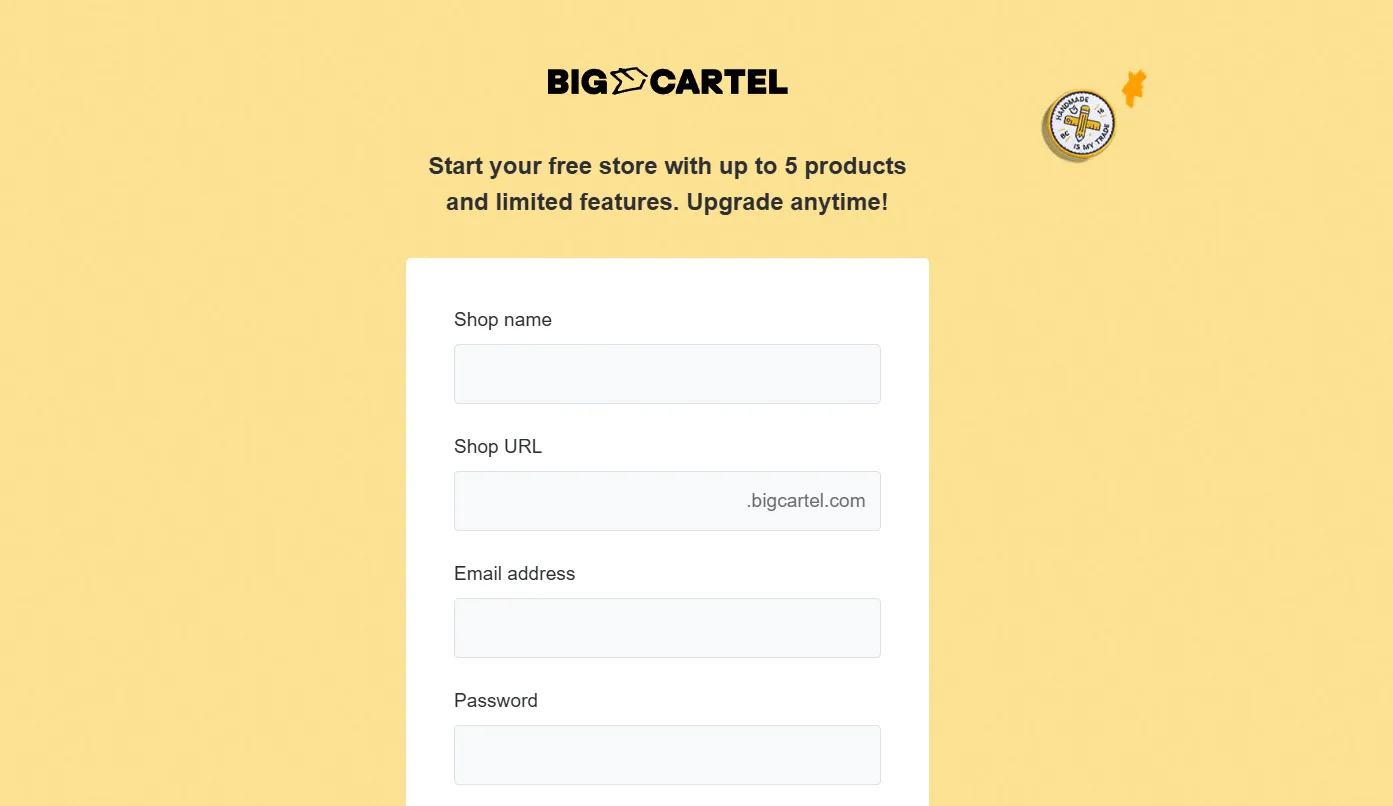
The dashboard itself reflects that same philosophy. Every tool you need, from product management to order tracking to basic analytics, is accessible within a clean, uncluttered interface that rarely requires more than two or three clicks to navigate. The learning curve is not steep, so you can easily navigate through daily business operations with no technical skill required.
However, the picture changes considerably once you bring WooCommerce into the conversation. Before you can use the plugin, you need to have a WordPress site already in place, which means choosing a web hosting provider, registering a domain name, installing WordPress, and then installing and activating the WooCommerce plugin itself. On top of that, you will need to select and configure a theme, set up payment gateways, and configure shipping options, each of which involves its own set of decisions and settings.
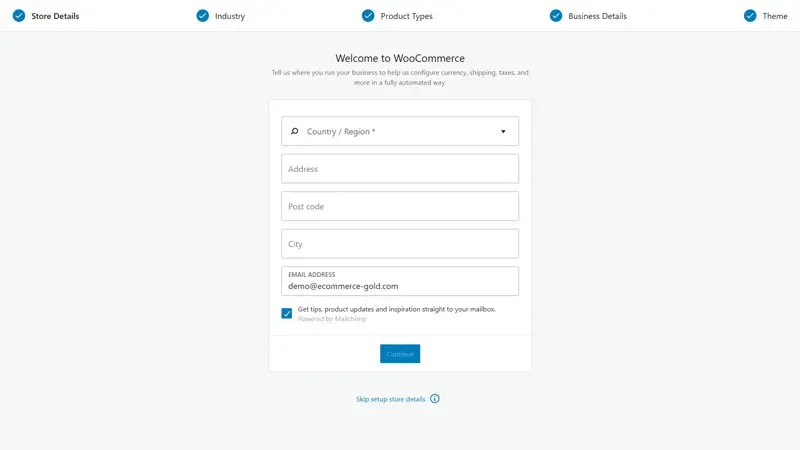
To be fair, WooCommerce does provide onboarding guidance and setup wizards that walk new users through the core configuration steps. Even though these resources are truly helpful, learning how to set up WooCommerce typically requires more time and technical confidence than Big Cartel does.
In short, when comparing Big Cartel vs WooCommerce on ease of use, Big Cartel wins because it eliminates nearly every technical hurdle between a creator and their first sale.
#3. Customization – WooCommerce Wins
Our verdict:
In the Big Cartel vs WooCommerce comparison for customization, WooCommerce wins decisively. As a free, open-source plugin built on WordPress, it gives you control over virtually every element of your store’s design and functionality. Big Cartel, by contrast, intentionally limits design choices to keep the experience simple.
Let’s begin with Big Cartel. This platform offers a small but polished set of 15 free, clean, and mobile-responsive Big Cartel themes to create your storefront. From our experience, these templates are easy to modify, allowing anyone to create an impressive design without coding expertise. For sellers on the Platinum and Diamond plans, theme code editing is available to those who know HTML and CSS, which enables a deeper level of customization.
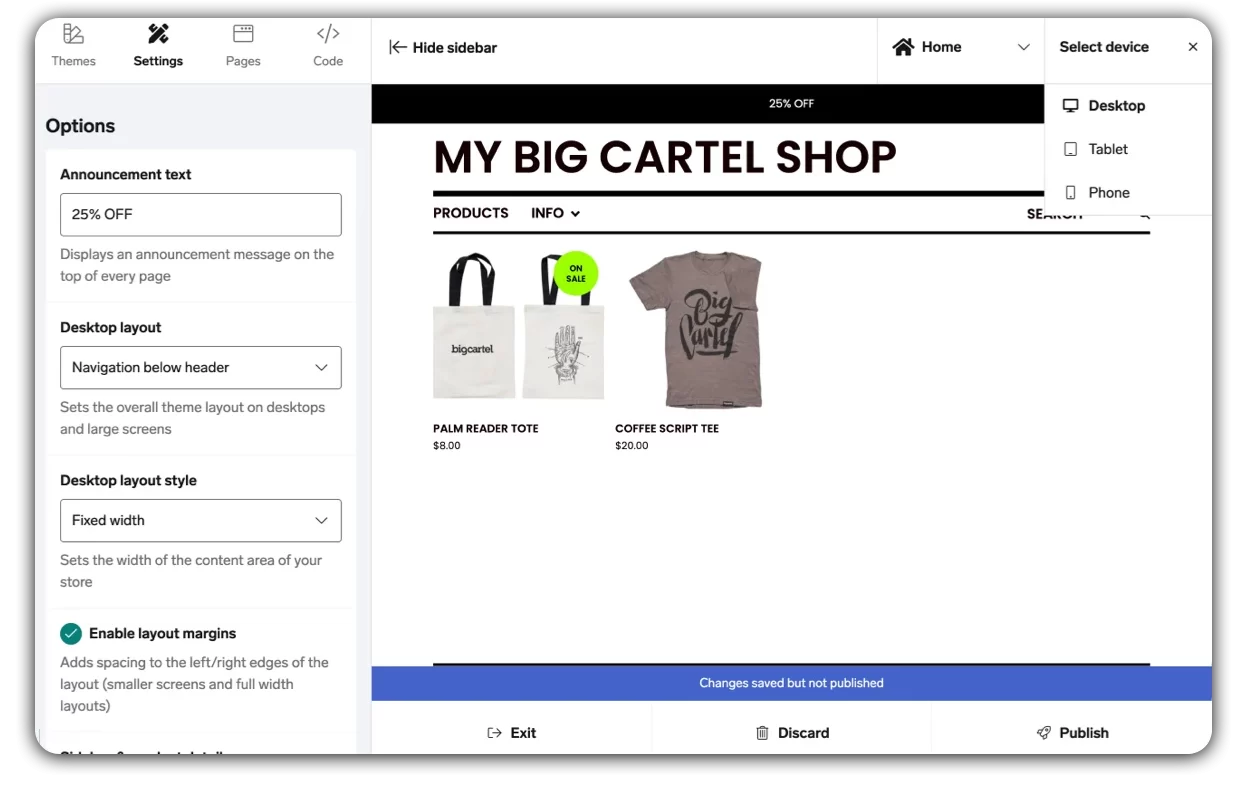
The honest limitation here is that Big Cartel’s design ceiling is relatively low. You are working within a fixed framework rather than building freely, and there is no drag-and-drop page builder, no custom checkout flow design, and no ability to restructure your store’s layout from the ground up.
Where Big Cartel keeps things intentionally contained, WooCommerce takes the opposite approach entirely. Being open-source and built on WordPress means you have access to thousands of free and premium themes, a wide range of page builder plugins, and the ability to edit the underlying code of virtually any part of your store. Whether you want to redesign your product pages, build a fully custom checkout experience, or create a unique homepage layout that reflects your brand, WooCommerce gives you the tools and the freedom to do so.
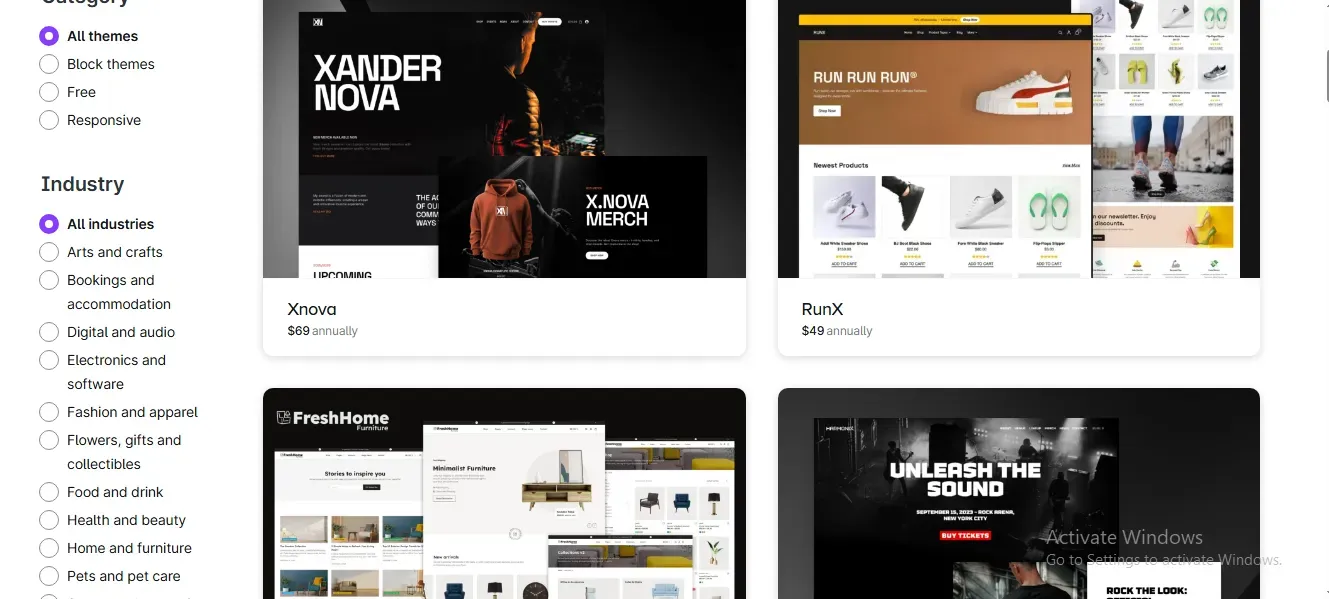
Beyond themes, WooCommerce’s customization extends deep into functionality as well. Because the plugin is open-source, developers can modify the codebase directly, hook into WordPress actions and filters, and build entirely bespoke features that no off-the-shelf extension covers. The trade-off, however, is that it requires development skills to perform advanced customization.
In conclusion, when comparing Big Cartel vs WooCommerce on customization, WooCommerce delivers a far richer, more flexible design and development experience, while Big Cartel offers a clean but constrained environment best suited to sellers who do not need much beyond a simple, attractive storefront.
#4. Product and Inventory – WooCommerce Wins
Our verdict:
In the Big Cartel vs WooCommerce comparison for product and inventory management, WooCommerce is the clear winner. It removes the product ceiling entirely and offers far more sophisticated inventory tools, while Big Cartel’s structure is designed around small, focused catalogs that suit independent creators rather than growing retail operations.
When it comes to product and inventory, Big Cartel keeps it simple, but that simplicity comes at a cost. Even on its highest paid plan, Big Cartel caps you at 500 products, supporting up to three variants with a maximum of 25 variant options per product. While this works for straightforward items, it is far too limiting if you sell products with multiple configurable attributes. On top of that, bulk editing is not available, meaning any price update or description change has to be done product by product.
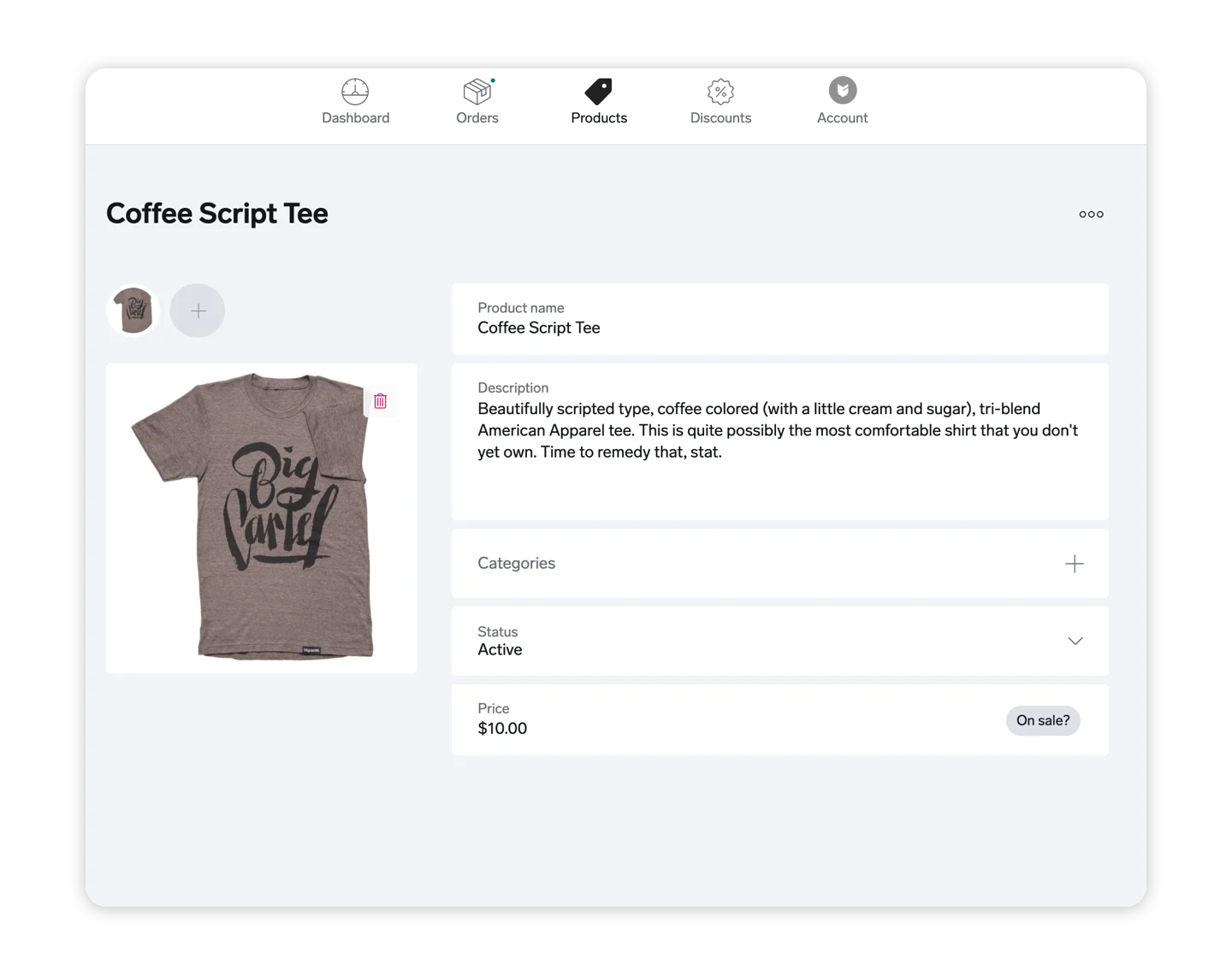
Additionally, even though inventory tracking is available on Big Cartel, it’s quite basic compared to WooCommerce. You can toggle stock tracking on or off per product and receive low-stock notifications, but there is no advanced inventory reporting, no SKU management, and no native support for managing inventory across multiple locations or warehouses.
On the other hand, WooCommerce places virtually no ceiling on your store. You can list an unlimited number of products, whether you are selling 50 or 50,000 items, without hitting any platform-imposed limits. Also, product types in WooCommerce are far more versatile, supporting simple products, variable products, grouped products, external/affiliate products, and downloadable or virtual products out of the box. Variable products in WooCommerce can carry an unlimited number of attributes and variants, making it easy to handle even the most complex product configurations.

On top of that, inventory management in WooCommerce is equally robust. You can assign SKUs, set stock quantities, define backorder rules, and trigger low-stock email alerts, all at both the product and variation level. Bulk editing is fully supported, so updating prices, stock status, or categories across hundreds of products takes minutes rather than hours.
In short, between Big Cartel vs WooCommerce in terms of product and inventory management, WooCommerce is in a completely different league from Big Cartel.
#5. Payment Gateways – WooCommerce Wins
Our verdict:
In this Big Cartel vs WooCommerce comparison for payment gateways, WooCommerce takes the win, offering a far broader selection of payment options that can accommodate virtually any customer, in any country, using any preferred payment method.
To start, Big Cartel keeps its payment gateway minimal, supporting only two options: PayPal and Stripe. For a first-time seller testing the waters, these two gateways cover a reasonable portion of online transactions, and both are widely trusted and relatively easy to set up. Besides, Big Cartel charges zero transaction fees on top of what PayPal and Stripe already collect, which keeps costs predictable for small-volume sellers.
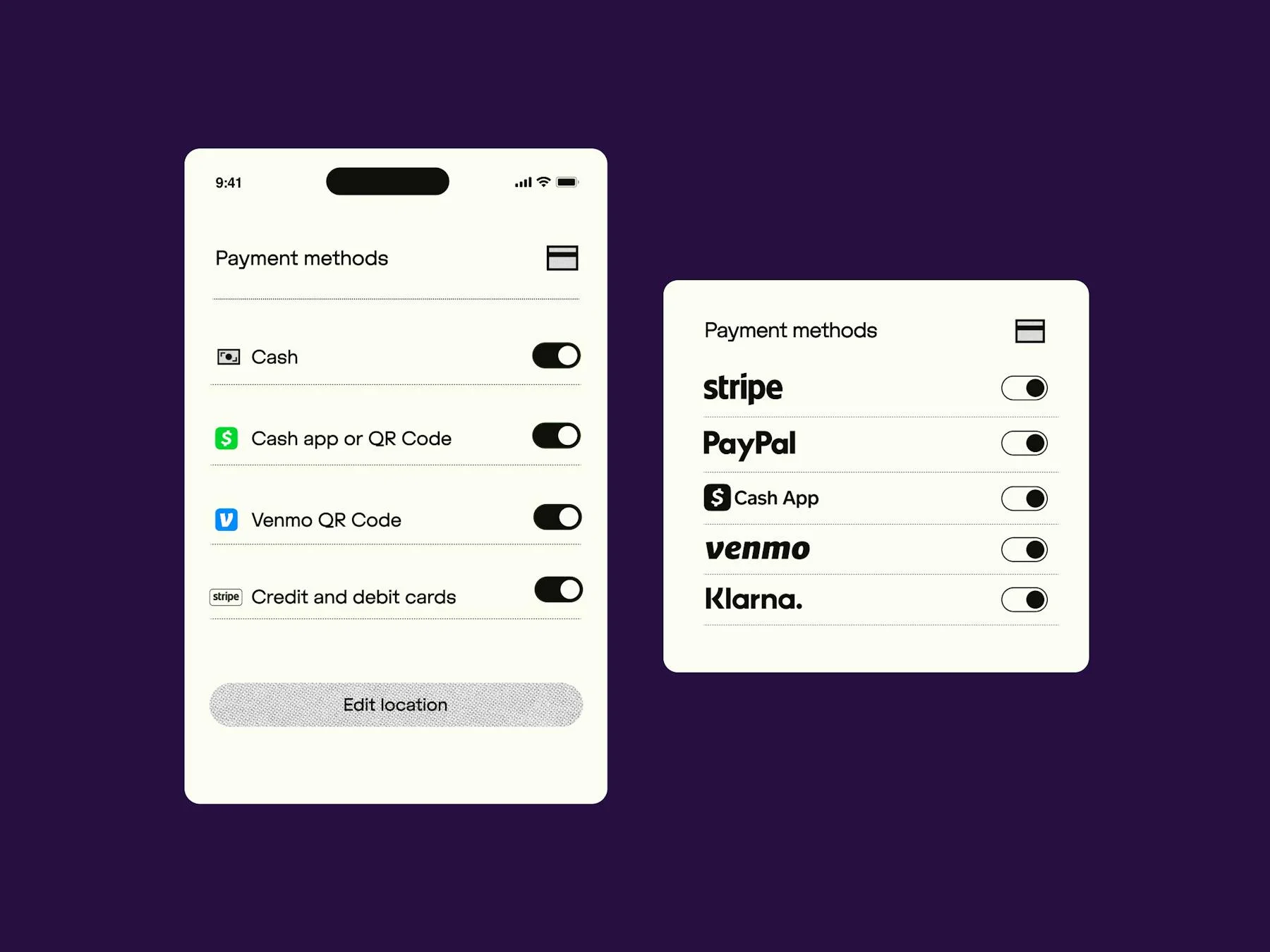
However, the limitations become apparent quickly. There is no support for regional or local payment methods, which is a meaningful gap if you are selling to customers in markets where PayPal and Stripe have limited penetration. Additionally, Big Cartel only supports Buy Now Pay Later services at paid plans, such as Platinum and Diamond. If you are looking to diversify your revenue channels or sell internationally at scale, these absences are difficult to overlook.
On the flip side, WooCommerce’s payment gateway support is one of its strongest suits. The platform is compatible with over 100 payment gateways through its plugin ecosystem, including Stripe, PayPal, Square, Authorize.net, Amazon Pay, and countless regional options tailored to specific countries and currencies. Furthermore, WooPayments, the platform’s own native gateway, offers a seamless integrated experience with features like multi-currency support, built-in fraud protection, and dispute management–all managed directly from your WooCommerce dashboard.
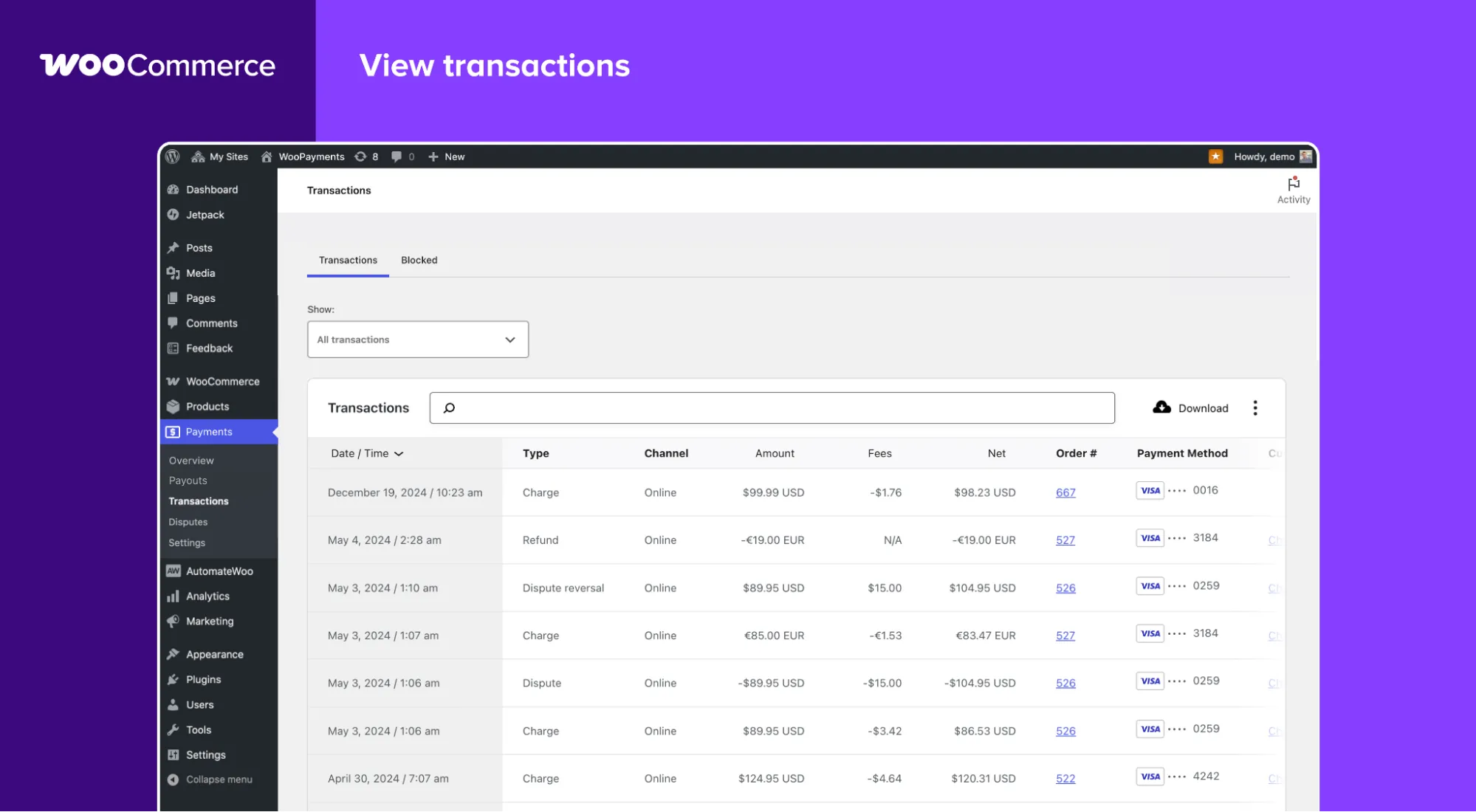
Beyond the number of options, WooCommerce supports buy-now-pay-later services, cryptocurrency payments, and offline/POS payment methods through dedicated plugins. The only caveat is that some premium gateway plugins incur an additional cost, so your total payment infrastructure expenses may increase depending on your configuration.
#6. Apps & Integrations – WooCommerce Wins
Our verdict:
When evaluating Big Cartel vs WooCommerce on apps and integrations, WooCommerce wins without contest. Its access to the entire WordPress plugin ecosystem gives merchants an almost unlimited ability to extend their store’s functionality in any direction.
First of all, Big Cartel’s integration library is quite modest since its target audience is independent artists and small-batch creators. The platform connects with a small selection of third-party tools, covering core use cases like email marketing (Mailchimp), social selling (Instagram, Facebook), shipping (ShipStation), and basic accounting (QuickBooks).

For a seller who only needs a handful of connections to run a simple operation, this is sufficient. However, the moment your needs move beyond the basics, whether that is a loyalty rewards program, a dropshipping feed, a CRM tool, or an advanced analytics dashboard, Big Cartel’s integration options will run dry very quickly. There is no open app marketplace in the traditional sense, and adding functionality that is not natively supported often means working around the platform rather than with it.
On the other hand, one of WooCommerce’s greatest advantages in the Big Cartel vs WooCommerce debate is its deep roots in the WordPress ecosystem. With access to over 50,000 WordPress plugins on top of WooCommerce’s own library of 800+ official extensions, merchants can add virtually any feature imaginable to their store without custom development. All these apps are free to install, with different premium tiers so you can easily find one that matches your budget.
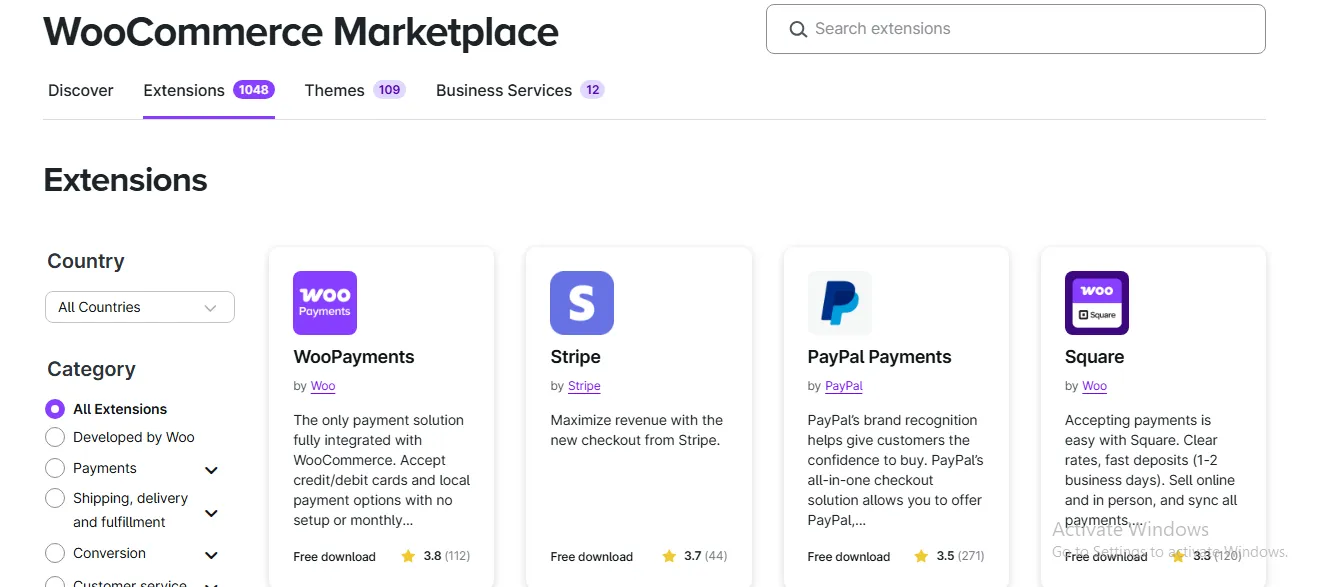
The trade-off worth acknowledging is that managing a large plugin stack requires some technical diligence. Keeping plugins updated, checking compatibility, and occasionally paying for premium extensions does add overhead. But for most merchants, the flexibility gained far outweighs that cost.
#7. Marketing and SEO Tools – WooCommerce Wins
Our verdict:
In the Big Cartel vs WooCommerce comparison for marketing and SEO tools, WooCommerce is the clear winner, delivering a comprehensive, flexible marketing infrastructure that gives merchants full control over how they attract, convert, and retain customers.
Frankly speaking, Big Cartel’s marketing and SEO toolkit is functional at the surface level but limited in depth. Each product page and collection allows you to fill in a basic title tag and meta description, which covers the bare minimum for on-page SEO. The platform also generates a sitemap automatically, which helps search engines index your store.
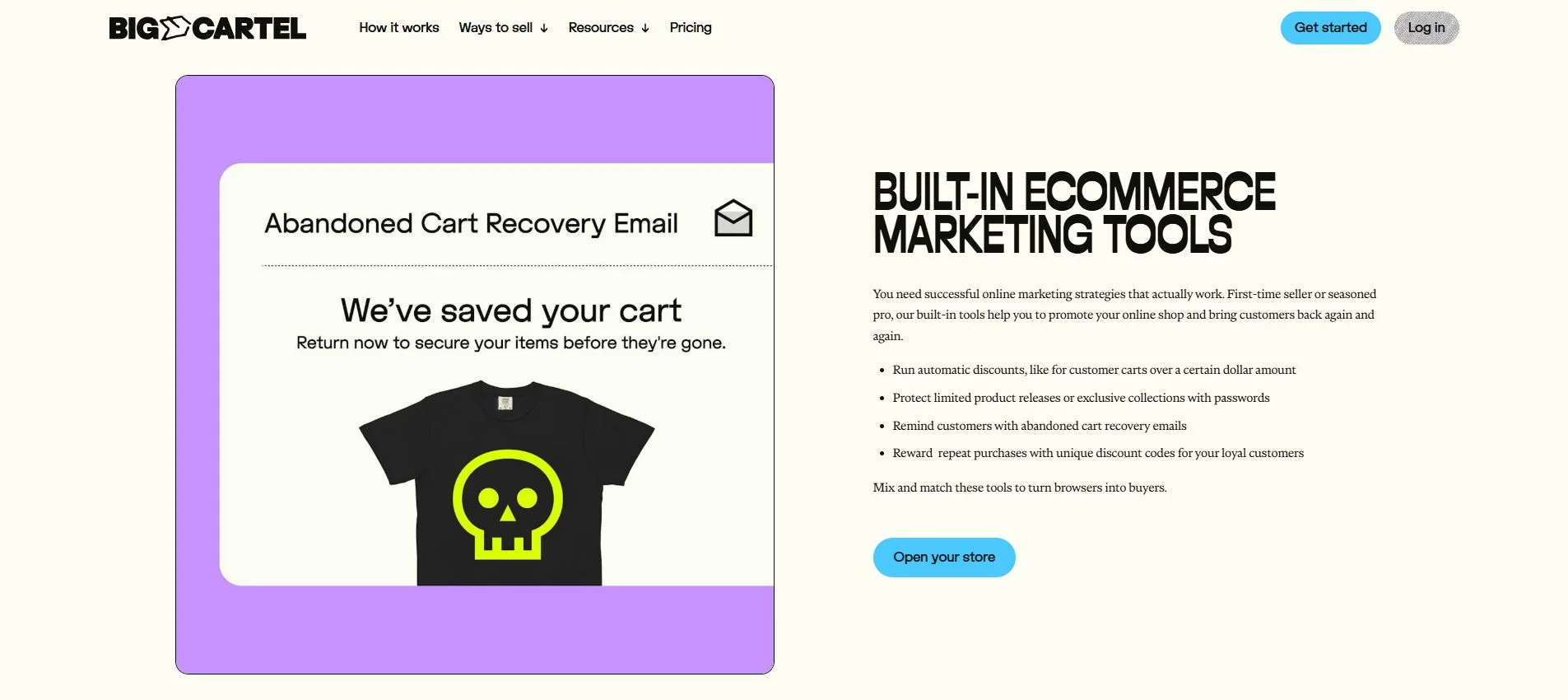
However, the limitations pile up fast. Big Cartel does not include a blogging feature, which is one of the most effective long-term SEO strategies available to eCommerce merchants. There is also no abandoned cart recovery on the free plan, no built-in email marketing tools, and no native coupon or discount engine on lower-tier plans. Social selling is supported through Instagram and Facebook connections, but the depth of those integrations is surface-level compared to what WooCommerce offers.
On the flip side, WooCommerce gives merchants one of the most powerful marketing foundations available in the Big Cartel vs WooCommerce matchup. Full blogging capability is available out of the box, allowing you to publish content, target long-tail keywords, and build domain authority over time. Paired with SEO plugins like Yoast SEO or Rank Math, you get granular control over meta tags, schema markup, breadcrumbs, XML sitemaps, and more.
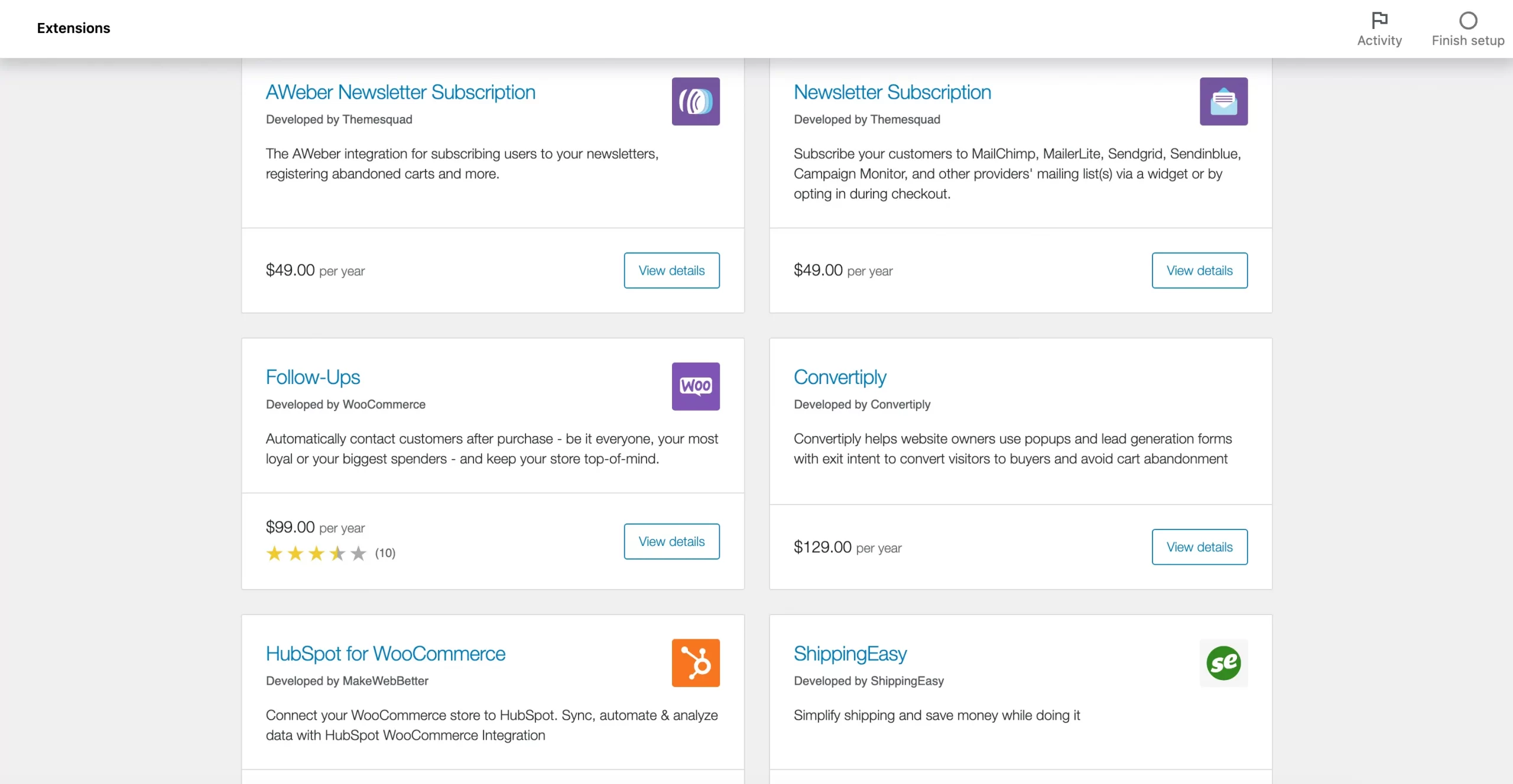
On the marketing side, WooCommerce integrates seamlessly with leading email platforms like Klaviyo, Mailchimp, and ActiveCampaign, enabling segmented campaigns, win-back sequences, and more. The platform also supports a fully customizable coupon and discount engine, allowing you to create percentage discounts and BOGO offers with detailed usage restrictions. For paid advertising, WooCommerce supports Google Shopping feeds, Meta Pixel integration, TikTok Ads, and Pinterest catalogs, all through dedicated plugins. Combined with its deep analytics capabilities, merchants running Big Cartel vs WooCommerce side by side will find that WooCommerce gives them dramatically more visibility into what is working and where to invest their marketing budget.
#8. Scalability & Growth – WooCommerce Wins
Our verdict:
In the Big Cartel vs WooCommerce comparison for scalability and growth, WooCommerce wins decisively. It is built to expand alongside your business, while Big Cartel is designed with a deliberate ceiling that eventually becomes a constraint.
To start, Big Cartel is purpose-built for small, independent sellers, and that focus is both its greatest strength and its most significant limitation when it comes to growth. The platform’s structure is intentionally lean, which means it scales well within a narrow band: a solo creator managing a curated catalog of handmade goods, prints, or merchandise will find it perfectly adequate for years.
But the moment your business starts pushing beyond that band, Big Cartel’s constraints become tangible. The 500-product cap on the highest paid plan puts a hard ceiling on catalog expansion. There is also no path to enterprise-level infrastructure on Big Cartel; you cannot upgrade your hosting, implement a CDN, or optimize your database performance the way you can on a self-hosted setup. If your store outgrows Big Cartel, your only option is to migrate elsewhere, whether to WooCommerce or other built-for-growth platforms.
Let Our Experts Handle Your Store Migration!
With the All-in-One Migration Service, our experts take care of everything, ensuring a seamless and stress-free migration.

On the other hand, WooCommerce is much more scalable in the Big Cartel vs WooCommerce comparison. Because it is self-hosted, your store’s performance ceiling is determined entirely by your hosting infrastructure, not by platform-imposed limits. As your traffic and order volume grow, you can upgrade to a more powerful hosting plan, implement a content delivery network (CDN), add caching layers, or move to dedicated or cloud hosting without ever touching your store’s core setup.
It is also worth noting that some of the world’s largest and most recognizable eCommerce brands, such as No Pong or Landyachtz, have run on WooCommerce at scale, processing millions of dollars in transactions monthly. That track record gives merchants confidence that the platform will not buckle under pressure as their business grows.
#9. Data Ownership & Hosting – WooCommerce Wins
Our verdict:
In the Big Cartel vs WooCommerce comparison for data ownership and hosting, WooCommerce wins clearly, giving merchants complete control over where their data lives, how it is managed, and who has access to it.
To begin with, Big Cartel is a fully hosted platform, which means your store lives entirely on Big Cartel’s servers. You do not need to think about hosting providers, server configurations, or database management since Big Cartel handles them all. However, that convenience comes with a fundamental trade-off: you do not truly own your data in the way a self-hosted merchant does. Your ability to export customer data is limited, and your store’s availability, performance, and continuity are entirely dependent on Big Cartel’s infrastructure and business decisions.
On the flip side, WooCommerce’s self-hosted nature is one of its most powerful differentiators in the Big Cartel vs WooCommerce matchup. Because WooCommerce is a plugin that runs on WordPress, your store is hosted on infrastructure you choose and pay for directly. WooCommerce also allows you to optimize your stack precisely for your store’s needs. You can configure caching, implement a CDN, set up automated backups, and define your own security protocols, none of which is possible on a hosted platform like Big Cartel.
#10. Security & Support – WooCommerce Wins
Our verdict:
In the Big Cartel vs WooCommerce comparison for security and support, WooCommerce takes the win — not because it handles security automatically, but because it gives merchants a far deeper, more robust set of tools, resources, and community support to protect and maintain their store.
Big Cartel handles the fundamentals of security automatically, which is one of the genuine advantages of a fully hosted platform. SSL certificates are included and activated by default on all stores, ensuring that customer data transmitted through your checkout is encrypted. PCI compliance s managed on your behalf, removing a significant technical and legal burden from the merchant’s shoulders. However, Big Cartel’s security coverage does not extend much beyond these basics. You have no ability to configure a web application firewall (WAF), implement two-factor authentication for your admin login, set up custom security rules, or run security audits on your store.
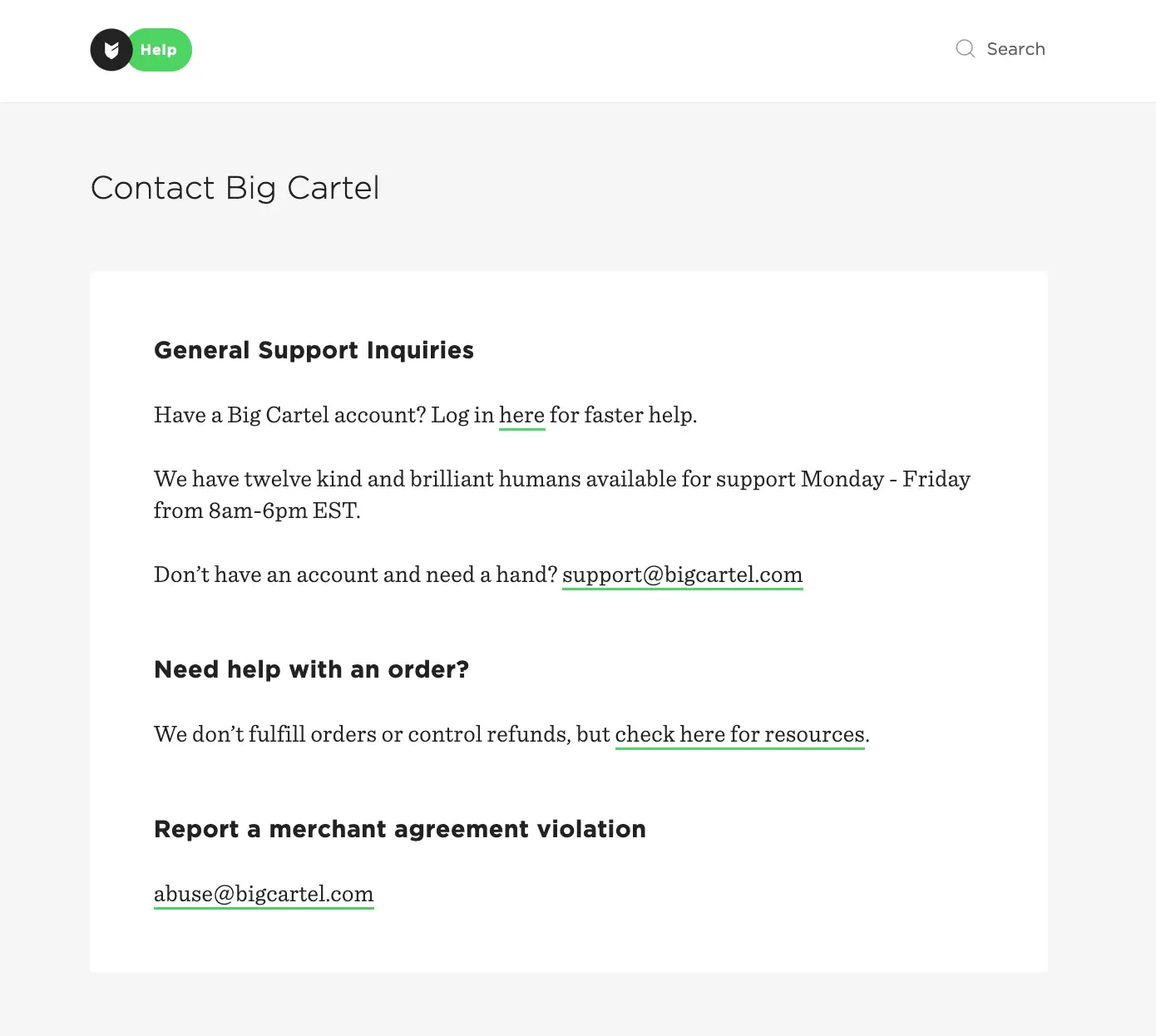
On the support side, Big Cartel offers email-based customer support alongside a help center with written documentation. Response times are generally reasonable for straightforward issues, but the depth of support is limited. There is no live chat, no phone support, and no dedicated account management for any pricing tier.
On the other hand, WooCommerce’s approach to security places the responsibility and power firmly in the merchant’s hands. Because you control your own hosting environment, you can implement a comprehensive, layered security setup tailored specifically to your store. Industry-leading security plugins like Wordfence and Solid Security provide real-time malware scanning, brute force protection, login attempt monitoring, and firewall rules that block known threats before they reach your site.
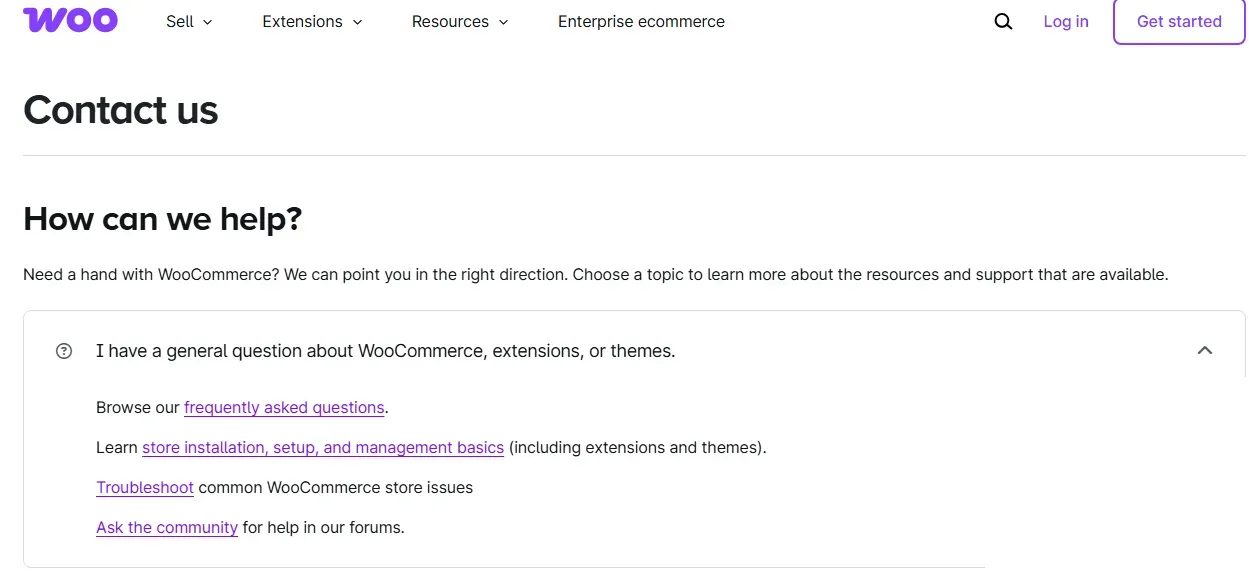
Where WooCommerce truly pulls ahead in the Big Cartel vs WooCommerce comparison is on the support front. While WooCommerce’s official support is limited to users of its paid extensions, the broader support ecosystem is unmatched. A global community of developers, designers, and merchants actively contributes to forums, Stack Overflow threads, YouTube tutorials can help you solve any issue you encounter.
Big Cartel vs WooCommerce – Which Should You Choose?
After running through all ten criteria in this Big Cartel vs WooCommerce comparison, the honest answer is that neither platform is universally better. They are built for fundamentally different types of sellers, and the right choice depends entirely on where you are in your eCommerce journey and where you intend to go.
Choose Big Cartel if you:
- Are an artist, maker, or independent creator with a small product catalog
- Want to get online quickly with zero technical setup
- Are on a tight budget and want predictable, low monthly costs
- Do not need advanced marketing tools, SEO features, or complex integrations
Choose WooCommerce if you:
- Are building a growth-focused store with plans to expand your catalog and customer base
- Want full control over your store’s design, functionality, and data
- Need access to a wide range of payment gateways, marketing tools, and integrations
- Are comfortable managing a WordPress-based setup or have access to a developer
Our Methodology – How We Test Big Cartel vs WooCommerce
At LitExtension, we do not base our comparisons on spec sheets alone. Every Big Cartel vs WooCommerce verdict in this article is grounded in hands-on testing, real-world research, and a structured evaluation process designed to reflect the actual experience of running an online store. Here is exactly how we approached this comparison:
- Set up live stores on both platforms from scratch: We went through the full onboarding process on Big Cartel and WooCommerce, measuring time-to-launch, setup complexity, and the experience of a first-time user with no prior knowledge of either platform
- Calculated realistic total cost of ownership: Rather than comparing headline prices, we factored in hosting, domain registration, SSL, premium themes, and essential plugins to arrive at an honest monthly cost for each platform at different store sizes
- Researched real-world user sentiment: We reviewed merchant feedback across G2, Trustpilot, Reddit, and dedicated eCommerce communities to validate our findings against the experiences of active users
- Applied a consistent scoring framework: Each criterion was evaluated against the same set of benchmarks, with verdicts awarded based on which platform better serves the needs of small-to-mid-sized eCommerce merchants
Our goal throughout this process was to give you a Big Cartel vs WooCommerce comparison that is honest, practical, and truly useful. Every verdict reflects what we found during testing, balanced against the real-world context of who each platform is built to serve.
Big Cartel vs WooCommerce – FAQs section
Is Big Cartel still good?
Yes. Big Cartel is still a solid choice, but only for the right type of seller. It is one of the most beginner-friendly and affordable hosted eCommerce platforms available, particularly for independent artists, musicians, and makers who want a simple, low-maintenance storefront without the overhead of managing hosting or plugins. The platform is actively maintained and continues to serve its core audience well.
Is WooCommerce the best eCommerce platform?
WooCommerce is widely regarded as one of the best eCommerce platforms available, but whether it is the best depends on your specific needs. For merchants who want maximum customization, full data ownership, and access to a vast ecosystem of plugins and integrations, WooCommerce is certainly one of the best option. However, it is not the easiest platform to get started with, and for sellers who prioritize simplicity over flexibility, alternatives like Shopify or Squarespace Commerce may offer a smoother experience.
Does Big Cartel do better than WooCommerce?
In most areas, no, but there are two specific criteria where Big Cartel pulls ahead in the Big Cartel vs WooCommerce matchup.
First, pricing: Big Cartel's free plan and straightforward paid tiers make it significantly more affordable and cost-predictable for micro-stores.
Second, ease of use: Big Cartel's zero-setup, hosted environment gets a non-technical seller online in minutes.
Final Words
Choosing between Big Cartel vs WooCommerce ultimately comes down to one honest question: what kind of seller are you, and what kind of business are you building?
If you are a creator who wants a clean, fuss-free storefront to sell a handful of products without touching a single line of code, Big Cartel is the right platform for you, available with a reasonable pricing. But if you are building something bigger, for example, a store you intend to grow, market aggressively, and run as a real business, WooCommerce is the platform that will support that ambition and ready to scale with you.
Found this Big Cartel vs WooCommerce comparison helpful? Don’t forget to head over to our LitExtension Blog and Resources for more practical eCommerce advice and insights tailored to merchants at every stage of growth.


