If you’re reading this, chances are you’re deciding between Shoplazza vs Shopify for your online store. Both platforms look similar at first, but they differ in important ways that affect how you build, market, and scale your business.
This comparison breaks down those differences clearly so you can choose the platform that fits your goals from the start. Here are the key aspects we will walk you through:
- Pricing;
- Ease of use;
- Themes & customization;
- eCommerce features;
- Marketing & SEO tools;
- Globalization;
- Performance & security;
- Customer support.
Keep reading to see which platform wins!
Should You Choose Shoplazza or Shopify?
If you're deciding between the two, here’s a quick way to understand which platform fits your situation best.
Choose Shoplazza if:
- Budget is a priority: Shoplazza keeps costs more predictable for new sellers because you rely less on paid apps and can start with free themes and built-in tools.
- You’re a beginner or dropshipper: The platform is very beginner-friendly, with easy setup, more free templates, and tools that appeal to dropshipping businesses.
- You need more staff accounts on lower plans: Shoplazza’s basic plans allow more team members compared to Shopify’s entry-level plan, which can be helpful as your team grows.
Choose Shopify if:
- You expect major growth and need scalability: Shopify’s infrastructure, app ecosystem, and developer community make it better suited for stores that plan to scale aggressively.
- You rely on a wider ecosystem: Shopify offers more integrations, stronger marketing and SEO tools, and a mature hosting and security system.
- You want a proven, all-in-one platform: With its large global user base and extensive feature set, Shopify is a more robust solution for established brands or businesses growing quickly.
Our recommendation
Shoplazza is a solid choice for new sellers on a tight budget, but Shopify is the better long-term platform for merchants who plan to grow, expand internationally, or build more complex operations.
Shoplazza Overview: Pros & Cons
Shoplazza is a cloud-based eCommerce platform designed for small businesses that want a simple way to launch an online store. Founded in 2017, it focuses on ease of use and supports merchants looking to expand globally. Today, Shoplazza powers nearly 50,000 websites worldwide, a notable reach for a platform that’s still relatively young.
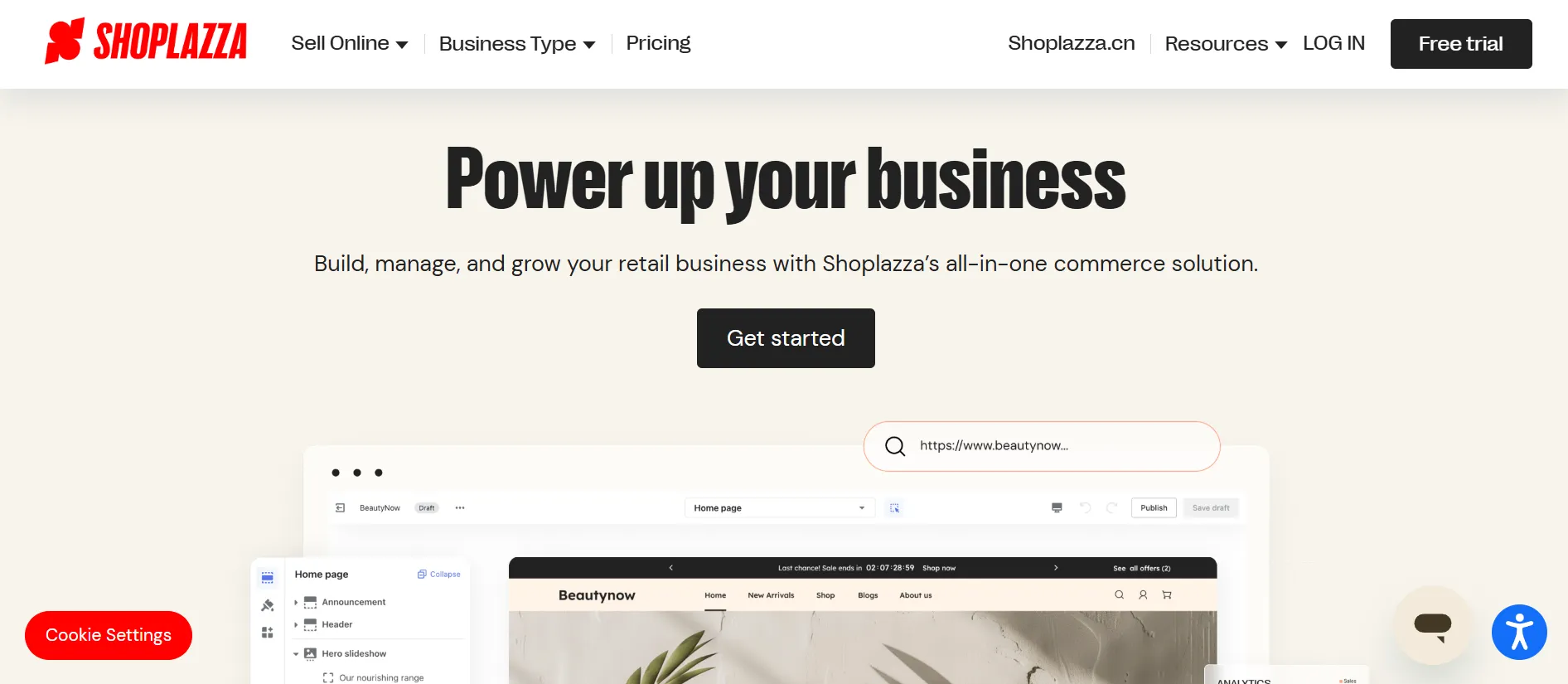
Here’s a quick look at the main strengths and limitations of Shoplazza:
Shoplazza pros | Shoplazza cons |
|
|
As you can see, Shoplazza has clear advantages for beginners but also a few gaps to consider. Let’s move on to Shopify to understand how the two platforms compare.
Shopify Overview: Pros & Cons
In comparison, Shopify is one of the most established eCommerce platforms in the world. Launched in 2006, the platform now supports 6 million merchants across nearly every industry – from small startups to major global brands. Shopify’s strength lies in its flexibility: users can start with simple tools and scale into more advanced features as their store grows.

To put Shopify’s capabilities into perspective, here are the key pros and cons to consider:
Shopify pros | Shopify cons |
|
|
With Shopify’s advantages and limitations outlined, we can now see how it stacks up against Shoplazza in more specific, feature-by-feature comparisons.
Shoplazza vs Shopify: All Features Comparison
Now that we’ve covered their individual strengths, it’s time to look at how they perform side by side. The following comparison outlines the key features and capabilities of Shoplazza vs Shopify.
Pricing
Our Verdict
In this aspect, Shoplazza wins because it is generally cheaper to operate. With more built-in tools and mostly free themes, it helps new sellers keep costs down.
Shoplazza pricing
Shoplazza uses a straightforward pricing model that mirrors Shopify’s structure in both plan names and monthly fees. For online stores, the platform offers 3 tiers:
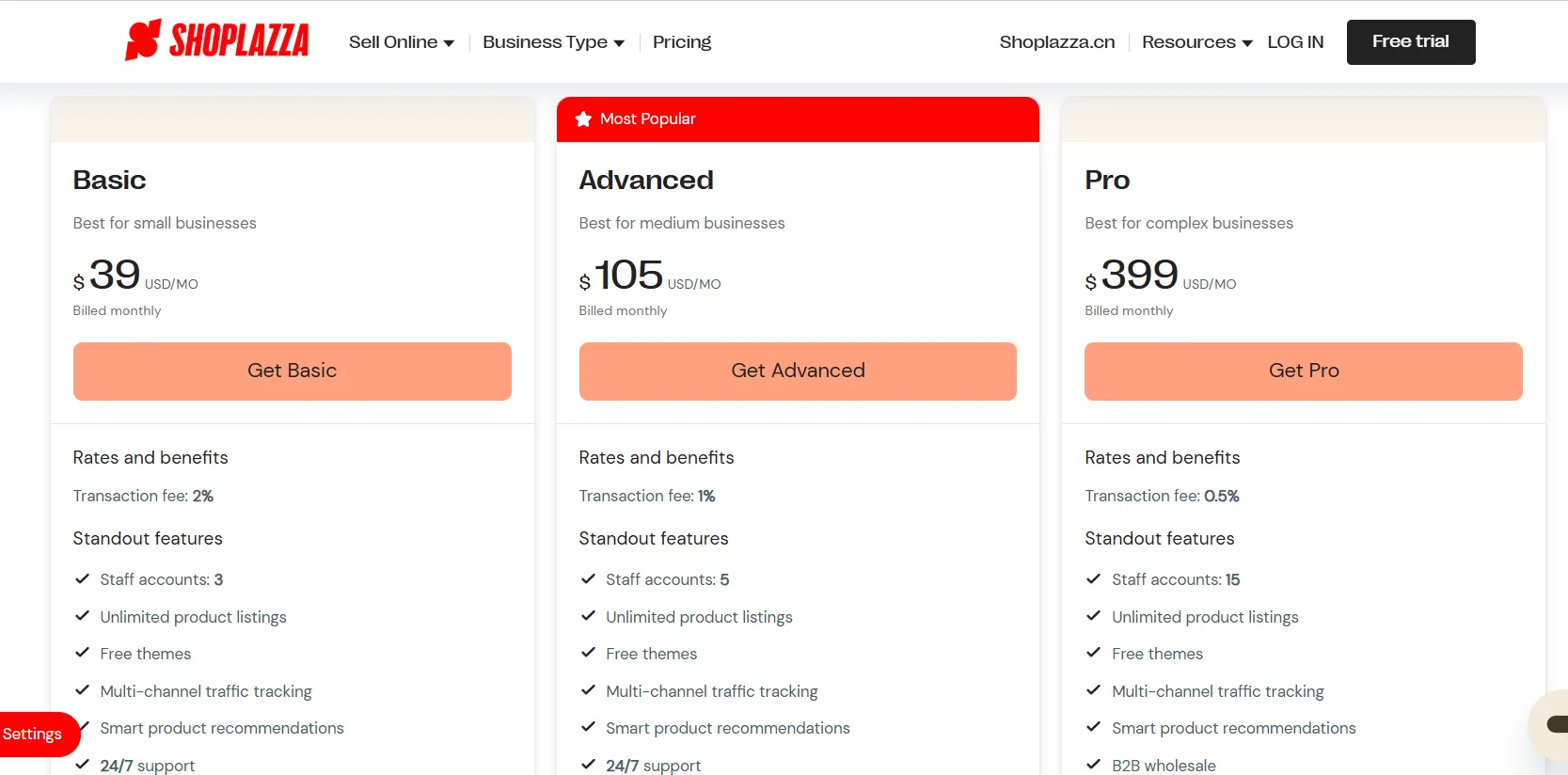
Merchants selling both online and in-store can also choose from the same plan levels, though pricing is available only through sales consultation. To try either setup, Shoplazza provides a 7-day free trial that lets you explore the platform before committing.
Beyond the subscription fee, merchants should also consider the operational costs of running a Shoplazza store. Typical expenses include:
- Transaction fees: Shoplazza charges 0.5%–2% per transaction, depending on the plan selected and the payment method used.
- Apps and add-ons: Most range from $5–$50/month, with a few advanced tools reaching $100/month.
- Themes: Many are free, while premium designs generally cost $99 for a one-time purchase.
Shopify pricing
Shopify offers three core selling plans, just like Shoplazza. But it also has Shopify Plus for enterprise-level brands, which gives larger businesses room to grow in a way Shoplazza doesn’t currently support.
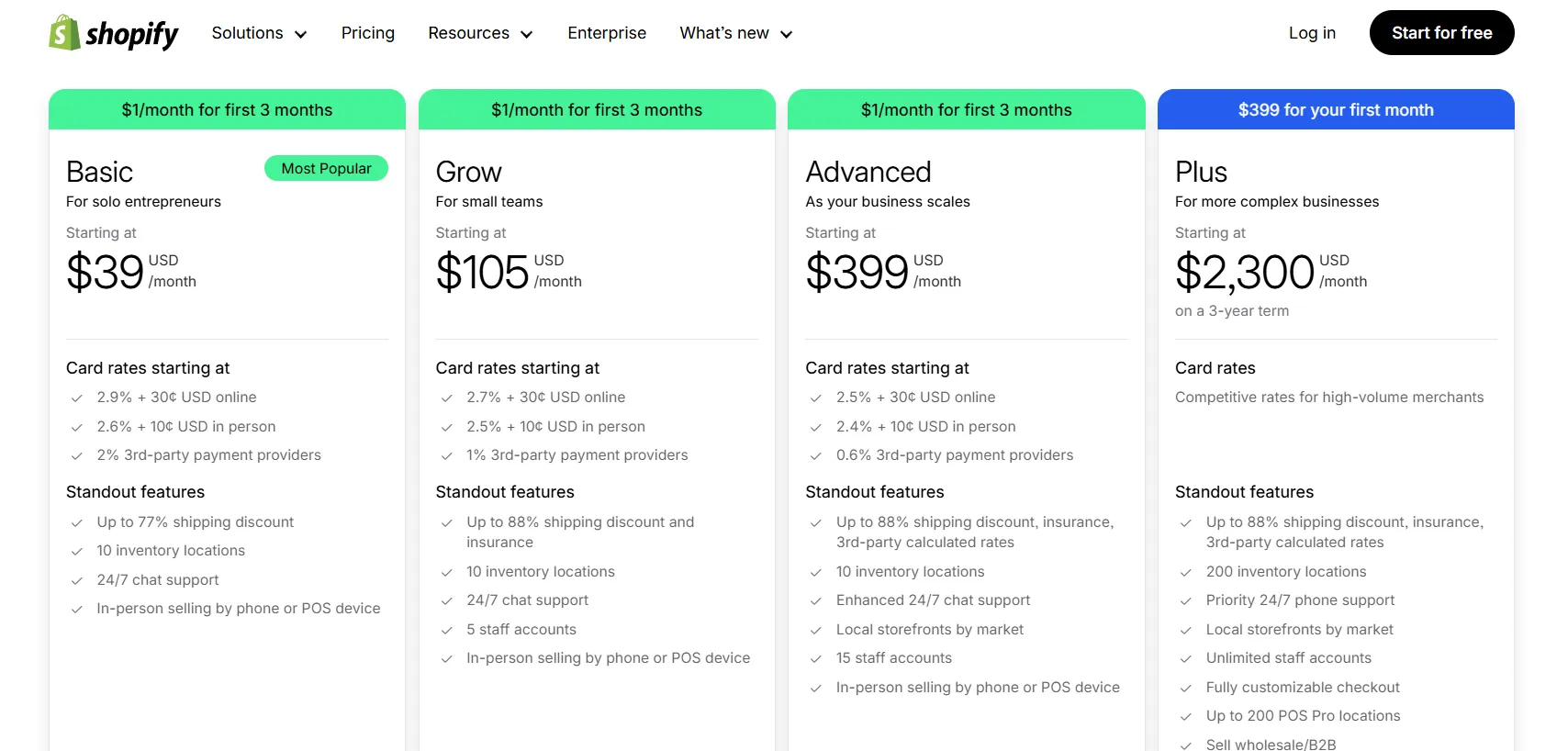
If your business doesn’t fit neatly into these main plans, Shopify also offers two alternative options designed for more specific selling needs. These plans cost from $5 to 89/month, and are ideal for merchants who want to sell primarily through social channels or focus on in-person retail.
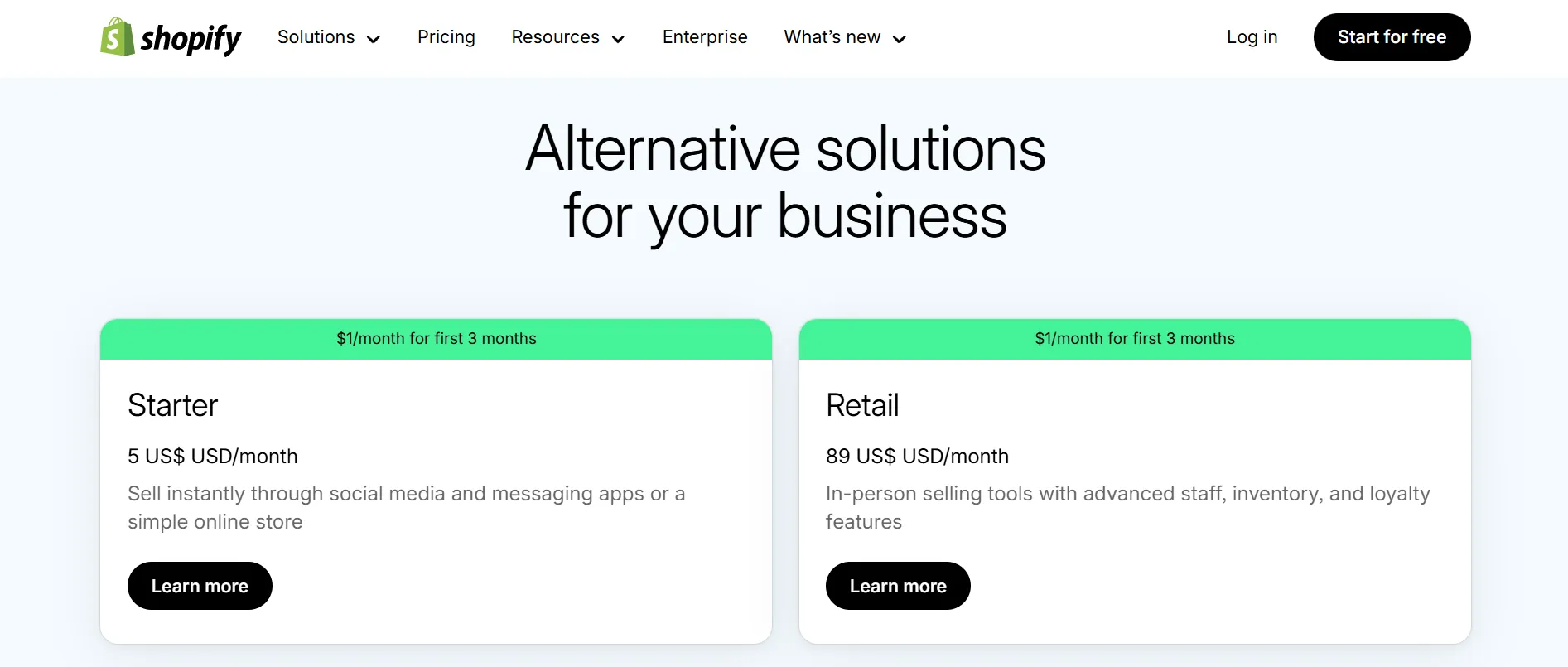
To ease onboarding, Shopify offers a 3-day free trial, followed by an extended trial priced at $1 for the first three months, giving new users time to explore the platform before committing.
When using Shopify, you’ll also notice several additional costs that aren’t included in the base plans but still need to be counted into your overall budget.
- Transaction fees: 0% with Shopify Payments, up to 2% when using external gateways
- Apps: Free to around $350/month depending on complexity
- Themes: Premium themes typically cost $100–$500
Compared to Shoplazza, these extra costs tend to add up more quickly on Shopify. This makes Shopify the more expensive option overall once you factor in real operating costs beyond the base subscription.
Ease of use
Our Verdict
Both platforms are easy to get started with, but Shopify has the edge. Its interface feels more polished, and the addition of Shopify Sidekick (its AI-powered helper) makes everyday tasks noticeably smoother.
Shoplazza ease of use
After creating your account, you’re taken straight to the Shoplazza dashboard, where a five-step “Getting Started” guide walks you through the essentials. The checklist covers tasks like choosing a theme, adding products, setting up payments, and customizing your storefront. You can track your progress as you move through each step and return to the guide whenever you need.
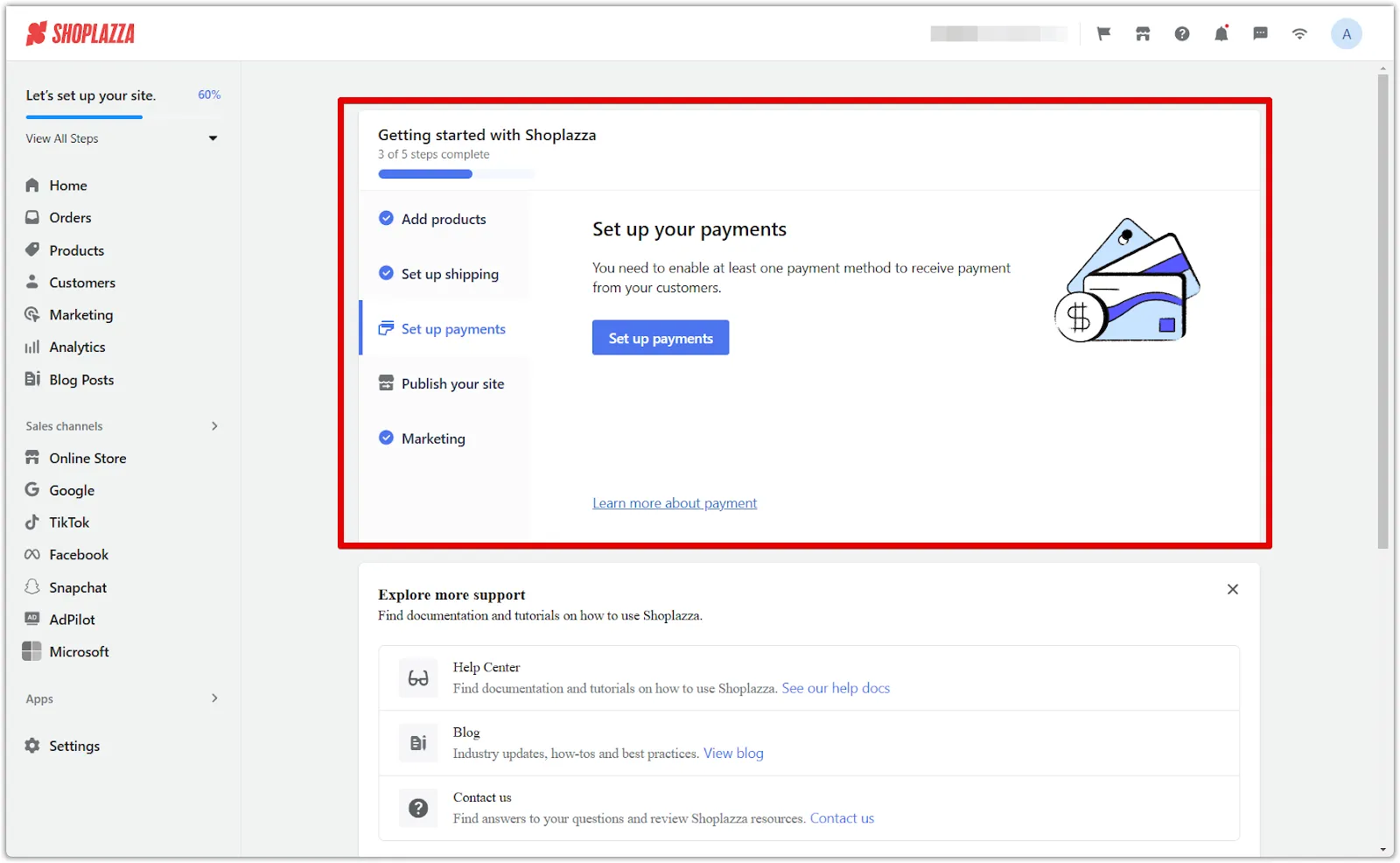
In daily use, Shoplazza keeps things simple. The dashboard is clean and easy to navigate, and most sections load quickly, making it smooth to switch between tasks.
Shopify ease of use
When you log into Shopify for the first time, you land on a dashboard that feels clean and well-organized. A getting-started guide sits at the top, offering suggestions on what to do next rather than forcing you into a fixed sequence. You can follow the checklist if you want a structured path, or skip around the dashboard and set things up in your own order.
The real difference shows up once you begin working inside the dashboard. Shopify now includes Shopify Sidekick, an AI assistant that helps you draft product descriptions, explain settings, suggest improvements, and walk you through adding new features.
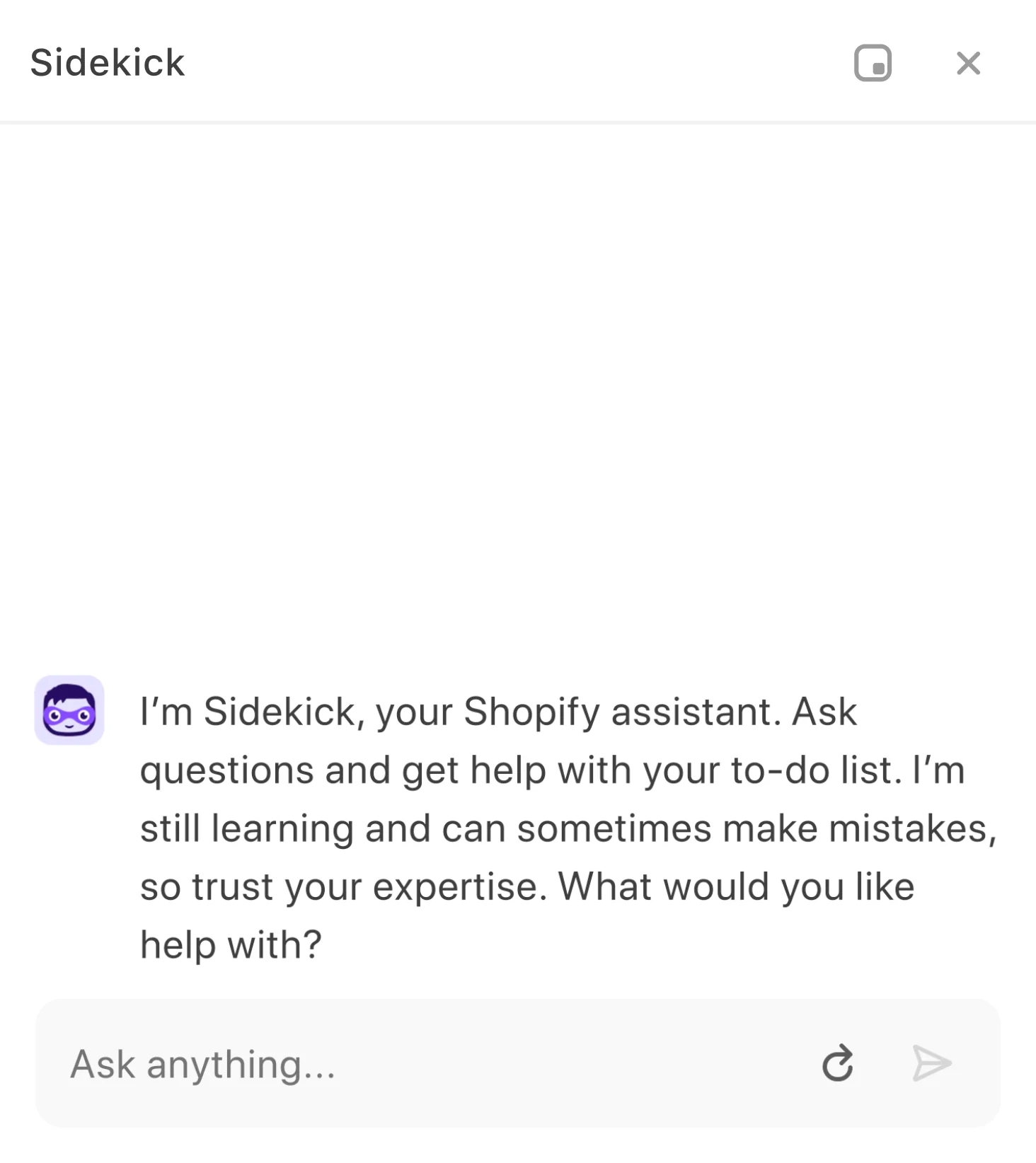
This is something Shoplazza doesn’t offer, and it noticeably elevates the day-to-day experience by giving merchants instant guidance right when they need it.
Themes & customization
Our Verdict
In the Shoplazza vs Shopify comparison, Shopify wins this round. Its larger theme library, more polished editor, and AI-assisted design tools offer far more flexibility than Shoplazza.
Shoplazza customization
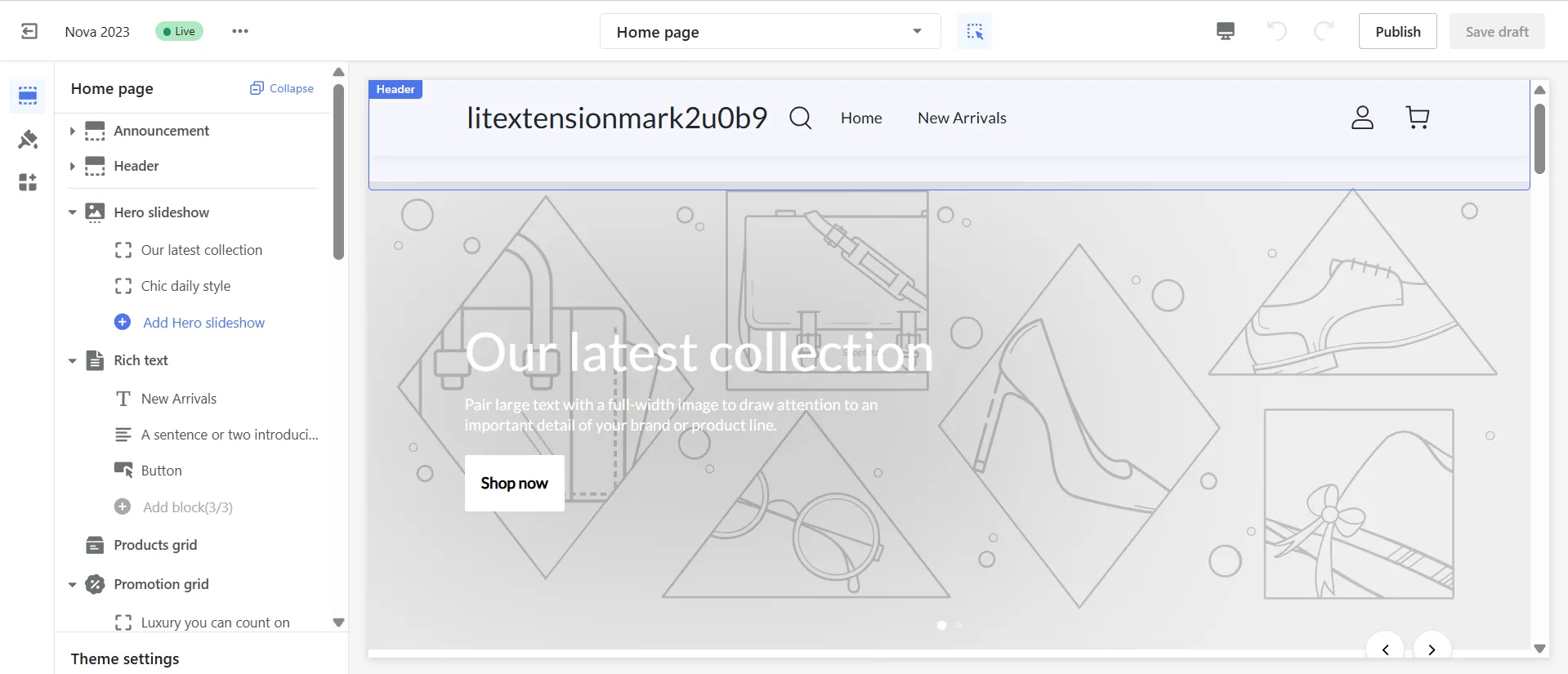
Shoplazza currently offers 28 themes, organized by product categories such as fashion, jewelry, home décor, electronics, and more. The best thing is that only one theme is paid at $99, while the rest are completely free.
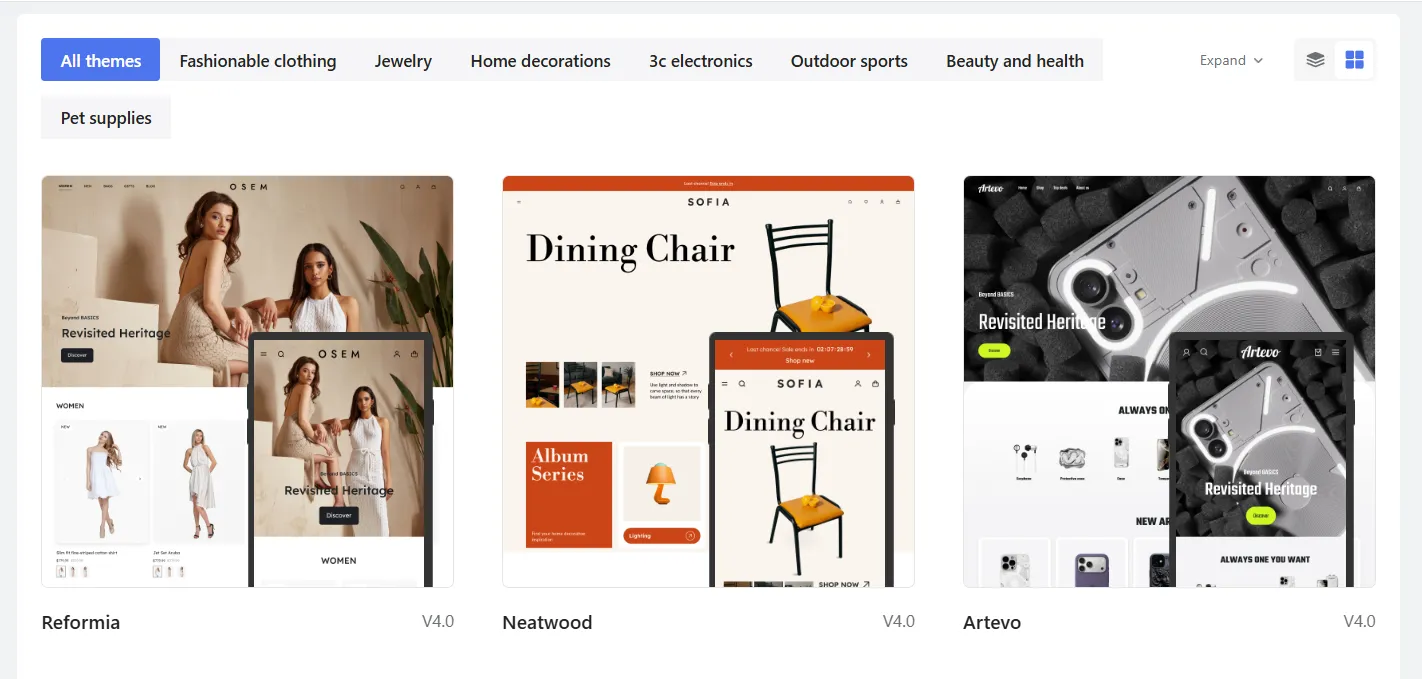
When it comes to customization, the theme editor immediately feels familiar. The interface closely resembles Shopify’s section-based layout, where you can add or remove blocks, rearrange page sections, and update content directly from a sidebar. Changes appear instantly in the live preview, making the editing process quick and intuitive.
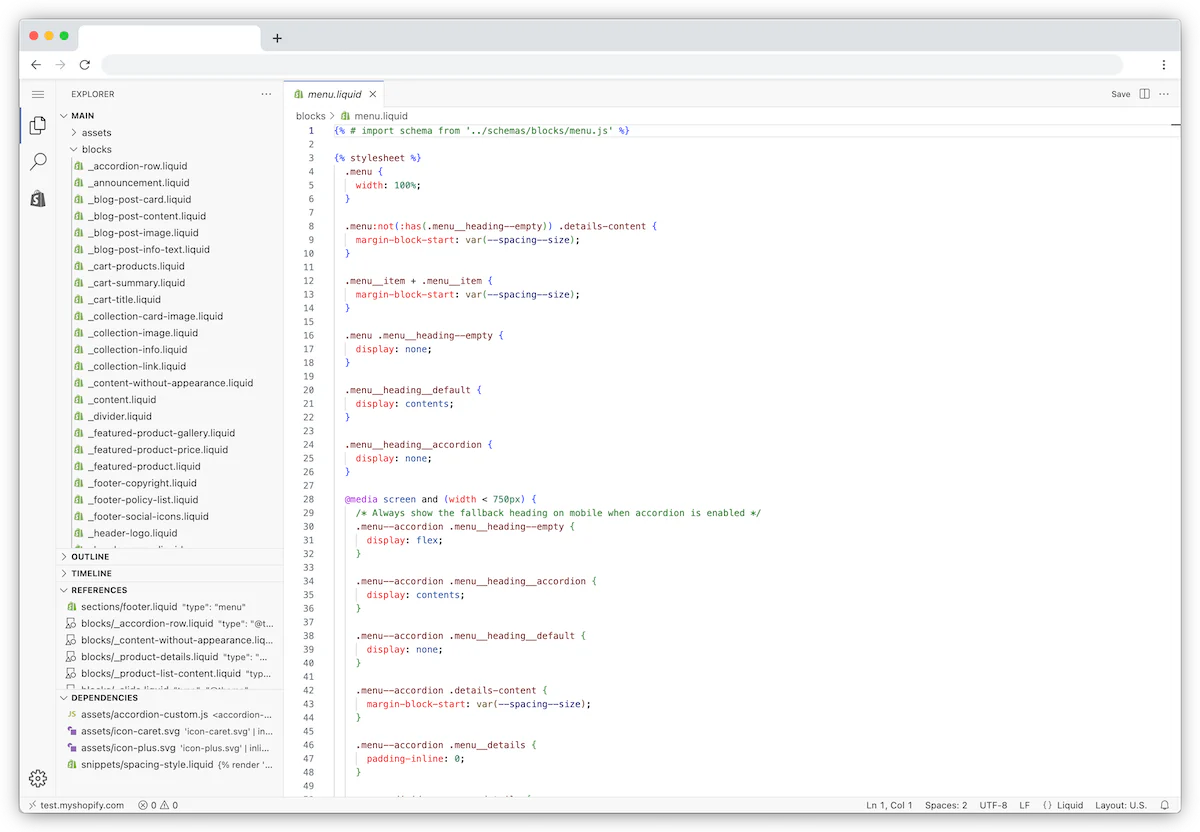
For merchants who want to customize further, Shoplazza provides access to theme code. Developers can edit templates using a Liquid-style syntax that behaves similarly to other templating languages, allowing deeper design and structural changes when needed.
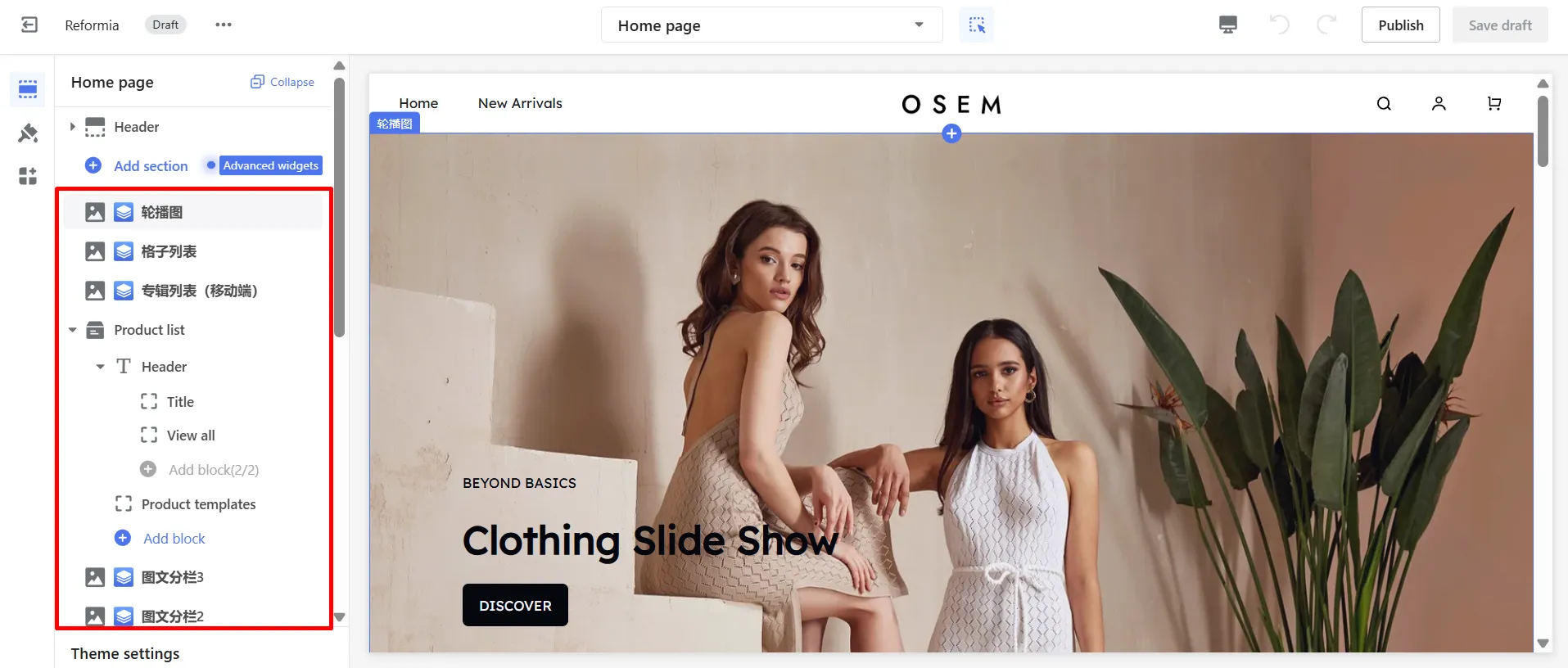
During testing, we did notice a small localization issue: certain labels in the editing sidebar occasionally appeared in Chinese. It doesn’t affect functionality, but it can be slightly confusing for non-Chinese-speaking users.
Shopify customization
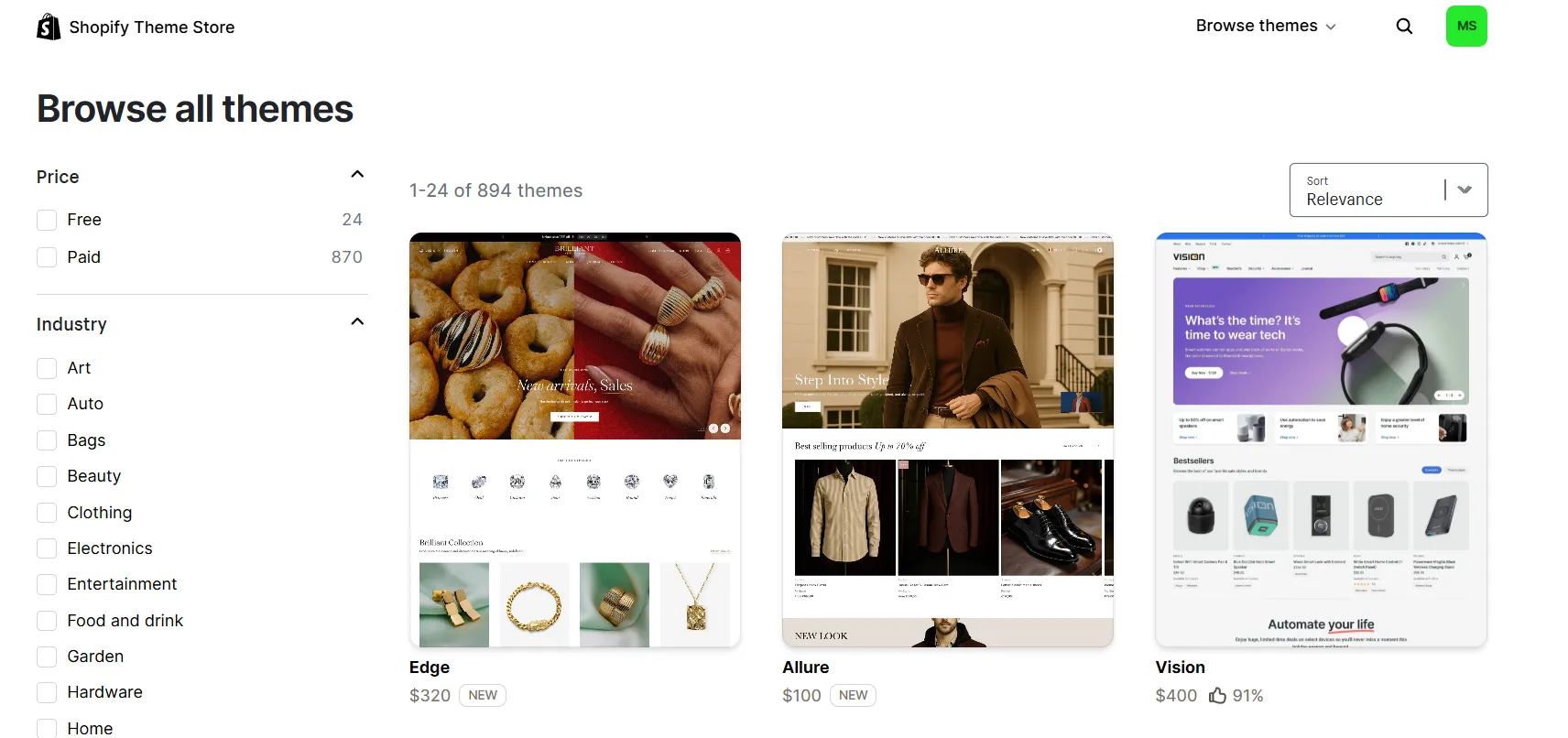
Compared to Shoplazza, Shopify offers a much wider range of options with nearly 1,000 themes available. These include both free and premium designs, with paid themes usually ranging up to $500.
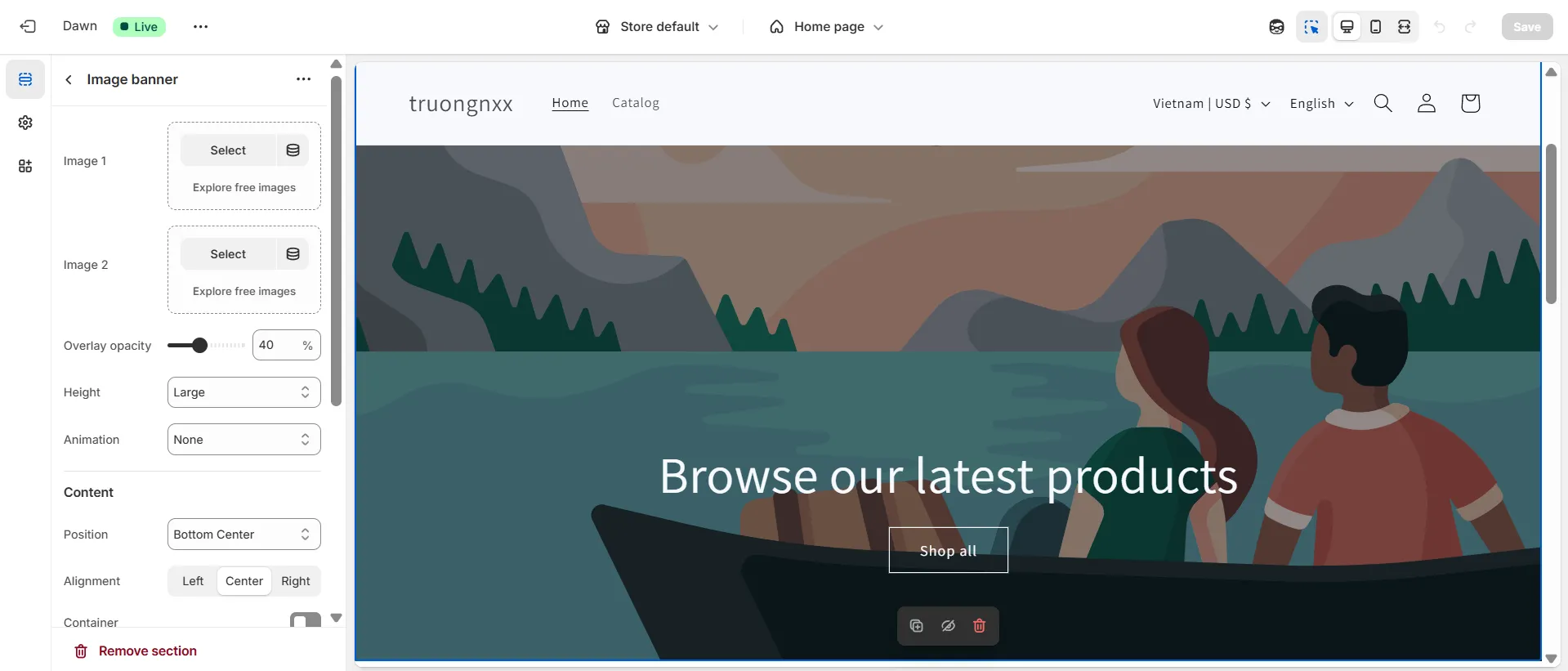
Once you choose a theme, Shopify’s visual editor gives you a robust level of control. The drag-and-drop interface lets you reorganize sections, customize layouts, and adjust styling elements like fonts, spacing, and color palettes.
Shopify also introduces AI-powered design assistance, helping merchants generate layout ideas, refine styling choices, or create on-brand content suggestions. It’s a useful addition for anyone who wants a professional look without spending hours on design decisions.
For advanced customization, Shopify gives full access to Liquid, its own templating language. This allows teams to modify layouts, adjust template logic, and add custom components on top of an existing theme structure.
eCommerce features
Our Verdict
Shoplazza provides everything a small or early-stage store needs to start selling, and its simplicity is a real advantage for teams that prefer a lighter setup. However, Shopify goes further with stronger inventory tools and a more advanced checkout system, giving growing businesses more control as operations become more complex.
To give you a clearer picture of how both platforms handle core selling functions, here’s a side-by-side comparison of Shoplazza vs Shopify key eCommerce features:
Feature | Shopify | |
Product types supported | Physical, digital, and service-based products | Physical, digital, and service-based products |
Product variants | Standard variants with basic rules | Larger variant sets, metafields, and advanced option logic |
Inventory management | Basic stock tracking | Multi-location inventory, low-stock alerts, more automation |
Order management | Standard fulfill, cancel, refund workflow | Advanced order editing, partial fulfillment, fraud analysis |
Checkout experience | Customizable checkout, supports local methods | Highly optimized checkout, Shop Pay, accelerated payment options |
Payment options | Shoplazza Payments + third-party gateways | Shopify Payments + 100+ gateways worldwide |
Shipping tools | Basic shipping zones and manual rates | Carrier-calculated rates, label printing, shipping integrations |
Tax handling | Manual tax setup for most regions | Automatic tax calculation in supported regions |
Discounts & promotions | Standard discount codes and simple rules | More advanced promotions, buy-x-get-y, volume discounts |
Subscriptions | Available via third-party apps | Native subscription features + multiple apps |
POS (Point of Sale) | Retail plans available but more limited | Full POS suite with hardware, unified inventory |
B2B tools | Limited B2B features | Dedicated Shopify B2B suite (companies, price lists, net terms) |
Dropshipping | Strong DS focus, integrations with key suppliers, easy setup | Integrate with key suppliers, easy setup Large DS ecosystem, wide range of apps (DSers, Spocket, Syncee, etc.) |
If you’re a dropshipper, the contrast between the two platforms becomes clearer. Shoplazza puts more focus on offering a streamlined dropshipping workflow out of the box, whereas Shopify relies heavily on third-party apps for advanced capabilities. Shopify still wins in variety and scalability, but Shoplazza provides an easier starting point for first-time dropshippers.
Marketing & SEO
Our Verdict
In this aspect, it’s a tie between Shoplazza vs Shopify. Both platforms provide only basic on-page SEO, so the right choice depends on how simple or advanced your marketing needs are.
Shoplazza
Shoplazza focuses on the essentials, with its strongest highlights being built-in social channel syncing and simple email marketing. You can connect products to platforms like Facebook, Instagram, TikTok, and Pinterest with just a few steps. Email campaigns are also easy to manage through Shoplazza integrations like Klaviyo and Omnisend.
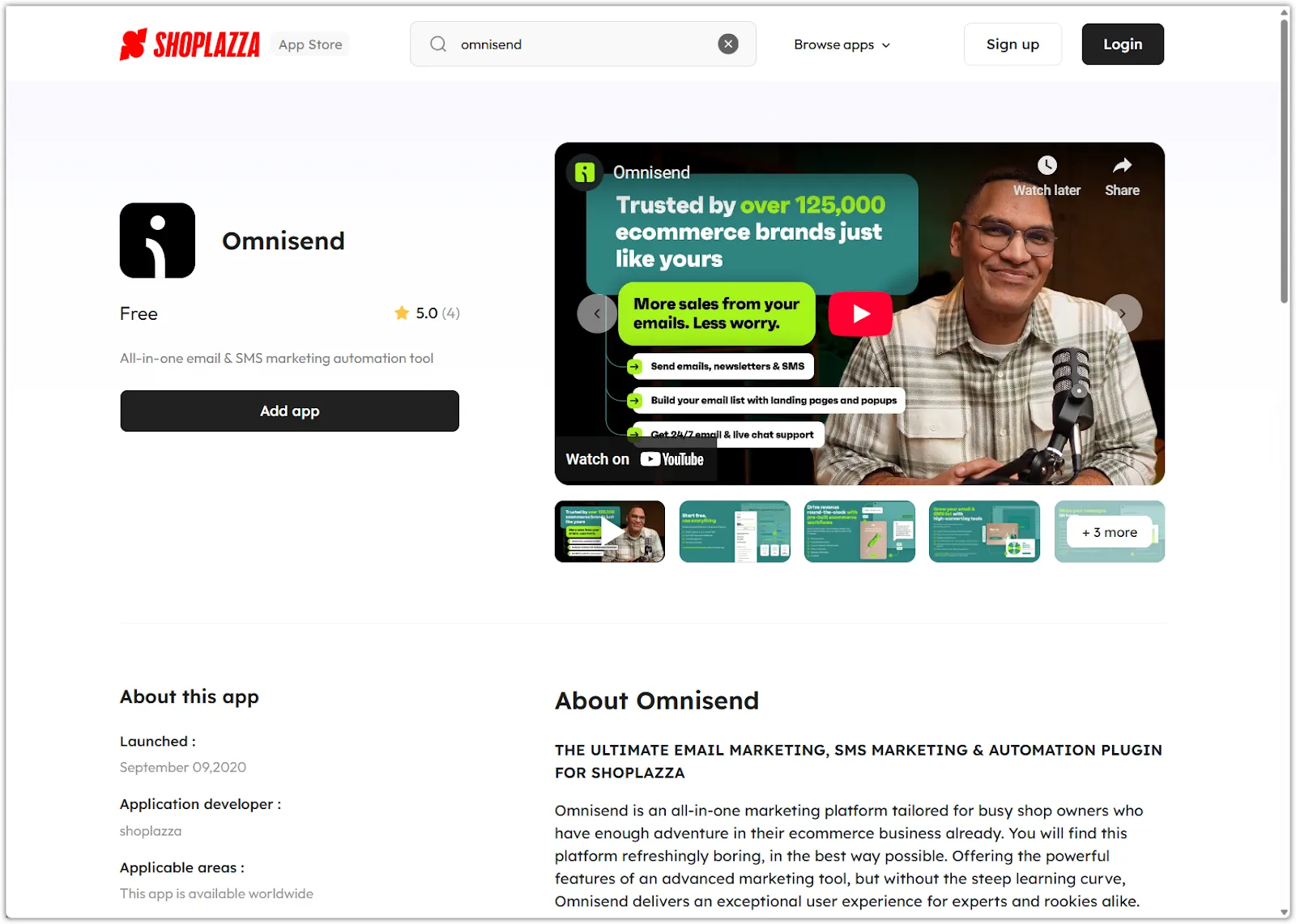
However, its marketing features remain fairly basic. You won’t find the deeper automation, segmentation, or advanced campaign tools that larger platforms offer. Thus, growing brands may eventually need third-party apps to fill those gaps.
Similarly, Shoplazza’s SEO tools stay at a basic on-page level, without the deeper controls found on more advanced platforms. You can still adjust core metadata, manage URLs, optimize images, and rely on fully responsive themes. The platform also integrates with Google Search Console and other tracking tools to handle fundamental SEO needs.
Shopify
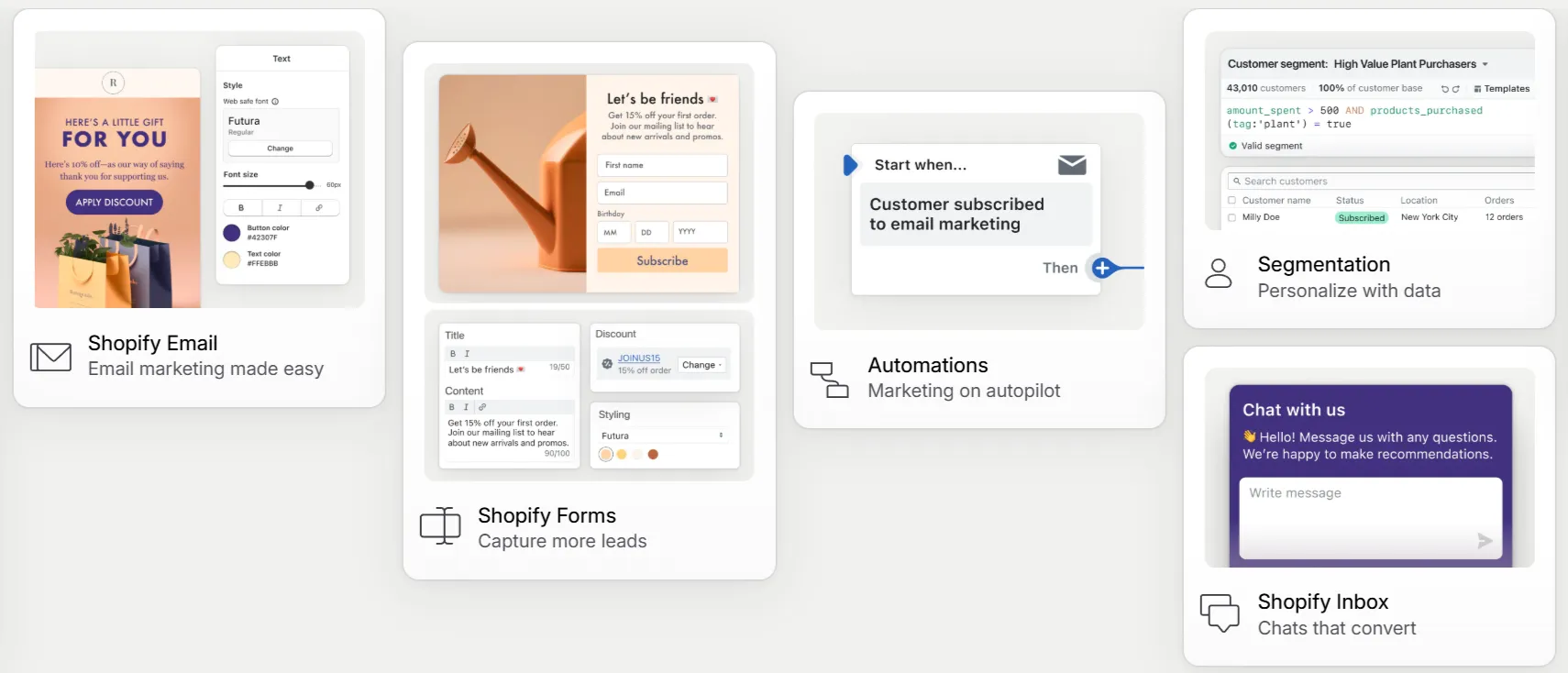
On the other hand, Shopify’s marketing tools are built with growth in mind. Features like Shopify Email, Segmentation, Automation, and Shopify Inbox make it easier to organize, personalize, and scale campaigns as your customer base expands. Shopify also connects smoothly with major channels like Facebook, Instagram, Google, and TikTok.
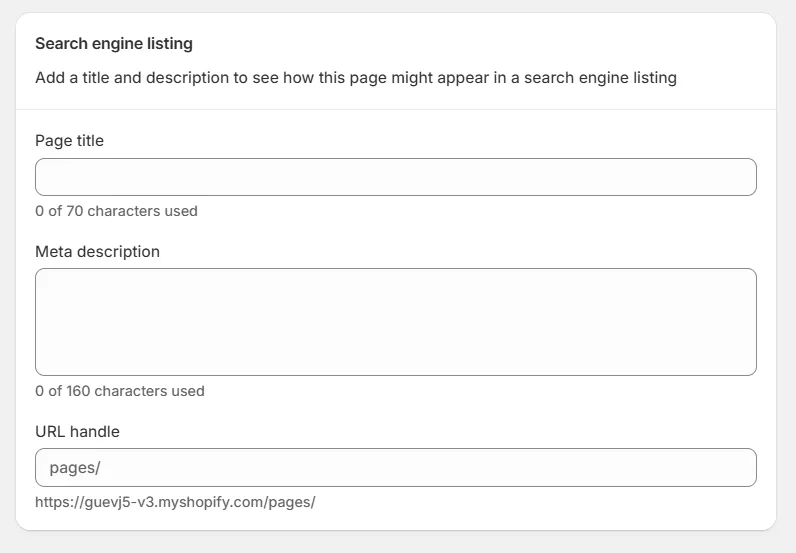
For SEO, Shopify offers the same basic on-page controls you’ll find on Shoplazza, including metadata editing, responsive themes, and automatic sitemap generation. The URL structure is fixed, but the platform manages redirects and core visibility tasks for you.
Global & cross-border eCommerce
Our Verdict
When it comes to global commerce, Shopify pulls ahead. The platform simply offers more automation, more coverage, and more control over how you sell in different regions.
Shoplazza
From our testing, Shoplazza handles global selling better than expected. You can create up to 50 additional markets – far more than many platforms allow – and reach customers in over 200 countries without extra tools. The platform supports multiple currencies, local payment methods, and language settings, making basic localization easy.
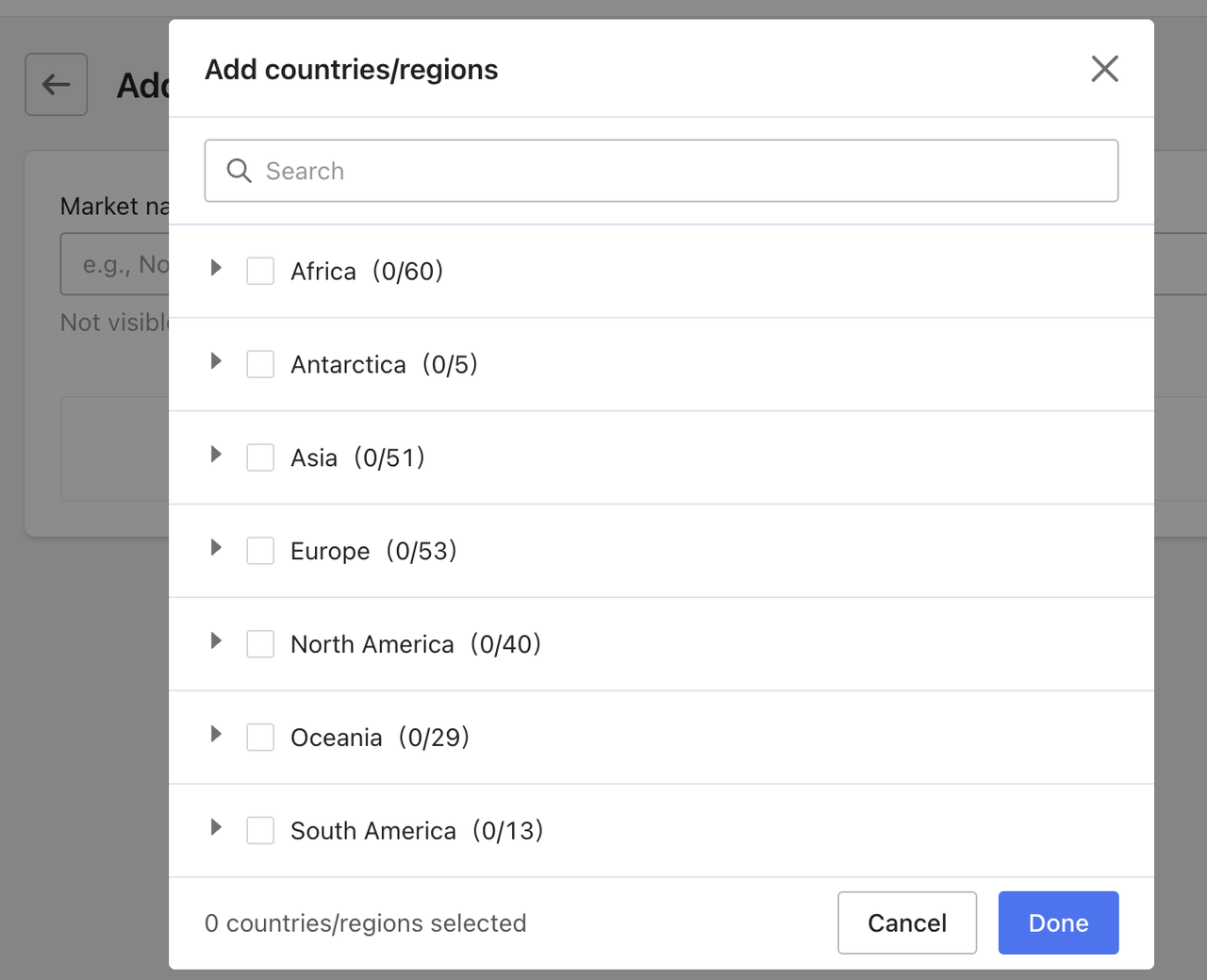
Managing these markets is also straightforward. Shoplazza lets you control pricing, inventory, product availability, and fulfillment rules for each market directly inside a unified dashboard. This centralized approach makes cross-border operations feel more manageable, especially for small teams that don’t want to juggle multiple systems.
Shopify
Since Shopify is built with international selling in mind, many of its tools help merchants scale globally without adding extra complexity. Through Shopify Markets, you can manage international storefronts from a single dashboard and sell to customers in 150+ countries.
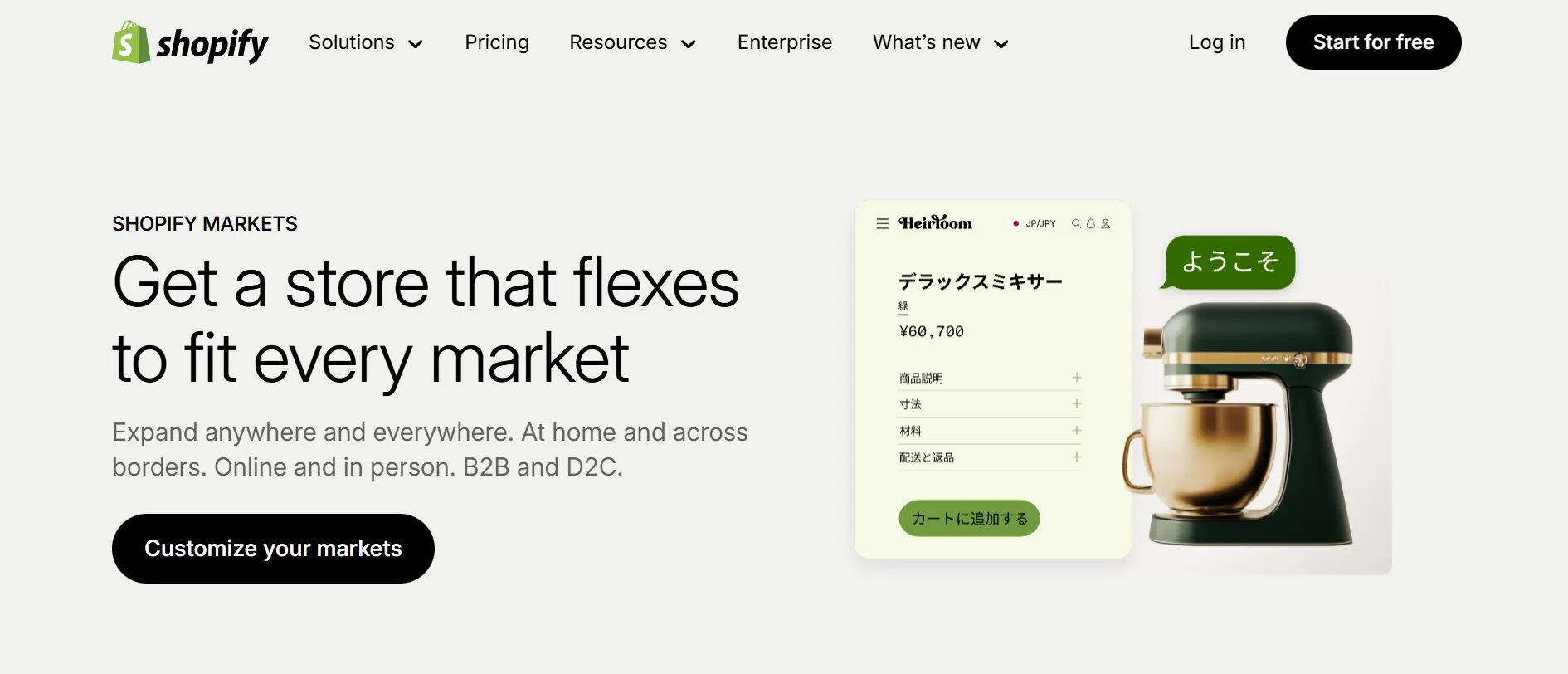
To support these international markets, Shopify includes features such as multiple currencies, automatic currency conversion, and geolocation-based recommendations. It also handles duties and import tax calculations and offers a wide range of region-specific payment methods.
Performance & security
Our Verdict
For performance and security, Shopify wins. Its infrastructure is more mature, and its security protections go deeper than what Shoplazza currently offers.
Shoplazza
Performance on Shoplazza is smoother than you might expect. The platform uses a cloud setup and global CDN to keep storefronts fast, while handling most technical optimization behind the scenes.
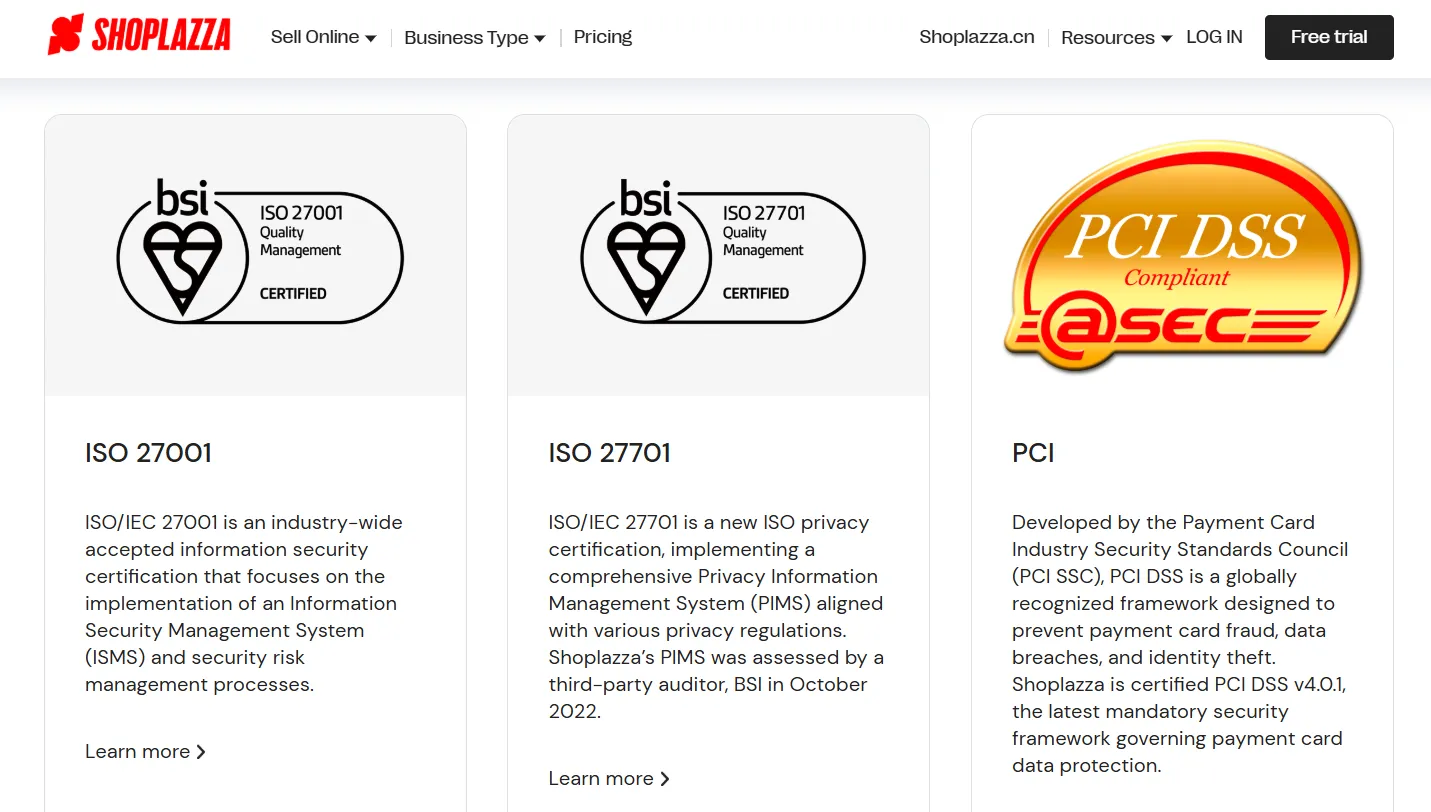
On the security front, Shoplazza does a solid job of protecting customer data. The platform encrypts and anonymizes sensitive information and stores it in isolated environments, which reduces the chances of any cross-store data exposure. Its multi-tenant architecture also keeps each store’s data separated, adding another layer of protection.
Shoplazza also states that it meets PCI DSS Level 1, the highest standard for payment security. While its security toolkit is fairly standard for a SaaS platform, it still provides the essential safeguards most merchants need for everyday operations.
Shopify
Shopify is widely known for its reliability, and performance is one of the platform’s strongest advantages. Stores run on Shopify’s globally distributed infrastructure with powerful CDN networks, so websites load quickly regardless of where customers are located.
Shopify also manages server scaling automatically, meaning stores remain stable even during high-traffic events like flash sales or Black Friday. In fact, during BFCM 2025, Shopify-powered merchants generated a record $14.6 billion in global sales, with the platform handling surges of up to 284 million requests per minute without major downtime.
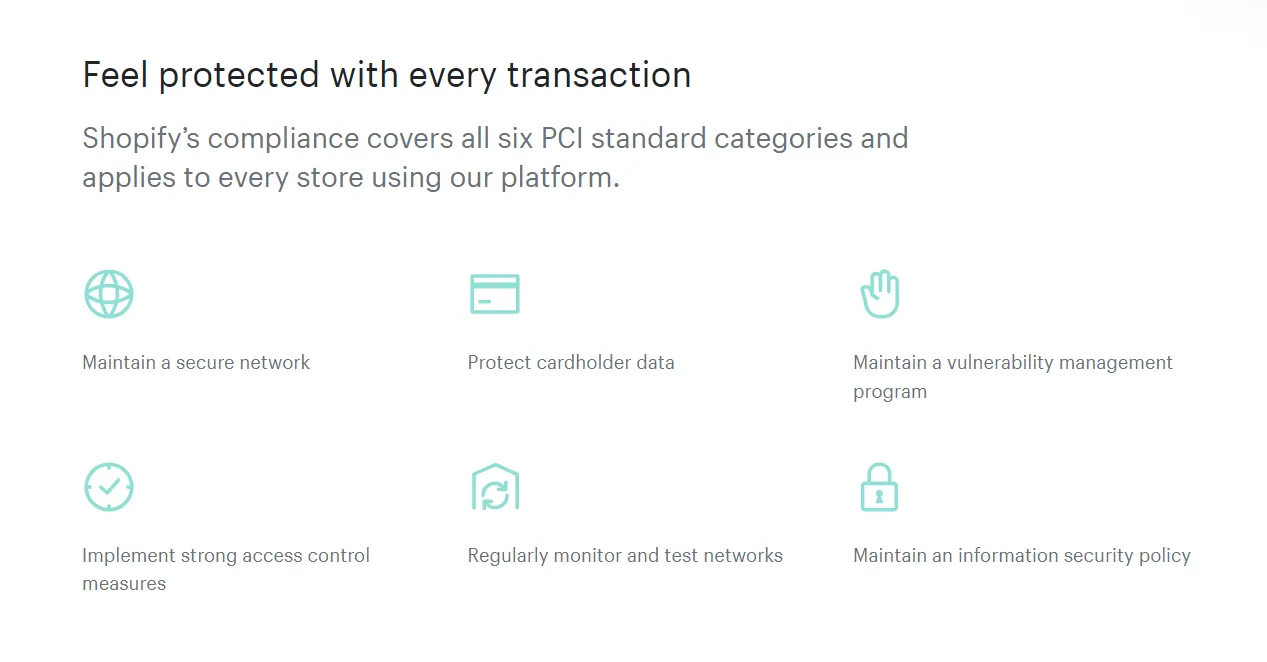
In terms of security, Shopify provides a strong and well-tested foundation. Stores come with SSL, PCI DSS Level 1 compliance, automated patching, and built-in fraud analysis.
Because the platform has supported millions of merchants over many years, its systems have been tested at a scale Shoplazza has not yet reached. This does not mean Shoplazza is unsafe, but it does give Shopify an edge for larger or higher-risk businesses.
Customer support
Our Verdict
Shoplazza delivers quick responses and covers the basics well, but Shopify’s support system is a little bit more comprehensive. With deeper documentation, a larger community, and AI-powered assistance, Shopify ultimately offers a more reliable experience as your store grows.
Shoplazza
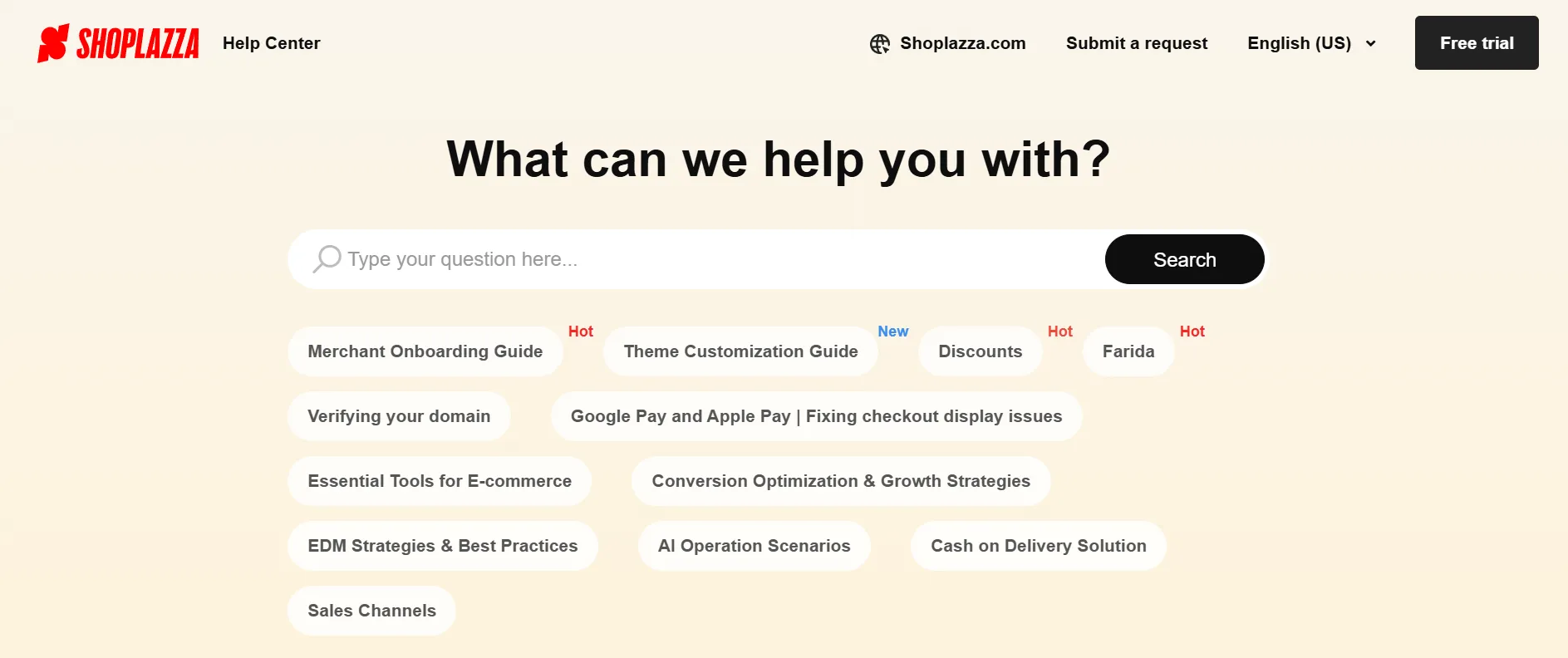
Shoplazza provides support through live chat and email, with agents available 24/7. In our experience, response times are fairly quick for general questions, and the team can help with basic troubleshooting or onboarding guidance.
The platform also includes a well-organized help center with guides and tutorials. While the library isn’t as extensive as what you’d find on larger platforms, the resources cover the essentials clearly and are sufficient for most day-to-day tasks.
Shopify
Shopify has one of the most comprehensive support systems in the eCommerce industry. Merchants can access 24/7 help through chat, email, or phone, and the platform’s knowledge base is extremely robust, covering everything from setup to advanced customization.
The difference becomes even clearer once you explore Shopify’s community ecosystem. Forums, partner blogs, developer guides, and user groups offer answers to almost any scenario you might encounter.
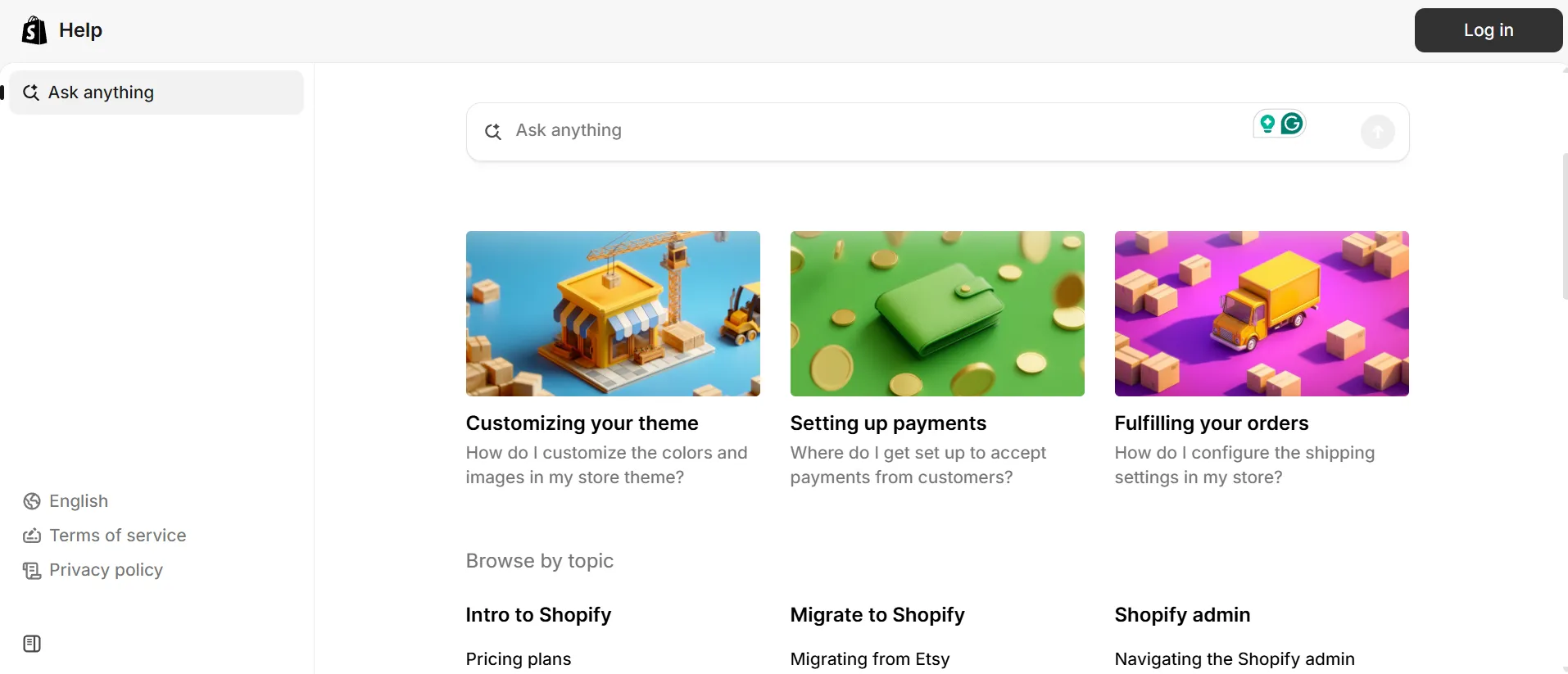
What really elevates the support experience is Shopify’s AI-powered assistant, which can help explain settings, recommend solutions, or walk you through tasks directly inside the dashboard.
Looking across the different categories, Shopify often comes out ahead in depth and scalability, but that doesn’t automatically make it the right choice for everyone. Shoplazza still delivers a solid experience for beginners and smaller businesses that want something simple without extra complexity.
Shopify vs Shoplazza for Different Types of Businesses
Not every store needs the same tools or the same level of complexity. Some businesses just want a simple start, while others need a platform that can grow with them.
Below are the matchups we’ve chosen to help you see which platform, between Shoplazza vs Shopify aligns best with different types of businesses:
Business type | Best platform | Why |
New sellers / small shops | Shoplazza | Simple setup, free themes, essential tools included |
Growing brands | Shopify | Stronger ecosystem, better scaling tools |
Design-first brands | Shopify | Larger theme library, deeper customization |
Global sellers | Shopify | More advanced localization + automated market tools |
Budget-focused teams | Shoplazza | Lower upfront cost, fewer paid apps needed |
Shoplazza vs Shopify: FAQs
Is Shoplaza legit?
Yes, Shoplazza is a legitimate eCommerce platform used by tens of thousands of merchants globally. It offers core store-building features, supports cross-border selling, and holds PCI DSS Level 1 certification, which is the highest standard for payment security. While it’s newer and less established than Shopify, it is not a scam.
What are the key differences between Shopify and Shoplazza for new eCommerce sellers?
For beginners, Shoplazza is simpler and more budget-friendly, with more free themes and an easier onboarding experience. Shopify, meanwhile, offers a larger ecosystem, stronger marketing and SEO tools, and more advanced features that help when you’re ready to scale.
Is Shoplazza a reliable and secure alternative to Shopify?
For small to mid-sized stores, yes. Shoplazza provides reliable hosting, good performance, and essential security features like SSL and PCI DSS Level 1 compliance.
However, Shopify has a longer track record, a more mature infrastructure, and deeper security capabilities, which may matter more for larger or high-traffic businesses.
How to check for real reviews about Shoplazza?
To verify genuine user experiences, check trusted review platforms like G2, Capterra, Trustpilot, and Software Advice. You can also browse Reddit threads, YouTube creator reviews, and Facebook seller groups for more candid feedback. Avoid relying solely on testimonials posted on Shoplazza’s own website, as these are typically curated.
Final Verdict: Should You Use Shopify or Shoplazza in 2026?
Choosing between Shoplazza vs Shopify really depends on your goals. Shoplazza is a great starting point if you want a simple, affordable setup with the essentials built in. Shopify, meanwhile, offers a broader ecosystem, stronger global selling tools, and far more room to scale.
Hopefully, this comparison helped you decide which platform fits your business best. If you want to explore other eCommerce options, feel free to browse our blog posts or join our community group to learn from other merchants.