
If you’re already using or evaluating commercetools but questioning whether it’s the right long-term fit, you’re likely searching for strong commercetools alternatives. The right choice depends on your architecture preferences, budget expectations, and internal capabilities.
In this article, we compare leading alternatives to commercetools across key technology trends, such as composable commerce, headless architecture, open SaaS, and enterprise suite models. Based on this list, you can find the most suitable one for your business:
- Shopify Plus
- BigCommerce
- Adobe Commerce
- Oracle Commerce
- Salesforce Agentforce Commerce
- SAP Commerce Cloud
- Spryker
- Saleor
- Elastic Path
- OroCommerce
Keep reading for the detailed breakdown!
commercetools Alternatives: At A Glance
Before diving into the detailed breakdown, it helps to see all the top commercetools alternatives side by side. Each platform on this list takes a different approach to eCommerce architecture, pricing, and target audience, so what works well for one business may be a poor fit for another. The table below summarizes the key strengths, the most common limitations, and the business type each platform is best suited for, so you can quickly narrow down the right commercetools alternatives before reading further.
Platform | Strength | Weakness | Best For |
Shopify Plus | Fast time-to-market with a fully managed, enterprise-grade SaaS environment | Limited architectural flexibility compared to composable alternatives | Enterprise brands that need speed, reliability, and a rich app ecosystem |
BigCommerce | Strong out-of-the-box B2B and headless-ready features without full composable overhead | Revenue-based tier upgrades can increase costs as the business scales | Mid-market to enterprise teams that want open SaaS flexibility |
Adobe Commerce | Deep customization of catalog structures, B2B workflows, and pricing logic | High total cost of ownership and long implementation timelines | Enterprises with complex multi-brand, multi-region, or B2B requirements |
Oracle Commerce | Tight native integration with Oracle ERP, CPQ, and finance systems | Significant licensing and implementation investment; slower to adapt | Large enterprises already operating within the Oracle ecosystem |
Salesforce Commerce | Seamless connection with Salesforce CRM, Marketing Cloud, and Service Cloud | Changes often require coordination across multiple Salesforce clouds | Organizations that want commerce tightly aligned with CRM and customer data |
SAP Commerce Cloud | Deep alignment with SAP ERP, supply chain, and procurement operations | Requires experienced SAP specialists; customization moves slowly | Enterprises running SAP systems that need commerce embedded in operations |
Spryker | Composable, modular architecture purpose-built for marketplace and B2B models | High implementation complexity and developer dependency | Enterprises building multi-merchant marketplaces or complex B2B platforms |
Saleor | Open-source, GraphQL-native, and cost-efficient with no revenue-based licensing | Requires strong in-house technical capability for setup and maintenance | Developer-led teams that want full architectural control at lower cost |
Elastic Path | Highly flexible product and pricing orchestration with a composable API-first core | Enterprise pricing puts it out of reach for smaller or mid-market businesses | Enterprises with complex catalog structures and advanced pricing requirements |
OroCommerce | Purpose-built B2B features including quote management, account hierarchies, and custom catalogs | Less suited for B2C-heavy or general retail use cases | Mid-market and enterprise B2B organizations with complex sales workflows |
1. Shopify Plus: Enterprise SaaS Simplicity
Best for: Enterprise brands that want a fully managed, fast-to-launch platform with proven scalability, a deep app ecosystem, and built-in B2B tools without managing infrastructure.
Shopify Plus is Shopify’s highest-tier plan for enterprise businesses, with pricing starting from around $2,300 per month and scaling based on revenue. Since it runs on a fully managed cloud, you don’t need to handle hosting or performance. It also supports API integrations and headless setups if you need more flexibility, while still staying relatively easy to manage.
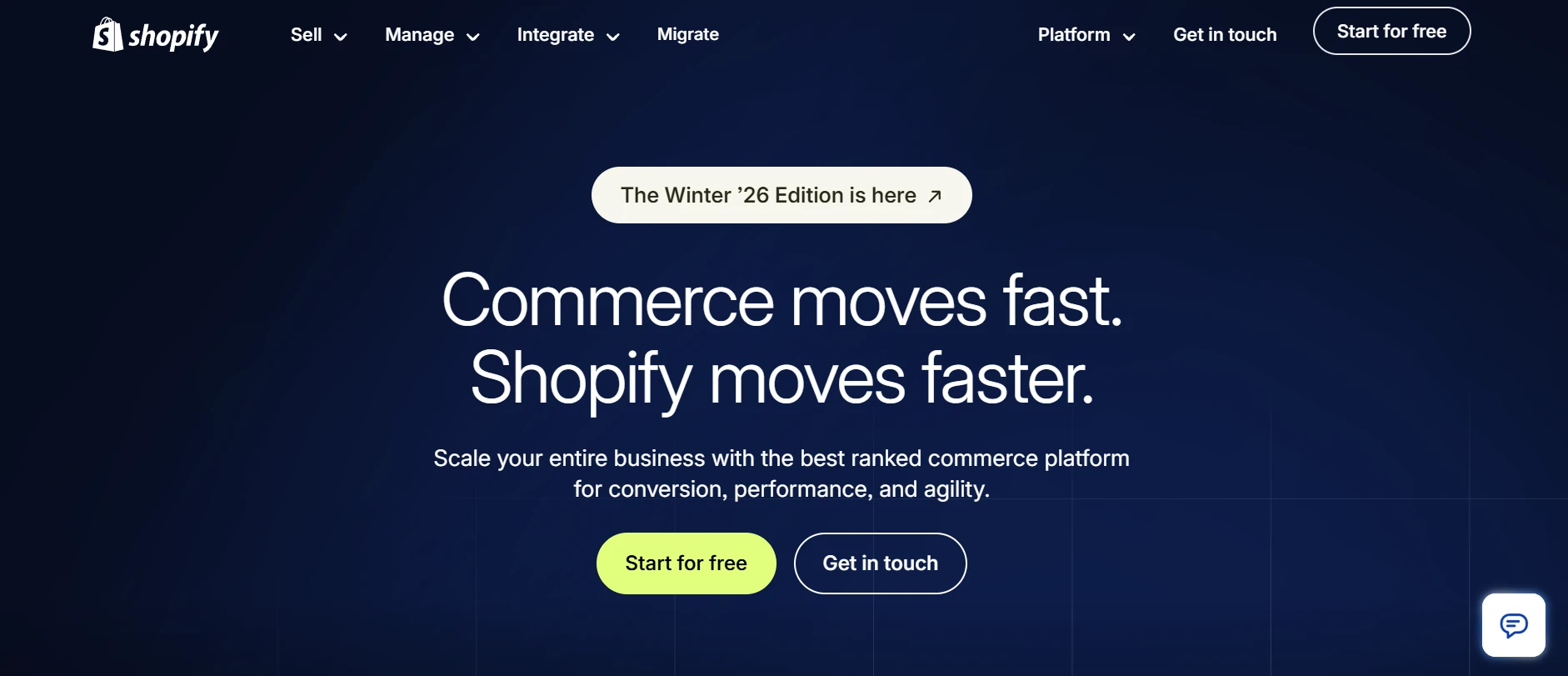
Shopify Plus core features:
- Customizable checkout with extensibility, UI apps, conditional logic, and segment-based branding.
- Automation with Shopify Flow across orders, customers, inventory, and apps.
- Launchpad for scheduling campaigns, drops, and flash sales.
- Centralized multi-store and international management (currencies, languages).
- Built-in B2B tools such as company accounts, price lists, payment terms, purchase lists, and B2B portals.
- Unlimited staff accounts with granular permissions.
What really differentiates Shopify Plus is how predictable enterprise growth feels on the platform. Features like high checkout capacity, advanced automation, and global storefront management are already built in. Thus, you can expand into new markets or B2B channels without rebuilding your core infrastructure.
If you want a detailed breakdown of feature and cost differences, you can read our full comparison between commercetools and Shopify.
2. BigCommerce: Open SaaS Balance
Best for: Mid-market and enterprise teams that need more built-in flexibility than a closed SaaS platform but are not ready to commit to the full complexity of a composable stack.
If you’re exploring commercetools but feel that a fully composable stack might be too complex, BigCommerce is often one of the first platforms to consider. It’s a SaaS platform built for mid-market and enterprise brands that want flexibility without rebuilding core commerce features from scratch.
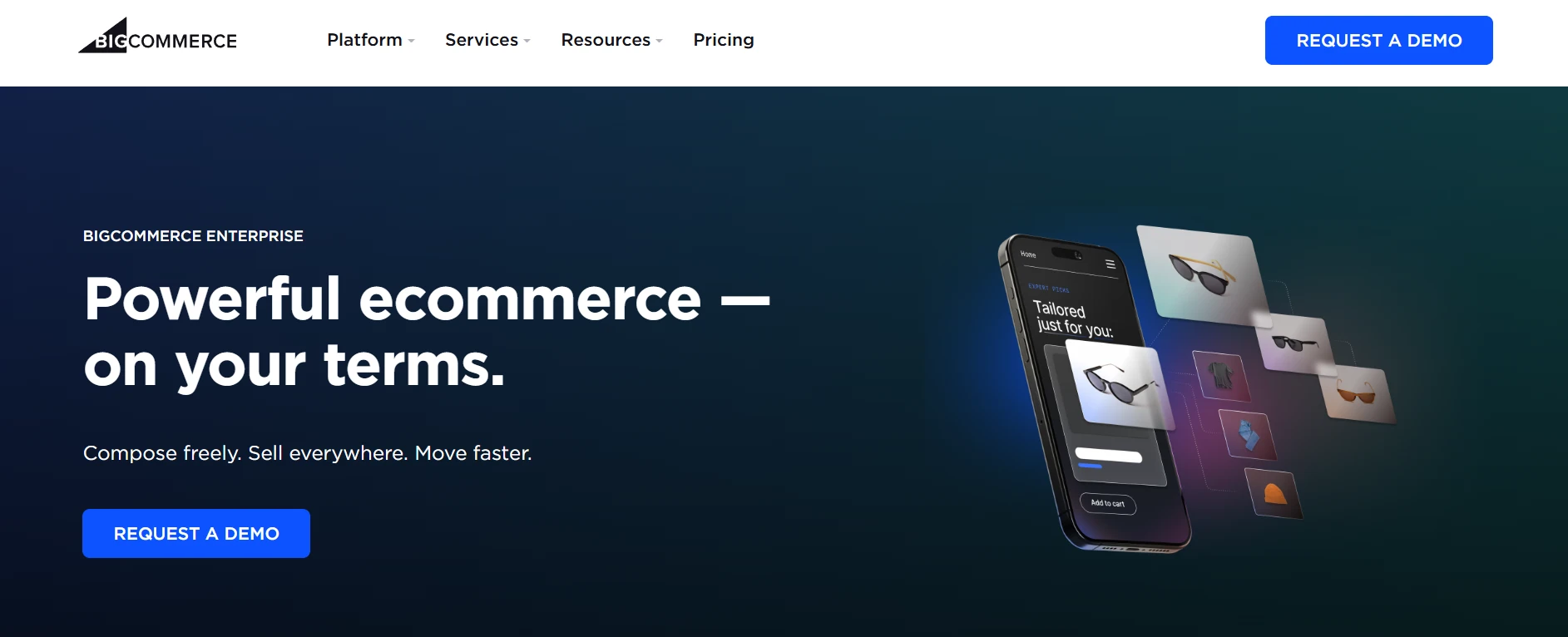
Pricing ranges from about $39 to $399 per month for standard plans, while Enterprise pricing is custom-based on revenue and needs.
BigCommerce core features:
- Flexible product and catalog management with variants, custom fields, and advanced pricing rules.
- Optimized checkout with wide payment support, coupons, gift cards, and cart recovery.
- Built-in SEO and marketing tools, plus integrations with email and automation platforms.
- Omnichannel selling across marketplaces and social channels from one backend.
- Native B2B features like customer groups, price lists, quotes, and restricted catalogs.
- Headless-ready, API-first architecture for custom frontends and system integrations.
Compared to commercetools, BigCommerce offers more built-in business functionality and more architectural flexibility than Shopify Plus. That middle ground makes it attractive for scaling teams that want control, but not the overhead of managing a fully composable stack.
If BigCommerce stands out as a more scalable alternative, you can always migrate with LitExtension. We ensure a smooth, accurate transfer so you can switch platforms without disrupting your business.
BigCommerce Migration Made Easy With LitExtension!
LitExtension offers great migration solutions that help you transfer your data from the current eCommerce platform to a new one accurately, painlessly with utmost security.
3. Adobe Commerce: Customization-Heavy Commerce Engine
Best for: Enterprises with complex multi-brand, multi-region, or B2B requirements that need deep control over catalog structures, pricing logic, and internal system integrations.
When your business model involves complex pricing structures, multiple brands, or deep integration with internal systems, we highly recommend Adobe Commerce. Built on Magento’s open-source foundation, it can be deployed in the cloud or on-premise and supports both traditional and headless architectures.

Pricing is custom and typically starts in the tens of thousands of dollars per year, depending on revenue and infrastructure needs. Comparing Adobe Commerce vs commercetools, the total cost of ownership depends heavily on how much customization and in-house development you plan to maintain long-term.
Adobe Commerce core features:
- Advanced multi-store and global management with region-specific catalogs, currencies, taxes, and pricing rules.
- Visual Page Builder with content staging and reusable blocks for marketer-friendly updates.
- AI-powered search, product recommendations, segmentation, and personalization.
- Strong B2B buyer tools such as company hierarchies, role-based permissions, pay-on-account, and self-service portals.
- Flexible architecture with extensible core, REST/GraphQL APIs, headless support, multi-source inventory, and deep Adobe/ERP/CRM integrations.
Adobe Commerce centralizes much of its customization within a powerful core engine. You can deeply tailor pricing logic, catalog structures, and B2B workflows without assembling multiple external services.
Among enterprise-level, this platform tends to appeal most to businesses that prioritize control over simplicity.
4. Oracle Commerce: Enterprise Stack Commerce
Best for: Large organizations already running Oracle ERP or Oracle CX that need commerce embedded natively within their existing enterprise ecosystem.
Next is Oracle Commerce, an enterprise eCommerce platform built for large and complex B2B, B2C, and hybrid models. It is commonly adopted by organizations already using Oracle ERP or CX, as it provides a cloud-based commerce solution with deep integration across the Oracle ecosystem.
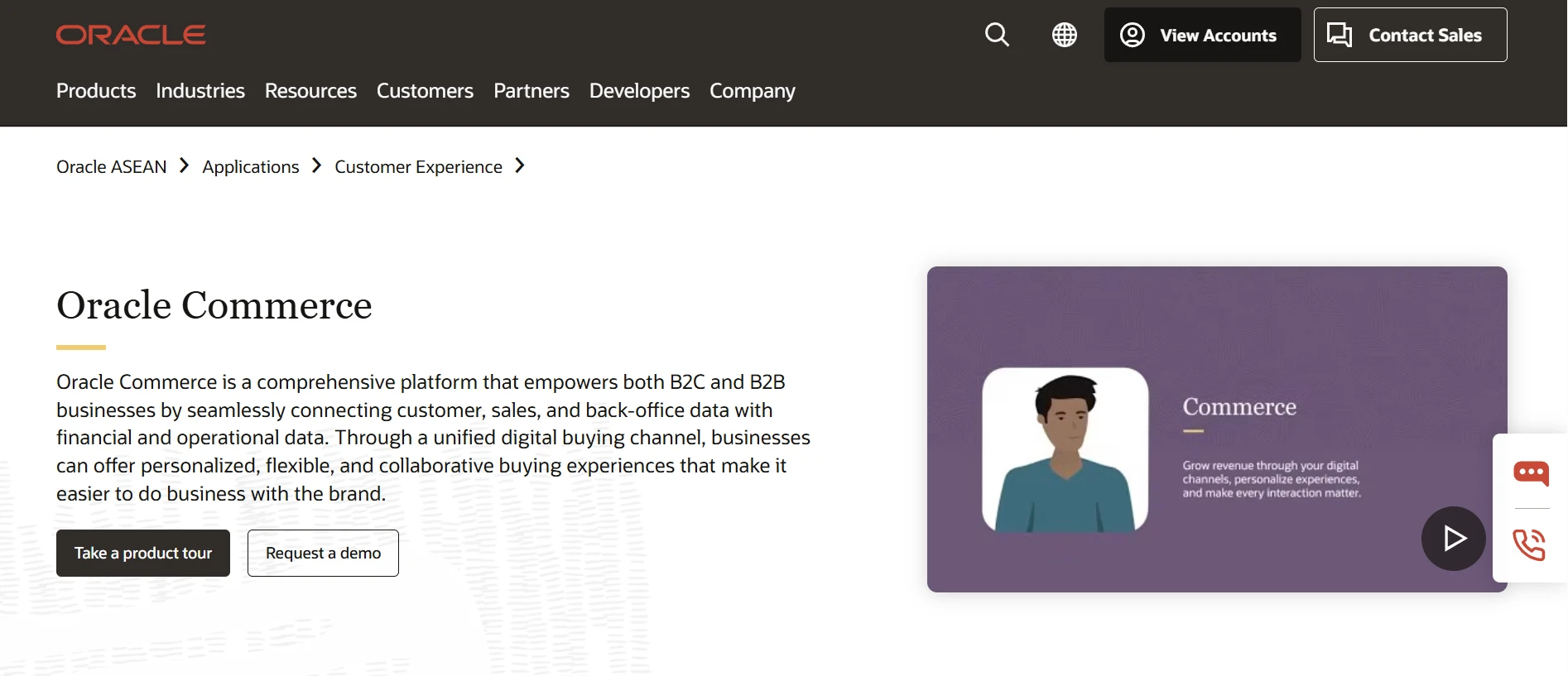
Similar to the competitors of commercetools mentioned above, Oracle Commerce follows a fully enterprise licensing model. In most cases, the investment level is significantly higher than standard SaaS platforms, especially once implementation and integration services are included.
Oracle Commerce core features:
- Unified B2B and B2C commerce with account-specific pricing, catalogs, and approval workflows.
- Advanced catalog and merchandising with rich product data, faceted search, and flexible order types (pre-order, back-order, BOPIS).
- Strong B2B capabilities such as account hierarchies, purchase lists, volume pricing, and procurement integrations.
- Personalization and rule-based promotions with audience segmentation.
- Multi-site and global management from a single admin.
- Omnichannel fulfillment with real-time, location-based inventory.
- API-first extensibility with deep integration into Oracle ERP, CPQ, and Oracle Cloud CX.
While commercetools separates commerce into modular services, Oracle Commerce keeps pricing logic, approval flows, and operational rules closely tied to ERP and finance systems. As a result, it operates more like a traditional enterprise stack, where commerce is embedded within broader business systems rather than built as an independent layer.
For a deeper analysis of architecture, cost, and implementation differences, you can explore our detailed commercetools vs Oracle Commerce comparison guide.
5. Salesforce Agentforce Commerce: CRM-Centric Commerce Platform
Best for: Organizations already operating within the Salesforce ecosystem that want commerce data tightly connected to CRM, marketing, and customer service workflows.
Salesforce Agentforce Commerce (formerly Commerce Cloud) is a cloud-native commerce platform built on Salesforce’s multi-tenant SaaS architecture. It supports both B2C and B2B models and connects directly with Salesforce CRM, Marketing Cloud, and Service Cloud. If you are already working inside Salesforce, this platform lets you extend customer data straight into your commerce operations.
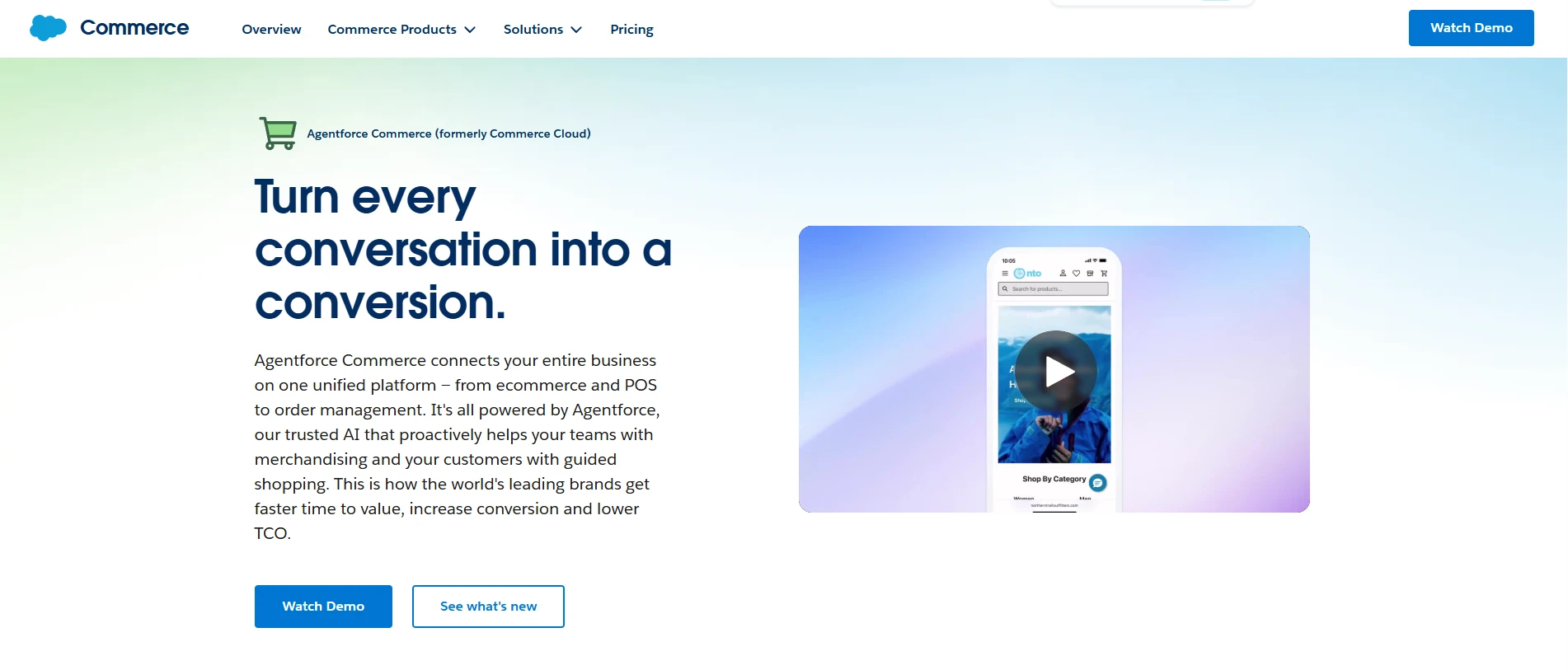
In terms of investment, Salesforce Commerce is usually packaged as part of a broader Salesforce agreement. What you pay often depends on how many clouds and services you activate. So instead of thinking about monthly platform fees alone, you’re evaluating the total Salesforce ecosystem footprint.
Salesforce Commerce Cloud core features:
- Omnichannel commerce across web, mobile, social, and in-store.
- Built-in order management with inventory visibility and fulfillment coordination.
- Centralized journey orchestration across touchpoints.
- Einstein-powered optimization for search, recommendations, and merchandising.
- Enterprise scalability with a strong global partner ecosystem.
Salesforce Commerce is best understood as part of a broader customer engagement strategy. Rather than focusing purely on modular architecture, it emphasizes tight integration with CRM data and cross-cloud workflows. This makes it particularly suitable for organizations that want commerce tightly aligned with sales, marketing, and customer service operations.
The trade-off is that changes often depend on the broader Salesforce setup, so updates may require coordination across multiple clouds rather than only the commerce layer.
6. SAP Commerce Cloud: ERP-Driven Commerce Operations
Best for: Enterprises running SAP systems that need commerce tightly aligned with ERP, supply chain, and procurement operations rather than managed as a separate layer.
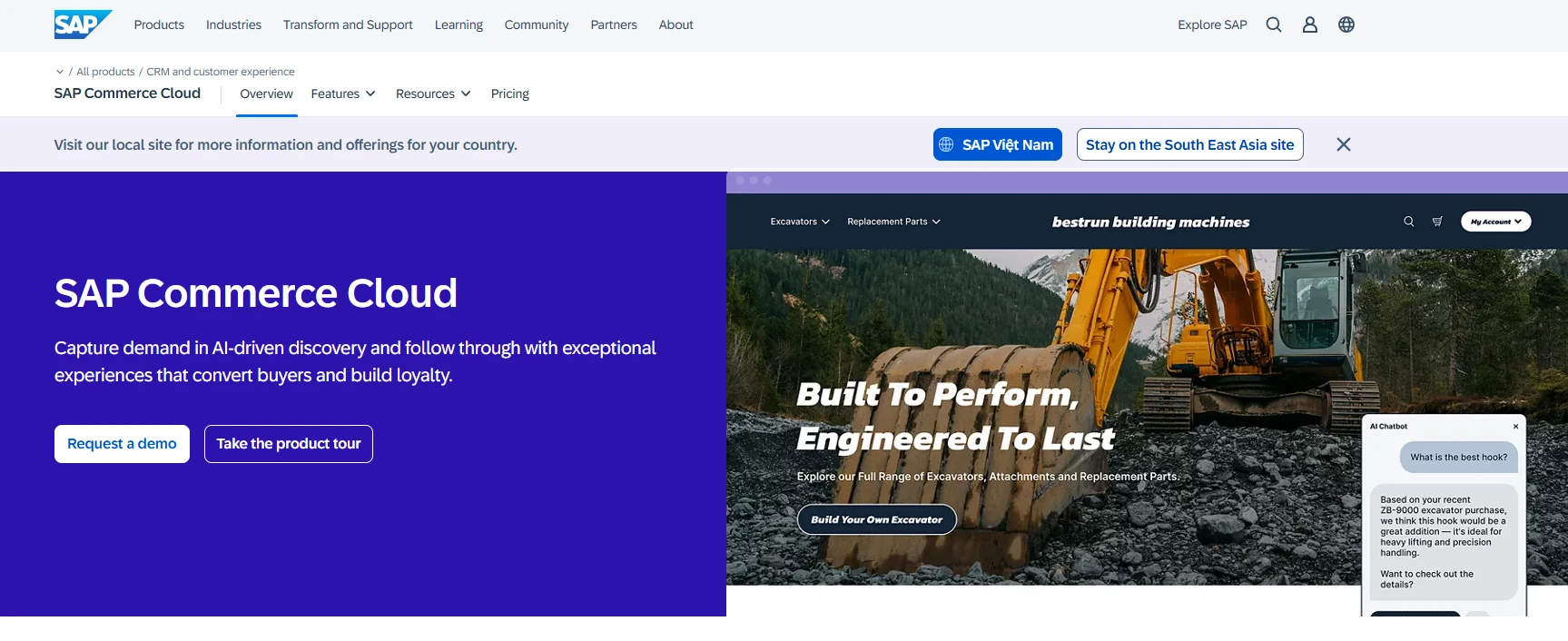
Different from the mentioned commercetools alternatives, SAP Commerce Cloud focuses more on operations. Built on SAP’s enterprise foundation (formerly Hybris), it integrates closely with ERP, supply chain, and procurement systems. The goal is to keep commerce aligned with backend processes rather than run as a separate layer.
SAP Commerce Cloud core functionalities:
- Unified B2B and B2C commerce on a single platform.
- Deep integration with SAP ERP, supply chain, and finance systems.
- Advanced product content and complex catalog management.
- Configurable pricing, contracts, and approval workflows.
- Multi-site and global storefront support.
- Enterprise scalability and security.
With commercetools, commerce logic sits at the center, and customer data connects around it. Meanwhile, Salesforce puts the customer record as the core, and commerce becomes one layer within a broader CRM ecosystem. Rather than optimizing APIs and product services first, Salesforce Commerce prioritizes customer lifecycle visibility.
At the same time, that depth requires structured planning and experienced SAP specialists. This leads to changes and customizations tend to move more slowly than on lighter SaaS platforms.
7. Spryker: Modular Marketplace Commerce
Best for: Enterprises building complex B2B platforms or multi-merchant marketplaces that require a composable, modular architecture with strong developer control.
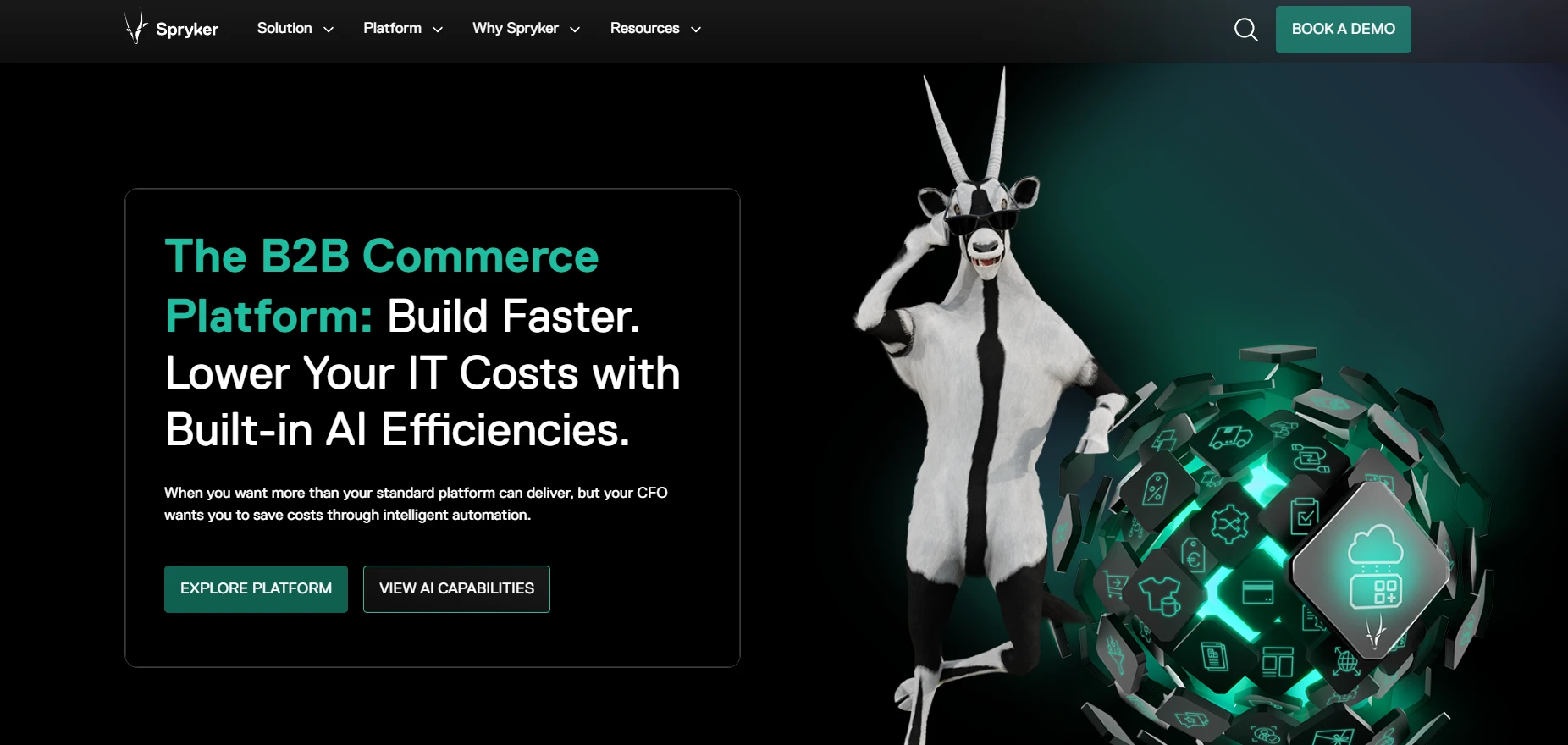
Moving on to our commercetools alternatives list, Spryker is a composable, API-first platform based on a modular architecture. You can combine different components to match your own business model. It supports headless builds and works well for marketplaces, B2B setups, or hybrid commerce models.
Spryker core functionalities:
- Composable architecture where you assemble packaged business capabilities to match B2B, B2C, marketplace, or subscription models.
- Headless, API-first design that supports custom web, app, POS, or other front ends.
- Strong enterprise marketplace features with multi-merchant management and commission logic.
- Advanced B2B support with complex pricing, account roles, and ordering workflows.
- Cloud-native PaaS model on AWS with scalable microservices and incremental updates.
- Broad integration ecosystem with connectors for payment, search, marketing, PIM, ERP, plus built-in analytics dashboards.
Spryker shares a composable approach similar to commercetools, but it is more structured around marketplace and complex B2B models. Instead of starting purely from low-level APIs, it offers modular building blocks tailored for multi-merchant and platform-based commerce.
8. Saleor: Modular Marketplace Commerce
Best for: Developer-led teams that want full architectural control, a GraphQL-native backend, and a cost structure tied to infrastructure rather than revenue-based licensing.
Not every business looking at commercetools alternatives wants a large enterprise suite. Saleor takes a much lighter approach. It started as an open-source project and is built around Python and GraphQL.
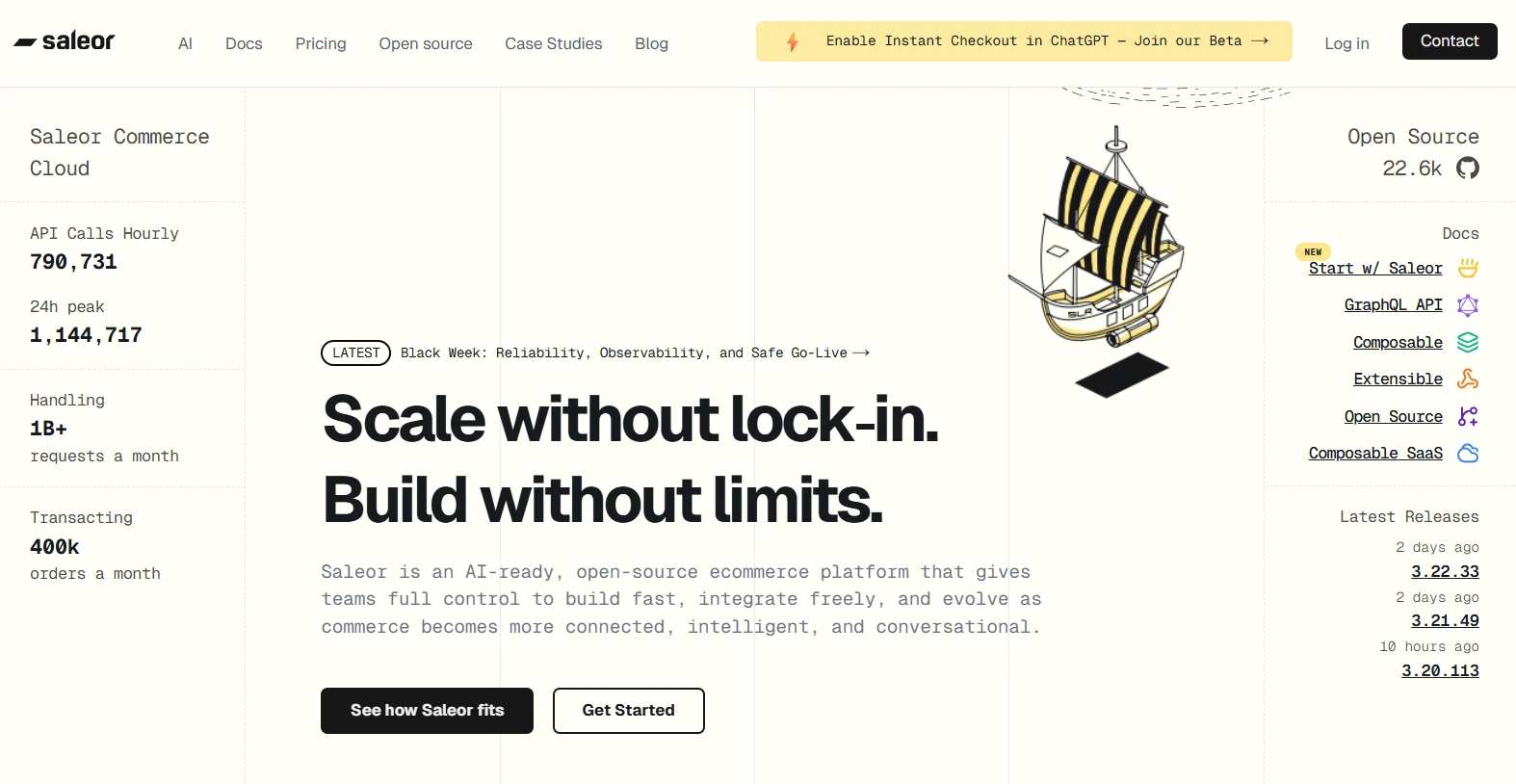
The platform is headless by design, which means the frontend and backend are completely separate from the beginning. You can self-host it for full control or use Saleor Cloud for a managed setup.
Saleor core features:
- Flexible product modeling for large and complex catalogs.
- Advanced cart and checkout with split payments and return handling.
- Native multichannel setup with per-channel pricing, currency, stock, and visibility control.
- Built-in promotion tools such as vouchers, sales, gift cards, and cart rules.
- Extensible payment orchestration supporting multiple gateways.
- Modern admin dashboard with UI extensions and app support.
- Cloud deployment options with autoscaling, sandbox environments, and no API rate limits.
In the long run, Saleor is definitely the more cost-efficient option compared to commercetools. Instead of revenue-based enterprise licensing, your expenses are more closely tied to infrastructure and development choices, which gives you clearer control over how the budget is allocated. For businesses that want to avoid escalating platform fees as revenue grows, this structure can be appealing.
9. Elastic Path: Composable Core Commerce Engine
Best for: Enterprises with advanced product catalog complexity and sophisticated pricing requirements that need a composable, API-first platform centered on monetization logic.
Last but not least on our commercetools alternatives list is Elastic Path. This platform takes a composable, API-first approach to commerce. Instead of positioning as an all-in-one ecosystem, Elastic Path centers on transaction logic, pricing flexibility, and integration freedom. Its pricing follows an enterprise model and is usually tailored based on usage and implementation scope.
Elastic Path core features:
- Product Experience Manager (PXM) to centralize product data and create flexible catalogs, assortments, and price books across regions or channels.
- Advanced catalog management with virtual catalogs, flexible hierarchies, bundles, and multi-store support.
- Powerful pricing and promotions engine with multi-currency, tiered pricing, coupons, and rule-based offers.
- Strong search and discovery with filtered navigation and SEO-friendly structures.
- End-to-end order and customer lifecycle management, from cart to returns.
- Open and extensible architecture with APIs and integration tools for ERP, CRM, and enterprise systems.
When comparing Elastic Path with commercetools competitors, both platforms follow a composable and API-first philosophy. However, Elastic Path often feels more opinionated around product and pricing orchestration. Its approach to managing catalogs and monetization logic can be more centralized, which may reduce the need to stitch together multiple services for core commerce functions.
For businesses evaluating serious commercetools alternatives, Elastic Path stands out among commercetools alternatives as a viable option when product complexity and pricing flexibility are top priorities.
10. OroCommerce: B2B-first Open-source Commerce
Best for: Mid-market and enterprise B2B organizations that need purpose-built account management, quote-to-order workflows, and customer-specific pricing without heavy custom development.
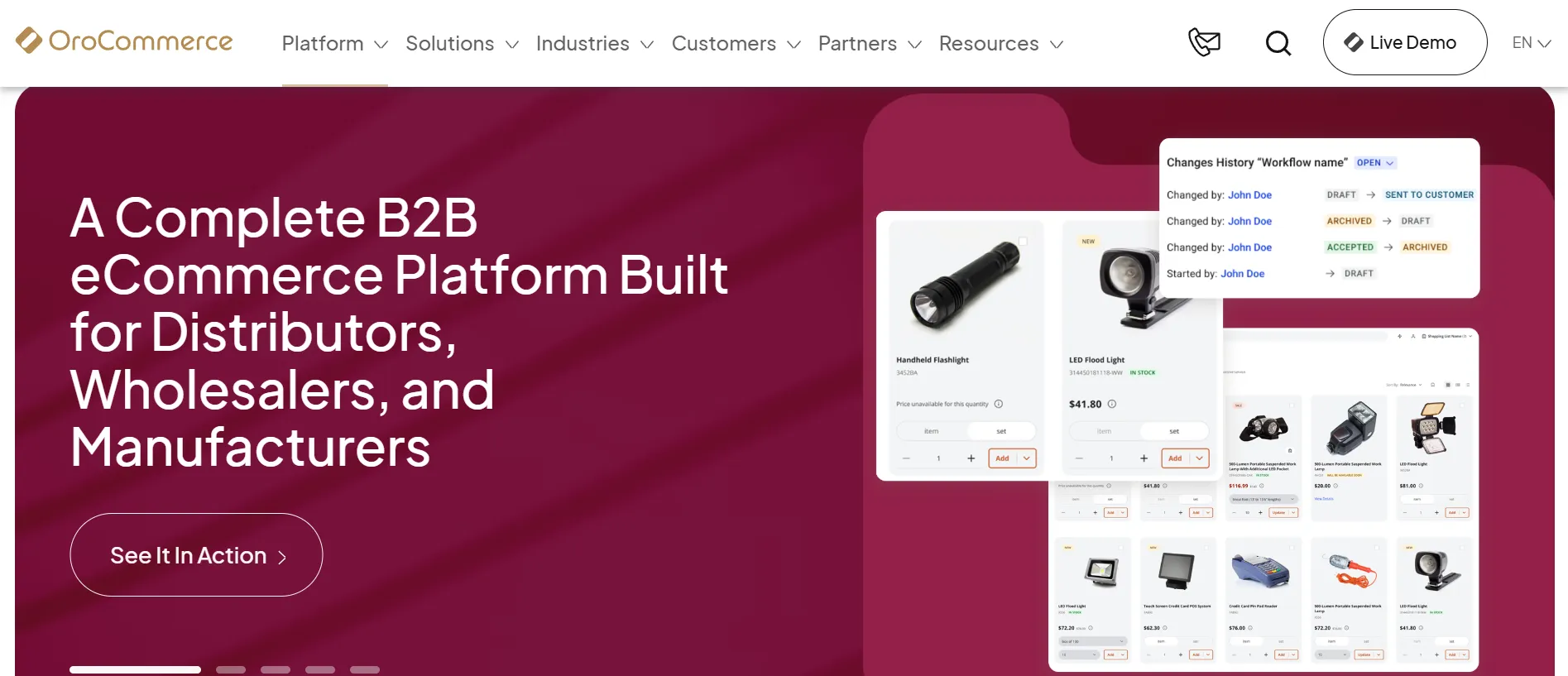
Rounding out the open-source options on this commercetools alternatives list is OroCommerce, a platform built specifically for B2B and complex sales models rather than general retail. It started as an open-source project and ships with a deep set of B2B features out of the box, so you spend less time custom-building the workflows that B2B buyers expect. You can self-host it for full control or run it through OroCloud for a managed deployment.
OroCommerce core features:
- Comprehensive B2B functionality including corporate accounts, multi-organization support, and quote-to-order workflows.
- Customer-specific catalogs, personalized price lists, and tiered pricing for negotiated B2B deals.
- Open-source architecture with a flexible API for deep customization and system extension.
- Multi-website management from a single instance, covering multiple brands or regional markets.
- Self-service buyer portals that deliver a B2C-like experience to B2B customers.
- Built-in CRM with seamless integration into ERP, PIM, and other business systems.
Unlike commercetools, which gives you low-level commerce APIs and expects you to assemble the B2B logic yourself, OroCommerce arrives with that logic already in place. As a result, it tends to suit mid-market and enterprise B2B organizations that want a customizable, CRM-driven foundation without building every account hierarchy and approval flow from scratch. For businesses where B2B selling is the core model, this makes OroCommerce one of the more practical commercetools alternatives to evaluate.
Why Should You Look for commercetools Alternatives?
commercetools is built around a pure composable philosophy. It gives you core commerce services through APIs and lets you assemble the rest of the stack yourself. For enterprises that want full architectural control, this model can work well.
However, that same philosophy creates trade-offs that not every business is comfortable with:
- Significant development resources and cost. The total cost of ownership of commercetools can reach mid- to high-six figures per year when licensing, integrations, infrastructure, and ongoing development are included.
- High complexity for non-technical teams. It lacks drag-and-drop tools. Non-technical teams often rely heavily on developers for changes.
- Limited native B2B and pricing depth. Advanced account hierarchies or complex tiered pricing may require custom work.
- No built-in frontend. You must build and host your own storefront, as commercetools manages backend commerce services only.
- Integration and data mapping challenges. ERP connections can be complex. Data mapping often requires careful planning and custom logic.
- Admin interface limitations. Slow performance in the Merchant Center and Promotion management can feel constrained.
None of these points makes commercetools a weak platform. They reflect its pure composable design. However, depending on your needs, you may prefer commerce alternatives with better features.
commercetools Alternatives: FAQs
What are the best commercetools alternatives?
Top commercetools alternatives include Shopify Plus, BigCommerce, Adobe Commerce, Elastic Path, Spryker, and Saleor. The best option depends on whether you prioritize composability, cost control, ecosystem strength, or speed to market.
What is the difference between commercetools and BigCommerce?
Commercetools is fully composable and API-first. You build your stack by connecting different services. In contrast, BigCommerce is structured SaaS. It comes with many core features ready to use, which makes setup and daily operations easier.
Which is better, Shopify or commercetools for small business?
Shopify is better for most small businesses. It’s easier to use, faster to launch, and doesn’t require a developer team. Meanwhile, commercetools is more suitable for large enterprises with custom requirements and technical resources.
Which platforms are closest to commercetools in API-first, headless capabilities?
The closest in architecture are Elastic Path, Spryker, and Saleor. All follow API-first or composable models.
How do commercetools alternatives compare on performance at scale?
Most enterprise platforms like commercetools, Elastic Path, and Spryker are built for high scalability. Managed SaaS platforms like Shopify Plus and BigCommerce also handle large traffic well but offer less infrastructure control. Performance depends largely on implementation quality and architecture decisions.
Conclusion
That wraps up the best commercetools alternatives we’ve found worth considering. We hope this guide helps you narrow down your options. The right choice depends on your business model, technical resources, budget expectations, and long-term growth strategy.
For more eCommerce insights, explore our latest blog posts and join our community group to stay updated with other folks!

