Are you thinking about using BigCommerce or Wix to build your own online store? You’ve come to the right place! During my years working in the eCommerce industry, I’ve consulted hundreds of businesses to help them decide between Wix vs BigCommerce.
Therefore, in this article, I will provide all of the information you need to make an informed decision between Wix and BigCommerce, including:
- Pricing
- Ease of use
- Design & templates
- Apps & integration
- eCommerce features
- Marketing features
- Customer support
- Security
Let’s take a look!
Wix vs BigCommerce: Which Is Better?
To be honest, it’s very hard to choose the best one out of Wix vs BigCommerce. This decision is heavily influenced by several factors, like the scale of your business, budget, and your specific requirements.
Based on my experience, here are my conclusions on the two platforms.
BigCommerce is the go-to platform for medium and large businesses due to its scalability and powerful eCommerce features, which can aid in the expansion of your company. Thanks to their capable service and support staff, you will effectively manage your online business. BigCommerce also supports you in overcoming challenges and gives you access to a wide range of eCommerce features and marketing tools. Just feel free to browse other BigCommerce alternatives for more insights.
Wix is ideal for new users, creatives, and small businesses. Wix offers 2,000+ free templates, making it easy for users to choose the best one for their own website. Additionally, it provides 24/7 customer care, excellent security, and a variety of marketing tools for everyone, including non-technical users.
#1. Pricing (Wix wins)
The Verdict:
When it comes to Wix vs BigCommerce pricing, Wix has more advantages. This platform provides a free plan, a cheaper entry plan, and no sales limits on its plans. Meanwhile, BigCommerce automatically moves you to a higher plan once your yearly sales pass your plan’s limit.
One of the most important things to consider when choosing platforms is pricing, so let’s start with BigCommerce vs Wix in terms of pricing.
Currently, BigCommerce offers four pricing plans, and each one is tied to your online sales over the last 12 months:
- Core: $39/month, or $29/month billed yearly (up to $30K in yearly sales)
- Growth: $105/month, or $79/month billed yearly (up to $100K in yearly sales)
- Scale: $399/month, or $299/month billed yearly
- Performance: custom pricing, starting from $1,499/month billed yearly
Once your sales pass a plan’s limit, BigCommerce automatically moves you to the next plan. You can also try the platform with a 15-day free trial, no credit card required.
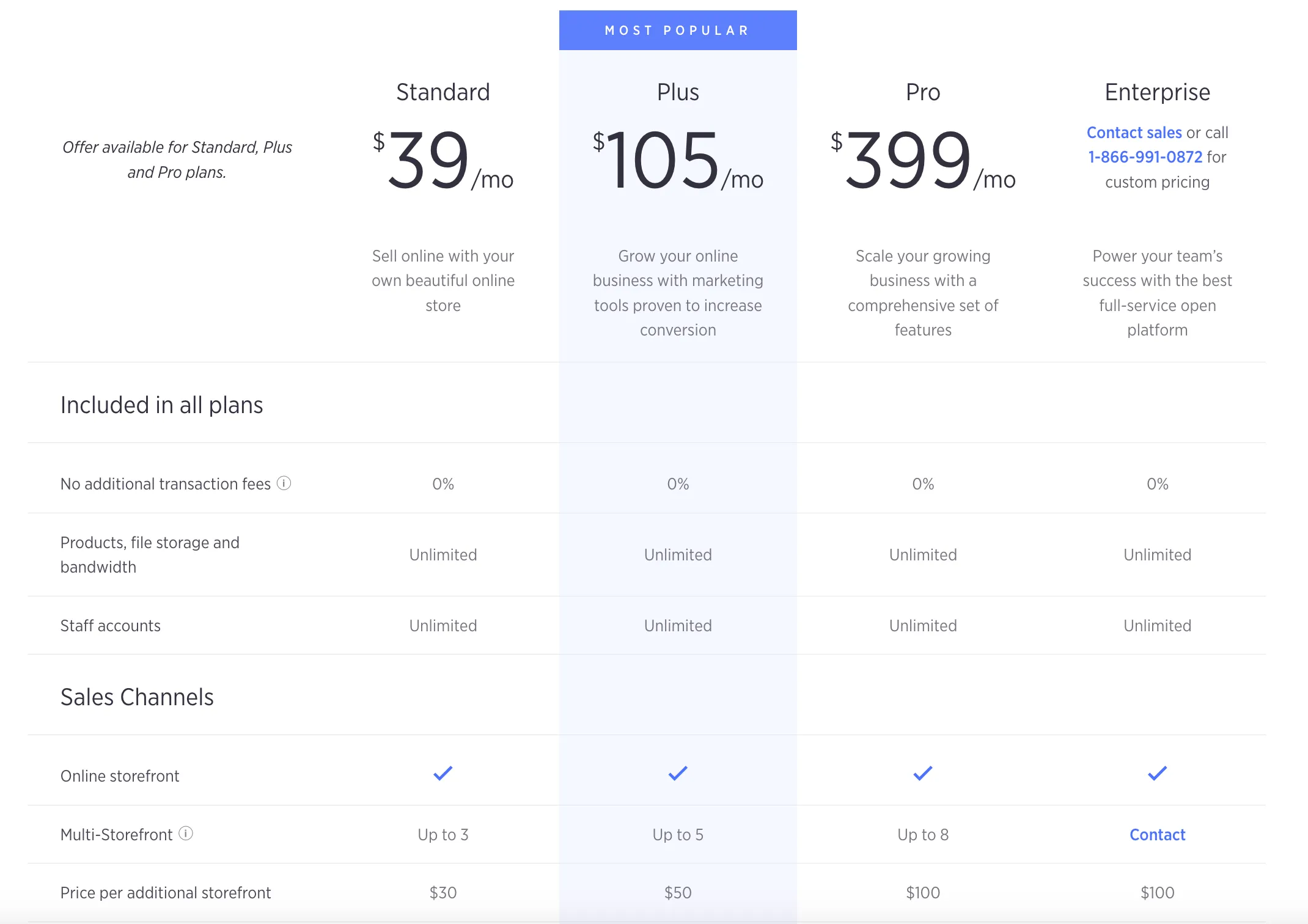
After creating a store with BigCommerce, you will have a fully responsive site, a one-page checkout, digital wallets, basic SEO tools, and thorough analytics, regardless of the plan you select. On top of that, BigCommerce charges no extra fee when you use one of its embedded payment providers. If you choose another provider, a 0.6–2% fee applies, depending on your plan.
Like BigCommerce, Wix offers four premium pricing tiers, ranging from $17 to $159 per month (billed yearly). Each plan offers a different set of features that can assist businesses of all sizes on their eCommerce journey. Note that the cheapest Light plan can’t accept online payments, so you’ll need at least the Core plan ($29/month) to sell online.

What’s more, Wix also comes with a free pricing plan. This tier allows you to use the platform for free but with restrictions. You’ll only receive a Wix address with Wix ads, no online payments, and only 500MB of storage and 1GB of bandwidth. With that being said, I think this tier will be the perfect solution for those who want to test out the water before committing long-term.
#2. Ease of Use (Wix wins)
The Verdict:
Wix is easier to use than BigCommerce. Frankly speaking, I must side with Wix in this Wix vs BigCommerce comparison in ease of use. This platform is extremely easy to navigate, and it’s suitable for beginners and small businesses.
When selecting an eCommerce platform, I believe the ease of use should be a priority, especially for those with no technical knowledge. Luckily, from my observation, BigCommerce and Wix are both simple website builders that can help you create an eCommerce site in a short period of time.
First, let’s talk about BigCommerce. It is a fully hosted platform, so you don’t need to install any software or set up hosting to get started.

BigCommerce comes with a simple and navigable user interface, ensuring that you won’t have to go back and forth while building your online presence. On top of that, this platform presents a step-by-step setup guide for your online store. This guideline will help you stay on the right track and avoid any confusion.
However, I must say that this platform employs quite a number of technical terms that non-technical people may find difficult to understand. If you’re not tech-savvy, you might need a lot of assistance from Google to understand all the jargon happening along the way.
Like BigCommerce, Wix also offers the most flexibility for website builders. You can basically drop anything wherever you want using this drag-and-drop site builder.
Wix may initially seem overwhelming and complex to a beginner in website design. To assist you with the initial stages of creating your online store, Wix also provides the Wix AI Website Builder, which replaced the old Wix ADI, to create a first version of your site from a few questions. You can then edit it freely in the Wix Editor.

#3. Design & Templates (A tie)
The Verdict:
In terms of Design & Templates, I must say it’s a tie in this Wix vs BigCommerce round. Both of them offer lots of templates for you to select from and let developers add custom code for deeper personalization.
From my observation, your first impression is important to attract customers. That’s why when comparing Wix vs BigCommerce, let’s not forget about Design & Templates.
Currently, BigCommerce has 230+ free and paid themes available in their BigCommerce theme store. You will have plenty of freedom to select the most suitable template from these well-made themes.
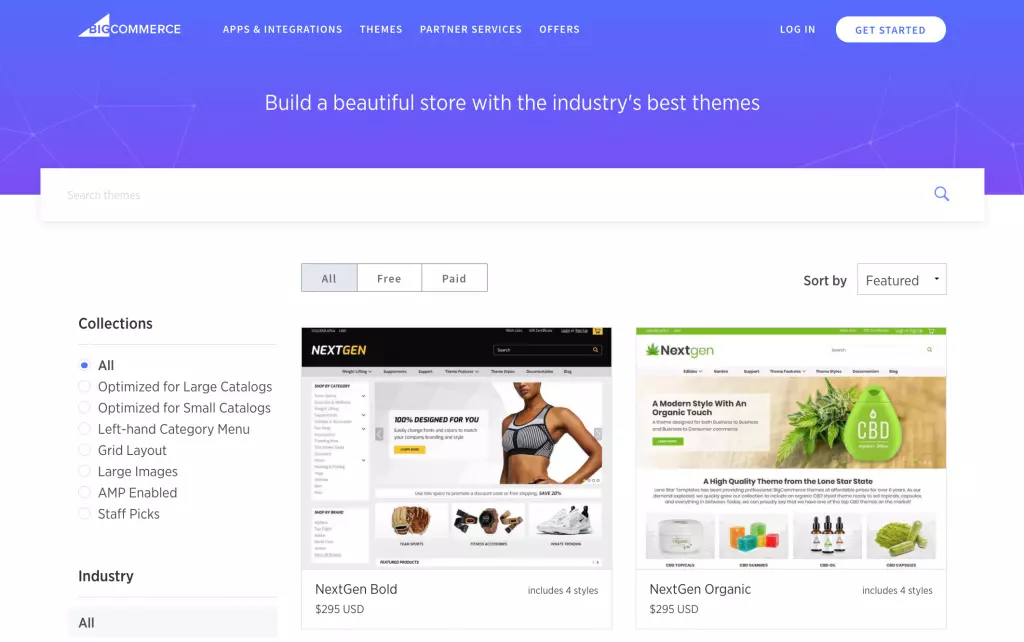
This platform lets you personalize the theme for your store. You can express your creativity with things like colors, fonts, carousels, etc., by using the “Style Editor” feature. Furthermore, it gives you immediate control over a wide range of options, including background colors, logo placement, the number of featured products, navigation arrow colors, and more.
The best part? All these things can be done with no coding knowledge required! But if you are a developer and confident in your coding skills, feel free to update your theme by working with the CSS and raw HTML.
In the meantime, you can choose from 2,000+ free Wix templates. These appealing templates cover a variety of topics and are simple to alter for marketing purposes. You will undoubtedly find the ideal and appropriate template for your store, regardless of the goods or services you plan to offer.
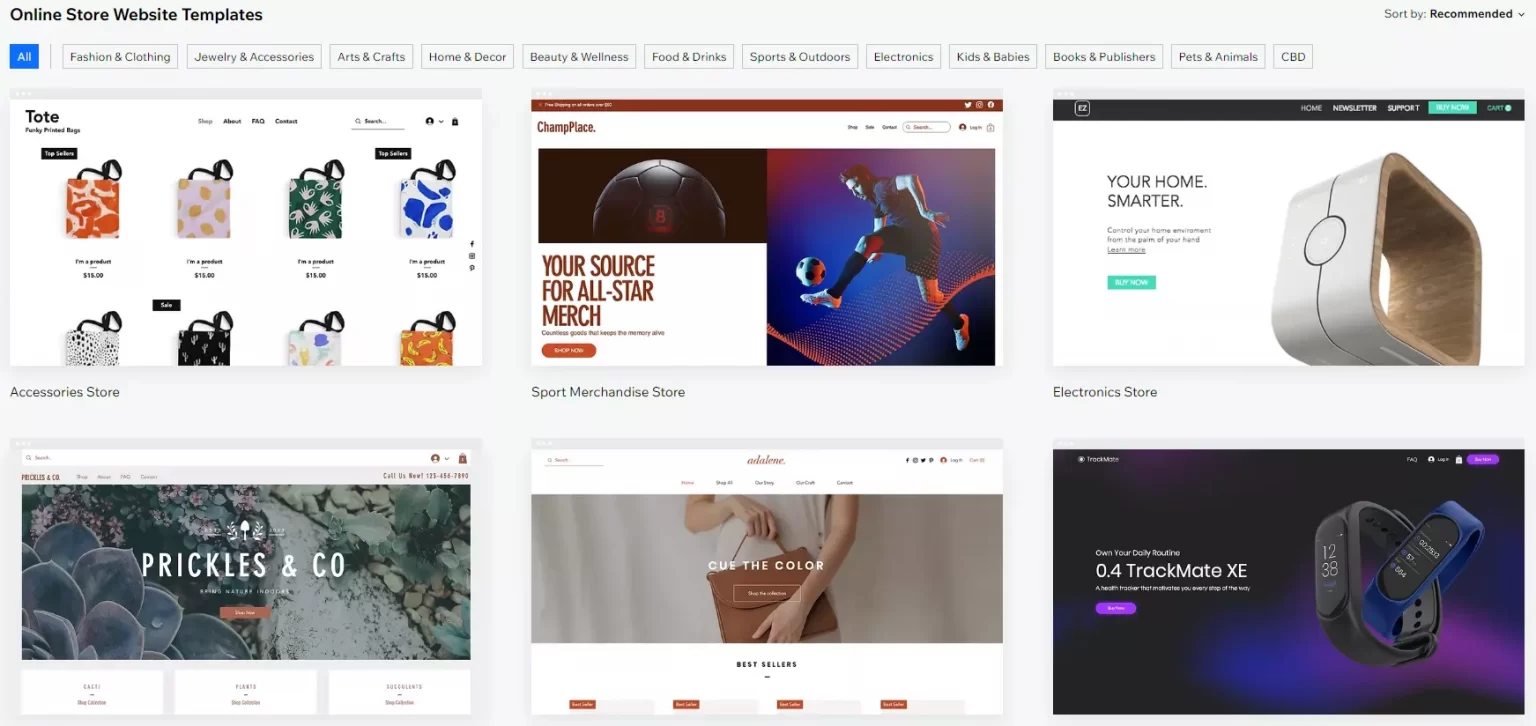
With so many templates available, it may be difficult for you to select a stunning one for your website. Wix offers the Wix AI Website Builder to set up a storefront in just a few simple steps, while agencies and advanced users can use Wix Studio (which replaced Editor X) for more design control.
However, there is a drawback in the form of unchangeable Wix templates. It would be annoying if you want to rebrand your store because whatever you choose in the beginning will follow you through to the end.
#4. App & Integrations (BigCommerce wins)
The Verdict:
In terms of Wix vs BigCommerce apps, BigCommerce is the winner here. BigCommerce allows you to connect to numerous apps and integrate with multiple social media platforms and marketplaces. Although Wix has fewer app and integration options, it still assists users in developing their businesses.
Adding apps and integrations can supplement a limited set of features in any eCommerce platform. Let’s compare the apps and integrations Wix vs BigCommerce could offer in the following sections.
In fact, BigCommerce offers a wide selection of apps to help you streamline your business. Currently, there are more than 1,200 apps on the BigCommerce App Marketplace. These apps cover 21 categories like Accounting & Tax, Marketing, and Shipping & Fulfillment, so you can find the best extensions for your store.

Moreover, BigCommerce allows you to sell products on Facebook, Instagram, TikTok, Pinterest, Google Shopping, Amazon, eBay, and Walmart. If you want to grow your business beyond the border, please visit LitCommerce to learn more about integrating with other platforms.
On the other hand, Wix does not excel at apps and integrations. Wix App Market currently has 500+ web apps divided into 6 main categories: marketing, selling online, services & events, media & content, design elements, and communication. They also categorize the apps based on their intended use, such as lead collection or traffic analysis.

Wix Marketing Integrations allow you to connect your website to tools such as Google Analytics, Google Ads, and Facebook Pixel to begin measuring your online campaigns and collecting valuable data.
Outgrowing Wix? Move to BigCommerce with Ease
LitExtension Automated Migration Tool transfers your products, customers, and orders from Wix to BigCommerce – fast, accurate, and hassle-free.
#5. eCommerce Features (BigCommerce wins)
The Verdict:
When it comes to Wix vs BigCommerce comparison in terms of eCommerce features, BigCommerce is the winner here. This platform has an excellent inventory management system and 65+ payment gateways, with no extra fees on its embedded providers. Wix has fewer advanced features, but it still provides users with the necessary options.
There’s no arguing that when comparing Wix vs BigCommerce, we should not skip their eCommerce features because these functions will be the heart of your online store.
Inventory management
BigCommerce Inventory Management
Luckily, BigCommerce includes a robust inventory management system that eliminates the need for additional software. Among its features are stock tracking by SKU, low stock notifications, and individual or bulk stock level changes. To further expand functionality, you can combine BigCommerce with third-party inventory management applications.
With Wix, you can integrate your preferred inventory management systems with your store using open APIs. Then, everything will be seamlessly and continuously synchronized. As a result, you can both manually set the inventory status for each product and automatically track the quantity of a particular product in stock.
Moreover, if you add a different SKU number to each of the variants of a product, such as a different color or size, you can track inventory separately.
Payment gateways
With BigCommerce, you have access to over 65 payment gateways that are already integrated. Big names in the payment processor market like PayPal, Amazon Pay, and Apple Pay are on the list. Even better, BigCommerce charges no platform fee on its embedded payment providers, while other providers come with a 0.6–2% fee depending on your plan.

Customers can pay for purchases on Wix through Wix Payments, PayPal, Stripe, Square, buy now, pay later options like Affirm and Klarna, or even offline (in cash or by bank transfer). Wix Payments, in particular, offers a smoother checkout process.

In terms of fees, Wix doesn’t add a platform fee on top of your sales, but Wix Payments charges a processing fee on every transaction. For example, US card payments cost 2.9% + $0.30, while UK merchants pay 2.1% + £0.20. BigCommerce’s card processing works similarly, starting at 2.89% + $0.29 per transaction.
#6. Marketing Features (A tie)
The Verdict:
Wix vs BigCommerce are quite neck-and-neck in terms of SEO & Marketing. Both of them offer a diversity of marketing tools as well as strong SEO features.
SEO optimization is crucial when running an online business. Let’s examine the SEO and marketing tools differences between Wix and BigCommerce in more detail.
SEO
BigCommerce is known for its good suite of SEO functions. At the same time, it also provides a nice selection of marketing tools to help you advertise your online store.
This improves the user experience on your website, and search engines are also aware of it. To make your blog and information pages more SEO-friendly, you can completely customize them using the administration panel’s access to metadata, header tags, titles, and URLs. Besides, BigCommerce keeps your commerce engine running and gives you a competitive edge with an uptime of 99.99%.

In terms of marketing tools, BigCommerce offers Banners, Coupon Codes & Discounts, Email Marketing, Abandoned Cart Recovery, Google Ads integrations, and Social Media tools. Besides, BigCommerce lets you sync your store data with popular email marketing platforms like Klaviyo, Omnisend, Mailchimp, and ActiveCampaign.
In the setup tabs of Wix, there is a handy tool called the Wix SEO Setup Checklist (formerly SEO Wiz). It builds a step-by-step SEO plan based on your business and keywords, and helps you connect your site to Google.
Furthermore, retailers will have more control and flexibility when it comes to customizing their meta tags, URL slugs, canonical tags, structured data, and other elements.

When it comes to marketing tools, Wix helps you promote online by connecting with social media platforms like Facebook and Instagram. In case you aren’t familiar with its dashboard, Wix AI has come to save your day! All you have to do is set up your Facebook & Instagram ads on your dashboard, and Wix’s AI targeting will find the best audience for you.
Wix offers its users top-notch email services as well. With the help of your newsletter, blog, and live chat interactions, you can draw in a ton of repeat business from devoted clients.
Blogging
On BigCommerce, a basic blog is included by default. Additionally, you don’t need to buy BigCommerce apps to manage content because there is a built-in blogging feature that makes it simple to upload blog posts.
In addition, BigCommerce provides a text editor with drag-and-drop support for embedding pictures and videos, text formatting, HTML markup, and other word-processing features you’ll need to produce fabulous posts.
Wix is better known as a website builder, but its blogging tools are still solid. You can add the Wix Blog for free, although you’ll need a premium plan to remove Wix ads and use your own domain.
Wix Blog is simple to use and has many features that users may find useful. These features include the ability to add images and videos and embed social media content.
#7. Customer Support (A tie)
The Verdict:
Speaking of customer support, BigCommerce and Wix have a number of distinct support methods. Both offer 24/7 help, so they are always available to support you whenever you need it.
The next category that I will cover in this Wix vs BigCommerce battle is customer support. Let’s see which platform can offer better support for you during your eCommerce journey.
BigCommerce provides excellent customer support. All plans come with 24/7 live chat and email support, while 24/7 phone support is included from the Growth plan (it’s a $29/month add-on on Core). Higher plans can also add priority support, and Performance merchants get a dedicated Customer Success Manager.
Additionally, you can also use video tutorials and, even better, the BigCommerce Support Center in addition to those.
Like BigCommerce, Wix also offers fantastic support for users, including a help center, 24/7 chat (AI first, with Customer Care Experts when needed), a 24/7 English callback line, email, a community forum, video tutorials, and an extensive knowledge base.

Wix’s 24/7 customer care is included in every premium plan. If your company needs priority support, you’ll have to contact Wix about its Enterprise solution.
#8. Security (A tie)
The Verdict:
In terms of security, both Wix and BigCommerce are doing a great job of taking you under their wings. Your website will be completely protected thanks to various security features.
Both BigCommerce and Wix are hosted platforms, so they will assist you in handling all security-related tasks. But I don’t think it is fair to skip this category when comparing Wix vs BigCommerce.
All of the websites that BigCommerce hosts are protected by multiple, robust security layers. To safeguard against credit card data breaches, BigCommerce maintains Level 1 PCI DSS compliance, the highest level available.

Intrusion detection and prevention systems, file integrity scanners, perimeter and server-specific firewalls, continuous monitoring, and fraud protection are additional security measures.
Additionally, an SSL certificate for a particular domain or subdomain has been issued by a reliable third party. It confirms that a secure website is properly encrypted, guaranteeing the privacy of all data transmitted between a user and the website.
Users of Wix can rest easy knowing that every Wix website has high-quality security built in. Every Wix site comes with a free SSL certificate, and its checkout is encrypted with HTTPS/TLS to increase security.

Additionally, Wix maintains PCI DSS Level 1 certification and uses TLS 1.2 and above, which means that visitor transactions are completely secure.
Wix’s security team also monitors sites 24/7 and protects them against DDoS attacks. Furthermore, because Wix is a centralized SaaS solution, security updates are handled for you automatically.
Wix vs BigCommerce – FAQs
Is BigCommerce better than Wix?
In the Wix vs BigCommerce debate, BigCommerce is the better choice if you need a stronger eCommerce platform for larger catalogs, advanced product management, multi-storefront selling, B2B features, and scalable online operations.
On the other hand, Wix is better if you want easier website design, more creative control, and a simpler setup for a small business website or a small online store. So, BigCommerce is stronger for serious eCommerce growth, while Wix is easier for design-first users.
How much does BigCommerce cost per month?
BigCommerce pricing starts at $39/month for the Core plan, or $29/month when billed annually. The Growth plan costs $105/month, or $79/month annually. The Scale plan costs $399/month, or $299/month annually. This platform also offers a Performance plan with custom pricing, starting from $1,499/month when billed annually. Your total cost may also depend on GMV limits, payment provider fees, apps, and any extra services you use.
Is Wix easier to use than BigCommerce?
Yes, Wix is generally easier to use than BigCommerce, especially for beginners who want to build a website quickly. Wix focuses on visual design, templates, drag-and-drop editing, and AI website creation. That said, BigCommerce is still user-friendly, but it has more advanced eCommerce settings. This makes it more powerful for growing stores, but less simple than Wix for basic website building.
Can I migrate from Wix to BigCommerce?
Yes, you can migrate from Wix to BigCommerce. If you want a stress-free, secure, and hands-off migration project, LitExtension can be your trusted partner to transfer from Wix to BigCommerce. With 15+ years of experience helping 200,000+ merchants switch platforms, we are always available to move your stores smoothly with minimal downtime and no technical hassle.
Our support team is just a message away, so contact us now.
Final Words
And that’s the end of my Wix vs BigCommerce comparison. I hope that this article will help you decide the best solution for your business between BigCommerce vs Wix.
In case you want to migrate Wix to BigCommerce or vice versa, we are right at your fingertips. Proud to be the #1 eCommerce Migration Tool, LitExtension guarantees to migrate all your data automatically, accurately, and securely.
Let Our Experts Handle Your Wix to BigCommerce Migration!
With the All-in-One Migration Service, our experts take care of everything, from data transfer to final checks, so you can focus on growing your new BigCommerce store.
Last but not least, contact the LitExtension support team if you need any additional help with BigCommerce and Wix.
Let’s visit LitExtension Blog for more interesting eCommerce ideas, or join our community for more advice on eCommerce!