If you are managing large product catalogs, handling multiple warehouses, and selling to different customer groups, finding the right B2B eCommerce platform for distributors can be a make-or-break factor to your business. These platforms must support bulk ordering, personalized pricing, and complex workflows that are common in B2B transactions.
Understanding your struggle while evaluating hundreds of solutions out there, we have gathered the list of the 12 best eCommerce platform for distributors, including:
- Shopify Plus
- BigCommerce Enterprise
- Adobe Commerce
- Salesforce B2B Commerce
- WooCommerce
- OroCommerce
- NetSuite SuiteCommerce
- SAP Commerce Cloud
- BetterCommerce
- Experlogix
- Virto Commerce
- Sana Commerce Cloud
In this article, we'll break down each platform in detail to see its pros and cons and why it's the best for distributors. So stay tuned!
12 Best B2B eCommerce Platform for Distributors
Choosing the right B2B eCommerce platform for distributors depends on your business needs, level of technical resources, and how much control you want over operations like pricing, inventory, and customer management.
Some platforms offer strong out-of-the-box B2B functionality, while others stand out for their deep ERP integrations or flexibility for customization. To help you compare, the table below highlights the key strengths, notable features, and pros and cons of each platform at a glance.
Platform | Pros | Cons |
Shopify Plus | • Easy to launch and manage without developers | • B2B features only available on Shopify Plus plan |
BigCommerce Enterprise | • Strong B2B support out-of-the-box | • Requires technical setup for custom use cases |
Adobe Commerce | • High level of customization through extensions | • Expensive to implement and maintain |
Salesforce B2B Commerce | • Seamless customer data visibility across sales and eCommerce | • High total cost of ownership |
WooCommerce | • Fully customizable and open-source | • Requires technical skills and hosting |
OroCommerce | • Purpose-built for B2B from the ground up | • Requires .NET development resources |
NetSuite SuiteCommerce | • Unified backend for finance, inventory, and commerce | • Only works best with NetSuite ERP |
SAP Commerce Cloud | • Scalable for multinational distributors | • Requires SAP developers and consultants |
BetterCommerce | • Modular platform lets you pick what you need | • Requires internal technical resources |
Experlogix | • Ideal for configurable products and bundles | • Not a full eCommerce platform (used with others) |
Virto Commerce | • Highly customizable for complex B2B workflows | • Requires .NET development knowledge |
Sana Commerce Cloud | • Uses ERP as the single source of truth | • Only works with Microsoft Dynamics or SAP |
1. Shopify Plus
Shopify Plus is the enterprise-level solution from Shopify, trusted by fast-growing brands and large wholesalers around the world. According to BuiltWith, nearly 80,000 live websites are currently using this technology, reflecting its strong market presence across both B2C and B2B segments. Distributors are increasingly adopting this platform for its ease of use, fast deployment, and ability to handle complex business needs without sacrificing performance.
For more information about this platform, don't forget to check out our Shopify Plus review here.
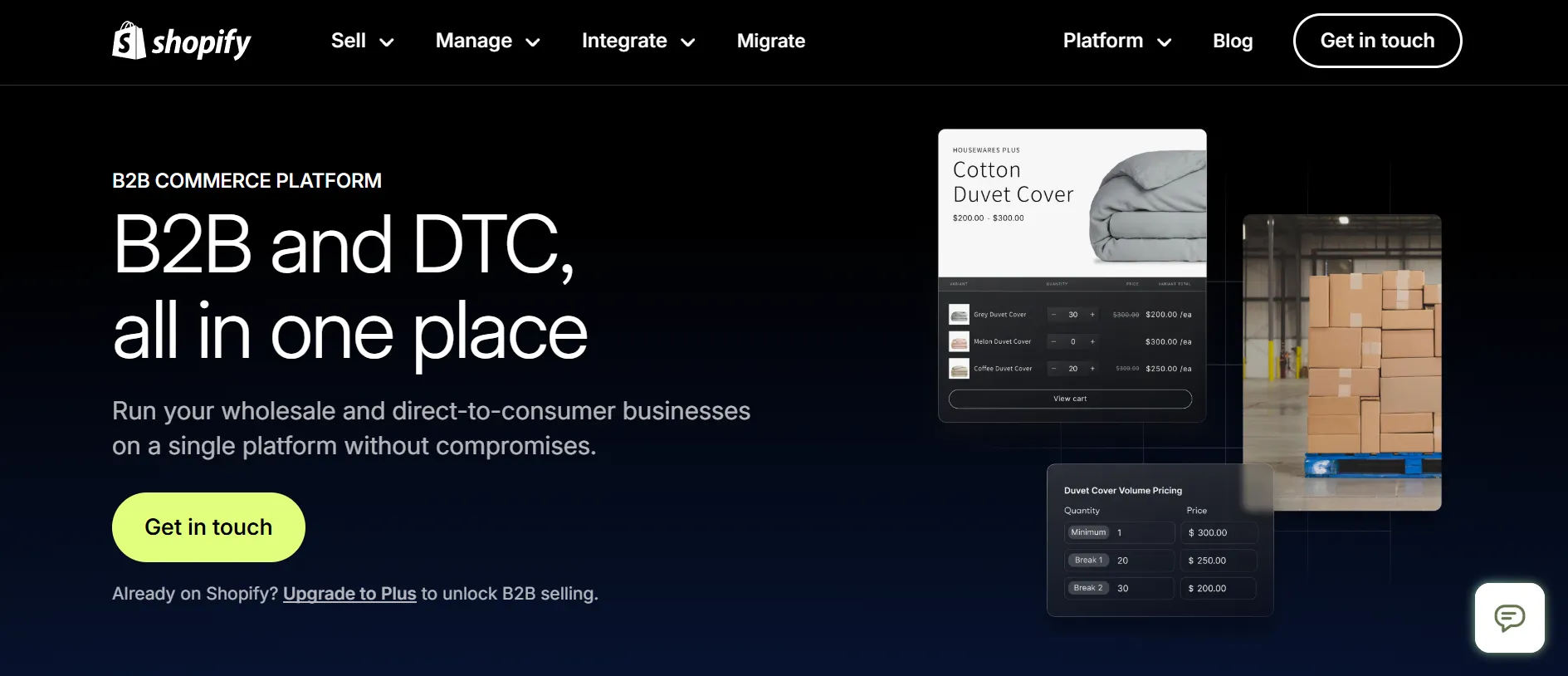
What makes Shopify Plus stand out as the best B2B eCommerce platform for distributors:
- Allow you to set customer-specific pricing, payment terms, and purchasing rules directly within the B2B checkout.
- Support bulk ordering with quick order lists and CSV uploads, making reordering faster for your clients.
- Offer multi-location inventory management so you can route orders based on warehouse availability.
- Include company profiles and role-based permissions for buyers, helping distributors work with complex account structures.
- Provide native B2B functions without the need for separate wholesale apps or additional storefronts.
Pros | Cons |
- Built-in B2B tools for pricing, catalogs, and buyer roles - User-friendly interface for both admins and buyers - Scalable SaaS infrastructure with excellent uptime and performance - Strong integration capabilities with ERP, CRM, and warehouse systems | - Native B2B features are exclusive to Shopify Plus plans - Some advanced workflows may require third-party apps or custom development - Limited backend flexibility compared to open-source platforms - Additional costs for apps and advanced customizations can add up |
2. BigCommerce Enterprise
BigCommerce Enterprise is a flexible SaaS platform designed for high-growth businesses that need advanced B2B capabilities without the complexity of open-source systems. Its flexible architecture and API-first approach make it a solid choice of B2B eCommerce platform for distributors who want a scalable and customizable solution.
What makes BigCommerce an outstanding B2B eCommerce platform for distributors:
- Provide native support for customer groups, custom pricing, and quote management without needing additional apps.
- Offer real-time inventory management and flexible shipping rules, helping distributors manage complex fulfillment operations.
- Include a robust API framework, making ERP and OMS integration easier and more reliable.
- Support large catalogs and multiple storefronts, which is useful for distributors serving different markets or product lines.
- Allow customer-specific catalogs and personalized purchasing workflows tailored to each buyer type.
Pros | Cons |
- Native B2B Edition with features like company accounts, PO support, and custom price lists - Open API architecture for deep customization and integrations - Supports multi-storefront and international expansion - Strong integration capabilities with ERP, CRM, and PIM systems | - Higher learning curve for headless or advanced custom setups - Some B2B features require technical setup or third-party help - Fewer pre-built themes and apps tailored for B2B distributors - Not as beginner-friendly as other SaaS platforms |
3. Adobe Commerce
Adobe Commerce (formerly Magento Commerce) is a powerful open-source platform tailored for large and complex eCommerce operations. It powers over 97,000 live websites globally, according to BuiltWith, making it one of the most widely used enterprise-grade eCommerce solutions. Many enterprise-level distributors prefer Adobe Commerce for its full control over backend architecture and its flexibility in building tailored B2B experiences.
For a full feature review of this platform, feel free to check out our Adobe Commerce review.
Why Adobe Commerce is a powerful B2B eCommerce platform for distributors:
- Enable customer-specific pricing, catalogs, and tiered discounts directly within the platform.
- Support complex B2B workflows, such as purchase approvals, requisition lists, and negotiated quotes.
- Offer multi-site management, allowing distributors to run multiple brands or regional storefronts from a single backend.
- Integrate easily with major ERP and inventory systems to ensure real-time sync across operations.
- Provide full control over order management, custom shipping rules, and payment methods like credit limits and PO.
Pros | Cons |
- Native B2B features like shared catalogs, quotes, and PO workflows - Fully customizable to meet complex distributor workflows - Strong integration capabilities with ERP, WMS, and PIM systems - Supports multi-store, multi-language, and multi-currency setups | - High development and maintenance costs - Requires in-house or agency developer support to build your website - Longer implementation time compared to SaaS platforms - Performance depends on hosting quality and backend optimization |
4. Salesforce B2B Commerce
Salesforce B2B Commerce is part of the Salesforce Commerce Cloud ecosystem, designed to help B2B companies build personalized, self-service buying experiences. Its tight integration with Salesforce CRM makes it a compelling option for businesses that prioritize customer relationships and data-driven selling.
We have analyzed its full features in our Salesforce Commerce review article, so make sure to check it out!
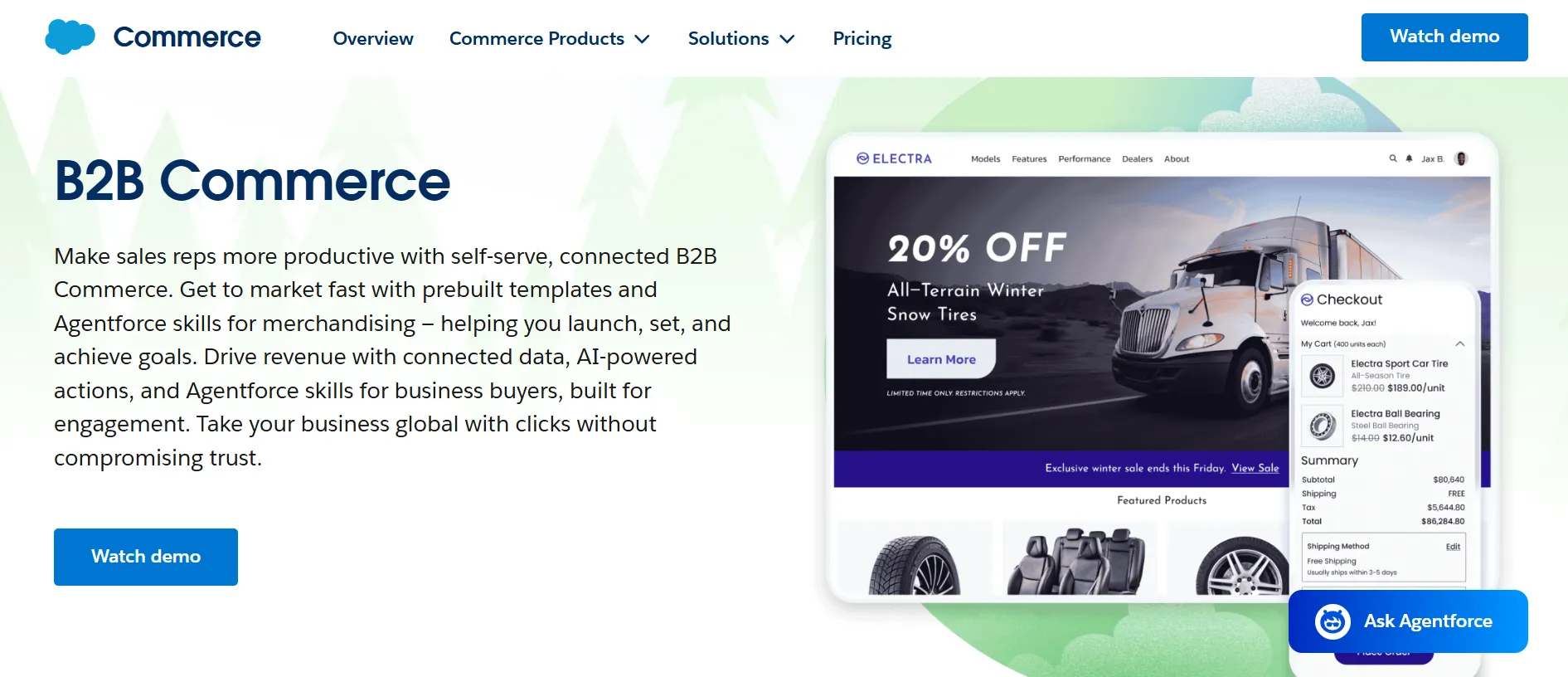
How this B2B eCommerce platform for distributors can support your needs:
- Enable contract-based pricing, volume discounts, and buyer-specific catalogs tailored to each distributor relationship.
- Support large order volumes and complex product configurations, which are common in distribution environments.
- Allow companies to set up business account hierarchies with multiple user roles and approval flows.
- Natively connect with Salesforce CRM and Service Cloud, giving sales teams real-time insight into buyer behavior.
- Provide self-service tools for reordering, quote management, and tracking orders without needing sales rep involvement.
Pros | Cons |
- Deep integration with Salesforce CRM for unified customer management - Robust B2B features like account-specific pricing and custom catalogs - Supports complex buyer hierarchies and approval workflows - Scalable for enterprise distributors with multi-site, multi-language needs | - High licensing and implementation costs - Steep learning curve for users with little experience with Salesforce - Requires Salesforce infrastructure and may lock users into the ecosystem - May require additional tools for frontend flexibility or headless setup |
5. WooCommerce
WooCommerce is a free WordPress plugin that turns any WordPress website into a fully functional eCommerce store. According to BuiltWith, WooCommerce powers over 3.5 million live websites globally, making it one of the most widely used platforms in the world. While it’s often associated with B2C, WooCommerce can also be adapted for B2B use through plugins, making it a popular choice among small to mid-sized distributors seeking budget-friendly flexibility.
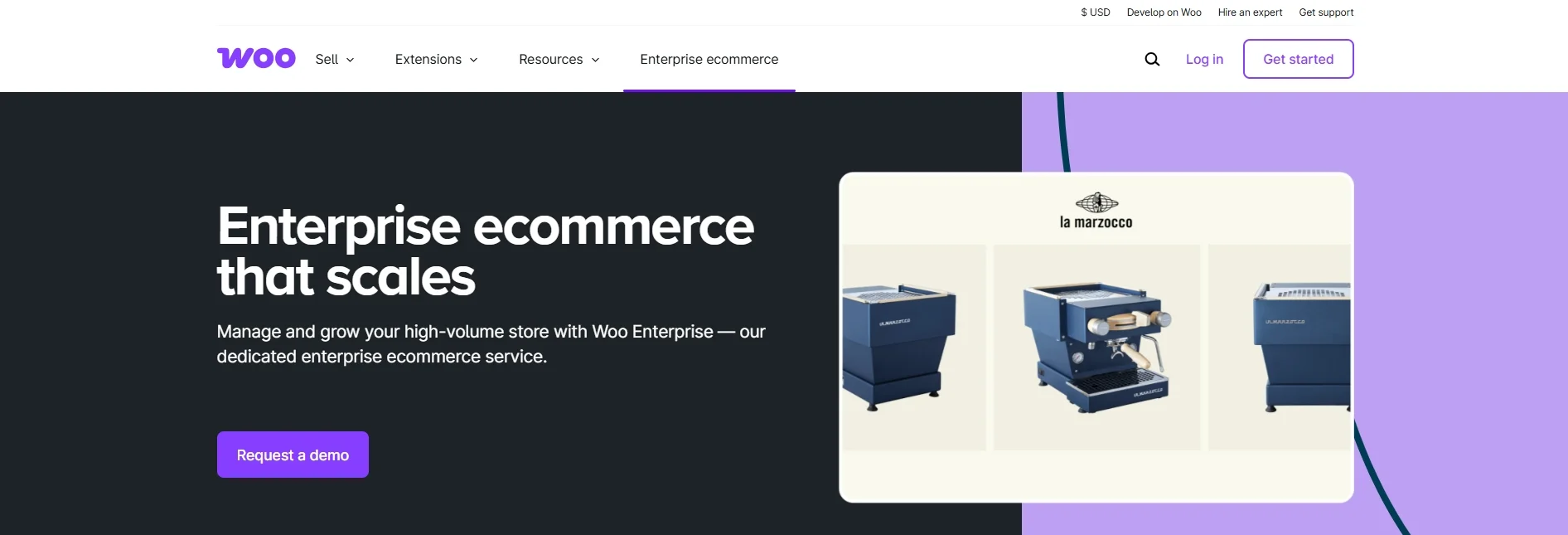
WooCommerce is one of the most accessible B2B eCommerce platforms for distributors because it:
- Set up customer-specific pricing and catalogs using B2B plugins to tailor the buying experience.
- Enable bulk ordering with quick order forms, product tables, and CSV upload tools.
- Create role-based accounts to support multiple buyer roles within a company.
- Integrate with ERP and inventory systems through plugins or custom APIs.
- Customize checkout flows, payment terms, and tax settings to match complex distributor needs.
Pros | Cons |
- Highly customizable and cost-effective for small distributors - Large library of B2B plugins like B2BKing and Wholesale Suite - Full ownership and control over data and backend code - Integrates with ERP, inventory, and accounting tools via plugins or APIs | - No built-in B2B features, requires plugins for most functions - Managing multiple plugins can create compatibility or performance issues - Requires technical knowledge or developer support for scaling - Hosting, security, and performance are fully self-managed |
6. OroCommerce
OroCommerce is a B2B-first eCommerce platform built specifically for complex selling models like distribution, wholesale, and manufacturing. It is created with B2B workflow as the foundation, so it focuses on features that distributors usually need from day one, such as custom pricing, buyer roles, and quote-based purchasing. Since OroCommerce is open-source, it also gives your team strong control over how the system works, which is helpful when your sales process has many steps and exceptions.
Hence, many businesses consider OroCommerce as a serious B2B eCommerce platform for distributors, especially those wanting long-term flexibility and strong back-office support.
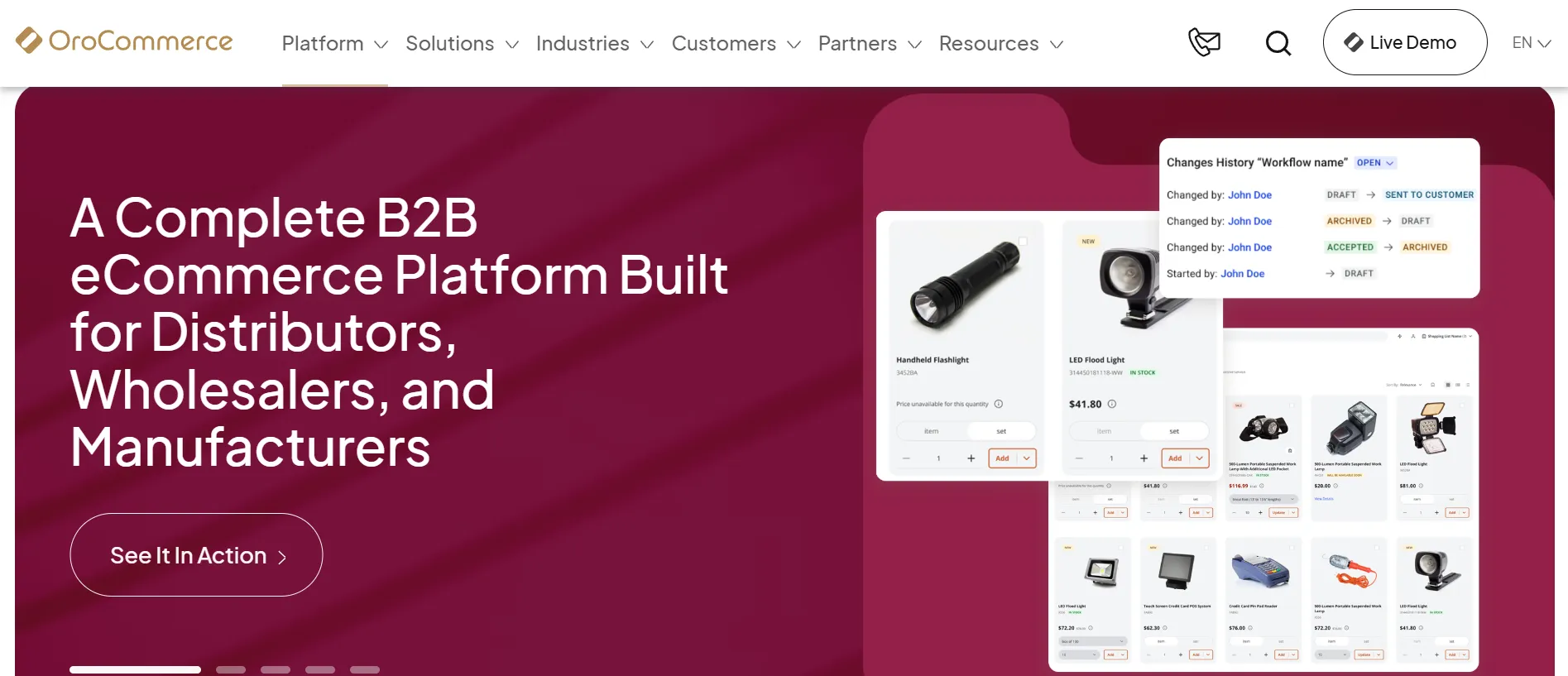
What makes this platform a strong B2B eCommerce platform for distributors:
- Build custom price lists and catalogs for each customer account or customer group.
- Support quote requests and negotiated pricing to match real distributor sales processes.
- Manage multiple buyers per company account with role-based permissions and approval rules.
- Connect with ERP and CRM systems using APIs and integration-ready architecture.
- Handle large catalogs and complex product data through flexible product and inventory settings.
Pros | Cons |
- Built specifically for B2B workflows like quoting and account-based pricing - Supports complex account structures with buyer roles and approval flows - Strong flexibility for ERP and CRM integrations through APIs - Open-source foundation allows deep customization for distributor needs | - Requires technical resources for setup, hosting, and customization - User's interface can feel less modern than some cloud-native competitors - Ongoing maintenance and upgrades require planning and development support - Total cost can rise if you rely heavily on custom development |
7. NetSuite SuiteCommerce
NetSuite SuiteCommerce is a cloud-based eCommerce solution built into Oracle’s NetSuite ERP system. This platform is designed to give distributors a unified system that combines online selling, inventory, finance, customer data, and order management in one place. Since it's part of the NetSuite ecosystem, SuiteCommerce helps eliminate data silos by syncing your website with real-time backend data.
For B2B distributors already using NetSuite ERP or planning to invest in it, SuiteCommerce offers tight integration and strong operational visibility. It supports both B2B and B2C channels, allowing your team to manage pricing, inventory, customer-specific catalogs, and fulfillment from a single platform. This makes SuiteCommerce a reliable B2B eCommerce platform for distributors focused on efficiency and centralized operations.
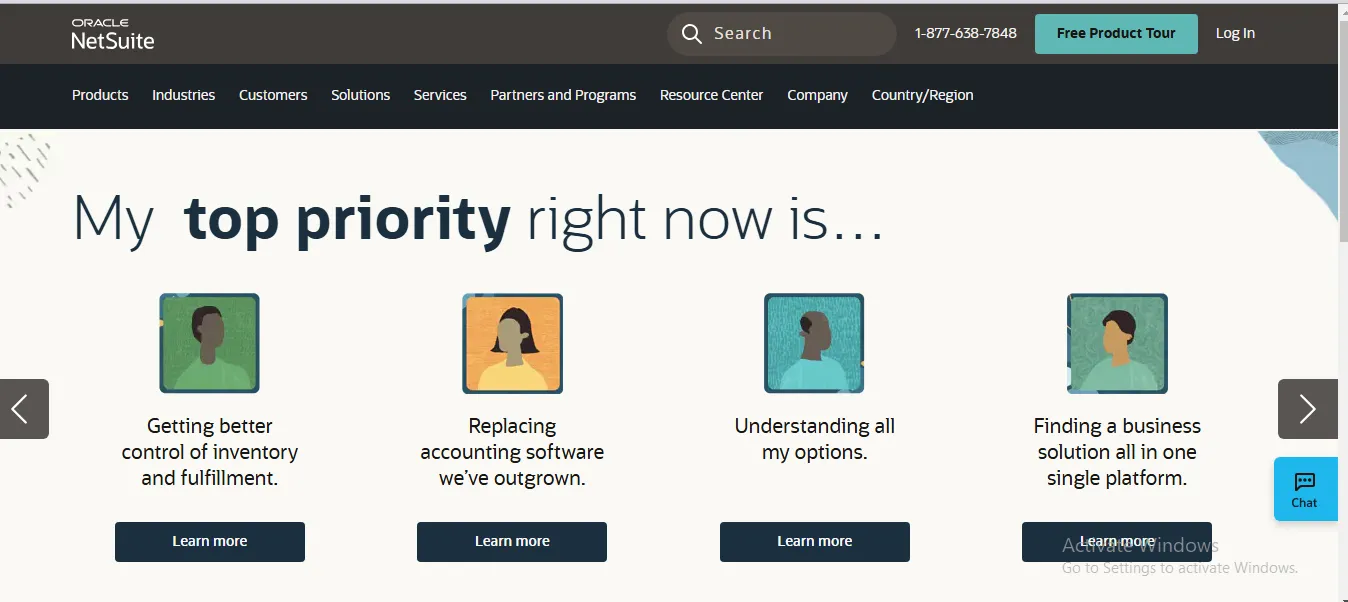
Why you should consider NetSuite SuiteCommerce:
- Sync product, order, customer, and inventory data directly with your NetSuite ERP in real time.
- Offer customer-specific pricing, terms, and catalogs without relying on external apps or custom code.
- Enable B2B buyers to request quotes, manage purchases, and reorder through self-service portals.
- Automate tax, shipping, and billing workflows based on customer profiles and order conditions.
- Manage both B2B and B2C channels from the same backend to reduce system complexity.
Pros | Cons |
- Native integration with NetSuite ERP ensures real-time accuracy across systems - Built-in support for B2B features like custom pricing and self-service portals - Centralized management of products, inventory, and financials - Simplifies operations by merging eCommerce and backend data into one single system | - Best suited for businesses already using or planning to adopt NetSuite ERP - Less flexible for design and UX customization compared to open platforms - Development and implementation are typically more complex and expensive - Higher total cost of ownership due to licensing and ERP dependency |
8. SAP Commerce Cloud
SAP Commerce Cloud is an enterprise-grade eCommerce solution built to handle the complex needs of large B2B organizations. This B2B eCommerce platform for distributors is often chosen by global manufacturers and wholesalers that require deep integration with ERP, CRM, and supply chain systems.
Designed with flexibility and scalability in mind, SAP Commerce Cloud supports multi-site, multi-language, and multi-currency operations. For large businesses that are already running on SAP, this platform is a natural extension and a powerful B2B eCommerce platform for distributors that operate on a global or enterprise scale.

How SAP Commerce Cloud can help:
- Manage multiple storefronts, catalogs, and languages from a single platform to support regional or brand-based distribution.
- Support account-specific pricing, contract terms, and complex approval workflows natively.
- Connect directly to SAP ERP and other SAP products for real-time data across finance, inventory, and logistics.
- Handle large, configurable product catalogs with powerful product content management tools.
- Enable B2B self-service with features like quick reorder, saved carts, and account-level analytics.
Pros | Cons |
- Deep integration with SAP ERP and back-office systems - Support account-specific pricing, contract terms, and complex approval workflows natively. - Connect directly to SAP ERP and other SAP products for real-time data across finance, inventory, and logistics. - Enable B2B self-service with features like quick reorder, saved carts, and account-level analytics. | - High implementation and licensing costs make it less ideal for smaller businesses - Requires experienced SAP developers and consultants to deploy and maintain - Limited agility for businesses that need fast, flexible changes to storefronts |
9. BetterCommerce
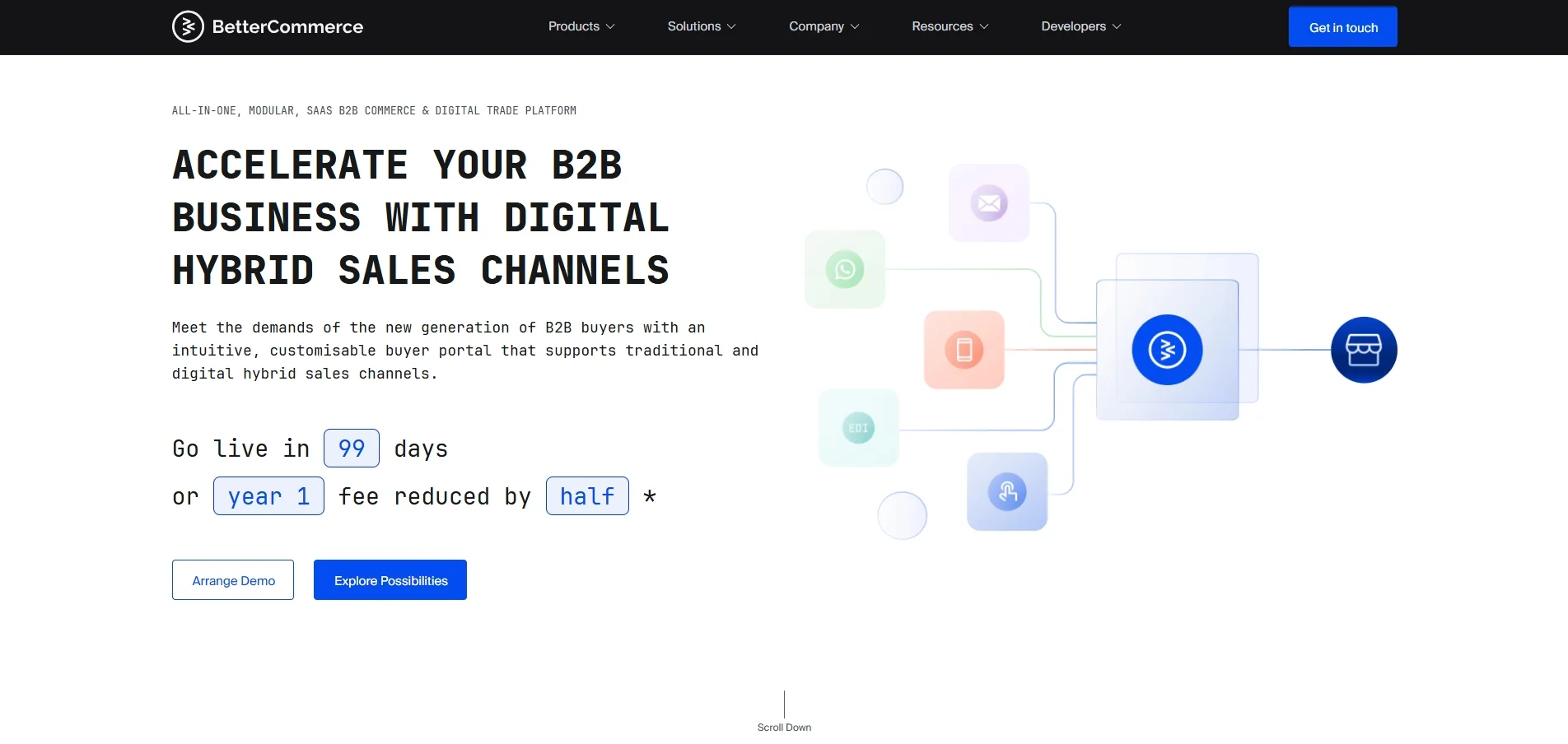
BetterCommerce is a modular eCommerce solution tailored for mid-market and enterprise businesses, with strong support for B2B use cases like wholesale, distribution, and multi-channel retail. Built on a headless architecture, it offers high flexibility and allows companies to integrate their preferred front-end technologies while managing commerce functions from a centralized backend.
This platform is API-first and designed to scale with growing product catalogs, complex pricing structures, and multi-account ordering. It also includes modules for PIM (Product Information Management), OMS (Order Management System), and analytics, reducing the need for multiple third-party tools. As a result, BetterCommerce has positioned itself as a modern, adaptable B2B eCommerce platform for distributors that want both speed and flexibility.
The reasons why BetterCommerce is an ideal solution:
- Create customer-specific pricing, catalogs, and promotions using built-in B2B features.
- Support bulk ordering and repeat purchases with quick order tools and saved carts.
- Connect PIM, OMS, and analytics into a single platform to streamline operations.
- Enable custom workflows and headless storefronts through an API-first architecture.
- Manage multiple sales channels (B2B, B2C, marketplaces) from one unified backend.
Pros | Cons |
- Modular design allows businesses to use only the features they need - Built-in tools like PIM and OMS reduce dependency on third-party software - API-first approach enables full control over front-end experiences - Centralized backend simplifies multi-channel selling and data sync | - Smaller ecosystem and community compared to larger platforms - Requires technical expertise to fully leverage its headless capabilities - Limited plug-and-play templates for businesses needing a fast launch - Documentation and support options are less extensive than major platforms |
10. Experlogix
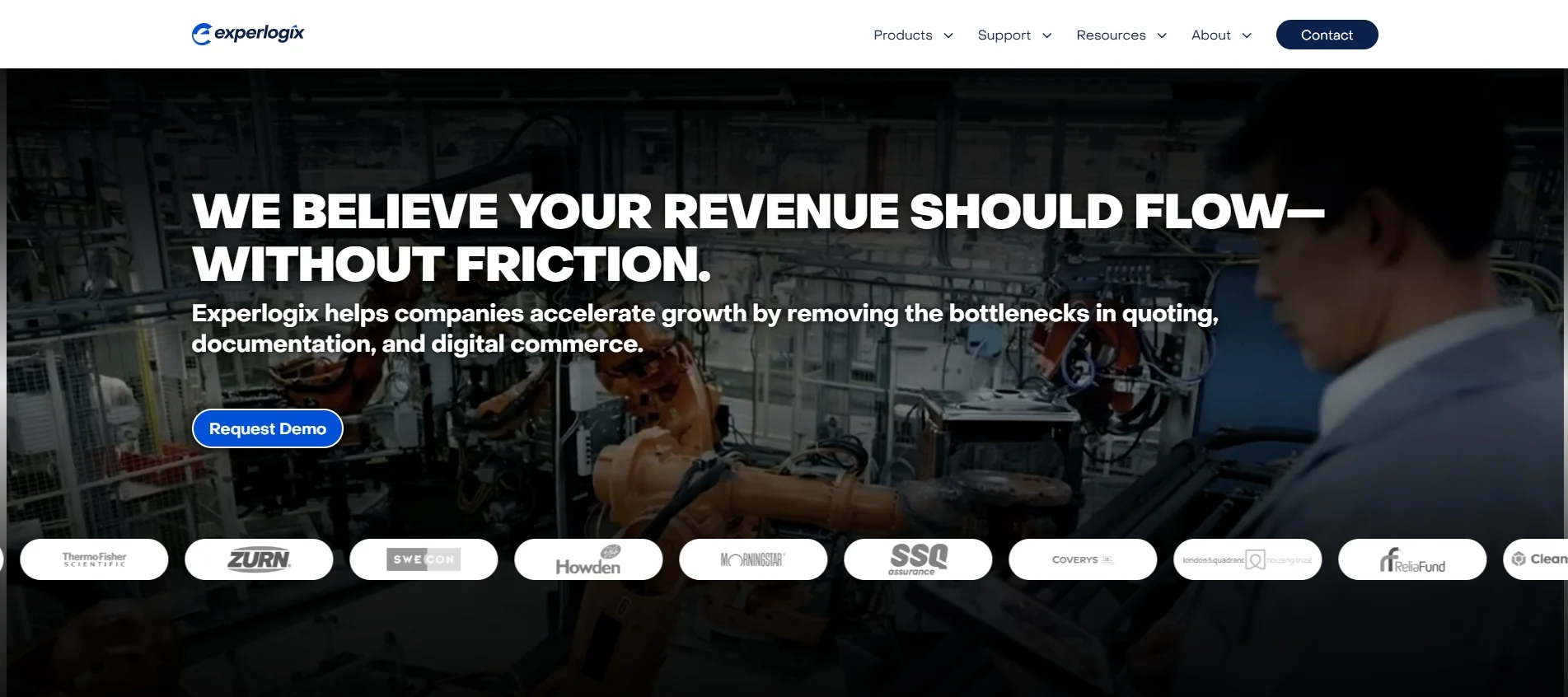
Experlogix is a commerce-focused solution designed to support B2B selling workflows, especially for distributors and manufacturers that deal with complex products and sales processes. This platform often works as part of a broader system because it integrates with platforms such as Microsoft Dynamics 365, Salesforce, and other ERP or CRM tools. This approach helps businesses keep pricing, inventory, and customer data consistent across teams.
For that reason, many companies consider Experlogix a strong B2B eCommerce platform for distributors that rely on quoting, configured products, and structured approval workflows.
Why choose Experlogix as your B2B eCommerce platform:
- Configure complex products using guided rules that reduce errors and speed up purchasing.
- Generate accurate quotes quickly by applying pricing rules, discounts, and approval steps.
- Integrate with ERP and CRM systems like Microsoft Dynamics and Salesforce to keep data consistent.
- Support contract pricing and customer-specific deals through structured pricing logic.
- Improve sales-to-order workflows by turning approved quotes into orders with fewer manual steps.
Pros | Cons |
- Speeds up quoting and reduces pricing errors through rule-based automation - Helps distributors manage approvals and contract-based pricing more easily - Improves operational efficiency by connecting quoting and ordering workflows - Integrates well with popular ERP and CRM systems like Dynamics and Salesforce | - Works best with integrations, so it may not fit businesses wanting an all-in-one platform - Setup can be complex and usually requires consulting or technical support - Pricing and packaging can be unclear without direct sales consultation - Less suitable for simple wholesale businesses that do not rely on CPQ processes |
11. Virto Commerce
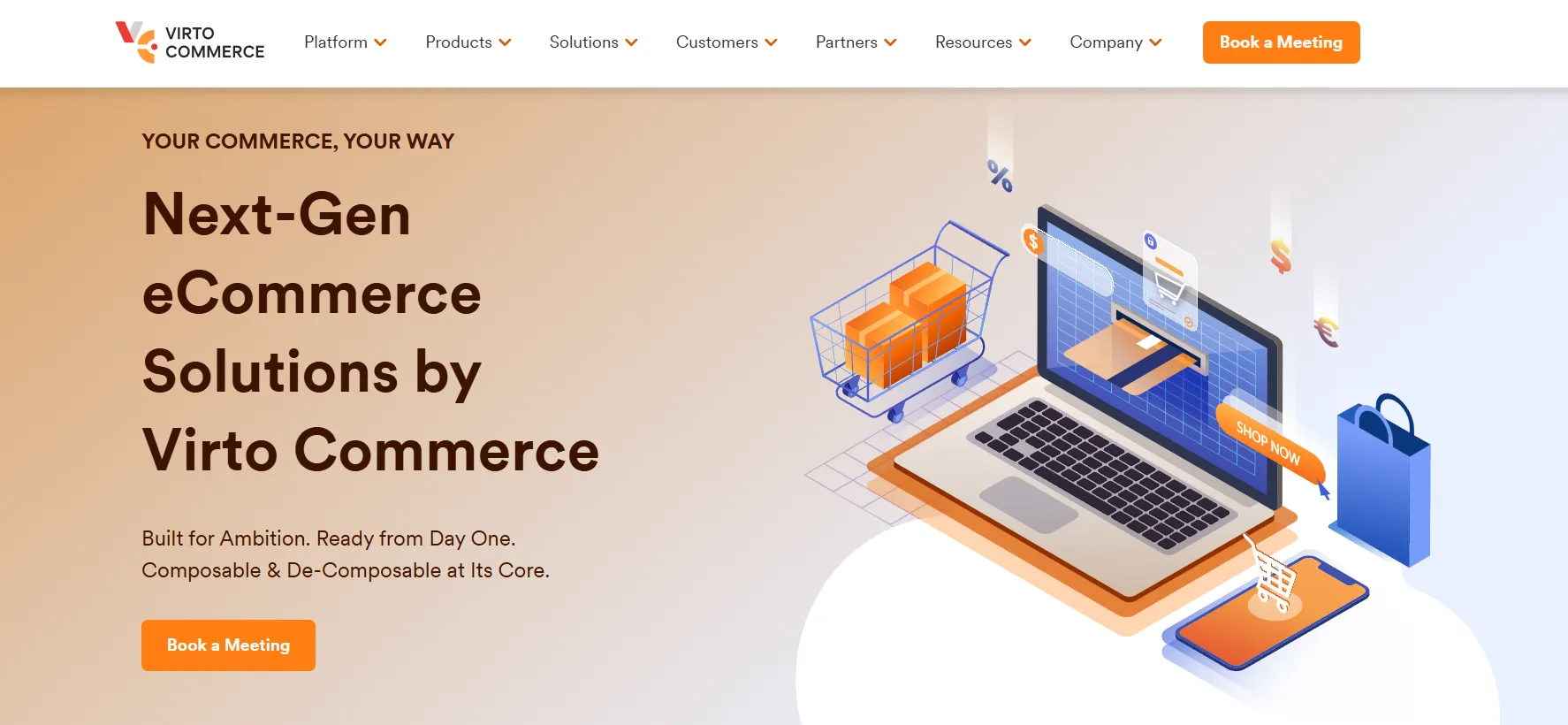
Virto Commerce is a cloud-based, open-source .NET platform built to serve complex B2B needs, especially in manufacturing, distribution, and wholesale. Designed with flexibility in mind, Virto Commerce allows full customization of workflows, integrations, and front-end experiences, making it an excellent fit for companies with unique or non-standard operations.
It supports multi-vendor, multi-tenant, and multi-store setups, and it’s ideal for distributors who require advanced catalog management, pricing controls, and enterprise-level scalability. Since it’s API-based and headless-ready, Virto Commerce also integrates easily with existing ERP, CRM, or legacy systems. All of this makes it a powerful B2B eCommerce platform for distributors looking to build tailored solutions that grow with their business.
How Virto Commerce can support your B2B business:
- Set up customer-specific pricing, catalogs, and purchasing rules directly within the platform.
- Handle complex B2B scenarios such as multi-warehouse inventory and multi-level buyer organizations.
- Customize workflows and business logic to match distributor operations using the .NET framework.
- Integrate with ERP, CRM, and third-party systems via APIs and prebuilt connectors.
- Manage multiple storefronts, vendors, or buyer groups from a single platform instance.
Pros | Cons |
- Open-source and fully customizable to fit complex distributor workflows - Strong multi-store and multi-vendor capabilities for scaling operations - Headless and API-first architecture allows flexible front-end development - Enterprise-ready for large catalogs, custom integrations, and global distribution | - Requires .NET development expertise for most customizations - Not suitable for businesses looking for plug-and-play simplicity - Higher setup and maintenance effort compared to hosted solutions - Smaller ecosystem and community than major enterprise platforms |
12. Sana Commerce Cloud
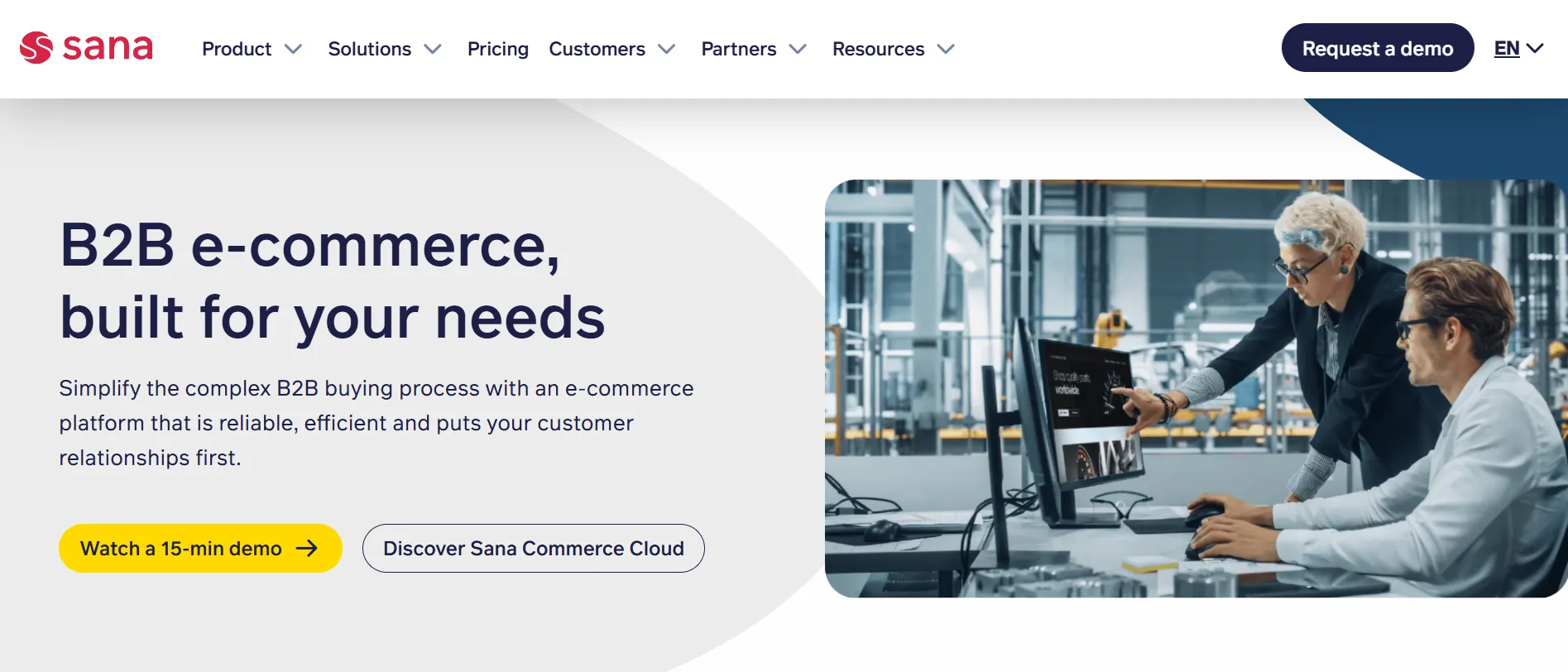
Sana Commerce Cloud is a B2B-first eCommerce platform designed for companies that rely heavily on their ERP systems to manage operations. Unlike many standalone platforms, Sana Commerce integrates directly with Microsoft Dynamics and SAP ERP systems in real time, allowing businesses to build their web store on top of their existing backend logic and data. This deep integration eliminates data duplication and ensures that product, pricing, and inventory information is always accurate.
Because of its ERP-driven architecture, Sana Commerce Cloud is a well-suited B2B eCommerce platform for distributors who need consistency between online and offline operations, especially in complex sales environments.
Why Sana Commerce is the ideal B2B eCommerce platform for distributors:
- Connect directly with SAP or Microsoft Dynamics to ensure real-time updates for pricing, stock, and customer data.
- Deliver personalized buyer experiences with customer-specific product catalogs and pricing pulled from ERP.
- Support B2B ordering workflows such as repeat orders, bulk uploads, and quote requests out of the box.
- Eliminate data duplication between systems by using ERP as the single source of truth.
- Enable fast and reliable order processing, even for complex or contract-based transactions.
Pros | Cons |
- Real-time ERP integration ensures consistent pricing, stock, and customer data - Strong native support for core B2B features like quotes and contract pricing - Built-in support for B2B reordering, multi-user accounts, and approval flows - Ideal for distributors needing tight alignment between eCommerce and operations | - Limited to businesses using Microsoft Dynamics or SAP ERP - Customization options are more limited than open-source or headless platforms - Design flexibility and storefront customization may be limited without development help - Initial setup can be complex due to ERP dependencies |
Must-have Features of B2B eCommerce Platform for Distributors
Choosing the right B2B eCommerce platform for distributors involves more than just comparing feature lists. Distributors have unique needs, from handling bulk orders to managing complex pricing agreements, and the platform you choose must support these functions seamlessly while integrating with your existing systems.
This section outlines the key criteria that every distributor should consider when evaluating a B2B eCommerce solution. These factors will help ensure your platform can scale with your business, simplify operations, and deliver the buying experience your customers expect.
1. Custom pricing and catalogs
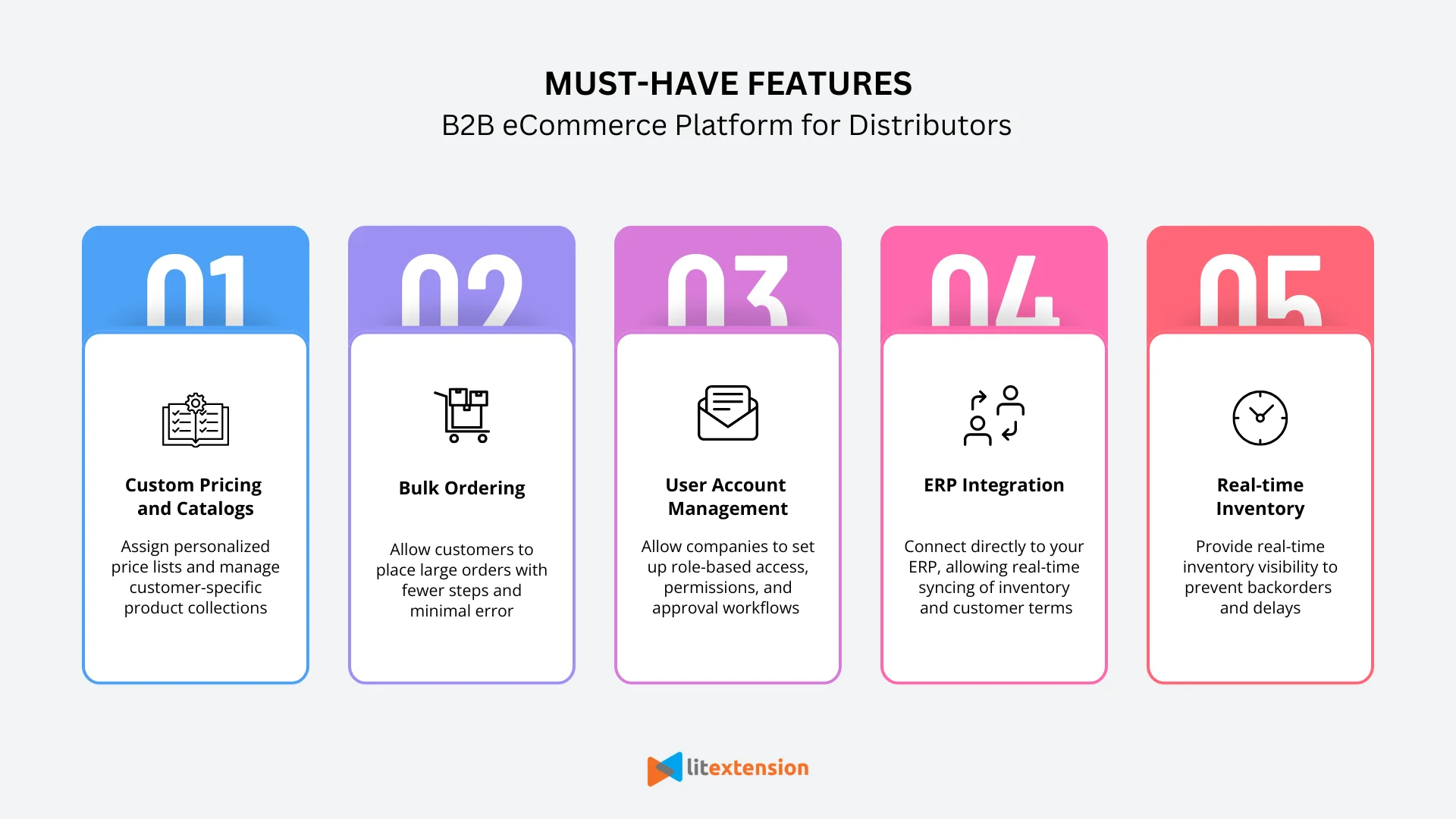
For distributors, pricing isn’t one-size-fits-all. You may offer different prices based on customer groups, order volume, contract terms, or negotiated deals. That’s why the ability to set custom pricing and catalogs is a must-have feature in any B2B eCommerce platform for distributors.
The ideal platform should let you assign personalized price lists, hide or show specific products to certain accounts, and manage customer-specific promotions. This level of control not only supports your existing sales agreements but also improves the online buying experience by showing each customer only what’s relevant to them.
2. Bulk ordering
Bulk purchases are at the heart of most distributor operations, so your B2B platform should make bulk ordering fast and efficient. Buyers don’t want to click through dozens of product pages; they want to reorder from saved lists, upload CSVs, or use quick order forms.
This functionality helps your customers place large orders with fewer steps, reducing friction and increasing repeat purchases. It also minimizes errors in order entry, which can be costly for both sides.
3. User account management
In B2B distribution, a single customer account often includes multiple users with different roles, such as purchasers, managers, and finance staff. That’s why your B2B eCommerce platform should offer robust user account management, allowing companies to set up role-based access, permissions, and approval workflows.
This feature ensures that each user only sees the information relevant to their role, and that large organizations can manage their internal purchasing processes directly within your store.
4. ERP integration
For distributors, ERP systems often handle critical backend operations like inventory, pricing, order fulfillment, and customer records. That’s why tight ERP integration is one of the most important criteria when choosing a B2B eCommerce platform.
Without integration, your sales team risks working with outdated or inconsistent data, which leads to errors, delays, and poor customer experiences. A good platform should connect directly to your ERP, allowing real-time syncing of pricing, inventory, order status, and customer terms.
5. Real-time inventory
Accurate inventory data is essential for maintaining trust with your B2B customers. Distributors often manage stock across multiple warehouses or locations, so your eCommerce platform must provide real-time inventory visibility to prevent backorders and delays.
Customers should be able to see product availability while browsing or during checkout. Your internal team should also have access to up-to-date stock levels to manage fulfillment more efficiently.
How to Choose the Best B2B eCommerce Platform for Distributors
Now that you know which features to look for, the next step is deciding which platform aligns best with your distribution business. With so many options available, ranging from fully hosted SaaS solutions to open-source platforms, it's important to go beyond surface-level comparisons.
The best B2B eCommerce platform for distributors should not only support your current needs but also scale with your growth, integrate with your existing systems, and adapt to how your buyers prefer to purchase. This section will walk you through a step-by-step process to help you make a confident, well-informed decision.
1. Define your business needs
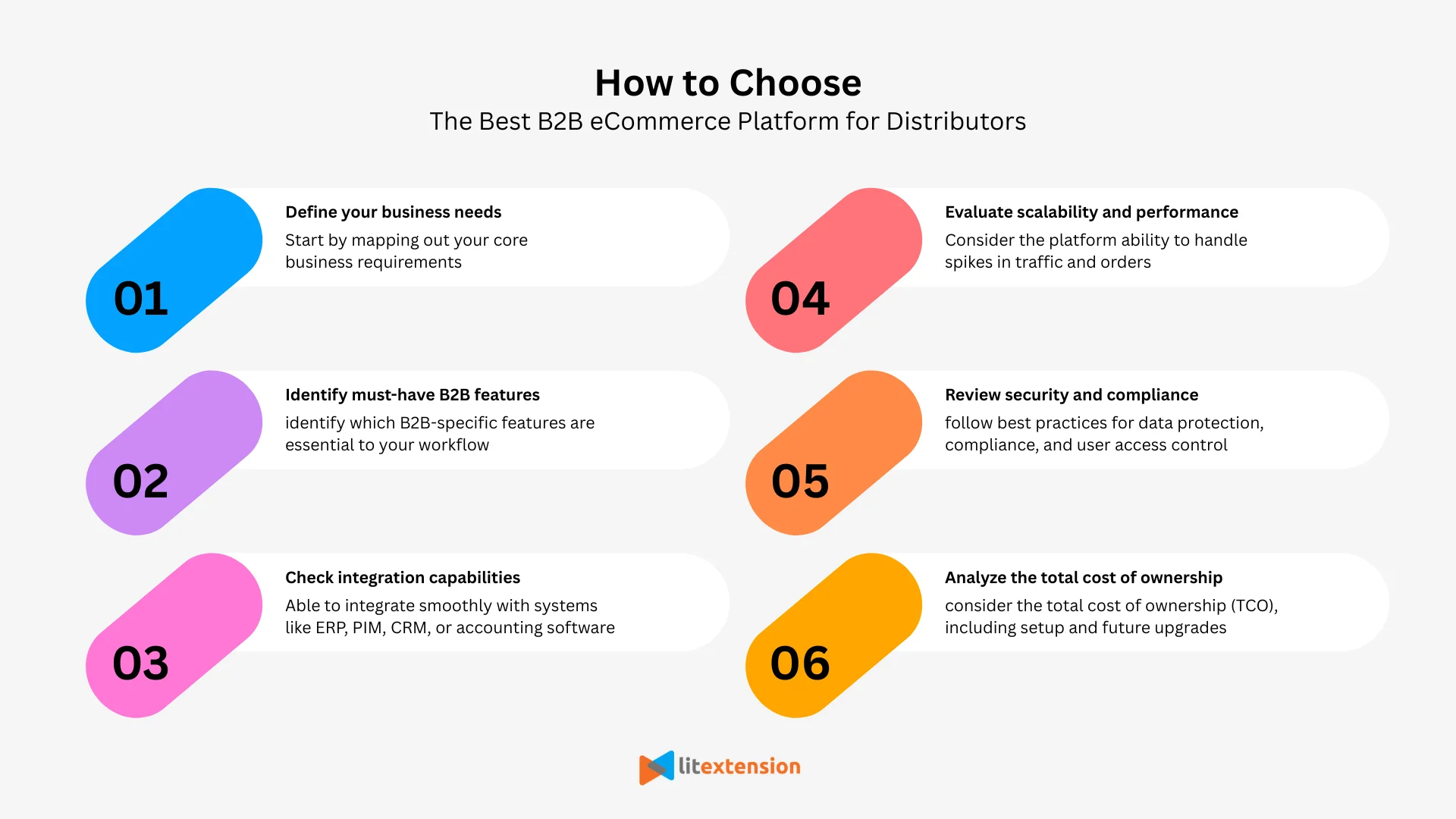
Before exploring platforms, start by mapping out your core business requirements. Every distributor operates differently; some manage hundreds of SKUs across multiple warehouses, while others focus on high-touch sales processes with custom quotes and pricing. Knowing your priorities will narrow your platform choices.
Consider factors such as:
- Your average order volume and catalog size
- The complexity of your pricing and customer relationships
- Whether you serve multiple customer segments (e.g., B2B and B2C)
- Internal resources available for development and maintenance
- Integration needs with systems like ERP, CRM, or WMS
2. Identify must-have B2B features
Not all platforms come with built-in B2B functionality. That’s why it’s important to identify which B2B-specific features are essential to your workflow and which ones you can do without.
Look for features such as:
- Customer-specific pricing and catalogs
- Role-based accounts and approval flows
- Bulk ordering tools
- Quote management and purchase order support
- ERP and inventory system integrations
Make sure the platform you choose offers these features natively or supports them through reliable extensions.
3. Check integration capabilities
Your eCommerce platform shouldn’t operate in a silo. Distributors often rely on systems like ERP, PIM, CRM, or accounting software to run day-to-day operations. The platform you choose must be able to integrate smoothly with these systems.
Evaluate:
- Available native integrations (especially for your current tech stack)
- API support for custom connections
- Middleware or connectors for data syncing
- Ability to handle real-time sync vs. batch updates
- Support for scalable integration as your business grows
A well-integrated platform reduces errors, saves time, and creates a more unified customer experience.
4. Evaluate scalability and performance
As your distribution business grows, your platform needs to keep up. From handling large product catalogs to managing spikes in traffic and orders, performance and scalability are key considerations.
Assess the platform’s ability to:
- Handle high-order volumes without slowing down
- Support multiple storefronts, regions, or sales models
- Scale hosting resources during peak periods
- Manage large or configurable product data
- Expand functionality through modules or APIs
Choose a platform that grows with you, not one you’ll outgrow in a year.
5. Review security and compliance
When handling high-value B2B transactions and sensitive business data, security is non-negotiable. Your eCommerce platform must follow best practices for data protection, compliance, and user access control.
Check whether the platform:
- Is PCI-DSS compliant for online payments
- Supports multi-user access controls and permissions
- Offers SSL and secure checkout by default
- Can be configured to meet GDPR or other data regulations
- Allows for regular software updates and patching
Security should be baked into the platform, not added on as an afterthought.
6. Analyze the total cost of ownership
Pricing isn’t just about monthly fees. To truly understand the value of a platform, you need to consider the total cost of ownership (TCO), including setup, customization, maintenance, and future upgrades.
Account for:
- Licensing or subscription fees
- Development and customization costs
- Plugin or app fees for B2B features
- Hosting and infrastructure costs (for open-source platforms)
- Ongoing maintenance and support resources
A platform with a low upfront cost but high long-term expenses may not be the most cost-effective choice.
B2B eCommerce Platform for Distributors – FAQs
What is a B2B eCommerce platform?
A B2B eCommerce platform is a system that helps businesses sell products or services to other businesses through an online store. Instead of focusing on one-time purchases, a B2B platform supports long-term customer relationships and repeat ordering. A good B2B eCommerce platform for distributors also handles complex workflows such as negotiated pricing, bulk ordering, and multi-user company accounts, so buyers can place orders efficiently without relying on manual support.
What are the differences between B2B and B2C?
B2B and B2C eCommerce work very differently because the buyer behavior and purchasing process are not the same. In B2C, customers usually make quick decisions and place individual orders. In B2B, buyers often purchase in large quantities, follow internal approval processes, and expect personalized pricing or contract terms.
Here are the key differences:
- B2B orders are often larger and repeat-based, while B2C orders are smaller and more frequent.
- B2B pricing is usually negotiated and customer-specific, while B2C pricing is fixed and public.
- B2B accounts often include multiple users and roles, while B2C accounts usually belong to one person.
- B2B buyers expect payment terms like invoicing or net terms, while B2C buyers typically pay immediately.
- B2B purchases may require quotes, approvals, and purchase orders, while B2C checkout is usually direct and simple.
What are the must-have features in a B2B eCommerce platform for distributors?
A B2B eCommerce platform for distributors should support features that match how distributors sell and how their customers buy. Most distributors deal with large orders, customer-specific pricing, and complex fulfillment, so the platform needs to make these processes smooth and reliable.
Key must-have features include:
- Custom pricing and catalogs that change based on customer accounts or contract terms
- Bulk ordering tools like quick order forms, CSV uploads, and reorder lists
- User account management with roles, permissions, and approval workflows
- ERP integration to sync pricing, inventory, orders, and customer data
- Real-time inventory visibility across warehouses and locations
Final Verdict
Finding the right B2B eCommerce platform for distributors depends on the complexity of your operations, the systems you already use, and the level of flexibility or control your business requires. Here's a quick breakdown of the 12 solutions we recommend:
- Best for ease of use and speed to launch: Shopify Plus, BigCommerce Enterprise
- Best for full customization and control: Adobe Commerce, OroCommerce, VirtoCommerce
- Best for ERP-driven distributors: NetSuite SuiteCommerce, SAP Commerce Cloud, Sana Commerce Cloud
- Best for configurable products and quoting workflows: Experlogix
- Best for mid-market flexibility with built-in tools: BetterCommerce
- Best for open-source WordPress users with dev support: WooCommerce
No matter your choice, the right platform should help you simplify operations, serve your customers better, and scale efficiently as your distribution business grows. Last but not least, if you want more expert insights on eCommerce tips and platform selection, don't forget to explore our LitExtension blogs and Resources Hub for detailed guides, platform comparisons, and real-life migration success stories tailored to distributors and wholesale businesses. We're here to help you make informed decisions and grow with confidence.