
As the eCommerce field becomes more competitive, it’s important to choose a platform that matches your current business while also supporting future growth. Among the many options available, ShopWired has gained attention for its built-in B2B capabilities and straightforward store management. Keep reading our ShopWired reviews to learn how well it actually performs!
ShopWired Reviews: Is ShopWired Worth It?
Yes, it’s worth it. We mainly recommend this platform for UK or EU-based businesses, particularly those running B2B or hybrid B2B/B2C sales, that values infrastructure reliability and native trade tooling over marketplace breadth or 24/7 support.
ShopWired has a strong presence in the UK, with 80.1% of its stores based there. Outside its home market, adoption remains relatively limited, with the United States (0.8%), Ireland (0.6%), and Denmark (0.6%) accounting for only small shares of its merchant base (according to Store Leads).
Overall, the platform isn’t uniformly excellent, but where it’s strong, it’s strong for concrete, checkable reasons:
| Criteria | Score | Key Strength | Key Weakness |
|---|---|---|---|
| Pricing | 4/5 | No transaction fees on any of the three standard plans. | Turnover-based caps force automatic plan upgrades tied to sales volume rather than feature requirements. |
| Customization | 4/5 | Free Version 5 drag-and-drop editor across 19 content sections with no premium theme fees. | Only 20 themes are available, and not all have been upgraded to the Version 5 framework. |
| Inventory Management | 3.5/5 | Single-page product creation with full parent/child category hierarchies. | Bulk editing only supports stock level updates; all other product fields must be edited individually. |
| Payment Gateways | 4/5 | Supports 40+ payment gateways with rates as low as 1% + 20p and no platform transaction fees. | Payment gateway options are primarily focused on the UK and Europe, with more limited coverage in North America and APAC. |
| Shipping | 3.5/5 | Flexible shipping rules based on zones and weight, plus integrations with Royal Mail Click & Drop and ShipStation. | No built-in real-time carrier rate calculation during checkout. |
| B2B Features | 4.5/5 | Native support for bulk discounts, quotations, trade accounts, and credit accounts starting from the Advanced plan. | The complete B2B feature set is only available on the Advanced plan and higher. |
| SEO & Marketing | 3/5 | Includes a built-in blog, customizable SEO URLs, abandoned cart recovery, and reward points. | Lacks structured data (schema) tools and optimization features for AI-powered search. |
| Integrations | 4/5 | More than 300 verified integrations, Zapier access to around 3,000 apps, and a documented REST API. | API is limited to an average of 2 requests per second, and there are no native integrations for Walmart or TikTok Shop. |
| Hosting & Performance | 4.5/5 | Delivers independently measured load times of 1.65s on mobile and 1.69s on desktop, with 99.95% uptime. | Mobile PageSpeed score (44) is significantly lower than the desktop score (84). |
| Customer Support & Security | 4/5 | PCI DSS Level 1 compliance, 256-bit SSL encryption, and documented GDPR/CCPA compliance. | Customer support is only available on weekdays from 9:00 AM to 10:00 PM, with no 24/7 or weekend support. |
| Overall | 3.9/5 | _ | _ |
Pros
- No transaction fees on any of the three standard plans, with gateway processing rates as low as 1% + 20p
- B2B tools (bulk discounts, quotations, trade accounts, credit accounts) included natively from the Advanced plan up, no separate add-on required
- 300+ third-party integrations, plus Zapier access extending connectivity to roughly 8,000 apps
- Independently measured sub-2-second load times (1.65s mobile, 1.69s desktop)
- Free Version 5 drag-and-drop editor across all 20 themes, no premium theme fees
- PCI Level 1 compliance, 256-bit SSL, and documented GDPR/CCPA-aligned data handling
Cons
- Turnover-based plan caps auto-upgrade accounts based on sales volume, not actual feature need
- Bulk product editing is limited to stock levels only — price, category, and description changes are one product at a time
- Theme library is thin at just 20 themes, and not all have migrated to the Version 5 framework
- REST API is rate-limited to an average of 2 requests per second
- No native Walmart or TikTok Shop connectors
- Support is limited to live chat/email, weekdays 9am-10pm — no 24/7 or weekend coverage
- SEO toolset lacks structured data/schema markup and AI-search-era optimization features
Pricing (3/5)
To evaluate ShopWired pricing, we looked past the sticker price to see how costs shift as a store scales, the same way we tested CedCommerce’s per-connector billing model.
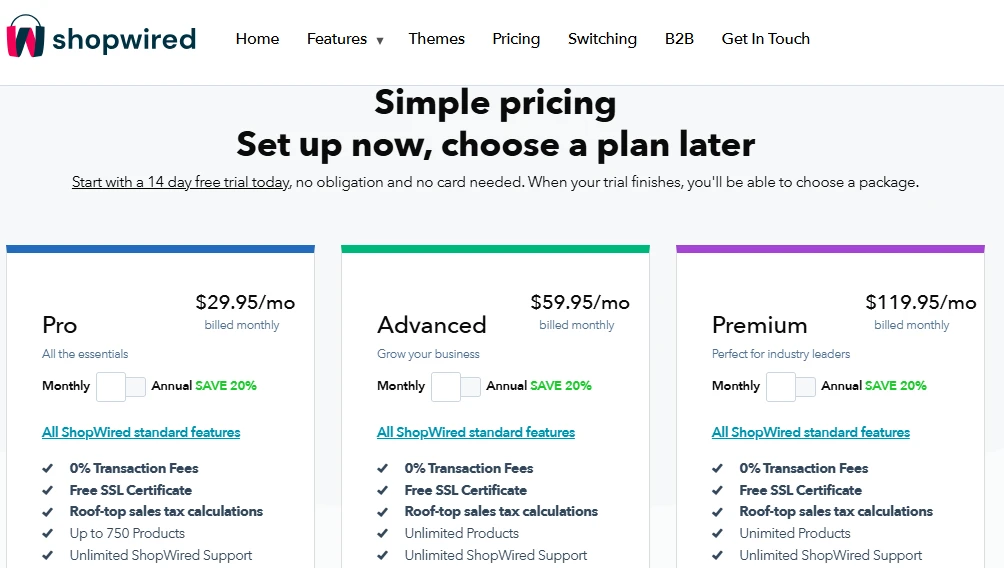
ShopWired runs three standard plans, each built around an annual turnover cap rather than a flat feature tier:
- Pro: $29.95/month, 750 products, £75,000 turnover limit, 2 admin accounts
- Advanced: $59.95/month, unlimited products, 5 admin accounts (turnover limit applied)
- Premium: $119.95/month, unlimited products, 15 admin accounts (turnover limit applied)
None of the three charge a transaction fee, and businesses that outgrow the turnover limit move to Enterprise plans starting at $249.95/month.
As you can see, the catch is the turnover-based structure itself. Once a store’s trailing 365-day turnover crosses its plan’s cap, ShopWired automatically moves the account up to the next package — regardless of whether the merchant actually needs the extra admin seats or features that come with it. That’s a fundamentally different mechanic from a flat-fee or GMV-tiered model like Shopify’s, and it means a fast-growing store’s subscription cost is tied to sales volume, not usage.
Verdict:
ShopWired’s plans are transaction-fee-free, but the automatic turnover-linked upgrades mean pricing predictability drops as a store scales.
Customization (4/5)
For customization, we tested how deep the theme editor actually goes versus how it’s marketed, the same distinction that mattered when we separated CedCommerce’s inventory claims from its actual dashboard limitations.
ShopWired’s 2022 “Version 5” release replaced its previous fixed-template editor with a full-site, drag-and-drop customizer built around 19 content sections. They span from product-specific blocks like Recently Viewed Products and Featured Categories to general layout blocks like Image with Text and Testimonials.
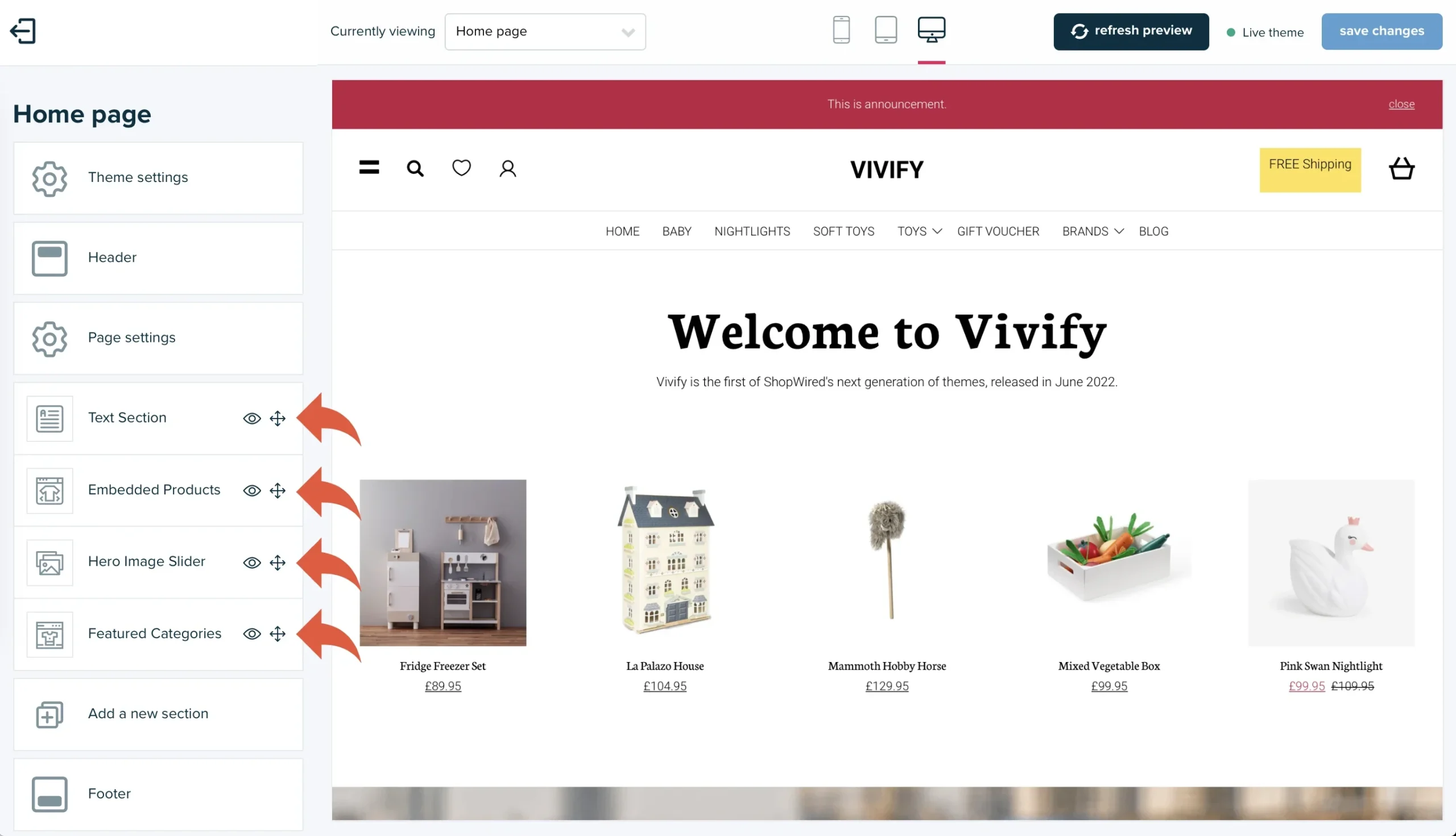
Since it’s a full-site editor, the customization extends beyond the homepage to product pages, category pages, content pages, and even the 404 and wishlist pages, with separate controls for header (logo, favicon, custom navigation menus) and footer link display. Every theme on the platform is free to use, with no premium theme fees layered on top.
However, Shopwired’s limitation is breadth, not depth: its theme library totals just 20 themes, and not all of them have been migrated to the Version 5 framework yet. As a result, some stores are still working with the older, less flexible editor depending on which theme they pick.
Verdict:
ShopWired’s Version 5 editor gives genuine full-site control at no extra cost, but the theme selection itself is thin compared to template-marketplace-driven platforms.
Inventory Management (3.5/5)
Next, to assess inventory management, we looked at product creation, catalog organization, and how bulk changes are handled.
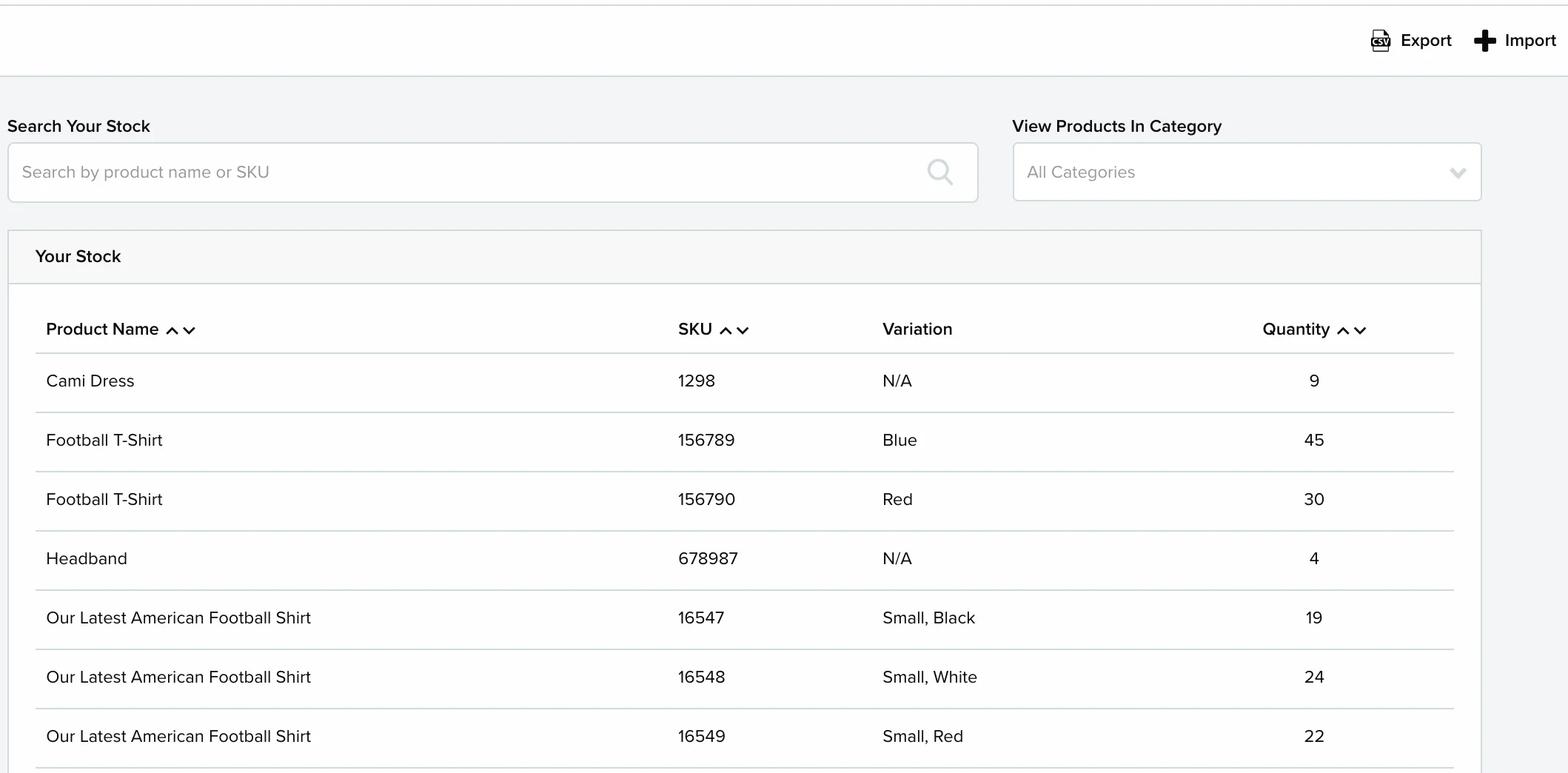
Product creation uses a single-page layout. Core fields — name, description, images, pricing — stay fixed at the top. Meanwhile, optional sections like variations and related products collapse into expandable panels below, keeping the page from feeling cluttered. The organization relies on a standard category system, but it supports full parent/child hierarchies, so merchants can build multi-level catalog structures rather than a flat list. On the product overview page, a single checkbox toggle switches a product between active and inactive without opening the product itself.
One thing worth noting, however, is that ShopWired’s built-in bulk tool only updates stock levels. Any other change (price, category, description), has to be made on a product-by-product basis. That’s a meaningful constraint for a catalog of any real size; it’s also a step behind CSV-based bulk editing tools that let sellers update price, inventory, and category fields together in one pass.
Verdict:
Product setup and catalog structure are well designed for day-to-day use, but the bulk-editing tool is narrow enough to slow down larger-scale catalog changes.
Payment Gateways (4/5)
At the moment, ShopWired integrates with over 40 payment options, including the best payment gateways for eCommerce, such as:
- PayPal Express Checkout
- Stripe
- Amazon Pay
- Klarna
- Worldpay
- Sagepay
- Barclaycard EPDQ
- Nochex
- Payment Sense
- Elavon
The processing rates are as low as 1% + 20p per transaction depending on the gateway. Critically, ShopWired itself doesn’t add a platform transaction fee on top of whatever the gateway charges, on any of its three standard plans. In short, merchants pay the gateway’s rate and nothing more. If a business needs a gateway that isn’t on the standard list, the support team will reportedly evaluate adding it on request.

On another note, the limitation is geographic concentration: the gateway list is built for UK and European merchants specifically. It’s noticeably thinner on providers with strong North America or APAC coverage, so a merchant selling primarily outside the UK/EU should check this list carefully before committing.
Verdict:
ShopWired’s gateway costs are competitive and fee-free at the platform level, but the selection is optimized for UK/European sellers rather than global coverage.
Shipping (3.5/5)
When it comes to ShopWired reviews, delivery rates are configured manually by zone (for example, UK, Europe, US, and others can each carry separate pricing). Rates can be set by price or weight thresholds, including free-shipping cutoffs above a set spend.
Also, default rate can be applied per zone as a fallback, and click-and-collect is available for merchants with a physical storefront or warehouse. For order fulfillment, ShopWired offers a Royal Mail Click & Drop app that generates a CSV formatted for the service, plus a ShipStation integration that automatically feeds order data through to speed up processing.
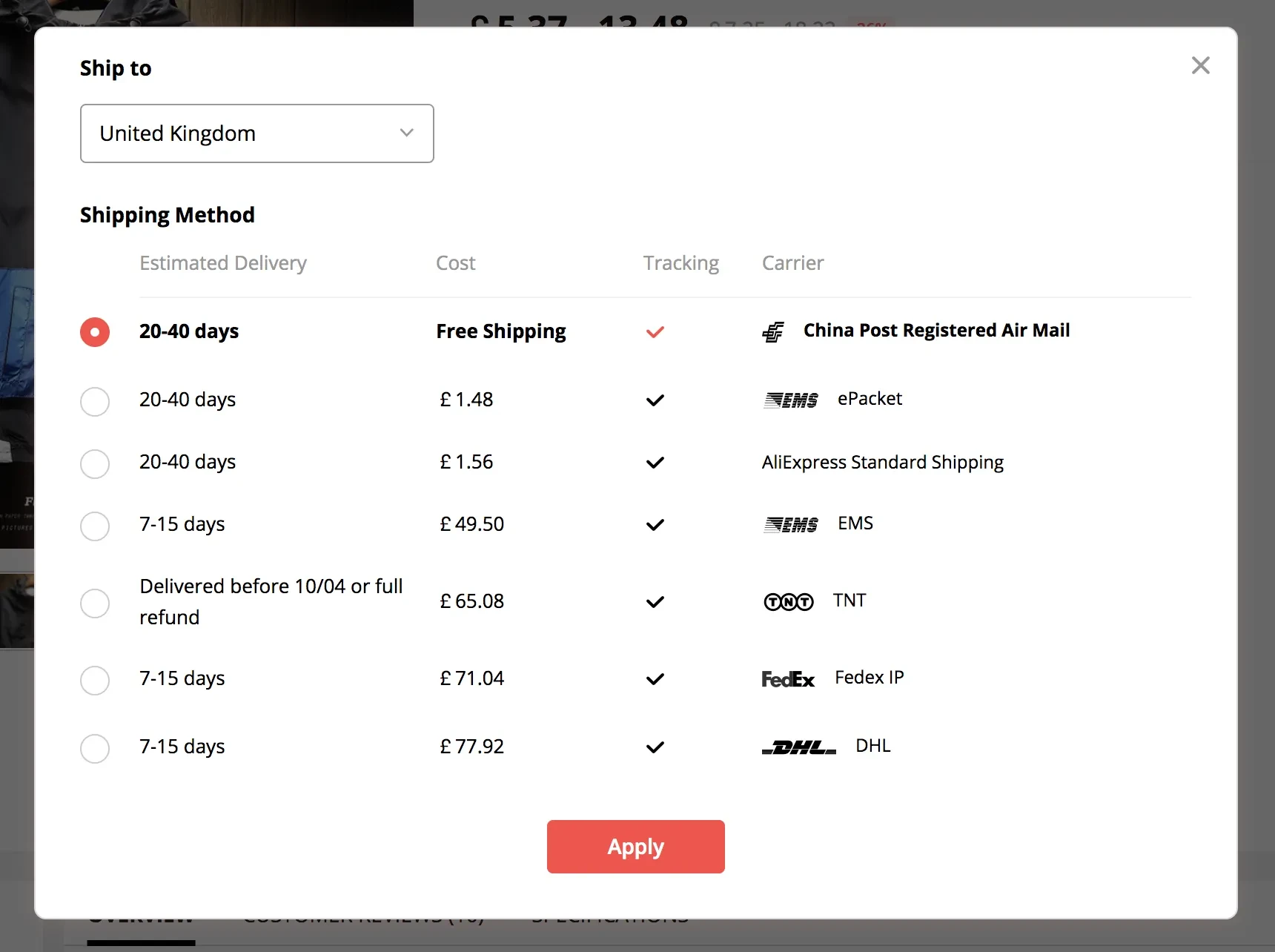
The limitation, however, is that shipping here is rules-based and not live-rated. There’s no native real-time carrier rate calculation at checkout pulling live rates from carriers. As a result, merchants are setting and maintaining zone/weight rules manually rather than having the platform query a carrier API for an exact rate per order.
Verdict:
ShopWired covers the shipping scenarios most SMB merchants need out of the box, but it functions as a manual rate-rules system rather than a live-rated checkout.
B2B Features (4.5/5)
For B2B, we checked whether trade functionality is built into the core platform or bolted on as a paid extension.
ShopWired’s B2B toolset ships as standard on the Advanced plan and up, with no separate B2B app or add-on fee required. It covers:
- Bulk discounts (percentage or fixed price for volume orders)
- A quotation system that lets customers request quotes and receive a payable link by email
- A trade accounts framework that includes manual or automatic account approval, individual or group-based trade pricing, trade-only products and categories, and more.
On top of that, credit accounts let approved customers check out and get invoiced afterward. Plus, VAT display can be toggled inclusive or exclusive depending on the buyer type.
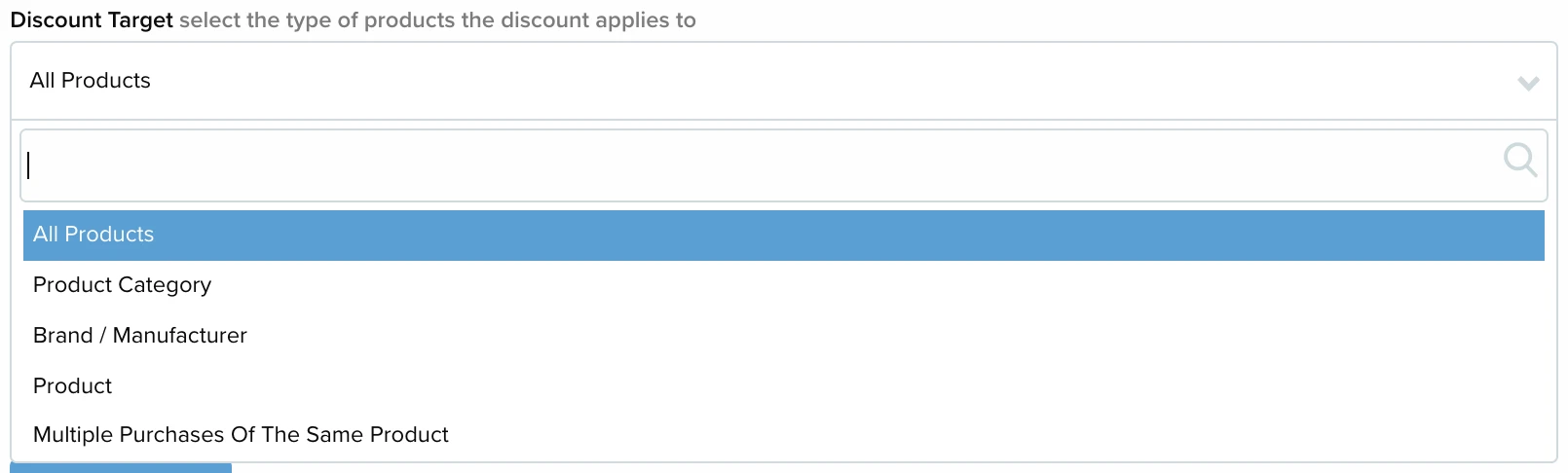
As you can see, one notable strength here is that none of these features sit behind a separate paid tier once a merchant is on Advanced or above. They work alongside every other feature on the account, including trade pricing applied per customer group rather than a single flat discount. That’s a meaningfully deeper native B2B stack than platforms that require layering a multi-vendor extension or third-party app just to get tiered trade pricing.
The only real gap we found is that credit accounts and trade accounts are gated to Advanced-tier and above, so a Pro-plan merchant testing B2B on a smaller turnover cap doesn’t get access without upgrading first.
Verdict:
ShopWired’s B2B toolkit is one of the most complete built-in offerings we’ve seen at this price point, with the main constraint being plan-tier access rather than missing functionality.
SEO & Marketing (3/5)
To evaluate SEO and marketing, we looked at what’s built into the core platform versus what a merchant would need to source through a third party, the same distinction that shaped our read of CedCommerce’s reporting depth.
On SEO, ShopWired includes a built-in blog, custom meta data (title, description, keywords) set per product, auto-generated SEO-friendly URLs that remain editable, and an auto-generated sitemap that can be submitted to search engines directly.

Marketing tools add Google Shopping feed submission, MailChimp integration for list building, gift vouchers, a reward points system for repeat purchases, automated abandoned cart recovery emails, percentage-based sale creation, discount codes, social share buttons, and back-in-stock notification requests. Reporting layers on top with gross profit calculated from product cost price, sales broken down by product/category/month, payment method distribution, a log of failed on-site searches, and visitor/conversion analytics.
The gap is in what’s absent from the documentation: there’s no mention of structured data/schema markup tooling, AI Overviews or generative-search optimization features, or entity-based SEO controls — the toolset covers traditional on-page and technical SEO fundamentals but doesn’t extend into the newer search-visibility mechanics that 2026-era SEO strategy increasingly depends on.
Verdict:
ShopWired covers core on-page SEO and conversion marketing solidly, but its SEO tooling reads as built for a pre-AI-search era rather than current search behavior.
Integrations (4/5)
ShopWired’s “Works with ShopWired” directory lists 300+ verified third-party platform integrations. Furthermore, merchants on the Advanced plan and up get access to Zapier, which extends connectivity to roughly 8,000 apps indirectly.
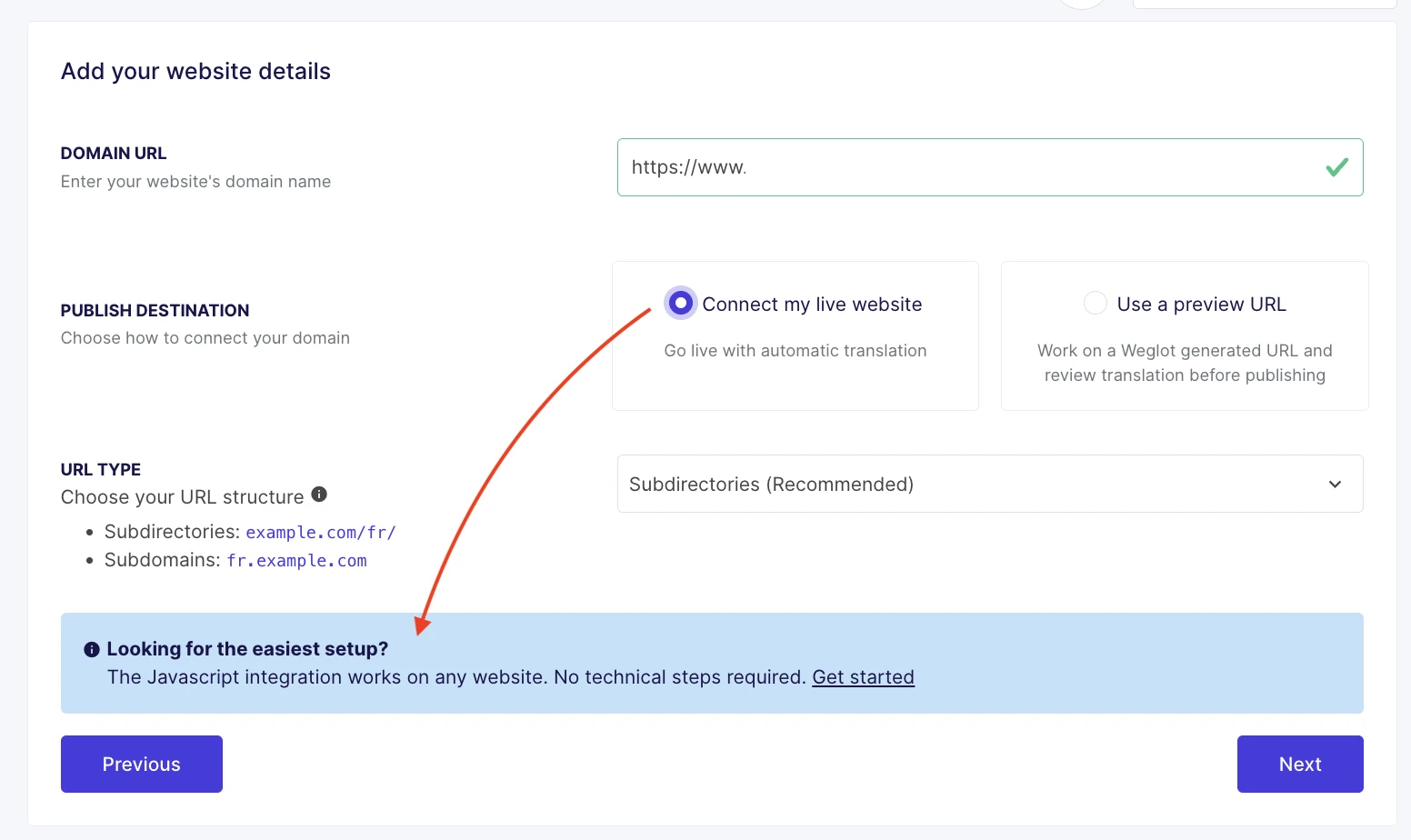
Native, purpose-built connectors exist for eBay (product and stock sync, order import, OAuth-based account authorization), plus Amazon, Etsy, Facebook, Instagram, and Pinterest. On the developer side, ShopWired runs a documented REST API (JSON responses, HTTPS-only, standard HTTP verbs, etc.) along with an OAuth2-based public app store for third-party developers to build and monetize apps.
However, keep in mind that the API is rate-limited to an average of 2 requests per second (with temporary burst allowance), which constrains high-volume catalog syncing or bulk migration work. And native marketplace coverage is notably narrower than dedicated multi-channel tools. For example, since there’s no built-in Walmart connector for ShopWired, sellers needing this channel are pushed toward the Zapier solution or a third-party app rather than a purpose-built integration.
Verdict:
ShopWired’s integration ecosystem is broad by app count and has a real, documented API, but native marketplace depth and API throughput both trail dedicated multi-channel platforms.
Hosting/Performance (4.5/5)
ShopWired runs on AWS with unlimited bandwidth, unlimited file storage, PCI Level 1 compliant servers, a global CDN, continuous backups, and a stated 99.95% uptime. Independent testing by eCommerce Gold also backs the headline numbers: a controlled test across 5 live customer stores, run once daily over three days on a London server using Uptrends, measured 1.65 seconds mobile load time (44 Google PageSpeed score) and 1.69 seconds desktop load time (84 PageSpeed score).
Sub-2-second load times on both device types are a genuinely strong result. However, the clear weak point is the mobile PageSpeed score sitting in the low 40s. This is a real gap against the desktop score of 84, and one that would show up directly in Core Web Vitals for merchants running mobile-heavy storefronts.
Verdict:
ShopWired’s infrastructure delivers consistently fast load times backed by independent testing, though mobile page-speed scoring lags meaningfully behind desktop.
Customer Support & Security (4/5)
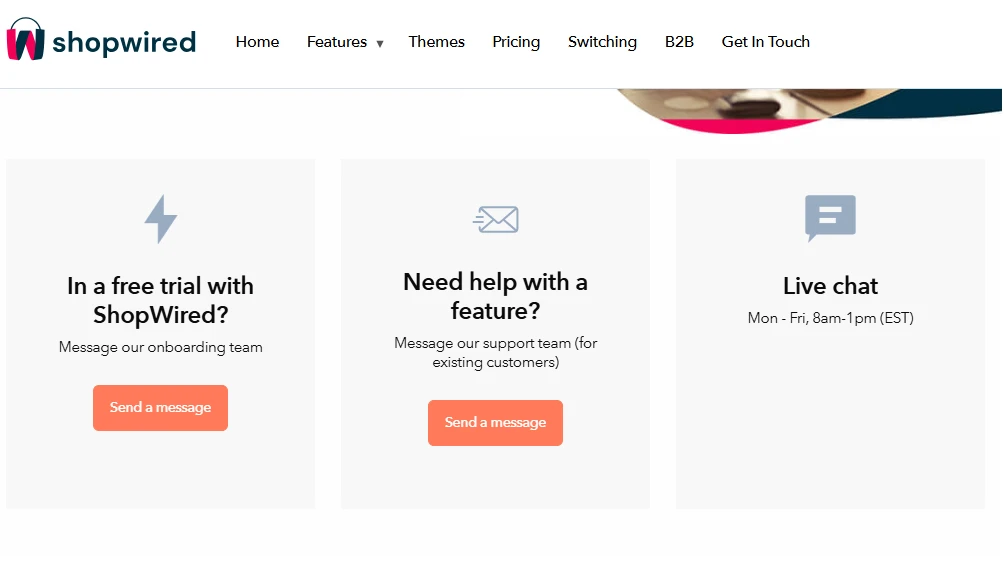
ShopWired offers two support channels – live chat and email – with live chat available 9am to 10pm, Monday to Friday. There’s no 24/7 or weekend coverage, so merchants handling weekend order spikes or operating outside UK business hours don’t have a live channel available on those days.
On the bright side, when it comes to security, ShopWired documents 256-bit SSL encryption across all customer interactions (covering login credentials, payment data, and browsing activity). It also holds PCI Level 1 compliance, the highest tier of the PCI standard, with an Attestation of Compliance available on request. Data is encrypted both at rest and in transit (including transmission to payment providers), stored with salted/hashed passwords, and access to system components is restricted on a need-to-know basis.
In short, the documentation covers encryption, PCI compliance, and data-handling controls in enough detail to be independently verifiable. However, so far, it doesn’t disclose specifics like backup frequency or breach-notification SLA timelines that would round out the picture for a more security-scrutinizing buyer.
Verdict:
ShopWired’s security stack is well-documented and independently verifiable down to encryption standard and compliance certification. Meanwhile, support coverage is solid in quality but limited to weekday hours only.
The Verdict: Who Should Use ShopWired
Given all of ShopWired pros and cons, we can say ShopWired is built for UK or EU-based merchants running B2B or hybrid B2B/B2C sales. They need trade pricing, quotation workflows, or credit accounts without paying extra for a wholesale app — features that ship natively from the Advanced plan rather than requiring a separate multi-vendor extension or third-party integration.
It’s also a strong fit for merchants who weight infrastructure reliability heavily. And for businesses already anchored to UK-centric payment providers like Sagepay, Worldpay, or Barclaycard EPDQ, ShopWired’s fee-free gateway structure is a direct cost saving over platforms that layer a platform transaction fee on top of processor rates.
On the other hand, ShopWired might be a weaker fit for:
- Merchants selling primarily outside the UK/EU
- Businesses that struggle with large or fast-turnover catalogs
- Those that need guaranteed weekend or 24/7 support coverage, or native connectivity to marketplaces like Walmart.
Our Methodology: How We Evaluate ShopWired
Our review process is built to catch the gap between what a platform claims and what it actually does once you’re inside the admin dashboard. Rather than summarizing ShopWired’s own feature pages, we ran the platform through three stages:
Step 1: Hands-on feature testing
First, our team set up a test account and worked through each core module directly. The tasks involved included:
- Creating and editing products to see exactly how the bulk-editing tool behaves
- Building out a theme using the Version 5 drag-and-drop editor
- Configuring shipping zones and rate rules
- Setting up a trade account to see how B2B pricing and approval flows work in practice
- Connecting a payment gateway to confirm processing rates.
Where ShopWired’s own documentation made a claim — like API rate limits or PCI compliance level — we made sure to cross-reference it against the platform’s help center.
Step 2: Independent data verification
For anything measurable (load time, uptime, review sentiment) we prioritized our own testing, plus third-party sources over ShopWired’s self-reported numbers.
Similarly, support quality and coverage hours were confirmed by contacting ShopWired’s live chat and email channels directly rather than relying on stated hours alone. Review sentiment was pulled from Trustpilot and G2 and cross-checked against specific, dated complaints to separate isolated incidents from genuine patterns.
Step 3: Comparative benchmarking
Finally, every finding was benchmarked against direct competitors (Shopify, BigCommerce, and EKM) on the same ten criteria, using each platform’s current 2026 pricing, feature set, and plan structure.
This step is what turned isolated facts (e.g., “ShopWired has a 2 requests/second API limit”) into evaluative claims. Scores were assigned only after this comparative pass, making sure the final score (3.9/5) reflect its genuine competitive standing.
Bonus: ShopWired Alternatives
If ShopWired’s weekday-only support or narrower marketplace connectivity are dealbreakers, these three platforms are the most common alternatives merchants land on:
Platform | Starting Price | Best for | Key Difference vs ShopWired |
$39/month (Basic) to $399/month (Advanced), plus Shopify Plus starting from $2300/month | Merchants looking for the largest app ecosystem and global scalability. | - Does not impose turnover-based plan caps, but charges transaction fees unless you use Shopify Payments. - Advanced B2B features are only available with Shopify Plus rather than being included in a mid-tier plan. | |
$39/month (Core plan) to $299/month (Scale); Custom pricing for Performance plan | B2C merchants selling across multiple channels who want built-in features such as real-time shipping rates and product reviews without relying on additional apps. | - Also enforces revenue-based plan limits, requiring an upgrade after $30,000 GMV on the Core plan. - Since June 2026, merchants using non-approved payment gateways may incur an Open Payment Provider Fee of up to 2%. | |
EKM | Single all-inclusive plan starting at approximately £300/month (+VAT), supporting up to £300,000 in annual sales. | UK businesses seeking a fully managed eCommerce solution with a dedicated account manager. | - EKM does not offer a lower-cost entry tier. - Instead, it bundles website design, marketing support, and proactive store management into its premium pricing. |
Need Help Migrate to Shopify?
LitExtension can help you transfer products, customers, and orders to Shopify – fast, accurate, and hassle-free.

FAQs
Is ShopWired any good?
Yes, ShopWired is a very good eCommerce platform, highly rated (around 4.8/5 stars on Trustpilot). It’s widely considered a strong, cost-effective alternative to Shopify or BigCommerce, especially for UK and European businesses.
Is ShopWired better than Shopify?
Whether ShopWired is better than Shopify depends on your business location and needs. ShopWired is better for UK-based small-to-medium businesses wanting built-in features, no transaction fees, and lower out-of-the-box costs. Shopify is better for global scaling, advanced design flexibility, and massive app integrations.
For more information, check out our Shopwired vs Shopify comparison.
How much is ShopWired?
ShopWired plans range from $29.95 to $249.95 per month (or £29.95 to £149.95+ VAT per month in the UK) depending on your sales volume and required features.
Conclusion
And that’s a wrap on our ShopWired reviews! One thing is clear: the platform isn’t designed to compete head-on with every feature offered by Shopify or BigCommerce. Instead, it focuses on delivering strong value in a few areas that matter most to its core audience, particularly UK and EU merchants that serve both wholesale and retail customers.
For more eCommerce tips, don’t forget to check out our blog and subscribe to our newsletter.

