Are you looking to start selling without upfront costs or any technical knowledge? In that case, Gumroad vs Etsy are likely the first platforms that come to your mind.
However, while both cater to creators and independent sellers, they offer very different approaches to selling online. That’s why taking the time to carefully evaluate each platform before making a decision is essential.
In this guide, we’ll help you determine which option suits you best by breaking down their key differences across important criteria:
- Pricing
- Supported product types
- Shipping and fulfillment
- Checkout and payment
- Store customization
- Customer support
- SEO & marketing features
- Security
Let’s get started!
Gumroad vs Etsy Overview
Gumroad pros & cons
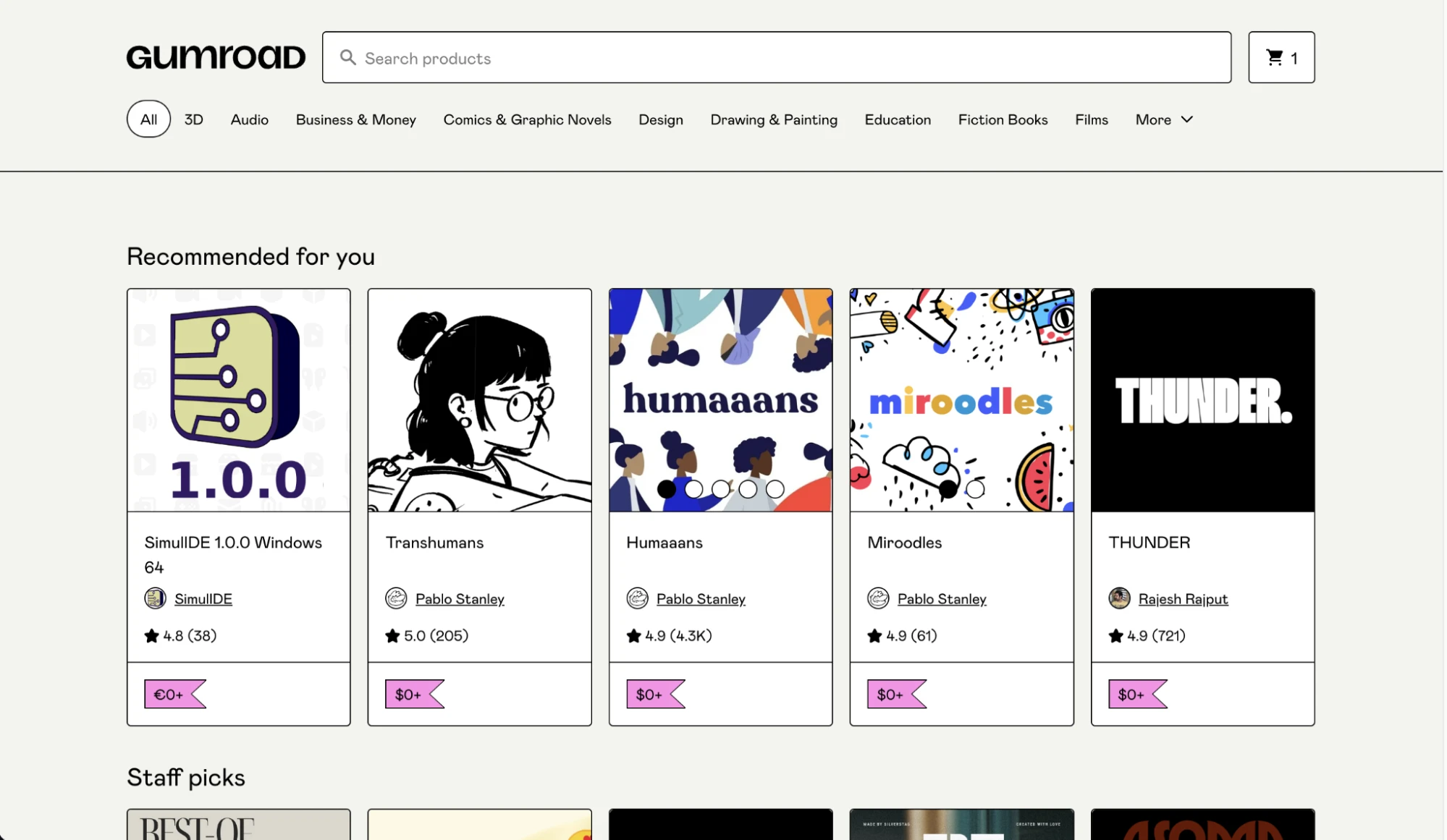
Gumroad is a creator-focused commerce platform launched in 2011, widely used by independent creators such as writers, designers, developers, and educators, with over 10,000 active creators and millions of customers purchasing through the platform globally (BuiltWith).
Its core value lies in its simplicity and its direct-to-consumer model, which allows sellers to monetize content without relying on a marketplace ecosystem.
Pros
- Simple pricing structure: A flat ~10% fee with no listing costs makes it predictable and easy to manage margins.
- Digital-first infrastructure: Built specifically for ebooks, courses, software, and memberships, with instant delivery and updates.
- Audience ownership: Sellers can collect emails and build direct relationships with customers.
- Custom domain + external integration: Can be embedded into personal websites, enabling stronger branding.
- Built-in tools: Includes email marketing, discount codes, and basic analytics.
Merchant of record: Handles VAT/sales tax in many regions, reducing compliance burden.
Cons
- No built-in traffic: No marketplace discovery; sellers must generate their own audience.
- Limited storefront customization: No advanced design or layout control compared to full eCommerce platforms.
- Weak physical product support: No native shipping or fulfillment system.
- Basic customer support ecosystem: No strong community or structured dispute resolution system.
- Limited scalability features: Not ideal for complex catalogs or large-scale operations.
Etsy pros & cons
Etsy is a global online marketplace founded in 2005, specializing in handmade, vintage, and creative goods. It connects sellers with a massive built-in audience, boasting over 90 million active buyers and millions of sellers worldwide (Business of App).
Etsy’s strength lies in its discovery-driven ecosystem, where customers actively browse and search for unique products. As a result, it's a powerful platform for gaining visibility without external marketing.
Pros
- Massive built-in audience: Access to millions of active buyers actively searching for products.
- Strong internal SEO: Listings can rank through keywords, tags, and performance, enabling organic discovery.
- Full shipping support: Integrated tools for shipping rates, labels, and tracking.
- Structured trust system: Reviews, ratings, and buyer protection increase conversion rates.
- Marketing tools: Includes Etsy Ads and offsite ads for additional exposure.
- Robust support ecosystem: Messaging system, dispute resolution, and active seller community.
Cons
- Complex fee structure: Listing fees, transaction fees, payment processing, and ads can add up significantly.
- Limited branding control: Standardized storefront with no custom domain or layout flexibility.
- High competition: Saturated marketplace makes differentiation and ranking more difficult.
- Platform dependency: Sellers do not own customer relationships or traffic sources.
- Policy risks: Account suspensions and strict rules can impact business stability.
Ready to Migrate?
LitExtension provides a well-optimized All-in-One migration service for your data transfer!
Similarities between Gumroad vs Etsy
At a high level, both platforms are designed to help individuals monetize creative work with minimal technical barriers, offering user-friendly setups, built-in payment systems, and support for selling digital products. They also lower the entry threshold for starting an online business.
Ease of use and low entry barrier
Both Gumroad and Etsy are widely recognized for their ease of use, particularly for beginners who have little to no experience with eCommerce platforms.
The onboarding process on both platforms is straightforward, allowing sellers to set up an account, create listings, and start selling within a relatively short time. Neither platform requires advanced technical knowledge, such as coding or website development, which significantly reduces the barrier to entry.
Support for digital product selling
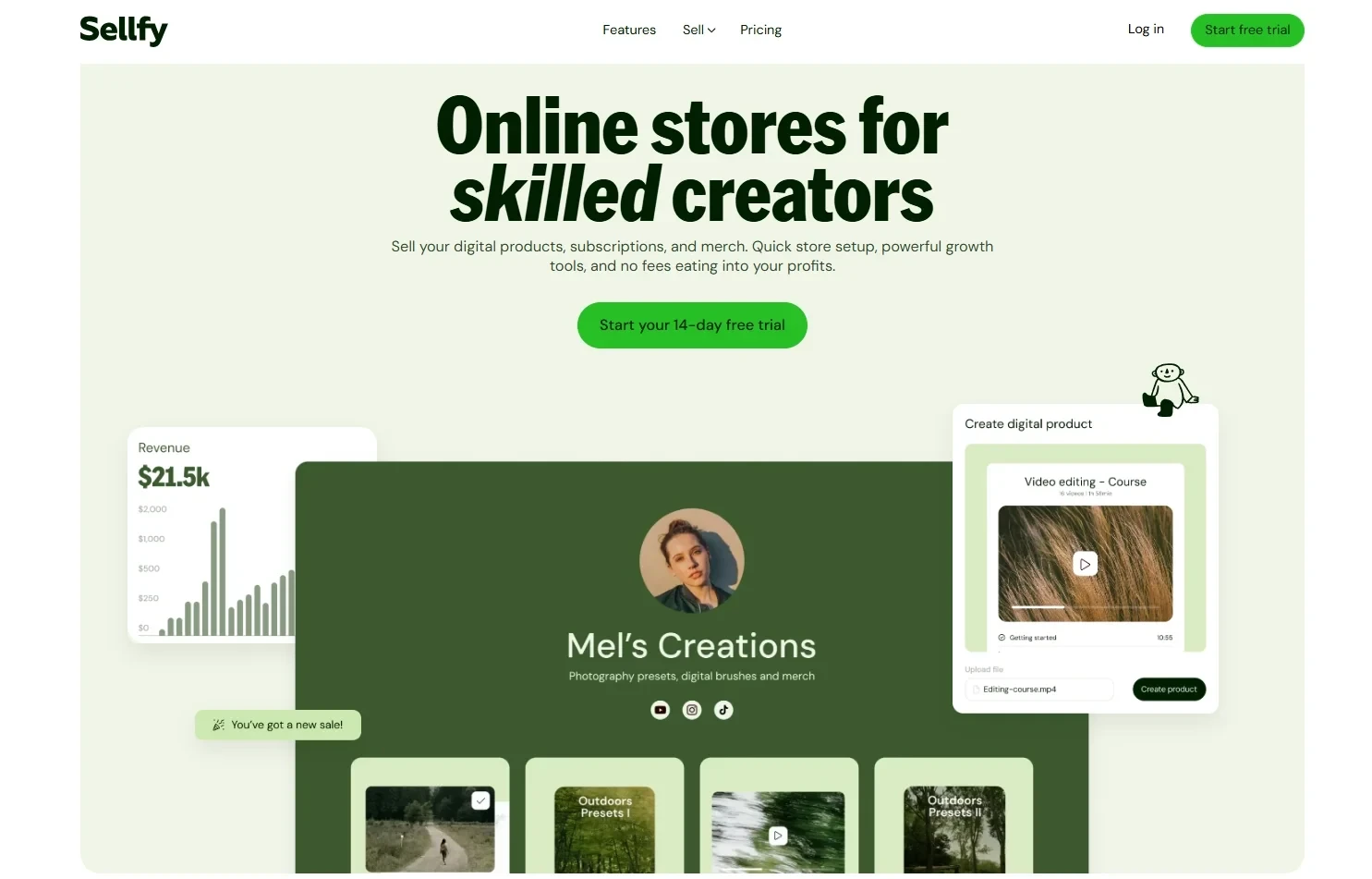
Though their primary focus differs (which we will return to later), both platforms support digital product sales.
Gumroad is inherently built for digital products, offering features like instant file delivery, streaming access, and product updates. Likewise, Etsy has also expanded to include digital downloads such as printables, templates, and design assets.
Designed for creators monetizing creative work
At their core, both Gumroad and Etsy are designed to help creators monetize their work. Artists, writers, designers, and makers can use either platform to turn their creative output into a source of income.
They also cater well to the growing creator economy, where individuals seek to build income streams around their skills, content, or craftsmanship. Simply put, unlike with other platforms, creators can reach paying customers without requiring large upfront investments or complex infrastructure.
Main Differences Between Gumroad vs Etsy
Aspect | Gumroad | Etsy |
Platform type | Direct selling tool (creator-first, no marketplace discovery) | Marketplace with built-in traffic and search |
Pricing | ~10% flat transaction fee, no listing fee (simple structure) | Multiple fees: $0.20 listing + 6.5% transaction + ~3% processing + optional 12–15% ads |
Product types | Digital-first (ebooks, courses, software, memberships); limited physical support | Physical-first (handmade, vintage, craft supplies) & digital downloads |
Shipping & fulfillment | Not built-in; seller handles physical logistics manually | Full shipping system (rates, labels, tracking) |
Checkout & payment | Simple checkout; acts as merchant of record; handles taxes (VAT, etc.) | Etsy Payments system; marketplace-managed with layered fees and payout schedules |
Store customization | Basic storefront + custom domain + external site integration (more branding control) | Very limited customization; no custom domain; standardized storefront |
Customer support | Basic (help center + email); seller fully responsible for customer service | Structured support system, messaging, dispute resolution, strong community |
SEO & marketing | No internal SEO; relies on external traffic (social, email); includes basic marketing tools | Strong internal SEO, built-in discovery & ads (on-site & offsite) |
Security | Secure checkout + payment processing + digital delivery control; limited dispute system | Full marketplace security: fraud detection, buyer protection, dispute handling, reviews |
Pricing
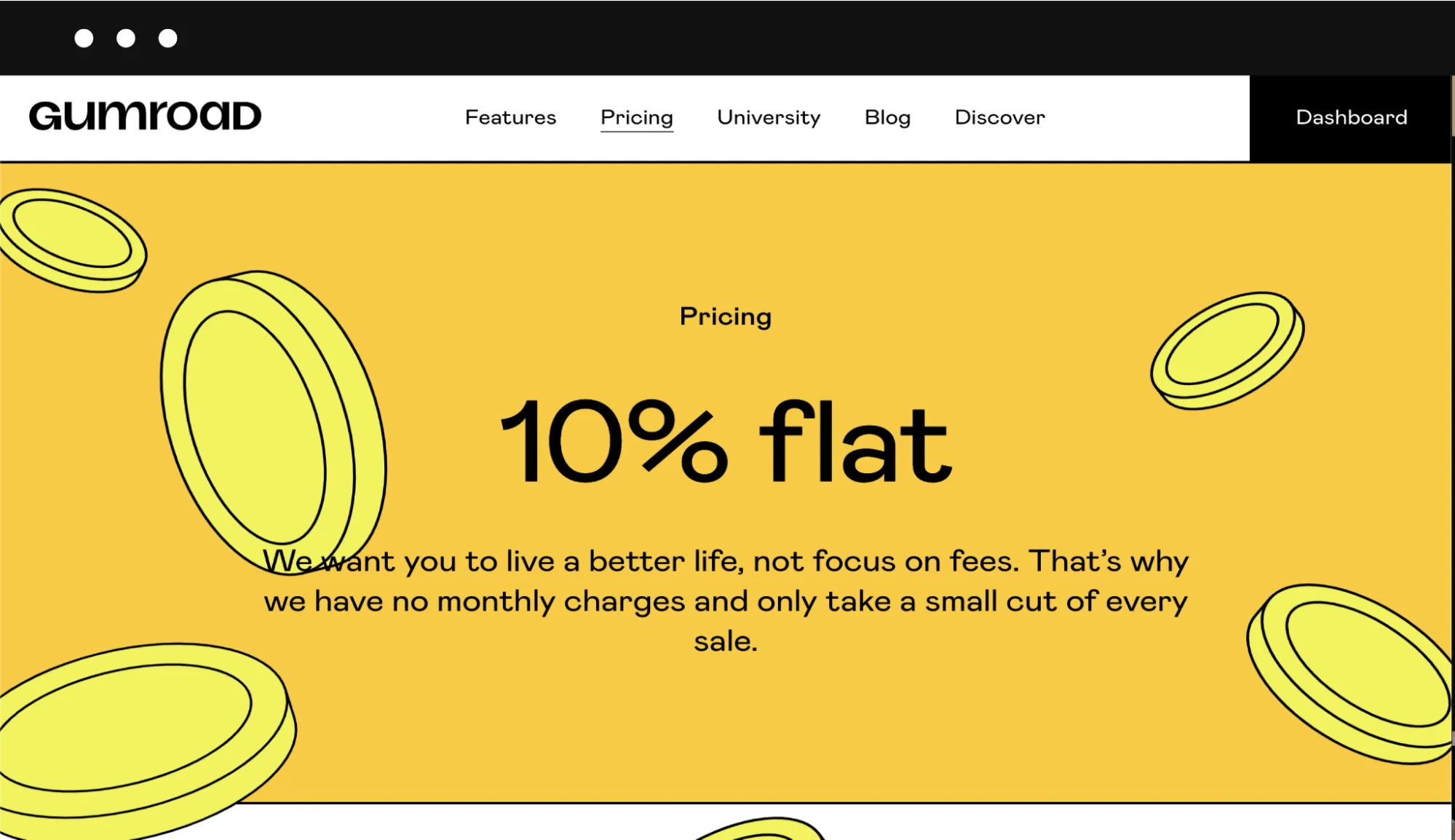
One of Gumroad's defining characteristics is its simple pricing structure.
The platform does not charge listing fees or mandatory monthly subscriptions under its standard model. Instead, it applies an approximately 10% flat transaction fee, which typically includes platform usage costs and payment processing. While there are variations (such as different fee tiers depending on features or discovery exposure), the overall structure remains predictable.
Etsy, on the other hand, uses a multi-layered fee system that can significantly impact overall profitability.
Sellers are charged $0.20 per listing, which must be renewed every four months, regardless of whether the item sells. In addition, Etsy applies a 6.5% transaction fee on each sale, along with payment processing fees (generally around 3% + $0.25). On top of this, Etsy may charge off-site advertising fees ranging from 12% to 15% for sales generated through its external marketing campaigns, particularly for higher-volume sellers. When combined, these costs often result in an effective fee range of approximately 12% to 20% or more.
Supported product types
Gumroad is built with a clear emphasis on digital products and creator monetization, particularly suitable for individuals selling intangible goods. These include ebooks, PDFs, online courses, software, music, videos, and subscription-based memberships. Sure, it is technically possible to sell physical goods through Gumroad, but this is not its primary use case, and the platform lacks the specialized infrastructure that would make physical product sales seamless or scalable.
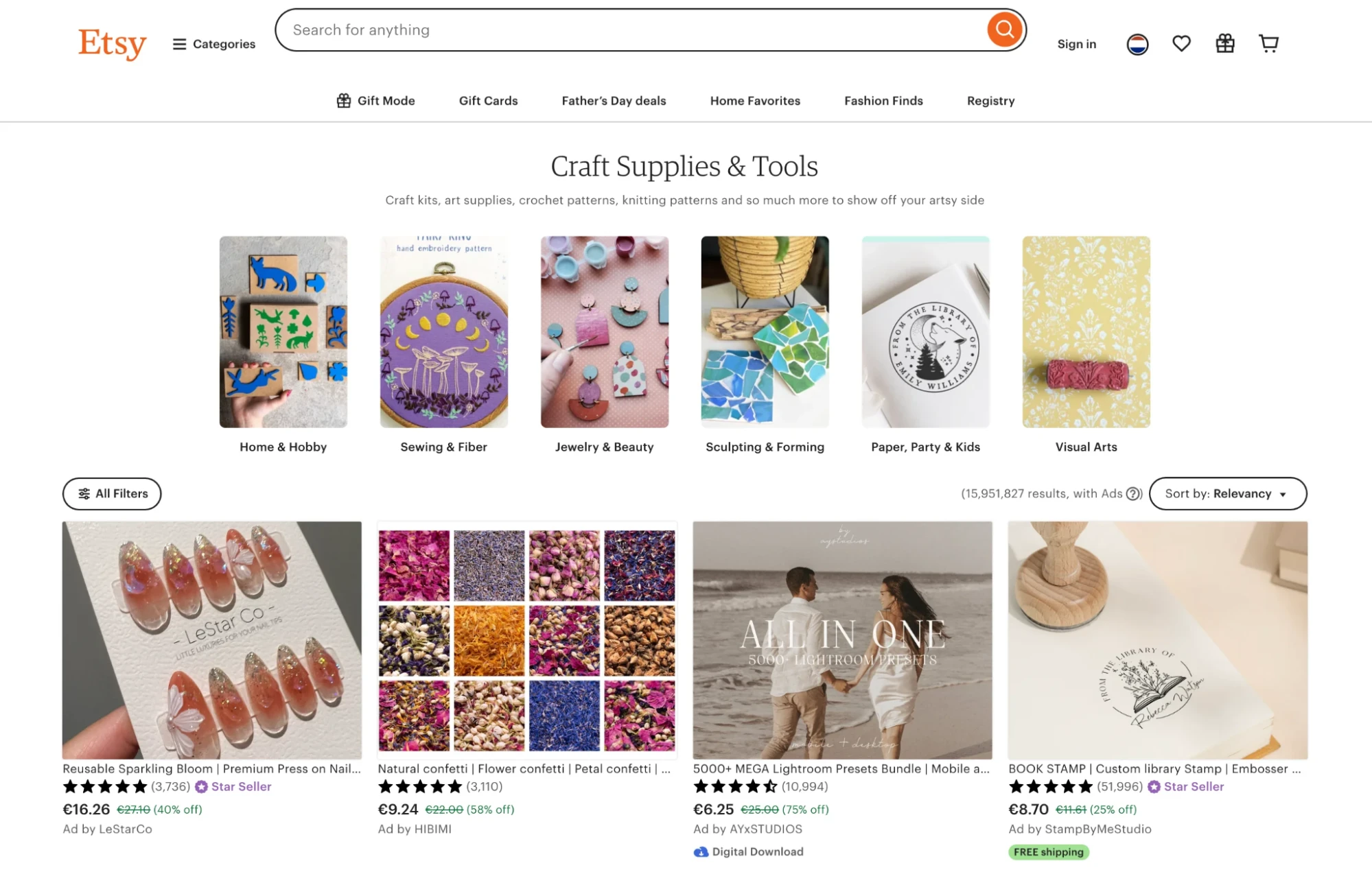
Etsy, on the other hand, supports a broader and more diverse catalog of product types, with a strong focus on physical goods. Its core categories include handmade items such as jewelry, crafts, and artwork, as well as vintage products (at least 20 years old) and craft supplies. In addition to these, Etsy also allows sellers to offer digital downloads, such as printables or design assets, though this is considered a secondary category given its focus on physical products.
Shipping and fulfillment
As mentioned, Gumroad is optimized for digital delivery. When a customer completes a purchase, the platform instantly provides access to the digital product via download links or email delivery, eliminating the need for any manual fulfillment.
However, for sellers offering physical goods, Gumroad does not provide built-in logistics tools such as shipping rate calculation, label purchasing, or order tracking. As a result, sellers must manage all aspects of shipping and fulfillment independently, often requiring external tools or manual workflows.
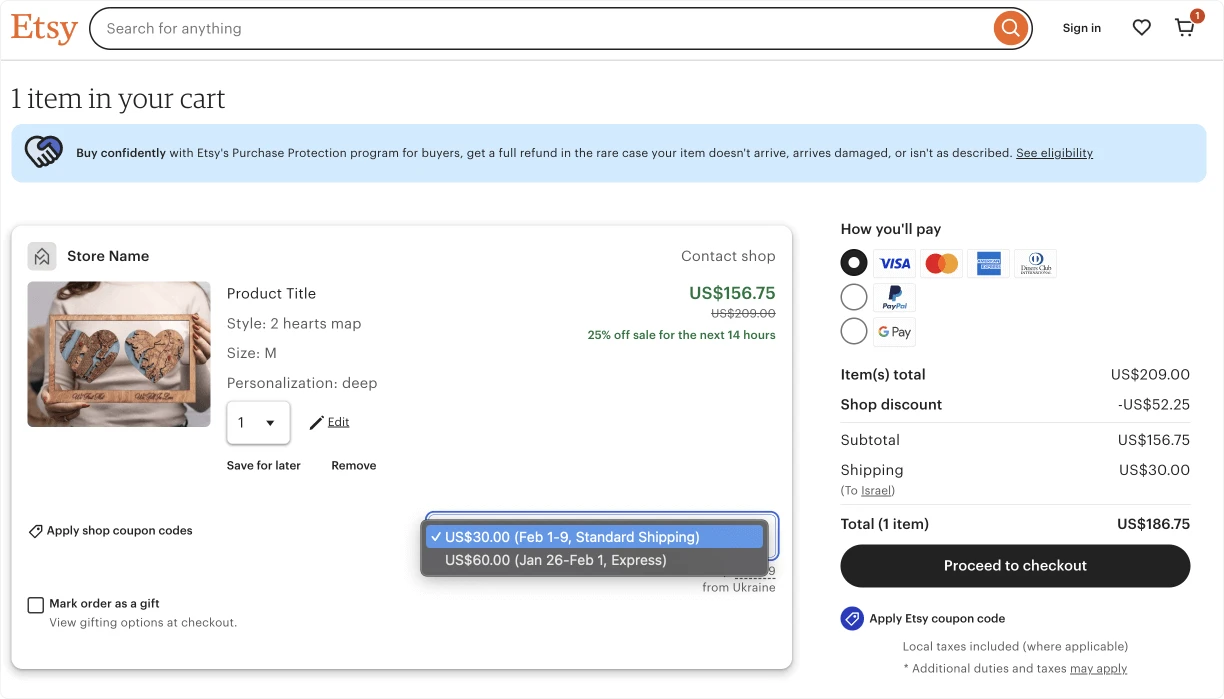
Etsy, by contrast, includes a comprehensive set of features designed specifically for physical product fulfillment. Sellers can configure shipping rates, print shipping labels directly through the platform, and provide tracking information to customers. Etsy also integrates shipping into its broader transaction system, meaning that shipping costs may be factored into fee calculations. This built-in logistics support makes Etsy significantly more suitable for sellers dealing with tangible products, as it streamlines the operational side of order fulfillment.
Checkout and payment
Gumroad offers a fully managed checkout experience, acting as a merchant of record in many cases, which simplifies compliance with tax regulations such as VAT or sales tax across different regions. The platform supports common payment methods, including credit and debit cards as well as PayPal, and provides a streamlined purchasing experience optimized for conversions. Sellers receive payouts via direct deposit or PayPal, depending on their location, and benefit from a relatively hands-off approach to payment processing and tax handling.
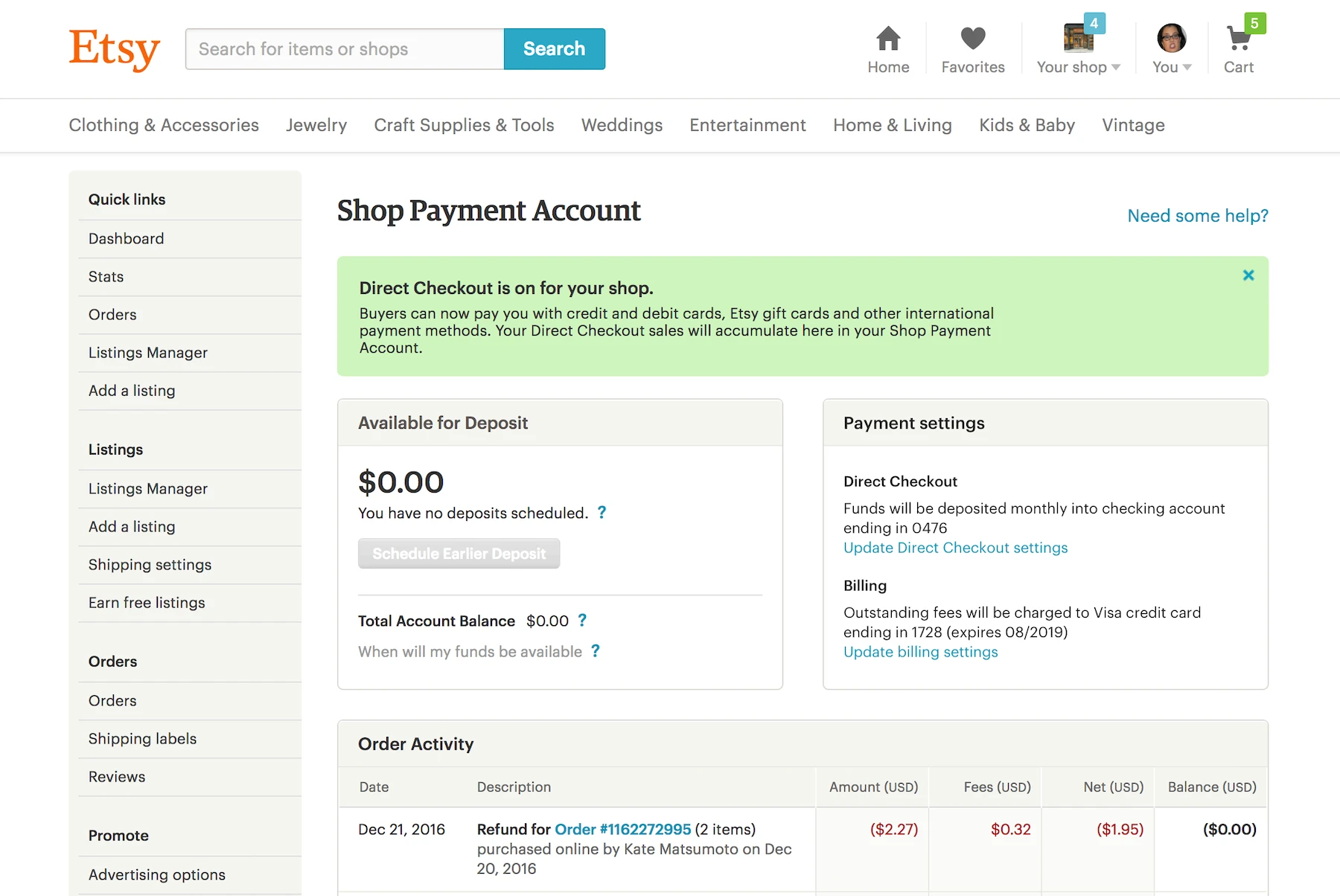
Meanwhile, Etsy uses its own integrated system, known as Etsy Payments, to manage transactions across the marketplace. This system also supports a wide range of payment methods, including credit and debit cards, PayPal, and localized payment options by region. Etsy collects payments on behalf of sellers and distributes earnings according to a scheduled payout system.
Still, unlike Gumroad's simplified structure, Etsy's payment system is closely tied to its layered fee model, meaning that sellers must navigate multiple types of charges and billing cycles. While robust and flexible, this approach introduces extra complexity compared to Gumroad's more streamlined checkout and payment process.
Store customization
Gumroad provides a relatively lightweight but flexible approach to store customization, especially when compared to marketplace platforms. Sellers can create a hosted storefront with customizable product pages, including descriptions, media, and pricing formats, and they also have the option to connect a custom domain, which is important for maintaining brand consistency and ownership.

In addition, one of Gumroad's key strengths lies in its ability to integrate with external websites, allowing sellers to embed product cards or checkout widgets into their own sites, effectively using Gumroad as a backend sales system while controlling the front-end experience. However, customization within Gumroad itself remains limited, as it does not offer advanced design tools such as drag-and-drop builders or deep layout control. As a result, it works best when paired with an external website for a fully branded experience.
In contrast, Etsy operates within a highly standardized marketplace structure, which significantly restricts store customization. Sellers can only modify basic elements such as their shop banner, logo, shop description, and individual product listings, including images, titles, and tags. The overall layout, navigation, and checkout experience are fully controlled by Etsy, leaving little room for brand differentiation. Additionally, Etsy does not support custom domains; since all storefronts exist within the Etsy ecosystem, it's rather challenging to create standalone landing pages or customized sales funnels. This results in a uniform shopping experience across all stores, which benefits usability but limits branding flexibility.
Customer support
Gumroad offers a relatively lean customer support system that focuses primarily on essential functionality rather than a full-service ecosystem. Support is delivered through a help center with documentation and FAQs, as well as email or ticket-based assistance. There is generally no live chat support or dedicated account management for smaller sellers, and the platform lacks a strong official community forum where users can exchange knowledge.
In terms of customer interaction, communication is handled directly between the seller and the buyer, without a marketplace-level mediation layer. This means sellers have full control over customer service and refund handling, but it also places the responsibility entirely on them to manage issues effectively.
Overall, Gumroad's support model emphasizes independence, which can be efficient for experienced creators but limiting for those who need structured guidance.
Etsy, on the other hand, provides a much more comprehensive and structured customer support ecosystem. In addition to a detailed help center and official support channels, Etsy includes built-in systems for buyer–seller messaging, allowing seamless communication within the platform.
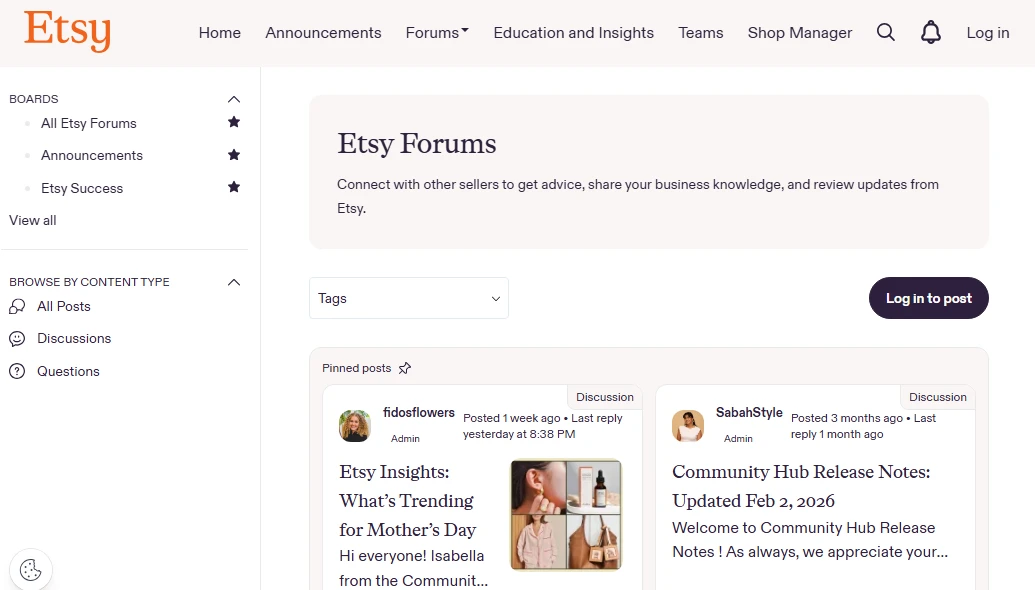
It also offers a formal case resolution process for handling disputes, refunds, and claims, with Etsy stepping in when necessary to mediate conflicts. Furthermore, beyond official support, Etsy benefits from a large and active seller community, including forums and peer groups where users can share advice and troubleshoot issues.
SEO & marketing features
Gumroad does not function as a discovery-driven platform and therefore lacks a meaningful internal SEO system.
Products are not easily discoverable within Gumroad itself, which means visibility depends almost entirely on external traffic sources such as social media, email marketing, content platforms, or personal websites. To support this model, Gumroad provides several built-in marketing tools, including email marketing features for sending updates and promotions, discount codes, basic analytics, and limited affiliate capabilities.
A key advantage of Gumroad is that it enables direct audience ownership, allowing creators to build and maintain their own customer lists, which can be leveraged for long-term marketing. However, the absence of an internal search ecosystem or advertising network means that growth relies heavily on the seller's ability to generate and sustain traffic independently.
Meanwhile, Etsy offers a significantly more robust set of SEO and marketing features centered around its internal marketplace.
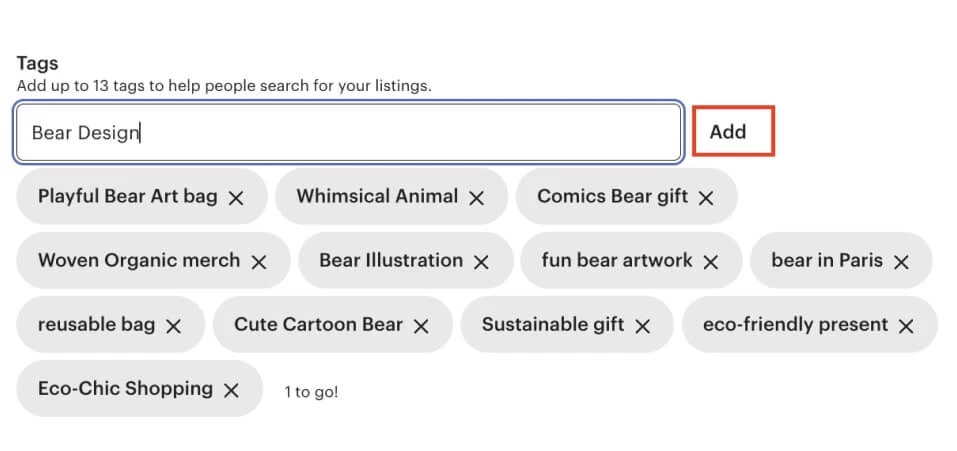
Products are indexed and ranked within Etsy's search engine based on factors such as keywords, tags (with up to 13 per listing), titles, listing quality, reviews, and sales performance. These features create strong opportunities for organic discovery, as buyers actively search and browse within the platform.
In addition to organic SEO, Etsy also provides built-in advertising options, including Etsy Ads for on-platform promotion and Offsite Ads that extend visibility to external channels like Google and Facebook. However, this comes at the cost of limited audience ownership, as sellers do not have direct control over customer relationships in the same way they would on a standalone platform.
Security
Gumroad focuses on providing secure transactions and reliable digital delivery, primarily through its role in handling payment processing. It leverages secure, PCI-compliant payment infrastructure via third-party processors, which ensures that customer payment data is protected during checkout.
The platform also includes features such as secure checkout flows, fraud protection through payment partners, and controlled access to digital products, including measures like restricted downloads or streaming for certain content types. Gumroad often acts as a merchant of record, which simplifies tax compliance by automatically handling requirements such as VAT or regional sales taxes.
However, while it ensures transactional security, Gumroad does not offer an extensive buyer protection or dispute resolution system comparable to large marketplaces, meaning sellers retain more responsibility in managing post-purchase issues.
On the other hand, Etsy provides a more comprehensive, marketplace-level security framework designed to protect both buyers and sellers. It includes secure payment processing through Etsy Payments, advanced fraud detection systems, and a structured buyer protection program that increases trust in transactions. Etsy also offers built-in dispute resolution mechanisms, allowing buyers to open cases and request refunds, with the platform intervening when necessary.
On another note, keep in mind that the platform also introduces stricter platform governance, including policies that can lead to account suspension or enforcement actions.
Which Platform Should You Choose?
When to choose Gumroad
All in all, Gumroad is the better choice if your business is built around digital products and audience ownership.
It works best for creators who already have, or are actively building, a following through channels like social media, email marketing, or content platforms. Because Gumroad does not provide built-in discovery, it rewards those who can drive their own traffic and want full control over customer relationships.
The platform is also ideal if you prioritize simplicity and speed, as you can launch products quickly without dealing with listing fees or complex setup. Additionally, if your focus is on scalable, low-maintenance products (such as ebooks, courses, templates, or memberships), Gumroad’s automated delivery and minimal operational overhead make it highly efficient.
When to choose Etsy
On the other hand, Etsy is the better option if you rely on built-in traffic and marketplace discovery to generate sales.
If you are just starting out and do not yet have an audience, Etsy’s internal SEO and large customer base can help you gain visibility more quickly. The platform also provides a more structured environment, with built-in trust signals like reviews and buyer protection, which can improve conversion rates.
However, keep in mind that this option comes with trade-offs, including higher fees, increased competition, and limited control over branding and customer relationships.
Our Methodology for Gumroad vs Etsy Comparison
To ensure this comparison between Gumroad and Etsy is accurate and practically useful, we followed a structured evaluation process that mirrors how real merchants and teams assess platforms before committing to one:
Step 1. Define comparison criteria
First, we mapped out the core decision factors that actually impact sellers in day-to-day operations and long-term growth, including pricing, product support, shipping and fulfillment, checkout and payments, and more.
Each criterion was selected because it directly influences one of three key business outcomes: profitability, scalability, or control. This choice ensures the comparison reflects real decision-making scenarios rather than surface-level feature lists.
Step 2. Collect and cross-verify data
Next, we gathered information from official platform documentation, including pricing pages, help centers, and feature announcements, to establish a reliable baseline.
However, we did not rely on a single source. To avoid bias or outdated claims, we cross-checked this information against third-party analyses, industry blogs, and user-reported experiences. This step is especially important for areas like fees (which can be layered or conditional), payment handling, and platform policies, where official summaries may not fully reflect real costs or limitations.
Step 3. Evaluate platform fit
Last but not least, rather than assuming a one-size-fits-all answer, we analyzed how each platform performs across different seller profiles, such as:
- Independent creators selling digital products
- Handmade or craft-based businesses
- Beginners with no existing audience
- Sellers looking to scale long-term
That way, our team can determine contextual advantages, meaning a platform may be strong in one scenario but weak in another. The goal is to help readers map their specific situation to the most suitable platform rather than choosing based on general rankings.
Gumroad vs Etsy: FAQs
What's better, Etsy vs Gumroad?
Etsy is generally better for beginners needing built-in traffic for handmade, vintage, or craft-focused products. Gumroad is better for creators with an existing following (social media/email) selling digital products, offering lower fees and better branding control.
How much does Etsy take from a $1000 sale?
On a $1,000 sale (including shipping) in the US, Etsy typically takes approximately $97.25 in mandatory fees (transaction, processing, and listing), roughly 9.7% of the total, assuming no offsite ads. If an off-site ad was used, fees could rise by 12–15% (up to $150 more).
Why are so many sellers leaving Etsy?
Sellers are leaving Etsy primarily due to rapidly increasing fees, intense competition from mass-produced items, and strict, often punitive, policy enforcement.
What platform is best to sell digital products?
Top choices for selling digital products include Etsy and Creative Market for high traffic, Gumroad and Payhip for ease of use, and Shopify for full customization.
Final Words
Overall, the choice between Gumroad vs Etsy ultimately comes down to how you want to run your business and where your strengths lie. Gumroad stands out for its simplicity, low-maintenance setup, and strong focus on digital products and audience ownership. Etsy, on the other hand, excels in visibility and built-in discovery, making it ideal for beginners or sellers who rely on marketplace traffic.
For more eCommerce tips, check out our blog or join our Facebook Community.