As we all know, eCommerce is one of the most competitive markets today, and 2025 alone has already witnessed the rapid emergence of new trends and technologies. Now that 2026 approaches, it’s only natural for merchants to wonder where the future of eCommerce is heading!
No worries; we're here to help. This article will address the 10 most impactful eCommerce trends, including:
- Customer experience first
- Mobile commerce growth
- Checkout optimization
- Omnichannel selling
- Security and data privacy
- Business automation
- Headless commerce
- Voice commerce
- AR and VR shopping
- Sustainable eCommerce
Let's get started.
An Overview of Today’s eCommerce Market
Before answering the question, “What is the future of e-Commerce?”, it’s important to understand where the market stands today.
The current eCommerce landscape is no longer defined by explosive growth. Instead, it is now shaped by market maturity, rising competition, and increasingly selective consumers:
Global eCommerce growth and market maturity
Globally, eCommerce continues to grow, but at a more measured and disciplined pace. According to Statista, global eCommerce sales continue to grow and are projected to surpass $3.6 trillion at the end of 2025, though at a slower rate compared to the pandemic-driven surge.
This slower growth is a sign of market maturity, not decline. In many developed markets, eCommerce penetration has stabilized, meaning most consumers are already shopping online. As a result, growth now comes primarily from taking market share, improving conversion efficiency, and increasing customer lifetime value, rather than simply onboarding new online shoppers.
In addition, such maturity also raises the bar for businesses. Competing on price alone is not enough, meaning merchants are increasingly pressured to optimize existing traffic, reduce churn, and build stronger customer relationships.
How consumer expectations have evolved
As the market matures, consumer expectations have risen faster than platform capabilities. Today’s shoppers no longer compare your store only to direct competitors; they compare it to the best experiences they’ve had anywhere online. Speed, clarity, personalization, and trust are now baseline expectations and no longer differentiators.
Research from Emplifi shows that customers are willing to abandon brands after just a few poor experiences, regardless of price or product quality. At the same time, consumers expect brands to understand them across touchpoints. Generic messaging, irrelevant recommendations, or disconnected experiences signal that a brand is out of touch.
The expanding role of mobile, social commerce, and marketplaces
Another defining feature of today’s eCommerce market is where shopping happens.
Mobile now dominates traffic, and in many regions, it drives the majority of online purchases. According to DemandSage (2025), mobile commerce accounts for nearly 60% of global eCommerce sales, reinforcing the need for mobile-first experiences.

Beyond owned storefronts, social commerce and marketplaces continue to shape consumer behavior. Platforms like Instagram, TikTok, and major marketplaces increasingly function as discovery engines rather than just sales channels. Customers often discover products socially, validate them through reviews or creators, and only then decide where to complete the purchase.
Transition to the future
Taken together, today’s eCommerce market is defined by maturity, higher expectations, and channel complexity. Growth is still very much possible, but it requires a different mindset than before. Instead of chasing volume, leading brands focus on efficiency, experience, and adaptability.
These conditions are precisely what give rise to the key eCommerce trends heading into 2026. In the next section, we’ll explore how businesses are responding to this environment.
Future of eCommerce 2026: 10+ Top Trends
In 2026, the most impactful eCommerce trends focus on customer experience, mobile commerce growth, checkout optimization, omnichannel selling, security and data privacy, business automation, headless commerce, voice commerce, AR and VR shopping, and sustainable eCommerce.
1. Customer experience first
By 2025, it's quite clear that traffic is much easier to buy than loyalty. Of course, most stores can still attract visitors through ads, marketplaces, or social platforms, but converting those visitors into repeat customers has become increasingly difficult.
This shift explains why customer experience (CX) has moved to the center of eCommerce strategy. In fact, according to Emplifi, nearly seven out of ten consumers say they would stop engaging with a brand after experiencing poor service twice.
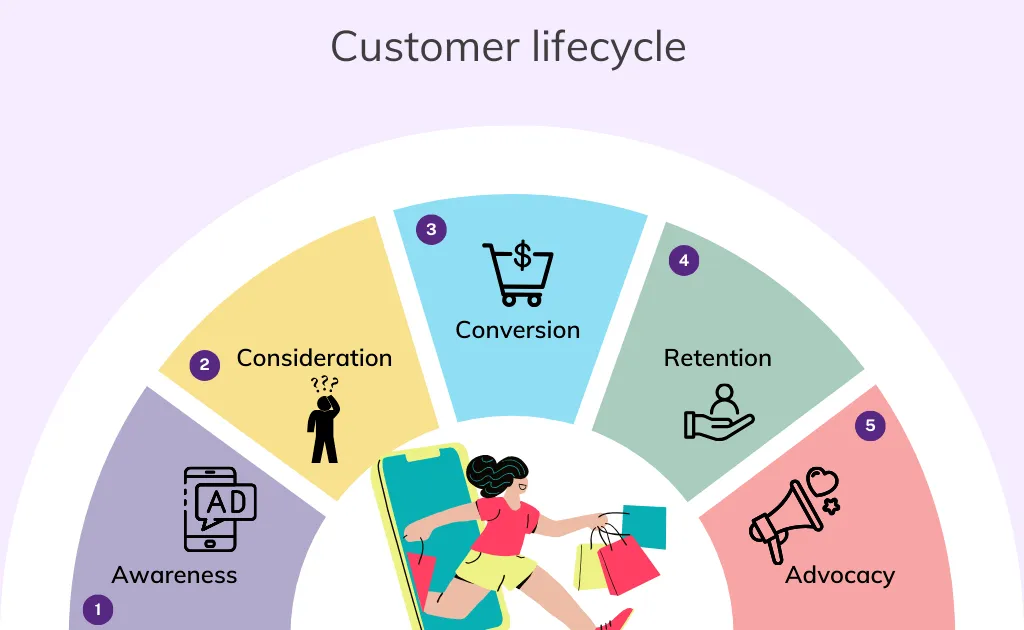
Remember that what has changed is not customer taste, but customer tolerance. After all, today’s shoppers are exposed to dozens of comparable stores within minutes. Hence, when navigation is unclear or product information is incomplete, they simply leave instead of trying to “figure it out.”
That's why, for merchants, following the “customer experience first” trend fundamentally reshapes how growth works.
Instead of relying on higher traffic volume, stores improve performance by reducing friction at each decision point, such as finding products, understanding value, and completing purchases. These changes increase conversion rates and, more importantly, repeat purchase behavior. Over time, they compound into higher customer lifetime value, meaning each acquired customer generates more revenue before churn.
Learn our best 20 tips to improve customer experience here.
2. Mobile commerce growth
At this point, the dominance of mobile commerce is quite palpable and rather predictable. In fact, it is projected to be responsible for about 59–60% of global eCommerce sales, with total mobile commerce value surpassing $4 trillion worldwide (Elementor).
Such a growth also fundamentally changes how stores convert demand into revenue. On desktop, customers may tolerate friction; on mobile, they don’t. Slow load times, dense layouts, or interactions designed for a mouse instead of a thumb create immediate drop-off.
As a result, in 2026 (and likely the next few years), it's important that merchants strip experiences down to what actually matters: clarity, speed, and momentum. In short, customers should be able to move from curiosity to purchase without committing time or attention. When mobile UX improves, engagement metrics rise first, and then conversion will naturally follow.
3. Checkout optimization
Even with stellar UX and mobile performance, conversions stall if the checkout process is cumbersome. Research from Neguru continues to demonstrate the importance of checkout optimization in driving conversions, as over 70% of shopping carts are abandoned before purchase due to complex forms and unclear payment steps.
The common problem is that many checkout flows still reflect internal business logic rather than customer behavior: too many fields, forced account creation, unclear fees, or unfamiliar payment steps. Each extra decision point increases hesitation, and hesitation (especially on mobile) almost always means abandonment.
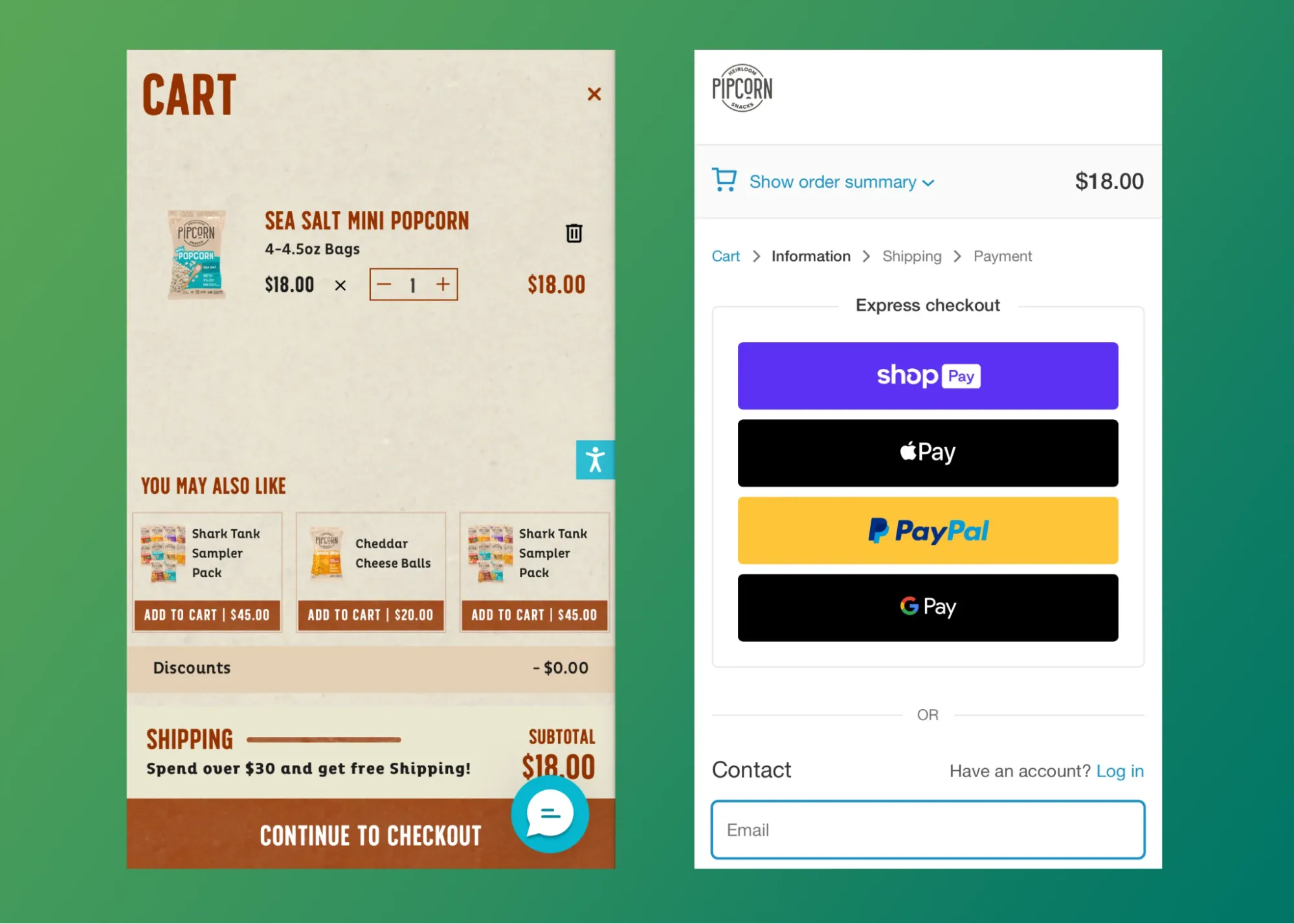
Hence, your store should spend more of the budget on optimizing checkout directly. After all, unlike top-of-funnel tactics, checkout improvements extract more value from existing demand. Fewer abandoned carts mean higher realized revenue per visitor, more predictable cash flow, and reduced reliance on remarketing to “recover” lost intent.
Check out the 15 best eCommerce checkout optimization tips here.
4. Omnichannel selling
Here's an important reminder: omnichannel selling has emerged not because merchants want more channels, but because customers already operate across them.
In fact, shopping journeys rarely begin and end in one place. Discovery might happen on social media, validation on marketplaces, and purchase on a branded store. Such a pattern is clearly shown in recent data from eCommerce expert Wunderman Thompson, in which around 60% of global consumers say they prefer brands that offer seamless omnichannel interactions.
The motivator behind this trend is simple: ignoring omnichannel experience leads to both friction and lost revenue.
When channels are disconnected, customers encounter inconsistency (e.g., inconsistent pricing, unavailable inventory, or repeated steps), each of which introduces doubt and increases drop-off. Omnichannel strategies solve this by aligning systems and ensuring data flows better across touchpoints.
5. Security and data privacy
As customer journeys span devices and channels, security and data privacy play a central role in trust. According to a survey conducted by ClearSale, 92% of U.S. online shoppers consider eCommerce security a critical factor when deciding where to buy, and 83% said they would shop more with retailers that are transparent about fraud prevention.
So, why have security and data privacy become such prominent experience factors? The answer is that trust now influences conversion as much as price or design.

Needless to say, when customers feel safe, they are much more likely to complete purchases, reassured that the brand respects their information and their time. In addition, transparent data practices also reduce friction during checkout and support long-term loyalty, especially in omnichannel environments where data moves across platforms.
For more guidance, you can look through our 8 best eCommerce security practices.
6. Business automation
After improving customer-facing experience, most eCommerce stores hit a less visible but more dangerous ceiling: operations don’t scale at the same speed as demand. By 2025, this gap has become one of the biggest growth killers for mid-sized and fast-growing stores.
That explains why business automation has been given more spotlight. According to McKinsey, companies that automate core workflows can reduce operational costs by 20–30%, while companies that fail to automate core workflows experience compounding inefficiencies as they scale.
Remember, the real impact of automation is not speed; it is the removal of decision fatigue. Your teams no longer have to spend most of the time reacting to issues (e.g., checking stock mismatches or fixing order errors). As a result, instead of adding headcount as order volume grows, stores can now freely reinvest resources into other important criteria like strategy, merchandising, experience improvements, and more.
7. Headless commerce
In the past, traditional, tightly coupled commerce architectures were designed for stability and not experimentation. Since every frontend change risked backend disruption, many teams had to delay improvements as a result.
The pressure inevitably led to the rise of headless and composable commerce. According to Gartner, over 50% of enterprises are expected to adopt composable or headless architectures specifically to increase agility and reduce dependency between systems.

This trenđ will likely change how growth decisions are made. Since frontend experiences can be iterated independently, channels can be added without restructuring the core system, and integrations become modular instead of fragile. Better yet, experimentation (like A/B testing layouts or launching new devices) no longer threatens store stability, allowing teams to remove technical constraints that previously capped experience quality.
Don't know which platform to get started? Here are the 11 best headless commerce platforms at the moment.
8. Voice commerce
Alongside traditional commerce, voice commerce has also emerged as one of the key sectors for the future of eCommerce in 2026. Reports from the Market Reports World predict that more than 8.4 billion voice assistants will be active by 2028, exceeding the global population.
Note, however, that voice commerce does not replace storefronts. It simply compresses repeat behavior; stages like reordering or basic product queries can now shift away from screens, reducing friction for loyal customers. That way, your store can strengthen retention and increase purchase frequency without increasing cognitive load.
And as customers become accustomed to frictionless actions, expectations for visual confidence rise for more complex purchases. Here's where AR and VR shopping enter the picture.
9. AR and VR shopping
Despite decades of innovation, eCommerce still struggles with one fundamental limitation: customers cannot physically experience products before buying.
In 2025, AR and VR gain traction not as novelty features, but as tools to reduce uncertainty – one of the most expensive problems in online retail. According to Snapchat reports, products with AR experiences show up to 94% higher conversion rates compared to non-AR listings; by 2025, the number of global consumers regularly using AR is expected to reach around 4.3 billion.
It's not hard to see why AR is growing to be the new norm: for customers, immersive visualization bridges the trust gap between online and offline shopping.

Seeing products in context creates emotional reassurance. Customers who understand what they are buying are less likely to return products, request support, or feel disappointed. And as confidence increases over time, values, transparency, and responsibility also become part of the buying decision rather than experiences alone, which leads directly into sustainable eCommerce.
10. Sustainable eCommerce
Lastly, sustainability has become structurally unavoidable in eCommerce because customers now connect brand credibility with long-term responsibility. Despite ongoing cost-of-living and inflation concerns, shoppers remain willing to spend roughly 9.7% more on products they perceive as sustainable, according to PwC.
- For merchants, sustainability impacts growth mechanics in two ways: First, operational efficiencies (optimized packaging, logistics, and sourcing) reduce long-term costs.
- Transparency strengthens brand trust, which stabilizes demand even when prices or markets fluctuate.
Simply put, sustainability becomes both a risk-reduction strategy and a competitive edge. In the future of eCommerce, sustainability is no longer an optional message; it is part of what makes a brand feel legitimate and future-proof.
How AI Is Transforming The Future of eCommerce
Alongside the trends shaping the future of eCommerce, AI has become a major force driving change across online retail. In 2026, it is transforming eCommerce through smarter product discovery, always-on customer support, dynamic pricing strategies, faster visual and voice search, more accurate demand forecasting, and stronger fraud prevention.
1. Smarter product discovery
For starters, AI-driven discovery helps replace rigid structures with probabilistic intent modeling.
The system observes how users navigate: which products they compare, where they hesitate, what they ignore, and how similar users eventually convert. These behavioral signals are continuously aggregated to infer what a shopper is likely trying to accomplish in the current session.
Then, based on this inference, AI dynamically reshapes discovery surfaces in real time. Product rankings, recommendations, and even category emphasis adapt as intent signals evolve during the session. As a result, customers encounter fewer irrelevant options, and the path from curiosity to purchase shortens, which is especially critical in mobile contexts where attention is limited.
2. Always-on customer support
Back then, support only engaged with customers when a specific issue showed up (e.g., a delivery was delayed or a payment failed). As order volume increased, this reactive model tended to scale rather poorly.

Fortunately, AI can reshape support by shifting it upstream, closer to the moment uncertainty appears. By monitoring order data, shipment timelines, return behavior, and historical issue clusters, AI systems can anticipate common friction points before customers explicitly ask for help. Answers are surfaced contextually, which prevents tickets from being created at all.
3. Dynamic pricing strategies
Another critical factor is pricing, which often breaks down when it is treated as a static decision in a dynamic environment. Demand fluctuates continuously due to promotions, competition, seasonality, and channel mix, yet traditional pricing models update slowly, often based on historical averages or manual reviews.
AI-driven pricing, on the other hand, operates as a closed feedback loop that continuously observes how price changes affect conversion, revenue, and inventory movement under different conditions. As these relationships are learned, prices can adjust automatically within predefined constraints. That way, slow-moving items can respond early to demand softness, while high-velocity products protect margin longer.
4. Faster visual and voice search
On many occasions, search friction increases when customers cannot articulate intent through keywords. That's why AI-powered visual/voice search can bypass keywords by mapping semantic meaning and similarity:
- Visual search analyzes shapes, colors, and patterns within images
- Voice search converts spoken language into intent embeddings.
Better yet, these systems learn from interaction outcomes. When users click, refine, or abandon results, feedback loops improve future matching accuracy. Over time, search becomes tolerant of both ambiguity and variation and adapts to how people naturally express intent.
5. Accurate demand forecasting
Similar to smart, user-focused search, AI can also replace fixed predictions in demand with continuously updated expectations. They ingest real-time sales velocity, campaign impact, channel behavior, and regional variation to recalculate forecasts as conditions change.
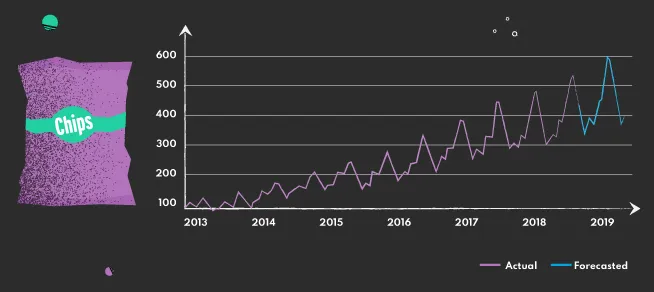
In short, forecasting now turns into an adaptive process rather than a periodic exercise. Inventory planning aligns more closely with actual demand trajectories, purchasing decisions become more precise, and fulfillment capacity can be adjusted proactively.
6. Stronger fraud prevention
As mentioned earlier, security, including fraud prevention, is one of the most critical factors in a store's long-term success.
With AI, your team can now reframe fraud detection as behavioral anomaly detection. Instead of matching transactions against known fraud patterns, models learn what legitimate behavior looks like across devices, locations, and purchasing rhythms. Likewise, deviations are also evaluated probabilistically in real time.
Such designs allow risk to be assessed contextually rather than categorically, allowing legitimate transactions to proceed as usual while isolating suspicious behavior with minimal disruption. The outcome is a more resilient checkout environment – one that protects revenue and trust simultaneously.
Challenges of AI Implementation
- Data quality, fragmentation, and availability are major blockers: AI relies on large volumes of clean, unified data, yet many eCommerce businesses still operate with messy or siloed datasets across CRM, ERP, and marketing tools. They directly lead to inaccurate recommendations and weak AI outcomes.
- Privacy, security, and compliance complicate personalization: Using customer data for AI increases the risk of breaches and regulatory violations (GDPR, CCPA). Even effective personalization can backfire if customers feel their data is misused or insufficiently protected.
- High implementation and maintenance costs limit adoption: AI requires significant upfront investment in infrastructure, tools, and ongoing optimization. For many SMEs, these costs slow adoption or force trade-offs that reduce AI’s real impact.
- Legacy system integration remains technically challenging: Many existing eCommerce platforms were not built for AI, making integrations complex and resource-intensive. This delays deployment and increases dependency on engineering teams.
- Talent shortages hinder long-term effectiveness: AI solutions need continuous monitoring and tuning, but skilled data scientists and AI engineers are scarce and expensive. Without internal expertise, AI performance often degrades over time.
- Ethical risks and customer expectations must be carefully balanced: Biased models or opaque decision-making can damage trust, but customers simultaneously expect hyper-personalization and ethical data use. To balance them and keep AI-driven experiences credible, human oversight is essential.
To avoid these risks, check out these 15 real-life examples of AI in eCommerce.
What’s Next? Visions for 2030
Looking beyond 2026, the future of e-Commerce 2030 will not be shaped by the emergence of individual technologies, but by how those technologies reinforce one another over time.
By 2030, AI, immersive experiences, and automation will no longer feel new or optional like they are now. Instead, they will be embedded into the baseline expectations of both merchants and customers:
How AI will impact eCommerce by 2030
At this point, AI will shift from being a support tool to becoming the default execution layer of eCommerce operations. Many processes that still require manual oversight today (such as merchandising adjustments, inventory planning, campaign optimization, and fraud evaluation) will increasingly operate autonomously within strategic boundaries set by humans.
Understandably, this evolution will fundamentally change how teams work. Now that they no longer have to waste time reacting to reports or dashboards, eCommerce teams can focus on defining goals and priorities while letting AI systems continuously test, learn, and optimize in the background. Decision cycles that once took days or weeks will happen in minutes, so businesses will respond to market shifts almost instantly.
The impact on customers will also be profound. Product discovery, pricing, and messaging will adapt to context (time, intent, and behavior) rather than relying on static segments. In short, personalization will no longer stand out as a feature in 2030; it will simply be how basic eCommerce works.
The role of AR and VR in future shopping experiences
As AI optimizes decisions behind the scenes, AR and VR will reshape how customers evaluate products before purchase. By 2030, immersive visualization is expected to move beyond experimentation and become a standard part of online shopping, particularly for categories where confidence and fit strongly influence conversion.
AR will be deeply integrated into everyday browsing, allowing customers to preview products in real environments with minimal effort. Instead of relying on imagination or static images, shoppers will be able to assess scale, appearance, and compatibility instantly. That way, merchants can reduce uncertainty early in the decision process, rather than correcting it after purchase through returns.
VR, while more contextual, will play an increasing role in high-consideration journeys. Virtual showrooms, guided product exploration, and immersive brand experiences will help bridge the gap between physical and digital retail. Together, AR and VR will shift competition away from price alone and toward clarity, confidence, and experience quality.
How eCommerce businesses can stay ahead of the future
The key lesson heading toward 2030 is that future readiness is architectural, not tactical. Adopting AI tools or immersive features in isolation will not be enough if the underlying platform cannot support rapid integration and scale. If not properly addressed, rigid systems that require heavy customization or frequent rebuilds will only hold businesses back.
Hence, to stay ahead, eCommerce businesses must invest in platforms and architectures designed for change, including systems that support automation, composable integrations, headless frontends, and seamless data flow across channels. Migrating to eCommerce platforms using trusted services like LitExtnesion also allows businesses to adopt emerging capabilities incrementally rather than through disruptive overhauls.
Need Help To Migrate?
LitExtension provides a well-optimized All-in-One migration service for your data transfer!

Verdict:
By 2030, the most successful eCommerce brands will not be those chasing every new trend, but those that made early, strategic decisions to modernize their foundations. With the right infrastructure in place, AI, AR, and future innovations become accelerators of growth – and that is what ultimately separates leaders from laggards in the future of eCommerce.
Future of eCommerce: FAQs
How will AI impact eCommerce?
Artificial intelligence (AI) will transform the entire customer journey and back-end operations, leading to hyper-personalization, increased operational efficiency, and higher revenue.
What's the role of Augmented Reality (AR) & Virtual Reality (VR)?
AR and VR bridge the digital-physical gap in eCommerce. They offer immersive "try-before-you-buy" experiences (virtual try-ons for clothes, visualizing furniture in your home), boosting engagement and conversions, and significantly reducing returns.
How to stay ahead in the future of eCommerce?
To stay ahead in eCommerce, you should embrace technology like AI, AR/VR, voice search, visual search, and blockchain. Also, prioritize hyper-personalization, seamless omnichannel experiences (BOPIS, click-and-collect), robust cybersecurity, and sustainable practices.
Final Words
Looking ahead, the future of eCommerce is not about chasing every new trend; you need to build the right foundation to support change. As customer expectations will continue to rise, businesses that rely on rigid systems or outdated platforms will find it harder to adapt as these shifts accelerate.
So if your current platform is holding you back, migrating to a more future-ready solution is often the most strategic next step. With 12+ years of experience serving 300,000+ clients, LitExtension can help your business migrate safely, accurately, and with minimal downtime. Get in touch with us today!
For more eCommerce tips, check out our blog or join our Facebook Community.