AI in eCommerce is no longer about experimentation. It is already shaping how online stores personalize experiences, manage operations, and make decisions at scale. For many merchants, the real question is no longer if AI should be used, but where it creates the most value in an eCommerce context.
In this article, we will walk you through everything you need to know about how artificial intelligence is used in eCommerce. More specifically, here are the main key points:
- How AI is Transforming eCommerce;
- 15 Ways AI is Transforming eCommerce Operations;
- How to Implement AI for eCommerce;
- Challenges & Limitations of AI in eCommerce.
Let’s get started!
Key Takeaways:
- AI in eCommerce has moved from experimentation to everyday execution, driving real impact on growth and efficiency.
- The strongest value comes from personalization, smarter decision-making, and scalable operations across the entire customer journey.
- High-impact AI use cases span recommendations, search, pricing, inventory forecasting, fulfillment, content, and retention.
- Successful adoption depends on clear business goals, high-quality data, and starting with ROI-driven use cases.
- AI enhances, rather than replaces, merchants by handling complexity at scale while humans focus on strategy and differentiation.
How AI is Transforming eCommerce?
For merchants and online store owners, AI is no longer an abstract concept. It is actively reshaping how you attract customers, grow revenue, and manage day-to-day operations. The impact is most visible across a few core areas that directly affect performance and scalability.
Customer experience and shopping journeys
First of all, AI changes how you design and manage the customer journey. Storefronts no longer need to rely on static layouts or fixed merchandising rules. With AI, product discovery, recommendations, and on-site assistance can adapt automatically based on real customer behavior and intent.
Marketing and revenue growth
AI is also changing how you approach growth. Instead of broad campaigns and manual segmentation, you can use AI to personalize messaging, optimize timing, and prioritize high-value customers automatically. As a result, marketing decisions become faster and more data-driven.
Industry data supports this shift. Salesforce reported in 2024 that over 90% of retailers surveyed were already using generative AI for personalization, particularly in product recommendations and marketing content.
On a larger scale, McKinsey estimates that generative AI could unlock $240–$390 billion in value for the retail sector in 2023, largely through improved margins and more efficient revenue generation. These figures highlight how AI in eCommerce is directly tied to financial performance.
Operations and efficiency
Beyond customer-facing features, AI is transforming how you run your store behind the scenes. Inventory planning, demand forecasting, and fulfillment decisions benefit from predictive insights rather than static assumptions. This allows you to respond faster to demand changes and reduce costly errors.
The operational impact is already measurable. According to Salesforce, 83% of retailers report improved efficiency after adopting AI in core workflows. For merchants, this means fewer manual processes, better resource allocation, and the ability to scale without adding complexity at the same rate.
Trust, fraud, and risk management
As your store grows, so do risks related to fraud, fake reviews, and payment abuse. AI strengthens this area by identifying unusual patterns that are difficult to catch with traditional rules. At the same time, it helps maintain a smooth checkout experience for legitimate customers.
During the 2024 holiday season, Salesforce reported that AI-influenced online sales in the U.S. reached $282 billion, alongside a sharp increase in chatbot usage. This highlights how AI is becoming embedded not only in sales and support, but also in risk control and trust-building across eCommerce operations.
What this transformation means for you
When you step back, the transformation becomes clear:
- You move toward data-driven decision-making across marketing, operations, and merchandising.
- You reduce reliance on manual optimization and static rules.
- You gain the ability to scale your business more efficiently.
Ultimately, AI does not replace your role as a merchant. It supports you by handling complexity at scale, so you can focus on strategy, growth, and long-term differentiation in an increasingly competitive eCommerce landscape.
15 Ways AI is Transforming eCommerce Operations
Now that you’ve seen how AI is transforming eCommerce at a broader level, the next step is understanding how you can apply it in practical, day-to-day scenarios. Based on our experience and industry research, we’ve narrowed this down to 15 use cases that consistently deliver value for online businesses.
1. Personalized product recommendations
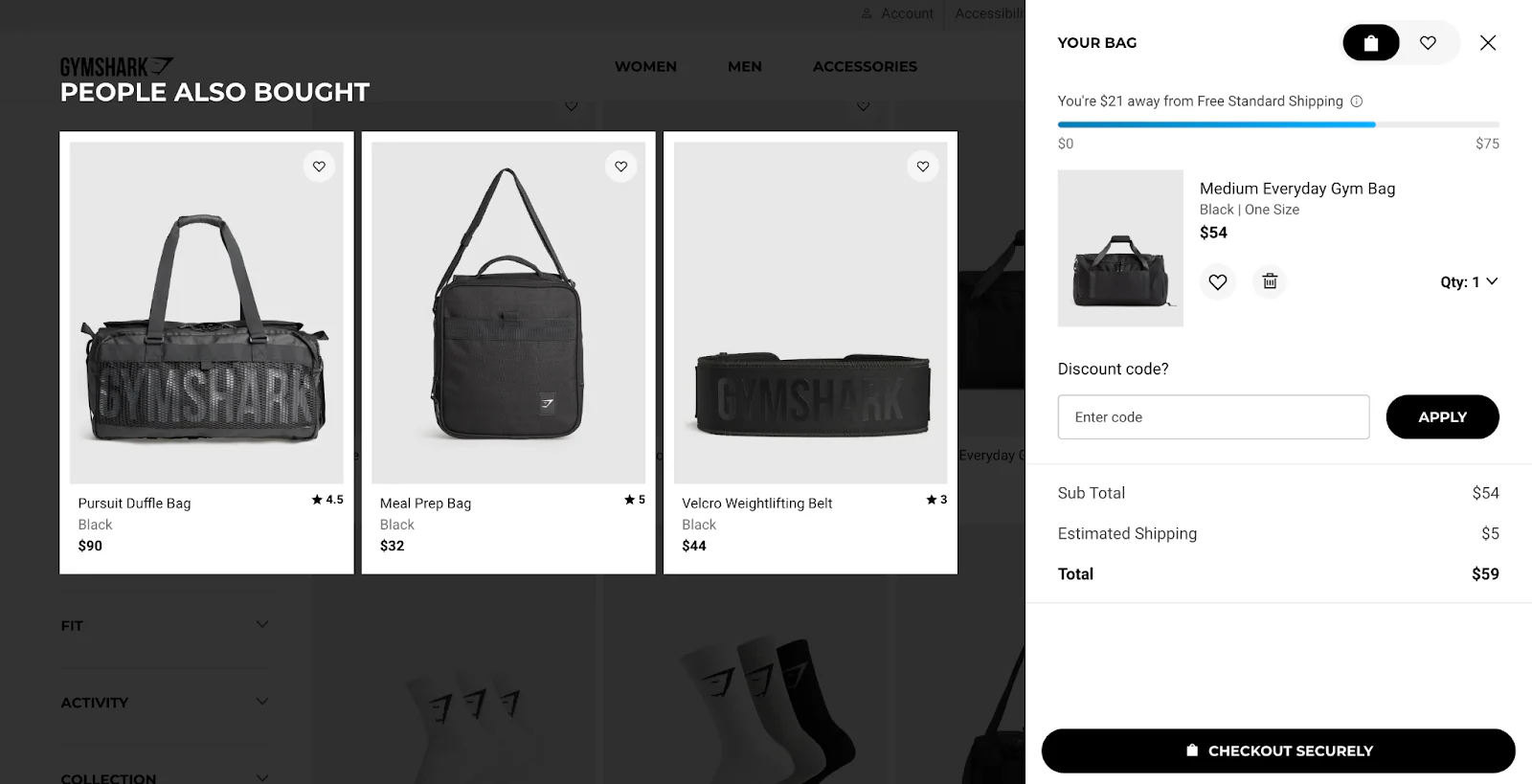
For many merchants, this is often the first place where AI in eCommerce shows clear impact. Instead of manually defining “related products” or bestsellers, AI analyzes browsing patterns, past purchases, and intent signals to surface products that are actually relevant to each visitor.
You see this approach at scale with brands like Gymshark, but the same logic now applies to smaller stores as well. When recommendations adapt in real time, shoppers discover more items naturally, which often leads to higher average order values and stronger cross-sell performance without extra manual work.
2. Smarter product discovery and search
Search is one of the most common friction points in an online store. When customers cannot find what they are looking for, they leave. AI changes this by shifting search from keyword matching to intent understanding.
With AI-powered discovery, you can support natural language queries, image-based search, and smarter ranking based on context. This means customers no longer need to search “correctly” to get good results. Over time, this leads to lower bounce rates and faster purchase decisions, especially for large or complex catalogs.
3. Conversational commerce & AI assistants
Customer support and product guidance do not always scale as your store grows. That is where conversational AI becomes useful. AI assistants can handle repetitive questions, track orders, and guide shoppers through product selection without waiting for a human response.
In practice, many merchants rely on customer-facing, AI-powered tools such as Gorgias, Zendesk AI, Tidio, Ada, or LivePerson to support these interactions across chat and messaging channels.
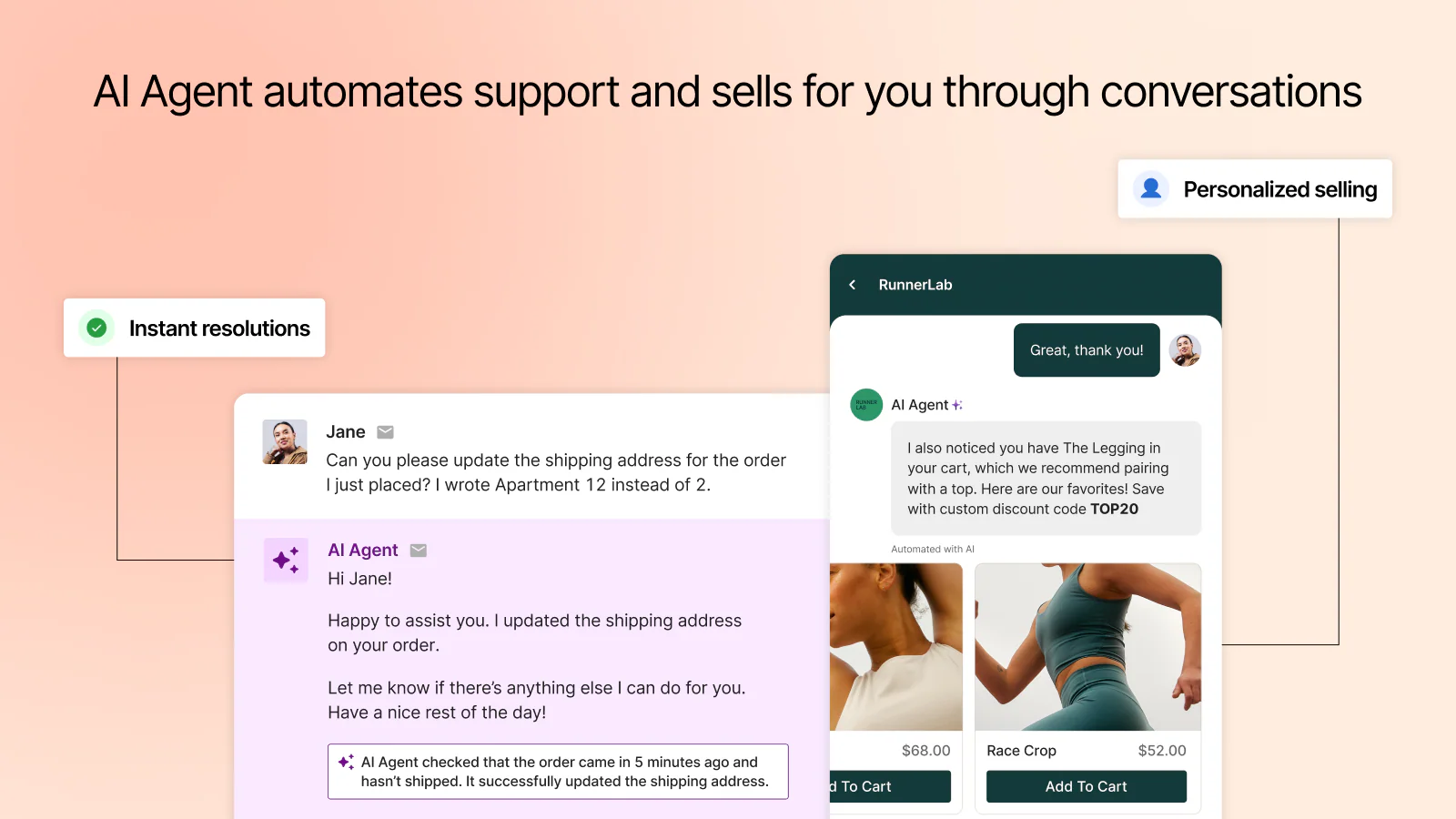
More importantly, these assistants do not replace your team. They help filter and resolve simple interactions, so your staff can focus on higher-value conversations. For many merchants, this leads to faster response times and more consistent customer experiences, especially during peak periods.
4. Visual intelligence & image recognition
In categories where appearance matters, text alone is not enough. Visual intelligence allows AI to analyze product images and understand visual attributes such as color, shape, or style. This capability supports use cases like visual search, improved product categorization, and even counterfeit detection.
For you as a merchant, it means customers can discover products visually, while your catalog stays cleaner and easier to manage behind the scenes.

5. Virtual try-on and experiential shopping
For certain product categories, customers hesitate because they cannot fully visualize what they are buying. Virtual try-on powered by AI helps reduce that gap by letting shoppers preview products in a realistic context before making a decision.
You can already see this in action with brands like Warby Parker, which uses AI-based virtual try-on so customers can see how different frames look on their face, or Sephora, where shoppers can test makeup shades digitally before purchasing. In fashion, brands such as Zara have also experimented with AR and AI-driven fitting experiences to enhance online browsing.

6. Predictive inventory management
Today, you can use AI to forecast demand more accurately by analyzing historical sales data, current trends, and patterns that traditional methods often miss. According to McKinsey research in 2024, AI-driven inventory forecasting enables brands to reduce overall inventory levels by 20–30% without hurting service levels, freeing up cash flow and reducing waste.
For you, asmerchants, this means fewer stockouts, lower carrying costs, and more reliable fulfillment – outcomes that directly support both customer satisfaction and profitability. Many leading retailers are already piloting these systems, shifting away from reactive restock strategies toward predictive replenishment with real-time insights.
7. Sales & demand forecasting
Forecasting is closely related to inventory, but the focus here is revenue planning. AI helps you anticipate future sales patterns by continuously learning from trends, promotions, and seasonal behavior.
On platforms such as Shopify and BigCommerce, demand forecasting is usually enabled through apps and external analytics tools, not built-in functionality. When forecasts update automatically, you can plan campaigns, staffing, and replenishment with far more confidence than spreadsheet-based models allow.
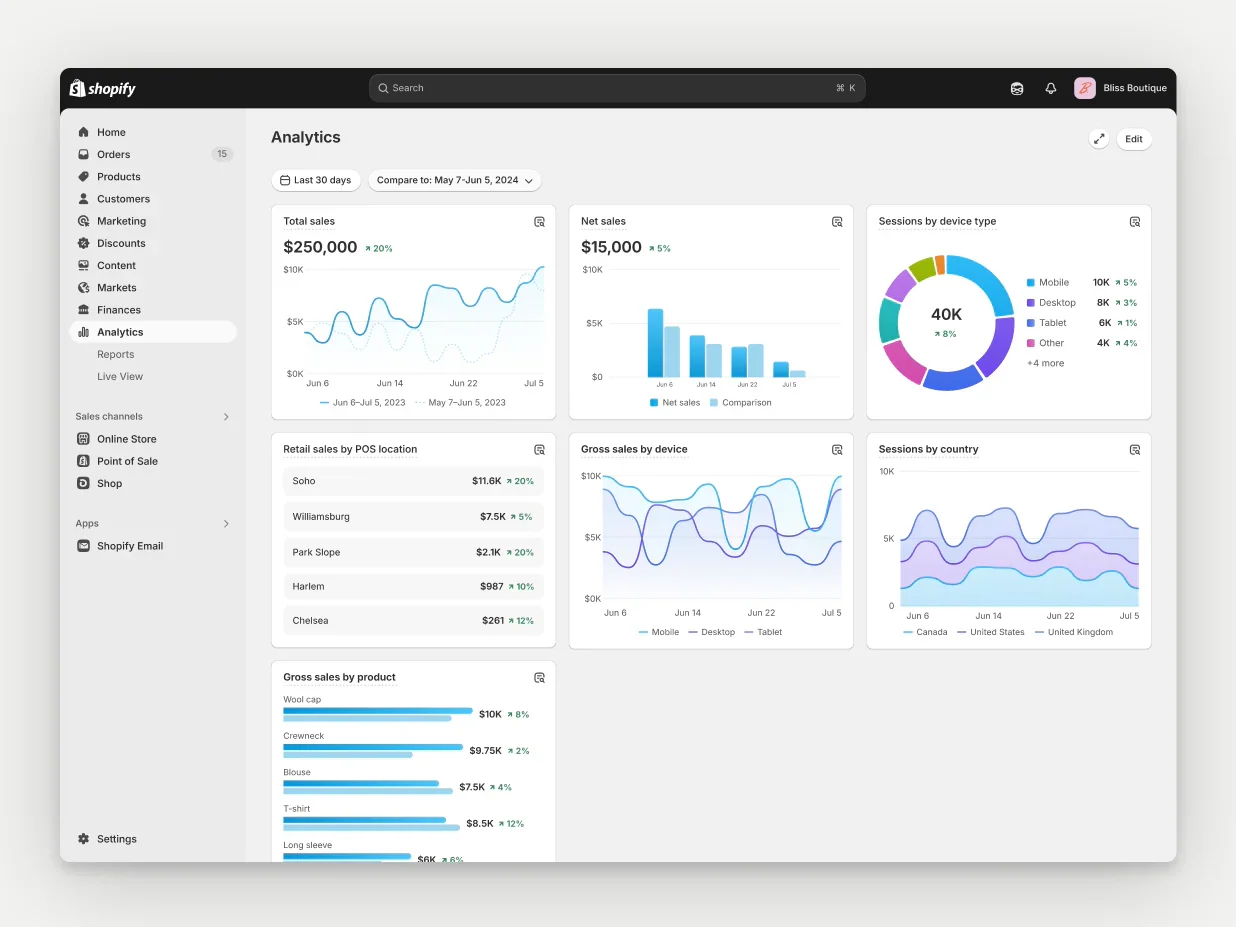
If you’re running on Shopify and want a clearer view of which AI tools actually work within this ecosystem, our eBook will break this down in details:
8. Order intelligence & fulfillment optimization
Once orders start flowing in, execution becomes the real challenge. Order intelligence uses AI to decide how and where orders should be fulfilled based on inventory availability, location, and delivery speed. This approach is especially useful if you sell across multiple warehouses or channels.
A well-known example of this use case comes from Walmart, which began applying AI to order fulfillment decisions as early as 2023.
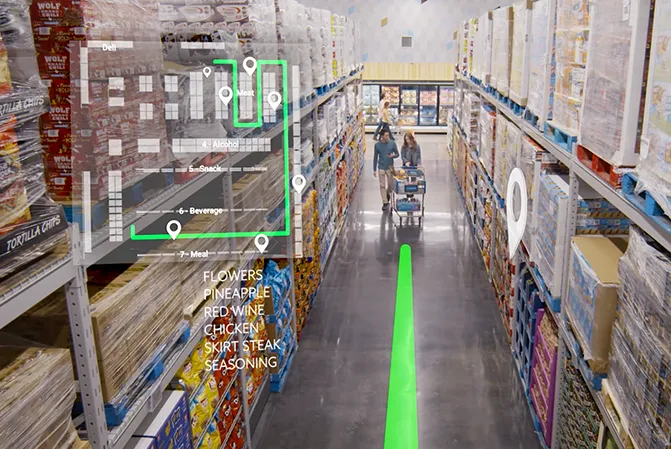
To handle high-order volumes across both online and physical stores, Walmart’s system evaluates factors such as inventory availability, customer location, and delivery speed. Based on these signals, it then decides whether an order should ship from a warehouse, a nearby store, or a fulfillment partner.
9. Supply chain & logistics optimization
Logistics performance has a direct impact on customer satisfaction, even though shoppers rarely see the complexity behind it. AI helps optimize shipping routes, carrier selection, and inventory flow by analyzing large volumes of logistics data in real time.
Major logistics and commerce providers already apply this at scale, but merchants benefit indirectly through smarter shipping recommendations and fulfillment integrations. Over time, these optimizations help reduce shipping costs and improve delivery reliability, which becomes increasingly important as customer expectations rise.
10. Product intelligence & catalog optimization
As your catalog grows, maintaining clean and consistent product data becomes harder. Product intelligence uses AI to analyze attributes, images, and performance data to improve categorization and data quality.
This is particularly valuable for stores with large or frequently changing catalogs. AI can flag missing attributes, suggest better classifications, and support scalable product experience management. For you, that means a more structured catalog, better discoverability, and fewer manual fixes over time.
11. Fraud detection, risk management & compliance
Fraud patterns change constantly, so static rules often fall behind. AI addresses this by learning from transaction data and detecting abnormal behavior in real time. It evaluates signals such as device changes, unusual locations, or unexpected purchase velocity. Because of this, risky activity can be flagged before orders are fulfilled.
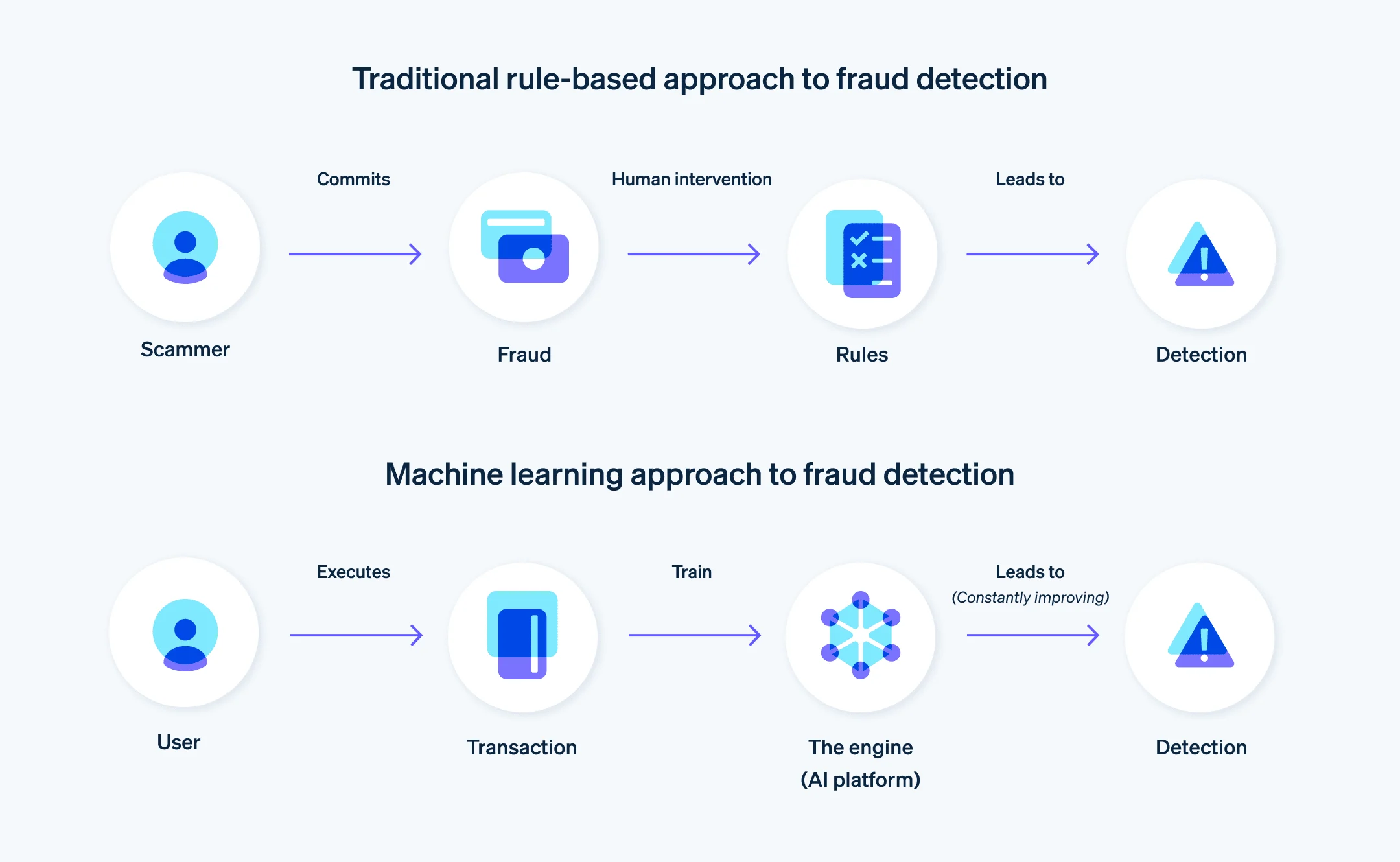
A clear example comes from Stripe, which uses machine learning models to assess transaction risk in real time. These models help balance fraud prevention with payment approval rates, allowing merchants to reduce chargebacks while minimizing friction for legitimate customers.
12. Dynamic pricing & revenue optimization
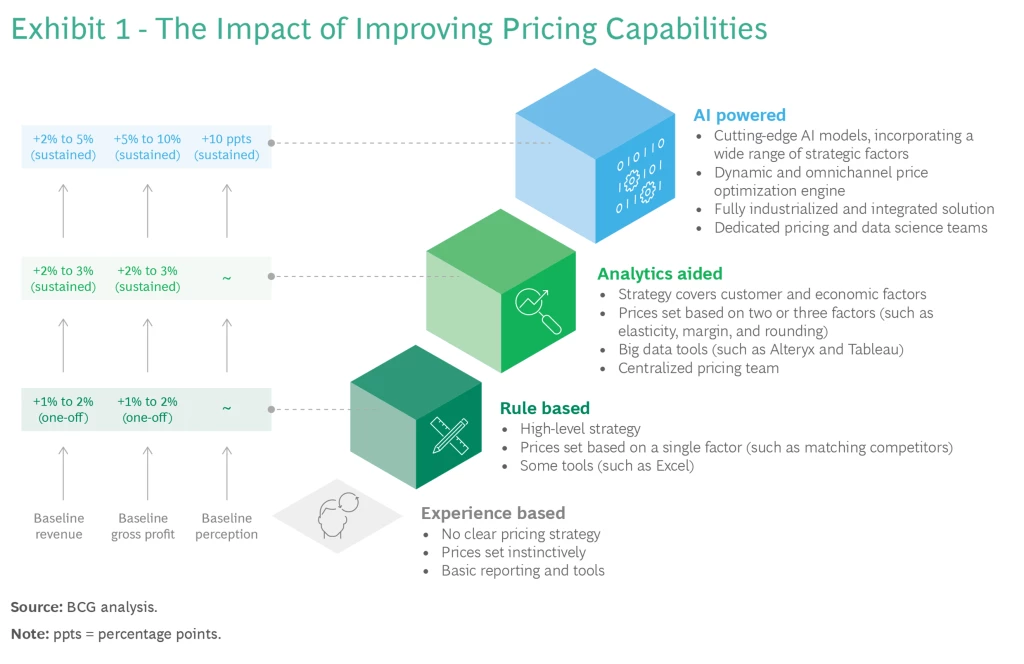
Pricing decisions rarely stay fixed, especially in competitive markets. AI-powered pricing models continuously analyze demand, inventory pressure, and historical performance. Based on these inputs, prices or promotions can be adjusted dynamically. However, the goal is not constant discounting.
According to BCG in 2024, AI-powered pricing can increase gross profit by 5–10% when applied consistently across categories. That impact comes not from constant discounting, but from smarter timing and targeting. Many merchants now use pricing intelligence tools alongside their eCommerce platforms to protect margins while remaining competitive.
13. Customer segmentation & lifecycle intelligence
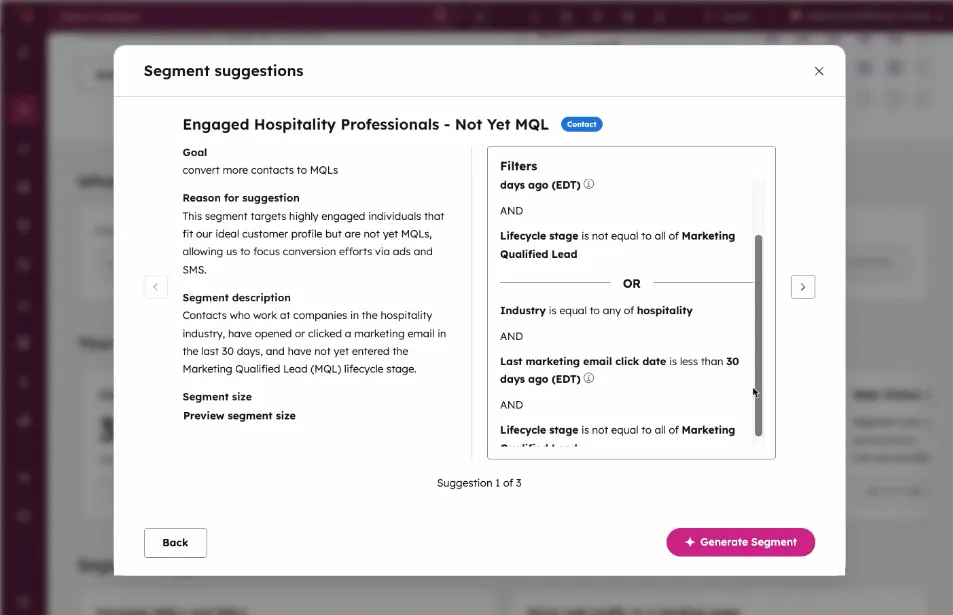
Not all customers behave the same, and AI makes it easier to act on that reality. Instead of segmenting customers manually, AI continuously groups them based on behavior, purchase frequency, and predicted value.
Platforms like Salesforce and HubSpot support AI-driven segmentation that updates automatically as customer behavior changes. This allows you to tailor messaging and offers across acquisition, onboarding, and repeat purchase stages without rebuilding segments each time.
14. Content generation
As your catalog grows, content creation can slow things down. Generative AI helps by drafting product descriptions, campaign copy, and content variations using existing data and brand guidelines. These models learn from past content, so tone and structure remain consistent.
A practical example is Shopify Magic, which supports merchants with AI-generated product descriptions and marketing copy directly within the admin. In this setup, AI handles repetitive writing at scale, while your team focuses on review and strategy. This makes it easier to keep product pages fresh, launch campaigns faster, and maintain consistency without expanding content resources linearly.

15. Customer retention & churn prediction
Last but not least, AI identifies early signals such as longer gaps between purchases, declining engagement, or changes in browsing behavior. These signals are combined into churn scores that highlight customers who may need attention.
With this visibility, retention becomes proactive. You can intervene with targeted messages, loyalty incentives, or reminders before customers disengage completely. Over time, this helps protect lifetime value and reduces reliance on constant new customer acquisition.
How to Implement AI for eCommerce?
As you can see, there are many ways to apply AI in online business. However, having many AI application options doesn’t mean you should implement them all at once. What’s more important is your approach to implementation.
Implementing AI in e-commerce is much easier to manage when you follow a clear, structured roadmap. The steps below will help you turn those use cases into practical actions, minimize risks during implementation, and focus on the real results that drive your business forward.
Step 1: Define clear business goals
First, clarify what you want AI to improve. This might include increasing conversion rates, reducing inventory waste, improving customer support, or boosting retention. When goals are specific, AI becomes a solution to a known problem rather than a vague initiative. Because of this, success is easier to measure later on.
Step 2: Prepare and align your data
Once goals are set, the next step is data readiness. Review your product, customer, and order data to ensure it is accurate and consistent. If data is fragmented or incomplete, AI outputs will be unreliable. This step is essential because AI systems can only perform as well as the data they learn from.
Step 3: Start with high-impact AI use cases
With a solid data foundation in place, it becomes easier to choose where to start. Focus on high-impact use cases with clear ROI, such as product recommendations, AI-powered search, chatbots, or demand forecasting. By starting small, you reduce risk and build confidence through early wins.
Step 4: Choose the right AI tools or platform capabilities
After selecting your initial use cases, decide how AI will be implemented technically. In many cases, native AI features within your eCommerce platform are sufficient. In other cases, third-party tools may be a better fit. At this stage, integration and ease of use matter more than advanced features.
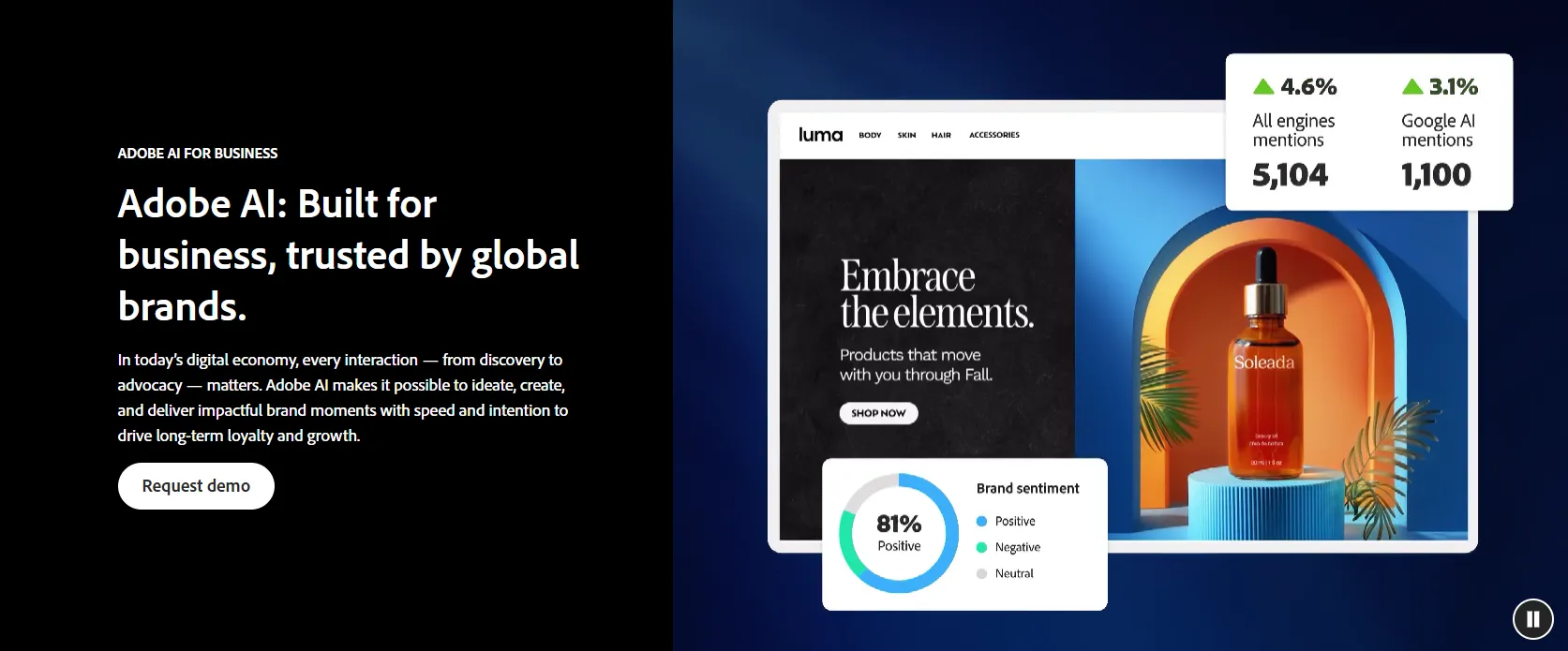
For example, merchants running on platforms like Adobe Commerce often rely on AI-driven personalization and merchandising features through their ecosystem. For specific use cases, tools such as Algolia (AI-powered search), Bloomreach (personalization), or Inventory Planner (demand planning) are commonly used to extend AI capabilities.
Step 5: Test, measure, and optimize
Then, measure performance against the goals defined earlier and run controlled experiments where possible. Over time, these insights help you fine-tune models and improve results. AI performs best when it is continuously monitored and adjusted.
Step 6: Monitor performance and scale
Finally, when early implementations prove successful, you can expand AI into other areas of the business. At the same time, keep an eye on performance, data governance, and operational impact. This ensures AI continues to support growth without introducing new risks or inefficiencies.
Challenges & Limitations of AI in eCommerce
Despite its increasing application in e-commerce, AI still has many limitations. In practice, most challenges typically fall into three core areas, rather than simply being a matter of technical complexity.
- Privacy and accuracy: AI depends heavily on customer and behavioral data, which raises privacy and compliance concerns. At the same time, accuracy is not guaranteed. If data is incomplete, biased, or outdated, AI outputs can be misleading and lead to poor decisions.
- Cost and ongoing investment: AI is rarely a one-time expense. Beyond tools and licenses, businesses need to account for integration, data preparation, and continuous optimization. Without clear priorities, costs can grow faster than returns.
- Quality and differentiation risks: Many AI-driven experiences follow market trends rather than brand direction. When used without strong guidance, AI can produce generic content and recommendations, making products and messaging feel similar across competitors.
Recognizing these challenges does not mean slowing down AI adoption. Instead, it helps you approach AI in eCommerce more intentionally and sustainably.
- Focus on the right use cases: start where AI can deliver clear value instead of applying it everywhere.
- Protect data quality and privacy: accurate inputs matter more than advanced models.
- Maintain quality control: use AI to scale execution, but keep human oversight to avoid generic outcomes.
Future of AI in eCommerce
Looking ahead, we see AI becoming less about standout features and more about everyday decision support. Instead of being something you actively “turn on,” AI will increasingly operate in the background, quietly shaping how stores run.
From our perspective, the next phase of AI adoption will focus on autonomy with boundaries. AI systems will not only recommend actions but also execute them, such as adjusting prices, routing orders, or triggering lifecycle campaigns. However, these systems will still work within rules and goals defined by your team.
We also expect personalization to become more connected across channels. AI will help unify customer data from web, mobile, social, and offline touchpoints, making experiences feel more consistent without requiring separate optimization for each channel.
Ultimately, we believe AI will be treated as a long-term capability rather than a short-term trend. Businesses that invest in data foundations, governance, and gradual improvement will gain the most value. Those chasing isolated AI features without a strategy are likely to see diminishing returns.
AI in eCommerce: FAQs
How is AI used in eCommerce?
AI is used in eCommerce to automate decisions, analyze large volumes of data, and improve performance across the business. Common applications include personalized product recommendations, smarter search, dynamic pricing, inventory forecasting, customer support automation, and fraud detection.
Which eCommerce companies use AI?
Many leading eCommerce companies already rely on AI as part of their core operations. These examples of artificial intelligence in eCommerce include:
- Shopify for applying AI across the eCommerce lifecycle, from storefront experiences to content generation.
- Amazon for recommendations and fulfillment optimization.
- Walmart for pricing and logistics optimization.
- Sephora for personalization and virtual try-on experiences.
Will AI replace eCommerce?
No, AI will not replace eCommerce. Instead, it enhances how eCommerce businesses operate. AI supports decision-making, automates repetitive tasks, and handles complexity at scale, but strategy, brand building, and customer relationships still require human input. In most cases, AI acts as an enabler rather than a replacement.
Which AI application is commonly used in eCommerce?
The most widely used AI application in eCommerce is personalization, particularly product recommendations and tailored content. Other commonly adopted applications include AI-powered search, customer service chatbots, demand forecasting, and fraud detection. These use cases tend to deliver clear ROI and are often the first areas where merchants introduce AI.
Conclusion
That’s it! We hope our list of these use cases has helped you better understand how AI in eCommerce can fit into your own business. Whether you are just getting started or refining existing initiatives, these use cases can serve as reference points as you decide where AI makes the most sense for you.
If you’d like to explore further, feel free to check out our other blog posts or join our community group to learn from shared experiences and ongoing discussions.