
Etsy can help you reach shoppers, but its selling fees, limited shop customization, and digital file restrictions may leave you looking for more flexibility. The right Etsy alternatives depend on what you want to change, from reaching a different audience to building your own brand or selling larger downloads.
In this article, we compare the pricing, pros, and cons of Etsy alternatives to help you choose the right platform. This overview gives you a quick starting point before exploring each platform in detail.
| Platform | Platform type | Main reason to consider it |
| Amazon Handmade | Marketplace | Access to Amazon shoppers through a dedicated handmade category. |
| eBay | Marketplace | Auction and fixed-price selling for vintage items and collectibles. |
| Bonanza | Marketplace | An additional sales channel with imports from existing stores. |
| Shopify | Hosted eCommerce platform | A dedicated online store with tools for growth and multichannel selling. |
| Big Cartel | Hosted store builder | A simple, affordable storefront for a small creative collection. |
| Wix | Hosted website builder | Flexible website design that combines a store, portfolio, and services. |
| Squarespace | Hosted website builder | Polished product presentation alongside a portfolio and brand content. |
| WooCommerce | Open-source WordPress plugin | Extensive customization through WordPress themes, plugins, and extensions. |
| IndieMade | Hosted store builder | A branded website with two-way Etsy syncing. |
| Easy Digital Downloads | Open-source WordPress plugin | Dedicated tools for downloadable products and licensed software. |
| Payhip | Hosted selling platform | Digital product selling without a mandatory monthly subscription. |
| Sellfy | Hosted selling platform | Downloads, subscriptions, and print-on-demand merchandise in one store. |
Should You Choose Another Marketplace or Build Your Own Store?
Before exploring Etsy alternatives, think about what you need most from your next platform. Another marketplace can help you reach existing shoppers. Your own store gives you more freedom to build your brand, but you’ll need to bring customers in yourself.
Understanding the differences between eCommerce platforms vs marketplace options can help you decide which approach fits your business.
Selling on another marketplace
A marketplace offers a familiar way to sell beyond Etsy. Here are the main benefits and trade-offs to consider:
- Existing audience: Your products appear where shoppers already browse. This helps with discovery, although traffic and sales are not guaranteed.
- Simpler setup: The platform provides the storefront, checkout, and technical infrastructure, so you can focus on listings and fulfillment.
- Selling fees: Listing fees, commissions, and advertising charges can affect your margins. Compare the total cost rather than one headline rate.
- Limited control: You follow marketplace rules and have fewer options for storefront design and direct customer marketing.
Building your own online store
An independent store gives you more freedom, but also more responsibility. These differences matter when planning your next step:
- Greater brand freedom: You can customize your website, product presentation, and shopping experience to reflect your business.
- Direct customer relationships: You can develop email lists with customer consent and manage your own loyalty campaigns.
- Different costs: You may avoid marketplace commissions, but still pay for hosting or subscriptions, payment processing, and additional tools.
- Traffic acquisition: You need to attract customers through SEO, social media, email, or paid advertising.
Using both channels
You can keep Etsy running and launch your own store alongside it. This gives you time to build an audience without immediately leaving an established sales channel. However, managing both requires coordinated inventory, listings, and orders.
Another marketplace suits sellers who prioritize discovery and simpler setup. Your own store is a stronger fit when brand control matters more and you can invest in attracting customers.
When you’re ready to move from Etsy to your own store, our experts can help you plan and manage the data migration.
Let Our Experts Handle Your Etsy Migration!
With the All-in-One Migration Service, our experts take care of everything, ensuring a seamless and stress-free migration.

Best Marketplace Alternatives to Etsy
1. Amazon Handmade
Best for: Makers who want access to Amazon shoppers and can meet its Handmade eligibility requirements.
Pricing: A Professional selling account costs $39.99 for the first month. Approved Handmade sellers receive an ongoing monthly fee waiver.
Among Etsy alternatives, Amazon Handmade stands out for combining a maker-focused category with Amazon’s broader shopping ecosystem. Sellers submit an application explaining their products and production process. After approval, a maker profile lets you share your background and introduce your craft.
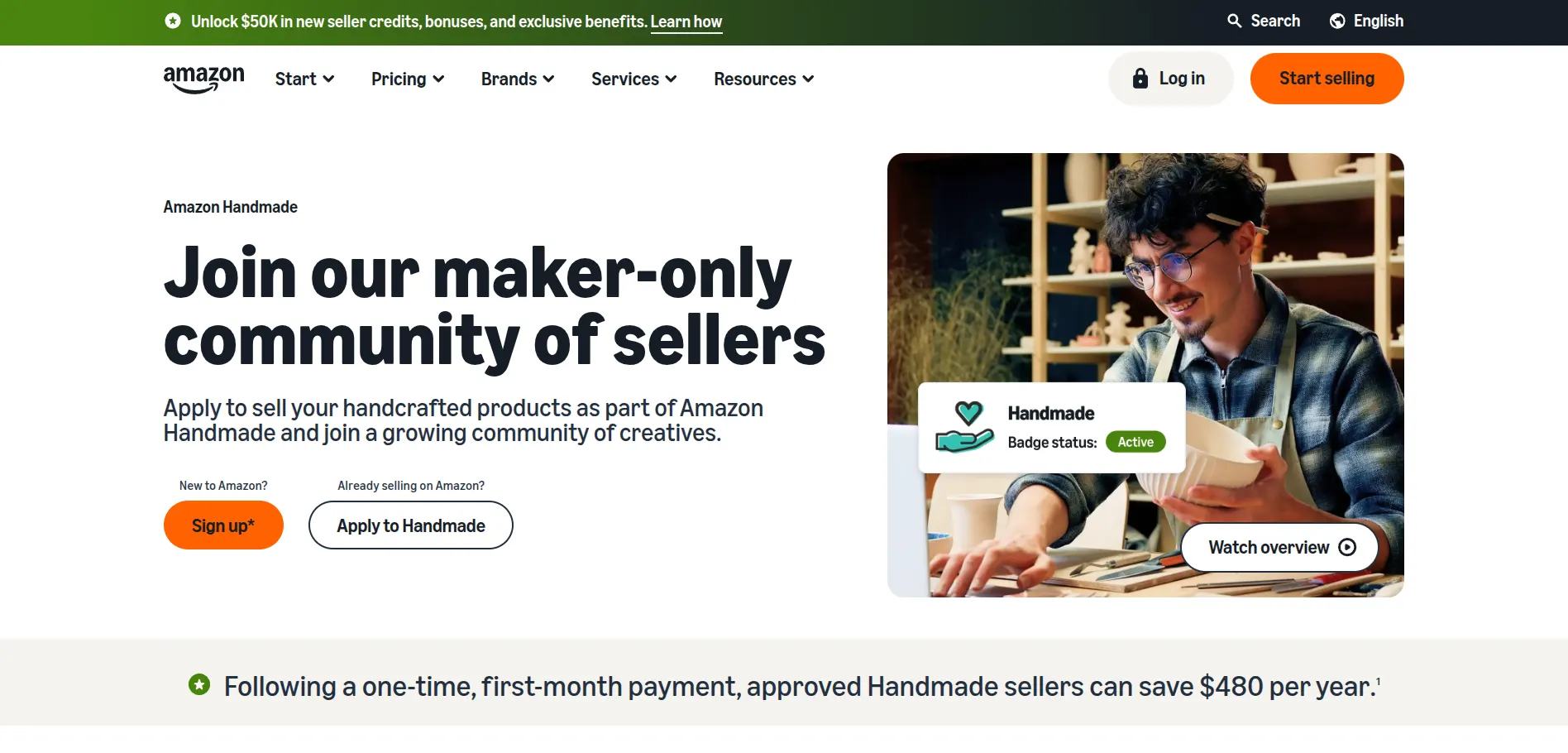
This makes it worth considering when marketplace reach matters more than a highly customized storefront. However, joining Amazon requires adapting to its listing processes and operating rules. Your product presentation still needs to communicate why handmade work deserves the buyer’s attention.
The following operational benefits and limitations can also affect your decision:
| Pros | Cons |
|
|
2. eBay
Best for: Sellers of vintage items, collectibles, and unique products who want flexible pricing formats.
Pricing:
- For US non-Store sellers, the first 250 listings each month have no insertion fee in most categories.
- Additional listings generally cost $0.35 each.
- Most categories carry a 13.6% final value fee on the sale amount up to $7,500 per item.
- A per-order fee also applies: $0.30 for orders of $10 or less, or $0.40 for higher-value orders.
For vintage and collectible sellers, eBay offers a broader selling environment than a craft-focused marketplace. Auctions can suit items with uncertain market value. Fixed-price listings offer a more familiar approach for products you sell regularly.
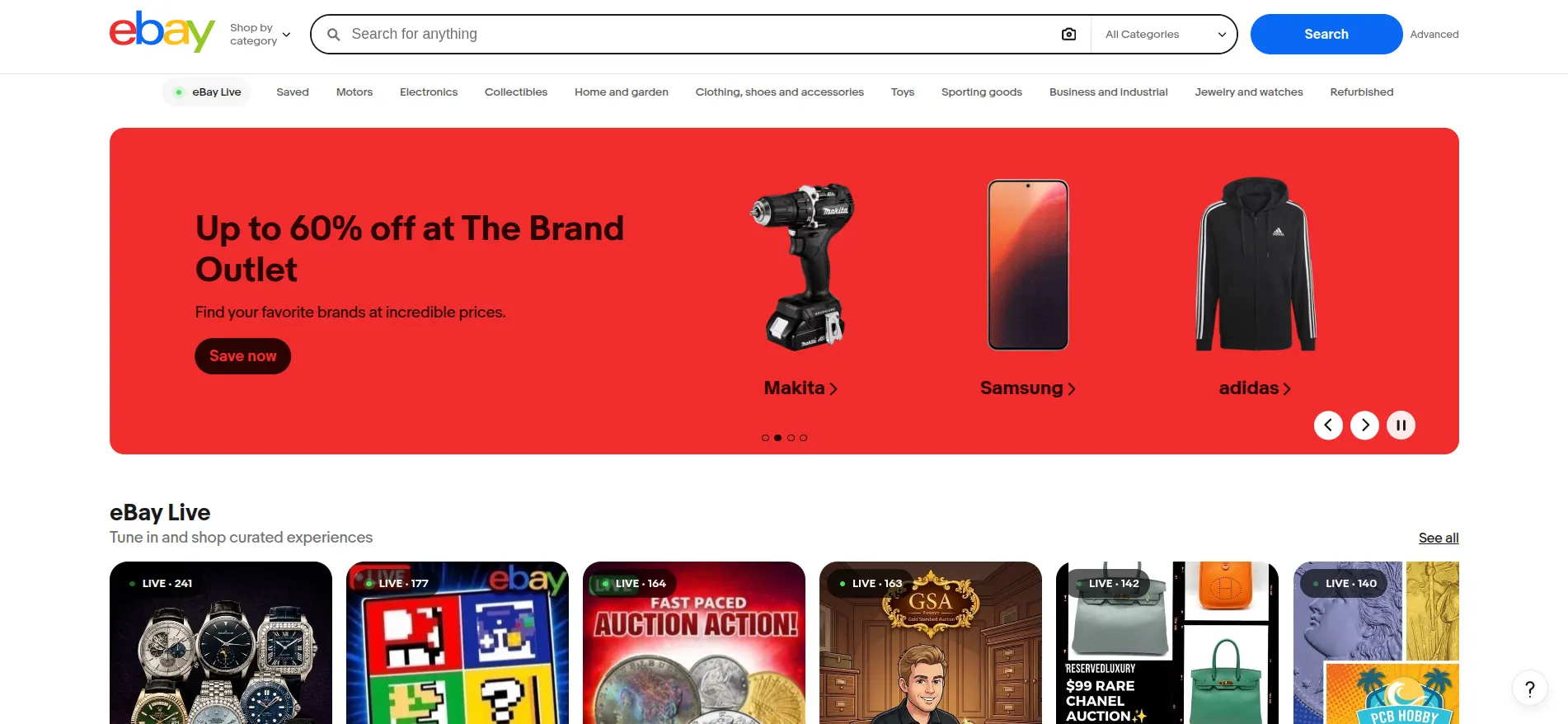
Its flexibility makes eBay one of the Etsy alternatives worth considering for a mixed catalog. However, handmade goods appear alongside general merchandise. Your photographs and descriptions need to explain the product’s craftsmanship and value clearly.
Beyond product fit, these listing and fee conditions deserve attention:
| Pros | Cons |
|
|
You can sell on both platforms or move your eligible eBay products to Etsy entirely. Our guide on how to import eBay listings to Etsy explains how to get started.
3. Bonanza
Best for: Sellers who want to test another marketplace using listings from their existing Etsy shop.
Pricing:
- Bonanza’s setup guide lists a $14.99 account setup fee.
- The updated base final value fee is 11%, with higher advertising levels potentially increasing the rate.
- A $0.25 transaction fee applies to sellers without an active membership subscription.
- The first 50 unique active listings each month are free. Additional listings cost $0.03 each per month, capped at $20.
A seller “booth” forms the center of Bonanza’s shopping experience. Buyers can browse your products together, including handmade items, vintage goods, and general merchandise. Its import tools support existing listings from Etsy, eBay, Amazon, and Shopify.
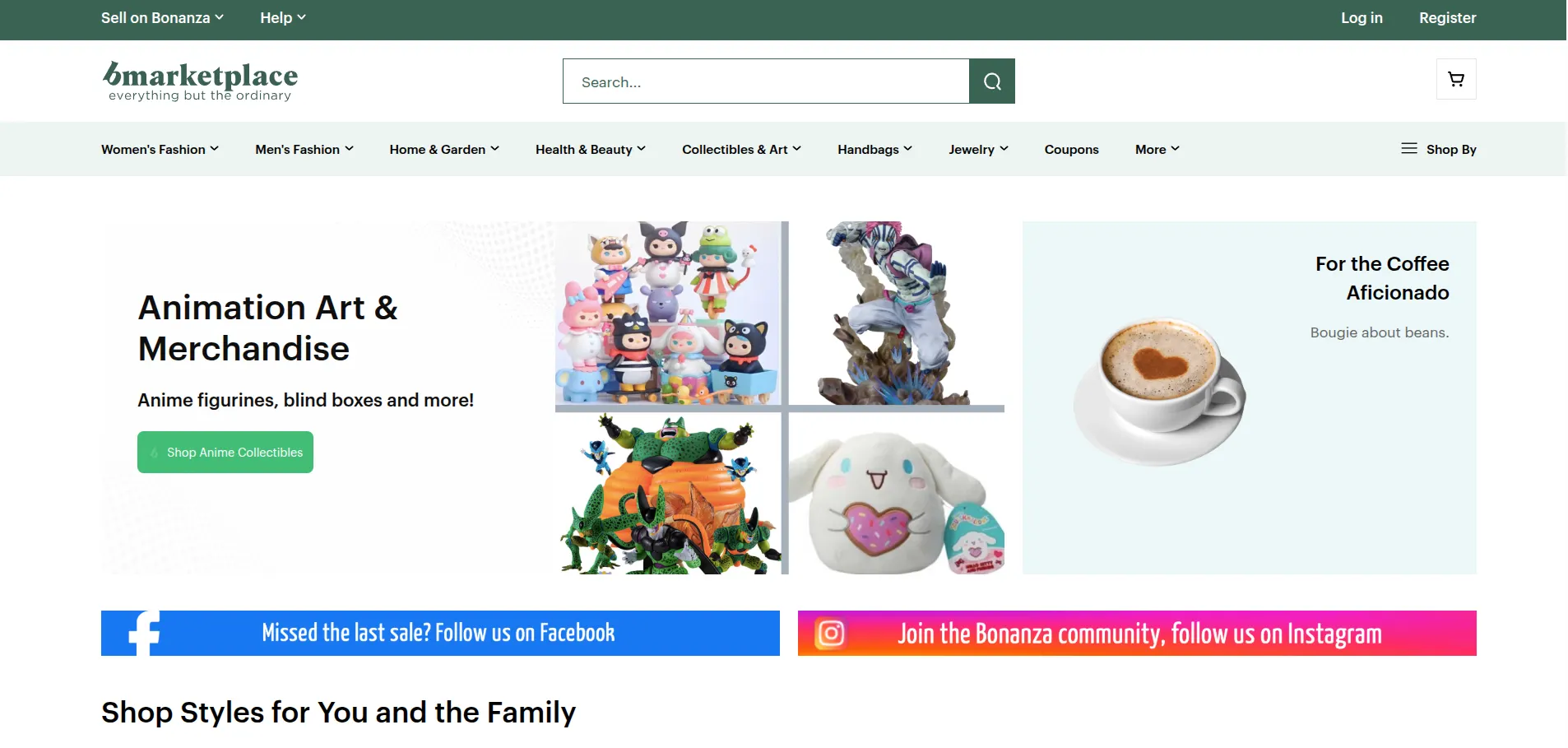
We see its main appeal as a way to test another sales channel with less catalog setup work. Its updated charges mean lower costs should not be assumed. A small initial selection can help you assess demand before expanding your booth.
These additional features and limitations are useful to compare:
| Pros | Cons |
|
|
These three Etsy alternatives offer different ways to expand your business. Amazon Handmade suits makers who want to sell within Amazon’s ecosystem, eBay is a good fit for vintage items and collectibles, and Bonanza offers a way to test an additional sales channel.
Best Etsy Alternatives for Building Your Own Store
If you want more freedom to shape your brand, these Etsy alternatives let you build a separate website with your own shopping experience. You’ll need to attract visitors yourself, so the right platform should fit both your budget and how you plan to grow.
4. Shopify
Best for: Sellers who want a dedicated eCommerce platform with room to grow beyond a small handmade catalog.
Pricing:
- Basic: $39/month, or $29/month with annual billing.
- Grow: $105/month, or $79/month with annual billing.
- Advanced: $399/month, or $299/month with annual billing.
- Plus: Starts at $2,300/month, with contract terms affecting pricing.
Shopify puts selling at the center of your website. You can build a storefront around your brand and manage products, orders, and inventory from one dashboard. Its connections to social channels, marketplaces, and in-person selling also make it useful when your business expands beyond website sales.

Among these Etsy alternatives, we see Shopify as a practical option for sellers with clear growth plans. Its app ecosystem gives you flexibility, but you’ll need to choose those additions carefully. A small shop with straightforward needs may not benefit from paying for several extra tools.
The following tradeoffs are worth considering before choosing a plan:
| Pros | Cons |
|
|
If you’ve compared Shopify vs Etsy and decided Shopify is your next step, our experts can help you plan your store data migration.
5. Big Cartel
Best for: Independent artists and makers who want a simple, affordable storefront for a small collection.
Pricing:
- Gold: Free, with up to 5 products.
- Platinum: $15/month, or $144/year ($12/month equivalent), with up to 50 products.
- Diamond: $30/month, or $288/year ($24/month equivalent), with up to 500 products.
Big Cartel focuses on independent creators rather than complex retail operations. It gives you a straightforward way to present a collection and sell under your own brand. That makes it appealing for artists selling prints, jewelry, merchandise, or occasional product releases.

We’d consider Big Cartel when keeping your store manageable matters more than adding extensive functionality. You can start with a small selection and upgrade as your collection grows. However, its catalog ceiling makes it less suitable if you expect to build a large inventory.
Here are the plan differences that may affect your day-to-day selling:
| Pros | Cons |
|
|
If you’re weighing a simple storefront against a marketplace, our Big Cartel vs Etsy guide explains the key tradeoffs.
6. Wix
Best for: Sellers who want a visually flexible website that combines an online store with brand storytelling, portfolios, or services.
Pricing:
- Core: $29/month.
- Business: $39/month.
- Business Elite: $159/month.
- Enterprise: Custom pricing.
Wix approaches eCommerce as part of a broader website builder. Its visual editor lets you create a site where product pages sit alongside your story, portfolio, blog, or booking services. This can suit makers whose customers want to learn about the person and process behind their products.

As one of the more design-focused Etsy alternatives, Wix is worth considering when your website needs to do more than display a catalog. You’ll have considerable freedom over the layout, but that freedom also means spending time checking navigation and the shopping experience as you build.
The following strengths and restrictions can help you judge its fit:
| Pros | Cons |
|
|
You can explore the differences in design, selling tools, and marketing in our Wix vs Etsy comparison.
7. Squarespace
Best for: Artists and design-focused brands that need a polished storefront alongside a portfolio.
Pricing:
- Basic: $25/month, or $19/month with annual billing.
- Core: $39/month, or $29/month with annual billing.
- Plus: $65/month, or $49/month with annual billing.
- Advanced: $139/month, or $99/month with annual billing.
Squarespace combines an online store with a library of around 200 website templates. Its Fluid Engine drag-and-drop editor lets you arrange images, text, and other blocks without coding, with separate layout controls for desktop and mobile. This gives creative sellers more freedom to present their products and brand story.

We see Squarespace as a good fit when presentation plays a central role in your business. For example, a ceramics maker could bring together a product collection, studio photographs, and process stories on one website without having to code. Among these Etsy alternatives, it particularly suits sellers who want their store to feel like a complete creative brand.
| Pros | Cons |
|
|
8. WooCommerce
Best for: WordPress users and merchants with technical support who need extensive store customization.
Pricing: WooCommerce is free, but you’ll need to budget for running your store:
- Small DIY store: Around $135-$515 in the first year.
- Professionally maintained small store: Around $1,300–$2,500/year.
- Growing store: Around $2,000–$10,000+/year.
For a closer look at hosting, extensions, and maintenance costs, read our WooCommerce pricing guide.
WooCommerce is a free, open-source eCommerce plugin that turns a WordPress website into a full online store. Unlike Etsy, it’s self-hosted – you own the store, the code, and the customer data, and you decide how everything looks and works.
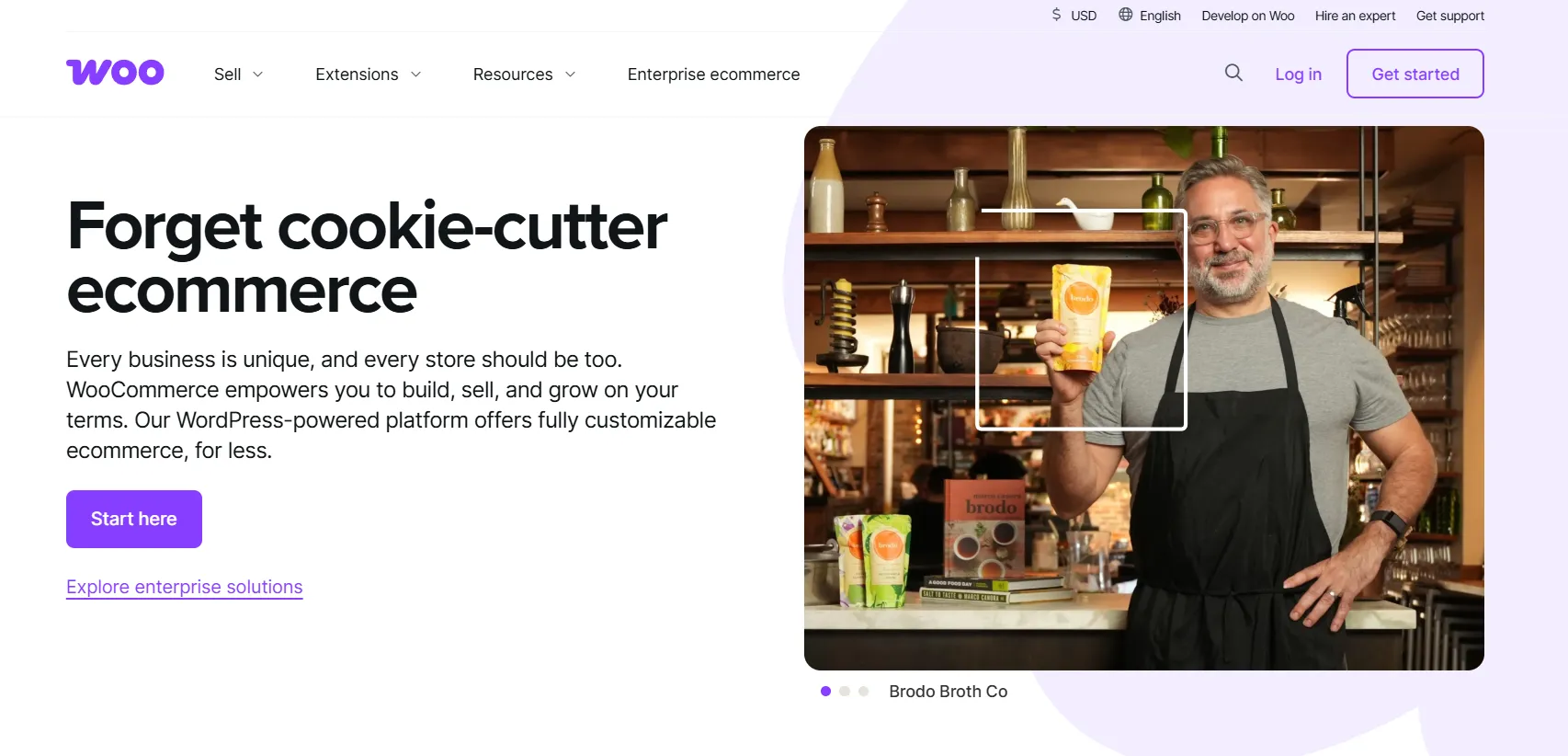
Of these Etsy alternatives, WooCommerce gives you considerable freedom, but it also puts more responsibility on your side. We’d consider it if you already use WordPress or have someone who can help maintain the website. A seller who wants to focus entirely on making and shipping products may find a hosted platform easier to manage.
| Pros | Cons |
|
|
9. IndieMade
Best for: Independent makers building their own website alongside an existing Etsy shop.
Pricing:
- Essential: $15/month, or $12/month billed annually.
- Plus: $25/month, or $20/month billed annually.
Next on our list, IndieMade brings your store, galleries, blog, and custom pages into one website. This makes it easier to present finished products alongside your creative process. Built-in product options let shoppers enter engraving text, select finishes, or upload files for personalized orders.
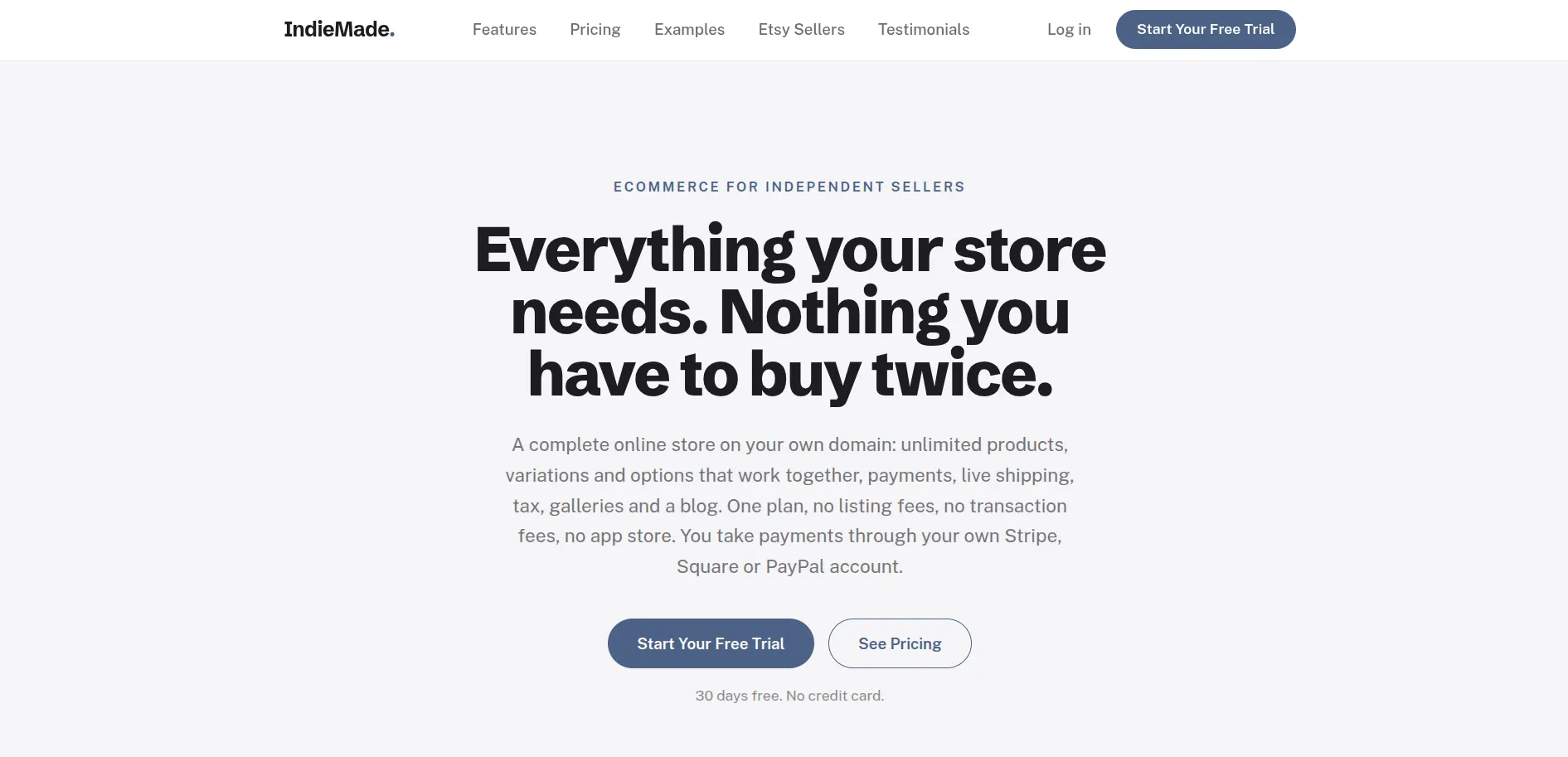
Its Etsy integration supports two-way syncing of listings and inventory, reducing duplicate work when you run both stores. You can manage a separate branded website and keep your Etsy catalog connected. This makes IndieMade a practical choice for makers expanding beyond Etsy without leaving it entirely.
| Pros | Cons |
|
|
Best Etsy Alternatives for Digital Products
Etsy limits instant-download listings to 5 files of up to 20 MB each and does not support digital product variations. These restrictions can make selling large design bundles or different versions of a download less straightforward. The following Etsy alternatives offer more flexibility in file delivery and digital product sales.
10. Easy Digital Downloads
Best for: WordPress users building a dedicated store for downloadable products or licensed software.
Pricing:
- Lite plugin: Free and open source.
- Paid licenses: $99.50–$499.50 for the first year.
- Standard renewals: $199–$999/year.
Easy Digital Downloads puts digital sales inside your WordPress dashboard. Its product editor focuses on downloadable files, with options for assigning different files to different price choices. For example, you could sell a basic template and a larger resource pack from the same product page.
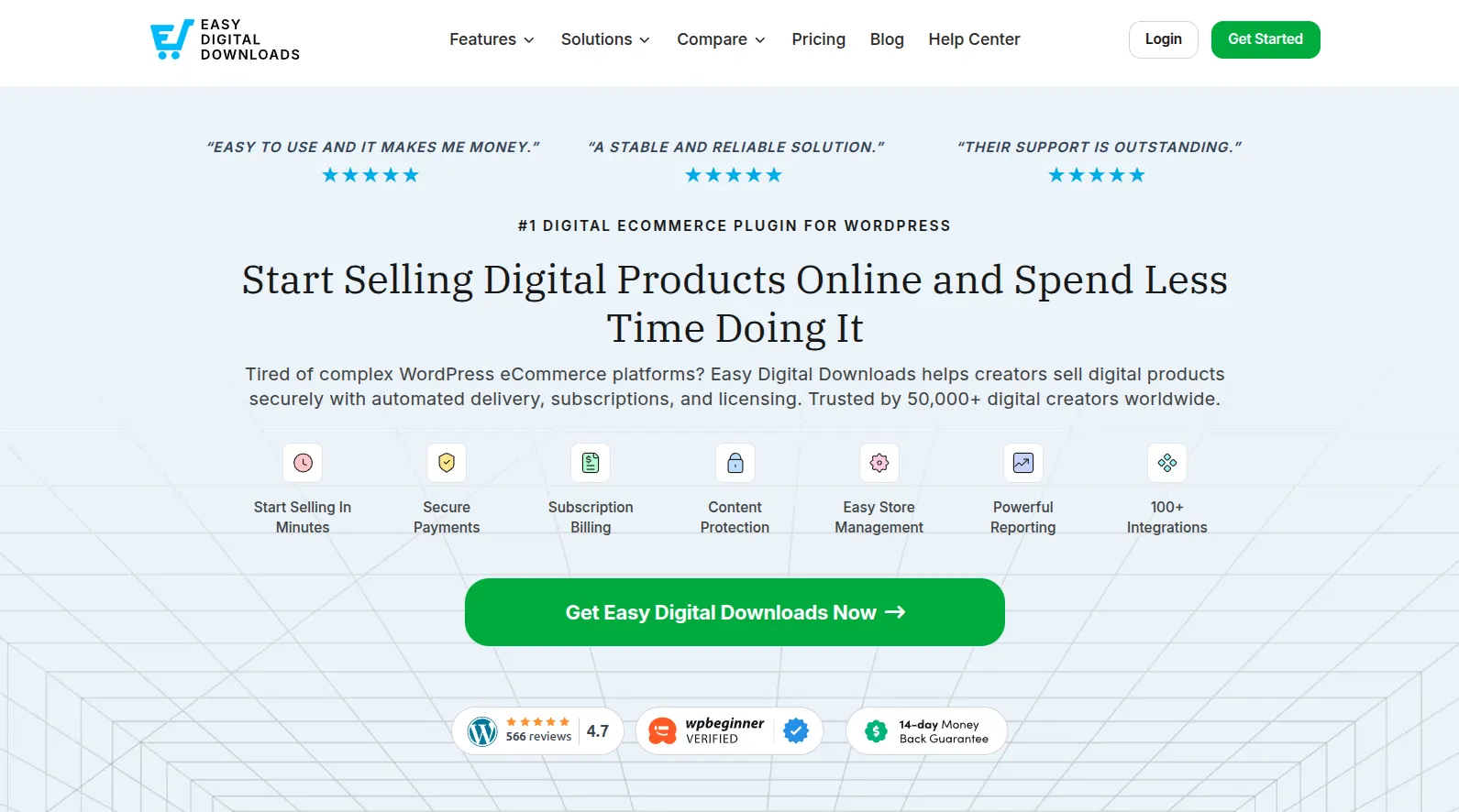
Its main strength is the ability to build a store around your content and expand into more specialized digital sales. Paid extensions add functions such as software licensing and recurring payments. However, the website still needs technical upkeep, making EDD more practical when you already know WordPress or have support available.
| Pros | Cons |
|
|
11. Payhip
Best for: Creators testing digital product sales without committing to a monthly subscription.
Pricing:
- Free Forever: $0/month, plus a 5% transaction fee.
- Plus: $29/month, plus a 2% transaction fee.
- Pro: $99/month, with no Payhip transaction fee.
If you prefer a hosted option without managing a WordPress website, Payhip offers a simpler setup. You upload your files, add a description and price, and publish the product in your store. Customers receive download access after payment, so you do not need to send files manually.
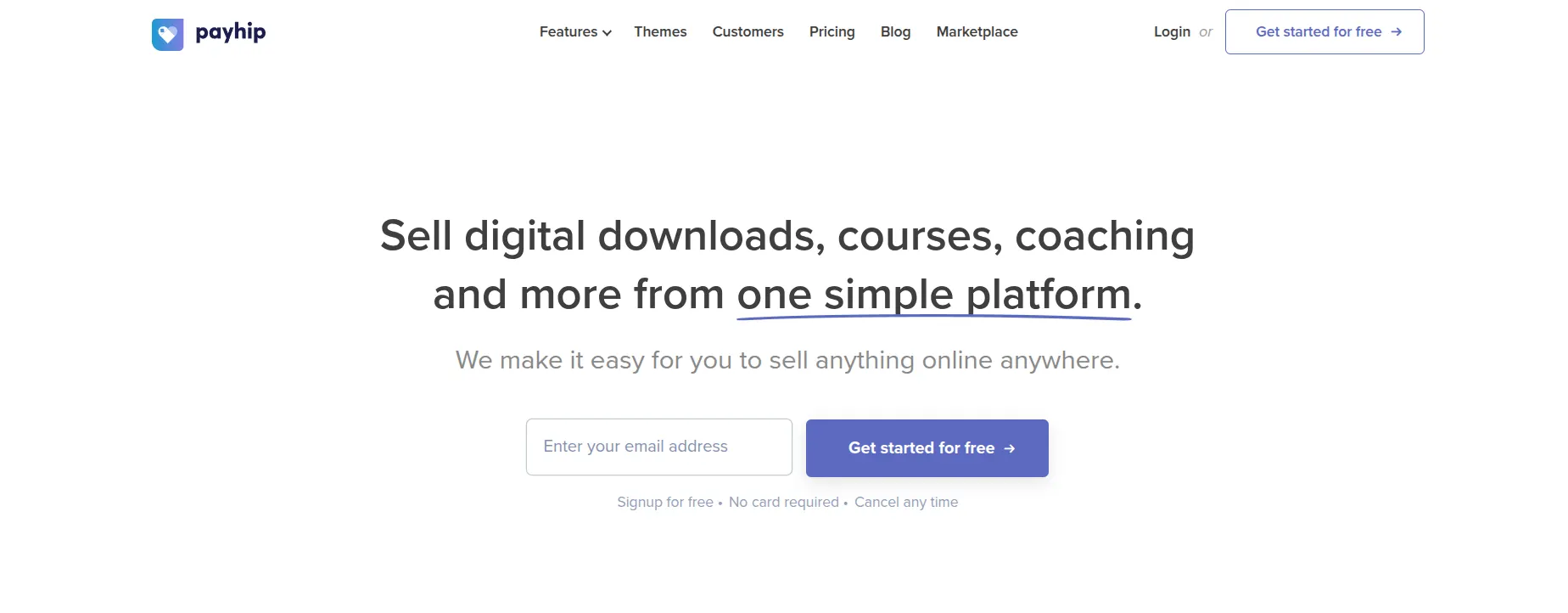
Payhip also lets you start without a monthly subscription. All plans include the same core features, and upgrading mainly reduces the platform’s transaction fee. This makes it an accessible option among Etsy alternatives when you want to test demand before committing to a fixed monthly cost.
| Pros | Cons |
|
|
12. Sellfy
Best for: Creators combining digital downloads, subscriptions, and merchandise in one hosted store.
Pricing:
- Starter: $29/month, or $22/month with annual billing.
- Business: $79/month, or $59/month with annual billing.
- Premium: $159/month, or $119/month with annual billing.
Another option to consider is Sellfy, especially if you want to sell more than downloadable files. You can offer digital products, subscriptions, and print-on-demand merchandise through one store. For example, the same illustration could become a downloadable print and a design on a T-shirt.
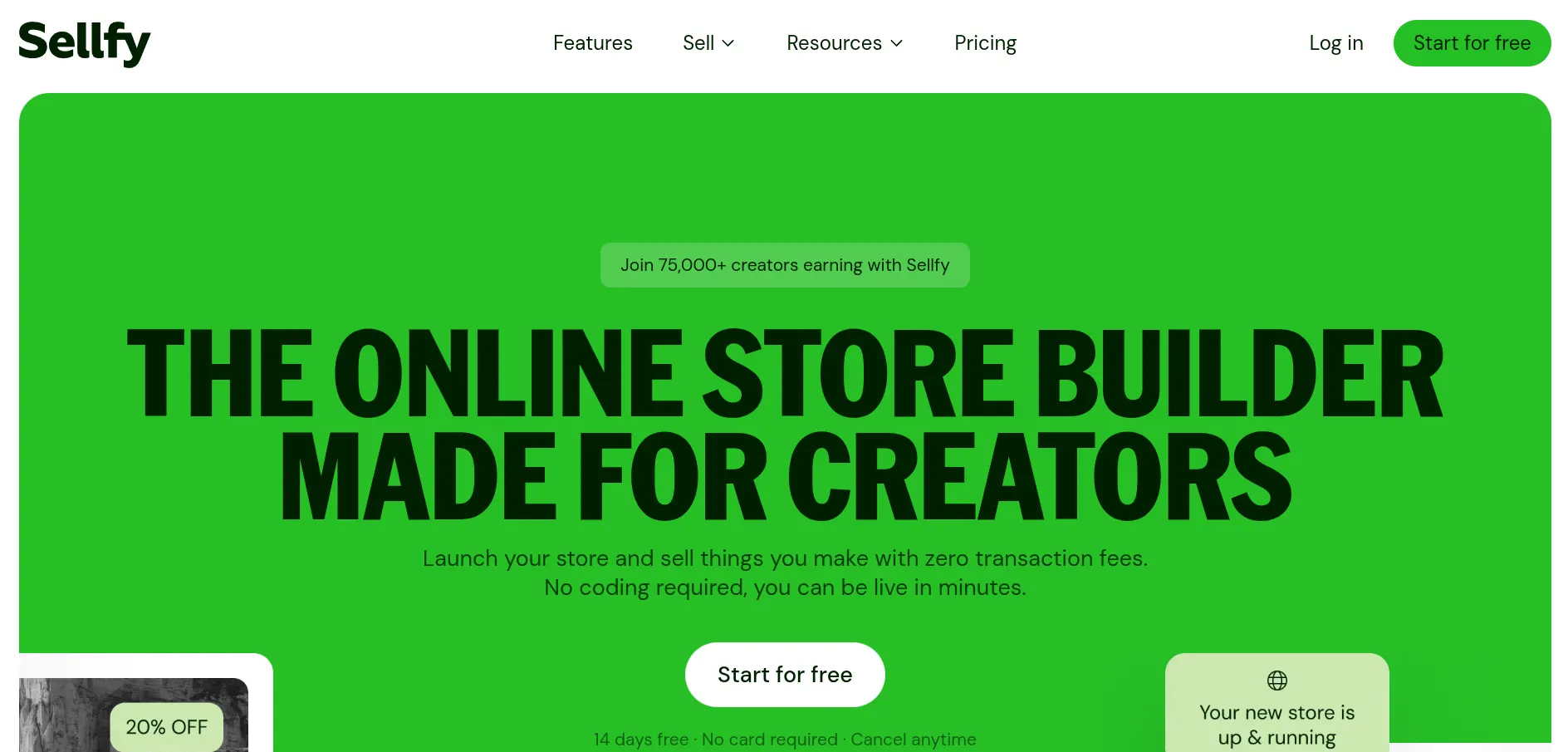
Sellfy also takes care of file hosting and sends buyers access to their purchases automatically. If you already have a website, you can add a Buy Now button, product widget, or an embedded store. Before choosing a plan, we recommend checking its annual sales allowance, since growing revenue may mean moving to a higher subscription tier.
|
Pros |
Cons |
|
|
These digital-focused Etsy alternatives offer different levels of control and commitment. EDD provides WordPress flexibility, Payhip offers a low-cost starting point, and Sellfy brings downloads and merchandise together. Your choice depends on how you want to deliver your products and manage the store behind them.
Our Sellfy vs Etsy guide compares the two options across digital sales, pricing, and store ownership.
How We Evaluated These Etsy Alternatives
We evaluated these Etsy alternatives using an internal comparison framework, with each criterion weighted according to its importance for sellers expanding beyond Etsy. We checked official pricing pages and documentation for fees, features, and platform limits.
The following criteria guided our reviews.
- Product fit (25%): We considered support for handmade goods, vintage items, and digital downloads, including variations and personalization.
- Total selling costs (25%): We reviewed subscriptions, listing fees, transaction charges, and additional expenses such as hosting or extensions.
- Setup and daily management (20%): We assessed storefront setup, inventory management, and order fulfillment.
- Customer reach and brand control (20%): We compared access to marketplace shoppers with storefront customization and tools for developing customer relationships.
- Room to grow (10%): We checked product allowances, file limits, integrations, and features that require an upgrade.
These weights explain our editorial priorities rather than represent published numerical scores. Our recommendations consider each platform’s tradeoffs and how well it fits your products, budget, and available resources.
Etsy Alternatives: FAQs
How much does Etsy take from a $100 sale?
For a US seller selling one $100 item, with no shipping charge, sales tax, or advertising fees, the standard cost is $9.95.
- Listing fee: $0.20.
- Transaction fee: $6.50, calculated at 6.5%.
- Payment processing: $3.25, calculated at 3% + $0.25.
You keep $90.05 before product costs and other expenses. An order attributed to Offsite Ads adds another $12 or $15, bringing the total to $21.95 or $24.95. Processing rates and additional fees vary by country.
Are there free alternatives to Etsy?
Yes. Big Cartel’s Gold plan lets you sell up to 5 products without a monthly subscription. Payhip’s Free Forever plan supports unlimited products but charges 5% per sale, plus payment processing. WooCommerce and Easy Digital Downloads offer free software, but you still need hosting and a domain.
Can I sell on Etsy and another platform at once?
Yes. You can keep your Etsy shop and sell through another marketplace or your own website. You’ll need to keep inventory accurate across channels, especially for one-of-a-kind products. Etsy transactions must stay on Etsy; you cannot direct buyers elsewhere to complete an Etsy purchase and avoid fees.
Is it worth leaving Etsy?
It can be worth leaving if Etsy’s fees, product restrictions, or limited brand control are holding your business back. However, your own store brings subscription or hosting costs and the responsibility of attracting customers. We recommend testing another channel first and comparing profit, workload, and sales before closing your Etsy shop.
Will my Etsy reviews transfer to another platform?
Not automatically. Etsy lets you download your reviews as a JSON file, but importing them depends on your destination platform and its review tools. Some platforms, such as IndieMade, support Etsy review imports. Your Etsy shop rating and marketplace reputation do not carry over as a native rating on another marketplace.
Final Verdict: Which Etsy Alternative Should You Choose?
Based on the Etsy alternatives we reviewed, these are our main picks.
- Shopify is our pick for building a dedicated online store with room to grow.
- Amazon Handmade is worth considering if you want to reach marketplace shoppers with handmade products.
- Big Cartel offers a simple starting point for a small creative collection.
- WooCommerce gives you extensive customization if you have WordPress experience or technical support.
- IndieMade makes sense when you want your own website connected to your Etsy shop.
- Payhip provides an accessible way to test digital product sales without a monthly subscription.
You do not need to leave Etsy immediately. Testing a second channel gives you time to compare sales, costs, and daily workload before deciding where to focus your business. Once you choose your next platform, our experts can help you plan the transfer of your store data with LitExtension.
For more guidance on choosing and growing your store, you can explore our other eCommerce blog posts.

